
MRI Machine for Sale: The 2026 September Buyer's Guide to New, Used, and Refurbished Scanners
Find the right MRI machine for sale in 2026 September. Compare new, 💯 used, and refurbished scanners, prices, field strengths, vendors, and total cost of ownership.

Searching for an MRI machine for sale in 2026 means navigating one of the most complex purchases a medical imaging center, hospital, or veterinary clinic can make. A modern magnetic resonance imaging scanner is not just a piece of equipment — it is a multimillion-dollar diagnostic ecosystem that includes superconducting magnets, gradient coils, RF transmit and receive chains, cryogenic plumbing, helium, shielding, software licenses, and a service contract that can outlive the warranty by a decade.
Whether you are an outpatient imaging center owner replacing an aging 1.5T workhorse, a chiropractor opening a cash-pay extremity center, or a hospital biomedical director negotiating a wide-bore 3T installation, the decision tree is the same. You must choose between new, used, or refurbished. You must decide on field strength, bore size, channel count, and gradient performance. And you must understand how depreciation, helium boil-off, coil compatibility, and FDA 510(k) status affect resale value and operating cost.
This 2026 buyer's guide breaks down the entire market for MRI scanners for sale, from sub-$50,000 parts machines to $3 million+ research-grade 7T systems. We cover Siemens, GE Healthcare, Philips, Canon, Hitachi, and emerging vendors like Hyperfine and Synaptive. You'll learn how OEM-certified refurbishment differs from third-party refurbishment, why a 16-channel machine may outperform a 32-channel one for your use case, and how to model a five-year total cost of ownership before signing a purchase order.
Pricing has shifted dramatically since the 2022 helium crisis and the post-pandemic equipment glut. Refurbished 1.5T systems that sold for $400,000 in 2020 now trade hands for $180,000 to $275,000. New mid-tier 3T scanners that listed at $2.1 million have crept toward $2.4 million as supply chain inflation and gradient-coil shortages persist. The used market, meanwhile, is flooded with off-lease GE Signa HDxt and Siemens Aera units coming off seven-year hospital contracts.
Before you commit to any scanner, understand what an MRI actually does at the physics level. Magnetic resonance imaging uses a powerful static magnetic field, switched gradient fields, and pulsed radiofrequency energy to excite hydrogen protons in tissue and read the signal they emit as they relax. That signal-to-noise ratio — and therefore your image quality — depends on magnet homogeneity, gradient slew rate, coil sensitivity, and shielding integrity, not just the headline Tesla number on the brochure.
This guide will walk you through every line item you need to evaluate, including site preparation, RF shielding, cryogen vent routing, chiller capacity, and the often-overlooked cost of coils and software keys. We'll also cover the legal side: HIPAA-compliant patient data migration when buying used, FDA registration of the seller, and the importance of an independent acceptance test before final payment. If you want to also brush up on the science behind the machine you are about to buy, consider reviewing a refresher on what an MRI test actually does before you sign the purchase order.
MRI Machine Market by the Numbers (2026)
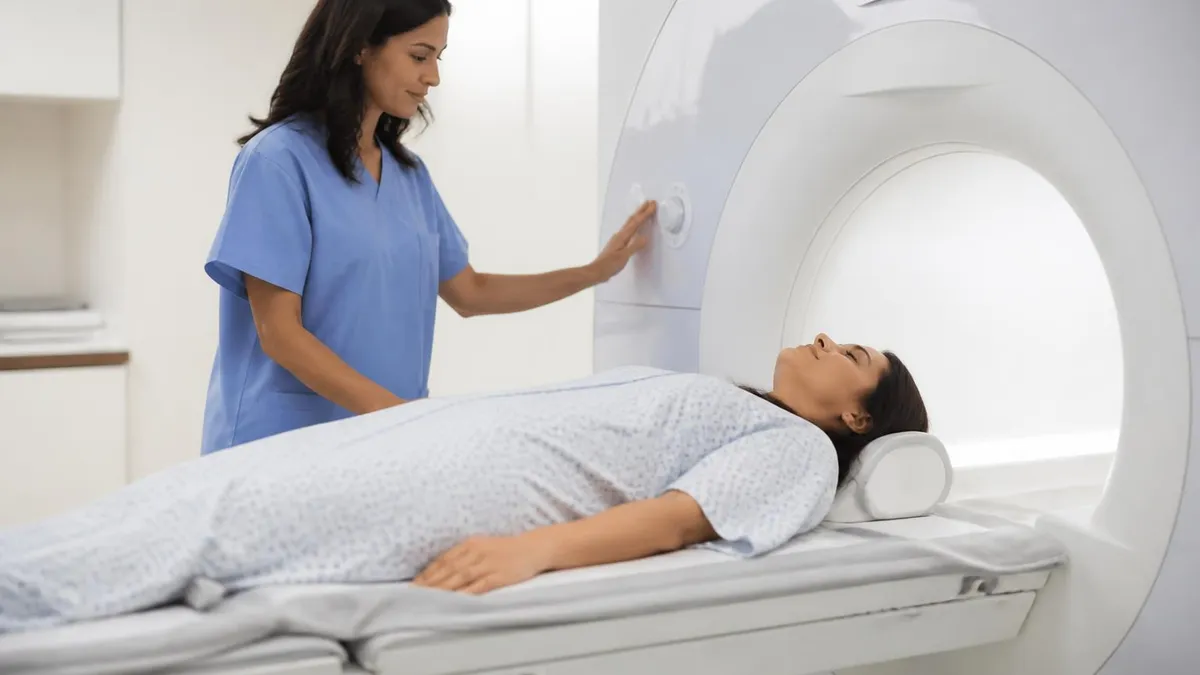
New vs Used vs Refurbished MRI Machine Options
Sold direct by Siemens, GE, Philips, Canon, or Hitachi with full factory warranty, latest software release, and 10-year parts support. Price range $1.4M–$3.2M depending on field strength and configuration. Includes full applications training and uptime guarantees.
Returned, fully rebuilt at factory facilities, and remarketed under programs like Siemens ecoline or GE GoldSeal. Carry a 1–2 year warranty, updated software, and FDA-cleared status. Typically 40–55% less than equivalent new systems.
Rebuilt by independent service organizations such as Block Imaging, Atlantis Worldwide, or DirectMed. Quality varies widely. Look for ISO 13485 certification, magnet ramp records, and a documented refurbishment scope before purchase.
Sold without warranty, often from clinic closures or hospital upgrades. Suitable only for buyers with in-house biomeds and a parts strategy. Prices range from $40,000 for a parts 1.5T to $250,000 for a working off-lease unit.
Pre-installed in a 48-foot trailer with onboard chiller, generator hookup, and patient ramp. Ideal for outreach programs, disaster response, or temporary capacity. Adds $300K–$600K to scanner cost but eliminates most site prep.
Pricing for an MRI machine for sale in 2026 spans nearly two orders of magnitude. At the low end, a 25-year-old open 0.3T extremity mri experience a closing chiropractic clinic might trade for $35,000 with no warranty. At the high end, a brand-new wide-bore 3T research system with full multi-nuclear spectroscopy can list north of $3.4 million before site prep. Understanding where your needs sit on that spectrum is the single most important step before contacting any vendor.
For most outpatient imaging centers, the sweet spot in 2026 is an OEM-certified refurbished 1.5T scanner from the 2016–2020 production window. Expect to pay $375,000 to $625,000 for a unit like a Siemens Aera, GE Optima MR450w, or Philips Ingenia 1.5T. These machines offer open bore mris (70 cm), digital RF chains, multi-channel coil support, and software that is still being actively patched by the manufacturer. Add roughly $40,000 to $90,000 for a complete coil suite covering brain, spine, knee, shoulder, breast, and body imaging.
Step up to 3T and the math changes quickly. A new wide-bore 3T from a tier-one OEM lists between $1.9 million and $2.6 million in 2026, with hospital-tier configurations climbing toward $3 million when advanced cardiac, neuro, or MR-guided radiation therapy packages are added. Refurbished 3T systems from the 2015–2019 era — Siemens Skyra, GE Discovery MR750w, Philips Ingenia 3T — sell for $850,000 to $1.4 million depending on coil count, software level, and remaining magnet life.
The used and as-is market is where the deepest discounts live, but also where the highest risk concentrates. A 2010-vintage GE Signa HDxt 1.5T pulled from a hospital upgrade might be advertised at $95,000. By the time you add de-installation, rigging, transport, magnet rampdown and re-ramp, helium refill (now $18,000–$30,000 alone), software keys, coil refurbishment, and a service contract, your true acquisition cost can easily triple. Always model the all-in number, not the asking price.
Field strength is not the only price driver. Bore diameter matters enormously: a 60 cm bore scanner sells for 15–25% less than an equivalent 70 cm wide-bore, but it cannot accommodate bariatric, claustrophobic, or shoulder-positioned patients comfortably. Channel count drives both price and image quality — a 16-channel system can be 20% cheaper than a 32-channel version of the same magnet, but parallel imaging acceleration suffers and exam times grow. For a high-throughput center, the faster scanner pays for itself in two years.
Vendor matters more than buyers expect. Siemens and GE dominate the US installed base and have the deepest third-party parts ecosystems, making their machines easier and cheaper to service long-term. Philips holds strong share in cardiac and oncology centers. Canon (formerly Toshiba) and Hitachi occupy value tiers with strong open-MRI offerings. Newer entrants like Hyperfine (portable 64 mT point-of-care) and Synaptive (Evry 0.5T) are reshaping the low-field market but do not yet have robust resale liquidity.
One often-forgotten cost is the software license. Advanced packages — diffusion tensor imaging, MR spectroscopy, MR elastography, cardiac cine, prostate multiparametric — are usually licensed per-feature and may or may not transfer with a used scanner. Always demand a written software inventory and confirm transferability in writing. For a primer on terminology you'll see in every spec sheet, the mri medical abbreviation is a useful reference during vendor negotiations.
MRI Practice Test Questions
Prepare for the MRI - Magnetic Resonance Imaging exam with our free practice test modules. Each quiz covers key topics to help you pass on your first try.
MRI Knowledge
MRI Exam Questions covering Knowledge. Master MRI Test concepts for certification prep.
MRI Physics
Free MRI Practice Test featuring Physics. Improve your MRI Exam score with mock test prep.
MRI Anatomy and Pathology
MRI Test Prep for MRI Anatomy and Pathology. Practice MRI Quiz questions and boost your score.
MRI Anatomy and Positioning
MRI Questions and Answers on MRI Anatomy and Positioning. Free MRI practice for exam readiness.
MRI Contrast Agents
Free MRI Quiz on MRI Contrast Agents. MRI Exam prep questions with detailed explanations.
MRI Patient Care and Positioning
MRI Practice Questions for MRI Patient Care and Positioning. Build confidence for your MRI certification exam.
Field Strength Compared: 0.3T, 1.5T, and 3T MRI Machines for Sale
Low-field open and extremity MRI scanners remain a viable niche in 2026, particularly for chiropractic clinics, orthopedic specialty centers, claustrophobic patient populations, and pediatric imaging. Hitachi Airis II, Esaote G-scan, and Paramed MROpen units routinely trade in the $75,000 to $225,000 range refurbished. Helium consumption is minimal or zero on permanent-magnet designs, which dramatically reduces operating cost compared with superconducting systems.
The trade-off is image quality and exam time. Signal-to-noise scales roughly linearly with field strength, so a 0.3T scan that takes 25 minutes at 1.5T may take 45 minutes or longer at low field. Advanced sequences like diffusion-weighted imaging and MR angiography are limited or unavailable. For musculoskeletal extremity work, however, low-field can deliver diagnostic-quality images at a fraction of the capital and operating cost of a superconducting magnet.
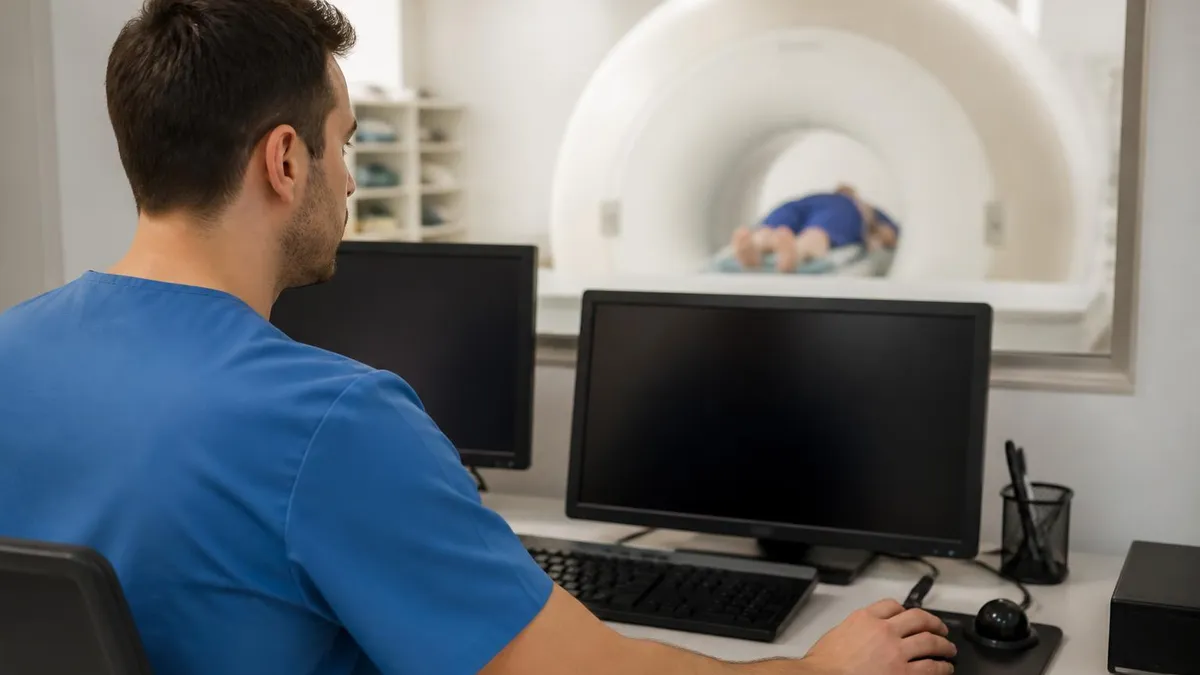
Buying a Refurbished MRI Machine: Pros and Cons
- +Capital cost 40–60% lower than equivalent new OEM scanner
- +OEM-certified programs include factory warranty and uptime guarantees
- +Faster delivery — often 60–90 days versus 6–12 months for new
- +Proven hardware platform with mature third-party parts supply
- +Lower depreciation curve protects resale value at next upgrade
- +Software typically updated to the most recent supported release
- +Coil and accessory ecosystem already widely available used
- −Remaining magnet life and helium history may be poorly documented
- −Latest AI reconstruction and sequence packages may not be available
- −Service contracts cost more per year than on a new scanner
- −Software license transferability is not always guaranteed by OEM
- −Cosmetic wear and outdated patient table design may concern patients
- −Limited or no upgrade path for next-generation gradient hardware
- −Insurance and credentialing bodies may require newer technology in some markets
MRI Machine for Sale: Pre-Purchase Inspection Checklist
- ✓Verify the seller is an FDA-registered device establishment and request the registration number.
- ✓Demand the full service history including all magnet quench events and helium fill records.
- ✓Confirm remaining helium level, boil-off rate, and date of last cold-head replacement.
- ✓Inspect the magnet bore, gradient coils, and RF body coil for visible damage or corrosion.
- ✓Request a documented refurbishment scope with parts replaced and software release installed.
- ✓Validate that all clinical software licenses are transferable in writing from the OEM.
- ✓Run a full acceptance test including SNR, geometric accuracy, slice thickness, and gradient linearity.
- ✓Inspect all surface coils for cracked housings, broken connectors, and channel integrity.
- ✓Confirm chiller, compressor, and UPS systems meet current scanner specifications.
- ✓Negotiate a service contract or self-maintenance parts plan before signing the purchase agreement.
- ✓Verify HIPAA-compliant wipe of any prior patient data on scanner and workstation drives.
- ✓Obtain written confirmation that the scanner is free of liens and prior security interests.
Helium has tripled in price since 2020
A single emergency helium refill on a 1.5T magnet now runs $18,000 to $30,000, and a 3T refill can exceed $45,000. Always verify the scanner has a modern zero-boil-off magnet and confirm the cold head has fewer than 25,000 operating hours before purchase. A neglected cold head can cost you more in cryogens during year one than the scanner saved you on capital.
Site preparation is where MRI projects most often blow their budgets. A 1.5T installation typically requires 600 to 900 square feet of total room space, including the magnet room, equipment room, control room, and patient prep area. The magnet room itself must be a fully copper-lined or steel-shielded Faraday cage with attenuation specifications matching the field strength, the local RF environment, and the manufacturer's tolerance for ambient interference. Shielding alone runs $90,000 to $220,000 depending on size and vendor.
The structural load of a superconducting magnet is significant. A modern 1.5T magnet weighs 4,500 to 6,800 kilograms, and 3T magnets routinely exceed 8,500 kilograms before helium fill. Many existing buildings, especially older medical office buildings and second-floor installations, require structural engineering review and reinforcement before delivery. Vibration sensitivity is also critical — magnets near elevators, HVAC mechanical rooms, or busy roadways can produce image artifacts no amount of shimming will fully correct.
The cryogen vent is non-negotiable. A magnet quench releases the entire helium charge — roughly 1,500 to 2,000 liters of liquid helium expanding into 1.4 million liters of gas — within seconds. The vent must route safely to outside atmosphere with code-compliant pipe sizing, frost protection, and a relief valve. Routing a quench pipe through an existing multi-story building can add $40,000 to $120,000 and weeks to the construction schedule. Always do this analysis before committing to a magnet purchase.
Electrical service requirements have grown with scanner sophistication. A modern 1.5T system typically draws 90 to 150 kVA continuous with peak gradient demand spiking much higher. 3T systems with high-performance gradients can require 200 kVA or more. You will likely need a dedicated transformer, isolated ground, surge suppression, and uninterruptible power for the magnet monitor, cold head compressor, and console. Generator backup for the cold head compressor alone is a smart investment to protect against quench during utility outages.
Chilled water is the other critical utility. Gradient amplifiers, RF amplifiers, and the helium compressor all reject substantial heat that must be removed by a dedicated chiller. Chiller capacity sizing depends on scanner duty cycle, ambient conditions, and redundancy requirements. Expect to spend $60,000 to $180,000 on a chiller plant and an additional $20,000 to $50,000 on piping, glycol loops, and controls. Undersized chillers cause thermal shutdowns and reduce scanner uptime more than any other infrastructure issue.
Patient access and workflow design matter too. ADA-compliant patient transfer, wheelchair clearance, gurney turning radius, and code-compliant egress all influence room layout. MRI safety zones — Zones I through IV — must be clearly designated, with ferromagnetic detection at the Zone III boundary becoming the de facto standard for accredited centers in 2026. Plan for changing rooms, a comfortable patient lounge, and clear sightlines from the control room into the magnet room.
Acoustic considerations are often deferred until patients complain. The gradient coils of a modern MRI produce sound pressure levels that can exceed 110 dB at the bore opening during demanding sequences. If you have not heard one in person, reviewing primer material on the mri machine noise will help you appreciate why room acoustics, ear protection inventory, and patient communication systems should be specified upfront, not as an afterthought.
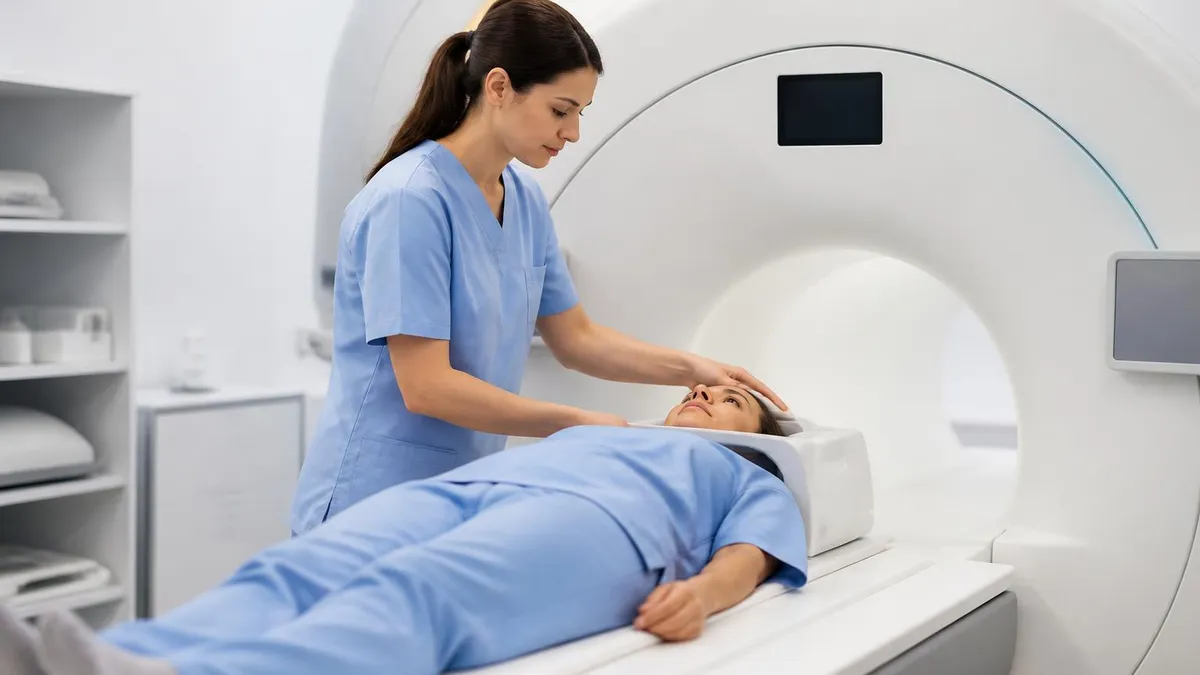
Even OEM-certified refurbished units occasionally arrive with subtle gradient miscalibration, coil channel failures, or shielding degradation introduced during transport. Hire an independent medical physicist to perform a full ACR-style acceptance test before final payment is released. The $4,000 to $9,000 cost is trivial insurance against a $500,000 surprise, and any reputable seller will welcome the verification.
Total cost of ownership over a five-year hold is the only number that should drive an MRI purchase decision, yet most buyers fixate on the sticker price alone. A scanner that is $200,000 cheaper to buy but $80,000 more expensive per year to service and operate will cost you $200,000 more over a five-year hold, not less. Build a real TCO model in a spreadsheet before you sign anything, and revisit it annually as helium, electricity, and service prices change.
The biggest line item after capital is the service contract. Full OEM service on a 1.5T scanner ranges from $85,000 to $140,000 per year, and a 3T contract can exceed $185,000 annually. Time-and-materials self-maintenance with a third-party ISO can cut that bill in half but exposes you to parts risk on high-cost items like gradient coils ($180,000+), RF body coils ($95,000+), and cold heads ($35,000+). Most centers blend approaches: OEM parts-only contract plus an in-house biomedical engineer.
Helium and cryogenics are the second variable cost driver. A well-maintained zero-boil-off 1.5T should consume less than 0.05 liters per day of helium under steady-state operation. A poorly maintained or older non-ZBO magnet can boil off three to ten liters per day, translating to $15,000+ in helium per year. Cold head replacement on the recommended schedule of every 30,000 to 36,000 operating hours preserves boil-off performance and is dramatically cheaper than reactive refills.
Power and chilled water draw real money, especially in high-throughput centers. A scanner running 14 hours a day five days a week with a high-duty-cycle case mix can consume 280,000 to 420,000 kWh annually. At average US commercial rates of $0.13 per kWh in 2026, that is $36,000 to $55,000 per year just for the scanner itself, before chiller and HVAC loads. Right-sizing the chiller and using economizers when ambient conditions allow can cut chiller energy 25 to 40 percent.
Coil refurbishment is a sneaky line item that surprises many first-time owners. Surface coils are dropped, banged, and stressed daily. Repair costs run $4,000 to $25,000 per coil depending on channel count and complexity. Plan for one coil refurbishment per coil per three to four years on average, and budget accordingly. Aftermarket coil refurbishers like Coiltek and Maxxam Innovations can cut repair costs significantly versus OEM.
Software upgrades are often charged separately and can be substantial. Major release upgrades on a 1.5T may run $40,000 to $90,000 and may require gradient cabinet or RF chassis modifications. Always negotiate at least one major software upgrade into your purchase contract, and clarify which AI reconstruction packages are included versus licensed separately. AI-driven acceleration like Siemens Deep Resolve, GE AIR Recon DL, and Philips SmartSpeed can pay for itself in throughput within 18 months at high-volume sites.
Resale value at year five depends heavily on how well you maintained the machine. A 1.5T scanner purchased refurbished at $475,000 and maintained meticulously will typically resell at $200,000 to $275,000 five years later, recovering 42 to 58 percent of capital. The same scanner with skipped preventive maintenance, coil damage, and a poor service log may fetch $90,000 or less. For context on how durable this technology really is, the history of MRI shows machines from the late 1990s still in clinical use today on properly maintained service paths.
With your TCO model in hand, the final stage of buying an MRI machine for sale is vendor negotiation and contract structure. Approach this as you would any major capital procurement: get at least three written quotes, normalize them to identical configurations, and break down each quote line-by-line into hardware, software, coils, installation, training, warranty, and service. Vendors hate apples-to-apples comparison because it removes their pricing flexibility, which is exactly why you should insist on it.
Negotiate the bundled package, not the line items. OEMs and refurbishers will discount hardware aggressively if it pulls through a long service contract, software license bundle, or coil package. Conversely, you can often unbundle items you do not need — a research-grade spectroscopy package, for example, may add $90,000 to your quote and zero clinical value at a sports medicine center. Be explicit about what your clinical case mix actually requires, and stop paying for what it does not.
Training and applications support are routinely under-scoped. A new scanner deserves at least two weeks of on-site applications training for your technologists, plus remote support for the first six months. For a refurbished or used purchase, training may not be included at all, and a la carte applications visits run $3,500 to $6,000 per day. Build training into the purchase budget — a beautifully specified scanner operated by under-trained techs delivers mediocre images and wasted capital.
Acceptance testing protocol should be written into the contract before signing. Specify ACR phantom testing for SNR, geometric accuracy, slice thickness accuracy, high-contrast spatial resolution, low-contrast detectability, percent signal ghosting, and percent image uniformity. Add gradient linearity testing, B0 homogeneity measurement, and channel-by-channel coil testing. Final payment should be contingent on passing the documented acceptance criteria, not on calendar delivery.
Pay attention to indemnification, intellectual property, and software escrow clauses. If a vendor goes out of business — which has happened multiple times in the third-party refurbishment market over the past decade — you need contractual rights to source code, service tools, and parts documentation. OEM contracts rarely grant these rights, but third-party contracts can and should. Have a healthcare technology attorney review any contract above $200,000.
Plan for decommissioning at the back end of the lifecycle. When you eventually sell or scrap the machine, you will need a HIPAA-compliant data wipe, a magnet rampdown, helium recapture (now commercially viable and often free), and certified de-installation. Negotiate trade-in value at purchase time if you anticipate upgrading within five to seven years — OEMs will often guarantee a minimum trade-in credit for repeat customers, which materially improves your TCO math.
Finally, stay current on the regulatory environment. The FDA has issued increasingly detailed guidance on MRI safety, gadolinium-based contrast agent stewardship, and AI-enabled image reconstruction. The ACR MRI accreditation program is updating equipment performance standards in 2026, which may impose new minimum specifications on accredited centers. State certificate-of-need rules also remain a factor in many markets and can affect both purchase timing and resale liquidity. Build regulatory review into your due diligence, not just your post-purchase compliance program.
MRI Questions and Answers
What Is an MRI Test? How Magnetic Resonance Imaging Scans Diagnose Disease in 2026
MRI Medical Abbreviation: What MRI Stands For and Why It Matters
The History of MRI: From Discovery to Modern Medicine
Knee MRI Images: A Complete Guide to Reading, Understanding, and Interpreting Knee Scans
Noise of MRI Machine: Why MRI Scanners Are So Loud and What to Expect
About the Author

Medical Laboratory Scientist & Clinical Certification Expert
Johns Hopkins UniversityDr. Sandra Kim holds a PhD in Clinical Laboratory Science from Johns Hopkins University and is certified as a Medical Technologist (MT) and Medical Laboratory Scientist (MLS) through ASCP. With 16 years of clinical laboratory experience spanning hematology, microbiology, and molecular diagnostics, she prepares candidates for ASCP board exams, MLT, MLS, and specialist certification tests.
Join the Discussion
Connect with other students preparing for this exam. Share tips, ask questions, and get advice from people who have been there.
View discussion (8 replies)