
What Is LTO? LTO License Certification Explained for US Drivers 2026 September
What is LTO and how does license certification lto work? Full guide to the LTO exam, requirements, and prep tips. ✅

If you have ever asked yourself what is LTO or wondered what license certification LTO actually involves, you are not alone. LTO stands for Land Transportation Office, the government agency responsible for regulating motor vehicles and licensing drivers. For anyone pursuing a driver's license, understanding the LTO's role is the essential first step. The lto license certification process covers everything from written knowledge tests to practical driving evaluations, and knowing what to expect dramatically improves your chances of passing on the first attempt.
Many people encounter the acronym LTO and immediately wonder what does LTO stand for in a broader context. While LTO appears in other industries — including food service, where LTO means limited-time offer — in the transportation world it refers exclusively to the Land Transportation Office. This agency oversees driver licensing, vehicle registration, franchise permits, and road safety enforcement. Its influence touches virtually every aspect of motorized travel, making it one of the most consequential regulatory bodies for anyone who drives or plans to drive.
Understanding what does LTO mean beyond just the abbreviation helps you appreciate why the certification process is as thorough as it is. The LTO sets minimum competency standards that every licensed driver must meet before operating a vehicle on public roads. These standards are grounded in traffic safety research and updated regularly to reflect new road conditions, vehicle technologies, and accident data. Passing the LTO exam is not merely a bureaucratic hurdle — it is a genuine measure of whether you are prepared to share the road responsibly with other drivers, cyclists, and pedestrians.
The LTO exam itself covers several subject areas, including traffic laws, road signs, pavement markings, defensive driving techniques, and the rights and duties of drivers and pedestrians alike. Each subject area has been carefully weighted to reflect real-world risk. For example, questions about traffic violations and penalties carry significant weight because understanding consequences deters dangerous behavior. Candidates who approach the exam with a structured study plan consistently outperform those who rely on last-minute cramming or guesswork, which is why dedicated preparation resources matter so much.
One question that frequently comes up is what is an LTO in terms of practical day-to-day function. Beyond licensing individual drivers, the LTO maintains national databases of registered vehicles and license holders, coordinates with law enforcement on traffic violation records, and issues official certifications that other agencies recognize. When a driver's license is suspended or revoked, the LTO is the authority that enforces and lifts those sanctions. This centralized role means that any issue with your license — from late renewal to accumulated violations — ultimately flows through LTO channels.
Preparing for the LTO exam requires more than memorizing a list of road signs. You need to understand the reasoning behind traffic rules, apply defensive driving logic to hypothetical scenarios, and demonstrate genuine awareness of pedestrian and cyclist safety. Practice tests are one of the most effective preparation tools available, because they simulate the time pressure and question format of the actual exam.
Working through hundreds of practice questions exposes knowledge gaps early, giving you time to address weaknesses before test day. The more realistic your practice environment, the more confident you will feel when you sit for the official certification.
Whether you are a first-time applicant eager to earn your license or an experienced driver renewing after a lapse, the LTO certification framework applies equally to everyone. Requirements, fees, and procedures may vary slightly by jurisdiction, but the core knowledge tested on the LTO exam remains consistent across regions. This guide walks you through every stage of the process — from understanding what the LTO does to building a study schedule that maximizes your readiness — so you can approach your certification with clarity and confidence.
LTO License Certification by the Numbers
Key Facts at a Glance
| Item | Value | Details |
|---|---|---|
| Typical Exam Questions | 60 | Multiple-choice format |
| Time Allotted | 1 hr | For written knowledge test |
| Passing Score Required | 75% | Minimum correct answers |
| License Validity Period | 3 yrs | Before renewal is required |

LTO Exam Format and Structure
| Section | Questions | Time | Weight | Notes |
|---|---|---|---|---|
| Traffic Laws and Regulations | 15 | 15 min | 25% | Speed limits, right-of-way, lane rules |
| Road Signs and Pavement Markings | 15 | 15 min | 25% | Warning, regulatory, and informational signs |
| Defensive Driving and Road Safety | 12 | 12 min | 20% | Hazard recognition, safe following distance |
| Traffic Violations and Penalties | 10 | 10 min | 17% | Fines, demerit points, license suspension |
| Driver's Duties and Responsibilities | 8 | 8 min | 13% | Rights of pedestrians, cyclist safety, emergency vehicles |
| Total | 60 | 1 hour | 100% |
Understanding what is LTO in the context of certification means recognizing that the Land Transportation Office does not just hand out licenses — it administers a structured competency evaluation designed to protect everyone who uses public roads. The written knowledge test is the most common entry point into this process, and it covers a surprisingly wide range of material. From the meaning of a yellow diamond-shaped warning sign to the precise legal blood-alcohol concentration limit that constitutes impaired driving, the exam tests both memory and comprehension in equal measure.
The traffic laws and regulations section forms the backbone of the LTO exam. This portion covers speed limits in residential zones, school zones, and highways; right-of-way rules at intersections with and without traffic signals; lane-changing procedures; and rules governing U-turns, overtaking, and merging. Many first-time test-takers are surprised by how many nuanced scenarios the exam explores. For example, a question might present a four-way stop where two vehicles arrive simultaneously, asking which driver should yield. Knowing the rule by heart is not enough — you must also apply it correctly under the slight pressure of an exam timer.
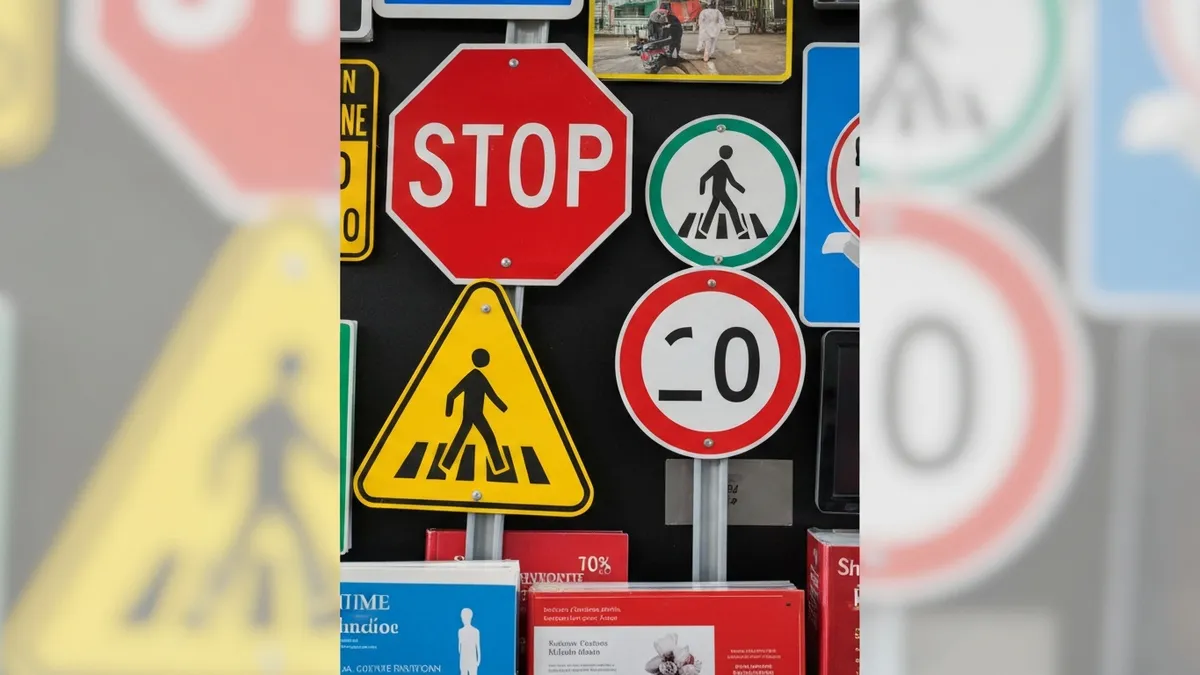
Road signs and pavement markings represent another quarter of the exam, and this section trips up more candidates than any other. The LTO recognizes dozens of distinct sign types, each with a specific shape, color, and meaning. Regulatory signs — typically white rectangles with black text — communicate laws you must obey, such as no-parking zones or posted speed limits.
Warning signs are diamond-shaped and yellow, alerting drivers to upcoming hazards like sharp curves, pedestrian crossings, or railroad tracks. Guide signs are usually green or blue and provide directional or informational content. Knowing the visual language of road signage fluently is a genuine safety skill, not just test trivia.
Defensive driving questions evaluate your ability to anticipate and respond to hazards before they become accidents. These scenarios often involve wet road conditions, reduced visibility, or distracted pedestrians stepping off curbs unexpectedly. The LTO uses these questions to assess whether candidates understand concepts like the two-second following rule, the dangers of tailgating at highway speeds, and the appropriate response when another driver behaves erratically. If you want to learn how to get lto certification online, you will find that most preparation platforms emphasize defensive driving heavily, because it is both heavily tested and directly connected to real accident prevention.
Traffic violations and penalties form a distinct section that many candidates underestimate. The LTO imposes a tiered penalty system: minor infractions like expired registration carry lower fines than serious violations like reckless driving or driving under the influence. Understanding these tiers matters on the exam because questions often present a described behavior and ask you to identify its classification and associated consequence. Knowing that running a red light is a major violation while an improperly displayed license plate is a minor infraction helps you answer correctly without second-guessing yourself mid-exam.
The driver's duties section covers obligations that extend beyond operating a vehicle safely. Drivers must yield to emergency vehicles with active sirens, stop completely for school buses displaying flashing red lights, and give pedestrians the right-of-way in clearly marked crosswalks. This section also addresses what to do after an accident — the legal requirements to stop, render aid if possible, exchange information, and report the incident to the appropriate authorities. Many candidates feel confident about the mechanical driving rules but stumble on these procedural obligations, so reviewing them carefully is time well spent.
What does LTO mean when all these subject areas come together? It means a comprehensive, standardized evaluation that genuinely separates drivers who are ready from those who need more preparation. The exam is intentionally challenging because the stakes are high — untrained or undertrained drivers cause thousands of preventable accidents every year. Approaching the LTO exam with respect for that purpose, rather than treating it as a bureaucratic hurdle to clear as quickly as possible, puts you in exactly the right mindset to study effectively and perform well on test day.
How to Study for the LTO Exam
First-time applicants should begin their LTO exam preparation at least three to four weeks before their scheduled test date. Start by downloading the official driver's manual or handbook relevant to your jurisdiction, then read it cover to cover to build a complete mental framework. Pay special attention to road sign categories, speed limit rules, and right-of-way scenarios, as these topics consistently generate the most exam questions. Create flashcards for every road sign shape and color combination so you can recognize them instantly.
After your initial read-through, shift to active practice by taking timed mock exams that mirror the actual LTO format. Aim for at least 200 to 300 practice questions across all subject areas before your test date. When you answer a question incorrectly, do not just note the right answer — read the explanation and understand why the correct option is right. This deeper engagement turns individual errors into lasting knowledge, dramatically reducing the chance of repeating the same mistake on the actual exam.

Pros and Cons of Online vs. In-Person LTO Exam Prep
- +Online practice tests are available 24/7, letting you study at your own pace and schedule
- +Immediate answer explanations help you understand mistakes right away without waiting for a teacher
- +Digital platforms track your progress over time, showing score trends across multiple sessions
- +Large question banks expose you to a wider variety of scenarios than any single printed guide
- +Many reputable platforms offer free practice exams with no registration required
- +Online prep tools often include road sign image galleries with visual recognition drills
- −Some online platforms use outdated question banks that do not reflect current traffic regulations
- −Without an instructor, you may develop incorrect mental models that go uncorrected until the exam
- −Screen fatigue can reduce concentration during long online study sessions
- −In-person driving school instructors provide real-time feedback that no app can fully replicate
- −Free platforms sometimes lack detailed explanations, leaving gaps in conceptual understanding
- −Self-paced study requires strong personal discipline — procrastination is a real risk without scheduled classes
LTO Exam Preparation Checklist
- ✓Download and read the official driver's manual relevant to your jurisdiction from start to finish.
- ✓Create a study schedule that allocates at least 30 minutes of focused review each day for three weeks.
- ✓Complete a 60-question diagnostic practice exam to identify your weakest subject areas immediately.
- ✓Build a flashcard deck covering every road sign category, shape, color, and meaning.
- ✓Review the complete traffic violations and penalty tier chart, memorizing classifications for common infractions.
- ✓Study the specific rules for school zones, construction zones, and railroad crossings in detail.
- ✓Practice at least five full-length timed mock exams under realistic, no-interruption conditions.
- ✓Review all incorrect answers after each practice session with written notes on each concept missed.
- ✓Confirm your exam appointment date, testing location, and required identification documents one week in advance.
- ✓Get at least eight hours of sleep the night before your exam and avoid last-minute cramming.

The 75% Threshold Is Your Minimum — Aim for 85%+
Most LTO knowledge exams require a minimum score of 75% to pass. However, experienced test-prep instructors consistently recommend targeting 85% or higher in your practice sessions, because real exam anxiety typically lowers performance by 5 to 10 percentage points. Building a comfortable buffer in practice gives you the confidence to stay calm and perform at your true level when it counts most.
Many candidates preparing for their LTO exam ask whether the practice tests available online are actually harder or easier than the real thing. This is a fair question, and the answer depends heavily on the platform you use. High-quality preparation platforms calibrate their question difficulty to match the actual exam, drawing on official driver's manuals and real test-bank material.
Lower-quality platforms sometimes include outdated or poorly worded questions that create confusion rather than genuine readiness. The comparison is similar to asking whether a Princeton Review prep book is harder than the real AP exam — quality of source material determines the accuracy of your preparation.
One reliable indicator of platform quality is whether the practice questions include detailed explanations for both correct and incorrect answer choices. A good explanation does not just say "the answer is B" — it explains the underlying traffic law or safety principle that makes B correct and the other options wrong. This level of explanation transforms passive reading into active learning, building the mental frameworks that help you answer novel question variations on the real exam, not just memorize the specific questions you practiced.
Another question that often arises is how to review mistakes effectively, similar to the question of how to review NBME exams in the medical education world. The principle is the same: do not rush past errors. Every wrong answer is a diagnostic signal pointing to a gap in your knowledge. Create a dedicated error log where you record each question you missed, the topic it belongs to, and the correct reasoning. Reviewing this log regularly — not just once — ensures that your weak areas receive repeated attention rather than a single pass.
Timing is another dimension of exam preparation that many candidates neglect. The LTO written exam typically allows approximately one minute per question, which feels generous until you encounter a complex scenario question that requires careful reading and reasoning. Candidates who have only ever studied without a timer often find themselves racing at the end of the real exam. Building timed practice into your routine from the first week eliminates this problem — you develop an intuitive sense of pacing that keeps you on track throughout the exam without constant clock-watching.
Physical and mental preparation for exam day deserves as much attention as content review. Sleep deprivation measurably impairs memory recall and decision-making, two cognitive functions that are essential for performing well on a knowledge test. Arriving at the testing center well-rested, having eaten a balanced meal, and carrying all required identification documents means you can devote your full mental energy to answering questions rather than managing avoidable logistical stress. Small preparation habits compound into meaningful performance advantages on exam day.
Group study is an underrated preparation method for the LTO exam. Discussing traffic scenarios with a study partner forces you to articulate your reasoning aloud, which strengthens retention far more effectively than silent review. When you explain to a partner why a yield sign applies in a particular intersection scenario, you are not just reciting a rule — you are constructing a mental model that generalizes to new situations. Study groups also surface questions and perspectives you would not encounter studying alone, broadening your exposure to the full range of topics the exam might test.
Finally, it is worth emphasizing that passing the LTO exam is a meaningful personal achievement, not just a credential to acquire. The knowledge tested on the exam — traffic laws, road signs, defensive driving principles, and driver responsibilities — directly reduces your risk of being involved in a preventable accident.
Drivers who genuinely understand these principles, rather than simply memorizing enough to pass, make the roads safer for everyone around them. Approaching your LTO certification with that perspective transforms study from a chore into an investment in your own safety and the safety of every person you share the road with.
Traffic laws, fine amounts, and procedural requirements are updated periodically by state and local transportation authorities. Using a driver's manual or practice question bank that is more than two years old significantly increases your risk of learning outdated information that conflicts with current law. Always verify that your study materials were published or updated within the current or previous calendar year before investing significant study time in them.
Once you pass the LTO written knowledge exam, the certification process typically continues with a practical driving test or road test administered by a licensed examiner. The road test evaluates your ability to apply all the rules and principles you demonstrated on the written exam in real driving conditions. Examiners assess basic vehicle control skills — smooth acceleration and braking, accurate steering, proper mirror usage — as well as higher-order competencies like gap selection when merging, appropriate speed management in school zones, and correct behavior at complex intersections.
If you are a first-time license applicant, reviewing what the road test specifically evaluates in your jurisdiction before your appointment is essential. Most transportation authorities publish official road test rubrics that list every skill evaluated and describe what constitutes a passing performance versus a critical error.
A critical error — such as failing to stop completely at a stop sign or making contact with a curb during parallel parking — typically results in automatic failure regardless of how well you perform on other portions of the test. Knowing these critical error categories in advance allows you to prioritize them in your practice sessions with a supervising driver.
For candidates who are wondering about how to get student license lto, the pathway typically involves completing a supervised driving hours requirement, passing a written knowledge test, and then scheduling a road test appointment. Student or learner's permits allow supervised practice driving during the period between the written exam and the road test, giving new drivers the real-world experience necessary to perform confidently under evaluation conditions. The number of required supervised hours varies by jurisdiction but commonly ranges from 30 to 50 hours, including a specified number of nighttime driving hours.
After passing both the written and practical components of the LTO certification, you will receive your official driver's license, which is typically valid for three years before renewal is required. During this validity period, maintaining a clean driving record — avoiding traffic violations, at-fault accidents, and license suspensions — is the most important thing you can do to preserve full driving privileges. Accumulated violations can trigger additional testing requirements or mandatory driving safety courses at renewal time, so the habits and knowledge you build during the certification process have long-term practical value.
The LTO also maintains records of all certified drivers in a centralized database that law enforcement and other agencies can access when necessary. This means that violations in one jurisdiction can appear on your record when you renew or transfer your license in another, and that a suspended license is nationally recognized. Understanding how interconnected these records are reinforces the importance of taking the certification process seriously from the beginning — the knowledge and discipline you demonstrate during licensing directly influences your long-term driving record and insurance rates.
For candidates interested in specialty endorsements — such as motorcycle licenses, commercial driver's licenses, or permits for vehicles requiring additional competency certification — the LTO offers additional examination pathways beyond the standard passenger vehicle test. Each specialty certification has its own written knowledge component covering vehicle-specific regulations, and most also require a separate practical skills evaluation. If you anticipate needing a specialty endorsement, it is worth researching those requirements during your initial certification process so you can plan your preparation timeline accordingly.
The LTO certification system ultimately serves as the foundation of a safe and orderly transportation network. Every driver on the road has theoretically demonstrated baseline competency through the same certification process, creating a shared set of expectations and behaviors that make road-sharing predictable and safer. When you invest genuine effort in your LTO preparation — studying thoroughly, practicing under realistic conditions, and approaching the exam with intellectual honesty about what you still need to learn — you are contributing to that broader safety system, not just satisfying a personal requirement.
On the day of your LTO exam, the decisions you make in the hours leading up to your test can significantly affect your performance. Begin the morning with a brief, low-intensity review of your error log rather than attempting to absorb new material. New information studied just before an exam often interferes with already-consolidated knowledge rather than adding to it, a phenomenon cognitive scientists call retroactive interference. Trust the preparation you have already done and use the final hour before your exam to calm your mind rather than cram additional facts.
When you sit down to begin the exam, read each question completely before looking at the answer choices. Many candidates rush to the answers before finishing the question stem, which causes them to select an option that sounds plausible but does not actually answer what was asked. LTO exam questions are sometimes deliberately worded to test whether you read carefully — a question about what a driver must do after a collision might specify a minor fender-bender with no injuries, which changes the correct procedural answer compared to a question about a collision involving serious injuries.
Managing difficult questions effectively is a core exam-taking skill. If you encounter a question you are genuinely uncertain about, use the process of elimination to remove obviously incorrect answers first, then make your best educated guess from the remaining options and mark the question for review. Most LTO exams allow you to flag uncertain answers and return to them before submitting, so do not waste valuable time staring at a single difficult question while the clock runs on easier questions waiting later in the test.
After you submit your exam, the score report you receive — whether passing or failing — is valuable diagnostic information regardless of the outcome. A passing score tells you that your preparation was adequate, but reviewing the subject areas where you lost points reveals opportunities to sharpen your knowledge before your license renewal exam years down the road.
A failing score, while disappointing, pinpoints exactly which subjects need more focused attention before you retake the test. Most LTO programs allow candidates to retake the written exam after a brief waiting period, giving you the opportunity to address specific weaknesses rather than repeating the same preparation process.
Driving with a newly issued LTO certification carries both privileges and responsibilities. The privilege is legally operating a motor vehicle on public roads; the responsibility is honoring the knowledge and safety principles you demonstrated during the certification process every time you get behind the wheel.
New drivers in particular face a heightened risk period during the first year of licensure, when the gap between theoretical knowledge and practical experience is widest. Deliberately practicing defensive driving habits — maintaining safe following distances, scanning intersections before entering, avoiding distractions — during this period accelerates the development of the automatic, calibrated responses that characterize truly safe drivers.
If at any point your driving record accumulates violations or you face license suspension, the LTO provides reinstatement pathways that typically include a review examination, payment of outstanding fines, and sometimes completion of a driver improvement course. These reinstatement processes are more demanding than the initial certification, reinforcing the value of maintaining a clean record from the start. The investment of time and money required to regain a suspended license far exceeds the cost of the defensive driving habits that prevent violations in the first place.
Ultimately, the LTO certification is not a finish line — it is a starting point. The knowledge you demonstrate on exam day represents the minimum competency required to drive safely, and every hour of real driving experience after that adds depth, nuance, and reflexive skill that no exam can fully capture.
Commit to lifelong learning as a driver: stay current with regulatory changes, take refresher courses when traffic laws evolve significantly, and approach every drive as an opportunity to practice the principles you studied during your certification. That ongoing commitment is what separates genuinely safe drivers from those who merely passed a test.
LTO Questions and Answers

LTO License Renewal Guide Philippines 2026 — Requirements and Process

LTO Meaning: What the Land Transportation Office Does
LTO Traffic Violations Philippines 2026 — Fines and Penalties Guide
RDA Exam Review: What Is LTO, What Does LTO Stand For, and How to Pass Your Driver's License Test

What Is LTO and LTO License Renewal Requirements: The Complete 2026 Guide
About the Author

Educational Psychologist & Academic Test Preparation Expert
Columbia University Teachers CollegeDr. Lisa Patel holds a Doctorate in Education from Columbia University Teachers College and has spent 17 years researching standardized test design and academic assessment. She has developed preparation programs for SAT, ACT, GRE, LSAT, UCAT, and numerous professional licensing exams, helping students of all backgrounds achieve their target scores.
Join the Discussion
Connect with other students preparing for this exam. Share tips, ask questions, and get advice from people who have been there.
View discussion (8 replies)