
What Is an LPN in Nursing? Complete Guide to the Licensed Practical Nurse Role in 2026 October
What is LPN in nursing? Complete guide to Licensed Practical Nurse role, duties, salary, training, and career paths in healthcare for 2026 October. 📗
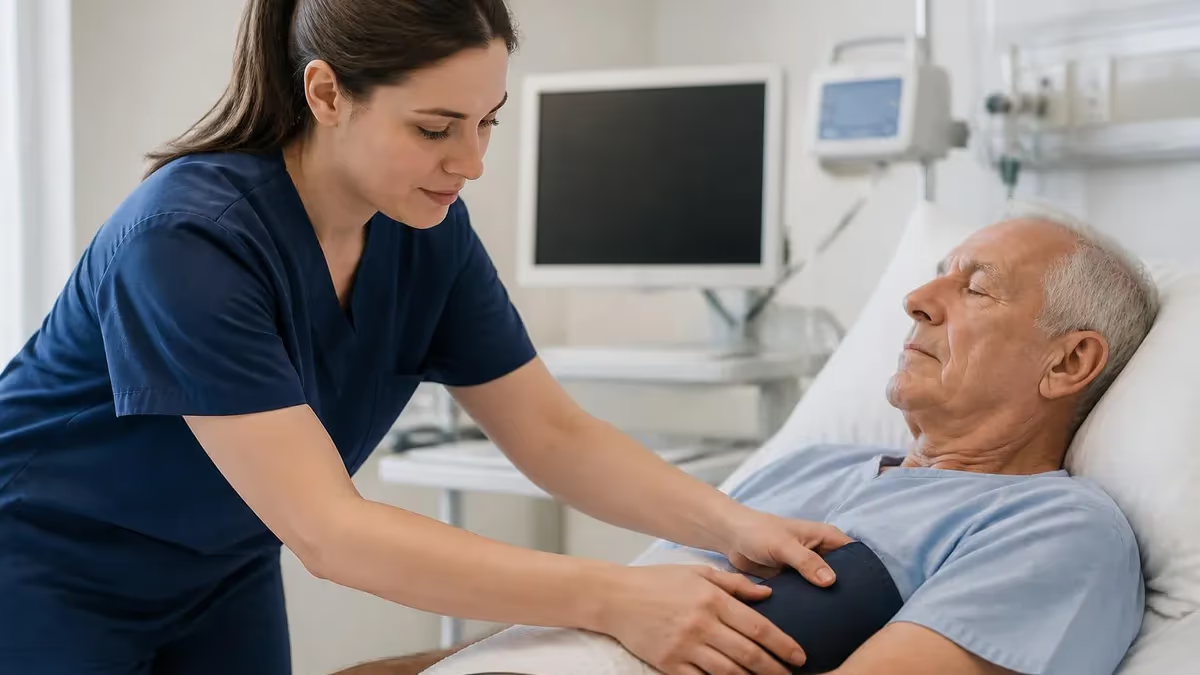
If you have ever wondered what is LPN in nursing, you are looking at one of the most accessible and rewarding entry points into the American healthcare system. A Licensed Practical Nurse, abbreviated as LPN in most states and LVN (Licensed Vocational Nurse) in California and Texas, is a state-licensed nursing professional who provides hands-on bedside care under the supervision of registered nurses and physicians. LPNs form the backbone of long-term care, home health, clinics, and rehabilitation facilities across the United States.
The LPN credential exists in a specific tier of the nursing hierarchy. Above the certified nursing assistant but below the registered nurse, LPNs occupy a middle ground that allows them to perform skilled clinical tasks without requiring a four-year college degree. Most LPN programs take only 12 to 18 months to complete, making this career path attractive for career changers, recent high school graduates, and anyone seeking a fast track into nursing without the time and tuition burden of a bachelor of science in nursing.
LPNs are licensed by their individual state board of nursing after passing the NCLEX-PN, the national licensing examination created by the National Council of State Boards of Nursing. The scope of practice varies meaningfully from state to state, but core LPN duties typically include monitoring vital signs, administering medications, performing wound care, inserting urinary catheters, collecting specimens, charting patient observations, and reinforcing patient education originally provided by the RN. In many settings, LPNs are the staff members patients see most often.
Demand for LPNs remains steady according to the U.S. Bureau of Labor Statistics, which projects approximately 54,000 openings each year through 2032 due to retirements, transitions to RN roles, and the aging baby boomer population requiring more long-term and home-based care. The median LPN salary hovers near $59,730 annually, with experienced nurses in high-demand states like California, Massachusetts, and Washington earning well above $70,000 with shift differentials and overtime.
One reason the LPN role has endured for more than seventy years is its flexibility. LPNs work twelve-hour shifts in skilled nursing facilities, eight-hour days in pediatric clinics, weekend rotations in correctional health, and overnight private duty in home settings. The credential transfers across state lines through the Nurse Licensure Compact in participating states, allowing LPNs to relocate without re-testing. For many nurses, the LPN license is also the launching pad to higher credentials.
This guide will walk you through everything you need to know about becoming and working as a Licensed Practical Nurse. We will examine the education pathway, the licensing exam, the day-to-day duties, salary expectations, scope-of-practice limits, and the realistic options for advancing your career. Whether you are deciding between LPN and RN training, researching a career change, or simply trying to understand what the LPN beside your hospital bed actually does, you will find detailed and current information here.
By the end of this article you will understand not only the textbook definition of an LPN but also the practical realities of the job, the tradeoffs versus other nursing roles, and the most reliable paths to maximize your earning potential and career satisfaction as a Licensed Practical Nurse in 2026 and beyond.
The LPN Profession by the Numbers

Path to Becoming a Licensed Practical Nurse
Earn High School Diploma or GED
Complete an Accredited LPN Program
Apply for Licensure With Your State Board
Pass the NCLEX-PN Examination
Receive License and Begin Practice
Understanding what is LPN in nursing requires looking past the textbook definition and into the daily reality of the role. An LPN's workday begins with shift handoff, where the outgoing nurse summarizes each patient's status, recent changes, pending orders, and overnight events. A typical LPN in a skilled nursing facility might be responsible for twenty to thirty residents during an eight-hour shift, while a clinic LPN may rotate between exam rooms supporting four to six providers and dozens of patients each day.
Medication administration is one of the largest portions of an LPN's day. LPNs pass medications orally, topically, by injection (subcutaneous and intramuscular), and through enteral tubes such as gastrostomy or jejunostomy. In most states, LPNs can also administer certain IV-push medications and hang IV fluids after completing additional certification. They are responsible for verifying the five rights of medication administration: right patient, right drug, right dose, right route, and right time before every single dose.
Wound care is another core LPN competency. LPNs change dressings on surgical incisions, pressure injuries, diabetic foot ulcers, and traumatic wounds. They measure wound dimensions, document tissue characteristics, photograph progression when required, and apply prescribed topical therapies. In long-term care settings, LPNs often run dedicated wound rounds and partner with consulting wound-care RNs to escalate concerns about delayed healing or signs of infection.
Assessments performed by LPNs differ slightly from those done by RNs. LPNs collect focused assessment data, including vital signs, pain scores, breath sounds, bowel sounds, capillary refill, and intake and output. They report abnormal findings to the supervising RN or physician, who then performs the comprehensive assessment and adjusts the plan of care. This division of labor is not a sign of lesser skill but a legal boundary that varies by state nurse practice act.
Patient education and emotional support fill the spaces between technical tasks. LPNs often spend more time at the bedside than any other licensed clinician, which means they build trusting relationships with patients and families. They reinforce dietary teaching, demonstrate insulin pen technique, encourage smoking cessation, and explain discharge instructions in plain language. This consistent human presence is one reason patients frequently remember their LPN by name long after they forget the surgeon's.
Documentation has grown into a major time commitment for modern LPNs. Every assessment, intervention, medication pass, refusal, and behavioral observation must be entered into the electronic health record before the end of the shift. LPNs use systems like PointClickCare, Epic, Cerner, and MatrixCare depending on the employer. Strong typing skills and comfort with technology are no longer optional for new graduates entering the workforce.
Finally, LPNs respond to emergencies. They initiate CPR, call codes, gather emergency carts, administer naloxone for opioid overdose, and stabilize patients until paramedics or rapid-response teams arrive. While they do not lead resuscitations, their early recognition and decisive action often determine outcomes. This combination of routine and crisis is part of what makes the LPN role demanding and deeply meaningful.
LPN Practice Test Questions
Prepare for the LPN - Certified Practical Nurse exam with our free practice test modules. Each quiz covers key topics to help you pass on your first try.
LPN - Certified Practical Nurse Basic Care...
LPN Exam Questions covering - Certified Practical Nurse Basic Care and Comfort. Master LPN Test concepts for certification prep.
LPN - Certified Practical Nurse Coordinate...
Free LPN Practice Test featuring - Certified Practical Nurse Coordinated Care. Improve your LPN Exam score with mock test prep.
LPN - Certified Practical Nurse Health Pro...
LPN Mock Exam on - Certified Practical Nurse Health Promotion and Maintenance. LPN Study Guide questions to pass on your first try.
LPN - Certified Practical Nurse Pharmacolo...
LPN Test Prep for - Certified Practical Nurse Pharmacological Therapies. Practice LPN Quiz questions and boost your score.
LPN - Certified Practical Nurse Physiologi...
LPN Questions and Answers on - Certified Practical Nurse Physiological Adaptation. Free LPN practice for exam readiness.
LPN - Certified Practical Nurse Psychosoci...
LPN Mock Test covering - Certified Practical Nurse Psychosocial Integrity. Online LPN Test practice with instant feedback.
LPN - Certified Practical Nurse Reduction ...
Free LPN Quiz on - Certified Practical Nurse Reduction of Risk Potential. LPN Exam prep questions with detailed explanations.
LPN - Certified Practical Nurse Safety and...
LPN Practice Questions for - Certified Practical Nurse Safety and Infection Control. Build confidence for your LPN certification exam.
LPN Ethical, Legal & Professional Standards
LPN Test Online for Ethical, Legal & Professional Standards. Free practice with instant results and feedback.
LPN Health Evaluation & Monitoring
LPN Study Material on Health Evaluation & Monitoring. Prepare effectively with real exam-style questions.
LPN Scope of Practice by Healthcare Setting
Skilled nursing facilities and assisted living communities employ the largest share of LPNs in the United States, roughly 38 percent of the total workforce. In this setting LPNs often function as charge nurse on a unit of 25 to 60 residents, supervising certified nursing assistants, conducting medication passes, completing weekly skin checks, and coordinating with consulting physicians who visit weekly.
Long-term care LPNs handle complex chronic disease management including diabetes, congestive heart failure, COPD, dementia, and post-stroke rehabilitation. They are deeply involved in end-of-life care, hospice coordination, and family communication. The pace is steady rather than frantic, and many LPNs build career-long relationships with residents who become like extended family.
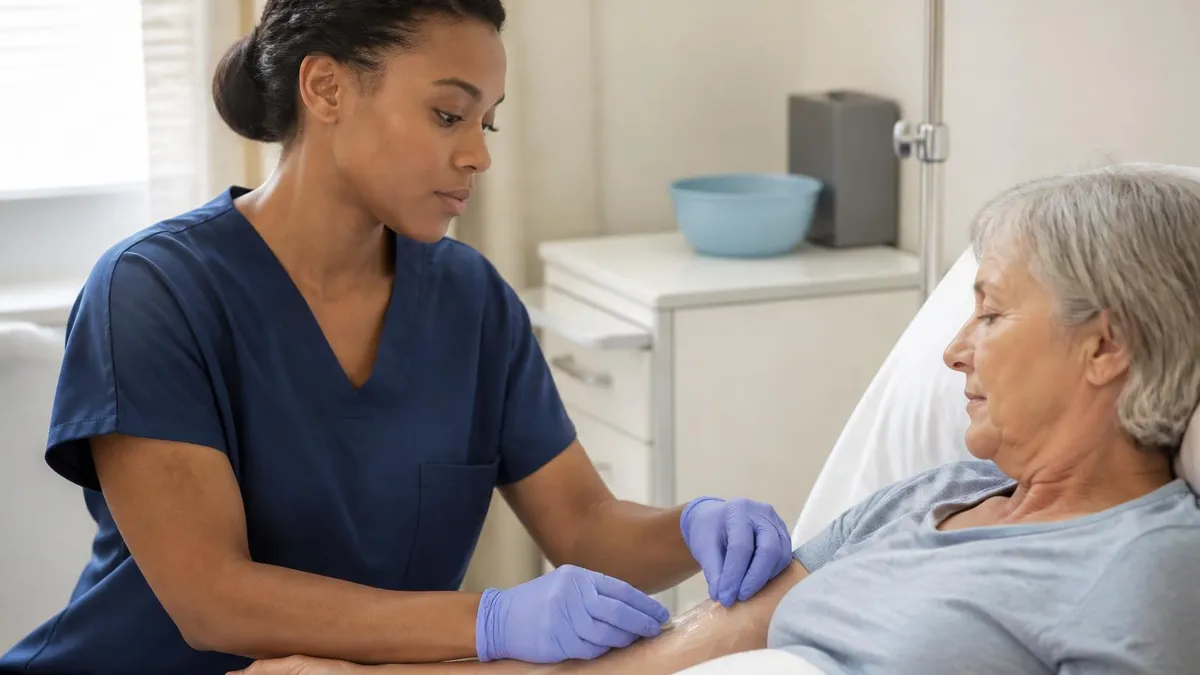
Is Becoming an LPN the Right Career Choice?
- +Enter the nursing workforce in 12 to 18 months instead of 2 to 4 years
- +Lower tuition than associate or bachelor degree nursing programs
- +Strong job security with 54,400 annual openings projected through 2032
- +Wide variety of work settings from hospitals to home health to corrections
- +Hands-on patient care without the heavy administrative load of RN roles
- +Clear pathway to advance into RN or LPN-to-BSN bridge programs
- +Tuition reimbursement commonly offered by long-term care employers
- −Lower salary ceiling than registered nurses, typically $20,000 less annually
- −Limited scope of practice restricts career options in acute-care hospitals
- −Physically demanding work with lifting, standing, and repetitive motion
- −Some states heavily restrict IV therapy and assessment duties
- −Emotional toll of long-term care and end-of-life patient deaths
- −Shift work including nights, weekends, and holidays in most settings
- −Required to work under RN or physician supervision at all times
Pros and Cons at a Glance
| Pros | Cons |
|---|---|
| Lower tuition than associate or bachelor degree nursing programs | Limited scope of practice restricts career options in acute-care hospitals |
| Wide variety of work settings from hospitals to home health to corrections | Physically demanding work with lifting, standing, and repetitive motion |
| Hands-on patient care without the heavy administrative load of RN roles | Some states heavily restrict IV therapy and assessment duties |
| Clear pathway to advance into RN or LPN-to-BSN bridge programs | Emotional toll of long-term care and end-of-life patient deaths |
| Tuition reimbursement commonly offered by long-term care employers | Shift work including nights, weekends, and holidays in most settings |
LPN Career Readiness Checklist Before Starting Your Program
- ✓Confirm your high school diploma or GED is on file and request official transcripts
- ✓Research at least three state-approved LPN programs within commuting distance
- ✓Verify the program is approved by your state board of nursing for NCLEX-PN eligibility
- ✓Calculate total program cost including tuition, books, uniforms, and clinical fees
- ✓Apply for federal financial aid through the FAFSA before program deadlines
- ✓Complete prerequisite courses in anatomy, English, and math if required
- ✓Pass the TEAS or HESI entrance exam with a competitive score
- ✓Submit to drug screening, criminal background check, and immunization records
- ✓Obtain CPR certification through the American Heart Association
- ✓Build a support network including childcare and transportation for 18 months of demanding study
Start with LPN if you need income fast — bridge to RN later
Many successful nurses begin as LPNs, work for two to five years to build clinical confidence and pay down student debt, then enter LPN-to-RN bridge programs while still working. This stair-step approach reduces financial risk and provides real bedside experience that strengthens RN school applications and performance.
LPN salary varies significantly based on geography, employer type, shift, and years of experience. The Bureau of Labor Statistics reported a median annual wage of $59,730 in May 2024, which works out to about $28.72 per hour. The lowest ten percent of LPNs earned less than $44,250, while the top ten percent earned more than $77,870. These numbers represent base pay only and do not include differentials, overtime, or bonus pay.
The five highest-paying states for LPNs in 2026 are California, Washington, Massachusetts, Rhode Island, and Alaska, where average annual wages exceed $70,000. California LPNs (called LVNs there) frequently earn more than $33 per hour in long-term care and over $40 per hour in hospital settings. The lowest-paying states tend to be in the deep South and rural Midwest, where averages dip below $50,000 annually but cost of living is also significantly lower.
Employer type creates the second-biggest salary spread. Government employers, including the Department of Veterans Affairs, federal Bureau of Prisons, and state correctional systems, typically pay top dollar with federal benefits including pension contributions, generous paid time off, and health insurance subsidies. Home healthcare agencies pay competitive hourly rates but often offer fewer guaranteed hours. Nursing homes pay the lowest base rates but offer the most consistent full-time scheduling.
Shift differentials add meaningful income for LPNs willing to work nights, weekends, and holidays. A typical evening shift differential ranges from $2 to $4 per hour, night shifts add $3 to $6 per hour, and weekend differentials can reach $5 per hour. LPNs who consistently work the 7 p.m. to 7 a.m. shift in long-term care can boost their annual income by $8,000 to $12,000 above the day-shift average without picking up extra hours.
Overtime and per diem work create additional earning opportunities. Many LPNs sign up with staffing agencies that fill last-minute shifts at nursing homes and clinics, often paying $35 to $50 per hour with no benefits. Some LPNs combine a full-time position with weekend per diem work, pushing total annual earnings above $90,000 in high-demand markets. This level of income requires careful time management to avoid burnout.
Beyond cash wages, LPN benefits packages typically include health insurance, dental and vision coverage, a 401(k) retirement plan with employer match between 3 and 6 percent, paid time off accruing at one to two weeks per year initially, and tuition reimbursement for LPNs pursuing further nursing education. Many long-term care employers will pay up to $5,250 per year toward LPN-to-RN bridge program tuition, which is a major financial benefit often overlooked.
Job outlook for LPNs remains strong. The BLS projects 5 percent employment growth from 2022 to 2032, with much higher growth in home health and ambulatory care settings driven by an aging population and a healthcare delivery shift away from inpatient hospitalization. LPNs who develop specialty skills in IV therapy, wound care, dementia care, and dialysis will find the most competitive job offers and the strongest long-term career security.
LPN scope of practice varies dramatically between states. Some states allow LPNs to start IVs, push certain medications, and supervise CNAs. Others restrict these activities entirely. Always read your state board of nursing's nurse practice act and any facility-specific policies before accepting a position. Practicing outside your legal scope can result in license suspension, civil liability, and criminal charges in extreme cases.
The most common career advancement for LPNs is the transition to registered nurse through an LPN-to-RN bridge program. These programs award either an associate degree in nursing (ADN) or a bachelor of science in nursing (BSN) and typically take 12 to 24 months to complete. Bridge programs award credit for your existing LPN coursework and clinical hours, making them faster and more affordable than traditional RN programs that start from scratch.
Online LPN-to-RN programs have exploded in availability since 2020, allowing working LPNs to complete didactic coursework on their own schedule while attending clinical rotations at affiliated local hospitals and nursing homes. Reputable accredited programs are offered by schools like Excelsior University, Western Governors University, and many state community colleges. Total tuition for accredited online ADN bridge programs typically ranges from $10,000 to $25,000, far less than traditional brick-and-mortar nursing schools.
If you want a clear roadmap on this transition, our guide to LPN to RN bridge programs walks through eligibility requirements, prerequisite coursework, NCLEX-RN preparation, and the financial aid options that make this jump affordable for working nurses. Many LPNs underestimate just how achievable this step is when their employer participates in tuition reimbursement programs.
Beyond the LPN-to-RN bridge, several specialty certifications can boost an LPN's earning power without requiring a full degree change. The Wound Care Certified (WCC) credential from the National Alliance of Wound Care and Ostomy is highly valued in long-term care. IV Therapy certification, offered through state-approved courses, expands an LPN's scope and pays well in infusion clinics and home health. Gerontological certification through the National Federation of Licensed Practical Nurses demonstrates expertise in caring for older adults.
Some LPNs choose to remain LPNs throughout their entire career and pursue leadership roles within that scope. Charge nurse positions in nursing homes, unit coordinator roles in clinics, staff development trainer positions, and admissions coordinator jobs all hire experienced LPNs at salaries that match or exceed entry-level RN pay. These positions reward clinical wisdom, scheduling skills, and the ability to mentor newer nurses and certified nursing assistants.
Travel LPN positions, while less common than travel RN roles, do exist and pay premium rates. Travel LPNs work 8 to 13 week contracts at facilities experiencing staffing shortages, often earning $1,800 to $2,500 per week including stipends for housing and meals. The Nurse Licensure Compact has made multistate practice easier for LPNs, although license verification still requires careful attention. Travel work is best suited for LPNs without young children at home.
For LPNs interested in education and policy, the path can lead all the way to becoming an LPN program instructor, a clinical educator at a healthcare system, or even a state board of nursing investigator. These roles typically require additional certifications or higher degrees, but they offer alternatives for nurses whose bodies can no longer sustain twelve-hour shifts on a busy unit. The LPN credential is far more flexible than many first-year nursing students realize.
Practical tips for thriving as a Licensed Practical Nurse begin with mastering time management. The single biggest difference between new LPNs who burn out within six months and those who flourish is the ability to organize a medication pass, a wound care round, and an admission all happening within the same hour. Build a simple shift template on a clipboard or tablet that lists every patient's name, room number, scheduled meds, treatments, and key assessment findings. Update it constantly throughout the shift.
Develop a professional relationship with your supervising RNs from day one. Ask intelligent questions, accept feedback gracefully, document thoroughly, and never hesitate to escalate a patient concern even when you are unsure. RNs are legally responsible for the patients you share, and they appreciate LPNs who communicate proactively rather than waiting until a small problem becomes a code blue. The best LPN-RN partnerships function like a single brain across two licenses.
Invest in continuing education from your first month of practice. Most states require 20 to 30 hours of continuing education every two years for license renewal, but ambitious LPNs pursue far more. Free CE is available through Medscape, the Centers for Disease Control, Lippincott Procedures, and many state nurses associations. Build a habit of completing two hours of CE per month and you will accumulate expertise that pays off in promotions, certifications, and clinical confidence.
Take care of your body the way you take care of your patients' bodies. LPNs lift, transfer, reposition, and stand on hard floors for hours every shift. Proper body mechanics, supportive footwear (the Hoka, Brooks, and Dansko brands dominate nursing for good reason), compression socks, and consistent stretching can extend your career by decades. Back injuries and chronic foot pain end more LPN careers than any other factor, and they are largely preventable with attention to ergonomics.
Find a mentor within your first year of practice. This can be an experienced LPN, a nurse manager, or an RN who has worked your specific population for years. A good mentor will explain unwritten rules, advocate for you during evaluations, share strategies for difficult families, and help you decide whether to advance to RN, specialize, or change settings. Mentorship is more valuable than any single continuing education class you will take.
Pass the NCLEX-PN with strong preparation. The exam is computer-adaptive, meaning it adjusts difficulty based on your responses, and it can end at any point between question 85 and question 150 once the algorithm determines your competence level. Use a structured review program for at least 8 to 12 weeks before your test date, practice with timed question banks, and review the NCLEX-PN test plan in detail. Most candidates who fail did not put in enough question practice rather than lacking knowledge.
Finally, remember why you chose nursing in the first place. The combination of long shifts, emotional weight, demanding patients, and modest pay can erode your enthusiasm if you let it. The LPNs who stay in the profession for 30 years and retire fulfilled are those who maintain genuine compassion for every patient, celebrate small clinical victories, and remember that the work they do matters profoundly to the people they serve. The LPN credential is more than a job. It is a calling, and at its best, it is a deeply rewarding life.
Sample Certified Practical Nurse Practice Questions
Try these questions from our free Certified Practical Nurse practice tests. The correct answer and an explanation follow each question.
An LPN is part of a care conference for a patient with multiple chronic conditions. What is the LPN's primary role in this setting?
- A. Make final care decisions
- B. Lead the multidisciplinary team
- C. Report observations and patient responses to current care
- D. Determine the medical diagnosis
Answer: C. Report observations and patient responses to current care
The LPN's primary role in a care conference is to share bedside observations, patient responses to treatment, and functional status updates to inform the team's decisions.
What is the importance of patient education in nursing care?
- A. To increase compliance with treatment plans
- B. To help patients understand their conditions, treatments, and preventive care
- C. To reduce hospital stay duration
- D. To monitor patient behavior
Answer: B. To help patients understand their conditions, treatments, and preventive care
Patient education is vital in nursing care as it empowers patients to understand their health conditions, prescribed treatments, and preventive measures. By providing clear and comprehensive information, nurses help patients make informed decisions and actively participate in their self-care. This understanding promotes adherence to treatment plans and contributes to better long-term health outcomes.
An LPN is caring for a patient with osteoporosis who sustained a vertebral compression fracture. Which nursing intervention is the highest priority?
- A. Administering calcium supplements as ordered
- B. Implementing fall prevention measures
- C. Encouraging ambulation to prevent bone loss
- D. Teaching the patient about bisphosphonate therapy
Answer: B. Implementing fall prevention measures
Fall prevention is the highest priority to prevent additional vertebral or other fractures, as the patient is at extreme risk for further injury.
A client with a nasogastric tube is prescribed continuous tube feeding. What is the most important nursing action to reduce aspiration risk?
- A. Flush the tube with 30 mL water every 8 hours
- B. Keep the head of the bed elevated at least 30–45 degrees
- C. Check residuals once per shift
- D. Run the feeding at room temperature
Answer: B. Keep the head of the bed elevated at least 30–45 degrees
Elevating the head of the bed 30–45 degrees continuously during tube feeding is the most effective intervention to prevent aspiration.
LPN Questions and Answers


About the Author

Registered Nurse & Healthcare Educator
Johns Hopkins University School of NursingDr. Sarah Mitchell is a board-certified registered nurse with over 15 years of clinical and academic experience. She completed her PhD in Nursing Science at Johns Hopkins University and has taught NCLEX preparation and clinical skills courses for nursing students across the United States. Her research focuses on evidence-based exam preparation strategies for healthcare certification candidates.
Join the Discussion
Connect with other students preparing for this exam. Share tips, ask questions, and get advice from people who have been there.
View discussion (7 replies)