
Accelerated LPN Programs: Complete 2026 October Guide to Fast-Track Licensed Practical Nurse Training
Accelerated LPN programs let you become a licensed practical nurse in 7-12 months. Compare costs, requirements, NCLEX-PN prep, and top schools for 2026 October. ✅

Accelerated LPN programs compress the traditional licensed practical nurse pathway into as little as seven to twelve months, making them the fastest legitimate route into bedside nursing in the United States. These intensive programs cover the same clinical skills, pharmacology, and care planning competencies as a standard 18-month LPN diploma, but they pack the curriculum into a year-round schedule with longer class days, weekend clinical rotations, and very little summer downtime. For career changers, single parents who need income fast, and certified nursing assistants ready to level up, the accelerated track is a serious option worth understanding in detail.
The appeal is obvious: median LPN wages now exceed $59,000 nationally according to the Bureau of Labor Statistics, and demand in long-term care, home health, and outpatient clinics is projected to grow 5% through 2032. Cutting nine to twelve months off your training timeline means starting to earn that paycheck almost a full year sooner, which can translate into $40,000 to $50,000 of additional lifetime income even before factoring in raises. The trade-off, of course, is intensity — accelerated students typically log 35 to 45 hours per week of combined didactic and clinical work.
Not every state regulates accelerated LPN programs the same way. Some Boards of Nursing cap the minimum required clock hours at 1,500, while others allow programs as short as 1,200 hours provided the NCLEX-PN pass rate remains above the state benchmark. Before enrolling, you must verify that the program is approved by your state Board of Nursing and accredited by either ACEN or the Council on Occupational Education. Without that approval, you cannot sit for the NCLEX-PN, no matter how good the school sounds on paper.
This guide walks you through every meaningful decision point: who qualifies for an accelerated track, what the curriculum actually covers, realistic costs and financial aid, the daily schedule you should expect, how to pass the NCLEX-PN on your first attempt, and which graduates land jobs fastest. We also compare accelerated programs against bridge options for CNAs, paramedics, and medical assistants, since those bridge tracks can shave even more time off your timeline if you already hold an eligible credential.
You will see throughout this article that success in an accelerated LPN program has almost nothing to do with raw intelligence and everything to do with logistics. Students who finish on time and pass the NCLEX-PN typically arrange childcare, transportation, and finances before week one, study in disciplined two-hour blocks, and use NCLEX-style practice questions from day one rather than waiting until the final term. The LPN (Certified Practical Nurse) Test: Your Complete Guide covers test preparation in depth and pairs naturally with this training guide.
We also address the realistic downsides, because accelerated programs are not the right fit for everyone. If you work more than 20 hours per week, have inconsistent childcare, or struggled academically in high school biology and math, the standard 12 to 18-month pace will give you a much higher chance of finishing. Burnout, failed clinical rotations, and program dismissals are real risks that schools rarely advertise on their websites. Understanding these risks before you commit protects your tuition deposit and your transcript.
By the end of this article you will know exactly what an accelerated LPN program demands, how much it costs, what the daily schedule looks like, how to evaluate any program you are considering, and how to set yourself up to pass the NCLEX-PN on your first attempt so that your fast-track really is fast.
Accelerated LPN Programs by the Numbers

Accelerated LPN Program Timeline
Months 1-2: Foundations
Months 3-4: Clinical Skills
Months 5-7: Specialty Care
Months 8-10: Advanced Practice
Months 11-12: NCLEX Prep & Licensure
Admission to an accelerated LPN program is more competitive than admission to a standard-paced track because the school cannot afford to enroll students who will fall behind. Most accelerated programs require a high school diploma or GED with a minimum cumulative GPA of 2.5, though competitive programs ask for 3.0 or higher. You will also need to show C-or-better grades in high school biology, algebra, and English. If your transcript is weak in any of these areas, a single college-level course in anatomy and physiology at a community college can repair the application significantly.
The TEAS (Test of Essential Academic Skills) is the most common entrance exam, though some schools accept the HESI A2 or PSB-PN instead. Accelerated programs typically require a TEAS composite of 65-70%, with reading and math sub-scores above 65%. You can take the TEAS multiple times, but most schools require a 30-day waiting period between attempts and consider only your highest score. Budget $115 for the exam plus $40-80 for an official prep book — the investment pays back in admission odds.
Background checks and drug screens are non-negotiable. Clinical sites refuse to host students with felony convictions involving violence, theft from a healthcare setting, drug diversion, or sex offenses. Misdemeanors and old offenses are reviewed case by case, but you should disclose everything on the application. Lying on a nursing school application is grounds for immediate dismissal and can permanently bar you from licensure in many states. If you have a complicated record, consult the state Board of Nursing before paying any application fees.
Health requirements add up faster than students expect. You will need proof of MMR, varicella, Tdap, hepatitis B series, annual flu shot, two-step TB skin test or QuantiFERON blood test, and increasingly COVID-19 vaccination. Plan for $300-600 in vaccinations and titers if your records are incomplete. CPR certification at the BLS Provider level (American Heart Association) is mandatory before the first clinical rotation, and many programs require it before orientation. Online-only CPR cards are not accepted — you need a hybrid or in-person skills check.
Some accelerated programs require prior healthcare experience. The most common requirement is current CNA certification with 6-12 months of patient care experience, though some accept medical assistant, EMT, or military medic backgrounds. The logic is straightforward: students who already know how to bathe a patient, transfer safely, and tolerate body fluids spend the first six weeks learning nursing theory rather than overcoming clinical culture shock. If you do not have healthcare experience, a 4-6 week CNA course before applying dramatically improves your odds.
Letters of recommendation, personal essays, and structured interviews round out competitive applications. Programs want to see that you understand the demands of accelerated study, have a realistic financial plan, and have arranged childcare or eldercare in advance. Vague essays about "wanting to help people" sink applications. Specific essays — "I worked as a CNA at Sunrise Memory Care for 14 months, watched the LPN run the medication cart, and decided I wanted that role" — get interviews. The LPN Jobs Near Me 2026: How to Find Licensed Practical Nurse Jobs guide shows the career outcomes you are working toward.
Finally, residency and tuition status matter for public programs. In-state tuition at a community college accelerated track can run $8,000-$12,000 total, while out-of-state students at the same school may pay $18,000-$28,000. Establishing residency typically requires 12 months of physical presence plus tax filings, voter registration, and a state driver's license. If you are moving for school, do not delay these steps — every month of in-state classification saves real money.
LPN Practice Test Questions
Prepare for the LPN - Certified Practical Nurse exam with our free practice test modules. Each quiz covers key topics to help you pass on your first try.
LPN - Certified Practical Nurse Basic Care...
LPN Exam Questions covering - Certified Practical Nurse Basic Care and Comfort. Master LPN Test concepts for certification prep.
LPN - Certified Practical Nurse Coordinate...
Free LPN Practice Test featuring - Certified Practical Nurse Coordinated Care. Improve your LPN Exam score with mock test prep.
LPN - Certified Practical Nurse Health Pro...
LPN Mock Exam on - Certified Practical Nurse Health Promotion and Maintenance. LPN Study Guide questions to pass on your first try.
LPN - Certified Practical Nurse Pharmacolo...
LPN Test Prep for - Certified Practical Nurse Pharmacological Therapies. Practice LPN Quiz questions and boost your score.
LPN - Certified Practical Nurse Physiologi...
LPN Questions and Answers on - Certified Practical Nurse Physiological Adaptation. Free LPN practice for exam readiness.
LPN - Certified Practical Nurse Psychosoci...
LPN Mock Test covering - Certified Practical Nurse Psychosocial Integrity. Online LPN Test practice with instant feedback.
LPN - Certified Practical Nurse Reduction ...
Free LPN Quiz on - Certified Practical Nurse Reduction of Risk Potential. LPN Exam prep questions with detailed explanations.
LPN - Certified Practical Nurse Safety and...
LPN Practice Questions for - Certified Practical Nurse Safety and Infection Control. Build confidence for your LPN certification exam.
LPN Ethical, Legal & Professional Standards
LPN Test Online for Ethical, Legal & Professional Standards. Free practice with instant results and feedback.
LPN Health Evaluation & Monitoring
LPN Study Material on Health Evaluation & Monitoring. Prepare effectively with real exam-style questions.
Accelerated LPN Programs Curriculum Breakdown
Classroom hours cover anatomy and physiology, pharmacology, medical-surgical nursing, maternal-child health, mental health nursing, geriatric care, nutrition, and professional ethics. Most accelerated programs deliver 750-900 didactic hours through a combination of in-person lecture, recorded modules, and proctored online assessments. Expect 4-5 hours of classroom or online instruction per day, with daily reading assignments of 40-80 pages from textbooks like Linton's Medical-Surgical Nursing or Lippincott's Fundamentals.
Exams happen weekly, not at the end of each unit. Most programs use ATI or HESI proficiency tests as benchmark assessments, requiring a score above the 50th percentile on the proctored predictor exam to progress to the next term. Failing two consecutive tests typically triggers a remediation plan, and failing three can lead to dismissal. This is the single most common reason accelerated students wash out — they treat weekly tests like a standard semester and fall behind irreparably.
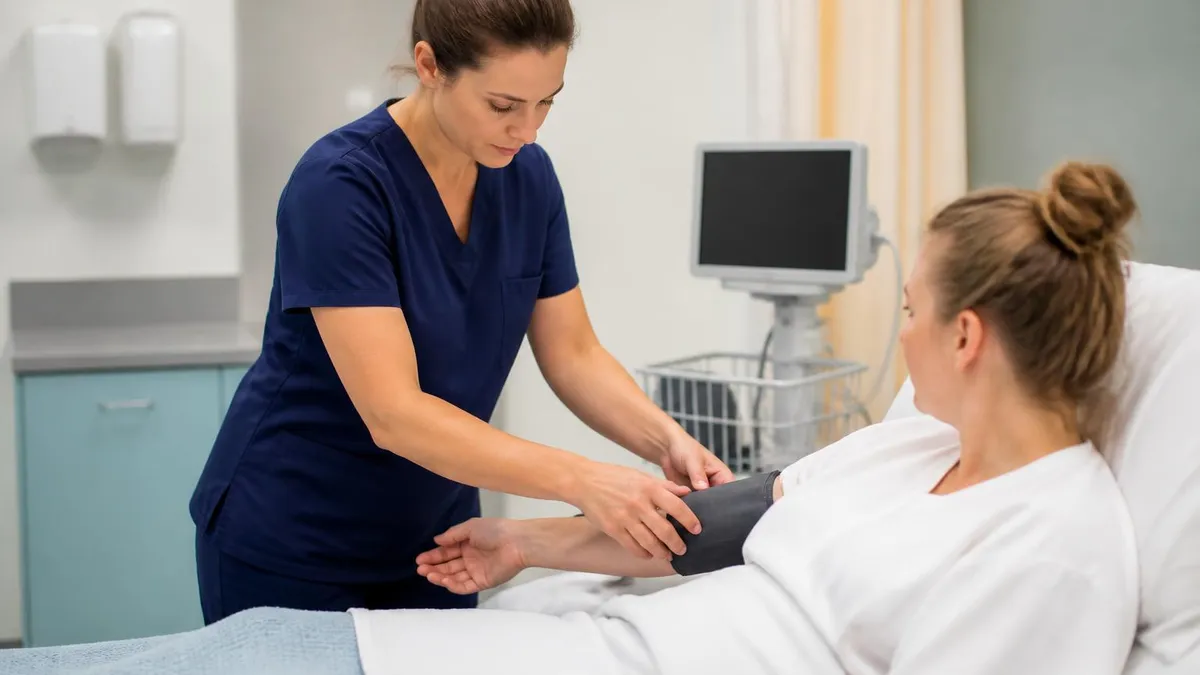
Are Accelerated LPN Programs Worth It?
- +Enter the workforce 6-12 months sooner and start earning a full LPN salary
- +Lower total tuition than a 2-year associate degree program in many states
- +Year-round schedule eliminates summer income gaps for career changers
- +Faster path to RN bridge programs (LPN-to-RN or LPN-to-BSN) after one year of work
- +Concentrated cohort builds tight study groups and lasting professional networks
- +Same NCLEX-PN credential and scope of practice as graduates of longer programs
- +Higher motivation cohort tends to produce strong first-time NCLEX-PN pass rates
- −35-45 hour weekly schedule makes outside employment nearly impossible
- −Higher washout rates — 15-25% of accelerated students do not finish on time
- −Limited time to remediate weak areas before the next high-stakes exam
- −Burnout is common; sleep, exercise, and social time take a real hit
- −Childcare and family support must be locked down before week one
- −Fewer scholarship and grant cycles align with non-traditional start dates
- −Clinical placements may be assigned far from home with little flexibility
Pros and Cons at a Glance
| Pros | Cons |
|---|---|
| Year-round schedule eliminates summer income gaps for career changers | Limited time to remediate weak areas before the next high-stakes exam |
| Faster path to RN bridge programs (LPN-to-RN or LPN-to-BSN) after one year of work | Burnout is common; sleep, exercise, and social time take a real hit |
| Concentrated cohort builds tight study groups and lasting professional networks | Childcare and family support must be locked down before week one |
| Same NCLEX-PN credential and scope of practice as graduates of longer programs | Fewer scholarship and grant cycles align with non-traditional start dates |
| Higher motivation cohort tends to produce strong first-time NCLEX-PN pass rates | Clinical placements may be assigned far from home with little flexibility |
Accelerated LPN Program Application Checklist
- ✓Confirm the program is approved by your state Board of Nursing and ACEN or COE accredited
- ✓Request official high school and any college transcripts sent directly to the admissions office
- ✓Schedule and pass the TEAS, HESI A2, or PSB-PN entrance exam with a competitive score
- ✓Complete CNA certification and gain 3-6 months of patient care experience if required
- ✓Submit two letters of recommendation from healthcare professionals or instructors
- ✓Write a personal statement explaining your nursing goals and accelerated readiness
- ✓Pass a Level 2 background check and 10-panel urine drug screen with hair follicle backup
- ✓Provide updated immunization records including hepatitis B series, MMR, varicella, Tdap, flu, and TB
- ✓Earn current BLS Provider CPR certification from the American Heart Association
- ✓Apply for FAFSA, scholarships, and any employer tuition assistance at least 90 days before start date
- ✓Arrange reliable childcare, transportation, and family backup coverage for 12 months
- ✓Build a $3,000-$6,000 emergency fund to cover uniforms, textbooks, fees, and gaps
Start NCLEX-PN practice questions in week one — not month ten.
The students who pass the NCLEX-PN on the first attempt almost universally answer 25-50 practice questions every single day starting in their first term, not in the final months before testing. Question-based learning forces you to apply content the same way the exam does, and a year of daily practice produces 9,000+ exposure-questions. Compare that to cramming 1,500 questions in the final six weeks and you understand why daily practice matters more than any single review course.
The true cost of an accelerated LPN program extends well beyond the published tuition figure. Public community college accelerated tracks generally run $8,000-$15,000 in tuition for in-state students, while private vocational schools and for-profit institutions can charge $20,000-$45,000 for the same credential. Before signing any enrollment agreement, request the school's complete cost of attendance disclosure, which must include tuition, fees, books, uniforms, equipment, background checks, drug screens, immunizations, malpractice insurance, NCLEX-PN application fees, and licensure costs.
Books and equipment add $1,200-$2,500 to your bill. Required items typically include three to five textbooks, a digital ATI or HESI subscription, a Littmann Classic III or Cardiology IV stethoscope, three sets of program-specific uniforms, white nursing shoes, a watch with a second hand, a penlight, bandage scissors, and a stethoscope name tag engraving. Used textbooks save real money, but verify the edition matches what the program requires — outdated drug references in pharmacology books are a safety issue and instructors will not accept them.
Federal financial aid is available to most accelerated LPN students, but the timing is awkward. Because accelerated programs do not follow the standard fall-spring-summer academic calendar, Pell Grants and Stafford Loans must be packaged across non-standard terms. File your FAFSA as early as October 1 of the year before you plan to start, use the school's federal code, and ask the financial aid office specifically how they handle non-standard term scheduling. Pell Grants in 2026 max out at $7,395 per year, which can cover a large portion of public-college tuition.
Workforce Innovation and Opportunity Act (WIOA) funding is one of the most underused resources for accelerated LPN students. If you are unemployed, underemployed, or transitioning out of a declining industry, your local American Job Center may cover 50-100% of tuition plus support services like childcare and transportation. The application process takes 30-60 days, so start before you apply to the school. Veterans should also explore Post-9/11 GI Bill benefits and the Veteran Readiness and Employment program, both of which work for approved LPN programs.
Return on investment is where accelerated programs genuinely shine. Assuming a $15,000 total cost and a starting salary of $50,000, the payback period is roughly four to six months of full-time work after licensure. Compared to a $30,000+ two-year lpn vs adn, you reach financial breakeven nearly a year sooner. Over a 30-year career, the additional year of earnings adds approximately $50,000-$70,000 in lifetime wages, not counting promotions, shift differentials, and the option to bridge into RN or BSN programs with employer tuition reimbursement.
Watch out for predatory schools, especially in the for-profit sector. Red flags include high-pressure enrollment tactics, refusal to disclose NCLEX-PN pass rates, tuition above $30,000, accreditation only from unrecognized agencies, no published completion rates, and aggressive lender referrals to private student loans with interest rates above 9%. The U.S. Department of Education's College Scorecard and the state Board of Nursing's program approval list are the two sources you should verify against before paying any deposit. The LPN Nursing Salary by State: 2026 Pay Guide for Licensed Practical Nurses helps you project realistic earnings by location.
Finally, build an emergency fund before you start. Accelerated schedules leave almost no room for outside employment, and unexpected costs — a car repair, a sick child, a clinical site uniform change — can derail otherwise excellent students. A $3,000-$6,000 cushion in a high-yield savings account is the single most protective financial move you can make. Combined with federal aid, WIOA funding, and a part-time CNA job during the lighter early weeks, the math works for most disciplined students.

Graduates of unapproved or unaccredited LPN programs cannot sit for the NCLEX-PN and cannot get licensed — period. Before paying any deposit, verify the program appears on your state Board of Nursing's official approved program list. Out-of-state online "LPN programs" that claim national reach are almost always scams, because clinical hours must be completed in-person and supervised by a state-approved preceptor.
NCLEX-PN pass rates are the single most important quality indicator when comparing accelerated LPN programs. The national first-time pass rate hovered around 84% in 2024 according to the National Council of State Boards of Nursing, but individual programs range from 55% to 98%. State Boards of Nursing publish each program's pass rate annually, and programs that fall below the state benchmark — usually 80% — face probation and eventual loss of approval. Always ask for the most recent three years of first-time pass rates, not just the most flattering year.
The NCLEX-PN itself is a computer adaptive test of 85-150 questions covering safe and effective care environment, health promotion and maintenance, psychosocial integrity, and physiological integrity. The minimum five-hour testing window includes one optional break, and the test ends when the algorithm is 95% confident you are above or below the passing standard. Most candidates finish in 100-120 questions and two to three hours. Daily question practice during your program builds the stamina and pattern recognition the adaptive algorithm rewards.
Job placement after licensure is strong almost everywhere in the United States, but the type of employer varies by region. Long-term care facilities, skilled nursing facilities, and home health agencies hire 60-65% of newly licensed LPNs, while physician offices, outpatient clinics, correctional health, and hospice each account for another 8-15%. Hospital med-surg LPN roles still exist in many states but are declining as health systems shift toward all-RN staffing on acute care floors. Geographic flexibility dramatically expands offers, especially in rural and underserved counties.
Starting salaries vary by state and setting. According to BLS May 2024 data, the median LPN wage is $59,730, but new graduates typically start 10-15% below median. Long-term care and home health offer the highest starting wages in many markets, often $4-$8 per hour above hospital roles, because the demand is intense and turnover is high. Sign-on bonuses of $2,500-$10,000 are common in skilled nursing facilities, though they typically vest over 12-24 months and require repayment if you leave early.
Bridge opportunities into registered nursing are abundant once you have one year of LPN experience. LPN-to-RN bridge programs at community colleges take 12-18 months and cost $8,000-$15,000, often with full employer reimbursement if you work for a hospital system or skilled nursing chain. LPN-to-BSN lpn to bsn onlines through accredited universities take 24-30 months part-time alongside full-time work. The earlier you start planning the bridge, the better — many LPNs continue working full-time as nurses while completing RN coursework with weekend clinicals.
Specialty certifications can boost your earnings as an LPN even before bridging to RN. The IV therapy certification, gerontology certification (CGN), wound lpn wound care certification (WCC), and long-term wound care certification for lpn (CLTC) each add $1.50-$4.00 per hour to base wages in most markets. Most certifications require six to twelve months of relevant experience plus a written exam, with study materials running $200-$500. Employers frequently reimburse certification costs because the credentials reduce liability and improve survey outcomes.
The bottom line: an accelerated LPN program is one of the highest-ROI healthcare credentials available in the United States today. Twelve months of intense study leads to a licensed, in-demand career with median wages near $60,000, clear bridge paths to higher credentials, and meaningful work in nearly every community. The discipline required during the program is real, but the outcome is genuine economic mobility. Use the LPN Practice Test PDF (Free Printable 2026) as you prepare for the NCLEX-PN at the end of your accelerated journey.
Practical success in an accelerated LPN program comes down to a small number of disciplined habits practiced every single week. The first habit is calendar discipline. Print the entire term schedule, mark every exam date, clinical shift, and skills check-off, and reverse-engineer study blocks backward from each major assessment. Students who treat study time as recurring appointments — same hours, same location, same coffee — finish on time at roughly twice the rate of students who study only when they feel motivated. Motivation evaporates in week six. Systems do not.
The second habit is daily question practice rather than weekend cramming. Aim for 25-50 NCLEX-PN style questions per day from week one of the program, reviewing rationales for both correct and incorrect answers. Free resources like the question bank linked at the top of this article are a strong starting point, and paid platforms like UWorld, Kaplan, and Saunders add another 3,000-4,000 questions for $99-$400. The cumulative effect of 365 days of practice is dramatic — most students see their predictor scores climb 15-25 points by month six.
The third habit is sleep protection. Accelerated students who sleep fewer than six hours per night for more than a week consistently underperform on testing and clinical performance, no matter how much they study. Build a 10 p.m. to 6 a.m. window and protect it ruthlessly during exam weeks. Caffeine after 2 p.m. and screens after 9 p.m. are the most common culprits. Many programs lose otherwise strong students in the final term simply because chronic exhaustion eroded their ability to retain pharmacology and prioritization concepts.
The fourth habit is study group selection. Two to four classmates who study at the same time of day, complete assigned readings on schedule, and respect time limits is the ideal configuration. Larger groups become social hours, and solo studying makes it harder to verbalize complex concepts like fluid and electrolyte shifts. Use weekly group sessions for high-yield review — drug classifications, lab values, prioritization scenarios — rather than re-reading textbook chapters everyone has already seen. Teaching a concept aloud to a peer is one of the strongest predictors of retention.
The fifth habit is clinical readiness. Arrive 15 minutes early to every shift, with a fully stocked pocket organizer, a printed handoff sheet, and your three priority patients identified before report. Preceptors notice preparedness immediately, and the LPNs who get hired into capstone facilities are almost always the ones who came to every shift looking ready to work. Wear pressed uniforms, keep your stethoscope and ID visible, and chart in real time rather than at the end of the shift. These details signal professionalism and reduce error rates.
The sixth habit is mental health maintenance. Therapy, exercise, a non-nursing hobby, and at least one full off-day per week prevent the burnout that derails roughly one in five accelerated students. Many schools include free counseling through student services — use it. A 30-minute walk three times per week measurably improves cognitive performance on practice tests, and a weekly meal with friends outside the program provides perspective during the inevitable rough weeks. Nursing school is not a marathon to suffer through; it is a season to manage skillfully.
Finally, plan your NCLEX-PN testing strategy before graduation. Apply for licensure with the state Board of Nursing 60-90 days before program completion, schedule your Pearson VUE testing slot within 30 days of receiving Authorization to Test, and complete a structured review course in the four weeks before your test date. Most candidates pass on the first attempt when they test within 30-45 days of graduation while content is still fresh. Waiting six months "to study more" is a known predictor of failure — get in, take the test, and start your career.
Sample Certified Practical Nurse Practice Questions
Try these questions from our free Certified Practical Nurse practice tests. The correct answer and an explanation follow each question.
What should a nurse do when assessing a patient’s mental status?
- A. Ask questions about daily activities
- B. Assess cognition, mood, and behavior using tools
- C. Observe only
- D. Check physical symptoms only
Answer: B. Assess cognition, mood, and behavior using tools
When assessing a patient’s mental status, a nurse should comprehensively evaluate their cognition, mood, and behavior, often utilizing standardized tools. This involves asking specific questions to assess orientation, memory, attention, and judgment, as well as observing their emotional state and interactions. This systematic approach provides objective data to identify mental health concerns, track changes over time, and inform appropriate care planning.
A client with a cervical spine injury at C5-C6 is being bathed. Which finding requires the LPN to stop and immediately notify the charge nurse?
- A. Muscle spasms in the upper extremities
- B. Sudden severe headache, sweating above the injury, and bradycardia
- C. Mild skin redness over the sacrum
- D. Urinary incontinence
Answer: B. Sudden severe headache, sweating above the injury, and bradycardia
These are classic signs of autonomic dysreflexia, a life-threatening condition in clients with SCI at T6 or above, caused by an unrecognized stimulus below the injury level.
A patient is receiving IV vancomycin too rapidly and develops flushing and redness of the face, neck, and chest. The nurse recognizes this as:
- A. Anaphylaxis
- B. Red Man Syndrome
- C. Stevens-Johnson Syndrome
- D. Serum sickness
Answer: B. Red Man Syndrome
Red Man Syndrome is an infusion-related reaction to rapid vancomycin administration, causing flushing and erythema over the upper body.
What is the role of a nurse in end-of-life care?
- A. To offer legal advice
- B. To provide compassionate care and support at the end of life
- C. To make decisions for the family
- D. To monitor symptoms only
Answer: B. To provide compassionate care and support at the end of life
In end-of-life care, a nurse's primary role is to provide compassionate care and comprehensive support to the patient and their family during this sensitive time. This involves managing pain and symptoms to ensure comfort, offering emotional and spiritual support, and facilitating communication about the patient's wishes and preferences. The nurse acts as an advocate, ensuring dignity and quality of life are maintained according to the patient's values.
LPN Questions and Answers




About the Author

Registered Nurse & Healthcare Educator
Johns Hopkins University School of NursingDr. Sarah Mitchell is a board-certified registered nurse with over 15 years of clinical and academic experience. She completed her PhD in Nursing Science at Johns Hopkins University and has taught NCLEX preparation and clinical skills courses for nursing students across the United States. Her research focuses on evidence-based exam preparation strategies for healthcare certification candidates.
Join the Discussion
Connect with other students preparing for this exam. Share tips, ask questions, and get advice from people who have been there.
View discussion (7 replies)