
LPN WV: LPN License by State Requirements, Compact Rules, and Next Steps 2026
🎓 Learn how to get an LPN WV license and how LPN license by state rules differ, from NCLEX-PN and endorsement to compact privileges and renewal.
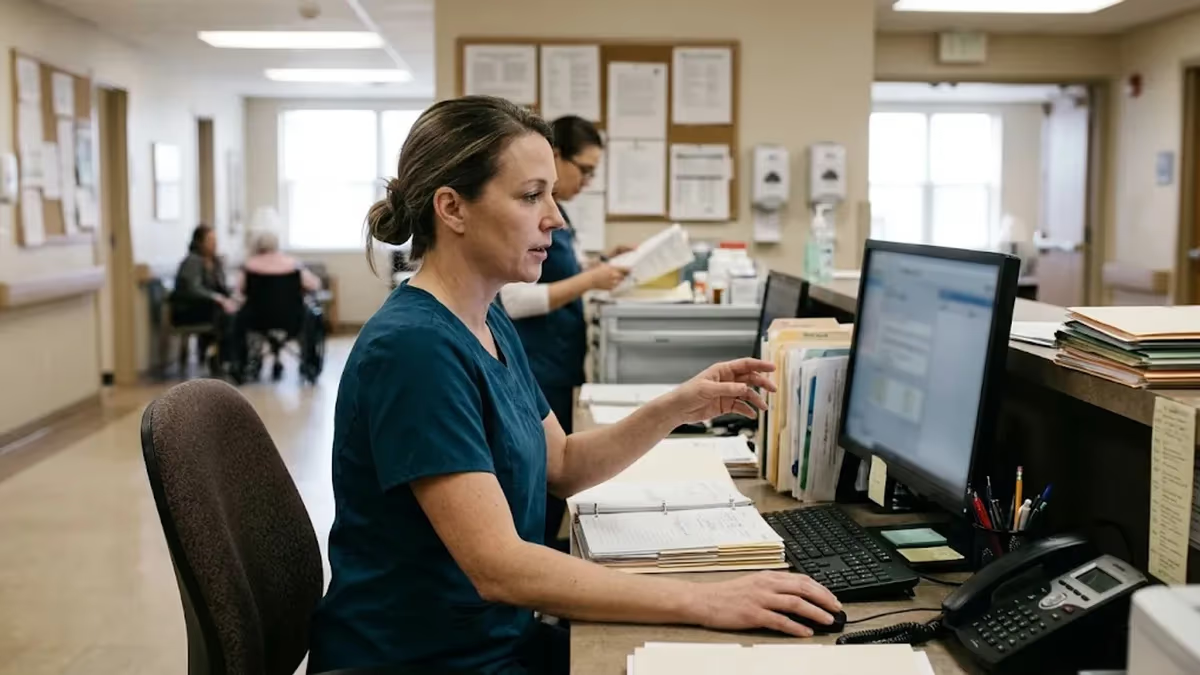
If you are searching for LPN WV information, you probably want a direct answer: how does a licensed practical nurse get licensed in West Virginia, and what happens if you later move or work in another state? The short version is that every state licenses nurses separately, yet nearly all of them rely on the same national exam. This guide explains how the West Virginia process works and how it compares with other states.
Practical nurses work under the direction of registered nurses, physicians, and advanced practice providers. They take vital signs, give medications, change dressings, document observations, and report changes in a patient's condition. Because the work touches patient safety directly, each state board sets minimum standards for education, testing, background checks, and conduct. West Virginia does this through its Board of Examiners for Practical Nurses, which issues the credential you need before you can legally use the LPN title in the state.
Most people first meet the topic of licensure by state when they compare schools. A program approved in one state may not automatically satisfy another state's board, and clinical hours, curriculum content, and faculty rules can differ. If you are still choosing a school, reading about the broader lpn license by state landscape alongside our online program guide helps you avoid expensive surprises before you enroll or sign a clinical contract.
Think of licensure as three layers. First comes education: you finish a board-approved practical nursing program, usually lasting twelve to eighteen months. Second comes examination: you pass the NCLEX-PN, the same national test used in every state. Third comes state authorization: the board verifies your records, runs a criminal background check, and issues the license. The first two layers are nearly identical everywhere, while the third is where differences in fees, timelines, and renewal rules appear.
West Virginia is also a member of the Nurse Licensure Compact, which matters a great deal if you live near a state line. A multistate license issued by your home state lets you practice in other compact states without applying again. Nurses in border regions often commute across state lines every day, so confirm each neighboring state's current compact status on the National Council of State Boards of Nursing map. That single check can save you months of paperwork and several hundred dollars.
Pay is another reason people compare states. The Bureau of Labor Statistics reports a national median wage for LPNs of roughly $62,000 a year, but real offers vary by region, setting, and shift differential. Nursing homes, home health agencies, clinics, and hospitals all hire LPNs. Rural states often pay less than metropolitan areas while offering lower living costs. Knowing exactly where your license is valid widens the pool of employers you can apply to.
This article walks through the exam, the application, endorsement, compact privileges, renewal, and exam preparation, using West Virginia as the main example. Rules change, so treat every number here as a starting point and confirm current fees and deadlines on the official board website before paying anything. Along the way you will find free practice questions, a checklist, and answers to the questions new graduates ask most often about getting licensed.
LPN Licensure by the Numbers
How LPN Licensure Works in West Virginia
Graduate from a practical nursing program approved by the state board. Programs combine classroom learning with supervised clinical hours in settings such as long-term care and medical-surgical units. Your school typically sends proof of completion straight to the board once you finish all requirements.
Submit the board application, pay the fee, and complete fingerprinting and a criminal background check. Disclose any past convictions or discipline honestly with documents. The board reviews your file and confirms that you are eligible to sit for the national licensing exam.
Register with Pearson VUE, pay the exam fee, and receive your Authorization to Test. The adaptive exam measures safe, entry-level practice across four client needs categories. Most states post results to the board within days, and the license issues soon afterward.
Track your expiration date, complete any required continuing education, and renew before the deadline. Report address changes and disclose disciplinary events as required. If you move to another compact state, apply for a new multistate license in your new home state.
LPN License by State: Core Requirements Compared
Across the country, the baseline for an LPN license is remarkably similar. Applicants must graduate from a state-approved practical or vocational nursing program, pass the NCLEX-PN, clear a criminal background check, and pay an application fee. Some states add jurisprudence exams, child abuse recognition coursework, or specific identification documents. Because the core steps match, a graduate who understands one state's process can adapt to another quickly, provided they read that board's instructions carefully and early.
Fees are where states diverge most visibly. Application fees for licensure by examination commonly fall between about $75 and $300, and the NCLEX-PN registration through Pearson VUE adds a separate fee of $200 in the United States. Fingerprinting and background check costs are often extra, frequently $30 to $60. Budget roughly $350 to $600 in total before your first paycheck, and keep receipts, since some employers reimburse licensing costs after hire.
Timelines differ as well. Some boards process a complete application within days, while others take several weeks, especially during the May and June graduation rush. Your program usually sends proof of completion directly to the board, and the board then declares you eligible to test. Only after eligibility is confirmed can you receive an Authorization to Test. Submitting paperwork early, and making sure your name matches your identification exactly, prevents the most common delays.
A few states offer temporary permits or interim licenses that allow new graduates to work under supervision while awaiting results. Not every board does, and rules about who qualifies vary. Where a permit is not available, you cannot practice as an LPN until the license posts. In West Virginia and elsewhere, confirm early whether such a permit exists, because planning your start date around an employer's onboarding schedule depends entirely on that answer.
Licensure by endorsement, sometimes called reciprocity, applies when you already hold an active LPN license in another state and want to be licensed in a new one. The new board verifies your original license through Nursys or a direct verification form, reviews your education and exam history, and confirms that your record is free of discipline. Expect an application fee, a background check, and in some states proof of recent practice hours within the past several years.
The Nurse Licensure Compact changes the picture for many nurses. Under the compact, a license issued by your primary state of residence grants a multistate privilege to practice in other member states. If you move permanently to another compact state, you generally apply for a new multistate license there and let the old one lapse. Nurses in non-compact states still need separate single-state licenses for every state where they practice, which adds cost and tracking.
Because lists of compact states change as legislatures act, avoid relying on old blog posts or forum threads. The National Council of State Boards of Nursing maintains a current map, and every state board links to it. When you compare states for a job offer, check three items: whether the state is a compact member, the endorsement fee and timeline, and any state-specific continuing education requirement attached to renewal. Those three answers explain most of the real differences.
LPN WV Licensure Paths: Exam, Endorsement, and Compact
Licensure by examination is the path for new graduates. You complete a board-approved practical nursing program, submit an application to the West Virginia board, and have your school send proof of completion. After the board declares you eligible, you register with Pearson VUE, pay the NCLEX-PN fee, and receive an Authorization to Test. Most candidates test within a few weeks, depending on appointment availability.
Plan for background screening alongside the exam. Fingerprinting and a criminal history check are standard, and any prior convictions or disciplinary actions should be disclosed honestly with supporting documents. Results often post to the board within days of passing, and many boards offer quick online verification once your license is issued. Do not begin working as an LPN until the board shows your license as active, because practicing early can jeopardize your career.
Is Starting Your LPN Career in West Virginia Worth It?
- +Compact membership lets you work in many other states with one multistate license
- +Short programs of about a year get you into the workforce quickly
- +Steady demand in long-term care, home health, clinics, and hospitals
- +Lower cost of living in many communities stretches an LPN paycheck further
- +The same NCLEX-PN is used nationwide, so your exam result transfers
- +LPN experience and credits can support a later bridge to RN
- −Median pay may sit below metropolitan areas in other states
- −Rural clinical placements can require long commutes during training
- −Fees for the board, exam, and background check add up before your first paycheck
- −Scope of practice differs by state, so duties may change if you relocate
- −Compact rules require a new license when you change your primary residence
- −Continuing education and renewal deadlines demand careful tracking
LPN WV License Checklist
- ✓Confirm your practical nursing program is approved by the state board.
- ✓Create an online account on the West Virginia board website.
- ✓Gather government ID that matches your legal name exactly.
- ✓Submit the licensure application and pay the current fee.
- ✓Schedule fingerprinting and complete the criminal background check.
- ✓Ask your school to send proof of program completion to the board.
- ✓Register with Pearson VUE once the board confirms eligibility.
- ✓Pay the NCLEX-PN registration fee and receive your Authorization to Test.
- ✓Complete a six-to-eight-week study plan with daily practice questions.
- ✓Verify your active license status online before accepting any shift.
Your Authorization to Test Has an Expiration Date
Once the board declares you eligible and you register, your Authorization to Test is valid only for a limited window. If you miss it, you may have to pay again. Schedule your appointment as soon as you receive it, and choose a date that follows a full review of your weakest content areas.
Preparing for the NCLEX-PN Before You Apply for Your LPN WV License
Passing the NCLEX-PN is the single biggest hurdle between graduation and your license, so preparation deserves a plan rather than last-minute cramming. The exam uses computerized adaptive testing, meaning each question you answer influences the difficulty of the next. You will see between 85 and 135 questions within a five-hour limit. The test stops once the software is confident about your ability, so a short exam does not tell you whether you passed or failed.
The test plan follows four client needs categories: Safe and Effective Care Environment, Health Promotion and Maintenance, Psychosocial Integrity, and Physiological Integrity. Physiological Integrity carries the largest share and includes basic care and comfort, pharmacological therapies, reduction of risk potential, and physiological adaptation. Studying in proportion to those weights is smarter than studying whatever feels easiest. Review your program's weakest course first, because that is usually where exam questions will feel least familiar.
Since 2023 the exam has included Next Generation NCLEX item types built around clinical judgment. Instead of only recalling facts, you may be asked to recognize cues, analyze them, prioritize hypotheses, and evaluate outcomes. Case studies, matrix grids, drag-and-drop ordering, and extended multiple response items appear alongside traditional multiple choice. Practicing these formats early reduces anxiety on test day, because unfamiliar layouts can cost time even when your underlying nursing knowledge is solid.
A realistic study schedule runs six to eight weeks for most graduates, with two to three hours on weekdays and longer blocks on weekends. Start with a diagnostic set of about 75 questions to find weak areas, then rotate through content review and timed practice. Track your accuracy by category in a notebook or spreadsheet. When you consistently score above 70 percent on mixed sets, you are usually approaching readiness, though individual results vary.
Rationales matter more than scores. After every practice question, read why the correct answer is right and why each distractor is wrong, even when you guessed correctly. Many NCLEX-PN questions hinge on priority setting, such as airway before circulation, safety before comfort, or assessment before intervention. Writing down a one-line rule from each missed question builds a personal playbook that you can review the night before your appointment.
Medication questions deserve special attention for practical nurses. Know common drug classes, their typical side effects, and the key nursing checks before administration, such as an apical pulse before digoxin or a potassium level with certain diuretics. Practice dosage calculations until you can complete them without hesitation, using dimensional analysis or ratio and proportion. Because pharmacology touches nearly every client needs category, steady daily review pays off more than occasional marathon sessions.
Logistics count too. Register with Pearson VUE only after the board confirms eligibility, schedule your appointment at a center convenient to you, and visit the location beforehand if possible. Bring valid identification that matches your registration name exactly. If you do not pass, most jurisdictions require a waiting period, commonly 45 days, before retesting, and the number of attempts per year is limited, so use any gap for targeted review of weak categories.
Fees, renewal dates, and continuing education hours change over time, and third-party websites often show outdated figures. Before you pay or submit anything, confirm the current requirements directly on the West Virginia board website or by contacting the board office.
Renewal, Continuing Education, and Staying Licensed
Earning the license is not the end of the process. Every state requires periodic renewal, and West Virginia is no exception. Renewal usually involves an application, a fee, and an attestation that you have met any continuing education or practice requirements. Missing the deadline can lead to a lapsed license, late penalties, or reinstatement paperwork. Put your expiration date in your phone calendar the day your license arrives, and set reminders for sixty and thirty days before it.
Continuing education requirements differ widely across the country. Some states require none at all for LPNs, while others require a set number of contact hours every renewal cycle, sometimes with mandated topics such as substance misuse, infection control, or human trafficking. Verify the current hours and approved providers for West Virginia on the board's website, and keep your completion certificates for several years in case the board audits your renewal.
Address and name changes must be reported promptly. Boards communicate by mail and email, and a missed notice is rarely accepted as an excuse for a lapse. If you marry, divorce, or move, update your records with the board and with Nursys if you use it. Compact nurses have an added duty: when you change your primary state of residence to another compact state, you must apply for a new multistate license in the new state within the time allowed.
Discipline reporting is another reality of licensure. Boards require nurses to disclose criminal convictions, certain arrests, and actions taken by other licensing agencies. Honesty on applications and renewals is critical, since failing to disclose is often treated as a separate violation. Employers also report concerns such as drug diversion or patient abuse. If you ever face a board inquiry, respond within the deadline and consider consulting an attorney experienced in nursing license defense.
Career growth often follows licensure. Many LPNs add certifications in areas such as IV therapy, wound care, gerontology, or long-term care, where allowed by their state's scope of practice. Scope differs by state: some boards allow LPNs to start IV lines after additional training, while others restrict it. Always check your board's practice act and your employer's policies, because what you can do in one state may fall outside your license in another.
Some LPNs eventually pursue bridge programs to become registered nurses. Credits from your practical nursing program may transfer, and employers sometimes offer tuition assistance. When you earn an RN license, you take the NCLEX-RN and apply as a new licensee, though your LPN history is a helpful part of your record. Plan this path early if you want it, because prerequisite science courses like anatomy, physiology, and microbiology are often required beforehand.
Finally, keep your documentation organized. Store copies of your diploma, transcript, exam result, license number, and renewal confirmations in a single folder, both digital and physical. When you apply for a job in a new state, endorsement applications request many of those details. Being able to produce them quickly can shorten processing times, and it shows hiring managers that you are as reliable as you are clinically capable.
Practical Tips for Getting Licensed and Starting Work
Start your paperwork before graduation. Many boards accept applications while you are still finishing your final term, and your school will send verification once you complete the program. Create an online account with the board, read the instructions twice, and gather identification, Social Security information, and fingerprint appointment details. Applying early can cut weeks off the time between your last exam and your first day as a working nurse.
Compare job offers with licensure in mind. If you plan to work for a staffing agency or take travel assignments, a multistate license is valuable because you can accept contracts in compact states without separate applications. If you plan to stay close to home in West Virginia, a single license is enough. Ask employers whether they reimburse licensing fees, since many long-term care facilities and hospitals do so for new hires.
Use official sources for every fee and deadline. Third-party websites often copy outdated numbers, and some charge extra for services the board provides cheaply. Bookmark the West Virginia board page, the NCSBN site, and Pearson VUE. When something looks unclear, call or email the board and save the response. Written confirmation protects you if a processing question arises later, and staff generally appreciate applicants who ask early.
Build a daily practice habit. Fifteen to twenty questions every day for eight weeks adds up to more than a thousand exposures to NCLEX-style items. Mix topics rather than blocking by subject, since the real exam does not group questions neatly. Review your wrong answers the same day while your reasoning is still fresh, and revisit them a week later to confirm that the lesson actually stuck.
Protect your sleep and routine in the final week. Last-minute cramming rarely helps with an adaptive exam that tests judgment. Taper your study to light review, confirm your test center route, prepare identification, and eat a familiar meal beforehand. During the test, read each stem carefully, identify what the question is actually asking, and eliminate clearly unsafe options before choosing among the remaining answers.
Use your first year wisely. New LPNs benefit from a supportive unit, so ask about orientation length, preceptor ratios, and mentorship before accepting a position. Long-term care often offers quick hiring and broad skills practice, while hospitals and clinics may offer more specialized experience. Whichever you choose, document your competencies, seek feedback, and treat early shifts as an extension of your education rather than a test you must pass alone.
Finally, remember that licensure by state is manageable when you take it one step at a time: finish an approved program, pass the NCLEX-PN, apply with complete documents, and renew on schedule. Whether your search began with LPN WV or another state's name, the same principles apply. Use the practice tests below to sharpen your skills, and check the related guides for programs, responsibilities, and local job markets.
LPN Questions and Answers
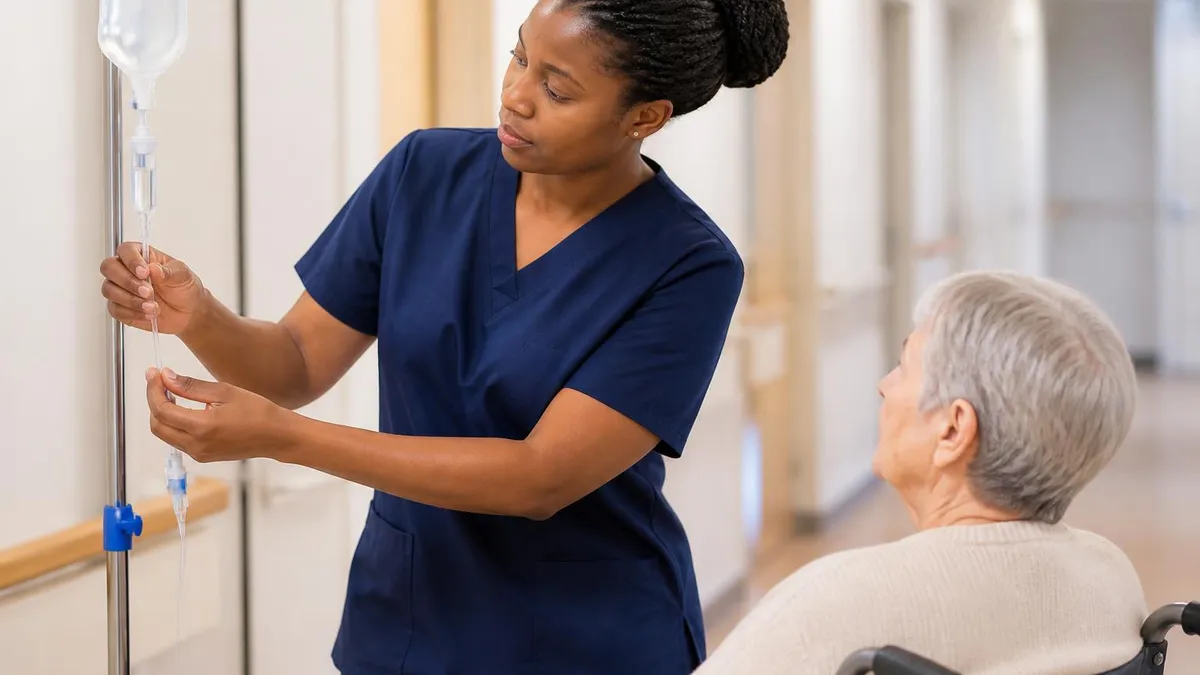
LPN Program Online: Complete 2026 Guide to Accredited Online LPN Programs

LPN Responsibilities: A Complete Guide to What Licensed Practical Nurses Do

LPN Jobs Atlanta: Complete 2026 Guide to Salaries, Top Employers & Career Paths in Georgia

Lincoln Tech LPN Program: Start Dates, Requirements & What to Expect

American Technical Institute LPN Program Reviews: Honest 2026 Student Feedback
How this page was made: written with AI tools and published by Nathan Beja, founder of Practice Test Geeks, who is responsible for its content. We have not yet matched this exam's facts to an official source, so confirm fees, dates and rules with the exam body. Not reviewed by a subject-matter expert. Editorial policy