
What Classes Are Required for LPN? Complete 2026 Prerequisites, Courses & Clinical Guide
🎓 What classes are required for LPN? See the prerequisites, core nursing courses, clinical hours, costs and NCLEX-PN steps in one clear 2026 guide.
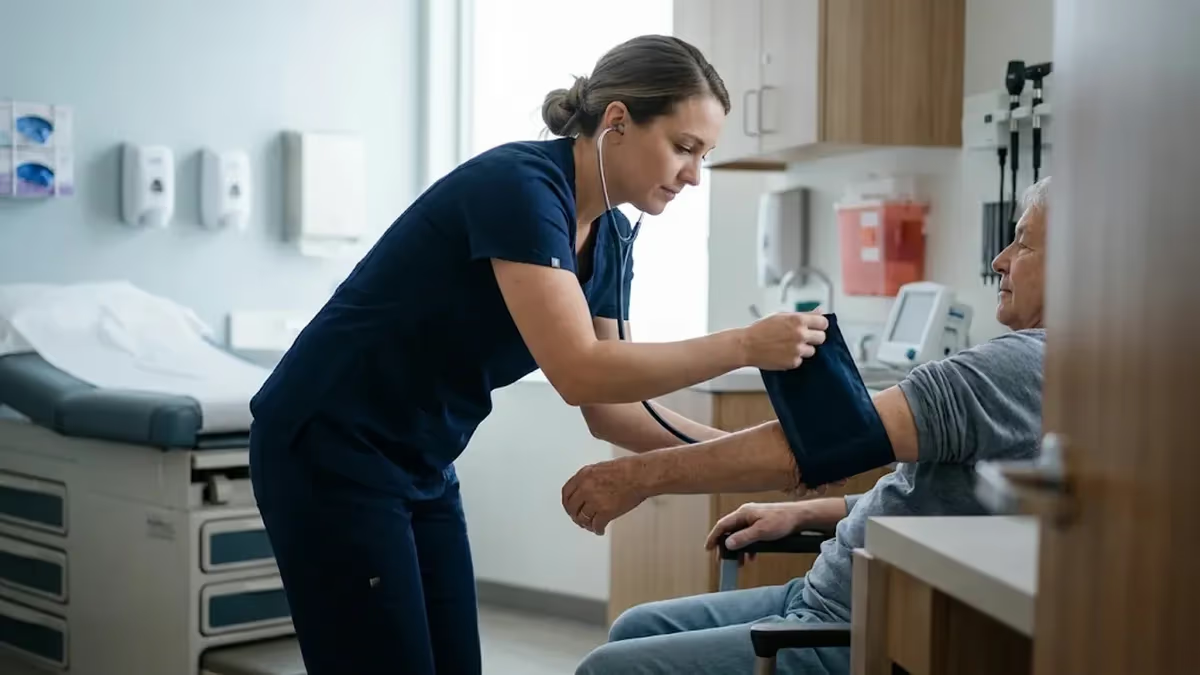
If you are asking what classes are required for LPN, the short answer is a mix of general education prerequisites and a focused set of practical nursing courses. Most programs expect a high school diploma or GED, then a handful of science and English classes before you start clinical coursework. Once admitted, you complete roughly 12 to 18 months of nursing classes, lab practice, and supervised patient care before sitting for the NCLEX-PN licensing exam. This guide walks through every step in order.
Requirements vary by state board of nursing and by school, and the lpn classes required in one state can differ from the next. A program in Texas may run 1,400 total hours while another in Ohio asks for fewer. Always compare a school's catalog against your state board's rules before you apply, because only graduates of board-approved programs can test for licensure and later transfer that license to other states.
Before you ever open a nursing textbook, expect to finish a few prerequisite classes. The most common ones are anatomy and physiology, English composition, college algebra or basic math, and introductory psychology. Some schools add biology, medical terminology, or human growth and development. Many community colleges let you complete these courses in one or two semesters, and strong grades matter, because admission to practical nursing programs is competitive and often based on a points system that rewards a high prerequisite GPA.
After admission, the core nursing curriculum begins. You will take fundamentals of nursing, pharmacology, medical-surgical nursing, maternal and newborn care, pediatrics, mental health nursing, and gerontology. Each course combines lecture, skills lab, and bedside practice. Classes build on one another, so fundamentals comes first, then medication math and administration, then disease-specific content. By the end, you should be able to take vital signs, give injections, change dressings, document accurately, and recognize when a patient needs the registered nurse or physician immediately.
Clinical rotations are the other half of the requirement. Most states require several hundred supervised hours in hospitals, long-term care facilities, clinics, and home health settings. A typical full program totals 1,000 to 1,500 hours across classroom, lab, and clinical time, with clinical hours often falling between 400 and 700. You cannot skip these hours or replace them with online coursework, because the board must verify that you can safely perform care tasks on real patients.
Total time and cost are worth planning early. Full-time students usually finish in 12 to 18 months, while part-time evening tracks can stretch to 24 months. Tuition ranges widely, from about $5,000 at some technical colleges to $30,000 or more at private schools, plus uniforms, textbooks, background checks, and exam fees. Financial aid, workforce grants, and employer tuition assistance can reduce that bill, so ask each admissions office what support is available before you commit.
The goal of all this coursework is the NCLEX-PN, the national licensing exam that every graduate must pass. The curriculum is designed to line up with its test plan, which is why practice questions are so useful while you are still in school. In the sections below, you will see the numbers, a step-by-step path, the course list in detail, and practical tips for passing each class on your first attempt.
LPN Class Requirements by the Numbers
The Step-by-Step Path to Meeting LPN Class Requirements
Start with a high school diploma or GED, proof you are at least 18, and official transcripts. Most schools also require a background check, drug screening, immunization records, and current CPR certification before you can enroll or step into a clinical setting.
Complete anatomy and physiology, English composition, math, and psychology, plus any extras your school lists. Aim for a B or better in science courses, because most practical nursing programs rank applicants by prerequisite GPA when seats are limited.
Many programs require the TEAS, HESI A2, or NLN PAX before they will consider your application. Study reading, math, science, and English, take a practice test first, and schedule your attempt early so a retake is possible before the deadline.
Once admitted, you take fundamentals, pharmacology, medical-surgical, maternal-newborn, pediatric, mental health, and gerontology classes, along with supervised clinical rotations. Passing each course with the minimum grade lets you advance to the next term on schedule.
After graduation, register with Pearson VUE, apply to your state board, and receive your Authorization to Test. Passing the NCLEX-PN earns your license, which lets you work as an LPN, or an LVN in California and Texas.
Fundamentals of nursing is the first course nearly every student takes, and it sets the foundation for everything else. You learn hygiene care, bed making, patient transfers, vital signs, infection control, wound care, and basic documentation. The lab portion lets you practice on mannequins before touching a real patient. Expect to be graded on skills check-offs, where an instructor watches you perform a procedure step by step and marks any missed safety detail. Failing a check-off usually means repeating it before moving on.
Anatomy and physiology, often paired with microbiology or nutrition, explains how the body works and why disease changes it. Some schools require these before admission, while others fold them into the first semester. Nutrition covers therapeutic diets, such as low-sodium plans for heart failure and carbohydrate-controlled meals for diabetes. These classes matter because nurses constantly connect symptoms to body systems. A patient with swollen ankles and shortness of breath makes more sense once you understand fluid balance, circulation, and kidney function.
Pharmacology is where many students feel the most pressure. You learn drug classes, common side effects, routes of administration, and the rights of medication administration. Dosage calculation is a major piece, so be ready for ratio problems like converting milligrams to grams or calculating a drip rate in milliliters per hour. Many programs require a minimum score of 90 percent or higher on medication math exams, because small calculation errors can seriously harm patients in real practice.
Medical-surgical nursing is usually the longest course sequence, often split across two or three terms. You study heart disease, respiratory conditions, diabetes, kidney problems, cancer care, and recovery after surgery. Each unit covers assessment, common treatments, patient teaching, and warning signs that a condition is getting worse. Clinical rotations in hospitals or skilled nursing facilities pair with this course, giving you real practice caring for adult patients with several diagnoses at the same time. This content also makes up a large share of the NCLEX-PN.
Maternal-newborn and pediatric nursing introduce care for patients at the start of life. You learn prenatal care, labor stages, postpartum recovery, newborn assessment, childhood growth milestones, immunization schedules, and common pediatric illnesses. Because children are not small adults, you practice weight-based dosing and age-appropriate communication. Clinical placements may include a birthing unit, pediatric clinic, or school health office. Even if you plan to work in long-term care, these courses are required because licensure covers care across the entire lifespan.
Mental health nursing teaches therapeutic communication, recognition of depression, anxiety, and substance use disorders, and safe responses to crisis situations. Gerontology focuses on older adults, including dementia care, falls prevention, polypharmacy, and end-of-life comfort measures. Since LPNs often work in nursing homes and rehabilitation centers, gerontology is especially practical. Both courses emphasize patient dignity, boundaries, and observation skills, which you will use every shift, no matter which specialty you eventually choose to pursue after you earn your license.
The final term usually includes a leadership or role-transition course covering delegation, legal and ethical issues, scope of practice, and job search skills. You learn what an LPN may do independently and what requires an RN's direction, which varies by state. Many programs also schedule an NCLEX-PN review class or a comprehensive predictor exam, such as the ATI or HESI exit exam. A strong score here is a good sign you are ready to register for the licensing test.
What Classes Are Required for LPN: Prerequisite, Core, and Clinical Courses
Prerequisite classes are the general education and science courses you complete before or alongside the nursing sequence. The usual list includes anatomy and physiology, English composition, college-level or basic math, and introductory psychology. Some schools also ask for biology, microbiology, nutrition, medical terminology, or human growth and development. Check each program's catalog, since the list can run from three courses to as many as eight, and some schools accept only recent credits.
Plan to earn at least a B in science prerequisites if you can, because admissions committees rank applicants by GPA. Many students complete these classes at a community college over one or two semesters, often online or in the evening while working. Verify that credits are regionally accredited and have not expired, since some programs reject science courses older than five years. Ask an advisor for a written plan so no requirement is missed.
Is Completing the Required LPN Classes Worth It?
- +Programs take only 12 to 18 months, far less than a two-year or four-year RN degree
- +Tuition is often lower than other nursing pathways, especially at community colleges
- +Median LPN pay is around $62,000 per year, according to Bureau of Labor Statistics data
- +Demand is steady in nursing homes, home health, clinics, and hospitals nationwide
- +Classes and clinical hours often count toward a later LPN-to-RN bridge program
- +You gain hands-on patient care skills that employers value from your first day
- −Admission can be competitive, with limited seats and long waitlists at popular schools
- −Clinical hours require fixed daytime schedules that can conflict with a full-time job
- −Pharmacology and medication math are demanding, and low scores can end progress
- −Out-of-pocket costs add up beyond tuition, including books, uniforms, and exam fees
- −LPN scope of practice is narrower than an RN's and varies by state and facility
- −Fully online completion is not possible because in-person clinicals are mandatory
Your LPN Class Requirements Checklist
- ✓Confirm your state board of nursing approves the program you plan to attend.
- ✓Gather your high school diploma or GED and official transcripts.
- ✓Complete anatomy and physiology with a grade of B or higher.
- ✓Finish English composition, math, and psychology prerequisites.
- ✓Register for the TEAS, HESI A2, or school-specific entrance exam.
- ✓Schedule a background check, drug screen, and immunization records.
- ✓Earn current CPR or Basic Life Support certification before orientation.
- ✓Submit your application and financial aid forms before every deadline.
- ✓Budget for books, uniforms, supplies, and exam fees beyond tuition.
- ✓Start NCLEX-style practice questions in your first semester.
Clinical Hours Cannot Be Skipped or Replaced Online
Every board-approved practical nursing program requires supervised, in-person clinical hours, typically 400 to 700 depending on the state. Lectures and simulations can supplement them, but they cannot replace patient care experience. Ask each school how clinical sites are assigned and how far you may need to travel.
Admission to practical nursing programs is competitive at many schools, so the application is its own set of requirements. Nearly every program asks for a high school diploma or GED, official transcripts, and proof you are at least 18. Many also require a minimum GPA, often 2.5 to 3.0, in prerequisite courses. Some community colleges publish a points system that weighs grades, entrance exam scores, and healthcare experience. Read the admissions packet carefully, because one missing document can delay you a semester.
Many schools also require an entrance exam. The TEAS, from ATI, tests reading, math, science, and English and language usage across 170 questions. The HESI A2 covers similar topics and lets schools choose which sections you take. Some programs use the NLN PAX or their own placement tests. Passing scores differ, but competitive programs often want proficient or advanced results. You can usually retake the exam after a waiting period, so plan your first attempt early and leave time for a second one.
Health and safety requirements come next. Expect a criminal background check, drug screening, proof of immunizations such as MMR, varicella, hepatitis B, and Tdap, a negative tuberculosis test, and often an annual flu shot. You will also need current CPR certification, usually Basic Life Support for healthcare providers from the American Heart Association. Clinical sites enforce these rules, not just the school, and a missing document can keep you out of the hospital on your first day. Start gathering paperwork months before classes begin.
Prior experience can help even when it is not required. Working as a certified nursing assistant, patient care technician, or medical assistant shows admissions committees you understand bedside care. Some schools award bonus points for CNA certification, and a few let CNAs skip portions of the first semester through bridge options. Even without formal credit, you will feel more comfortable in fundamentals lab if you have already turned a patient, taken a blood pressure, and helped someone with a meal.
Timing matters as much as qualifications. Many programs admit only one or two cohorts per year, with applications due months before classes start, and seats are limited to 20 to 40 students. Waitlists are common at popular community colleges. If you miss the deadline, you may wait a year. Build a calendar that tracks prerequisite completion, exam dates, application deadlines, and document requests, and apply to at least two schools so one rejection does not stall your plan.
Once enrolled, your coursework maps to the NCLEX-PN test plan, which divides content into four major client needs categories: safe and effective care environment, health promotion and maintenance, psychosocial integrity, and physiological integrity. Physiological integrity is the largest, covering basic care and comfort, pharmacological therapies, reduction of risk potential, and physiological adaptation. Knowing this structure helps you see why each class exists and where to spend extra review time as you move through the program.
After graduation, your school reports completion to the state board, and you register with Pearson VUE, the NCLEX testing vendor, for a $200 fee. You also apply to the board for licensure, which usually includes fingerprints and a state fee. Once approved, you receive an Authorization to Test and can schedule the exam. The NCLEX-PN is computer adaptive and asks between 85 and 150 questions over up to five hours, ending as soon as the software is confident about your result.
Graduating from a program that your state board of nursing does not approve can make you ineligible for the NCLEX-PN. Check the board's official list of approved schools, and ask about the program's recent NCLEX pass rates before paying any deposit.
LPN classes are offered through several kinds of schools, and the format affects both cost and schedule. Community colleges and technical colleges are usually the most affordable, with many programs under $15,000. Private career schools may cost more but offer rolling starts and evening tracks. Hospital-based and vocational high school programs also exist in some regions. Whichever type you choose, confirm the program is approved by your state board of nursing, since that approval determines whether you can sit for the NCLEX-PN.
Hybrid programs let you complete lectures online while attending labs and clinicals in person. Fully online LPN programs do not exist in a true sense, because hands-on practice cannot be replaced. If a school advertises a 100 percent online path, read the fine print, since you will still arrange in-person clinical placements. Online prerequisites such as psychology or English composition are widely accepted, but check that the college is regionally accredited so the credits transfer smoothly.
States differ in several ways. Hour requirements, prerequisite lists, and background check rules are set by each board of nursing, and some states use different titles. California and Texas call the role Licensed Vocational Nurse, or LVN, but the training is nearly identical. A few states require specific content, such as child abuse recognition or opioid prevention training. Before enrolling, read your board's education rules and note any extra courses that apply to your license.
If you already hold related credentials, you may not need to start from zero. CNAs can find bridge programs that credit prior training, and some paramedics and military corpsmen qualify for advanced standing. Previously completed college courses may transfer if they were taken recently and earned at least a C. Ask the admissions office for a transcript evaluation before paying tuition, because a short email can save you a semester of repeated classes and several thousand dollars.
Budget for more than tuition. Typical additional costs include textbooks at $500 to $1,200, uniforms and shoes at $150, a stethoscope and supplies, background check and drug screen fees, liability insurance, a school pin, and the $200 NCLEX registration fee plus the state licensing fee. Many students also reduce work hours during clinical weeks. Add these up before you apply, and compare total cost, not just the advertised per-credit price, across at least three programs.
Financial aid can close the gap. Complete the FAFSA to see whether you qualify for Pell Grants, federal loans, or work-study, and ask schools about institutional scholarships. Workforce Innovation and Opportunity Act funds, state workforce boards, and nursing home employers sometimes pay tuition in exchange for a work commitment. Hospitals and long-term care chains frequently offer tuition reimbursement as well. Because aid deadlines usually fall before program deadlines, start the paperwork as soon as you choose your target schools.
The investment tends to pay off quickly. The Bureau of Labor Statistics reports median LPN pay of roughly $62,000 per year, with strong demand in nursing homes, home health, physician offices, and hospitals. Because the program is shorter than an RN degree, you can start earning within about 18 months. Many LPNs later use bridge programs to become registered nurses, so the classes you complete now often count toward a future degree.
Treat the program like a full-time job. Plan on two to three hours of study for every hour of class, which means a 15-hour weekly schedule can demand 30 to 45 hours of total work. Block study time on your calendar, and protect it. Students who fall behind in fundamentals or pharmacology rarely catch up without extra help, since each course builds on the last. Starting strong in the first four weeks sets the tone for the entire program.
Use practice questions from day one instead of waiting until graduation. NCLEX-style items ask you to apply knowledge, not just recall facts, and the earlier you practice that skill, the easier your exams will feel. Aim for 20 to 30 questions daily, and read every rationale, including those for answers you got right. Track weak areas in a notebook, such as lab values or insulin types, and revisit them weekly until they become automatic.
Master medication math early. Practice dosage calculations for 15 minutes every day, using dimensional analysis so your work is consistent. Write out units on every problem, and double-check by estimating whether the answer is reasonable. If a calculation suggests giving 10 tablets, stop and recheck. Safe nurses build this habit in school. Many programs cap retakes on math exams, so a weak start can threaten your place in the program.
Prepare for clinicals like a job interview. Arrive 15 minutes early, wear a clean uniform, and bring your supplies. Review your patient's diagnosis, medications, and lab values the night before, and prepare questions for your instructor. Offer to help staff, since preceptors remember students who are curious and reliable. Many LPNs receive job offers from their clinical sites, so each shift is a chance to show professionalism, teamwork, and the communication skills hiring managers value.
Build a support system. Form a study group of three or four classmates who meet weekly to quiz each other and explain concepts aloud. Teaching a topic is one of the best ways to learn it. Talk to your instructors during office hours at the first sign of trouble, and use tutoring, simulation labs, and writing centers. Also arrange backup childcare and transportation, because a missed clinical day can be difficult or impossible to make up.
Take care of yourself, too. Nursing school is demanding, and burnout can derail strong students. Sleep at least seven hours, eat regular meals, and schedule short breaks. Exercise, even a 20-minute walk, helps retain information and ease stress. If you feel overwhelmed, speak with a counselor early. Most schools offer free support services, and asking for help is a professional skill that you will need on the job, just as much as clinical technique.
As graduation approaches, start your licensure steps right away. Submit the board application, finish fingerprints, and register with Pearson VUE once your school confirms your eligibility. Schedule the NCLEX-PN within four to six weeks of graduating, while the content is fresh. Use a structured review plan with timed question sets and a final self-assessment, then rest the day before. With steady preparation and the right classes behind you, passing on your first attempt is a realistic goal.
LPN Questions and Answers

LPN Travel Nursing Jobs: Complete 2026 Guide to Pay, Requirements & Top Specialties

CNA to LPN Bridge Programs in Oklahoma: Complete 2026 Guide to Fast-Track Your Nursing Career

LPN Refresher Course Online Free: Complete Training Guide & Requirements

LPN to RN Bridge Programs: Complete Guide to Advancing Your Nursing Career
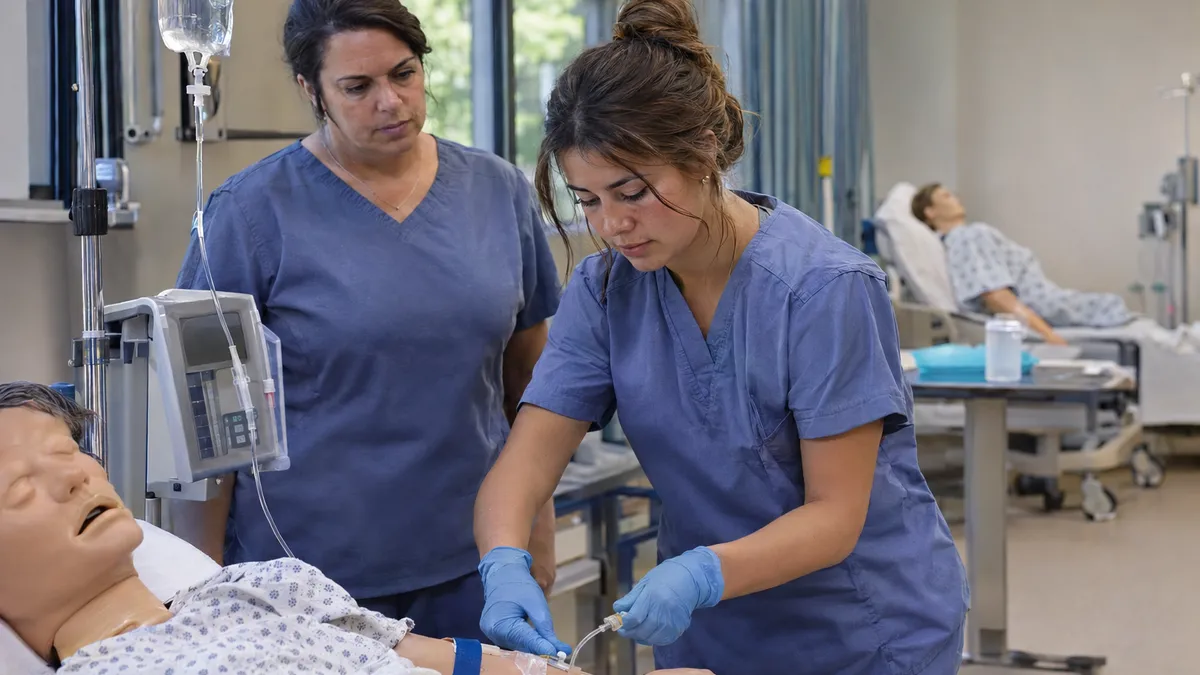
LPN Entrance Exam Practice: Complete 2026 Study Guide, Free Tests & 8-Week Plan
How this page was made: written with AI tools and published by Nathan Beja, founder of Practice Test Geeks, who is responsible for its content. Exam facts are checked against the official sources listed below. Not reviewed by a subject-matter expert. Editorial policy
Sources & references
Exam facts on this page (fees, format, dates, passing scores) are checked against these official sources; the date is our last check. Editorial policy
- op.nysed.gov — Fees, renewal, retake fee, score validity · verified Nov 2026
- nclex.com — Fees, eligibility, exam format, score release, test delivery, time limit, retake policy, passing score, registration deadline, test dates · verified Nov 2026