
HVAC Vent Cleaning: The Complete Guide to Air Duct Maintenance, Indoor Air Quality, and When to Call a Professional
❓ Learn everything about HVAC vent cleaning: costs, frequency, DIY tips, and when to hire a pro to improve air quality and system efficiency.
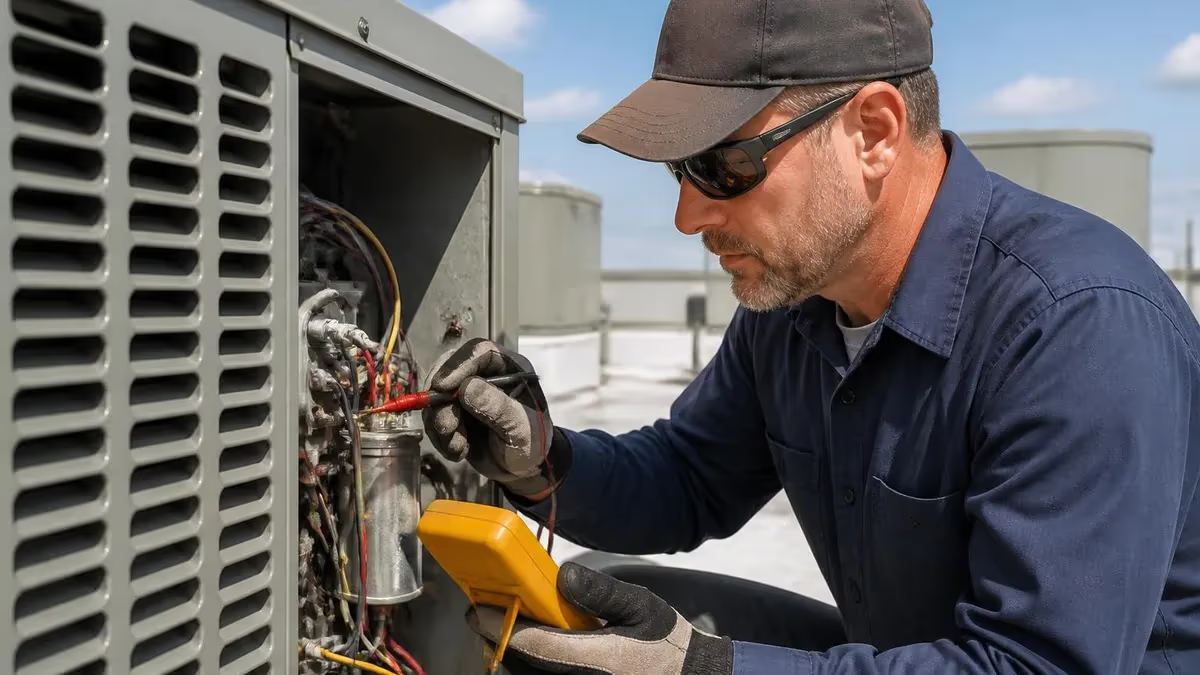
HVAC vent cleaning is one of the most overlooked yet critically important aspects of home and building maintenance. Over time, the ductwork that carries conditioned air throughout your property accumulates dust, debris, pet dander, mold spores, and even pest residue that can degrade indoor air quality and reduce system performance. Understanding what hvac vent cleaning involves, when it's necessary, and how to approach it properly can save you money, protect your health, and extend the life of your entire heating and cooling system.
The air ducts in a typical American home circulate air from your furnace or air conditioner through every room, then return it back to the central unit. This constant airflow means that whatever is inside your ducts eventually gets distributed throughout your living spaces. According to the EPA, Americans spend roughly 90 percent of their time indoors, and indoor air can be two to five times more polluted than outdoor air — making the cleanliness of your duct system directly relevant to your family's respiratory health and overall well-being.
Most HVAC professionals recommend having your duct system inspected every three to five years and cleaned when inspection reveals significant buildup. However, certain situations call for more immediate attention. If you've recently completed a major home renovation, moved into a previously owned home without documentation of prior cleaning, experienced a rodent or insect infestation, or noticed a musty smell coming from your vents, scheduling a professional cleaning should be a top priority regardless of how much time has passed since the last service.
The cost of professional duct cleaning varies significantly based on home size, number of vents, level of contamination, and geographic location. Nationally, homeowners typically pay between $300 and $1,000 for a thorough cleaning of a standard residential system, though heavily contaminated systems or larger commercial properties can run considerably higher. While that might seem like a significant expense, it's worth comparing against the ongoing costs of reduced system efficiency, higher energy bills, and potential medical expenses associated with poor indoor air quality.
Homeowners often confuse vent cleaning with filter replacement, but these are very different maintenance tasks. Replacing your air filter every one to three months is essential for preventing large particles from entering the system and should be done consistently by every homeowner. Duct cleaning, by contrast, addresses the interior surfaces of the duct network itself — including supply and return ducts, registers, grilles, diffusers, heat exchangers, cooling coils, drain pans, fan housings, and the air handling unit housing. Comprehensive cleaning requires specialized equipment that most homeowners simply don't have access to.
One important consideration in any vent cleaning discussion is the role of duct design and hvac vent cleaning service quality. Not all duct cleaning companies are created equal. The National Air Duct Cleaners Association (NADCA) has established industry standards that reputable companies should follow, including the use of source removal methods that physically extract contaminants rather than simply displacing them. Before hiring any contractor, verify their NADCA certification, request references, and get a detailed written estimate that specifies exactly what the service includes.
This comprehensive guide covers everything you need to know about HVAC vent cleaning — from understanding what happens inside your ducts to evaluating whether DIY cleaning is appropriate for your situation, interpreting inspection findings, and maintaining a clean system long after the professionals have left. Whether you're a homeowner trying to improve your family's air quality or an HVAC professional looking to better serve your clients, the information here will help you make informed decisions about one of the most important aspects of indoor environmental control.
HVAC Vent Cleaning by the Numbers
Warning Signs Your HVAC Vents Need Cleaning
Visible Dust and Debris at Registers
Unusual Odors When System Runs
Inconsistent Airflow Between Rooms
Spike in Allergy or Respiratory Symptoms
Recent Renovation or Construction Work
Evidence of Pests or Mold
The professional duct cleaning process follows a systematic approach designed to remove contaminants from every component of the air distribution system, not just the visible registers. Understanding what a thorough cleaning entails helps you evaluate contractor proposals, ask the right questions, and recognize when a company is cutting corners. The difference between a legitimate source-removal cleaning and a superficial service that merely stirs up debris can mean the difference between genuinely improved air quality and wasted money.
A proper cleaning begins with a comprehensive inspection, typically using a camera or scope to assess actual conditions inside the ductwork before any work begins. This inspection documents the type and extent of contamination, identifies any damage to duct liners or insulation, and reveals issues like disconnected sections or improperly sealed joints that might need repair. Reputable contractors will walk you through the inspection findings and explain exactly what they propose to do before collecting any payment or beginning work.
The actual cleaning process uses two primary methods: contact cleaning and air washing. Contact cleaning involves physical agitation tools — brushes, whips, or skipper balls — that dislodge debris from duct surfaces. Air washing uses compressed air to blow loosened material toward a collection point. Both methods should be used in conjunction with a powerful negative-pressure vacuum system that draws the dislodged material out of the duct network and into a HEPA-filtered collection unit rather than releasing it into your living space.
Technicians work systematically through the system, sealing off sections and cleaning them one at a time to maintain negative pressure throughout the process. Every supply duct, return duct, branch, and trunk line should receive attention. The air handling unit itself — including the blower motor, evaporator coil, drain pan, and housing — requires cleaning as well, since these components collect significant contamination and directly affect both air quality and system efficiency. A contractor who skips these components isn't performing a complete cleaning.
After mechanical cleaning, the contractor should perform a post-cleaning inspection to verify that contamination has been effectively removed. If microbial growth was identified during the initial inspection, an EPA-registered antimicrobial treatment may be applied to duct surfaces after cleaning. However, be cautious about contractors who recommend chemical treatments as a substitute for thorough mechanical cleaning — sealants and sanitizers are supplements to proper source removal, not replacements. NADCA standards are clear that coatings should only be applied after surfaces are properly cleaned.
The entire process for a typical residential system usually takes three to five hours depending on home size and contamination level. During this time, expect some noise from the vacuum equipment and some disruption as technicians access all the registers throughout your home. After the job is complete, the contractor should restore all registers to their original positions, seal any access holes that were cut during the process, and provide documentation of the work performed including before-and-after photos if available.
Following a professional cleaning, you can take several steps to maintain clean ducts longer. Upgrading to a higher-MERV rated filter appropriate for your system captures more fine particles before they enter the duct network. Sealing leaks in accessible duct sections with mastic sealant or foil tape reduces the entry of unconditioned air carrying dust and moisture. Maintaining consistent humidity levels between 30 and 50 percent prevents conditions that favor mold growth. Regular vacuuming and dusting of living spaces reduces the overall particulate load that the system must manage.
HVAC Practice Test Questions
Prepare for the HVAC - Heating Ventilation and Air Conditioning exam with our free practice test modules. Each quiz covers key topics to help you pass on your first try.
HVAC Air Conditioning
HVAC Exam Questions covering Air Conditioning. Master HVAC Test concepts for certification prep.
HVAC Code Compliance
Free HVAC Practice Test featuring Code Compliance. Improve your HVAC Exam score with mock test prep.
HVAC Electrical Controls
HVAC Test Prep for Electrical Controls. Practice HVAC Quiz questions and boost your score.
HVAC Energy Efficiency
HVAC Questions and Answers on Energy Efficiency. Free HVAC practice for exam readiness.
HVAC Heating Systems
HVAC Mock Test covering Heating Systems. Online HVAC Test practice with instant feedback.
HVAC Load Calculations
Free HVAC Quiz on HVAC Load Calculations. HVAC Exam prep questions with detailed explanations.
HVAC Tools and Equipment
HVAC Practice Questions for HVAC Tools and Equipment. Build confidence for your HVAC certification exam.
HVAC Refrigeration
HVAC Test Online for Refrigeration. Free practice with instant results and feedback.
HVAC Safety Practices
HVAC Study Material on Safety Practices. Prepare effectively with real exam-style questions.
HVAC System Design
Free HVAC Test covering System Design. Practice and track your HVAC exam readiness.
HVAC Thermodynamics
HVAC Exam Questions covering Thermodynamics. Master HVAC Test concepts for certification prep.
DIY vs. Professional HVAC Vent Cleaning: What You Need to Know
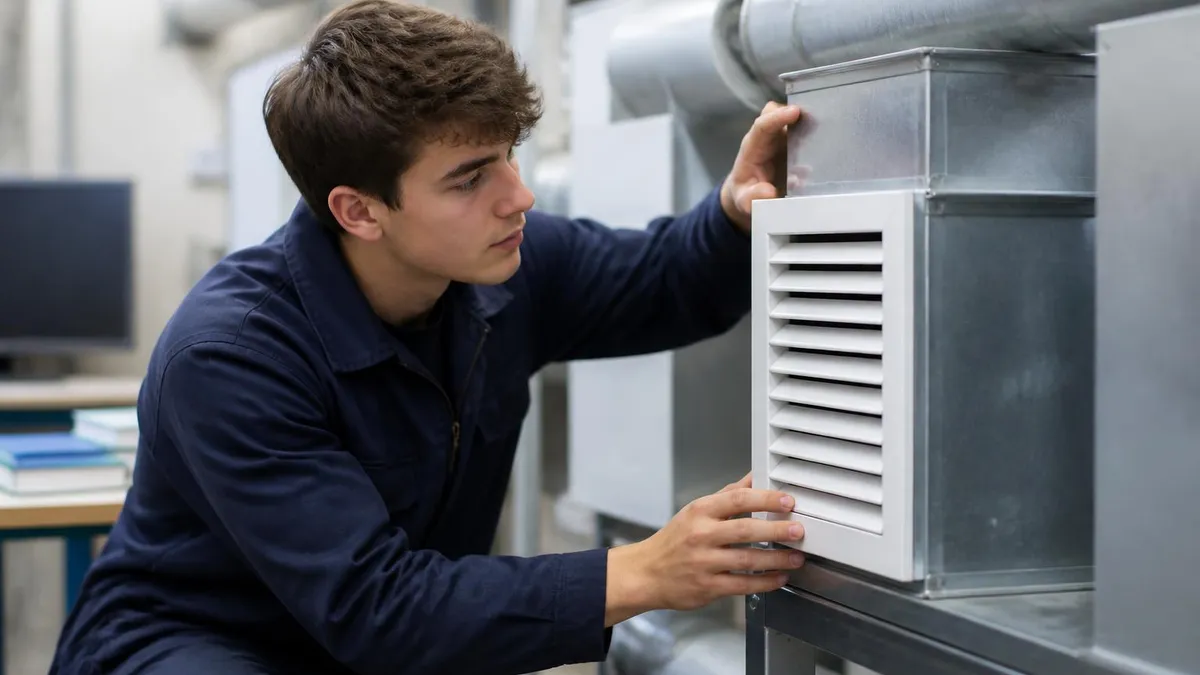
Homeowners can handle several meaningful vent maintenance tasks without professional equipment. Removing and washing register covers monthly, vacuuming visible debris from the first few inches of supply and return openings, and replacing air filters on schedule are all effective DIY contributions. A standard household vacuum with a brush attachment can remove surface-level dust from accessible ductwork near registers, and checking visible sections of flexible ductwork for disconnections or damage costs nothing beyond your time.
The critical limitation of DIY vent cleaning is reach and suction power. Household vacuums simply cannot generate the negative pressure required to extract debris from deep within the duct network, and most homeowners lack the flexible brushes and camera tools needed to reach and assess interior duct surfaces. DIY cleaning also risks pushing debris deeper into the system or damaging delicate duct liner materials if done aggressively. For surface-level maintenance, DIY is valuable; for genuine contamination removal, professional equipment is required.
Professional Duct Cleaning: Benefits and Limitations
- +Removes accumulated dust, allergens, and debris that degrade indoor air quality
- +Can improve HVAC system efficiency and reduce energy consumption by up to 20-30%
- +Identifies underlying problems like leaks, mold, or pest damage during inspection
- +Reduces strain on system components, potentially extending equipment lifespan
- +Eliminates odors caused by organic material buildup inside ductwork
- +Provides documented proof of system condition valuable for real estate transactions
- −Significant upfront cost ranging from $300 to $1,000 or more for residential systems
- −Benefits may be minimal in newer homes or systems without significant contamination
- −Low-quality providers can cause damage or fail to deliver genuine cleaning results
- −Cleaning does not address design flaws or duct leakage that reduces system efficiency
- −Temporary disruption and noise during a multi-hour cleaning process
- −Results may be difficult to verify without professional inspection equipment
HVAC Vent Cleaning Maintenance Checklist
- ✓Replace air filters every 1–3 months based on filter type and household conditions
- ✓Inspect visible registers and grilles monthly for dust buildup and discoloration
- ✓Vacuum register covers and the first 6 inches of accessible duct openings quarterly
- ✓Schedule a professional duct inspection every 3–5 years or after major renovations
- ✓Maintain indoor humidity between 30–50% to prevent mold-favorable moisture conditions
- ✓Seal accessible duct joints with mastic sealant or UL 181-rated foil tape
- ✓Keep outdoor air intakes clear of leaves, debris, and vegetation year-round
- ✓Document all cleaning services with dates, provider information, and before/after photos
- ✓Check drip pans and condensate drain lines for standing water or microbial growth annually
- ✓Test carbon monoxide detectors and verify combustion air supply is unobstructed annually
Source Removal Is the Only Accepted Standard for Professional Duct Cleaning
The National Air Duct Cleaners Association (NADCA) requires that certified contractors use source removal methods — physically extracting contaminants rather than displacing them. If a contractor cannot explain their source-removal process or lacks NADCA certification, their cleaning may not improve your air quality at all. Always verify NADCA certification at nadca.com before hiring any duct cleaning company.
Understanding the true cost of HVAC vent cleaning requires looking beyond the initial service price to consider what you're actually buying and how different cost factors affect the quality of the result. Pricing varies widely across the industry, and the cheapest option is rarely the best value when the goal is genuinely improved indoor air quality and system performance. A clear understanding of what drives pricing helps you evaluate quotes accurately and avoid both overpaying for unnecessary add-ons and underpaying for inadequate service.
Home size is the primary cost driver for residential duct cleaning, simply because larger homes have more ductwork, more registers, and more surface area to clean. A contractor typically charges per vent or register, with the total also reflecting the linear footage of duct being cleaned.
National averages break down to approximately $25 to $50 per supply vent and $75 to $150 per return vent for a complete cleaning, though regional labor costs significantly affect these figures. Urban markets in the Northeast and West Coast tend to run 20 to 40 percent higher than rural markets in the Midwest and South.
The level of contamination found during the pre-cleaning inspection also affects final cost. A system with routine dust accumulation requires less labor and time than one with heavy debris buildup, visible mold growth, or evidence of past pest activity. In contaminated systems, additional services like antimicrobial treatment, coil cleaning, or duct repair may be necessary and will add to the total. Getting a detailed written estimate that itemizes each service helps you understand exactly what you're paying for and prevents unexpected charges after the work is complete.
When comparing quotes from multiple contractors, be sure you're comparing equivalent scope. Ask each provider specifically whether their price includes cleaning the air handling unit, blower motor, evaporator coil, and drain pan — not just the supply and return ductwork. Some companies provide a low base price that covers only the main trunk lines and then charge extra for branch ducts, registers, and the air handler. A quote that seems dramatically lower than competitors may simply exclude major components that a thorough job requires.
For commercial properties, duct cleaning costs scale significantly with system complexity, building size, and the number of air handling units. A small commercial building might pay $1,500 to $5,000 for a thorough cleaning, while large facilities with complex multi-zone systems can spend tens of thousands of dollars on comprehensive service. Commercial property managers should budget for duct cleaning as a routine maintenance line item and schedule it proactively rather than reactively, as the energy and liability costs of neglecting commercial duct maintenance consistently exceed the cost of regular service.
Some homeowners wonder whether HVAC duct cleaning is covered by homeowners insurance or health insurance given its connection to indoor air quality. In most cases, routine duct cleaning is considered a maintenance expense not covered by homeowners insurance. However, if duct contamination resulted from a covered peril — such as water damage from a burst pipe that led to mold growth in the ductwork — your insurance claim might include duct remediation as part of the restoration. Always document the condition of your ducts before and after any covered loss event and discuss with your adjuster.
Financing options for duct cleaning are available through some contractors, particularly for high-cost situations involving mold remediation or complete duct system restoration. Additionally, improving duct cleanliness and sealing duct leaks can contribute to energy savings substantial enough to offset cleaning costs over time. The U.S. Department of Energy estimates that leaky ducts can reduce heating and cooling efficiency by 20 to 30 percent, meaning that a comprehensive service addressing both cleaning and sealing can deliver measurable returns on the investment through lower monthly utility bills.
The FTC and EPA have both issued consumer alerts about fraudulent duct cleaning companies that advertise extremely low prices ($49–$99 whole-home specials) and then use high-pressure tactics to upsell hundreds of dollars in unnecessary treatments once they're inside your home. Always research companies on NADCA.com, check BBB ratings, and get at least two competitive bids before scheduling service. A legitimate whole-home cleaning costs $300–$1,000 and takes several hours — anything substantially cheaper almost certainly involves cutting corners or aggressive upselling.
The health implications of HVAC vent cleanliness extend far beyond simple comfort, touching on serious respiratory conditions, allergic disease, and the long-term wellbeing of vulnerable household members. Medical research has consistently demonstrated links between indoor air quality and health outcomes, making duct maintenance a legitimate public health issue rather than merely a housekeeping preference. Understanding these health connections helps homeowners prioritize duct maintenance appropriately and recognize when cleaning may be contributing to health symptoms they're experiencing.
Dust mites represent one of the most common indoor allergen sources, and their waste products are a primary trigger for allergic rhinitis and asthma. These microscopic organisms thrive in warm, humid environments and feed on organic debris — conditions that dusty ductwork can support. When the HVAC system circulates air through contaminated ducts, dust mite allergens become airborne and are inhaled by occupants. Regular filter replacement and periodic duct cleaning reduce the dust mite habitat and allergen load in circulated air, providing meaningful relief for affected individuals.
Mold is perhaps the most serious health concern associated with contaminated ductwork. Certain mold species, including Stachybotrys chartarum (commonly called black mold) and various Aspergillus and Penicillium species, produce mycotoxins that can cause serious respiratory illness, neurological symptoms, and immune dysfunction in susceptible individuals. Mold growth in ducts typically requires both organic debris as a food source and elevated moisture — conditions that can develop from duct leaks near humid crawl spaces or from condensation on poorly insulated cold surfaces.
For households with asthma patients, the relationship between duct cleanliness and symptom management can be particularly significant. The American Lung Association recommends maintaining good indoor air quality as a core component of asthma management, and studies have shown that reducing indoor allergen and irritant exposure decreases asthma attack frequency and severity. While duct cleaning alone is not a cure for asthma, it's a meaningful intervention that, combined with regular filter changes and humidity management, can contribute to a measurably healthier indoor environment.
Infants, elderly individuals, and people with compromised immune systems face the greatest health risks from poor indoor air quality. These groups have less respiratory reserve to handle irritant or allergen exposure and may develop serious complications from conditions that healthy adults simply find annoying. Households with vulnerable members should prioritize more frequent duct inspection and cleaning, maintain stricter filter replacement schedules, consider upgrading to HEPA filtration where system compatibility allows, and address any moisture issues that could support microbial growth in the duct system.
Beyond respiratory health, volatile organic compounds (VOCs) from building materials, cleaning products, and furnishings can accumulate in duct systems and be recirculated through living spaces. While duct cleaning does not specifically address VOC contamination, a clean and well-maintained duct system combined with adequate fresh air ventilation helps dilute and remove indoor pollutants more effectively than a compromised system. Understanding that indoor air quality is a holistic challenge — not just a dust problem — helps homeowners take a comprehensive approach to maintaining a healthy home environment.
The EPA's indoor air quality guidelines emphasize source control as the most effective strategy: removing or reducing contamination sources is more effective than trying to filter or dilute pollutants after the fact. In the context of duct maintenance, this means addressing the root causes of contamination — duct leaks that allow dusty attic or crawlspace air to enter the system, moisture problems that support mold growth, and inadequate filtration that allows fine particles to bypass the filter and coat duct surfaces. Cleaning removes existing contamination; addressing root causes prevents recontamination and delivers lasting air quality improvements.
Maintaining clean HVAC vents is not a one-time event but an ongoing commitment that requires integrating several maintenance habits into your regular home care routine. The most effective long-term strategies work synergistically — better filtration reduces duct contamination, duct sealing reduces the entry of outside particulates, humidity control prevents mold, and periodic professional cleaning removes whatever the preventive measures couldn't stop. Together, these practices create a system that delivers consistently clean, healthy air year after year.
Filter selection plays a more important role in duct cleanliness than many homeowners realize. Standard fiberglass filters with MERV ratings of 1 to 4 capture only the largest particles, allowing fine dust, pollen, and pet dander to pass through and deposit on duct surfaces.
Upgrading to a pleated filter with a MERV rating of 8 to 11 captures significantly more fine particulate without restricting airflow to the degree that high-MERV filters (MERV 13+) can in systems not designed for them. Before upgrading your filter, check with your HVAC manufacturer or a qualified technician to ensure your system can handle the increased static pressure.
Duct sealing is another high-impact maintenance step that directly affects duct cleanliness. The EPA estimates that the average forced-air system loses 20 to 30 percent of conditioned air through duct leaks, and these leaks don't just waste energy — they also draw in unconditioned air from attics, crawlspaces, and wall cavities that may contain high concentrations of dust, insulation fibers, and biological contaminants. Sealing these leaks with mastic sealant (preferred for most applications) or code-approved metallic tape substantially reduces both contamination entry and energy waste simultaneously.
Humidity management is particularly important in climates with high outdoor humidity, in homes over crawlspaces, and in older homes with less air sealing. Maintaining indoor relative humidity between 30 and 50 percent using properly sized and maintained air conditioning, dehumidifiers in problem areas, and adequate ventilation prevents the moisture conditions that support mold and dust mite proliferation. Monitor humidity with an inexpensive digital hygrometer and address any persistent high-humidity areas before they contribute to duct system contamination.
Pets are a significant contributor to duct contamination in many households. Pet dander, hair, and associated particulates circulate constantly in pet-owning homes and accumulate quickly in duct systems. Households with multiple pets or pets that shed heavily should increase filter replacement frequency to monthly, consider more frequent professional duct inspections, and groom pets regularly to reduce the overall airborne particle load. Some HVAC professionals recommend installing return air filters — secondary filtration at the return grilles — in heavily pet-exposed systems as an additional barrier against dander accumulation.
Seasonal transitions are natural checkpoints for duct system maintenance. At the beginning of heating season (fall) and cooling season (spring), take a few minutes to inspect visible registers, replace the air filter, check that all registers are open and unobstructed, and listen for any unusual sounds when the system first starts running after an extended period of dormancy. These brief seasonal checks catch developing problems early when they're inexpensive to address, rather than allowing them to become significant issues that require costly repairs or emergency service calls during peak weather periods.
For homeowners who have recently purchased a previously owned home, establishing a duct cleaning and inspection baseline is essential. You have no way of knowing the maintenance history of the system, and the previous owners may have neglected duct care for years or even decades.
Having a qualified HVAC technician inspect the duct system, ideally with a camera, within the first year of ownership gives you an accurate picture of current conditions and allows you to make informed decisions about whether cleaning is immediately necessary or can be deferred to your regular maintenance cycle. This initial investment in knowledge protects both your health and your equipment investment going forward.
HVAC Questions and Answers
HVAC Sales: The Complete Guide to Selling Heating and Cooling Systems, Building Customer Trust, and Closing More Deals

HVAC Air Duct Sealing: The Complete Homeowner and Contractor Guide to Sealing Ductwork for Efficiency, Comfort, and Indoor Air Quality
HVAC Solutions: The Complete Guide to Heating, Cooling, and Indoor Air Quality Systems for Homes and Buildings

Commercial HVAC Repair: Systems, Costs, and Service Strategies
HVAC Apprenticeship Programs: Your Complete Guide to Starting a Hands-On Career in Heating, Ventilation, and Air Conditioning
About the Author

NATE Certified HVAC Technician & Licensing Exam Trainer
Universal Technical InstituteMike Johnson is a NATE-certified HVAC technician and EPA 608 universal-certified refrigerant handler with a Bachelor of Science in HVAC/R Technology. He has 19 years of commercial and residential HVAC installation and service experience and specializes in preparing technicians for NATE certification, EPA 608, A2L refrigerant safety, and state HVAC contractor licensing examinations.