
HVAC Units for Sale: Your Complete Buyer's Guide to Choosing, Pricing, and Installing the Right System
Find the best hvac units for sale with our complete guide to system types, ✍🏼 pricing, efficiency ratings, and installation tips for US homes.
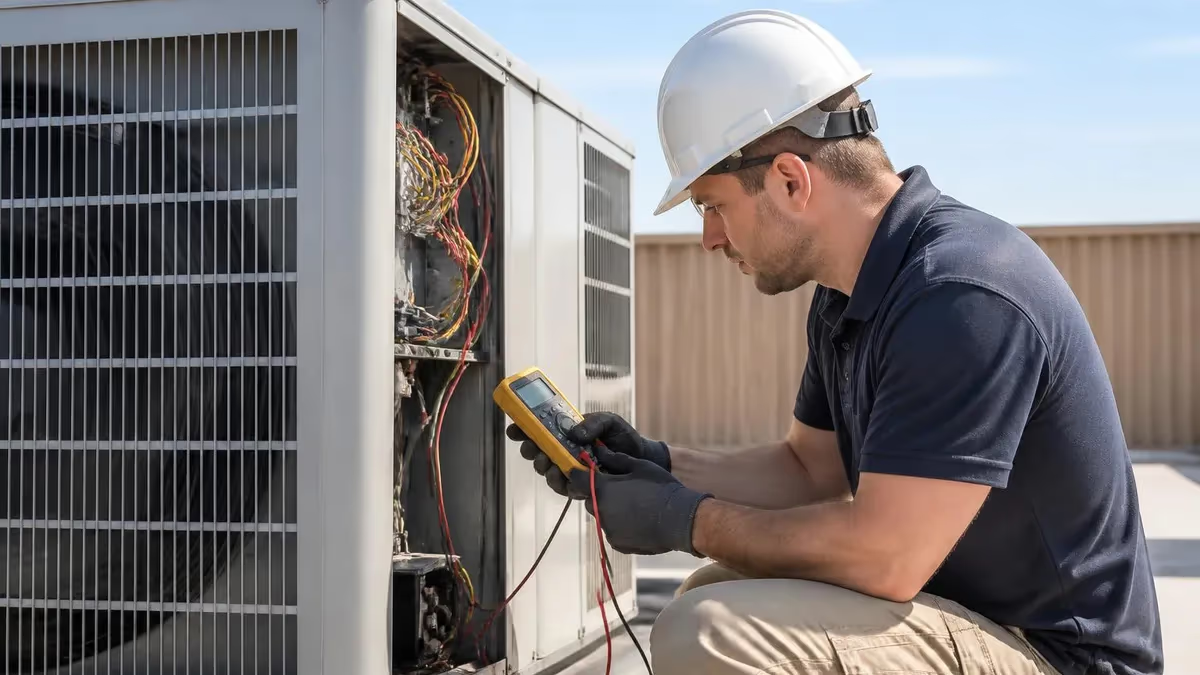
If you are searching for hvac units for sale, the market has never offered more choices — or more complexity. From compact mini-split systems for single rooms to whole-home central air setups rated above 20 SEER2, today's buyers face decisions about fuel type, efficiency tier, brand warranty, contractor compatibility, and regional rebate eligibility all at once. Understanding how each variable affects your long-term comfort and operating cost is the foundation of a smart purchase, and this guide walks you through every major consideration in plain language.
The United States HVAC equipment market exceeded $18 billion in retail and contractor sales in 2024, and analysts project steady annual growth of roughly 5 percent through 2030. Drivers include aging housing stock, rising summer temperatures across the Sun Belt, tightening federal energy efficiency standards under the 2023 DOE rule changes, and a surge in new construction in the Southeast and Mountain West. All of that demand pushes consumers toward replacement or upgrade purchases, often on a compressed timeline when an existing unit fails during peak season.
Price is obviously a top concern, but the sticker price on a unit is only one part of the total cost of ownership. A $1,200 builder-grade central air conditioner that draws 18 SEER2 of efficiency will cost meaningfully more to operate each year than a $2,400 premium unit rated at 22 SEER2, especially in climates where cooling runs five or six months annually.
Over a 15-year equipment lifespan, the efficiency gap can easily exceed $3,000 in electricity costs, which means the cheaper unit was actually the more expensive choice. Factoring in utility rebates and federal tax credits under the Inflation Reduction Act makes the math even more decisive.
Equipment category matters as much as price. Central split systems, packaged rooftop units, ductless mini-splits, heat pumps, and geothermal systems each serve distinct use cases, and buying the wrong category — however well-priced — leads to years of inefficiency or comfort complaints. A 3-ton central system installed in a 900-square-foot cottage will short-cycle constantly, driving up humidity and component wear. A single-zone mini-split dropped into a 2,800-square-foot home with no existing duct infrastructure will leave most rooms underserved. Right-sizing and right-categorizing the equipment is every bit as important as the purchase price.
Installation quality is the third leg of the stool. Industry data consistently shows that 40 to 60 percent of HVAC systems in the United States are installed with at least one major deficiency — incorrect refrigerant charge, improperly sized ductwork, inadequate airflow, or missing condensate drainage. Even the highest-rated equipment on the market will underperform and fail early when installed carelessly. That means vetting your installing contractor is part of the buying process, not an afterthought. NATE-certified technicians and contractors who perform Manual J load calculations before recommending equipment size are worth seeking out before you finalize any purchase.
Seasonal timing can also affect both availability and price. The months of October through February typically see reduced demand, and many distributors and contractors offer off-season pricing or promotional financing. Conversely, purchasing in June or July means competing with thousands of emergency replacement calls, potentially facing equipment allocation limits from distributors, and paying full market rates with little negotiating leverage. If your current system is showing signs of age — frequent cycling, rising utility bills, R-22 refrigerant designation — planning a proactive replacement in the shoulder season is a practical strategy that protects your budget and timeline.
This guide covers every major HVAC equipment category available to US buyers today, explains the efficiency standards you will encounter on spec sheets and Energy Star certifications, walks through realistic installed cost ranges by system type and home size, and gives you a practical framework for evaluating contractors, financing offers, and rebate programs. Whether you are replacing a failed unit under pressure or planning a deliberate upgrade for maximum efficiency, the information here will help you make a confident, well-informed decision.
HVAC Units for Sale: Market by the Numbers
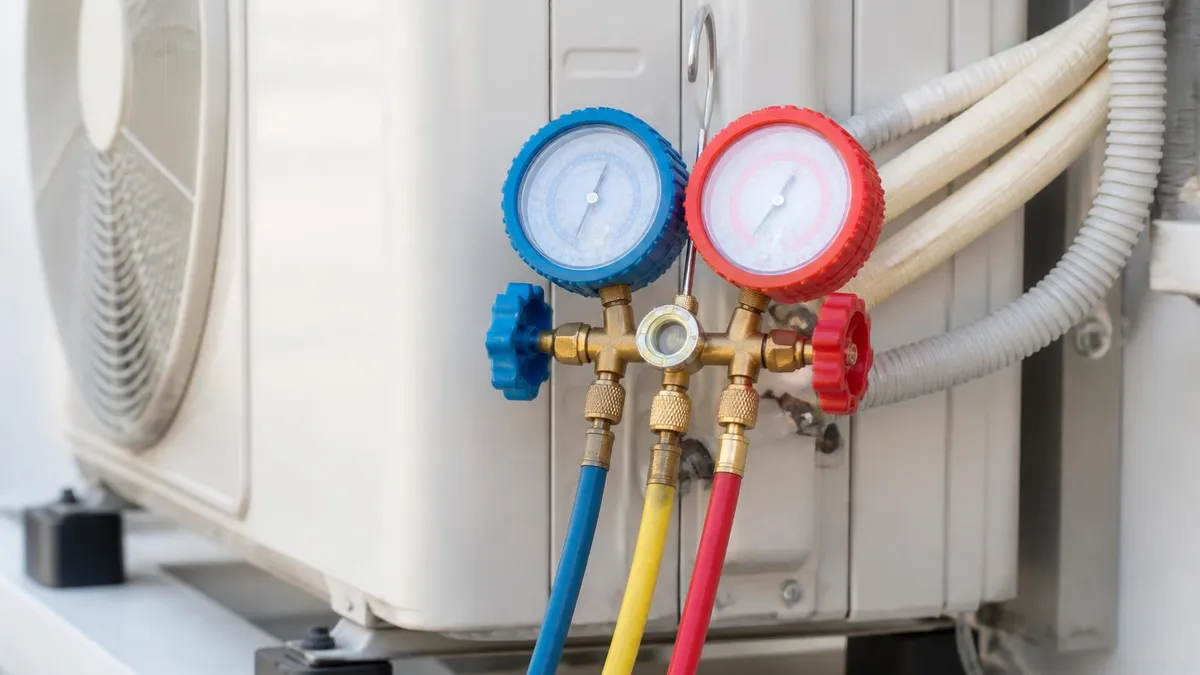
Major HVAC System Categories Available for Purchase
The most common US residential choice, pairing an outdoor condenser with an indoor air handler and existing ductwork. Available as heat pumps or separate AC-plus-furnace combos. Best for homes with existing ducts and whole-home conditioning needs.
Refrigerant lines connect an outdoor compressor to one or more indoor wall-mounted air handlers — no ducts required. Ideal for room additions, older homes, garages, and multi-zone precision control. Available in single-zone and multi-zone configurations up to eight indoor units.
All components — compressor, coil, air handler, and sometimes furnace — housed in a single cabinet, typically installed on the roof or beside the home on a concrete pad. Common in the South and Southwest, and in light commercial applications where rooftop installation is preferred.
Ground-source systems that exchange heat with the earth via buried loops, achieving efficiencies of 300 to 500 percent. High upfront cost ($10,000–$30,000 installed) is partially offset by the federal 30 percent tax credit and dramatically lower operating costs over 20-plus years.
Self-contained room cooling solutions requiring no permanent installation. Window units from 5,000 to 25,000 BTU serve individual rooms efficiently. Portable units offer flexibility but sacrifice efficiency and produce more noise. Best for renters, supplemental cooling, or temporary setups.
Understanding realistic pricing for HVAC units for sale means separating equipment cost from installed cost, because the two figures can differ dramatically depending on your home's existing infrastructure, local labor rates, and system complexity.
A standard 3-ton central air conditioner from a mid-tier brand might carry a wholesale equipment price of $1,400 to $1,900, but the fully installed cost in most US markets ranges from $3,500 to $6,500 — with the gap filled by refrigerant lines, electrical work, condensate drainage, thermostat installation, permits, and labor. Always request itemized quotes that separate equipment from labor so you can make valid comparisons between contractors.
Mini-split systems occupy a wide pricing band depending on the number of zones and the capacity of each indoor unit. A single-zone 12,000 BTU (1-ton) mini-split from a reputable brand like Mitsubishi, Daikin, or LG can be purchased for $700 to $1,200 as equipment only, with DIY-friendly pre-charged line sets available for homeowners in some states. Professionally installed, the same system typically runs $2,500 to $4,500. Multi-zone systems serving three or four rooms jump to $6,000 to $12,000 installed, though they often replace multiple window units or serve additions that would otherwise require duct extensions costing a similar amount.
Heat pump systems, which provide both heating and cooling from a single outdoor unit, have seen the sharpest price movement in the market over the past two years. The 2022 Inflation Reduction Act created a 30 percent federal tax credit for qualifying heat pump installations (up to $2,000 per year through 2032), and many utilities now offer additional rebates of $500 to $1,500.
Those incentives have driven significant consumer demand, and manufacturers including Carrier, Trane, Lennox, and Rheem have expanded their heat pump lineups aggressively. A 3-ton air-source heat pump in the mid-efficiency tier (16–18 SEER2) installed in a moderate climate typically costs $5,000 to $9,000 all-in before incentives.
Furnace replacement, whether standalone or as part of a complete system refresh, adds another $1,500 to $4,500 depending on fuel type, efficiency rating, and whether ductwork modifications are needed. A 96 percent AFUE gas furnace — the highest efficiency tier for conventional gas systems — costs more upfront but qualifies for utility rebates in many regions and reduces annual heating bills significantly in cold-climate states. Oil furnaces are increasingly being replaced with heat pumps as fuel oil prices remain volatile, a trend accelerating in the Northeast where state-level electrification incentives are particularly generous.
Commercial HVAC pricing follows a different scale. Light commercial packaged rooftop units (RTUs) for small retail or office spaces in the 3-to-10-ton range typically cost $4,000 to $15,000 in equipment, with installed costs ranging from $8,000 to $30,000 depending on crane requirements, electrical upgrades, and curb adapter compatibility with existing ductwork penetrations. Mid-size commercial projects involving multiple RTUs or chiller-based systems require engineering-level design and are typically bid through a full mechanical contracting process rather than a simple equipment purchase.
Financing options have become a standard part of the HVAC purchasing conversation. Many manufacturers — including Carrier, Trane, and Lennox — offer promotional financing through affiliated credit programs, often featuring 12 to 60 months of zero-percent interest for qualified buyers. Home equity loans and HELOCs offer another path, particularly for larger whole-home systems or geothermal installations where the efficiency payback over 10 years is well-documented.
Some utilities offer on-bill financing that lets customers pay for high-efficiency equipment through their monthly utility statement, removing the upfront barrier entirely. Comparing the total cost of each financing path — including any fees, rate changes after the promotional period, and impact on your credit — is as important as comparing the equipment prices themselves.
The best time to lock in competitive pricing is during the shoulder seasons of fall and early spring. Contractors have more scheduling flexibility, distributors are moving inventory to make room for new model-year equipment, and manufacturer rebate programs often run concurrent with seasonal promotions. Requesting multiple bids — ideally three or more from NATE-certified contractors who provide written Manual J calculations — gives you both pricing benchmarks and confidence that the recommended system size is actually appropriate for your home's load profile rather than simply what the contractor has in stock.
HVAC Practice Test Questions
Prepare for the HVAC - Heating Ventilation and Air Conditioning exam with our free practice test modules. Each quiz covers key topics to help you pass on your first try.
HVAC Air Conditioning
HVAC Exam Questions covering Air Conditioning. Master HVAC Test concepts for certification prep.
HVAC Code Compliance
Free HVAC Practice Test featuring Code Compliance. Improve your HVAC Exam score with mock test prep.
HVAC Electrical Controls
HVAC Test Prep for Electrical Controls. Practice HVAC Quiz questions and boost your score.
HVAC Energy Efficiency
HVAC Questions and Answers on Energy Efficiency. Free HVAC practice for exam readiness.
HVAC Heating Systems
HVAC Mock Test covering Heating Systems. Online HVAC Test practice with instant feedback.
HVAC Load Calculations
Free HVAC Quiz on HVAC Load Calculations. HVAC Exam prep questions with detailed explanations.
HVAC Tools and Equipment
HVAC Practice Questions for HVAC Tools and Equipment. Build confidence for your HVAC certification exam.
HVAC Refrigeration
HVAC Test Online for Refrigeration. Free practice with instant results and feedback.
HVAC Safety Practices
HVAC Study Material on Safety Practices. Prepare effectively with real exam-style questions.
HVAC System Design
Free HVAC Test covering System Design. Practice and track your HVAC exam readiness.
HVAC Thermodynamics
HVAC Exam Questions covering Thermodynamics. Master HVAC Test concepts for certification prep.
HVAC Efficiency Ratings: SEER2, HSPF2, and AFUE Explained
SEER2 — Seasonal Energy Efficiency Ratio 2 — replaced the original SEER standard in January 2023 under a new DOE test protocol using higher external static pressure to better reflect real-world duct resistance. The higher the SEER2 number, the less electricity the system uses to produce a given amount of cooling. Minimum federal standards for new central AC equipment are now 13.4 SEER2 in the North and 14.3 SEER2 in the South and Southwest, effective since January 2023. Premium units reach 22 to 26 SEER2.
When comparing units, each full SEER2 point translates to roughly 5 to 7 percent reduction in cooling energy use. A homeowner in Phoenix running a 3-ton system 2,000 hours per year who upgrades from 14 SEER2 to 18 SEER2 can expect to save approximately $180 to $250 annually in electricity costs at 2025 average residential rates. Over a 15-year lifespan that compounds to $2,700 to $3,750 in savings, often exceeding the equipment price premium for the higher-efficiency unit. Always verify SEER2 ratings using the AHRI Certified directory at ahridirectory.org before finalizing a purchase.

Buying a New HVAC Unit vs. Repairing Your Existing System
- +New units carry manufacturer warranties of 5 to 12 years on parts, reducing repair exposure significantly
- +Modern equipment operates at 20–40% higher efficiency than systems installed before 2010, cutting utility bills
- +New systems qualify for federal tax credits up to $2,000 and state/utility rebates reducing net purchase price
- +Updated refrigerant — R-410A transitioning to R-454B — ensures parts and service availability for the system's lifetime
- +Variable-speed compressors on premium new units deliver quieter operation and more consistent indoor humidity control
- +Newer smart thermostats and zoning integration available with new installations improve comfort and automation options
- −Upfront installed cost of $4,000–$12,000 represents a significant capital outlay compared to a $300–$800 repair
- −Installation disrupts the home for one to two full days and may require electrical panel upgrades adding $1,000–$3,000
- −Equipment lead times can run two to six weeks during peak season, leaving homeowners without climate control
- −Choosing the wrong system type or size — without a Manual J calculation — creates long-term comfort and efficiency problems
- −Financing costs can add 10–20% to total system cost if promotional zero-percent terms expire before payoff
- −Low-quality installations can negate efficiency gains; vetting a qualified contractor takes additional time and effort
HVAC Buying Checklist: 10 Steps Before You Purchase
- ✓Get a written Manual J load calculation from your contractor to confirm correct system size for your home.
- ✓Collect at least three itemized quotes separating equipment cost from labor and permit fees.
- ✓Verify the contractor holds a current state HVAC license and carries general liability plus workers' compensation insurance.
- ✓Look up proposed equipment SEER2 and HSPF2 ratings on the official AHRI Certified directory before signing.
- ✓Check Energy Star certification and confirm federal tax credit eligibility for the specific model number on the quote.
- ✓Research utility rebate programs through your electric and gas provider before purchasing — rebates are model-specific.
- ✓Confirm the refrigerant type: avoid systems still using R-22 (phased out) or older R-410A stock nearing end of production.
- ✓Ask for the contractor's installation checklist and confirm they will perform a startup commissioning report.
- ✓Review the manufacturer warranty registration process and confirm the contractor will register on your behalf.
- ✓Compare total cost of ownership over 10 years — not just purchase price — across the quoted efficiency tiers.
When Repair Cost Exceeds 50% of Replacement Cost — Replace
A widely used industry benchmark holds that if a repair quote exceeds 50 percent of the cost of a new system, replacement is almost always the smarter financial decision — especially if the existing unit is more than 10 years old. Factor in efficiency savings, new warranty coverage, and available tax credits: the math rarely favors expensive repairs on aging equipment. Ask your contractor to run both scenarios side by side before committing.
The major HVAC brands available in the US residential and light commercial markets each occupy distinct positions on the quality-value spectrum, and understanding those differences helps you evaluate contractor recommendations critically. Carrier, Trane, and Lennox are generally considered the premium tier — their equipment features more advanced variable-speed compressor technology, broader product lines, and historically strong dealer networks.
Carrier's Infinity and Trane's XV series represent the upper end of their respective lineups, both offering communicating system controls that optimize performance across matched indoor and outdoor components. These premium brands typically carry 10-year parts warranties when registered within 60 days of installation, and some extended labor warranty programs are available through dealer networks.
The mid-tier segment includes well-respected names like Rheem, Ruud (sister brands under the same parent), American Standard (which shares engineering with Trane), and Bryant (a Carrier sibling). These brands offer most of the efficiency and reliability of the premium tier at price points 10 to 20 percent lower for equivalent BTU and SEER2 ratings.
For most homeowners without strong brand loyalty or specific feature requirements, mid-tier equipment installed by a skilled contractor will perform as well as premium equipment over the system's full life. The contractor's installation quality and ongoing service relationship generally matters more than the 10 to 15 percent efficiency premium between the mid and top tiers.
Value-tier brands — including Goodman, Amana (owned by Daikin), and some private-label lines available through big-box retailers — occupy the highest-volume segment of the replacement market. Goodman in particular is widely used in contractor markets because of aggressive pricing and broad parts availability.
The trade-off is that value-tier units typically use single-stage or two-stage compressors rather than variable-speed technology, produce more on-off cycling, and may show higher failure rates in the 8-to-12-year range than premium brands. For rental properties, starter homes, or budget-constrained replacements, value-tier equipment from a reputable manufacturer with a strong local dealer network is a pragmatic choice that delivers reliable comfort at minimum capital outlay.
Mini-split market leadership in the US belongs to Japanese and Korean manufacturers: Mitsubishi Electric, Daikin, Fujitsu, and LG together account for the majority of the professional mini-split market. Mitsubishi's Hyper Heat line is widely recognized as the cold-climate benchmark, maintaining 100 percent rated heating capacity at 5 degrees Fahrenheit and meaningful output at minus 13 degrees — performance no conventional heat pump can match.
These Japanese-engineered systems typically cost 15 to 25 percent more than equivalent-capacity Chinese-manufactured units, but their track record for component longevity and the depth of their US service networks supports the premium for most buyers who plan a 15-to-20-year ownership horizon.
Geothermal systems are dominated by WaterFurnace, ClimateMaster, and Bosch — brands that have served the niche market long enough to build substantial dealer and installer training programs. Geothermal is not a commodity purchase: the ground loop design (horizontal, vertical, or pond loop) must be engineered specifically for your site's soil conductivity and available land area, and the installing contractor needs specific training beyond conventional HVAC certification.
The payback period for geothermal relative to high-efficiency air-source heat pumps has narrowed since the IRA tax credit applies equally to both technologies at 30 percent, but geothermal still wins on long-term operating cost in climates with extreme heating or cooling seasons and regions with high electricity rates.
Commercial HVAC brands serving the light commercial segment include Carrier, Trane, Lennox, and Daikin Applied for higher-end installations, with York (Johnson Controls), Nordyne, and Bohn serving more cost-sensitive commercial applications. The commercial segment also features a large service and replacement market for legacy equipment from manufacturers that have been consolidated or renamed over the decades — Heil, Tempstar, Comfortmaker, and others share engineering and components despite carrying different brand names.
For commercial buyers, evaluating local service network depth is even more critical than in residential markets, since equipment downtime in a commercial facility has direct business cost implications beyond simple comfort disruption.
Warranty comparison across brands requires reading the fine print carefully. Most manufacturers offer two warranty tiers: a base warranty (typically 5 years parts, 1 year labor) and an extended registered warranty (10 years parts when registered within 60 to 90 days of installation). Some brands require equipment to be installed by a factory-authorized dealer for the extended warranty to apply. Voiding conditions typically include improper refrigerant charge, mismatched indoor/outdoor components, installation without required permits, and failure to register within the specified window. Keeping all documentation — installation permit, contractor invoice, and registration confirmation — is essential for warranty claim support.

Any HVAC unit for sale that uses R-22 (Freon) refrigerant should be avoided entirely. R-22 production was banned in the United States effective January 1, 2020 under EPA regulations, and remaining stockpiles command prices of $100 to $150 per pound — a typical system holds 5 to 10 pounds. A single refrigerant leak repair can cost $800 to $1,500 just for the refrigerant, plus labor. Confirm that any unit you purchase is rated for R-410A or the newer R-454B refrigerant before signing a contract.
Federal, state, and utility incentive programs have fundamentally changed the economics of purchasing high-efficiency HVAC equipment, and navigating them correctly can reduce your net out-of-pocket cost by $1,500 to $6,000 on a qualifying installation.
The most significant federal incentive is the Energy Efficient Home Improvement Credit (Section 25C of the Internal Revenue Code, extended and expanded by the Inflation Reduction Act of 2022). This credit provides 30 percent of the cost of qualifying heat pump installations, up to $2,000 per year, and 30 percent of qualifying heat pump water heater costs, up to $600 per year. The credit is non-refundable but carries no income limit, and it resets annually through 2032.
Qualifying equipment under Section 25C must meet specific efficiency thresholds published by the Consortium for Energy Efficiency (CEE). For 2025 and 2026, qualifying split-system heat pumps must achieve at least 15.2 SEER2 and 8.1 HSPF2. Central air conditioners qualify at 15.2 SEER2 or higher. Gas furnaces qualify at 96 percent AFUE or higher. The IRS does not publish a list of qualifying products — you must confirm that the specific model you are purchasing meets the CEE threshold, typically verified through the manufacturer's product specification sheet or the ENERGY STAR certified products database at energystar.gov.
State-level incentives vary widely. Several states — Massachusetts, New York, California, Colorado, and Minnesota among them — layer additional rebates on top of the federal credit, sometimes adding $1,000 to $3,000 per qualifying installation. Massachusetts' Mass Save program, for example, offers rebates of $1,500 to $10,000 for cold-climate heat pump installations depending on system capacity and whether the project replaces fossil fuel heating.
California's statewide rebate programs through the TECH Clean California initiative have driven heat pump adoption dramatically in the Central Valley and coastal markets. Checking your state energy office website and the DSIRE database (dsireusa.org) before purchasing reveals all available state programs.
Utility rebates add another layer. Many electric utilities offer $300 to $1,500 for qualifying heat pump installations, particularly in regions where grid operators are managing peak demand by incentivizing efficient electrification of heating. Some utilities require the equipment to be installed by a participating contractor, and applications must be submitted within a specified window after installation — often 60 to 90 days. Gas utilities in some markets also offer rebates for high-efficiency furnace and boiler replacements, though the value tends to be lower ($50 to $300) than electric utility heat pump incentives.
Low-income households may qualify for deeper assistance through the Weatherization Assistance Program (WAP) administered by the Department of Energy, or through state and local energy assistance programs. The Inflation Reduction Act also created the High-Efficiency Electric Home Rebate Act (HEEHRA) program, which provides point-of-sale rebates up to $8,000 for qualifying heat pump installations for households below 150 percent of area median income. HEEHRA implementation has varied by state — checking with your state energy office for current program status is the most reliable way to determine eligibility.
Financing should be evaluated in parallel with incentives rather than sequentially. The most efficient approach is to calculate the net equipment cost after all applicable credits and rebates, then determine whether to finance the remainder or pay cash.
For example: a $9,000 heat pump installation with a $2,000 federal tax credit, a $1,200 utility rebate, and a $500 state rebate has a net cost of $5,300 — which may be cash-fundable for many households, eliminating financing interest entirely. If financing is still necessary, manufacturer 0-percent promotional financing for 24 to 36 months represents genuine zero-cost capital if paid off within the promotional window.
Property tax exemptions for energy-efficient improvements are available in many states, meaning that a high-efficiency HVAC upgrade that increases your home's appraised value will not necessarily increase your annual property tax bill. States including Maryland, Oregon, New York, and Virginia offer such exemptions explicitly for HVAC and other energy improvements.
This incentive is often overlooked because it is passive — it reduces an increase that would otherwise occur rather than putting money directly in your hand — but over a 20-year ownership horizon it can represent meaningful cumulative value for high-efficiency systems that add $5,000 to $15,000 to assessed home value.
Making a successful HVAC purchase requires practical preparation before you ever speak with a contractor or browse equipment listings. Start by documenting your current system: photograph the data plate on both the indoor air handler and outdoor unit to record the brand, model number, serial number, tonnage rating, refrigerant type, and installation year.
This information tells you whether a refrigerant conversion is needed, how old the equipment is relative to its expected lifespan, and whether matched-component replacement is possible or if a full system swap is warranted. Knowing these details going in prevents contractors from omitting important context about your specific situation.
Measure your home's square footage by floor level, and note any rooms that have consistent comfort complaints — rooms that are always too hot in summer or too cold in winter are diagnostic clues about duct sizing, insulation gaps, or equipment capacity limitations. If you have existing ductwork, ask any contractor you interview whether they inspect the duct system as part of the installation scope, or whether that is a separate evaluation.
In many cases, installing new high-efficiency equipment on a leaky or undersized duct system will not deliver the efficiency gains promised on the spec sheet, because roughly 20 to 30 percent of conditioned air is lost before reaching its destination in a typical unsealed residential duct system.
When requesting quotes, insist on receiving a written scope of work that specifies the exact model numbers of the outdoor unit, indoor air handler or coil, thermostat, and any accessories included in the price. Generic quotes that say only '3-ton heat pump, 16 SEER2' without model numbers leave open the possibility that a lower-spec unit will be substituted on installation day.
A contractor unwilling to specify equipment in writing before you sign a contract is a significant red flag. Legitimate contractors are happy to confirm equipment specifications because they stand behind those choices and want you to verify the AHRI-certified match between indoor and outdoor components.
The installation day itself deserves active engagement from the homeowner. A professional HVAC installation should take 6 to 10 hours for a standard central system replacement, and it should include: removal and proper disposal of the old unit (including refrigerant recovery, which is legally required under EPA 608), installation of all new components, refrigerant charging by weight rather than by 'feel,' electrical connection verification, condensate drain test, airflow measurement at supply registers, and a startup commissioning sequence where the technician confirms the system is operating within manufacturer specifications.
Ask the contractor for the startup report and keep a copy with your home records.
Post-installation maintenance significantly extends equipment life and sustains efficiency. Change or clean air filters every one to three months depending on household dust and pet hair load. Schedule professional maintenance once annually — spring for cooling-season systems, fall for heating — during which a technician cleans the coil, checks refrigerant charge, inspects electrical connections, lubricates moving parts, and tests safety controls.
Many contractors offer maintenance agreement programs ($150 to $350 per year) that include priority scheduling during peak season, which can be valuable when August temperatures make a failing system an urgent health concern for elderly or medically vulnerable household members.
Smart thermostat integration is now standard on virtually all new HVAC systems, and the benefits extend beyond convenience. Thermostats like the Ecobee SmartThermostat Premium and Nest Learning Thermostat actively learn your schedule and adjust setpoints to minimize runtime during unoccupied hours, with EPA studies showing average savings of 8 to 23 percent on heating and cooling costs relative to manually set programmable thermostats.
Most new smart thermostats also provide runtime data, maintenance reminders, and fault codes that can help you diagnose problems before they escalate to expensive repairs. Ensure that your new HVAC system's control board is compatible with your chosen smart thermostat before purchase — some proprietary communicating systems require brand-specific thermostats.
Finally, register your equipment with the manufacturer within the specified window — typically 60 days of installation — to activate the extended warranty. Set a calendar reminder. Manufacturer warranty registration is one of the most consistently neglected steps in the HVAC purchase process, and claims on unregistered equipment may be denied or limited to the shorter base warranty period. Keep your installation permit, contractor invoice, equipment serial numbers, and registration confirmation in a dedicated folder (physical or digital) that you can access quickly if a warranty claim arises years from now.
HVAC Questions and Answers
HVAC Sales: The Complete Guide to Selling Heating and Cooling Systems, Building Customer Trust, and Closing More Deals
HVAC Air Duct Sealing: The Complete Homeowner and Contractor Guide to Sealing Ductwork for Efficiency, Comfort, and Indoor Air Quality
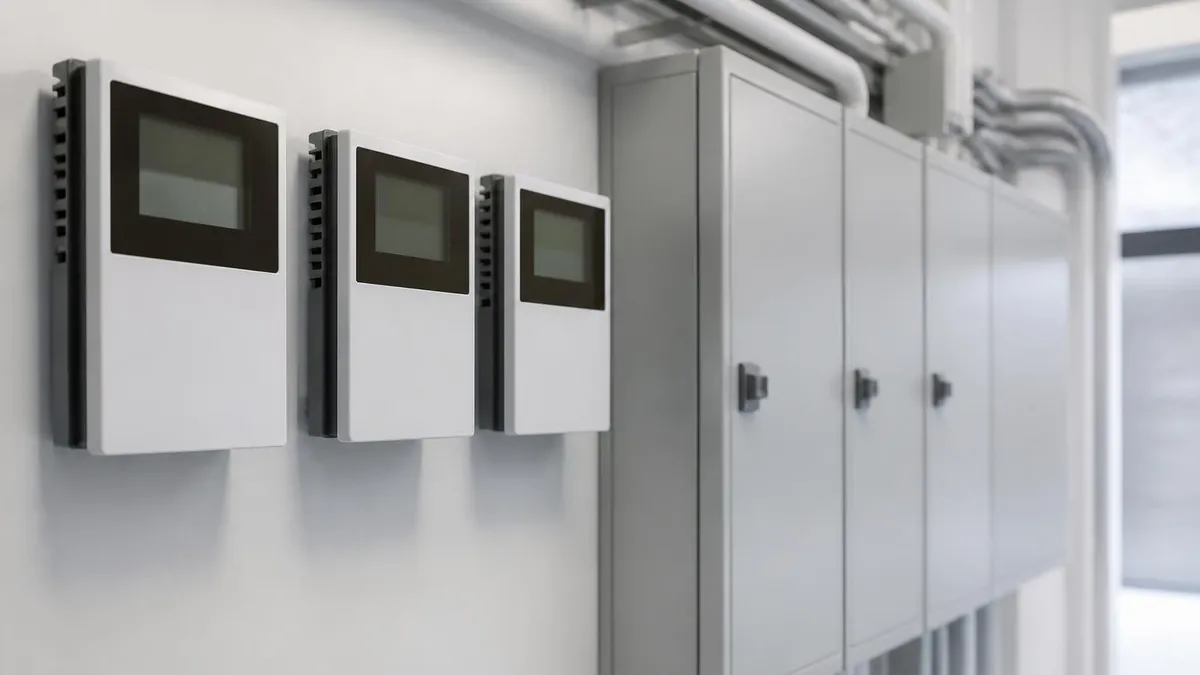
HVAC Solutions: The Complete Guide to Heating, Cooling, and Indoor Air Quality Systems for Homes and Buildings

Commercial HVAC Repair: Systems, Costs, and Service Strategies
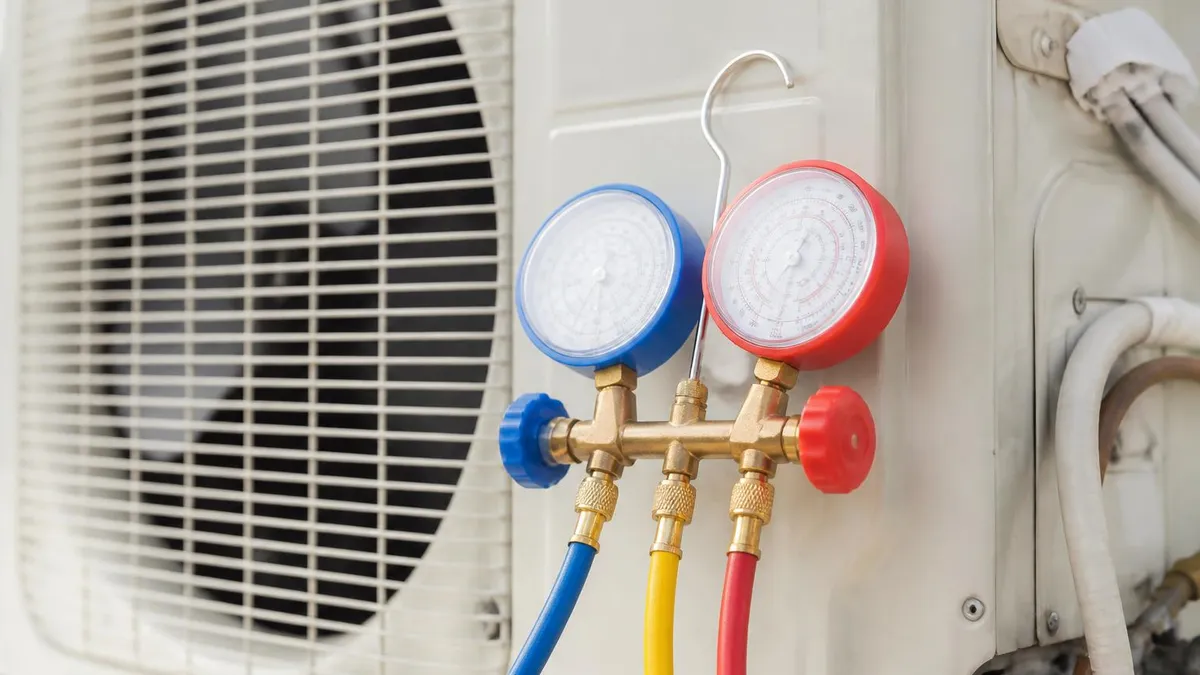
HVAC Apprenticeship Programs: Your Complete Guide to Starting a Hands-On Career in Heating, Ventilation, and Air Conditioning
About the Author

NATE Certified HVAC Technician & Licensing Exam Trainer
Universal Technical InstituteMike Johnson is a NATE-certified HVAC technician and EPA 608 universal-certified refrigerant handler with a Bachelor of Science in HVAC/R Technology. He has 19 years of commercial and residential HVAC installation and service experience and specializes in preparing technicians for NATE certification, EPA 608, A2L refrigerant safety, and state HVAC contractor licensing examinations.