
How Often Should Central HVAC System Be Serviced? The Complete 2026 Guide to Maintenance Frequency, Schedules, and Smart Service Intervals
💯 How often should central HVAC system be serviced? Complete 2026 guide to maintenance schedules, intervals, and cost-saving service frequencies.
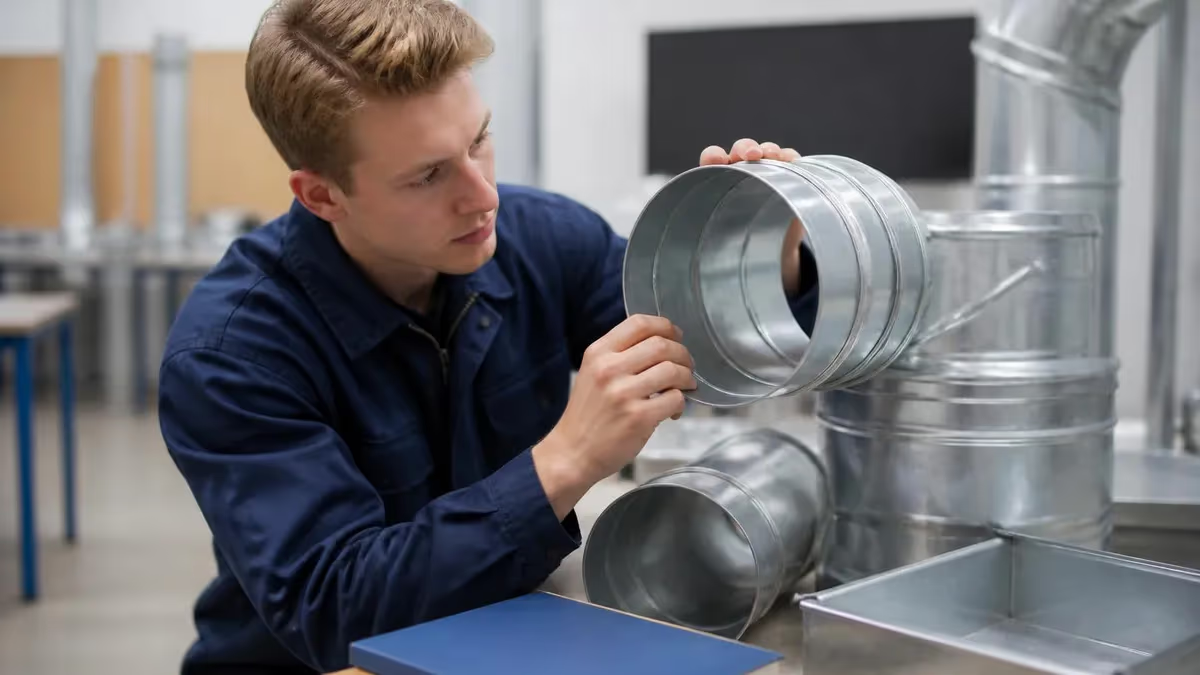
How often should central HVAC system be serviced is one of the most common questions homeowners ask, and the answer matters more than most people realize. The short, evidence-based answer is twice per year: a heating tune-up in fall before the first cold snap and a cooling tune-up in spring before summer humidity arrives. This biannual cadence is recommended by ENERGY STAR, ACCA Standard 4, the AHRI, and nearly every major manufacturer warranty document, including Carrier, Trane, Lennox, Rheem, and Goodman. Practice with the free HVAC practice test on PracticeTestGeeks (750+ questions with answer explanations).
The reasoning behind two visits per year is straightforward. A central HVAC system contains a furnace or heat pump for heating, an air conditioner or heat pump for cooling, blower motors, refrigerant lines, condensate drains, electrical contactors, capacitors, and a network of ductwork. Each component faces different stressors in different seasons. Trying to inspect a frozen evaporator coil in January is impossible, and ignoring summer-related refrigerant issues until winter creates expensive cascading failures.
Homeowners who follow the twice-yearly schedule report 15 to 20 percent lower energy bills, equipment lifespans of 18 to 25 years versus 10 to 12 for neglected systems, and roughly 40 percent fewer emergency repair calls. The U.S. Department of Energy estimates that a dirty condenser coil alone can reduce efficiency by 30 percent, while a clogged air filter changed only annually instead of quarterly can drag down SEER ratings by another 15 percent. These numbers compound quickly across a fifteen-year ownership window.
Service frequency, however, is not one-size-fits-all. A home in coastal Florida with year-round cooling, salt air corrosion, and constant humidity demands more attention than a vacation cabin in northern Minnesota that runs only six months a year. Pet owners with multiple shedding animals, families with allergy sufferers, homes near construction zones, and households with smokers all push the maintenance curve upward. Conversely, modern variable-speed inverter systems with self-diagnostic boards may stretch certain intervals.
This guide explains exactly when to service each component, what a technician should do at each visit, when DIY tasks can supplement professional maintenance, and how to recognize when you need more frequent attention than the standard twice-yearly cadence. We will cover heat pumps, gas furnaces, central air conditioners, mini-splits, geothermal systems, and zoned configurations, plus how regional climate, equipment age, and usage patterns shift the ideal calendar. If you want professional support, our directory of hvac contractors can help you find qualified local technicians.
We will also address the financial side: maintenance plan pricing, what a fair tune-up costs, when warranties require documented annual service to remain valid, and how skipping maintenance affects resale value and home inspection reports. By the end, you will have a customized service calendar matched to your specific equipment, climate, and household — not a generic recommendation that may overspend or undershoot what your system actually needs.
Whether you own a brand-new 16-SEER variable-speed heat pump or a fifteen-year-old 80 percent AFUE gas furnace, the principles of preventive HVAC care remain the same: catch small problems before they become big ones, keep coils and filters clean, verify refrigerant charge and combustion safety, and document every visit. Let us walk through the complete schedule, component by component.
Free HVAC Study Tools
Interactive HVAC resources on PracticeTestGeeks, free to start:
- HVAC EPA 608 Refrigerant Certification — 35 questions with instant scoring and answer explanations
- HVAC flashcards — review key terms and concepts card by card
- HVAC study guide — topic-by-topic overview of what the exam covers
- HVAC cheat sheet — one-page printable summary for last-minute review
HVAC Service Frequency by the Numbers
Annual HVAC Service Schedule by Month
Spring (March-April)
Summer (June-August)
Fall (September-October)
Winter (December-February)
Mid-Year Check (Optional)
A proper professional HVAC tune-up is far more thorough than the 15-minute filter-and-glance visits offered by some discount providers. ACCA Standard 4, the industry benchmark for residential maintenance, lists 47 distinct inspection and service tasks across heating and cooling visits combined. Reputable contractors typically spend 60 to 90 minutes per visit, document every reading, and provide a written report comparing current measurements against manufacturer specifications and the previous year's data.
On the cooling side, a complete spring tune-up includes verifying refrigerant charge using subcooling or superheat methods (never just gauges), cleaning the condenser coil with appropriate non-acidic cleaner, inspecting and tightening all electrical connections, testing capacitor microfarads against nameplate ratings, measuring temperature split across the evaporator coil, flushing the condensate drain with vinegar or nitrogen, and checking blower amp draw. The technician should also inspect the contactor for pitting and verify the start kit if present.
The fall heating tune-up addresses entirely different concerns. For gas furnaces, technicians perform a combustion analysis using a digital analyzer to measure carbon monoxide, oxygen levels, and combustion efficiency. They inspect the heat exchanger with a camera or mirror for cracks (a leading cause of CO poisoning), clean burners and flame sensors, verify gas pressure with a manometer, test the limit switch and rollout sensors, and ensure proper venting. For heat pumps, the fall visit overlaps with cooling tasks plus reversing valve testing and defrost cycle verification.
Both visits should include filter replacement or inspection, thermostat calibration, ductwork visual inspection at accessible points, refrigerant line insulation check, condensate pump operation if installed, and a system runtime test in heating and cooling modes. Many homeowners are surprised to learn that a thorough hvac maintenance service often uncovers minor issues — a weak capacitor, slightly low charge, a loose connection — that would have caused a breakdown within 12 months if left alone.
Documentation is the most overlooked part of professional service. Every reading the technician takes — static pressure, temperature splits, amp draws, refrigerant pressures, combustion percentages — should appear on the invoice. This paper trail does three things: it proves warranty compliance to the manufacturer, it lets the next technician (or the next homeowner if you sell) see trends, and it protects you if a major component fails prematurely and you need to demonstrate proper maintenance history.
Beware of red flags during tune-ups. A technician who recommends $2,000 in repairs on the first visit without showing you measurements, a company that pushes uv light hvacs or duct cleaning add-ons without diagnostic justification, or a tech who never opens the blower compartment is not providing real maintenance. ACCA-certified Quality Maintenance contractors and NATE-certified technicians follow standardized checklists and explain findings rather than upselling fear-based repairs.
Smart maintenance contracts typically cost $180 to $400 per year and bundle both visits, priority emergency scheduling, 10 to 20 percent discounts on repairs, and waived diagnostic fees. For systems older than seven years or premium variable-speed equipment, these plans usually pay for themselves through the discounts alone. For brand-new systems under full warranty, a la carte tune-ups at $129 to $179 each may be the better value until the warranty period ends.
HVAC Practice Test Questions
Prepare for the HVAC - Heating Ventilation and Air Conditioning exam with our free practice test modules. Each quiz covers key topics to help you pass on your first try.
HVAC Air Conditioning
HVAC Exam Questions covering Air Conditioning. Master HVAC Test concepts for certification prep.
HVAC Code Compliance
Free HVAC Practice Test featuring Code Compliance. Improve your HVAC Exam score with mock test prep.
HVAC Electrical Controls
HVAC Test Prep for Electrical Controls. Practice HVAC Quiz questions and boost your score.
HVAC Energy Efficiency
HVAC Questions and Answers on Energy Efficiency. Free HVAC practice for exam readiness.
HVAC Heating Systems
HVAC Mock Test covering Heating Systems. Online HVAC Test practice with instant feedback.
HVAC Load Calculations
Free HVAC Quiz on HVAC Load Calculations. HVAC Exam prep questions with detailed explanations.
HVAC Tools and Equipment
HVAC Practice Questions for HVAC Tools and Equipment. Build confidence for your HVAC certification exam.
HVAC Refrigeration
HVAC Test Online for Refrigeration. Free practice with instant results and feedback.
HVAC Safety Practices
HVAC Study Material on Safety Practices. Prepare effectively with real exam-style questions.
HVAC System Design
Free HVAC Test covering System Design. Practice and track your HVAC exam readiness.
HVAC Thermodynamics
HVAC Exam Questions covering Thermodynamics. Master HVAC Test concepts for certification prep.
HVAC System Service Frequency by Equipment Type
The classic split system pairing a gas furnace indoors with an outdoor condensing unit follows the standard twice-yearly schedule. The fall furnace visit is non-negotiable because of carbon monoxide and gas safety concerns, while the spring AC visit focuses on refrigerant and electrical health. Filter changes should occur every 30 to 90 days depending on MERV rating, with 1-inch filters needing monthly attention and 4 to 5-inch media filters lasting six to twelve months.
Expect a typical service life of 18 to 22 years with consistent maintenance, compared to roughly 10 to 14 years for neglected units. Gas valves, heat exchangers, and inducer motors are the most expensive failure points, and all three are directly affected by combustion fouling that only annual tune-ups can prevent. Homes burning propane or in dusty rural areas may need an extra burner cleaning mid-winter.
Should You Sign a Twice-Yearly Maintenance Plan?
- +Locks in priority emergency scheduling during peak demand weeks
- +Typically saves 10-20% on any repairs needed throughout the year
- +Bundles both visits at a discount versus a la carte tune-up pricing
- +Automatic reminders mean you never forget seasonal service dates
- +Satisfies manufacturer warranty documentation requirements automatically
- +Most plans waive after-hours and weekend diagnostic fees entirely
- +Builds relationship with one contractor who learns your specific system
- −Annual cost of $180-$400 may exceed value on new systems under warranty
- −Some plans push unnecessary add-ons like UV lights or duct cleaning
- −Switching contractors can be awkward if you prepaid for multiple visits
- −Coverage usually excludes refrigerant, filters, and major component repairs
- −Quality varies widely between national chains and local independents
- −Cancellation policies sometimes lock you in for a full calendar year
Pros and Cons at a Glance
| Pros | Cons |
|---|---|
| Locks in priority emergency scheduling during peak demand weeks | Some plans push unnecessary add-ons like UV lights or duct cleaning |
| Bundles both visits at a discount versus a la carte tune-up pricing | Switching contractors can be awkward if you prepaid for multiple visits |
| Automatic reminders mean you never forget seasonal service dates | Coverage usually excludes refrigerant, filters, and major component repairs |
| Satisfies manufacturer warranty documentation requirements automatically | Quality varies widely between national chains and local independents |
| Most plans waive after-hours and weekend diagnostic fees entirely | Cancellation policies sometimes lock you in for a full calendar year |
Monthly Homeowner HVAC Maintenance Checklist
- ✓Inspect and replace 1-inch air filter monthly during heavy heating or cooling use
- ✓Walk around outdoor condenser to confirm no leaves, grass clippings, or debris within 2 feet
- ✓Listen for unusual sounds: grinding, squealing, clicking, or short cycling patterns
- ✓Check that all supply and return vents are open and unobstructed by furniture or rugs
- ✓Verify thermostat is reaching set temperature within 15-20 minutes of cycle start
- ✓Look for water around indoor unit indicating clogged condensate drain or pump failure
- ✓Rinse outdoor coil with garden hose from inside-out to remove pollen and dust buildup
- ✓Test carbon monoxide detectors monthly during heating season (replace batteries annually)
- ✓Inspect visible refrigerant lines for missing insulation, kinks, or oily residue
- ✓Review monthly energy bill against same month previous year for unexplained spikes
- ✓Confirm humidifier water panel is wet and bypass damper is open during winter months
- ✓Document any service work performed in a binder with dates, parts, and technician notes
Change your air filter on schedule — it affects every other component
A clogged filter can cause premature HVAC failures. Restricted airflow causes evaporator coils to freeze in summer, heat exchangers to overheat and crack in winter, blower motors to burn out, and refrigerant charge to drift out of spec. Set a recurring phone reminder, buy filters in 12-packs, and never let a dirty filter sit longer than the manufacturer rating — it is the cheapest insurance in home ownership.
Recognizing the warning signs that your HVAC system needs immediate service — outside the regular twice-yearly schedule — can save thousands in repair costs and prevent catastrophic failures. The most common red flag is a sudden change in performance: the system that cooled your home reliably for a decade suddenly takes twice as long to reach setpoint, or the furnace cycles on and off every few minutes instead of running smooth 15-minute cycles. These pattern changes almost always indicate something measurable has shifted, even if the system technically still works.
Unusual sounds rank second in diagnostic value. A new humming, buzzing, or clicking near the outdoor unit often signals a failing capacitor, which costs $15 in parts but causes $1,500 in compressor damage if ignored. Grinding or squealing from the indoor blower compartment typically means bearings are failing on the blower motor or inducer. A loud bang at startup on a gas furnace can indicate delayed ignition — gas is accumulating before the burner lights — and this is a genuine safety emergency requiring immediate shutdown and professional inspection before the next cycle.
Smell changes deserve immediate attention. A musty odor from supply vents usually means biological growth on the evaporator coil or in the condensate drain pan, often solvable with a $79 coil cleaning. A rotten-egg or sulfur smell near a gas furnace indicates a gas leak — leave the house immediately, call the utility from outside, and do not touch any electrical switches. A burning electrical smell, especially from the air handler closet, points to overheating wires or a failing motor and requires turning off power at the breaker before anything else.
Visible problems carry equal weight. Ice forming on the refrigerant lines or evaporator coil during cooling season means low refrigerant charge or restricted airflow — running the system in this condition will destroy the compressor in days. Water pooling under the indoor unit or staining the ceiling below an attic air handler indicates a clogged primary drain and a failed safety float switch, both of which require service before the next cooling cycle. Visible rust on the heat exchanger panel, soot around the burners, or a yellow flame instead of crisp blue all indicate combustion problems on gas equipment.
Energy bill spikes are the slowest but most reliable indicator of an inefficient system. A 15 to 25 percent increase in cooling costs compared to the same billing period the prior year — adjusted for temperature differences — usually means the condenser coil is fouled, refrigerant is slightly low, or the blower wheel is caked with debris. Smart thermostats with energy reports make this comparison automatic. Catching efficiency drift early through utility data often lets you schedule a $200 service call instead of waiting for the eventual emergency breakdown.
Frequency of breaker trips, blown fuses, or thermostat resets is another signal. A system that has tripped its breaker even once in recent memory is telling you that a motor is drawing excess amps or a contactor is welding shut. These failures rarely fix themselves and almost always escalate. Treat any electrical anomaly as a service call, not a reset-and-forget situation. The same applies to repeated thermostat communication errors on modern smart systems — those error codes are not glitches but actual fault reports from the equipment.
Finally, age-related warning signs deserve their own category. Systems older than 12 years approaching the 15 to 18 year replacement window often show declining performance that no amount of service fully restores. R-22 refrigerant systems (any AC manufactured before 2010) face skyrocketing refrigerant costs — sometimes $150 per pound — making leak repairs economically irrational. If your contractor mentions any of these conditions, request a load calculation and replacement quote alongside the repair estimate. Sometimes the right service interval becomes the conversation about retirement, not maintenance.
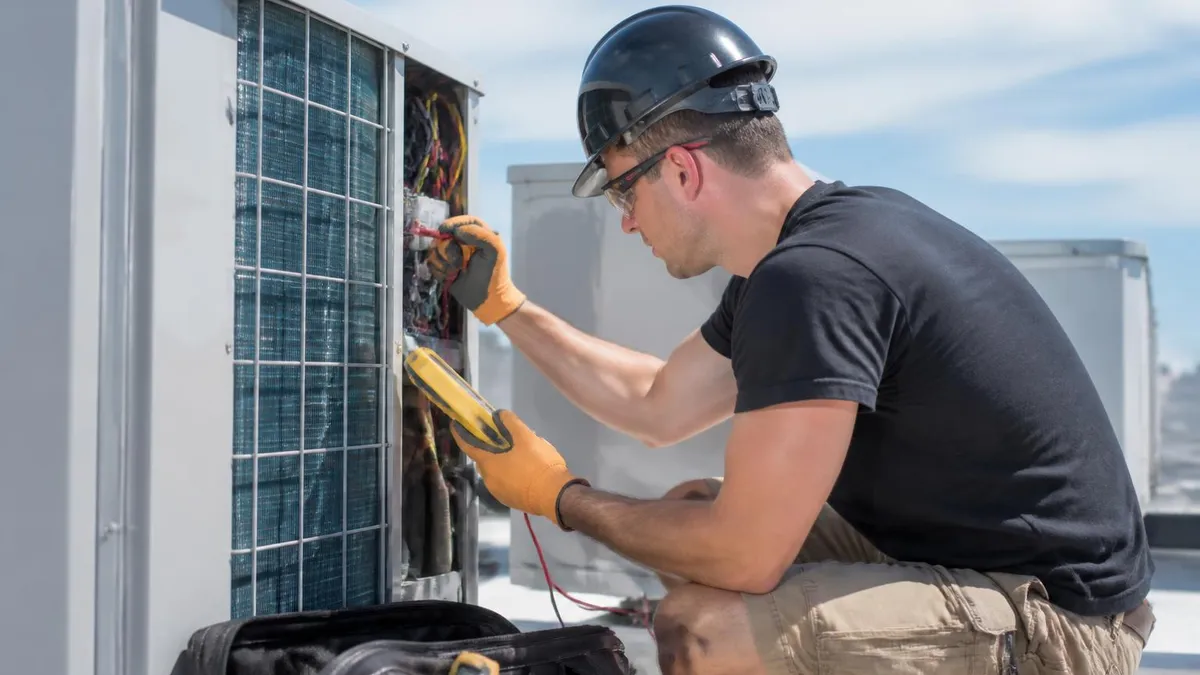
Cracked heat exchangers cause approximately 430 carbon monoxide deaths and 50,000 emergency room visits in the United States every year. A crack invisible to homeowners can leak CO at lethal concentrations into supply ductwork. Annual professional combustion analysis is the only reliable way to detect early-stage heat exchanger failure. Pair every fall tune-up with battery replacement in CO detectors on every level of your home — this is non-negotiable safety, not optional maintenance.
The financial case for twice-yearly HVAC service is overwhelming when you run real numbers, but homeowners deserve to see the math rather than accept marketing claims at face value.
A typical maintenance plan covering two annual visits costs $180 to $400 in 2026, with regional variation: $179 to $249 is the median in the Sun Belt and Midwest, $250 to $350 in coastal California and the Northeast, and $300 to $450 in high-cost metros like Boston, Seattle, and the Bay Area. A la carte tune-ups run $89 to $159 each at promotional pricing, climbing to $179 to $279 for thorough multi-point service.
The direct energy savings alone usually justify the cost. A well-maintained 14-SEER central AC running 1,400 hours per cooling season consumes roughly 4,200 kWh; at the national average of 16 cents per kWh, that is $672 in annual cooling costs. Maintenance restoring just 12 percent efficiency — well below the documented 15 to 20 percent range — saves $80 per year on cooling alone. Add comparable heating savings of $60 to $120, and a $250 maintenance plan is essentially free after utility offsets.
Repair avoidance is where the math becomes dramatic. The average HVAC service call for an unexpected failure costs $385 in 2026, and that does not include parts. A failed capacitor caught during a tune-up costs $25 to replace; the same failure on a hot July afternoon triggers a $250 emergency service call, a $75 capacitor markup, and possible compressor damage running into thousands. ACCA member contractors report that maintained systems average $185 in unplanned repairs per year versus $640 for neglected systems — a $455 annual differential.
Equipment lifespan extension delivers the biggest long-term return. A new 3-ton 16-SEER central AC plus 80,000 BTU furnace installation runs $9,500 to $14,500 in 2026 depending on region, ductwork condition, and brand selection. Extending equipment life from 12 years to 20 years through consistent maintenance defers that replacement, effectively saving $600 to $900 per year of equipment ownership. Compounded across two replacement cycles in a 40-year homeownership window, the difference exceeds $25,000 in equipment costs alone.
Warranty preservation has become increasingly important as manufacturers tighten requirements. Carrier, Trane, Lennox, Rheem, and Goodman all require documented annual professional maintenance to honor 10-year parts warranties on compressors and heat exchangers. A failed compressor at year 8 costs $2,400 to $3,800 in parts and labor — fully covered under a maintained warranty, fully out of pocket if you cannot produce service records. This single factor alone makes maintenance plans cost-effective even before counting any other benefits.
Home insurance and resale value add a final layer of value. Some homeowner policies now ask about HVAC maintenance history when adjusting claims for water damage from condensate failures or fire damage from electrical issues. At resale, a documented maintenance binder transferred to the buyer routinely adds $2,000 to $5,000 in perceived value and helps avoid concessions on home inspection findings. Pair this with our guide to HVAC Solutions for context on how maintenance fits within broader home comfort planning.
For homeowners on tight budgets, prioritization matters more than perfection. If you can only afford one professional visit per year, choose the fall furnace tune-up — combustion safety and warranty compliance outweigh cooling efficiency in most calculations. Fill the gap with DIY tasks: aggressive filter discipline, condenser rinsing, and visual inspections. This hybrid approach captures 70 percent of the benefit of full twice-yearly service at half the cost, which is far better than skipping maintenance entirely.
Putting all of this into a practical, personalized maintenance calendar requires matching service frequency to your specific equipment, climate, and household conditions rather than blindly following generic advice. Start by gathering your equipment data: model and serial numbers on both the indoor and outdoor units, installation date, current warranty status, and any service records you have. This information determines whether you are early in the equipment life cycle (years 1 to 5, focus on warranty compliance), middle (years 6 to 12, focus on efficiency preservation), or late (years 13-plus, focus on failure prevention and replacement planning).
Next, calibrate frequency to your climate. Homes in cooling-dominant regions like Phoenix, Houston, Tampa, and New Orleans should weight maintenance toward spring tune-ups, with a stronger argument for a mid-summer condenser cleaning given dust loads and runtime hours. Heating-dominant regions like Minneapolis, Buffalo, and Anchorage should weight toward fall furnace service and consider a January mid-winter check for heat pumps. Mixed climates like Atlanta, Nashville, Denver, and the Mid-Atlantic benefit most from the classic balanced twice-yearly approach.
Adjust for household factors that accelerate equipment wear. Homes with three or more occupants, multiple pets, smokers, allergy sufferers running enhanced filtration, or located near agricultural operations, construction zones, busy highways, or coastal salt air should move from twice-yearly to potentially three visits annually. Homes with single occupants, no pets, located in clean suburban environments, with modern variable-speed equipment, and high-MERV media filters can often stretch certain service tasks without harm — though never skip annual combustion analysis on any gas equipment.
Build your annual calendar around two anchor appointments scheduled at low-demand times. Book the spring AC tune-up in March or early April before contractors get slammed by the first heat wave, and the fall furnace visit in September or early October before the first frost. Off-peak scheduling typically saves 15 to 20 percent compared to emergency pricing in July or January, and you get the contractor's most experienced technicians rather than rushed or temporary staff brought on for summer surge demand.
Document everything systematically. Create a simple binder or digital folder containing the original installation paperwork, every service invoice with technician notes, warranty registration confirmations, and any DIY maintenance you perform with dates. This file pays dividends three times: when filing a warranty claim, when selling the home, and when a new hvac terms system history to diagnose a problem efficiently. Many homeowners find that systematic documentation alone improves the quality of service they receive because contractors recognize informed customers.
Set up reliability reminders that do not depend on memory. Calendar alerts at the end of February (for spring scheduling) and the end of August (for fall scheduling) give you a month of lead time. Filter reminders should be set to the actual replacement interval — most 1-inch filters need 30-day changes during heavy use seasons, while 4 to 5-inch media filters run 6 to 12 months. Smart thermostats with maintenance reminders enabled add another safety net, though they tend to alert based on runtime rather than calendar dates.
Finally, build a working relationship with one trusted contractor rather than chasing the cheapest tune-up coupon each season. Continuity matters in HVAC service because diagnostic value compounds — a technician who has seen your system across three or four visits notices small changes in static pressure, amp draws, or refrigerant pressures that a first-visit contractor would miss entirely. Loyalty also gets you faster emergency response when the inevitable mid-summer breakdown happens, which is the moment where maintenance relationships prove their value most dramatically.
Sample HVAC Practice Questions
Try these questions from our free HVAC practice tests. The correct answer and an explanation follow each question.
An HVAC technician is asked to service a split system in a confined crawlspace. Which atmospheric hazard should be tested for BEFORE entering?
- A. Carbon dioxide levels only
- B. Oxygen deficiency, flammable gases, and toxic gases
- C. Temperature and humidity only
- D. Only refrigerant concentration
Answer: B. Oxygen deficiency, flammable gases, and toxic gases
Confined space entry requires testing for oxygen deficiency, flammable/explosive gases, and toxic gases before any worker enters.
How often should HVAC compliance training be conducted?
- A. Only during initial orientation
- B. Every five years
- C. At regular intervals as required by regulations
- D. Only when violations occur
Answer: C. At regular intervals as required by regulations
Compliance training must be conducted at regular intervals as specified by applicable regulations to keep practitioners current.
When measuring the outdoor ambient temperature for AC system performance diagnosis, where should the measurement be taken?
- A. In direct sunlight near the condenser unit
- B. At the condenser air inlet in the shade, away from the unit's discharge air
- C. Inside the return air duct
- D. At the liquid line service port
Answer: B. At the condenser air inlet in the shade, away from the unit's discharge air
Outdoor ambient temperature should be measured in the shade at the condenser air inlet, away from the hot discharge airstream, to get an accurate reference for system performance charts.
A technician finds that a boiler is not firing even though the thermostat is calling for heat. The system has 24V at the thermostat. What should be checked next?
- A. Low water cutoff device
- B. Expansion tank pressure
- C. Flue pipe draft
- D. Circulator pump operation
Answer: A. Low water cutoff device
A low water cutoff (LWCO) shuts down the burner when water level or pressure is insufficient, and is a common safety-related cause of a boiler not firing.
HVAC Questions and Answers
HVAC Wholesale Direct: The Complete Guide to Sourcing Equipment, Parts, and Supplies at Distributor Pricing
HVAC Repair Portland: The Complete 2026 Homeowner's Guide to Furnace, AC, and Heat Pump Service in the Rose City
HVAC Tune Up Service: The Complete Guide to Professional HVAC Maintenance and Why It Pays for Itself
HVAC Solutions: The Complete Guide to Heating, Cooling, and Indoor Air Quality Systems for Homes and Buildings
Certified HVAC Contractors: How to Find, Vet, and Hire the Right Professional for Your Home or Business
How this page was made: written with AI tools. We have not yet matched this exam's facts to an official source, so confirm fees, dates and rules with the exam body. Not reviewed by a subject-matter expert. Editorial policy