
HVAC Companies Hiring Near Me: The Complete Guide to Finding Local HVAC Jobs, Apprenticeships, and Career Opportunities in 2026 October
Find HVAC companies hiring near me with this complete 2026 October guide to local HVAC jobs, apprenticeships, pay rates, certifications, and how to get hired fast. 🟢

Searching for hvac companies hiring near me is one of the smartest career moves you can make in 2026, because the trade is experiencing a documented labor shortage that has pushed wages, signing bonuses, and benefit packages to record highs across nearly every metropolitan area in the United States. Whether you are a new high school graduate, a career changer, a veteran transitioning to civilian work, or an experienced tech looking to switch shops, local HVAC employers are actively recruiting at a pace not seen in decades.
The U.S. Bureau of Labor Statistics projects 9% job growth for HVAC mechanics and installers through 2033, well above the average for all occupations, with roughly 42,500 openings each year. That demand is driven by aging equipment in residential homes, stricter refrigerant regulations like the AIM Act phaseout of R-410A, and the rapid adoption of heat pumps under federal tax credits. Local companies feel this pressure first, which is why so many post ads, run job fairs, and pay referral bonuses to existing employees.
This guide walks you through exactly how to find HVAC companies hiring in your area, what they look for in candidates, what kinds of jobs are available at each experience level, how to evaluate offers, and the credentials that move you from minimum wage helper to six-figure service tech. You will also see how to hvac contractors in your region, because the same directories homeowners use to hire pros are gold mines for job seekers identifying employers.
The HVAC industry is unusual in that nearly every employer, from one-truck operations to national chains like Service Experts and ARS/Rescue Rooter, is hiring simultaneously. Small residential shops want apprentices they can train into lead installers within two years. Commercial contractors need journeymen for hospital, school, and data center projects. Manufacturers like Carrier, Trane, and Lennox hire hvac scheduling software engineers. Utility programs are staffing weatherization crews funded by Inflation Reduction Act dollars.
Pay varies widely by region and specialization. A first-year helper in rural Mississippi might earn $16 per hour, while a senior commercial refrigeration tech in San Francisco can clear $50 per hour plus overtime. The national median sits around $57,300 according to recent BLS data, but top earners in service-heavy markets routinely break $100,000 with overtime and on-call premiums. Add union benefits, employer-paid health insurance, and pension contributions, and the total compensation picture often exceeds white-collar jobs requiring a four-year degree.
Beyond pay, HVAC offers something increasingly rare: stable, location-anchored work that cannot be outsourced or replaced by AI. Buildings need hvac fort collins everywhere people live and work, and someone has to physically diagnose, repair, install, and maintain the equipment. That makes "hvac companies hiring near me" not just a job search, but a search for long-term economic security in your community.
In the sections ahead, you will learn how to target the right employers, prepare a resume that gets callbacks, ace the interview, evaluate compensation packages, negotiate confidently, and pass the certification exams that unlock the highest-paying roles. By the end, you will have a clear, actionable plan to land an HVAC job in your area within the next 30 to 60 days.
HVAC Hiring by the Numbers
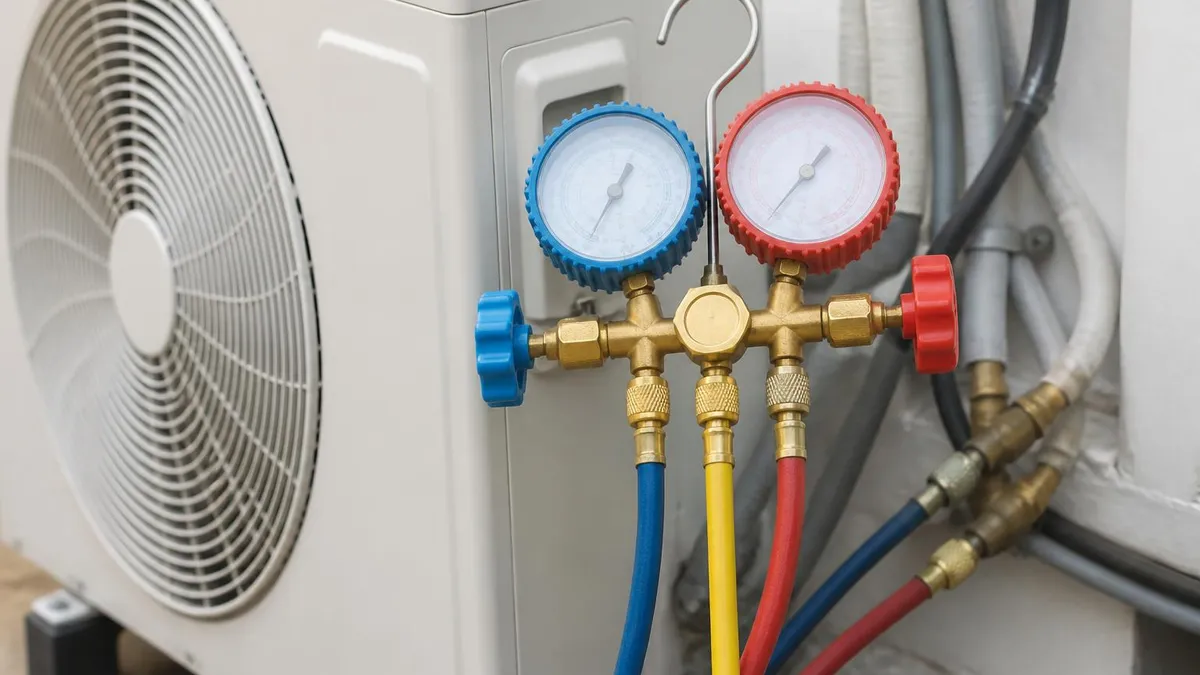
Where to Find HVAC Companies Hiring Near Me
The big three job boards aggregate listings from thousands of local shops. Filter by "HVAC" plus your zip code, then sort by date. Set daily email alerts so new postings hit your inbox before competitors apply.
ACCA, MCAA, PHCC, and SMACNA chapters maintain member directories full of hiring contractors. Many run formal apprenticeship placement programs and host hiring events where you meet owners face to face.
Stop by Ferguson, Johnstone Supply, or your local wholesale house early morning. Contractors picking up parts know who is hiring. Ask the counter staff — they hear about openings before they hit the web.
UA Local 597 plumbers/pipefitters and SMART sheet metal halls run Joint Apprenticeship Training Committees that place apprentices with signatory contractors. Pay scales are public and benefits are excellent.
Schools with HVAC programs have direct pipelines to area employers. Even non-students can often access the career services office, attend on-campus job fairs, and network with instructors who refer candidates.
HVAC jobs are not monolithic. Understanding the segments helps you target companies that match your skills, schedule, and income goals. The biggest divide is residential versus commercial work, but within each category there are installation roles, service roles, sales roles, and increasingly specialized positions in controls, refrigeration, and indoor air quality. Knowing which lane fits you best lets you write a targeted resume and ask smart questions in interviews.
Residential service technicians handle homeowner calls — diagnosing no-cool complaints, replacing capacitors, charging refrigerant, and selling repair-versus-replace decisions. This work pays well because techs often earn commission on parts and accessories sold, but it requires strong customer-service skills and the ability to upsell without feeling pushy. Expect $25 to $45 per hour base plus spiffs, with top performers in markets like Phoenix, Dallas, and Atlanta earning six figures.
Residential installers focus on putting in new systems — furnaces, condensers, air handlers, ductwork, and increasingly heat pumps. The work is more physical and weather-dependent than service, but the schedule is predictable and the learning curve is steep in a good way. Most installers reach lead status in two to three years, at which point they run their own crew and command $30 to $50 per hour. Want to plan an installation? Use an HVAC duct calculator to understand sizing principles your future crews will rely on.
Commercial HVAC is a different world. Rooftop units on shopping centers, chillers in office towers, VAV boxes in schools, and refrigeration racks in grocery stores require techs who can read blueprints, work with building automation systems, and troubleshoot 480-volt three-phase equipment. Commercial pay starts a little lower than residential because tip and commission income is absent, but the ceiling is much higher and the work is steadier through economic cycles.
Industrial and refrigeration roles — ammonia systems in food plants, low-temp racks in supermarkets, process cooling for pharma — sit at the top of the pay scale. EPA Section 608 Universal plus RETA CARO or CIRO certifications can push earnings past $130,000 in major metros. These jobs are demanding, often involving on-call coverage and travel, but the job security is unmatched because few techs have the credentials to do the work.
Sales-engineering and comfort-advisor roles deserve mention too. Many HVAC companies hire former installers and service techs into in-home sales positions where they design replacement systems, write proposals, and close deals on the spot. Commissions of 8% to 12% on systems averaging $12,000 to $20,000 means top advisors clear $150,000 to $250,000. If you have technical knowledge and people skills, this path is worth exploring.
Finally, do not overlook controls technicians and building automation specialists. With the rise of smart buildings and tightening energy codes, every commercial property needs someone who can program Tridium Niagara, troubleshoot BACnet networks, and integrate Honeywell or Johnson Controls front ends. Controls techs frequently earn $45 to $60 per hour with full benefits and minimal physical strain — a great fit for techs whose knees and backs are starting to feel the years.
HVAC Practice Test Questions
Prepare for the HVAC - Heating Ventilation and Air Conditioning exam with our free practice test modules. Each quiz covers key topics to help you pass on your first try.
HVAC Air Conditioning
HVAC Exam Questions covering Air Conditioning. Master HVAC Test concepts for certification prep.
HVAC Code Compliance
Free HVAC Practice Test featuring Code Compliance. Improve your HVAC Exam score with mock test prep.
HVAC Electrical Controls
HVAC Test Prep for Electrical Controls. Practice HVAC Quiz questions and boost your score.
HVAC Energy Efficiency
HVAC Questions and Answers on Energy Efficiency. Free HVAC practice for exam readiness.
HVAC Heating Systems
HVAC Mock Test covering Heating Systems. Online HVAC Test practice with instant feedback.
HVAC Load Calculations
Free HVAC Quiz on HVAC Load Calculations. HVAC Exam prep questions with detailed explanations.
HVAC Tools and Equipment
HVAC Practice Questions for HVAC Tools and Equipment. Build confidence for your HVAC certification exam.
HVAC Refrigeration
HVAC Test Online for Refrigeration. Free practice with instant results and feedback.
HVAC Safety Practices
HVAC Study Material on Safety Practices. Prepare effectively with real exam-style questions.
HVAC System Design
Free HVAC Test covering System Design. Practice and track your HVAC exam readiness.
HVAC Thermodynamics
HVAC Exam Questions covering Thermodynamics. Master HVAC Test concepts for certification prep.
Apprenticeships, Trade Schools, and Certifications Local Employers Value
Registered apprenticeships through the Department of Labor combine paid on-the-job training with classroom instruction. Programs typically run three to five years, with apprentices starting at 50% of journeyman scale and increasing by roughly 10% every six months as they pass benchmark exams and rack up hours. Union JATCs and many open-shop contractors offer DOL-registered tracks that conclude with a nationally recognized journeyworker credential.
The big advantage of apprenticeship is zero student debt and immediate income. You earn while you learn, employers cover tuition for required night classes, and you graduate with five years of real field experience plus a credential that travels nationwide. The downside is the long timeline and the requirement to balance work and school. For 18 to 25 year-olds with stamina, it is often the best path into the trade.
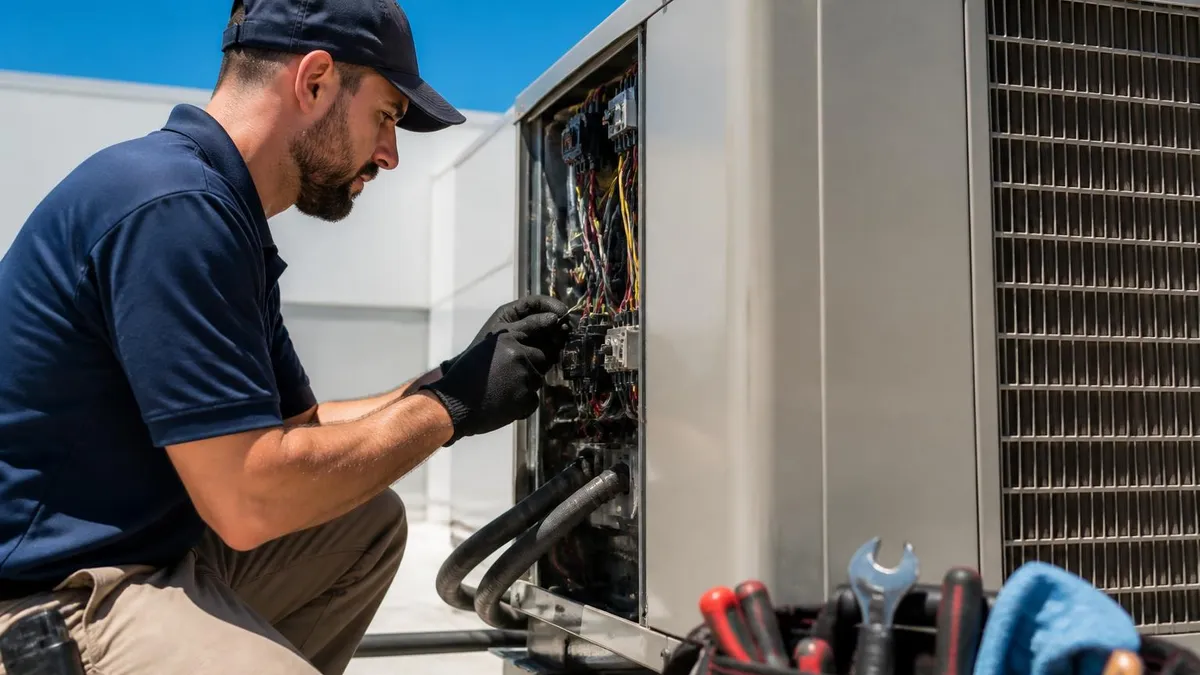
Should You Take an HVAC Job at a Small Local Shop or a National Chain?
- +Small shops offer faster advancement to lead tech or installer
- +Direct relationship with the owner means quicker raises when you prove value
- +Variety of work — you do residential, light commercial, and everything in between
- +Less bureaucracy, more flexibility on schedule and vacation requests
- +Performance bonuses and tips often paid same-week in cash or check
- +Tight crews build mentorship relationships that accelerate skill development
- −Smaller shops may lack formal training programs or tuition reimbursement
- −Benefits like health insurance and 401k matching can be weaker or absent
- −Less brand recognition on your resume when you eventually job-hop
- −Cash flow swings during slow seasons can affect overtime availability
- −Tools, trucks, and uniforms sometimes come out of your pocket initially
- −Limited internal moves — you can't easily transfer to a sister branch
Pros and Cons at a Glance
| Pros | Cons |
|---|---|
| Small shops offer faster advancement to lead tech or installer | Smaller shops may lack formal training programs or tuition reimbursement |
| Direct relationship with the owner means quicker raises when you prove value | Less brand recognition on your resume when you eventually job-hop |
| Variety of work — you do residential, light commercial, and everything in between | Cash flow swings during slow seasons can affect overtime availability |
| Less bureaucracy, more flexibility on schedule and vacation requests | Tools, trucks, and uniforms sometimes come out of your pocket initially |
| Performance bonuses and tips often paid same-week in cash or check | Limited internal moves — you can't easily transfer to a sister branch |
Application and Interview Checklist for HVAC Companies Hiring Near Me
- ✓Earn your EPA Section 608 Universal certification before applying anywhere
- ✓Build a one-page resume listing every brand and tool you can use
- ✓Get a clean driving record printout — most shops pull MVRs before offers
- ✓Buy or borrow basic hand tools and a multimeter to show up interview-ready
- ✓Create a LinkedIn profile and follow local HVAC company pages for openings
- ✓Prepare two stories about troubleshooting wins or learning experiences
- ✓Research the shop online — read Google reviews and the owner's bio
- ✓Bring three professional references with phone numbers and email addresses
- ✓Wear clean work clothes or business casual, not a suit, to the interview
- ✓Ask about pay-per-spiff structures, on-call rotations, and truck stock policies
Apply Between October and February
HVAC hiring spikes in late fall and winter as shops staff up for spring AC season. Owners want new techs trained and productive before the May heat wave generates 30+ calls per day. Applying in this window gives you weeks of paid bench time learning the systems before chaos hits — and means less competition from summer job hunters.
Negotiating pay in HVAC is different from negotiating in office jobs because hourly rates, overtime rules, on-call premiums, spiffs, and benefits all intersect. Knowing the total compensation math gives you use. Most candidates focus only on base hourly rate and leave thousands of dollars on the table by ignoring overtime structure, weekend differentials, vehicle allowances, boot stipends, and tool budgets that experienced techs routinely negotiate.
Start by researching local pay using BLS Occupational Employment data, state labor department wage surveys, Glassdoor, and Indeed salary pages. Cross-reference with conversations at supply houses and union halls. By the time you walk into an interview, you should know the 25th, 50th, and 75th percentile rates for your experience level in your metro. That data lets you ask for the 60th to 70th percentile confidently when you have certifications and a clean record.
Overtime is the hidden lever. Service techs in summer routinely log 50 to 60 hour weeks. At time-and-a-half over 40 hours, that adds 25% to 40% to base pay. Some shops pay double-time on Sundays and holidays. Confirm how on-call works: a flat weekly stipend ($150 to $400) plus billed time on calls, versus pure billable rate when you actually run. A favorable on-call structure can add $15,000 a year to your W-2.
Benefits matter more than they look on paper. Employer-paid family health insurance is worth $1,500 to $2,200 per month — call it $20,000 to $26,000 in pre-tax value. A 4% 401(k) match on a $70,000 salary is $2,800. Paid vacation, sick days, and holidays add another $4,000 to $6,000. Tool insurance, uniforms, take-home truck with personal use, and continuing education reimbursement push total value even higher.
Be ready to discuss spiffs and SPIFs (Sales Performance Incentive Funds) at residential service shops. These per-item commissions reward selling capacitors, surge protectors, IAQ accessories, and maintenance agreements. A productive tech can earn $300 to $1,500 per week in spiffs alone. Ask for the exact spiff sheet during the interview and calculate realistic monthly earnings before accepting an offer with a lower base.
If you are an apprentice or helper, you have less use on hourly rate but plenty on training and progression. Negotiate written milestones: "I move from $18 to $20 after passing EPA 608, then to $22 after 1,000 hours of brazing experience." Get it in writing. Shops that refuse to commit to a progression schedule are signaling they will keep you cheap as long as possible.
Finally, never accept an offer on the spot. Ask for 24 to 48 hours to review the paperwork. Reread the non-compete, the tool policy, the dispatch fees, and the chargeback clauses for warranty callbacks. If a shop pressures you to sign immediately, that pressure does not improve after you start. Take your time, make the math work for your household budget, and choose the employer that respects the process.
Some HVAC companies require new hires to sign contracts repaying "training costs" of $5,000 to $15,000 if they quit within two to five years. Others force employees to buy company-branded tools at marked-up prices. Read every clause before signing. Legitimate shops invest in their people without trapping them.
HVAC is one of the few trades where career trajectory is genuinely under your control. Start as a helper, become an installer, move to service, specialize in commercial or controls, then choose whether to chase senior-tech pay, project-manager salary, sales income, or business ownership. Each branch has documented earnings data, defined skill requirements, and clear timelines, so you can plan five and ten years ahead with a level of certainty most professions never offer.
The traditional path runs helper to installer to service tech to senior tech to service manager. That ladder typically takes seven to ten years from day one, and by the end you are earning $80,000 to $120,000 in most metros with full benefits and a take-home vehicle. Service managers oversee dispatch, training, and customer escalations, often earning $100,000 to $150,000 plus performance bonuses tied to department revenue and gross margin.
Specialization is the highest-use move. Become the shop's go-to person for hvac equipment parts-splits, geothermal heat pumps, hot water boilers, or commercial refrigeration, and you become irreplaceable. Manufacturers run factory-authorized programs that pay for travel, equipment, and certification. A Mitsubishi Diamond Elite contractor's lead ductless installer commands premium pay because the brand routes leads directly to that shop. If you want context on the materials side, browse HVAC duct supplies to understand the components specialists install daily.
The sales track turns technical knowledge into top-of-market income. Comfort advisors and sales engineers who came up through the field outperform pure salespeople because they design systems that actually work and explain trade-offs honestly. With 8% to 12% commissions on $15,000 average tickets, top advisors close 8 to 12 systems per month and earn $200,000+. The trade-off is constant travel inside your market and pressure to hit weekly sales targets.
Project management appeals to techs who enjoy planning more than wrenching. Commercial PMs run new construction and retrofit jobs from bid through closeout — managing schedules, submittals, change orders, subcontractors, and inspections. A typical commercial HVAC PM earns $85,000 to $130,000 base plus a 5% to 15% bonus on completed-project gross margin. The role suits methodical thinkers who can read blueprints and herd cats simultaneously.
Business ownership is the ultimate ceiling-buster. With three to five years of field experience plus a master mechanical license (required in most states), you can launch a one-truck operation for $40,000 to $80,000 startup capital. Successful owners scale to multi-truck residential operations clearing $1M to $5M annually, then sell to private equity rollups for 3x to 6x EBITDA. The PE consolidation wave has minted millionaires across the trade in the last five years.
Wherever you aim, document everything. Keep a logbook of equipment models, fault codes, repair techniques, and customer-service wins. Photograph completed installs. Save certifications and continuing-ed certificates in a labeled binder. When you negotiate raises, switch shops, or apply for a license, that documentation proves competence in ways a resume cannot match. Treat your career like a portfolio, and the portfolio will compound over decades.
Practical preparation makes the difference between getting hired this week and waiting three months for callbacks. Start with a five-line elevator pitch: who you are, what you bring, why HVAC, why this company, and what you are looking for. Practice it aloud until it sounds natural. Hiring managers screen out applicants who fumble basic self-introduction within the first thirty seconds, regardless of technical skill.
Polish your resume for the trades, not for corporate. One page is plenty. List equipment brands you have worked on (Trane, Carrier, Lennox, Goodman, Rheem, Mitsubishi, Daikin), tool proficiencies (hvac tools and gauges vacuum pumps, recovery units, hvac leak detectors, combustion analyzers), and specific tasks completed. Quantify when possible: "Performed 400+ residential service calls" or "Installed 60+ split systems and 12 ductless heads." Numbers beat adjectives every time.
Prepare for the technical interview. Common questions include: explain superheat and subcooling, walk through diagnosing a no-cool call, describe the refrigeration cycle, calculate proper ductwork sizing for a 3-ton system, explain when you would recommend repair versus replacement, and describe how you handle an upset customer. Practice answering each one aloud in 60 to 90 seconds with concrete examples from actual work or schooling.
Show up early and prepared. Arrive 10 to 15 minutes before the interview. Bring three printed copies of your resume, a notebook, a pen, and your certifications in a folder. Wear clean work pants, a polo or button-up, and clean boots — never sneakers. Have your driver's license, Social Security card, and EPA 608 card ready in case the offer is immediate. Many shops want you to start within 48 hours.
During the interview, ask sharp questions: What does a typical first 90 days look like? How is the on-call rotation structured? Who would I be paired with for ride-alongs? What does the spiff or commission sheet pay on common items? How do raises and progression work? What's the typical week-to-week ticket volume? Strong questions show you understand the business and intend to be a productive long-term hire, not a job-hopper.
After the interview, send a thank-you email within 24 hours. Mention something specific the interviewer said, restate your interest, and reaffirm one strength relevant to the role. This single step puts you ahead of 80% of applicants and routinely flips borderline decisions in your favor. Hiring managers remember candidates who close the loop professionally.
Finally, treat the job search itself like a job. Apply to five to ten openings per week. Track them in a spreadsheet with company name, contact, date applied, follow-up date, and status. Follow up by phone five to seven business days after applying when you have not heard back. Most callbacks come from candidates who showed initiative after the application, not from the application itself. Persistence is the cheat code of the trades.
Sample HVAC Practice Questions
Try these questions from our free HVAC practice tests. The correct answer and an explanation follow each question.
Which refrigerant blend is considered a 'near-azeotropic' mixture that exhibits temperature glide?
- A. R-502
- B. R-22
- C. R-404A
- D. R-410A
Answer: C. R-404A
R-404A is a zeotropic (near-azeotropic) blend of R-125, R-143a, and R-134a that exhibits temperature glide during phase change, unlike R-410A which is essentially azeotropic.
What is the 'deadband' in thermostat operation?
- A. The maximum allowable temperature swing
- B. The temperature range between heating and cooling setpoints where neither system operates
- C. The time delay before a system restarts
- D. The differential between supply and return air temperature
Answer: B. The temperature range between heating and cooling setpoints where neither system operates
The deadband is the neutral zone between heating and cooling setpoints that prevents simultaneous heating and cooling operation.
A clamp meter (clamp-on ammeter) measures current by detecting what around a conductor?
- A. Voltage drop
- B. Resistance
- C. Magnetic field
- D. Temperature
Answer: C. Magnetic field
A clamp meter senses the magnetic field produced by current flowing through a conductor, allowing non-contact amperage measurement.
What is a 'dual-fuel' or 'hybrid' heat pump system?
- A. A system that uses two refrigerants simultaneously for improved efficiency
- B. A system pairing an air-source heat pump with a gas furnace, using the heat pump for mild weather and switching to gas heat when it's more cost-effective at very cold temperatures
- C. A system that provides both heating and domestic hot water using two separate refrigerant circuits
- D. A system with both a ground-source and air-source heat pump for redundancy
Answer: B. A system pairing an air-source heat pump with a gas furnace, using the heat pump for mild weather and switching to gas heat when it's more cost-effective at very cold temperatures
A dual-fuel system uses a heat pump as the primary heating source and a gas furnace as backup, switching between the two based on outdoor temperature and energy cost.
HVAC Questions and Answers

HVAC Duct Supplies: The Complete Buyer's Guide to Ductwork Components, Sizing, and Installation Materials
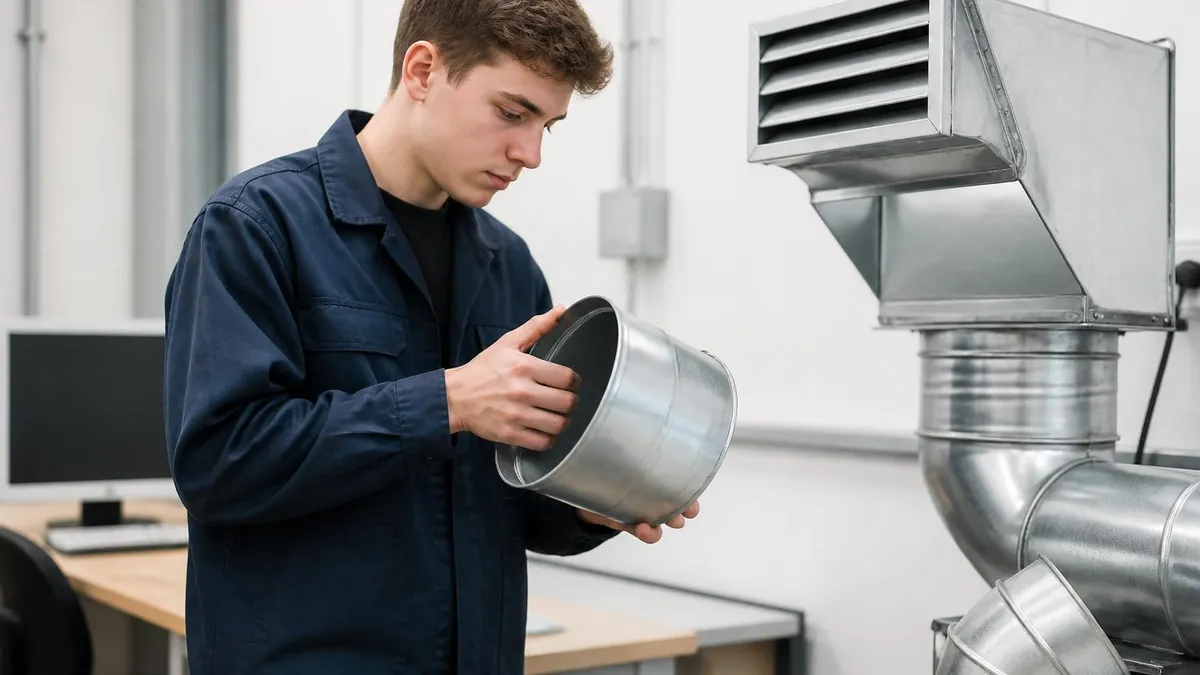
HVAC Duct Calculator: The Complete Guide to Sizing Ductwork for Airflow, Static Pressure, and System Efficiency
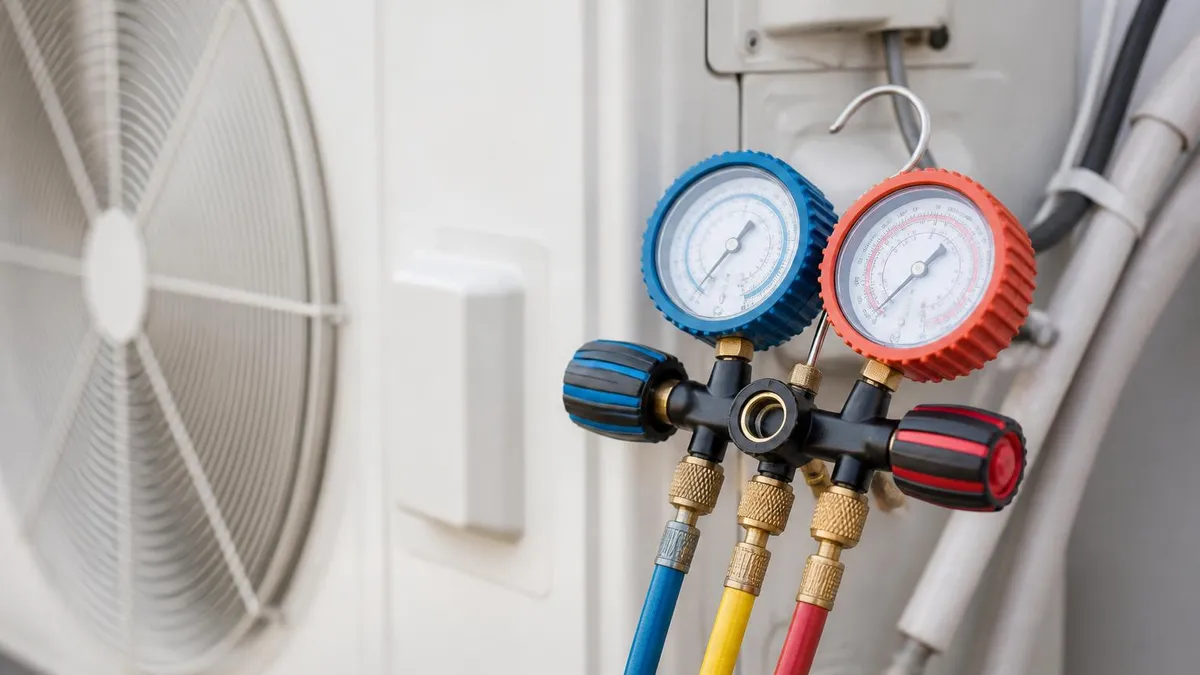
Certified HVAC Contractors: How to Find, Vet, and Hire the Right Professional for Your Home or Business
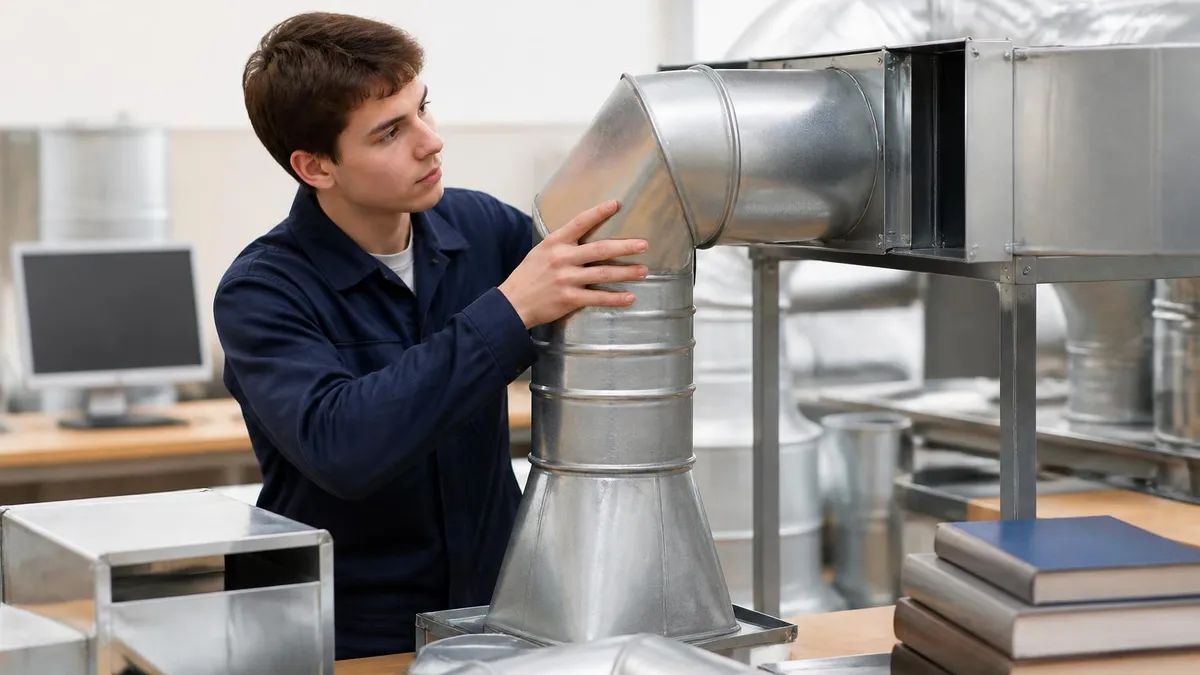
HVAC Repair Philadelphia: The Complete Homeowner's Guide to Finding, Hiring, and Working With Local Heating and Cooling Pros
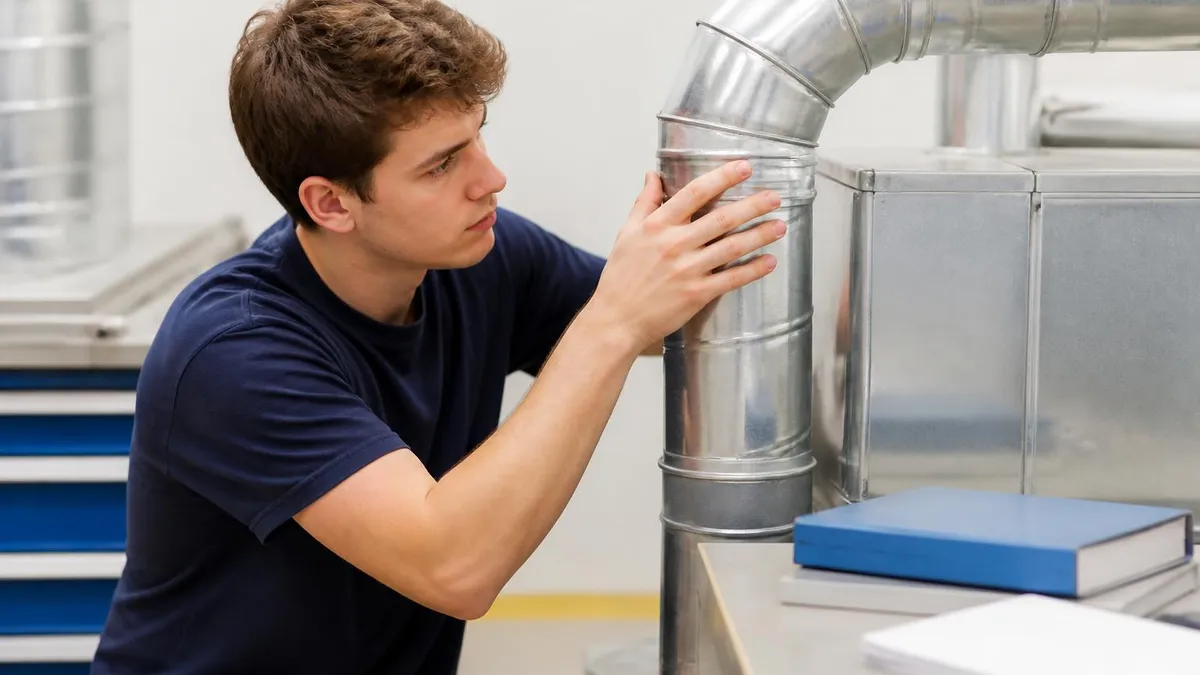
Best HVAC Repair in Bandon, OR: Local Services Near Me Guide
About the Author

NATE Certified HVAC Technician & Licensing Exam Trainer
Universal Technical InstituteMike Johnson is a NATE-certified HVAC technician and EPA 608 universal-certified refrigerant handler with a Bachelor of Science in HVAC/R Technology. He has 19 years of commercial and residential HVAC installation and service experience and specializes in preparing technicians for NATE certification, EPA 608, A2L refrigerant safety, and state HVAC contractor licensing examinations.