
HVAC Chiller Systems: The Complete Guide to Types, Components, Sizing, and Maintenance for Commercial Cooling
HVAC chiller guide covering air-cooled vs water-cooled types, 🎯 components, sizing, efficiency ratings, troubleshooting, and maintenance best practices.
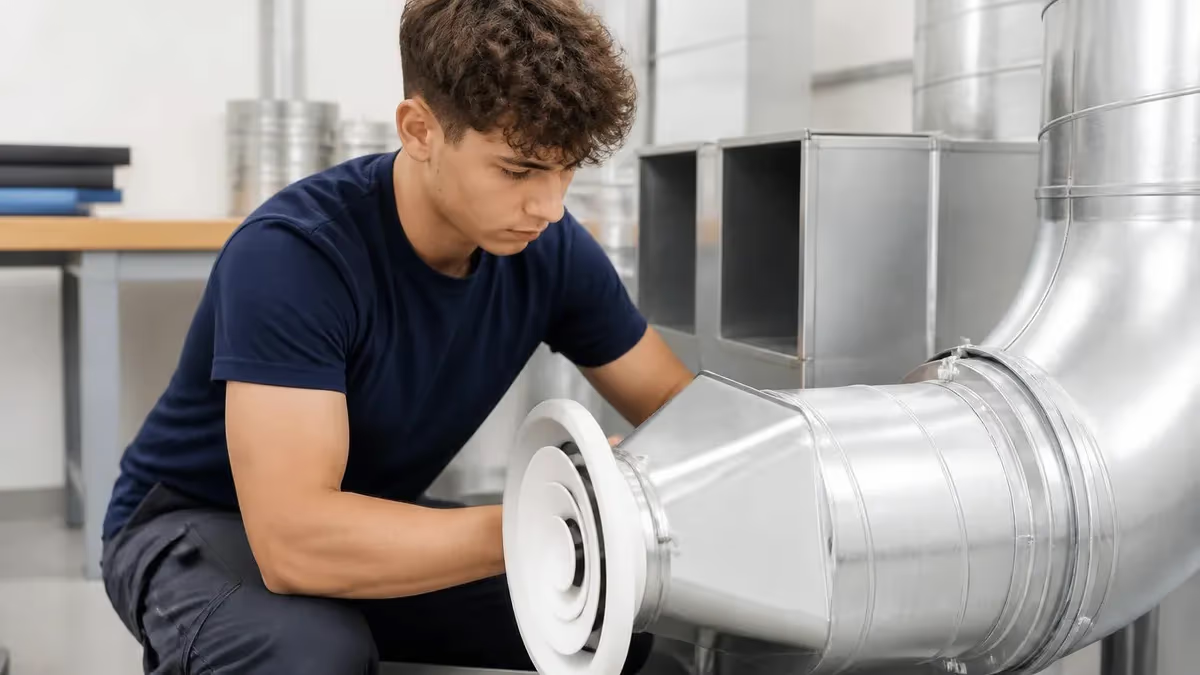
An hvac chiller is the backbone of large-scale commercial and industrial cooling, responsible for removing heat from a building's water loop and rejecting it either to the atmosphere or to a cooling tower. Unlike residential split systems that use refrigerant to directly cool air, chillers cool water or a glycol mixture, which then circulates through air handlers, fan hvac fcu and process equipment throughout the facility. Understanding how chillers work is essential for any HVAC technician working in commercial environments.
Chillers serve everything from office towers and hospitals to data centers, manufacturing plants, ice rinks, and pharmaceutical production lines. They range in size from small 20-ton packaged units serving a single floor to massive 5,000-ton centrifugal machines cooling entire campuses. The Department of Energy estimates chillers account for over 25% of total energy use in hvac rtu 3d cad york, making efficiency, sizing, and maintenance critical decisions for owners and engineers alike.
This guide breaks down the four main chiller types, the refrigeration cycle they share, the components inside the cabinet, and the practical math behind sizing, efficiency ratings, and load calculations. We will also cover the most common failure modes, the maintenance tasks that prevent them, and how new refrigerant regulations under the AIM Act are reshaping equipment selection for 2026 and beyond. Whether you are studying for certification or specifying a new system, this article gives you the working knowledge you need.
The technology behind modern chillers has advanced dramatically over the last two decades. Magnetic-bearing oil-free compressors, variable-speed drives, and microchannel condenser coils have pushed integrated part-load values (IPLV) below 0.30 kW per ton — a 40% improvement over fixed-speed machines from the 1990s. At the same time, low-GWP refrigerants like R-1233zd, R-513A, and R-1234ze are replacing R-134a and R-410A in new equipment to comply with EPA phase-down rules.
For technicians, the chiller room is one of the most technically demanding environments in the trade. You will work with pressures from 5 inHg vacuum to 300 psig, electrical services up to 4,160 volts, water flows of hundreds of gallons per minute, and control systems that integrate with building automation platforms. Mastery of psychrometrics, refrigeration theory, electrical troubleshooting, and water chemistry are all required to keep these machines running reliably.
Throughout this guide we reference industry standards from ASHRAE, AHRI, ASME, and the EPA, along with practical field experience from commissioning and service work. By the end, you should be able to identify the right chiller for an application, calculate basic capacity and efficiency, recognize warning signs of trouble, and plan a maintenance program that maximizes uptime and equipment life. If you also work on the air-distribution side, our companion article on HVAC duct supplies covers the downstream components that move chilled air to occupants.
Before we dive into types and components, remember that a chiller never operates in isolation. It is part of a hydronic system that includes pumps, piping, air handlers, cooling towers (on water-cooled systems), expansion tanks, and controls. Sizing and selecting any one component without considering the others is a recipe for poor performance, short cycling, and premature failure. Think of the chiller as the heart and the rest of the system as the circulatory network — both must be designed together.
HVAC Chillers by the Numbers
Chiller Types and Configurations
Reject heat directly to outdoor air via condenser fans and coils. Best for buildings under 200 tons, locations without water supply, and applications prioritizing low maintenance. Typical IPLV: 0.50–0.75 kW/ton.
Use a cooling tower and condenser water loop to reject heat. Significantly more efficient than air-cooled, with IPLVs as low as 0.30 kW/ton. Ideal for larger buildings, 24/7 operation, and hot climates.
Use high-speed impellers to compress refrigerant. Common in 200–5,000 ton ranges, very efficient at full load, and now available with magnetic bearings for oil-free operation and ultra-low IPLV ratings.
Positive-displacement compressors used in smaller chillers (10–500 tons). Screw chillers excel at part-load with VFDs; scroll chillers are simple, reliable, and common in modular and packaged rooftop applications.
Use heat — not electricity — to drive the refrigeration cycle, typically with lithium bromide and water. Ideal where waste heat, steam, or natural gas is cheap. Higher first cost but excellent in combined heat and power systems.
Every chiller, regardless of size or compressor type, operates on the same vapor-compression refrigeration cycle that residential air conditioners use, just at a much larger scale. The four major components — compressor, condenser, expansion device, and evaporator — work in a continuous loop to absorb heat from the building water and reject it to either outdoor air or condenser water. Understanding each component and how they interact is the foundation for diagnostics, commissioning, and energy optimization.
The compressor is the heart of the machine and the largest energy consumer. In a centrifugal chiller, a high-speed impeller (often spinning 8,000 to 30,000 RPM) accelerates refrigerant vapor outward, converting kinetic energy into pressure. Screw compressors use two interlocking rotors that progressively reduce the volume of refrigerant trapped between them. Scroll compressors use two spiral elements, one fixed and one orbiting, to trap and compress gas. Each design has a sweet spot in capacity, efficiency curve, and service requirements.
After leaving the compressor as hot, high-pressure vapor, refrigerant enters the condenser. In a water-cooled chiller, the condenser is a shell-and-tube heat exchanger where refrigerant condenses on the outside of tubes carrying cooling-tower water. In an air-cooled unit, fans blow ambient air across finned coils to do the same job. The amount of heat rejected here equals the cooling load plus the compressor's work input — typically 1.25 tons of heat rejection for every 1 ton of cooling.
Liquid refrigerant then flows through the expansion device, usually an electronic expansion valve (EEV) on modern chillers. The EEV throttles the flow, dropping pressure and temperature sharply. The refrigerant enters the evaporator as a low-temperature, low-pressure two-phase mixture, ready to absorb heat from the building chilled-water loop. The evaporator is another shell-and-tube exchanger; building water flows through the tubes while refrigerant boils on the outside, cooling the water from a return temperature around 54°F down to 44°F.
The control system ties everything together. Modern chillers use microprocessor controllers (Carrier PIC, Trane Tracer, York OptiView, Daikin MicroTech) that monitor 50–100 sensor points: refrigerant pressures and temperatures, motor amperage, water flows, oil pressure, vibration, and bearing temperatures. The controller modulates compressor speed or capacity, EEV position, and condenser water flow to match the building load while protecting the machine from unsafe conditions.
Supporting components include the oil management system on lubricated machines (sump, pump, cooler, filter), the purge unit on low-pressure chillers that removes non-condensables, vibration isolators, suction-side moisture-and-liquid indicators, refrigerant relief valves, and isolation valves that allow component service without losing the full charge. Each of these requires periodic attention, and overlooking any one can lead to expensive downtime. For more on how the cooled air ultimately reaches occupants, see our guide on the HVAC duct calculator.
The refrigerant itself deserves attention. Older R-22 and R-123 machines are being phased out; current production focuses on R-134a, R-410A, R-513A, R-1233zd, R-1234ze, and R-1234yf. Each has different operating pressures, oil compatibility, and global warming potential. A technician must never mix refrigerants or assume a retrofit is simple — line sizes, expansion devices, and seal compatibility all change with the refrigerant. EPA Section 608 certification is required to handle any of these.
HVAC Practice Test Questions
Prepare for the HVAC - Heating Ventilation and Air Conditioning exam with our free practice test modules. Each quiz covers key topics to help you pass on your first try.
HVAC Air Conditioning
HVAC Exam Questions covering Air Conditioning. Master HVAC Test concepts for certification prep.
HVAC Code Compliance
Free HVAC Practice Test featuring Code Compliance. Improve your HVAC Exam score with mock test prep.
HVAC Electrical Controls
HVAC Test Prep for Electrical Controls. Practice HVAC Quiz questions and boost your score.
HVAC Energy Efficiency
HVAC Questions and Answers on Energy Efficiency. Free HVAC practice for exam readiness.
HVAC Heating Systems
HVAC Mock Test covering Heating Systems. Online HVAC Test practice with instant feedback.
HVAC Load Calculations
Free HVAC Quiz on HVAC Load Calculations. HVAC Exam prep questions with detailed explanations.
HVAC Tools and Equipment
HVAC Practice Questions for HVAC Tools and Equipment. Build confidence for your HVAC certification exam.
HVAC Refrigeration
HVAC Test Online for Refrigeration. Free practice with instant results and feedback.
HVAC Safety Practices
HVAC Study Material on Safety Practices. Prepare effectively with real exam-style questions.
HVAC System Design
Free HVAC Test covering System Design. Practice and track your HVAC exam readiness.
HVAC Thermodynamics
HVAC Exam Questions covering Thermodynamics. Master HVAC Test concepts for certification prep.
Chiller Sizing, Capacity, and Efficiency Ratings
Chiller capacity is rated in tons of refrigeration, where 1 ton equals 12,000 BTU/hr of heat removal — the rate needed to melt one ton of ice over 24 hours. Proper sizing starts with a Manual N or ASHRAE-compliant cooling load calculation that accounts for envelope conductance, solar gain, internal lighting and equipment loads, occupant sensible and latent loads, ventilation air, and process loads. Oversizing leads to short cycling, poor dehumidification, and wasted capital cost.
For chilled-water systems, the basic capacity equation is Q = 500 × GPM × ΔT, where Q is BTU/hr, GPM is water flow, and ΔT is the temperature difference between return and supply water (typically 10–14°F). Designers usually target a 12°F ΔT for energy efficiency, though low-flow/high-ΔT designs of 16–20°F are becoming common in data centers and large campuses to reduce pumping energy by up to 50%.

Air-Cooled vs Water-Cooled Chillers: Which Should You Specify?
- +Air-cooled units eliminate the need for a cooling tower, water treatment, and condenser water pumps
- +Lower first cost and simpler installation, especially for buildings under 200 tons
- +No risk of Legionella bacteria associated with cooling towers
- +Reduced maintenance — no tower fill, sump, or chemical treatment program required
- +Ideal for buildings in water-restricted areas or where roof space is limited
- +Easier to add modular capacity by simply installing additional units
- +Operate well in low ambient temperatures with proper head pressure controls
- −Water-cooled chillers are 20-40% more energy efficient at design conditions
- −Air-cooled performance degrades sharply above 95°F outdoor air temperature
- −Higher noise levels at the outdoor unit can require sound attenuation
- −Larger physical footprint than water-cooled equivalents of the same capacity
- −Water-cooled systems offer longer service life (25+ years vs 15-20 for air-cooled)
- −Air-cooled units are limited in maximum single-unit capacity (typically under 500 tons)
HVAC Chiller Installation and Commissioning Checklist
- ✓Verify equipment pad is level, properly sized, and rated for full operating weight plus water
- ✓Confirm electrical service matches nameplate voltage, phase, and minimum circuit ampacity
- ✓Install vibration isolators per manufacturer specification at all four corners
- ✓Pressure test refrigerant piping to manufacturer specs and pull vacuum below 500 microns
- ✓Flush and clean chilled water and condenser water piping before connecting to chiller
- ✓Verify chilled water flow meets minimum and maximum GPM limits in the IOM manual
- ✓Calibrate flow switches, pressure sensors, and temperature sensors before startup
- ✓Check refrigerant charge by weight using a certified scale per the nameplate specification
- ✓Confirm safety relief valves are piped to a code-compliant discharge location
- ✓Run a full performance test at design conditions and document all readings for owner turnover
Approach temperature is your best early-warning indicator
The approach temperature — the difference between the refrigerant saturation temperature and the leaving water temperature in both evaporator and condenser — should stay within 2-4°F under normal conditions. A rising approach indicates fouled tubes, low refrigerant charge, or non-condensable gases. Trending this value monthly catches problems months before they cause a trip or efficiency loss.
Troubleshooting a chiller starts with reading the controller's alarm history and fault codes, but the real skill lies in interpreting operating data against design baselines. Every commissioning report should include design pressures, temperatures, motor amps, and approach values at multiple load points. Without this baseline, you are flying blind. Smart technicians screenshot the controller dashboard monthly and build a simple spreadsheet that flags drift in any key parameter.
The most common chiller problems break into five categories: refrigerant issues, water-side problems, electrical faults, control failures, and mechanical wear. Refrigerant problems — undercharge, overcharge, contamination, or non-condensables — usually manifest as abnormal pressures and high approach temperatures. A high condenser approach with normal pressures often means fouled tubes from poor water treatment, while high pressures with a normal approach suggest air or other non-condensables, especially on low-pressure R-1233zd or R-123 machines.
Water-side issues are the single biggest source of chiller trouble in the field. Low flow trips, frozen evaporator tubes, scaled or fouled heat exchangers, and corrosion from improper pH or chloride levels account for an estimated 40% of all chiller service calls. A water treatment program managed by a qualified specialist — with conductivity, pH, alkalinity, hardness, and biological counts logged weekly — is cheaper than a single tube-bundle replacement, which can run $40,000 to $150,000 on a large machine.
Electrical faults usually announce themselves through ground faults, phase loss, or starter trips. Modern chillers with solid-state or VFD starters require periodic inspection of DC bus capacitors, IGBT cooling, and harmonic mitigation components. Megger testing the motor windings annually catches insulation degradation before it leads to a catastrophic motor burnout — an event that contaminates the entire refrigerant circuit and can cost six figures to clean and recharge.
Control failures often masquerade as mechanical problems. A sticking electronic expansion valve, a drifting pressure transducer, or a failing flow switch can cause symptoms that look identical to a refrigerant or water problem. Always verify sensor accuracy against a calibrated reference before chasing a refrigerant ghost. Many veteran chiller mechanics carry a calibrated hvac digital gauges and a precision thermometer specifically for this verification step.
Mechanical wear shows up gradually: rising bearing temperatures, increasing vibration, oil consumption, or shaft seal leaks. Vibration analysis with a trending tool catches bearing wear, impeller imbalance, and motor problems months before they cause a forced outage. Modern oil-free magnetic-bearing chillers eliminate many of these wear modes entirely, which is why they are increasingly popular in mission-critical applications like hospitals and data centers despite higher first cost.
Finally, never ignore unusual sounds. A surging centrifugal chiller — characterized by a deep, periodic woofing noise from the compressor — indicates the machine is operating below its stable flow envelope and can destroy the impeller and bearings within hours. Surge is usually caused by low refrigerant charge, low condenser water temperature, or a control loop hunting. Shut the machine down, identify the root cause, and never allow extended surge operation to continue under any circumstances.
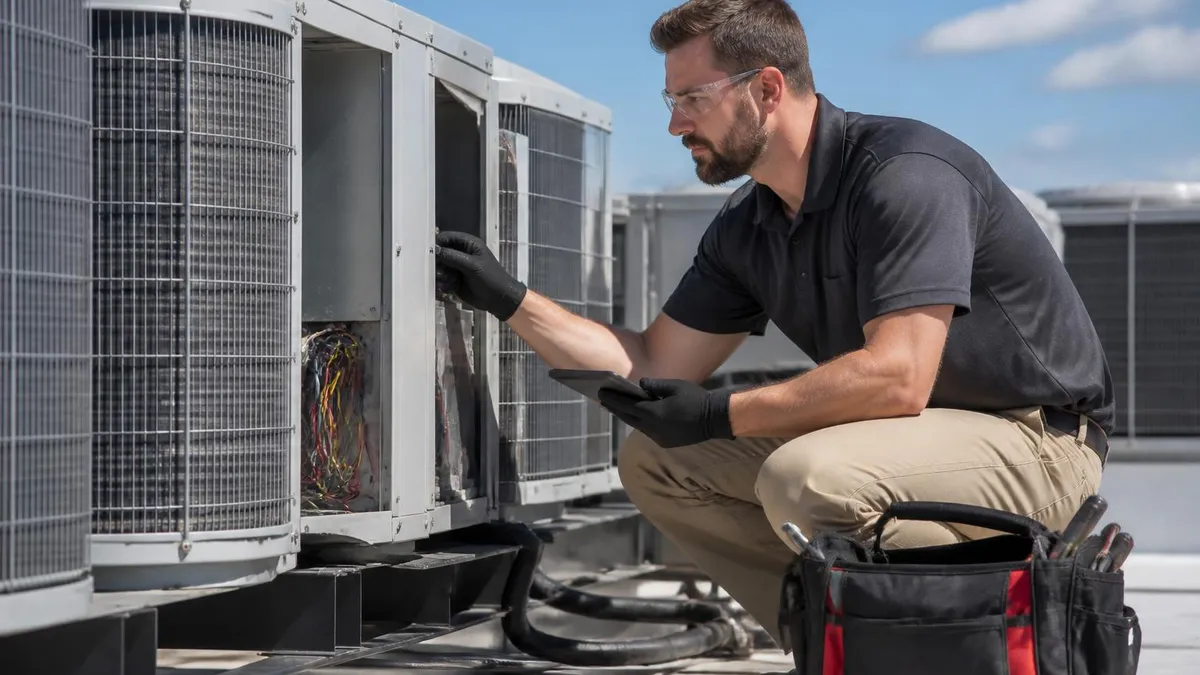
Under the AIM Act, the EPA is phasing down high-GWP HFC refrigerants on an aggressive schedule. Beginning January 1, 2025, new chillers over 300 tons may not use refrigerants with GWP above 700, effectively eliminating R-410A and R-134a from new production. Replacement refrigerant for existing equipment will become scarce and expensive — plan retrofits and end-of-life replacements now rather than waiting for a forced emergency.
A well-maintained chiller will deliver 20-25 years of reliable service, while a neglected one may need major repair or replacement in less than 10. The difference comes down to a disciplined preventive maintenance program executed by qualified technicians on a documented schedule. ASHRAE Standard 180 and the chiller manufacturer's IOM manual together provide the framework for what to do and how often to do it.
Daily checks — even on unmanned plants via the BAS — should log evaporator and condenser approach, motor amps, refrigerant pressures and temperatures, oil pressure (if applicable), and any active alarms. Anomalies that exceed normal trend bands deserve investigation that day, not next month. Many catastrophic failures are preceded by weeks of subtle data drift that an attentive operator could have caught for free. If you work in a region where finding qualified service techs is challenging, our directory of hvac contractors can help you locate experienced chiller specialists.
Weekly tasks include visual inspection for oil and hvac leak detector (look for staining around flare fittings, valve stems, and sight glasses), water treatment sampling, cooling tower fill and drift eliminator inspection, and verification that purge units on low-pressure machines are not running excessively. A purge that runs more than 30 minutes per day is a strong signal of a refrigerant-side leak that demands immediate attention before non-condensables foul the condenser.
Monthly maintenance adds vibration readings on motor and compressor bearings, oil analysis sampling (on lubricated machines), megger testing of motor windings, calibration verification of critical sensors, and a walk-around inspection of all hot and cold piping insulation. Damaged insulation on chilled-water piping causes condensation, mold, and ceiling damage that often costs more to remediate than the insulation repair itself.
Annual or major hvac system service frequency include eddy-current tube testing on heat exchangers (every 5 years minimum), refrigerant analysis for acid and moisture, oil change, condenser tube cleaning (mechanical brushing or chemical clean depending on water quality), starter inspection, VFD capacitor check, safety device testing, and motor megger and surge testing. Document everything in the equipment file — both the building owner and future technicians will need this history.
End-of-life planning typically starts at year 15. The chiller may still run, but efficiency degradation, parts obsolescence, and refrigerant availability questions begin to bite. A simple lifecycle cost analysis comparing continued operation, an efficiency upgrade (VFD retrofit, magnetic-bearing compressor swap), and full replacement usually pays for itself many times over in energy and avoided emergency repair costs. Utility incentive programs frequently cover 15-30% of the cost of high-efficiency replacement equipment.
Finally, invest in training. The chiller plant is the most expensive single piece of mechanical equipment in most commercial buildings, and the people operating and servicing it should be the most highly trained on staff. Manufacturer factory schools, ASHRAE technical conferences, and trade certifications like RSES, NATE, and EPA 608 all build the skill base that turns reactive firefighting into proactive reliability management. The investment pays back through lower energy use, longer equipment life, and fewer emergency overtime calls.
For technicians moving into chiller work for the first time, a few practical habits separate the professionals from the hobbyists. First, always treat the chiller room as a controlled environment. Keep it clean, well-lit, and free of stored materials. Refrigerant hvac leak detectors and oxygen monitors should be in working order and within their calibration date. ASHRAE Standard 15 requires specific ventilation and alarm provisions wherever refrigerant equipment operates, and code officials do check.
Second, document everything. Take photos before, during, and after any service activity. Save controller screenshots showing operating data before you touch a setpoint. If you replace a part, save the old one until the machine has run successfully for at least a week. This discipline pays back enormously when an intermittent fault returns and you need to retrace your work.
Third, develop a relationship with the equipment manufacturer's technical support line. Modern chillers ship with proprietary firmware and diagnostic tools that only authorized service providers can fully access. Building a working rapport with the local factory rep — and attending their training offerings — gives you access to bulletins, software updates, and troubleshooting help that independent technicians simply cannot match on their own.
Fourth, never skip the basics when chasing a complex fault. The vast majority of chiller problems trace back to fundamentals: water flow, refrigerant charge, electrical supply, sensor calibration, or controller setpoints. Before you start replacing expensive components, verify the simple stuff with a clamp meter, a thermometer, and a flow indicator. The first hour spent on basics often eliminates 90% of the suspected problems.
Fifth, respect the safety hazards. Chillers combine high-voltage electrical equipment, pressurized refrigerant, rotating machinery, hot piping, confined spaces, and heavy mechanical components. Lockout-tagout procedures are not bureaucracy — they exist because people have been killed by every one of these hazards. Wear PPE appropriate to the task, work with a partner when accessing energized equipment, and never bypass a safety interlock to keep a machine running.
Sixth, keep learning. The chiller industry is evolving quickly with new refrigerants, oil-free compressors, AI-driven optimization, and integration with renewable energy and thermal storage. Subscribe to ASHRAE Journal, follow manufacturer technical bulletins, and consider an advanced certification like the ASHRAE Operations and Performance Management Professional (OPMP) or Certified commercial hvac designer (CHD). Continuous learning is what separates a 30-year career from being obsolete in five.
Finally, remember that chiller work is about reliability and energy stewardship as much as it is about refrigeration physics. A well-run chiller plant keeps occupants comfortable, processes running, and energy bills under control. The technician who can deliver on all three becomes indispensable to building owners and a true asset to the HVAC profession. The skills you build here transfer to any commercial mechanical work and form the foundation of a long, rewarding career.
HVAC Questions and Answers

HVAC Duct Supplies: The Complete Buyer's Guide to Ductwork Components, Sizing, and Installation Materials
HVAC Duct Calculator: The Complete Guide to Sizing Ductwork for Airflow, Static Pressure, and System Efficiency
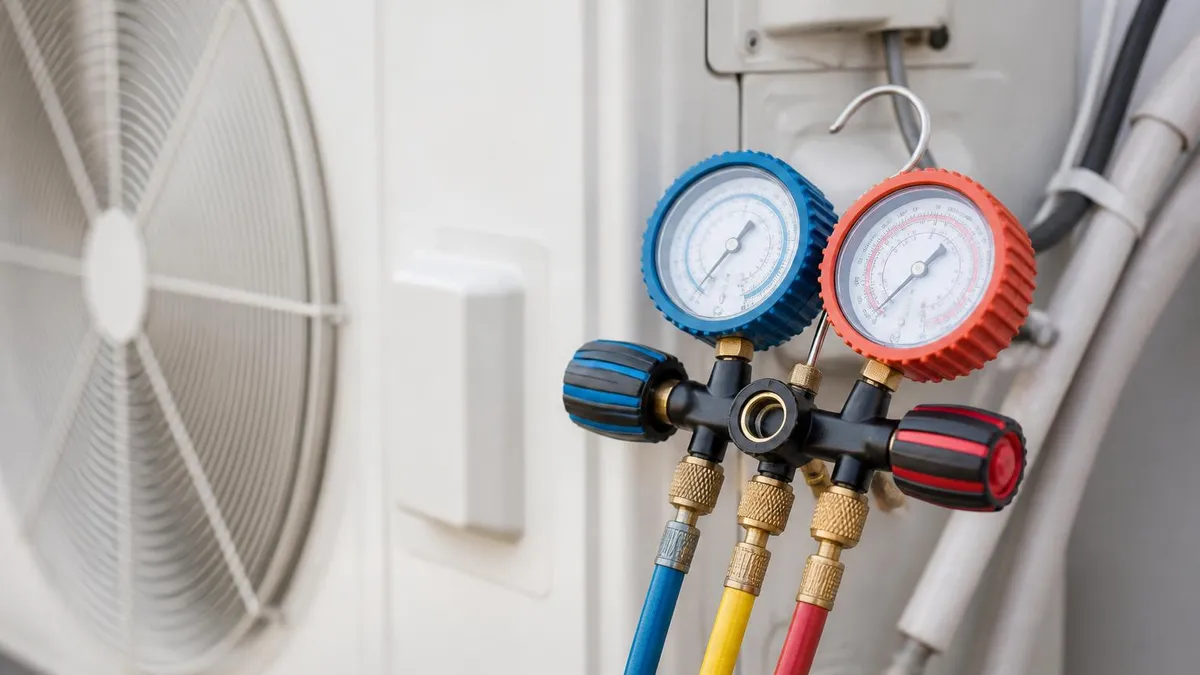
Certified HVAC Contractors: How to Find, Vet, and Hire the Right Professional for Your Home or Business

HVAC Repair Philadelphia: The Complete Homeowner's Guide to Finding, Hiring, and Working With Local Heating and Cooling Pros
Best HVAC Repair in Bandon, OR: Local Services Near Me Guide
About the Author

NATE Certified HVAC Technician & Licensing Exam Trainer
Universal Technical InstituteMike Johnson is a NATE-certified HVAC technician and EPA 608 universal-certified refrigerant handler with a Bachelor of Science in HVAC/R Technology. He has 19 years of commercial and residential HVAC installation and service experience and specializes in preparing technicians for NATE certification, EPA 608, A2L refrigerant safety, and state HVAC contractor licensing examinations.