
Commercial HVAC Jobs: The Complete Career Guide to Roles, Salaries, Certifications, and Growth Paths
Commercial HVAC jobs guide: roles, pay scales, certifications, training paths, and how to land a high-paying career in commercial heating and cooling. 💡

Commercial HVAC jobs sit at the intersection of skilled trades, building science, and energy management, making them one of the most stable and well-compensated career paths in the construction industry today. Unlike residential service, commercial work involves hvac rtu 3d cad york chillers, boilers, variable air volume systems, and building automation controls that keep schools, hospitals, office towers, and manufacturing plants running. Workers in this niche typically earn 20 to 35 percent more than residential counterparts because the equipment is larger, the stakes are higher, and the technical knowledge required is significantly broader. Practice with the free HVAC practice test on PracticeTestGeeks (750+ questions with answer explanations).
The Bureau of Labor Statistics projects roughly 37,700 HVAC openings each year through 2032, and a growing share of those positions are in commercial and industrial settings. Aging infrastructure, decarbonization mandates, refrigerant transitions to A2L blends, and the explosion of data center construction have all pushed demand upward. Employers are competing hard for technicians who can troubleshoot a 200-ton centrifugal chiller, commission a rooftop package unit, or program a Niagara-based building automation system without breaking a sweat.
Entry points into the field are more flexible than many realize. You can begin as a sheet metal apprentice, a controls trainee, a service helper, or even a fresh trade school graduate with an EPA Section 608 card. Within three to five years, motivated workers move into journeyman-level roles, and within ten years many are running their own service trucks, managing crews, or transitioning into project management, sales engineering, or commissioning. The career ladder is unusually long for a trade.
Geography matters enormously in commercial HVAC pay. Technicians in New York City, San Francisco, Seattle, and Chicago routinely clear six figures with overtime, while those in smaller Midwestern or Southern markets may earn between $55,000 and $75,000 in equivalent roles. Union shops add pension contributions, annuity funds, and gold-plated health insurance that can bring total compensation well past $150,000. Non-union shops compete with signing bonuses, take-home trucks, tool allowances, and aggressive profit-sharing structures.
If you are evaluating commercial HVAC as a career or planning a lateral move from residential, the smartest first step is understanding what employers actually want. They want safety awareness, electrical literacy, refrigeration fundamentals, mechanical aptitude, and the ability to read mechanical drawings. Beyond that, soft skills like punctuality, written communication for service tickets, and the ability to interact with facility managers separate the technicians who get promoted from those who plateau. To understand contractor hiring standards more broadly, see our guide on hvac contractors.
This guide walks you through the full landscape: the job titles you will see on Indeed and ZipRecruiter, the salary bands by region and experience, the certifications that actually move the needle on pay, the day-to-day reality of the work, and the long-term progression options. Whether you are 18 and weighing trade school against college, or 35 and contemplating a career pivot, the data and advice below will help you make a confident decision about entering one of America's most resilient trades.
Expect a learning curve. Commercial HVAC blends mechanical, electrical, controls, plumbing, and IT skills into a single role, and the first two years are demanding. The payoff is a career that cannot be offshored, automated away, or outsourced — buildings need humans to keep them comfortable, and that demand only grows as the existing workforce ages out faster than apprentices enter the pipeline.
Readers who want more detail usually continue with commercial hvac jobs.
If you want the full picture, the commercial hvac jobs guide walks through it step by step.
For a deeper look at this topic, see our guide to commercial hvac jobs.
Free HVAC Study Tools
Interactive HVAC resources on PracticeTestGeeks, free to start:
- HVAC EPA 608 Refrigerant Certification — 35 questions with instant scoring and answer explanations
- HVAC flashcards — review key terms and concepts card by card
- HVAC study guide — topic-by-topic overview of what the exam covers
- HVAC cheat sheet — one-page printable summary for last-minute review
Commercial HVAC Jobs by the Numbers
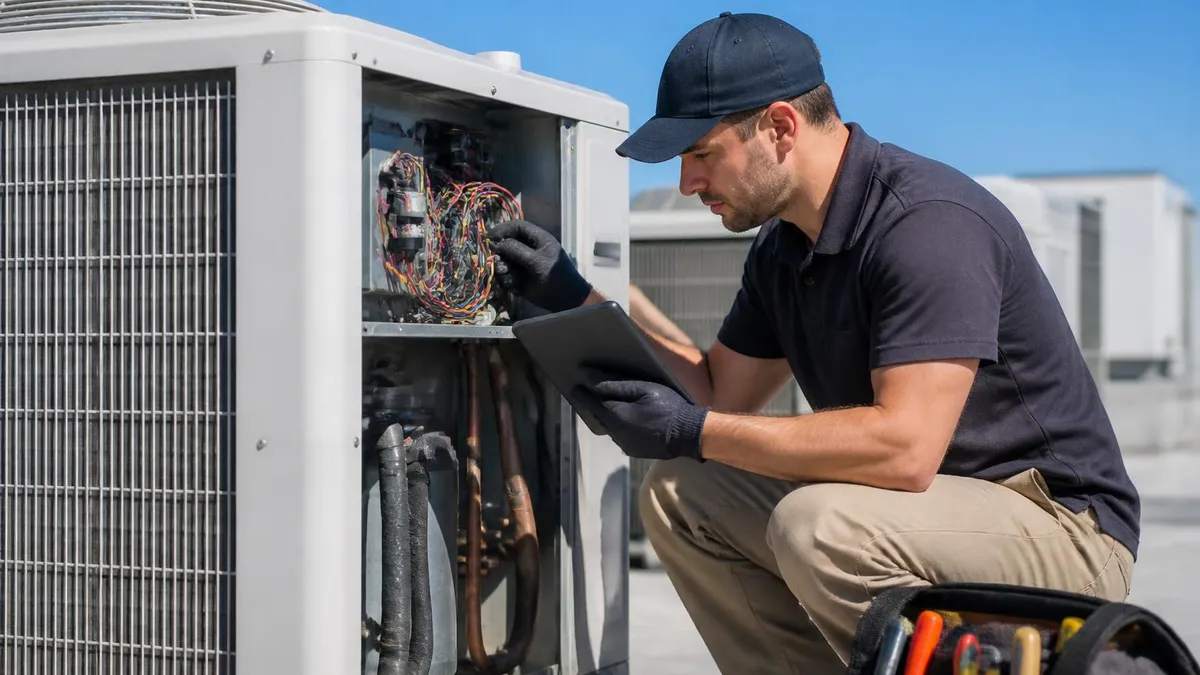
Common Commercial HVAC Job Roles
Diagnoses and repairs rooftop units, split systems, chillers, and boilers across commercial properties. Requires EPA 608, strong electrical troubleshooting, and refrigerant handling experience. Most common entry point after apprenticeship.
Focuses on new construction and retrofit projects, setting equipment, brazing refrigerant lines, and connecting electrical and controls. Works closely with sheet metal crews and general contractors on job sites.
Programs and troubleshoots building automation systems from Tridium, Honeywell, Johnson Controls, and Siemens. Combines HVAC mechanical knowledge with IT networking. One of the highest-paid niches in the trade.
Oversees a fleet of technicians, schedules preventive maintenance contracts, manages parts inventory, and handles customer escalations. Typically promoted from senior tech ranks after 8 to 12 years of field experience.
Verifies that new HVAC systems perform per design specifications. Conducts functional testing, balancing reviews, and documentation. Often holds professional engineer credentials or BCxP certification from ASHRAE.
Salaries in commercial HVAC vary widely based on region, union status, employer type, and specialization. A first-year apprentice in a non-union shop in Tennessee might start at $18 to $22 an hour, while a fourth-year apprentice in a Chicago Local 597 program earns over $45 an hour in wages plus another $25 in benefits. The compounding effect of fringe benefits in union jobs is dramatic — a $70,000 base wage often translates to $110,000 in total compensation once health, pension, and annuity contributions are counted.
Service technicians with five to ten years of experience occupy the middle of the pay distribution. Median base wages run $32 to $48 an hour, with overtime pushing annual earnings into the $90,000 to $130,000 range. Specialized work commands a premium: chiller technicians who can rebuild centrifugal compressors, controls techs fluent in Niagara AX/N4, and refrigeration mechanics who handle low-temp supermarket racks routinely earn 15 to 25 percent above generalist service rates.
Geographic differences are stark. According to ZipRecruiter and Indeed aggregated 2025 data, commercial HVAC technicians in San Jose average $98,000 base pay, while equivalent roles in Birmingham average $61,000. Cost of living explains some of the gap, but not all — the difference reflects local construction activity, union density, and competition from data center operators who aggressively bid for talent. Markets like Phoenix, Dallas, Northern Virginia, and Columbus have seen wages rise 20 to 30 percent over the past three years.
Project managers, sales engineers, and service managers earn well above field rates. PMs at large mechanical contractors pull $95,000 to $160,000 depending on book size and bonus structure. Sales engineers, who blend technical knowledge with relationship-building, often earn $120,000 to $200,000 with commission. Owners of small commercial HVAC service companies routinely clear $250,000 once their book of business stabilizes around 80 to 120 maintenance contracts.
Benefits matter as much as wages, especially for long-term wealth building. Strong commercial HVAC employers offer 401(k) matches of 4 to 6 percent, health insurance with low deductibles, paid time off scaling from two weeks to five weeks, employer-paid life and disability insurance, take-home service vehicles, and tool allowances of $1,500 to $3,000 annually. Some larger contractors also fund continuing education, paying for manufacturer training, certifications, and even associate degrees.
Refrigerant compliance and equipment costs shape job specialization and pay, much like how proper HVAC duct supplies influence project profitability for installation crews. Workers who understand the financial side of the trade — billable hours, parts margins, callback ratios — climb the ladder faster than those who focus only on wrench time. Employers reward technicians who can write clear service tickets that justify the invoice to a skeptical facility manager.
Finally, consider total career earnings. A 22-year-old who enters a union apprenticeship and works steadily until 65 will typically earn between $5.5 and $7.5 million in lifetime wages, plus a pension worth $1.5 to $2.5 million in present value. That trajectory matches or exceeds many four-year college outcomes without the burden of student debt. For young workers weighing options, the financial math heavily favors commercial HVAC, especially in metro areas with strong union locals or booming commercial construction sectors.
HVAC Practice Test Questions
Prepare for the HVAC - Heating Ventilation and Air Conditioning exam with our free practice test modules. Each quiz covers key topics to help you pass on your first try.
HVAC Air Conditioning
HVAC Exam Questions covering Air Conditioning. Master HVAC Test concepts for certification prep.
HVAC Code Compliance
Free HVAC Practice Test featuring Code Compliance. Improve your HVAC Exam score with mock test prep.
HVAC Electrical Controls
HVAC Test Prep for Electrical Controls. Practice HVAC Quiz questions and boost your score.
HVAC Energy Efficiency
HVAC Questions and Answers on Energy Efficiency. Free HVAC practice for exam readiness.
HVAC Heating Systems
HVAC Mock Test covering Heating Systems. Online HVAC Test practice with instant feedback.
HVAC Load Calculations
Free HVAC Quiz on HVAC Load Calculations. HVAC Exam prep questions with detailed explanations.
HVAC Tools and Equipment
HVAC Practice Questions for HVAC Tools and Equipment. Build confidence for your HVAC certification exam.
HVAC Refrigeration
HVAC Test Online for Refrigeration. Free practice with instant results and feedback.
HVAC Safety Practices
HVAC Study Material on Safety Practices. Prepare effectively with real exam-style questions.
HVAC System Design
Free HVAC Test covering System Design. Practice and track your HVAC exam readiness.
HVAC Thermodynamics
HVAC Exam Questions covering Thermodynamics. Master HVAC Test concepts for certification prep.
Certifications That Actually Boost Your Commercial HVAC Job Prospects
The EPA Section 608 Universal card is the non-negotiable baseline credential for anyone handling refrigerants in commercial settings. It covers Type I (small appliances), Type II (high-pressure systems including most commercial split and packaged equipment), and Type III (low-pressure chillers). Without Universal, you cannot legally purchase or recover refrigerant from most commercial machines, which dramatically limits your hireable scope and your hourly rate ceiling.
Most employers expect new hires to arrive with at least Type II in hand. Trade schools build the exam into curriculum, and many service companies will pay for testing during onboarding. Plan to study 20 to 30 hours; the exam is open-book but technical. Renewal is not required for life, but the new A2L refrigerant transition is driving employers to seek techs with current 609, ASHRAE refrigerant safety, and manufacturer-specific A2L training as well.
Is a Commercial HVAC Job Right for You?
- +Strong six-figure earning potential within 10 years
- +Recession-resistant — buildings always need climate control
- +Cannot be offshored or fully automated
- +Diverse work environments and equipment, never repetitive
- +Clear apprenticeship-to-journeyman progression with defined raises
- +Transferable skills across construction, manufacturing, and facilities
- +Strong union options with pensions and gold-tier benefits
- −Physically demanding — rooftops, ladders, confined spaces, heavy lifting
- −On-call rotations and emergency callouts during nights and weekends
- −Exposure to extreme heat, cold, and refrigerants requires constant safety focus
- −Steep initial learning curve combining mechanical, electrical, and controls
- −Tool investment ranges from $3,000 to $8,000 for a full commercial kit
- −Continuing education burden as refrigerants and codes evolve rapidly
Pros and Cons at a Glance
| Pros | Cons |
|---|---|
| Recession-resistant — buildings always need climate control | Physically demanding — rooftops, ladders, confined spaces, heavy lifting |
| Cannot be offshored or fully automated | On-call rotations and emergency callouts during nights and weekends |
| Diverse work environments and equipment, never repetitive | Exposure to extreme heat, cold, and refrigerants requires constant safety focus |
| Clear apprenticeship-to-journeyman progression with defined raises | Steep initial learning curve combining mechanical, electrical, and controls |
| Transferable skills across construction, manufacturing, and facilities | Continuing education burden as refrigerants and codes evolve rapidly |
Skills Checklist for Landing Commercial HVAC Jobs
- ✓Hold an active EPA Section 608 Universal certification card
- ✓Read and interpret mechanical drawings, isometrics, and one-line diagrams
- ✓Diagnose three-phase electrical systems including motor starters and VFDs
- ✓Troubleshoot refrigeration cycle issues using gauges, P-T charts, and superheat/subcool
- ✓Braze copper refrigerant piping with nitrogen purge to industry standards
- ✓Operate boom lifts, scissor lifts, and aerial work platforms safely (OSHA cert helpful)
- ✓Communicate clearly with facility managers via written service tickets
- ✓Use multimeter, megohmmeter, manometer, and combustion analyzer confidently
- ✓Understand basic BAS networking including BACnet IP and MS/TP
- ✓Maintain a clean driving record and pass routine drug screening protocols
Apply directly to mechanical contractors — not big-box retailers
The fastest path into commercial HVAC is applying directly to mid-sized mechanical contractors (50 to 300 employees) that handle service contracts for office buildings, hospitals, and schools. They train aggressively, promote from within, and pay 15 to 25 percent more than franchised residential chains. Use the MCAA, SMACNA, and ABC member directories to find them in your metro.
The career ladder in commercial HVAC is one of the longest and best-defined in the skilled trades. New entrants typically start as apprentices or helpers, earning 40 to 50 percent of journeyman scale. Over four to five years, they progress through structured wage steps tied to classroom hours, on-the-job training milestones, and competency assessments. By the time they top out, journeymen earn full union or shop scale and qualify for any commercial assignment from chiller rebuilds to controls commissioning.
After journeyman, the next rung is lead technician or senior tech. These workers handle complex troubleshooting calls solo, mentor apprentices, and act as the technical authority on a job site. Lead techs typically earn an additional $3 to $8 an hour over journeyman scale and start interfacing directly with customers and project managers. Many large contractors require lead status before placing a technician on critical accounts like data centers, hospitals, or biotech facilities.
From there, the paths diverge based on personality and interest. Field-focused techs become specialty experts — chiller mechanics, controls engineers, commissioning agents, refrigeration specialists, or test-and-balance certified technicians. Each specialty has its own credentialing path, and each commands premium wages. Office-focused workers transition into service dispatch, project management, estimating, or sales engineering, often after earning a two-year associate degree or industry certifications like CEM, BCxP, or PMP.
Ownership is a realistic long-term goal in commercial HVAC. Many small to mid-sized contractors are owned by former technicians who bought out a retiring boss or started fresh with a service truck, an LLC, and three preventive maintenance contracts. Industry data shows the average commercial hvac service co generates $1.2 million in revenue with margins of 12 to 18 percent. A solo operator with strong customer relationships and one helper can clear $200,000 to $400,000 annually within five years.
Private equity has dramatically reshaped the commercial HVAC landscape over the past decade. Roll-up firms aggressively acquire family-owned mechanical contractors, offering owners exits at 6 to 10 times EBITDA. This trend has created lucrative opportunities for technicians who want stock options, leadership tracks, and exposure to multi-state operations, but it has also driven some experienced techs to start independent shops in markets where the local consolidator has alienated long-time customers with poor service.
Education tends to compound earning power throughout a commercial HVAC career. Many journeymen pursue associate degrees in HVAC engineering technology or facilities management while working full-time, with employers often covering tuition. Some progress to bachelor's degrees in mechanical engineering or construction management, opening doors to design-build roles, consulting engineering, or facility director positions at large hospitals, universities, and Fortune 500 corporate campuses with seven-figure salary ceilings.
The bottom line: commercial HVAC is not a dead-end job. It is a launching pad into one of the broadest skilled trades careers available in the US economy, with credible paths to specialty mastery, business ownership, executive leadership, or engineering consulting. The technicians who plan deliberately, pursue continuing education, build professional networks through ASHRAE and RSES chapters, and document their accomplishments rise faster than those who simply show up and turn wrenches for forty years.

Some commercial HVAC employers classify technicians as 1099 independent contractors to avoid paying overtime, workers' compensation, and benefits. This is illegal misclassification in most states when the employer controls your schedule, tools, and assignments. Always insist on W-2 status with overtime eligibility, and report violations to your state labor department if needed.
The day-to-day reality of commercial HVAC work varies enormously by specialty and employer. A service tech at a mid-sized mechanical contractor typically reports to a shop or yard at 6:30 or 7 AM, picks up a work order packet, loads parts from inventory, and heads out to scheduled preventive maintenance or breakdown calls. Most days involve three to six site visits ranging from a 30-minute filter change to a four-hour compressor swap. Lunch is eaten on the road, sometimes in the truck.
Installation work follows a different rhythm. Crews typically work on one or two large jobs at a time, arriving at a construction site for an 8 to 10 hour shift. The work is more team-oriented, involving sheet metal, pipefitters, electricians, and general contractors. Installers spend more time on ladders, lifts, and ductwork access platforms, and the work is heavier physically. New construction generally pays slightly less than service work but offers more predictable hours and fewer emergency callouts.
Controls technicians spend roughly half their time on laptops and half in mechanical rooms. They commission new buildings, troubleshoot existing BAS networks, and tune control sequences to optimize energy performance. The work blends IT and HVAC in ways that demand strong continuous learning habits. A typical day might involve replacing a failed VAV controller in the morning and writing graphics for a chiller plant retrofit in the afternoon, all while fielding calls from facility engineers across multiple buildings.
Weather plays a big role in workload and stress. Summer months bring 60-hour weeks and weekend emergency calls as rooftop units fail under load. Winter brings boiler service, heat exchanger inspections, and pipe-freeze emergencies. Spring and fall are typically the steadiest periods, dominated by preventive maintenance and retrofit projects. Smart technicians use shoulder seasons to catch up on certifications, training, and time off rather than burning vacation during peak overtime windows.
Safety culture varies dramatically between employers and is one of the most important things to evaluate before accepting a commercial HVAC job. Good employers conduct weekly toolbox talks, provide annual OSHA-30 refreshers, supply current PPE, enforce lockout-tagout religiously, and maintain a no-blame near-miss reporting system. Bad employers cut corners on fall protection, refrigerant safety, and electrical procedures — which is how techs end up burned, electrocuted, or worse. Trust your gut during the interview.
Customer interaction is a real part of the role, especially for service technicians who often work alone on client sites. Facility managers, building engineers, and property managers expect professional appearance, clear communication, and detailed documentation. Commercial HVAC technicians who develop strong soft skills — explaining problems in non-technical terms, providing options, following up on repairs — earn far more in tips, referrals, and promotion opportunities than peers who treat customers as obstacles. For broader context on contractor quality standards in specific markets, see our breakdown of hvac repair philadelphia.
Tools are an ongoing investment that experienced technicians treat seriously. A starter commercial kit runs $2,500 to $4,000 and includes gauges, vacuum pump, recovery machine, scales, manometer, multimeter, and basic hand tools. Within five years, most techs invest another $3,000 to $5,000 in specialty items: combustion analyzer, megohmmeter, infrared camera, anemometer, and brand-specific service software dongles. Many employers offer tool allowances or company-purchased shared kits for high-cost specialty items.
If you have decided to pursue commercial hvac companies hiring near me the next 90 days will set the tone for your entire career trajectory. Start by obtaining your EPA 608 Universal certification if you do not already have it. Online prep courses cost $40 to $80, and testing centers like ESCO Institute and Mainstream Engineering process exams in under a week. Walking into an interview with this card already in hand signals seriousness and removes the most common reason entry-level applicants are rejected.
Next, build a focused resume that highlights mechanical aptitude, electrical experience, and any hands-on construction work. If you lack direct HVAC experience, emphasize transferable skills: military maintenance roles, automotive technician work, electrical helper jobs, refrigeration in food service, or even competitive vocational programs in high school. Quantify accomplishments where possible — number of installs completed, customer satisfaction scores, equipment types serviced. A clean one-page resume outperforms a generic two-page document every time.
Apply broadly but smartly. Target three categories of employers: large national mechanical contractors (EMCOR, energy efficient hvac USA, Service Logic, ABM), regional union or open-shop contractors, and specialty firms focused on controls, refrigeration, or commissioning. Use LinkedIn to identify hiring managers and reach out directly with a brief introduction. Cold emails to service managers convert at surprisingly high rates because hiring is the single biggest pain point at most commercial HVAC firms in 2026.
Prepare for interviews by studying the basics cold. Expect questions on the refrigeration cycle, single-phase versus three-phase motors, common refrigerant types and their pressures, troubleshooting a unit that is not cooling, and safety procedures around refrigerant recovery. Many interviews include a brief hands-on assessment in a shop bay — wiring a contactor, identifying parts on a rooftop unit, or reading a wiring diagram. Practice these skills with sample problems from trade school workbooks or our practice tests.
Once hired, commit to your first two years with discipline. Show up early, ask intelligent questions, take notes after every service call, and request to ride along with the most experienced techs. Avoid the temptation to job-hop for a $2 raise — early reputation compounds dramatically. Within 18 to 24 months, you should be operating semi-independently on routine service and small installs, which positions you for your first major raise or specialty selection.
Network deliberately through professional organizations. ASHRAE local chapters host monthly meetings where you will rub shoulders with engineers, contractors, building owners, and sales reps. RSES chapters offer technical training and a tighter-knit community of service professionals. ABC, MCAA, and SMACNA all sponsor apprenticeship competitions and continuing education events. Three to five quality industry connections per year compound into job offers, mentorships, and side opportunities over a decade.
Finally, treat your career like a business. Track your certifications, hours, equipment types serviced, and notable jobs in a simple spreadsheet or notebook. Document accomplishments quarterly. Review pay scales and benefits packages from competing employers once a year to make sure you are not underpaid. Set five-year and ten-year goals — journeyman by year 4, lead tech by year 7, service manager or specialty expert by year 10. The technicians who plan with intention earn substantially more than those who drift.
Sample HVAC Practice Questions
Try these questions from our free HVAC practice tests. The correct answer and an explanation follow each question.
What is 'coefficient of performance' (COP) as it applies to commercial chillers?
- A. The ratio of cooling capacity to the compressor shaft power input
- B. The ratio of cooling output energy to total electrical energy input
- C. The percentage of design capacity at which the chiller operates
- D. The ratio of chilled water temperature drop to condenser water temperature rise
Answer: B. The ratio of cooling output energy to total electrical energy input
COP is the ratio of useful cooling output to total energy input—a chiller with COP 5 produces 5 units of cooling for every unit of electrical energy consumed.
A commercial rooftop unit (RTU) serving multiple zones typically uses which distribution strategy?
- A. Hydronic piping to each zone
- B. Constant volume ductwork with zone dampers
- C. Dedicated outdoor air system (DOAS)
- D. Radiant floor panels
Answer: B. Constant volume ductwork with zone dampers
Multi-zone RTUs typically use constant or variable volume ductwork with zone dampers to distribute conditioned air to multiple spaces.
What is the primary limitation of portable air purifiers with HEPA filtration in large commercial spaces?
- A. They produce harmful ozone as a byproduct
- B. Their airflow capacity (CFM) is too low to adequately clean the air volume of large spaces
- C. They remove beneficial negative ions from indoor air
- D. They only capture particles larger than 10 microns
Answer: B. Their airflow capacity (CFM) is too low to adequately clean the air volume of large spaces
Portable HEPA units have limited CFM ratings designed for room-scale spaces, and multiple units or whole-building HVAC integration is required for larger commercial environments.
What is 'economizer mode' in a commercial air handling unit?
- A. Running the chiller at reduced capacity
- B. Using outdoor air for free cooling when conditions are favorable
- C. Bypassing the filter section to reduce static pressure
- D. Modulating the heating coil to save energy
Answer: B. Using outdoor air for free cooling when conditions are favorable
Economizer mode uses outdoor air instead of mechanical cooling when outside conditions (temperature/enthalpy) are suitable, reducing energy costs.
HVAC Questions and Answers

HVAC Duct Supplies: The Complete Buyer's Guide to Ductwork Components, Sizing, and Installation Materials
HVAC Duct Calculator: The Complete Guide to Sizing Ductwork for Airflow, Static Pressure, and System Efficiency
Certified HVAC Contractors: How to Find, Vet, and Hire the Right Professional for Your Home or Business
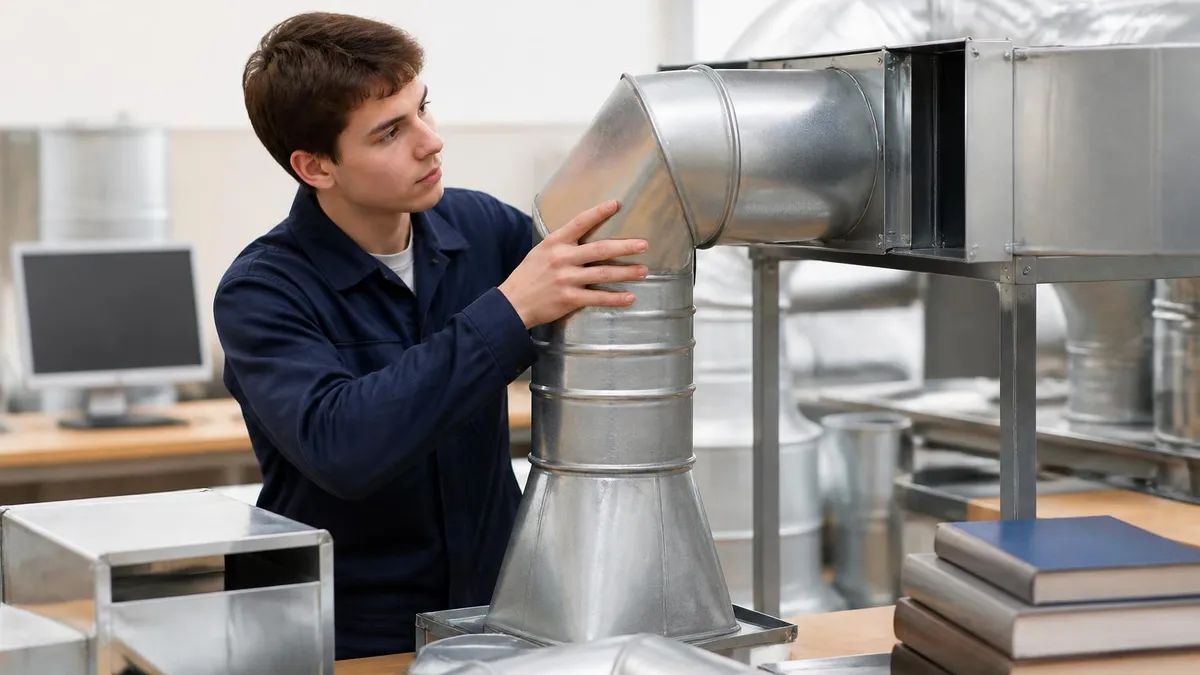
HVAC Repair Philadelphia: The Complete Homeowner's Guide to Finding, Hiring, and Working With Local Heating and Cooling Pros
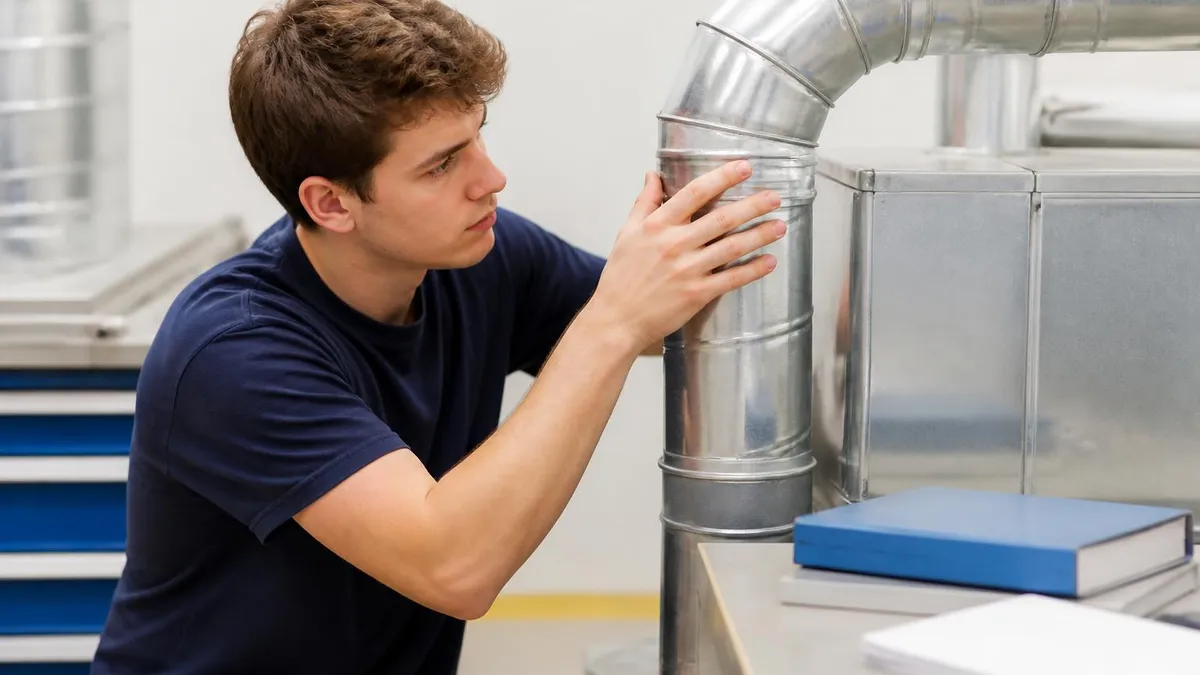
Best HVAC Repair in Bandon, OR: Local Services Near Me Guide
How this page was made: written with AI tools and published by Nathan Beja, founder of Practice Test Geeks, who is responsible for its content. We have not yet matched this exam's facts to an official source, so confirm fees, dates and rules with the exam body. Not reviewed by a subject-matter expert. Editorial policy