
Home Inspector Course: Complete 2026 Guide to Training, Certification Requirements, Costs & Career Launch
Complete home inspector course guide for 2026. Compare training programs, costs, state requirements, certification paths, and exam prep to launch 📗
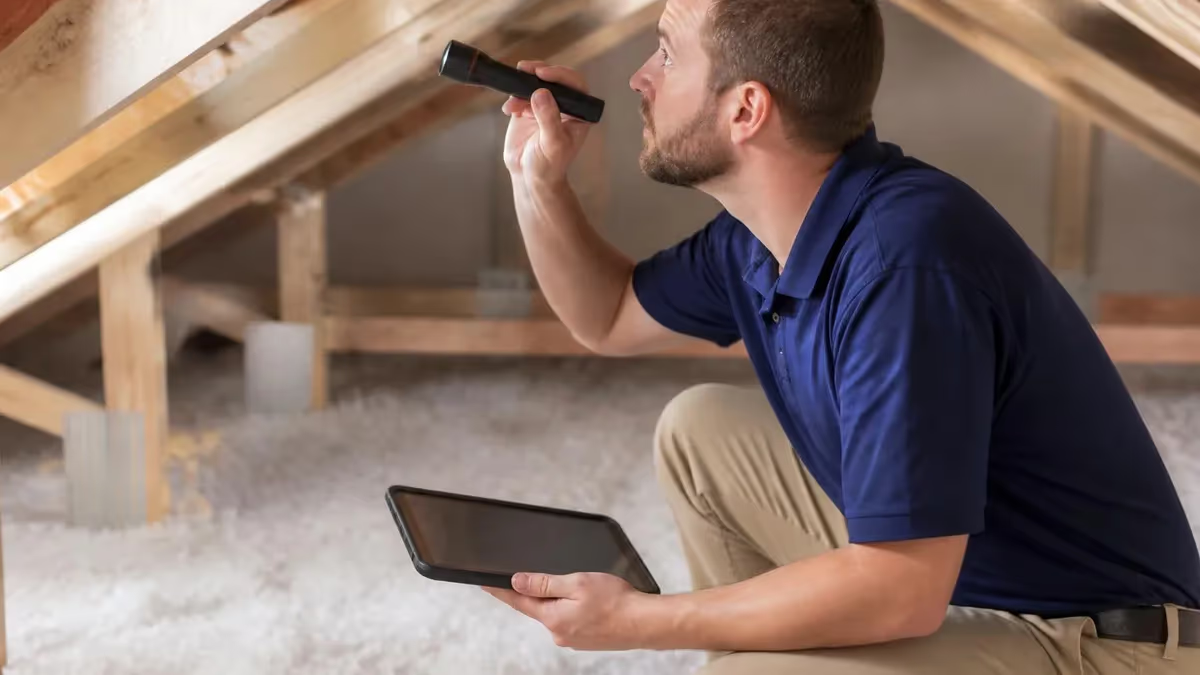
Choosing the right home inspector course is the single most important decision you will make when launching a career in residential inspection, because the program you select determines your eligibility for state licensure, your readiness for the National Home Inspector Examination, and your competitiveness when prospective clients searching for home inspectors near me compare credentials. A strong course teaches building science, defect recognition, ethics, reporting software, and business fundamentals in roughly 90 to 200 hours of structured learning depending on your state. Practice with the free Home Inspector practice test on PracticeTestGeeks (300+ questions with answer explanations).
The home inspection industry has grown steadily since 2019, with the Bureau of Labor Statistics projecting healthy demand through 2032 as housing turnover, insurance carrier requirements, and pre-listing inspections all increase nationwide. Real estate transactions in most metros now expect an inspector to walk every system in a home within three to four hours and deliver a digital report by midnight. That expectation only happens when the inspector trained on the same workflow during coursework.
Tuition for a complete training program in 2026 ranges from $695 for self-paced online certification packages to roughly $3,400 for hybrid programs that include classroom labs, ride-alongs with veteran inspectors, and live mock inspections. Some community colleges bundle the course with general contractor coursework, which can stretch the total to $5,000 but also opens doors to commercial inspection later. The smartest students compare hours, instructor credentials, and exam pass rates before paying a deposit.
State rules vary dramatically. Texas requires 194 classroom hours plus a sponsorship; Illinois requires 60 hours of approved pre-licensing plus a passing exam score; California has no statewide license at all but expects InterNACHI or ASHI membership for credibility. Before enrolling, every student should verify that the course is explicitly approved by their state board, because completing the wrong curriculum means repeating coursework and paying tuition a second time. State approval lists update quarterly.
Beyond regulation, a quality home inspector course should prepare you to talk confidently with buyers, sellers, agents, and contractors on inspection day. Communication is the skill that drives repeat referrals and five-star reviews. Coursework that includes recorded client walk-throughs, sample agreements, and conflict-resolution role-play produces graduates who close their first ten paying jobs within 60 days of licensure. Programs without that soft-skills layer leave new inspectors stumbling through their early walk-throughs.
This guide walks through every component of a high-quality home inspector course, the realistic cost ladder, expected first-year and five-year earnings, the National Home Inspector Examination structure, state-by-state licensing variations, and the specific skills that separate top-rated inspectors from average ones. By the end you will know which course fits your timeline, your budget, and the market you plan to serve, and you will have a checklist to verify any school before you commit.
If you already have hands-on construction, electrical, plumbing, or HVAC experience, expect the technical portions of coursework to feel familiar and the report-writing modules to feel new. If you are coming from an unrelated field like finance or teaching, plan to invest extra study time in building systems and load 30 percent more hours into your schedule. Either way, the course is doable for motivated adults willing to commit eight to twelve focused weeks.
Free Home Inspector Test Study Tools
Interactive Home Inspector Test resources on PracticeTestGeeks, free to start:
- Home Inspector Test practice test — 300+ questions with instant scoring and answer explanations
- Home Inspector Test flashcards — review key terms and concepts card by card
- Home Inspector Test study guide — topic-by-topic overview of what the exam covers
- Home Inspector Test cheat sheet — one-page printable summary for last-minute review
Home Inspector Course by the Numbers

Core Modules Inside a Quality Home Inspector Course
Covers foundations, framing, roofing, exterior cladding, and moisture intrusion. Students learn how loads transfer through structures and how to spot deflection, settlement, and water damage on inspection day.
Service panels, branch circuits, drain-waste-vent systems, water heaters, and furnaces. Includes hands-on practice identifying double-tapped breakers, polybutylene piping, and cracked heat exchangers.
Photographing, narrating, and categorizing defects as safety, major, or maintenance items. Most courses require students to write 5-10 sample reports using software like Home Inspector Pro or Spectora.
Deep study of InterNACHI, ASHI, or state-specific SOPs. Covers conflict of interest, agent kickbacks, scope limits, and the legal language that protects inspectors from post-closing lawsuits.
Pricing, scheduling software, errors and omissions coverage, general liability, LLC formation, and lead generation tactics for new inspectors entering competitive metros like Chicago or Phoenix.
Tuition for a complete home inspector course in 2026 sits between $695 and $3,400 for most students, but the actual total cost of becoming licensed and operational is much higher once you add fees, equipment, insurance, and software. Understanding the full picture upfront prevents the financial shock that drives roughly 15 percent of new inspectors out of the field within their first year of practice. Plan a realistic budget before you enroll in any program.
The course itself is only the entry fee. Add the state application fee ($150-$300), background check ($45-$75), exam registration ($225 for the NHIE), errors and omissions insurance ($1,200-$1,800 annually), general liability ($400-$700 annually), inspection software subscription ($60-$100 per month), and a starter equipment kit including a quality moisture meter, voltage tester, combustible gas detector, infrared thermometer, telescoping ladder, and high-lumen flashlight. Expect $2,500-$4,000 in equipment alone.
Add it all together and the realistic launch budget for a solo home inspector in 2026 lands between $7,500 and $11,000. That figure surprises career-changers who saw a $799 advertised course price online and assumed they could be inspecting homes within a month for under a thousand dollars total. Honest schools disclose the full ladder during enrollment; predatory schools hide it until after you have paid tuition and started studying.
Financing is available through several channels. Many InterNACHI and ASHI-affiliated schools offer interest-free payment plans split across three to six months. Some students use 0% APR credit card promotional periods to spread the cost across 12-18 months. Veterans can apply GI Bill benefits to approved programs, and several state workforce development boards offer grants of $1,500-$3,000 for displaced workers retraining into skilled trades. Always ask about how much do home inspectors make in your specific metro before financing.
The return on that initial investment can be strong. A diligent solo inspector charging $425 per inspection and completing 250 inspections per year grosses $106,250 before expenses. After insurance, software, fuel, marketing, and self-employment tax, take-home settles around $62,000 to $74,000 in year one, scaling toward $95,000-$130,000 by year three as referral networks compound. Inspectors who add ancillary services like radon, mold, sewer scope, and termite quickly cross six figures.
Avoid courses priced under $400 unless they are explicitly state-approved and clearly disclose what they exclude. Cheap programs usually skip live instruction, omit report-writing software access, and provide no mentorship. Graduates of bargain courses pass the exam less often, struggle on their first ten inspections, and burn through their startup capital paying for the help they should have received in school. The cheaper option becomes the most expensive option.
The best value typically comes from $1,800 to $2,400 hybrid programs that combine 80-100 hours of online coursework with 40-60 hours of in-person labs, plus at least three ride-along inspections with a working veteran. That format builds the muscle memory needed to navigate an attic, crawlspace, and roof confidently while still letting you keep your day job during the academic portion. Most students finish in 10-14 weeks at a part-time pace.

Home Inspector Practice Test Questions
Prepare for the Home Inspector Test exam with our free practice test modules. Each quiz covers key topics to help you pass on your first try.
Home Inspector MCQ
Home Inspector Exam Questions covering MCQ. Master Home Inspector Test concepts for certification prep.
Home Inspector Test
Free Home Inspector Practice Test featuring Test. Improve your Home Inspector Exam score with mock test prep.
Home Inspector Trivia
Home Inspector Mock Exam on Trivia. Home Inspector Study Guide questions to pass on your first try.
Home Inspector Home Online Inspector Test
Home Inspector Test Prep for Home Online Inspector Test. Practice Home Inspector Quiz questions and boost your score.
Home Inspector Top Rated Home Inspector
Home Inspector Questions and Answers on Top Rated Home Inspector. Free Home Inspector practice for exam readiness.
Home Inspector Ultimate Home Inspector
Home Inspector Mock Test covering Ultimate Home Inspector. Online Home Inspector Test practice with instant feedback.
Home Inspector Electrical System Safety Ha...
Free Home Inspector Quiz on Electrical System Safety Hazards. Home Inspector Exam prep questions with detailed explanations.
Home Inspector Forced-Air Furnace Inspection
Home Inspector Practice Questions for Forced-Air Furnace Inspection. Build confidence for your Home Inspector certification exam.
Home Inspector Plumbing DWV Systems
Home Inspector Test Online for Plumbing DWV Systems. Free practice with instant results and feedback.
Home Inspector Roofing Systems and Materials
Home Inspector Study Material on Roofing Systems and Materials. Prepare effectively with real exam-style questions.
Home Inspector Structural Framing Defects
Free Home Inspector Test covering Structural Framing Defects. Practice and track your Home Inspector exam readiness.
How to Become a Home Inspector: Online vs Classroom Course Formats
Fully online home inspector courses dominate the market because they let career-changers keep their existing job during training. Programs like InterNACHI's flagship course are free for paid members and include 1,000+ hours of optional video content alongside the required modules. AHIT, ICA, and PHII deliver structured 120-hour curricula at $695-$1,495 with self-paced video, downloadable manuals, and proctored module exams that students can complete from any laptop.
The trade-off is hands-on exposure. Without scheduled labs, online-only students must arrange their own ride-along inspections with a licensed mentor before they feel ready for paying clients. Many states now require this. Successful online graduates typically supplement coursework by joining a local InterNACHI chapter, attending one or two regional conferences, and shadowing at least five inspections before taking the NHIE. The format works well for disciplined adults with construction backgrounds.
Is a Home Inspector Course the Right Career Investment?
- +Flexible self-employed schedule with control over daily workload and vacation timing
- +Strong earning potential of $75,000-$130,000 within three to five years of licensure
- +Low ongoing overhead compared to most skilled-trade businesses or franchise opportunities
- +High demand in growing metros driven by housing turnover and insurance carrier requirements
- +Tangible daily impact helping families avoid costly post-purchase surprises and safety hazards
- +Stackable income streams from radon, mold, sewer scope, termite, and pool inspections
- +No degree required — course completion plus state licensure opens the door to the profession
- −Significant upfront investment of $7,500-$11,000 covering tuition, equipment, insurance, and fees
- −Physically demanding work involving roofs, crawlspaces, ladders, and attic navigation year-round
- −Liability exposure requires careful contract language and quality errors and omissions insurance
- −Income is seasonal in northern markets where winter slows real estate transactions significantly
- −Constant continuing education obligations to maintain state license and association memberships
- −Difficult conversations with frustrated buyers, sellers, and agents during deal-killing findings
- −First-year marketing grind required to build agent referral relationships and online review base
Pros and Cons at a Glance
| Pros | Cons |
|---|---|
| Flexible self-employed schedule with control over daily workload and vacation timing | Physically demanding work involving roofs, crawlspaces, ladders, and attic navigation year-round |
| Low ongoing overhead compared to most skilled-trade businesses or franchise opportunities | Liability exposure requires careful contract language and quality errors and omissions insurance |
| High demand in growing metros driven by housing turnover and insurance carrier requirements | Income is seasonal in northern markets where winter slows real estate transactions significantly |
| Tangible daily impact helping families avoid costly post-purchase surprises and safety hazards | Constant continuing education obligations to maintain state license and association memberships |
| Stackable income streams from radon, mold, sewer scope, termite, and pool inspections | Difficult conversations with frustrated buyers, sellers, and agents during deal-killing findings |
| No degree required — course completion plus state licensure opens the door to the profession | First-year marketing grind required to build agent referral relationships and online review base |

Pre-Enrollment Checklist for Any Home Inspector Course
- ✓Confirm the course is explicitly approved by your state regulatory board for pre-licensing credit
- ✓Verify total instructional hours meet or exceed your state's minimum requirement
- ✓Check that the school publishes a current NHIE first-attempt pass rate above 65 percent
- ✓Ask whether tuition includes textbook, software access, exam prep, and at least one practice exam
- ✓Confirm instructors hold active licenses and have completed 500+ paid inspections personally
- ✓Request a sample inspection report produced by a recent graduate for quality assessment
- ✓Check refund policy, payment plan terms, and any non-refundable enrollment deposit
- ✓Verify membership credit toward InterNACHI, ASHI, or your preferred professional association
- ✓Confirm access to live instructor support, not just pre-recorded video and email-only help
- ✓Read at least 20 recent graduate reviews on Google, Trustpilot, and ASHI member forums
- ✓Ask about job placement assistance, mentor matching, or post-graduation business coaching
- ✓Verify the program teaches the specific report software you intend to use in your business
State approval beats brand recognition every time
A nationally famous home inspector course means nothing if it lacks approval from your specific state board. Always cross-reference the school against your state's published approved-provider list before paying tuition. Graduates of unapproved programs must repeat coursework at an approved school, paying tuition twice and losing 8-12 weeks of momentum during their career launch.
Home inspector salary varies dramatically by metro, experience, and business model, but the Bureau of Labor Statistics reports a national median of $64,820 for construction and building inspectors as of the 2024 data release. The top 10 percent of home inspectors earn more than $107,830, and self-employed inspectors in expensive housing markets like Seattle, Denver, Austin, and Boston routinely cross $150,000 after their third year. Geography drives compensation more than any other single factor.
Inspectors working in chicago area home inspectors markets typically charge $425-$550 for a standard single-family inspection on a 2,000-square-foot home, while Minneapolis-Saint Paul inspectors average $375-$475 according to recent Reddit threads documenting actual quoted prices. Rural Midwest inspectors charge less, often $275-$350, but also enjoy lower overhead, shorter drives, and less direct competition for each agent referral relationship. Suburban inspectors find the best balance.
The path from course graduate to high-earning veteran follows a predictable arc. Year one focuses on agent referral building and typically grosses $35,000-$55,000 for full-time inspectors completing 100-160 inspections. Year two expands to 180-220 inspections and $65,000-$85,000. Year three crosses 250 inspections and $90,000-$115,000 as repeat agents and direct buyer referrals stabilize the calendar. Year five inspectors often add a second inspector and break into franchise-style earnings.
Ancillary services dramatically multiply earnings per address. A standard inspection priced at $450 can become a $750-$900 ticket when the inspector adds radon testing ($175), termite inspection ($95), sewer scope ($175), and mold air sampling ($225). Inspectors who train in these specialties during their initial course or in continuing education modules outperform single-service competitors by 40-60 percent in gross revenue. Most state-approved courses now bundle radon certification into the base tuition.
Insurance carrier mandates have created an entirely new revenue stream since 2023. Many homeowner insurance companies now require a four-point inspection (roof, electrical, plumbing, HVAC) before binding or renewing coverage, especially in Florida, Texas, Louisiana, and other catastrophe-prone states. These quick inspections take 45 minutes and bill $125-$175, allowing an inspector to complete three or four in a single morning between standard buyer inspections. Smart course graduates target this niche immediately.
Inspectors who position themselves as the regional expert for a specific home type also outearn generalists. Mid-century modern specialists in Palm Springs, historic Victorian experts in San Francisco, log-home inspectors in Colorado mountain towns, and high-rise condo specialists in Miami all command premium pricing of $650-$1,200 per inspection. Niche positioning requires deeper coursework and targeted continuing education but produces fewer competitive agent pitches and stronger client loyalty over time.
Long-term career options expand significantly after five years. Experienced inspectors transition into commercial property inspection ($1,200-$5,000 per job), expert witness testimony for real estate litigation ($300-$500 per hour), training and consulting for new inspectors, franchise ownership with brands like Pillar To Post or HouseMaster, and authoring continuing education courses. Several veteran inspectors I have interviewed earn over $250,000 annually by combining inspection work with consulting and online training products.
At least a dozen online schools advertise heavily on Google but lack approval from major state boards including Texas, North Carolina, and Illinois. Always verify your selected provider appears on your state's current approved-provider list before paying any tuition. The list updates quarterly, and approval can lapse if a school fails its annual audit. Calling the state board directly takes ten minutes and saves thousands of dollars.
The home inspector course market in 2026 is dominated by a handful of established providers, each with distinct strengths and weaknesses worth comparing before you commit. InterNACHI, AHIT, ICA School, PHII, Kaplan, and ATI together account for roughly 80 percent of new inspector enrollments nationwide, with regional community colleges and state-specific schools filling the remaining demand. Choosing among them depends on your state, learning style, and budget.
InterNACHI offers the most comprehensive course library and the strongest ongoing member benefits, including free legal templates, marketing tools, and access to the world's largest inspector community. Annual membership runs about $499 and includes the entire course catalog, making it the most cost-effective option for self-disciplined learners. The downside is that InterNACHI's standalone course lacks the live-instructor accountability that some students need to maintain momentum across 120 hours of material.
AHIT, owned by ATI Training, runs a strong national network of in-person classroom programs in roughly 30 major metros. Their 10-day intensive format compresses 120 hours into two weeks of live instruction with veteran inspector instructors. AHIT's NHIE pass rate consistently runs above 80 percent, and their alumni network is exceptionally active in major markets. Tuition lands between $2,395 and $3,295 depending on city, plus optional ride-along packages priced at $399-$799.
ICA School pioneered the affordable, all-online format and remains a strong choice for budget-conscious students in states with lower hour requirements. At $695 for the full national curriculum, ICA offers strong value but limited live support. PHII (Professional Home Inspection Institute) sits in a similar price band at $895 and adds slightly more instructor interaction. Both serve career-changers well when paired with self-arranged ride-alongs and an InterNACHI membership for community access.
Kaplan and several major community colleges occupy the premium tier at $2,800-$4,500. Their advantage is integration with broader real estate and construction curricula, which suits students who want to add appraisal, real estate sales, or general contracting credentials over time. The disadvantage is rigid scheduling and limited geographic availability. If you live near a participating campus and prefer traditional academic structure, the cost premium can be justified. Most students do not need it.
Beyond the major national schools, every state has at least one regional provider focused specifically on local code, regional construction styles, and the state-specific exam supplement where one exists. Texas Inspector, North Carolina Home Inspector Licensure Board approved schools, and Florida-based providers like Inspection Certification Associates all serve their home markets well. Regional schools also tend to have stronger placement networks with local agents and brokerages, which matters enormously during the first six months of practice.
Before you commit to any program, read the actual standards of practice your state adopts and confirm the course covers them explicitly. Some schools teach a generic national curriculum that misses state-specific requirements like radon testing rules, wood-destroying organism reports, or four-point insurance inspections. Pair your coursework with quality practice questions that mirror the NHIE format, because exam readiness is what separates graduates who launch immediately from those who stall for months. Study what do home inspectors look for during real inspections to build mental checklists.
Once you finish your home inspector course, the final stretch toward licensure runs through the National Home Inspector Examination and any state-specific supplemental exam. The NHIE is a 200-question, four-hour, computer-based test administered at PSI testing centers nationwide and accepted by roughly 30 states as the official licensing exam. Registration costs $225 and you can typically schedule your seat within two weeks of feeling ready. Plan to study an additional 60-100 hours after coursework before testing.
The NHIE blueprint distributes questions across seven domains: property and building inspection (roughly 27 percent), analysis of findings and reporting (17 percent), professional responsibilities (10 percent), and technical knowledge of structural, exterior, roofing, plumbing, electrical, HVAC, interior, insulation, and ventilation systems. Strong courses align their internal practice exams to this blueprint so students arrive at PSI familiar with the question style and pacing demands. Expect about 72 seconds per question on test day.
Effective exam prep combines four ingredients: re-reading your course materials with focused notes, completing 1,000-1,500 practice questions across multiple platforms, taking at least three full-length timed mock exams, and reviewing every missed question until you understand the underlying concept rather than just the right answer. Students who skip the timed mock exams routinely run out of time on the real NHIE and leave 15-25 questions blank, which is the single most common cause of first-attempt failure.
On exam day, arrive 30 minutes early with two forms of ID, a calm mindset, and a plan to flag-and-skip any question that consumes more than 90 seconds. The PSI software lets you return to flagged questions before submission. Most successful test-takers complete a first pass in 180 minutes, then spend the final hour reviewing flagged questions and double-checking diagram-based items where small details matter. Trust your initial instinct on 85 percent of questions and only change answers when you have a concrete reason.
After passing the NHIE, your final steps include submitting the state application packet, completing the background check, securing errors and omissions plus general liability insurance, and registering your business entity. Most states issue licenses within 14-30 days of receiving a complete application. Use that processing window to set up your inspection software, order branded business cards, build a simple website, and start introducing yourself to local real estate offices. The inspectors who book quickly after licensure are the ones who started marketing during the waiting period.
Build a defensible client agreement before your first paid inspection. Your course should provide a template, but every inspector should have an attorney in their state review and customize it. Clear scope limits, photo retention policies, and dispute resolution clauses protect you from the small percentage of clients who try to weaponize a missed item months after closing. Inspectors with strong agreements rarely lose claims; inspectors with generic downloaded templates often pay settlements out of pocket.
Finally, commit to lifelong learning. The best inspectors complete 40-60 hours of continuing education annually even when their state only requires 12-20. Attend the InterNACHI House of Horrors weekend at least once, subscribe to industry newsletters, join two or three regional inspector Facebook groups, and read every code update for your state. The first five years build the technical foundation; years five through twenty build the business judgment, reputation, and referral network that make this career genuinely rewarding.
Sample Home Inspector Test Practice Questions
Try these questions from our free Home Inspector Test practice tests. The correct answer and an explanation follow each question.
During an inspection of a home built in 1968, a home inspector identifies solid strand aluminum branch circuit wiring. Which of the following represents the MOST significant hazard associated with this type of wiring?
- A. It is incompatible with modern high-amperage appliances.
- B. The wiring is prone to breaking during installation.
- C. Connections can loosen over time, leading to overheating and arcing.
- D. Aluminum wiring emits a gas that can degrade insulation.
Answer: C. Connections can loosen over time, leading to overheating and arcing.
Solid strand aluminum wiring has a higher coefficient of thermal expansion than copper. This property, known as "cold creep," causes the wire to expand and contract more with temperature changes. Over time, this can lead to loose connections at terminals (outlets, switches, breakers), which increases resistance, causes overheating, and creates a serious fire hazard from arcing.
A home inspector observes a 4-inch cast iron soil stack that has significant horizontal crackling and scaling on its exterior. What is the recommended action?
- A. Apply a sealant coat immediately
- B. Note it as a material deficiency and recommend evaluation by a licensed plumber
- C. This is normal aging and requires no action
- D. Replace only the visible section
Answer: B. Note it as a material deficiency and recommend evaluation by a licensed plumber
Exterior scaling and cracking of cast iron indicates corrosion and potential structural failure; a licensed plumber should evaluate for replacement.
An inspector finds that the grading around a home's foundation slopes toward the building. What is the recommended correction?
- A. Install interior drain tile
- B. Re-grade so the soil slopes away at least 6 inches over the first 10 feet
- C. Add window wells to basement windows
- D. Apply waterproof coating to the interior wall
Answer: B. Re-grade so the soil slopes away at least 6 inches over the first 10 feet
Positive drainage requires the grade to fall at least 6 inches within the first 10 feet from the foundation to direct surface water away and prevent basement seepage.
A home inspector observes that drip edge flashing is missing at the eaves. What is the primary concern?
- A. Loss of curb appeal
- B. Water can wick back under the shingles and rot the fascia and deck edge
- C. Improper attic ventilation
- D. Reduced fire resistance of the roof assembly
Answer: B. Water can wick back under the shingles and rot the fascia and deck edge
Without drip edge flashing, capillary action can draw water back under the shingles at the eave, saturating and rotting the fascia board and roof deck edge.
Home Inspector Questions and Answers
Certified Home Inspector: Complete Guide to Training, Certification, Salary & Career Path in 2026
Local Home Inspectors: Complete Guide to Finding, Hiring, and Working With Trusted Inspection Pros Near You
National Home Inspector Exam: Complete 2026 Study Guide, Pass Rates, Cost & Certification Prep
Home Inspector Pro Review 2026: Pricing, Features & Top Alternatives
Free National Home Inspector Questions and Answers
About the Author

Licensed Real Estate Broker & Licensing Exam Specialist
University of Wisconsin School of BusinessSandra Taylor is a Graduate Realtor Institute (GRI) and Accredited Buyer's Representative (ABR) designee with an MBA in Real Estate from the University of Wisconsin School of Business. She has 18 years of residential and commercial real estate brokerage experience and coaches real estate license candidates through state salesperson and broker pre-license examinations across multiple states.