
What Is a Home Health Aide? Complete 2026 September Career Guide to Duties, Training, and Certification
What is a home health aide? Complete guide to HHA duties, training, certification, salary, and how to start your career as a health home aide in 2026 September. 🎓

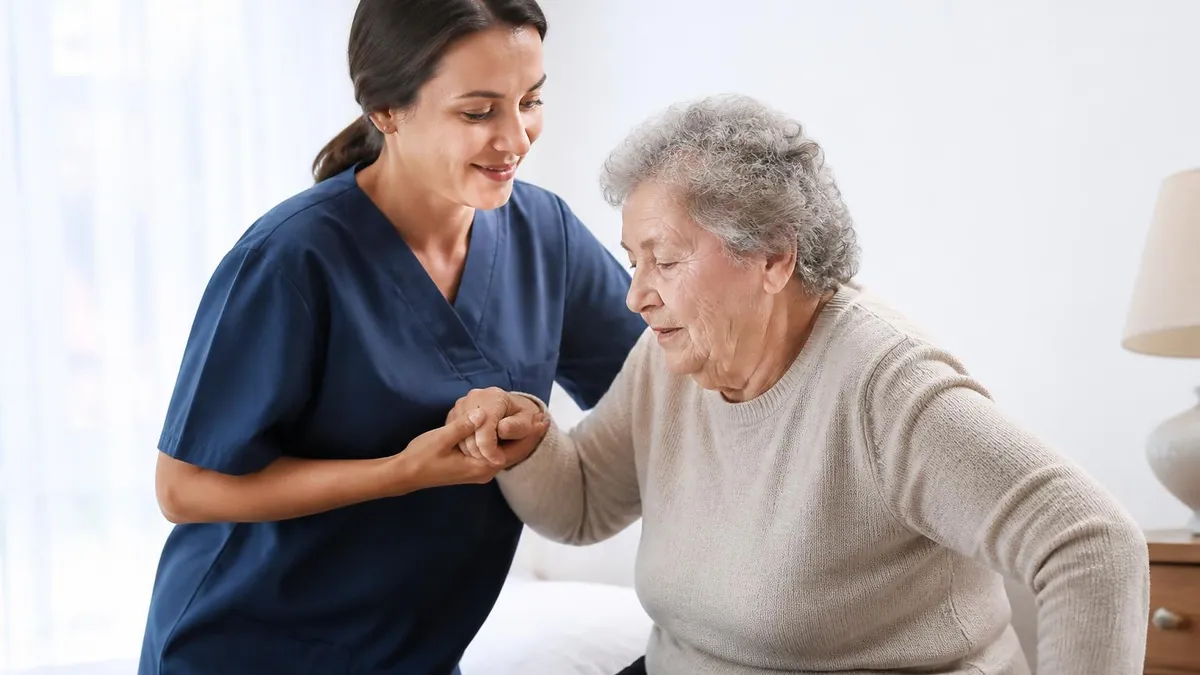
A health home aide, more commonly called a home health aide or HHA, is a trained caregiver who delivers personal care, basic clinical support, and daily living assistance to clients inside their own homes. These professionals work with the elderly, people recovering from surgery, individuals living with chronic illness, and clients with physical or cognitive disabilities. Unlike nursing home staff, home health aides bring care to the client's living room, which preserves dignity, comfort, and independence while reducing the cost of long-term care for families across the United States.
The role sits at the intersection of caregiving and basic healthcare. A typical shift may include bathing a client, preparing a low-sodium meal, helping with mobility, checking vital signs, reminding a patient to take prescribed medication, and documenting the visit in an electronic system such as HHA Exchange. The job is physically active and emotionally rich, and it gives workers a clear sense of purpose because the impact on each client is immediate and visible. Many aides describe their work as one of the most meaningful jobs in healthcare.
Demand for home health aides is one of the fastest growing in the entire U.S. labor market. The Bureau of Labor Statistics projects that employment for home health and personal care aides will grow about 21 percent between 2023 and 2033, far faster than the average for all occupations. The aging baby boomer generation, rising rates of chronic conditions like diabetes and dementia, and a strong cultural preference for aging in place are all driving this hiring boom. Agencies in nearly every state report ongoing shortages of certified aides.
Becoming an HHA is also one of the most accessible entry points into healthcare. Federal Medicare rules require at least 75 hours of training, although many states require 100 or 120 hours. Most certification programs can be completed in four to twelve weeks, and many are free through agency-sponsored training, vocational schools, or community college partnerships. There is no college degree requirement, and many aides go on to become certified nursing assistants, licensed practical nurses, or registered nurses by stacking credentials on top of their initial home health aide certification.
Pay for home health aides has improved sharply in recent years as states raise Medicaid reimbursement rates and agencies compete for talent. The national median hourly wage now sits around 16 to 18 dollars per hour, with major metropolitan markets like New York, Boston, San Francisco, and Seattle paying 20 to 25 dollars or more. Overtime, weekend differentials, live-in stipends, and bonus pay for bilingual aides can push annual earnings well above the median, especially for full-time aides who pick up consistent hours through trusted agencies.
The work is regulated, structured, and clearly defined in scope. Home health aides cannot diagnose illness, prescribe medication, perform sterile procedures, or operate independently of a nursing plan of care. Every task an aide performs in a Medicare-certified agency is documented in a written care plan approved by a registered nurse. This structure protects both the client and the aide, and it gives new caregivers a clear roadmap for what they can and cannot do on the job from their very first shift forward.
This guide walks you through everything a future or current aide needs to know in 2026: the daily duties, the training requirements, the certification pathway, the technology tools like HHA Exchange used in the industry, salary expectations, scope of practice limits, and the long-term career ladder. Whether you are exploring caregiving as a first job, returning to the workforce, or planning to launch into nursing school, the home health aide role offers a stable, in-demand, and deeply human starting line.
Home Health Aide Career by the Numbers
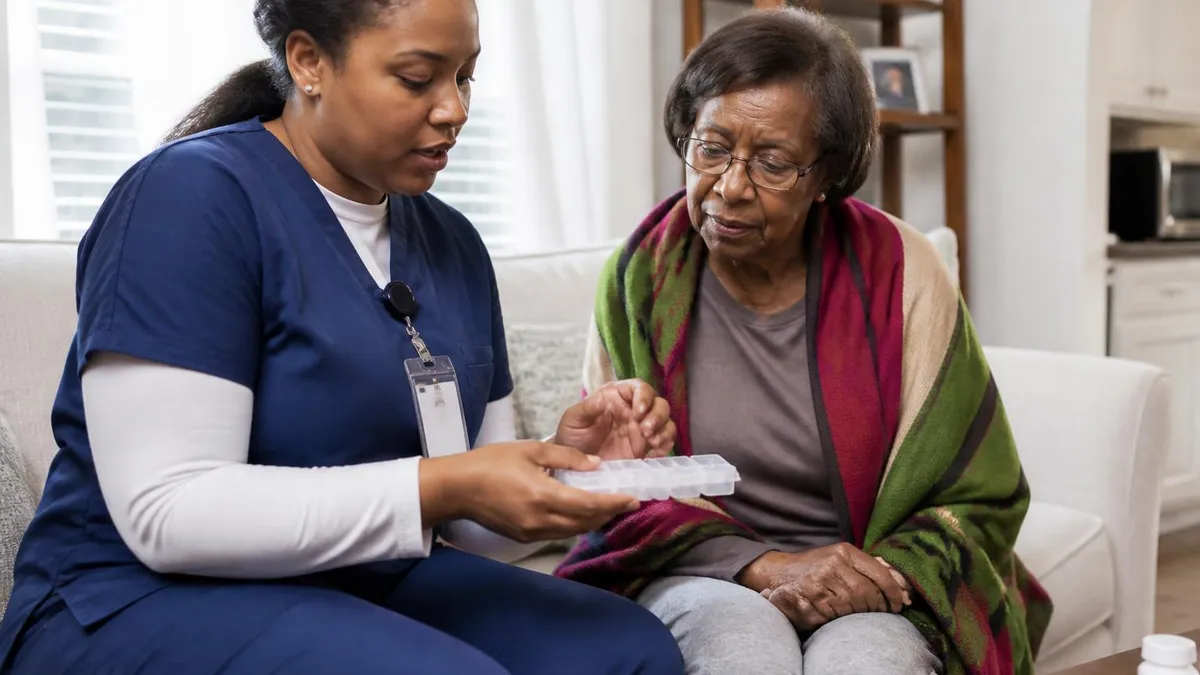
What Does a Home Health Aide Actually Do Each Day?
Assist with bathing, dressing, oral care, grooming, toileting, and incontinence care. Aides protect client dignity while preventing skin breakdown, infection, and falls during transfers from bed to chair, chair to toilet, and into the shower.
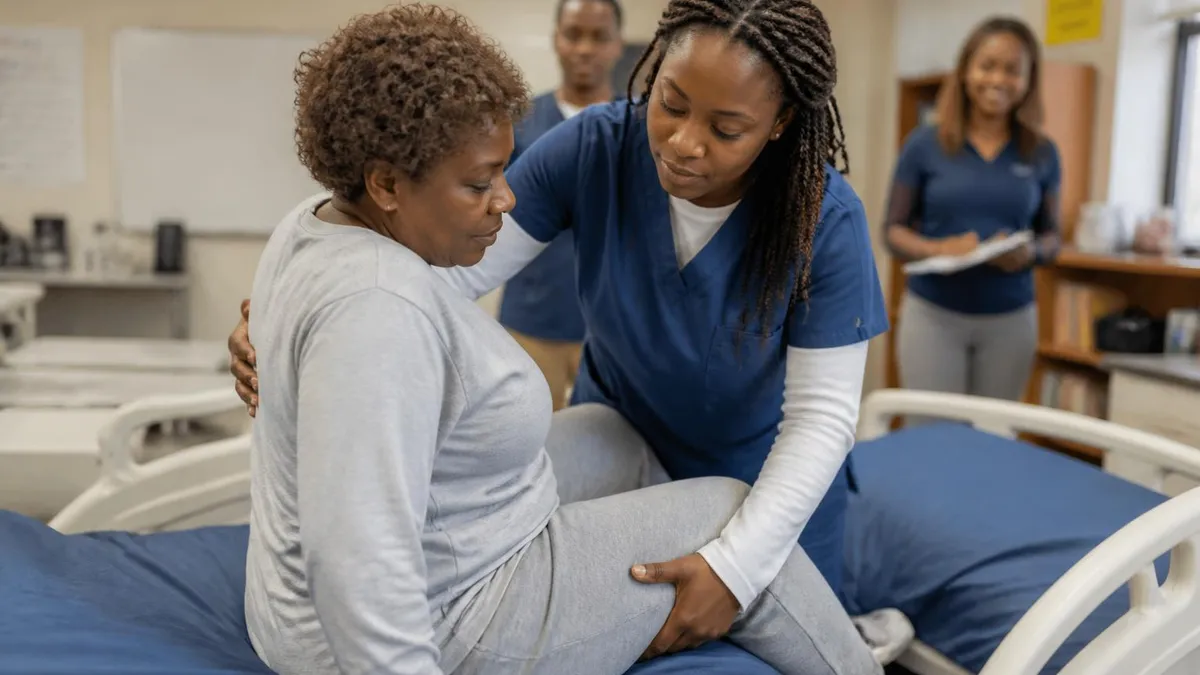
Help clients walk safely with canes, walkers, or gait belts. Reposition bed-bound patients every two hours to prevent pressure injuries, and transfer clients using mechanical lifts or two-person techniques when needed.
Plan and cook meals that match diabetic, cardiac, renal, or pureed diet orders. Monitor fluid intake, encourage hydration, and feed clients who cannot self-feed while watching for choking and swallowing difficulties.
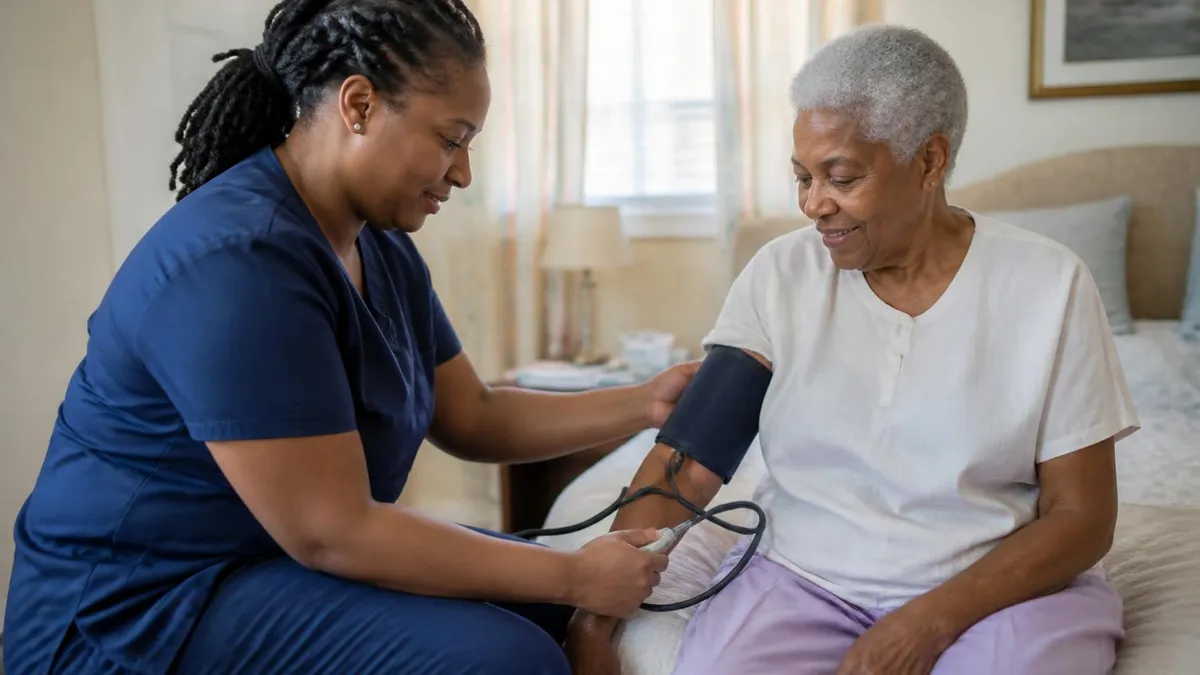
Take blood pressure, pulse, respirations, temperature, and weight. Report changes in skin color, breathing, mood, appetite, or pain to the supervising nurse so problems are caught before they become emergencies.
Change linens, do laundry, wash dishes, and tidy the client's immediate living area. Some aides also pick up groceries, accompany clients to medical appointments, and assist with simple administrative tasks like sorting mail.
The path to becoming a certified home health aide is shorter and more affordable than almost any other healthcare role. Federal law under the Medicare Conditions of Participation requires a minimum of 75 hours of training, with at least 16 hours of supervised practical or clinical work. However, individual states often raise that bar. New York requires 75 hours, California requires 120, and a handful of states such as Washington require 75 plus additional home care aide hours. Always check the requirements published by your state's Department of Health.
Training programs are offered by home care agencies, community colleges, vocational schools, the American Red Cross, and online learning platforms. Agency-sponsored programs are often free because the agency wants to hire you at the end. Community college and private-pay programs typically cost between 300 and 1,500 dollars depending on the state and whether the program includes books, scrubs, CPR certification, and the cost of the competency exam itself.
The curriculum covers infection control, body mechanics, vital signs, range of motion exercises, nutrition, communication, observation and reporting, emergency response, basic anatomy, common conditions such as dementia and stroke, end-of-life care, and client rights. A federally aligned program also covers documentation standards, HIPAA, and the boundaries of the aide's scope. Hands-on labs teach skills like bed baths, perineal care, denture care, and safe transfers using practice equipment and a manikin before students move on to live clinical supervision.
Certification is awarded after passing a written test and a skills demonstration in front of an evaluator. The written portion typically contains 50 to 100 multiple-choice questions on safety, infection control, nutrition, communication, and personal care. The skills portion requires the student to perform three to five randomly selected tasks such as handwashing, blood pressure measurement, ambulation with a gait belt, and bed-to-chair transfer. You can prepare for the written portion using a free hha practice test and video review.
Once certified, the aide is added to the state registry, which is the official roster that agencies and employers check before hiring. Registry status must be maintained through continuing education hours, which vary by state but commonly require 12 hours per year for Medicare-certified agencies. Some states also require periodic background checks, TB testing, flu vaccination documentation, and CPR recertification every two years through the American Heart Association or American Red Cross programs.
If your goal is a faster, more flexible route, online and hybrid programs have expanded dramatically since 2020. Reputable online HHA training programs deliver theory through video and interactive modules, then partner with local agencies for the required in-person clinical hours. Make sure any online program you choose is approved by your state Department of Health and listed in the state's directory of approved training entities, otherwise your hours may not count toward state certification.
For aides who already have CNA certification, the path to adding HHA credentials is often simplified. Many states accept CNA training as fully meeting HHA requirements, and a CNA can typically be added to the HHA registry through a short bridge module covering home care specific topics like client autonomy, working alone, and the role of the family in the care plan. This dual credential opens doors to both nursing home and home care employment with the same training investment.
HHA Practice Test Questions
Prepare for the HHA - Home Health Aide exam with our free practice test modules. Each quiz covers key topics to help you pass on your first try.
HHA Basic Care and Comfort
HHA Exam Questions covering Basic Care and Comfort. Master HHA Test concepts for certification prep.
HHA Basic Care and Comfort Questions and A...
Free HHA Practice Test featuring Basic Care and Comfort Questions and Answers. Improve your HHA Exam score with mock test prep.
HHA Communication and Interpersonal Skills
HHA Mock Exam on Communication and Interpersonal Skills. HHA Study Guide questions to pass on your first try.
HHA Communication and Interpersonal Skills...
HHA Test Prep for Communication and Interpersonal Skills Questions and Answers. Practice HHA Quiz questions and boost your score.
HHA Infection Control and Safety
HHA Questions and Answers on Infection Control and Safety. Free HHA practice for exam readiness.
HHA Infection Control and Safety Questions...
HHA Mock Test covering Infection Control and Safety Questions and Answers. Online HHA Test practice with instant feedback.
HHA Mental and Emotional Support
Free HHA Quiz on Mental and Emotional Support. HHA Exam prep questions with detailed explanations.
HHA Mental and Emotional Support Questions...
HHA Practice Questions for Mental and Emotional Support Questions and Answers. Build confidence for your HHA certification exam.
HHA Mobility and Transfer Techniques
HHA Test Online for Mobility and Transfer Techniques. Free practice with instant results and feedback.
HHA Mobility and Transfer Techniques Quest...
HHA Study Material on Mobility and Transfer Techniques Questions and Answers. Prepare effectively with real exam-style questions.
HHA Nutrition and Hydration
Free HHA Test covering Nutrition and Hydration. Practice and track your HHA exam readiness.
HHA Nutrition and Hydration Questions and ...
HHA Exam Questions covering Nutrition and Hydration Questions and Answers. Master HHA Test concepts for certification prep.
HHA Observation and Reporting
Free HHA Practice Test featuring Observation and Reporting. Improve your HHA Exam score with mock test prep.
HHA Observation and Reporting Questions an...
HHA Mock Exam on Observation and Reporting Questions and Answers. HHA Study Guide questions to pass on your first try.
HHA Patient Rights and Ethics
HHA Test Prep for Patient Rights and Ethics. Practice HHA Quiz questions and boost your score.
HHA Patient Rights and Ethics Questions an...
HHA Questions and Answers on Patient Rights and Ethics Questions and Answers. Free HHA practice for exam readiness.
HHA Personal Care and Hygiene
HHA Mock Test covering Personal Care and Hygiene. Online HHA Test practice with instant feedback.
HHA Personal Care and Hygiene Questions an...
Free HHA Quiz on Personal Care and Hygiene Questions and Answers. HHA Exam prep questions with detailed explanations.
HHA Home Health Aide Certification Practic...
HHA Practice Questions for Home Health Aide Certification Practice Test. Build confidence for your HHA certification exam.
HHA Home Health Aide Certification Practic...
HHA Test Online for Home Health Aide Certification Practice Test #1. Free practice with instant results and feedback.
HHA Home Health Aide Certification Practic...
HHA Study Material on Home Health Aide Certification Practice Test #2. Prepare effectively with real exam-style questions.
HHA Home Health Aide Certification Practic...
Free HHA Test covering Home Health Aide Certification Practice Test #3. Practice and track your HHA exam readiness.
HHA Home Health Aide Certification Practic...
HHA Exam Questions covering Home Health Aide Certification Practice Test #4. Master HHA Test concepts for certification prep.
HHA HOME HEALTH AIDE COMPETENCY TEST
Free HHA Practice Test featuring HOME HEALTH AIDE COMPETENCY TEST. Improve your HHA Exam score with mock test prep.
HHA HOME HEALTH AIDE COMPETENCY TEST #1
HHA Mock Exam on HOME HEALTH AIDE COMPETENCY TEST #1. HHA Study Guide questions to pass on your first try.
HHA Home Health Aide Competency Test
HHA Test Prep for Home Health Aide Competency Test. Practice HHA Quiz questions and boost your score.
HHA Home Health Aide Competency Test #2
HHA Questions and Answers on Home Health Aide Competency Test #2. Free HHA practice for exam readiness.
HHA Exchange Login and the Tools Aides Use Daily
HHA Exchange is the dominant electronic visit verification and care management platform used by home care agencies across the United States. It tracks when an aide clocks in and out of each visit, what tasks were performed, what observations were made, and whether the visit fully matched the authorized care plan. State Medicaid programs in New York, Pennsylvania, New Jersey, Massachusetts, Texas, and many others require EVV systems like HHA Exchange to be used for every Medicaid-billed home care shift.
For aides, the platform is most often accessed through a free smartphone app. The aide opens the app at the client's home, taps a clock-in button, completes the required tasks, marks them complete in the system, and clocks out at the end of the visit. The location is verified by GPS or by a telephone call from the client's landline. Agencies use the data to bill Medicaid accurately and to prove that care was delivered as scheduled.
Is Becoming a Home Health Aide Right for You?
- +Fast entry into healthcare with only 75 to 120 hours of training required
- +Strong job security with 21 percent projected growth through 2033
- +Free or low-cost certification programs offered through most home care agencies
- +Flexible scheduling including part-time, weekend, overnight, and live-in shifts
- +Direct one-on-one client relationships rather than crowded facility care
- +Clear career ladder into CNA, LPN, RN, and case manager roles
- +Bilingual aides and CPR-certified aides earn premium hourly differentials
- −Physically demanding work with lifting, transfers, and long hours on your feet
- −Emotional weight of caring for clients with terminal or worsening conditions
- −Hourly pay still trails skilled nursing and clinical roles in most states
- −Mileage and travel between client homes is not always reimbursed fairly
- −Exposure to infectious disease, household pets, and unsafe home environments
- −Documentation requirements can feel heavy for aides new to digital systems
Core Skills Every Home Health Aide Must Master
- ✓Perform proper hand hygiene before and after every client contact
- ✓Take and accurately record blood pressure, pulse, respiration, and temperature
- ✓Transfer clients safely using a gait belt, mechanical lift, or two-person technique
- ✓Reposition bed-bound clients every two hours to prevent pressure injuries
- ✓Prepare meals that follow diabetic, cardiac, low-sodium, or pureed diet orders
- ✓Recognize and report changes in skin condition, mood, appetite, or breathing
- ✓Provide perineal care, catheter care, and incontinence support with full dignity
- ✓Document each visit accurately in HHA Exchange or another EVV platform
- ✓Respond calmly to falls, choking, chest pain, and other home emergencies
- ✓Maintain HIPAA compliance and respect client confidentiality at all times
Aging in Place Is the Number One Choice for Older Americans
According to AARP research, nearly 77 percent of adults 50 and older want to remain in their own homes as they age rather than move into a facility. Home health aides are the workforce that makes this possible. Without trained aides, millions of older Americans would lose the choice to age in place, and family caregivers would face impossible burdens. This is why federal and state funding for home care is expanding every year.
Salary for home health aides has risen meaningfully over the past five years. The Bureau of Labor Statistics reports a 2024 median hourly wage of about 16.12 dollars per hour for home health and personal care aides, with a median annual wage near 33,530 dollars. Top earners in the 90th percentile bring in close to 42,000 dollars or more per year. Hourly rates vary dramatically by region, agency funding model, and the aide's experience, language skills, and willingness to take difficult shifts.
States with strong Medicaid reimbursement and high cost of living pay the most. New York, Massachusetts, Washington, California, Connecticut, and New Jersey routinely pay 18 to 25 dollars per hour for certified aides, with New York City Consumer Directed Personal Assistance Program rates pushing into the high 20s with benefits. Lower-paying states like Louisiana, Mississippi, West Virginia, and Alabama still typically pay 12 to 14 dollars per hour, although these markets are now seeing rapid wage increases as agencies fight to fill open shifts.
Beyond hourly wages, full-time home health aides often qualify for health insurance, paid sick leave, mileage reimbursement, hazard pay, weekend differentials, overnight differentials, and bonuses for picking up last-minute shifts. Bilingual aides especially those fluent in Spanish, Mandarin, Cantonese, Russian, Haitian Creole, or Arabic often earn one to three dollars per hour above the base rate. Aides certified in dementia care, hospice, or pediatric home care can also negotiate premium rates with specialty agencies.
Hours are remarkably flexible. You can work four hours per day, eight hours per day, twelve-hour overnight shifts, weekend-only schedules, or live-in arrangements where you stay in the client's home for several consecutive days. This flexibility is one of the biggest reasons the field attracts working parents, college students, second-career workers, and people recovering from injuries that prevent them from working in nursing homes or hospitals. You can scale your schedule up or down without losing your certification.
The career ladder above HHA is wide open. Many aides use the role as a stepping stone into a certified nursing assistant credential, which typically adds 30 to 50 more hours of training plus a state exam. From CNA, the next step is often patient care technician, EKG technician, phlebotomist, or licensed practical nurse, which takes about a year of full-time schooling. Eventually many former aides become registered nurses, case managers, hospice nurses, or even agency owners themselves.
Self-employment is also possible. Many states allow independent contractor aides to be hired directly by private-pay clients without going through an agency, although Medicaid clients usually must go through a licensed agency for billing reasons. Independent aides set their own rates, often charging 25 to 40 dollars per hour, but they must handle their own taxes, workers compensation, liability insurance, and scheduling. This route is most successful for experienced aides with strong word-of-mouth reputations.
Long-term, the demographic math favors anyone entering this field today. The 65-and-older population in the U.S. is projected to grow from about 58 million in 2024 to over 80 million by 2040. Meanwhile the supply of family caregivers per older adult is shrinking because adult children live further away, work full time, and have fewer siblings to share the load. This widening gap means that home health aides who stay in the field, build skills, and develop a professional reputation will have steady demand for decades.
Federal rules set the floor at 75 hours of training, but more than half of U.S. states require additional hours, separate state exams, or specific background check protocols. Always verify requirements with your state Department of Health before paying for any training program, and confirm that the program is on the state's approved training entity list. Otherwise your hours may not count and you may not be added to the official aide registry.
Scope of practice is the legal line that defines what a home health aide can and cannot do. Understanding this line protects clients, protects you, and protects your certification. Aides operate under a written care plan developed by a registered nurse, and every task you perform must fall inside the boundaries of that plan and your state's nurse practice act. Step outside those boundaries, even with good intentions, and you risk losing your certification, facing civil liability, or causing real harm to a vulnerable client.
In general, home health aides may assist with activities of daily living such as bathing, grooming, dressing, toileting, ambulation, and feeding. They may also take vital signs, observe and report changes, perform light housekeeping, prepare meals, and remind clients to take their own medication at the scheduled time. These reminders are different from administering medication, which is a nursing function in most states and outside the aide's scope. Read more about hha login documentation and scope details.
What aides typically cannot do includes administering medication by injection, IV, or by physically placing a pill in the client's mouth in most states; performing sterile procedures such as wound packing or sterile catheter insertion; suctioning a tracheostomy unless specifically trained and delegated by a registered nurse; making diagnostic decisions; changing the care plan unilaterally; or providing any service not authorized by the supervising nurse. A few states allow specially trained Advanced Home Health Aides to perform additional tasks under delegation.
Documentation is part of scope. Every visit must be documented accurately in HHA Exchange or whichever EVV system the agency uses. Fraudulent documentation, including clocking in for a visit you did not perform or marking tasks complete that you did not do, is grounds for immediate termination and can result in criminal charges under Medicaid fraud statutes. Many states aggressively prosecute this kind of fraud because it directly damages the public funding that pays for home care services.
Mandatory reporting is also part of the role. Aides are mandated reporters of elder abuse, child abuse, and neglect in most states. If you observe bruising inconsistent with the client's history, unexplained weight loss, financial exploitation, or unsafe living conditions, you have a legal duty to report through your agency's chain of command and, in many states, directly to Adult Protective Services. Failing to report can carry both professional and criminal penalties depending on the state.
Confidentiality under HIPAA is non-negotiable. You may not discuss a client's medical information, address, family situation, or any identifying detail with anyone outside the care team. This includes social media posts, text messages to friends, and casual conversations in public. Violations can lead to fines, termination, and removal from the state registry. Treat every piece of client information as confidential by default, and when in doubt, ask your supervising nurse before sharing anything with anyone.
The good news is that scope of practice is not designed to limit you. It is designed to give you a clear, defensible framework that lets you do meaningful work without taking on liability that belongs to nurses and physicians. Aides who understand and respect their scope tend to have longer, less stressful careers because they know exactly what is expected of them, what they should refuse to do, and when to call the supervising nurse for direction in any situation that falls outside the written care plan.
If you are ready to start your career as a home health aide, the practical next steps are clear. First, decide which state you want to work in, because your certification will be issued by that state's Department of Health or equivalent agency. If you plan to move within the next year, look into reciprocity agreements; some states accept HHA certification from neighboring states with little or no additional paperwork, while others require a full retraining program.
Second, choose an approved training program from your state's official directory. Avoid programs that promise certification without classroom hours or clinical practice, because they are almost always scams that will leave you without a valid credential. Look for programs that include CPR certification, first aid, and access to the state competency exam in the program fee. If a local home care agency offers free training in exchange for a six-month or one-year employment commitment, this is often the best financial choice.
Third, prepare for the certification exam with practice questions. The written portion is straightforward if you study consistently, but the skills demonstration intimidates many candidates. Practice each skill out loud, narrating what you are doing as you do it, because evaluators score you on both technique and communication. Use free practice question banks, watch video walk-throughs of common skills, and form a small study group with classmates so you can rehearse skills together before exam day.
Fourth, build a strong resume and cover letter targeted at home care agencies. Highlight any prior caregiving experience including informal family caregiving, customer service experience, language skills, valid driver's license, reliable transportation, willingness to work weekends and overnights, and any specialized certifications such as dementia care or pediatric care. Agencies hire on attitude and reliability as much as on credentials, so your tone matters as much as your training hours.
Fifth, prepare for the interview by researching the agency and being honest about your availability. Agencies need aides who can commit to consistent shifts, not aides who cancel at the last minute. Show up to the interview in clean professional clothing, bring your certification card, government ID, social security card, and any required immunization records, and be ready to answer scenario-based questions like how you would handle a fall, an angry family member, or a client who refuses care.
Sixth, once hired, invest in yourself by treating the first 90 days as a paid apprenticeship. Ask questions, accept constructive feedback, observe experienced aides whenever possible, and never pretend to know how to do something you do not know how to do. Clients can be hurt by an aide who is too embarrassed to ask for help. Supervising nurses prefer aides who call with questions over aides who guess and make mistakes that the nurse has to fix later in the visit cycle.
Finally, plan your next credential. Most successful long-term home health aides do not stay at the entry level forever. Within one to two years, set a clear goal to add CNA certification, specialty training in dementia or hospice, or even begin prerequisites for LPN or RN school. Many agencies and hospital systems offer tuition assistance for aides who want to advance, and stacking credentials is the single fastest way to grow your hourly rate and your long-term career security.
HHA Questions and Answers
HHA Practice Test Video Answers

HHA Jobs Near Me — How to Find, Train, and Start Your Career

Can a Home Health Aide Administer Medication? Scope of Practice Explained
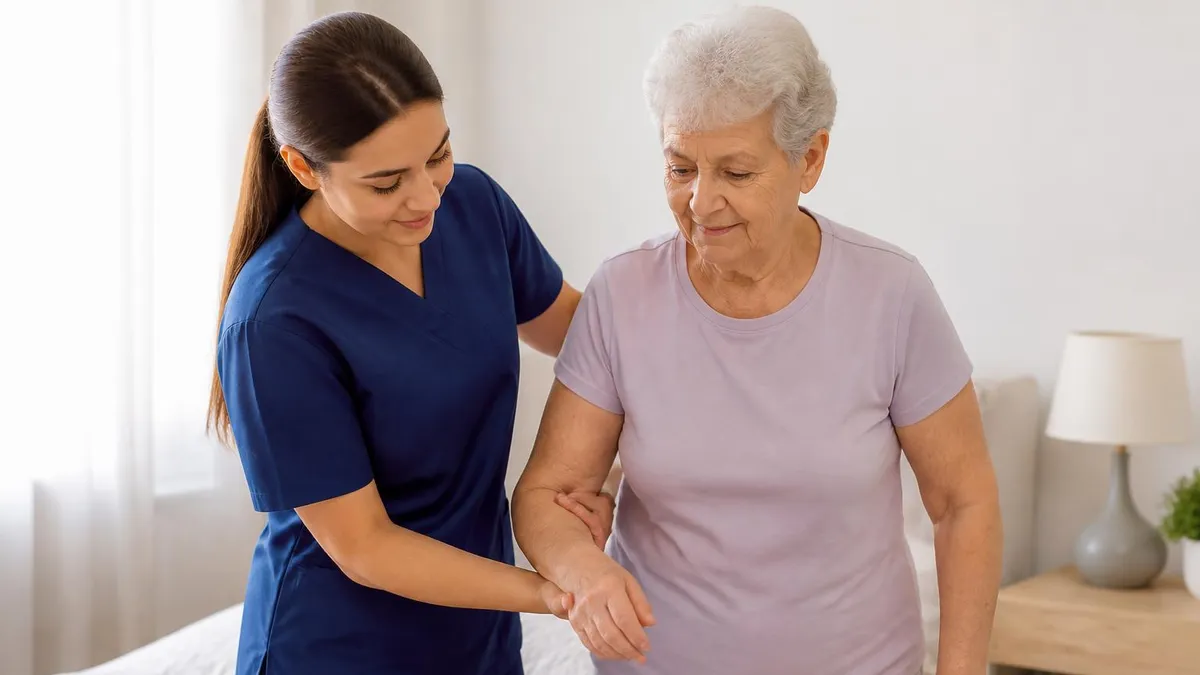
Home Health Aide Training Online: Complete 2026 Guide to Certification, Cost, and Career Launch
Resume for HHA: Complete Guide to Writing a Home Health Aide Resume That Gets Hired in 2026
About the Author

Registered Nurse & Healthcare Educator
Johns Hopkins University School of NursingDr. Sarah Mitchell is a board-certified registered nurse with over 15 years of clinical and academic experience. She completed her PhD in Nursing Science at Johns Hopkins University and has taught NCLEX preparation and clinical skills courses for nursing students across the United States. Her research focuses on evidence-based exam preparation strategies for healthcare certification candidates.
Join the Discussion
Connect with other students preparing for this exam. Share tips, ask questions, and get advice from people who have been there.
View discussion (8 replies)