
Home Health Aide Responsibilities: Complete Guide to HHA Duties, Skills, and Daily Tasks in 2026
Complete guide to home health aide responsibilities, 🆕 daily duties, skills required, scope of practice, and how HHAs use HHA Exchange to log care.
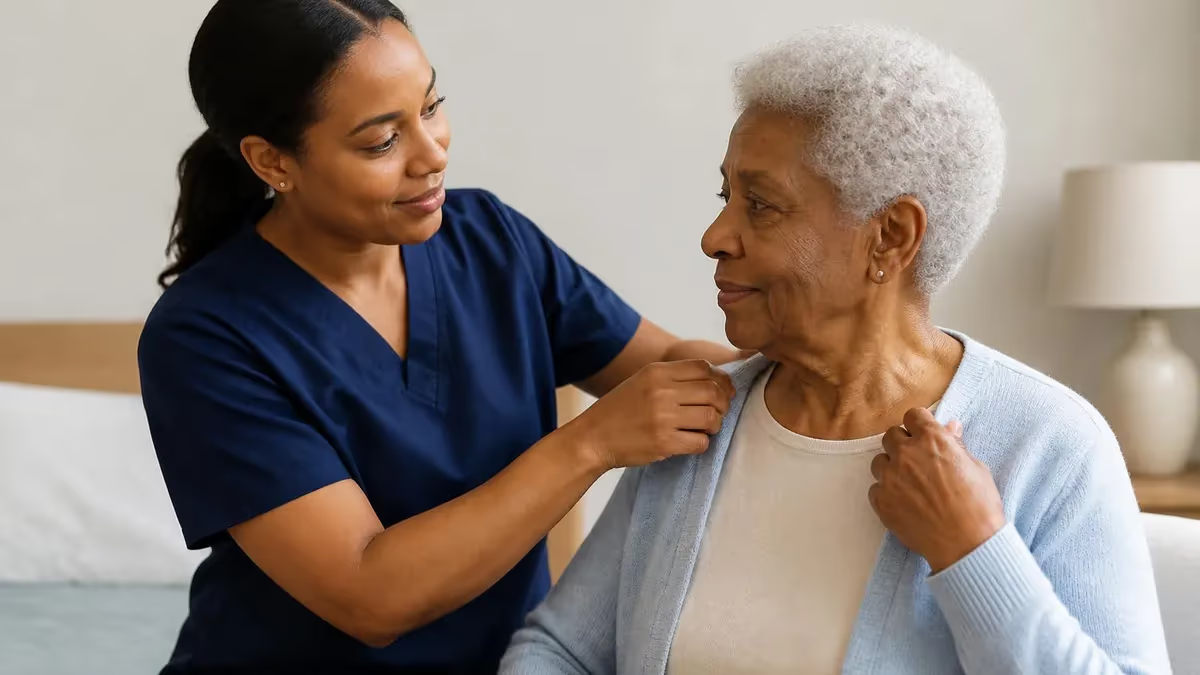
Understanding home health aide responsibilities is the first step toward building a meaningful, stable career in one of the fastest-growing healthcare fields in the United States. A home health aide, often abbreviated as HHA, is the trained caregiver who helps elderly, disabled, or chronically ill clients live safely and comfortably in their own homes. Practice with the free HHA practice test on PracticeTestGeeks (18 questions with answer explanations).
The role blends compassion, observation, and practical hands-on care, and it is governed by federal and state regulations that define exactly what an aide can and cannot do during each visit. If you are exploring this career, start with a clear picture of what an hha actually does shift to shift.
The Bureau of Labor Statistics projects 21 percent job growth for home health and personal care aides between 2023 and 2033, far faster than the average for all occupations. That demand is driven by an aging baby boomer population, a national push to keep seniors out of institutional settings, and the expansion of Medicaid waiver programs that pay for in-home care. Every one of those jobs comes with a defined set of duties that the aide is legally and ethically bound to perform with consistency and documentation.
Home health aide responsibilities fall into four broad buckets: personal care, basic health monitoring, light household support, and accurate documentation. Personal care includes bathing, dressing, grooming, toileting, and helping clients transfer safely from bed to chair. Health monitoring covers vital signs, intake and output, skin checks, and reporting changes to the supervising nurse. Household support means meal prep, laundry, and tidying the care environment. Documentation ties it all together because every task must be logged before the shift ends.
What makes the role unique is the trust that develops between aide and client. You may be the only person a client sees that day, which means your observations carry enormous weight. A small change in appetite, a new bruise, or a shift in mood can be the earliest signal of a urinary tract infection, a fall risk, or depression. Trained aides know how to spot those signals, document them clearly, and escalate them through the right channels so the care plan can be adjusted before a small problem becomes a hospital admission.
HHAs work for Medicare-certified home health agencies, Medicaid personal care programs, private-pay agencies, hospice providers, and increasingly through consumer-directed programs where the client or family hires the aide directly. Each setting has slightly different rules, but the core responsibilities remain the same. Federal regulations under 42 CFR 484.80 set a national baseline of 75 training hours and 16 hours of supervised practical work, and many states layer additional requirements on top of that minimum.
This guide walks you through every category of HHA responsibility in detail, explains how care plans are built and followed, covers the digital tools aides use to clock in and document visits, and shows you how to prepare for the certification exam that confirms you understand the scope of the role. Whether you are weighing the career for the first time or already working visits and want a refresher, the information ahead reflects current 2026 standards and best practices.
By the end, you will know exactly what to expect in your first week on the job, how to document care in compliance with electronic visit verification rules, and where the legal boundaries of practice begin and end. You will also have practice quizzes linked throughout to test your understanding of the most commonly tested HHA topics, including basic care, comfort measures, and interpersonal communication skills.
Free HHA Study Tools
Interactive HHA resources on PracticeTestGeeks, free to start:
- Home Health Aide Certification Practice Test #1 — 18 questions with instant scoring and answer explanations
- HHA flashcards — review key terms and concepts card by card
- HHA study guide — topic-by-topic overview of what the exam covers
- HHA cheat sheet — one-page printable summary for last-minute review
- Federal Home Health Aide training must total at least 75 hours of classroom and supervised practical training, and at least 16 hours of classroom training must come before at least 16 hours of supervised practical training. (U.S. Centers for Medicare & Medicaid Services (CMS), under the federal Home Health Agency Conditions of Participation at)
- Under 42 CFR 484.80, a Home Health Aide fails the competency evaluation if rated "unsatisfactory" in more than one required area. (U.S. Centers for Medicare & Medicaid Services (CMS), under the federal Home Health Agency Conditions of Participation at)
- A Home Health Aide rated unsatisfactory on a task may not do that task without direct RN supervision until they have been retrained in it and passed a later evaluation. (U.S. Centers for Medicare & Medicaid Services (CMS), under the federal Home Health Agency Conditions of Participation at)
- Federal Home Health Aide qualification lapses after 24 consecutive months without paid work as an aide, and the aide must then complete another qualifying program. (U.S. Centers for Medicare & Medicaid Services (CMS), under the federal Home Health Agency Conditions of Participation at)
- Federal rules require every Home Health Aide to complete at least 12 hours of in-service training in each 12-month period. (U.S. Centers for Medicare & Medicaid Services (CMS), under the federal Home Health Agency Conditions of Participation at)
- The federal Home Health Aide competency evaluation is run by a registered nurse: some subject areas must be observed with a patient or pseudo-patient, and the rest may be tested by written exam, oral exam, or observation. (U.S. Centers for Medicare & Medicaid Services (CMS), under the federal Home Health Agency Conditions of Participation at)
- Under federal rule 42 CFR 484.80, a qualified Home Health Aide must complete one of four routes: a training and competency evaluation program, a competency evaluation program alone, a state-approved nurse aide program with a current listing in good standing on the state nurse aide registry, or a state licensure program that meets the federal standards. (U.S. Centers for Medicare & Medicaid Services (CMS), under the federal Home Health Agency Conditions of Participation at)
Facts verified Oct 18, 2026 against U.S. Centers for Medicare & Medicaid Services (CMS), under the federal Home Health Agency Conditions of Participation at. Dates that have passed are removed automatically.
HHA Exam at a Glance
Facts verified Oct 18, 2026 against U.S. Centers for Medicare & Medicaid Services (CMS), under the federal Home Health Agency Conditions of Participation at. Dates that have passed are removed automatically.
Home Health Aide Responsibilities by the Numbers
Core Duties and Daily Tasks of an HHA
Help clients with bathing, oral care, hair washing, shaving, nail care, and dressing while respecting privacy and dignity. Use proper body mechanics to prevent injury to yourself and the client during every transfer and reposition.
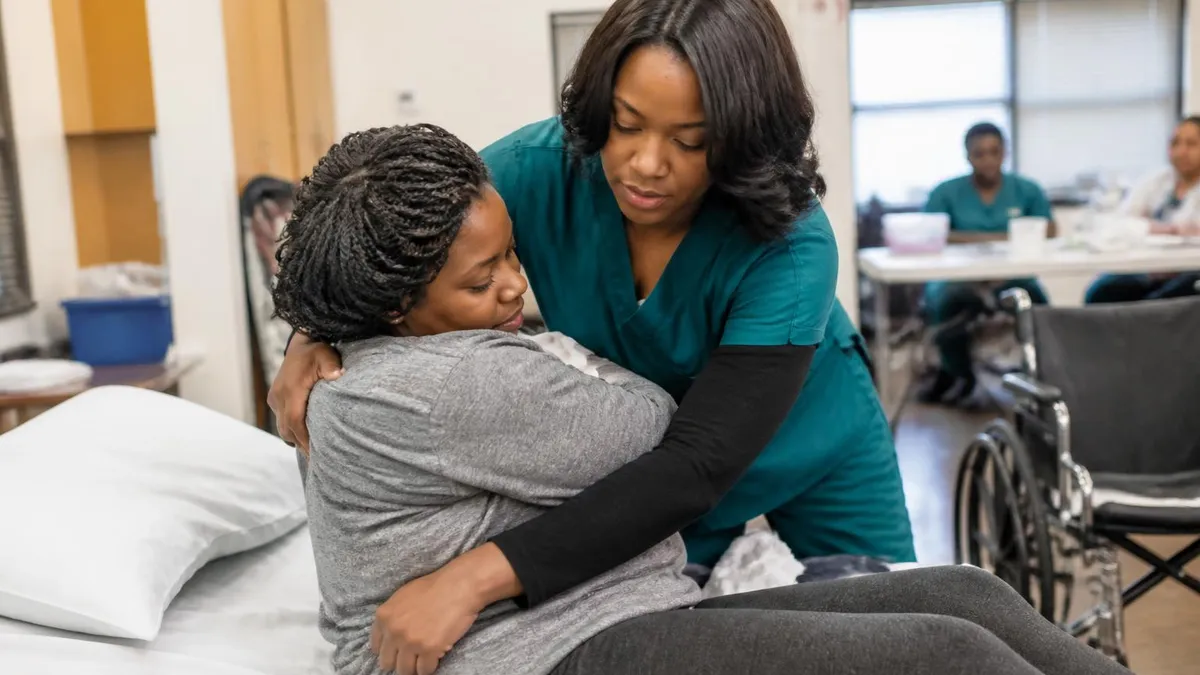
Assist with walking, repositioning every two hours, transferring from bed to wheelchair, and range-of-motion exercises ordered by the nurse. Use gait belts and proper lifting techniques to keep both client and aide safe.
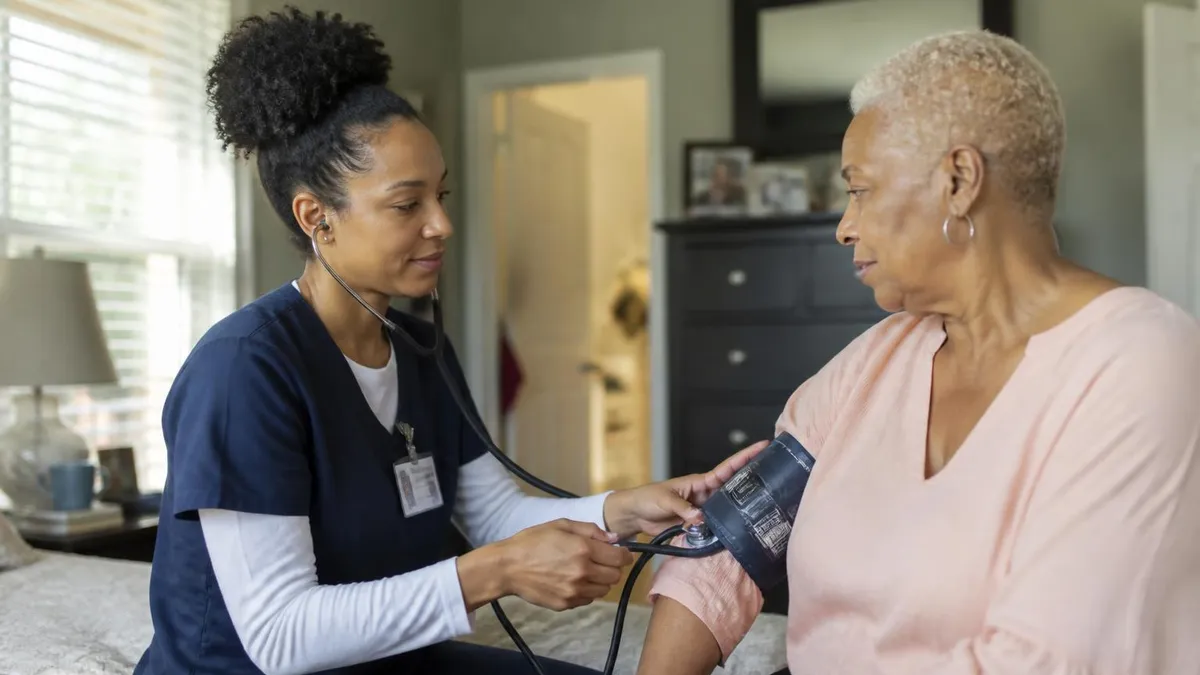
Take and record temperature, pulse, respirations, and blood pressure when assigned. Report any reading outside the parameters listed in the care plan to your supervising nurse immediately rather than waiting until the end of shift.
Plan and prepare meals that follow the prescribed diet, assist with feeding when needed, monitor fluid intake, and document how much the client ate at each meal to track nutrition and hydration trends.
Keep the client care environment clean and safe by changing linens, doing laundry, washing dishes used by the client, and tidying living spaces. Heavy cleaning of the entire home is outside the scope of practice.
Personal care sits at the heart of home health aide responsibilities because it is the most intimate and most frequently performed category of work. Every shift typically begins with bathing or partial bathing, depending on what the care plan calls for and how the client is feeling that day.
A bed bath uses two basins, washcloths, and gentle soap to clean a client who cannot get up, while a shower or tub bath requires safety equipment like grab bars, non-slip mats, and a shower chair to prevent falls. Aides are trained to wash from cleanest to dirtiest area and to keep the client covered as much as possible.
Oral care is performed at least twice daily for clients with teeth and after every meal for those who wear dentures. For clients who are unconscious or NPO, swab care with a moistened mouth swab prevents the painful cracking and infection that can develop in a dry mouth. Hair care, nail care, and shaving round out the daily grooming routine. Nail care is one of the few areas where the aide must check the care plan first because diabetic clients require nail care by a licensed professional, not the HHA.
Dressing and undressing follow a simple rule that students learn early and practice often: dress the weak side first, undress the strong side first. This protects an affected arm or leg from being stretched, twisted, or injured during the process. Aides choose clothing that is comfortable, appropriate to the season, and easy for the client to manage independently when possible. Encouraging clients to do what they can for themselves preserves dignity and slows functional decline, which is a quiet but powerful part of the job.
Toileting assistance includes helping clients to the bathroom, using bedside commodes, changing incontinence briefs, and providing perineal care. Aides must observe and report changes in urine color, odor, and amount, as well as the consistency and frequency of bowel movements. Many people exploring hha exchange login jobs are surprised to learn how much clinical observation happens during routine toileting care, but those observations are often the earliest warning of infection, dehydration, or impaction.
Mobility support is another daily responsibility that requires both physical skill and judgment. Aides help clients ambulate using gait belts, assist with transfers from bed to chair using mechanical lifts when ordered, and perform passive range-of-motion exercises to prevent contractures. Repositioning bedbound clients every two hours is non-negotiable because pressure injuries can develop within hours on bony areas like heels, the sacrum, and elbows. Aides inspect skin during every position change and report any redness that does not fade within thirty minutes.
Skin care extends beyond pressure injury prevention. Aides apply lotions to keep skin moisturized, watch for rashes or open areas, and follow specific care plans for clients with wounds, stomas, or skin folds that need special attention. They do not perform sterile dressing changes, but they do reinforce dressings that have become loose and report any drainage, odor, or change in appearance. Clear, factual reporting helps the nurse decide whether a wound check visit needs to be scheduled sooner than planned.
Eating and feeding assistance ranges from setting up a tray and opening containers for an independent client to spoon-feeding someone with advanced dementia. Aides position clients upright at ninety degrees, offer small bites, allow time to chew and swallow, and watch closely for signs of coughing, choking, or pocketing food in the cheeks. They document the percentage of each meal consumed and the amount of fluid taken, which feeds directly into the nutrition and hydration tracking that nurses and dietitians review weekly.
HHA Practice Test Questions
Prepare for the HHA - Home Health Aide exam with our free practice test modules. Each quiz covers key topics to help you pass on your first try.
HHA Basic Care and Comfort
HHA Exam Questions covering Basic Care and Comfort. Master HHA Test concepts for certification prep.
HHA Basic Care and Comfort Questions and A...
Free HHA Practice Test featuring Basic Care and Comfort Questions and Answers. Improve your HHA Exam score with mock test prep.
HHA Communication and Interpersonal Skills
HHA Mock Exam on Communication and Interpersonal Skills. HHA Study Guide questions to pass on your first try.
HHA Communication and Interpersonal Skills...
HHA Test Prep for Communication and Interpersonal Skills Questions and Answers. Practice HHA Quiz questions and boost your score.
HHA Infection Control and Safety
HHA Questions and Answers on Infection Control and Safety. Free HHA practice for exam readiness.
HHA Infection Control and Safety Questions...
HHA Mock Test covering Infection Control and Safety Questions and Answers. Online HHA Test practice with instant feedback.
HHA Mental and Emotional Support
Free HHA Quiz on Mental and Emotional Support. HHA Exam prep questions with detailed explanations.
HHA Mental and Emotional Support Questions...
HHA Practice Questions for Mental and Emotional Support Questions and Answers. Build confidence for your HHA certification exam.
HHA Mobility and Transfer Techniques
HHA Test Online for Mobility and Transfer Techniques. Free practice with instant results and feedback.
HHA Mobility and Transfer Techniques Quest...
HHA Study Material on Mobility and Transfer Techniques Questions and Answers. Prepare effectively with real exam-style questions.
HHA Nutrition and Hydration
Free HHA Test covering Nutrition and Hydration. Practice and track your HHA exam readiness.
HHA Nutrition and Hydration Questions and ...
HHA Exam Questions covering Nutrition and Hydration Questions and Answers. Master HHA Test concepts for certification prep.
HHA Observation and Reporting
Free HHA Practice Test featuring Observation and Reporting. Improve your HHA Exam score with mock test prep.
HHA Observation and Reporting Questions an...
HHA Mock Exam on Observation and Reporting Questions and Answers. HHA Study Guide questions to pass on your first try.
HHA Patient Rights and Ethics
HHA Test Prep for Patient Rights and Ethics. Practice HHA Quiz questions and boost your score.
HHA Patient Rights and Ethics Questions an...
HHA Questions and Answers on Patient Rights and Ethics Questions and Answers. Free HHA practice for exam readiness.
HHA Personal Care and Hygiene
HHA Mock Test covering Personal Care and Hygiene. Online HHA Test practice with instant feedback.
HHA Personal Care and Hygiene Questions an...
Free HHA Quiz on Personal Care and Hygiene Questions and Answers. HHA Exam prep questions with detailed explanations.
HHA Home Health Aide Certification Practic...
HHA Practice Questions for Home Health Aide Certification Practice Test. Build confidence for your HHA certification exam.
HHA Home Health Aide Certification Practic...
HHA Test Online for Home Health Aide Certification Practice Test #1. Free practice with instant results and feedback.
HHA Home Health Aide Certification Practic...
HHA Study Material on Home Health Aide Certification Practice Test #2. Prepare effectively with real exam-style questions.
HHA Home Health Aide Certification Practic...
Free HHA Test covering Home Health Aide Certification Practice Test #3. Practice and track your HHA exam readiness.
HHA Home Health Aide Certification Practic...
HHA Exam Questions covering Home Health Aide Certification Practice Test #4. Master HHA Test concepts for certification prep.
HHA HOME HEALTH AIDE COMPETENCY TEST
Free HHA Practice Test featuring HOME HEALTH AIDE COMPETENCY TEST. Improve your HHA Exam score with mock test prep.
HHA HOME HEALTH AIDE COMPETENCY TEST #1
HHA Mock Exam on HOME HEALTH AIDE COMPETENCY TEST #1. HHA Study Guide questions to pass on your first try.
HHA Home Health Aide Competency Test
HHA Test Prep for Home Health Aide Competency Test. Practice HHA Quiz questions and boost your score.
HHA Home Health Aide Competency Test #2
HHA Questions and Answers on Home Health Aide Competency Test #2. Free HHA practice for exam readiness.
Documentation, HHA Exchange, and Daily Reporting
HHA Exchange is the leading electronic visit verification and homecare management platform used by thousands of agencies across the United States. Aides clock in and out using a smartphone app, an interactive voice response phone call from the client's landline, or a fixed visit verification device installed in the home. Each clock-in captures GPS coordinates or a phone number that proves the aide was physically present at the approved location.
After clocking in, the aide completes the plan of care tasks listed for that shift, marking each as performed, refused, or unable to perform with a note. At clock-out, the system prompts the aide to review the visit, add narrative observations, and submit. The agency reviews submissions daily and uses the data to bill Medicaid, Medicare, or private insurance accurately and on time.
Is Being a Home Health Aide Right for You?
- +Strong job security with 21 percent projected growth through 2033
- +Flexible scheduling including part-time, weekend, and overnight shifts
- +Short training pathway with most programs finishing in 4-12 weeks
- +Meaningful one-on-one relationships with clients and families
- +Entry point to nursing careers including CNA, LPN, and RN tracks
- +Low or no-cost training through agency-sponsored programs and workforce grants
- +Work in a home setting rather than a busy facility floor
- −Median pay of around $33,500 is lower than facility-based nursing roles
- −Physical demands include lifting, transferring, and long periods of standing
- −Exposure to bodily fluids, illness, and occasionally unsafe home environments
- −Emotional toll of caring for clients with terminal or progressive conditions
- −Travel between client homes is usually unpaid mileage and time
- −Variable hours can mean unpredictable weekly earnings without overtime
Pros and Cons at a Glance
| Pros | Cons |
|---|---|
| Flexible scheduling including part-time, weekend, and overnight shifts | Physical demands include lifting, transferring, and long periods of standing |
| Meaningful one-on-one relationships with clients and families | Exposure to bodily fluids, illness, and occasionally unsafe home environments |
| Entry point to nursing careers including CNA, LPN, and RN tracks | Emotional toll of caring for clients with terminal or progressive conditions |
| Low or no-cost training through agency-sponsored programs and workforce grants | Travel between client homes is usually unpaid mileage and time |
| Work in a home setting rather than a busy facility floor | Variable hours can mean unpredictable weekly earnings without overtime |
Daily HHA Responsibilities Checklist for Every Shift
- ✓Review the care plan and any nurse notes before entering the home
- ✓Wash hands and put on personal protective equipment as needed
- ✓Clock in through HHA Exchange or your agency's EVV system
- ✓Greet the client by name and explain what you will be doing today
- ✓Complete personal care tasks listed in the plan of care
- ✓Take and record vital signs if assigned for this visit
- ✓Prepare meals according to the prescribed diet and document intake
- ✓Perform light housekeeping limited to the client care environment
- ✓Observe and report any changes in physical or mental status
- ✓Document all tasks, observations, and refusals before clocking out
Observation is your most valuable skill.
Anyone can be trained to give a bed bath or take a blood pressure. What separates a great home health aide from an average one is the ability to notice subtle changes from one visit to the next and to communicate those changes clearly to the nurse. A client who is slightly more confused, slightly less hungry, or slightly more short of breath today than yesterday may be in the early stages of a serious problem. Your eyes and your notes are the early warning system for the entire care team.
Skills and competencies for the HHA role go beyond the basic care tasks listed on a daily worksheet. Federal regulations require that aides demonstrate competency in twelve specific subject areas, ranging from communication skills to recognizing emergency situations. Strong communication is foundational because aides serve as the bridge between the client, the family, and the supervising nurse.
Active listening, clear speaking, and respectful tone are tested daily in homes where clients may be hard of hearing, cognitively impaired, or simply having a difficult day. Effective communication also includes knowing when to stay silent and let a client express grief or frustration.
Infection control knowledge protects both the aide and the client. Hand hygiene before and after every task, proper glove use, safe handling of soiled linens and incontinence supplies, and correct disposal of sharps are all part of every shift. Aides who work with clients who have MRSA, C. difficile, or COVID-19 follow additional precautions and use full PPE including gowns and masks. Standard precautions assume that every client could potentially be infectious, which keeps the aide protected even when an undiagnosed infection is present.
Body mechanics protect the aide from one of the most common career-ending injuries: lower back strain. Bending at the knees rather than the waist, keeping the load close to the body, pivoting rather than twisting, and using mechanical lifts for any client who cannot bear full weight on their own legs are habits that must be built from day one. Agencies that invest in proper lift equipment and train aides to use it consistently see far lower turnover and far fewer workers compensation claims.
Emergency recognition is another critical skill. Aides are trained to recognize the signs of a heart attack, stroke, choking, severe bleeding, seizures, hypoglycemia, and falls. They know to call 911 first, then notify the agency and family, and to stay with the client until help arrives. The acronym FAST for stroke recognition, the Heimlich maneuver for conscious choking, and basic first aid for bleeding control are reviewed during initial training and refreshed annually.
Nutrition and hydration knowledge matters more than many people realize. Aides need to understand the difference between a regular diet, a soft diet, a mechanical soft diet, a pureed diet, and a thickened liquids diet, because serving the wrong consistency to a client at risk for aspiration can cause pneumonia or death. They also need to recognize the early signs of dehydration, which include dry mouth, dark urine, low blood pressure, and confusion, especially in elderly clients who may not feel thirsty when they actually need fluids.
Cultural competency rounds out the skill set. Aides care for clients from every background, faith, language, and lifestyle. Respecting religious dietary restrictions, modesty preferences, prayer times, end-of-life rituals, and family decision-making structures is part of providing dignified care. Aides who take the time to learn about a client's cultural background build deeper trust and provide better care, which is reflected in agency satisfaction scores and client retention rates.
Documentation skills tie everything together. Whether you are entering data into HHA Exchange, writing a paper visit note, or completing an incident report, your writing should be clear, factual, timely, and complete. Use approved medical abbreviations, spell client names correctly, write in black ink for paper forms, and never use correction fluid. If you make a mistake on paper, draw a single line through it, initial it, and write the correction next to it so the original entry remains readable for audit purposes.
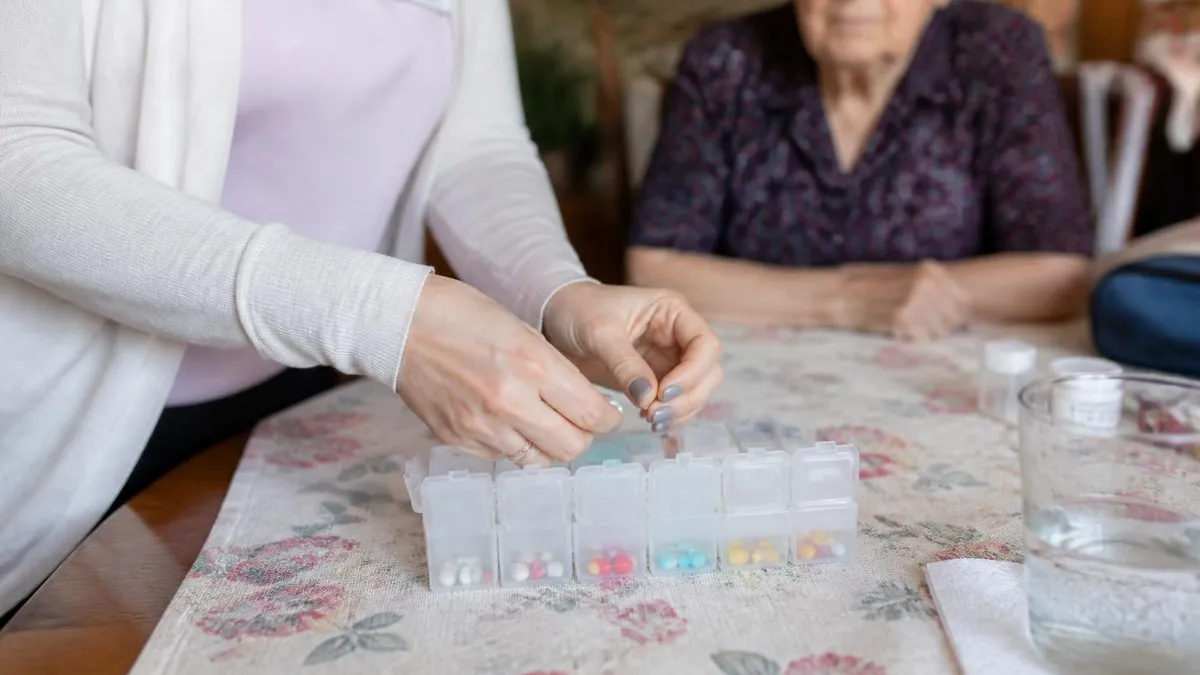
Home health aides are never permitted to administer medications by injection, insert or remove catheters, perform sterile dressing changes, or provide care that requires a nursing license. In most states, aides can remind a client to take medication and hand them a prepoured pill organizer, but they cannot push pills, draw up insulin, or pour medications themselves. Performing tasks outside your scope, even at the request of a family member, can result in immediate certification loss and potential criminal charges.
The scope of practice for home health aides is defined at both the federal and state level, and understanding where the boundaries lie protects your certification and your clients. At the federal level, the Centers for Medicare and Medicaid Services lays out the foundation for Medicare-certified agencies.
State nursing boards or health departments add further detail, especially around medication assistance, insulin administration, and delegated nursing tasks. Some states allow aides who complete advanced training to perform tasks that are off-limits to aides in other states, which is why you must always work from the care plan written for your specific state and agency.
One of the most common misunderstandings involves medication. Aides can typically remind a client when it is time to take medication, open a bottle if the client cannot, hand the pill bottle or prepoured pill organizer to the client, and document that the medication was taken. Aides cannot pour pills from a bottle, draw up liquid medications, administer eye drops or suppositories in many states, or give injections. Even something as simple as applying a prescription cream may require nurse delegation depending on state rules and the client's medical situation.
For a complete state-by-state breakdown of what aides can and cannot do, review the home health aide certification guide that maps out training and scope requirements across all fifty states. Pay particular attention to delegation rules in your state, because some allow registered nurses to delegate tasks like insulin administration or tube feeding to specially trained aides while others prohibit it entirely. When in doubt, call your supervising nurse before performing any task you are uncertain about.
Sterile procedures are universally outside the HHA scope. Aides do not change sterile wound dressings, insert urinary catheters, suction tracheostomies, or perform any task that requires sterile technique. They can assist with clean dressing changes when the nurse has trained them on a specific client, they can empty urinary drainage bags and document output, and they can provide tracheostomy clients with comfort measures like positioning and emotional support. The line between clean and sterile is one of the most important boundaries in home care.
Aides also do not make medical decisions. If a client asks whether they should take an extra dose of pain medication, the answer is to call the nurse. If a family member wants you to give a client over-the-counter medication that is not on the medication list, you decline politely and contact your supervisor. Aides who take on responsibilities beyond their scope, even with the best of intentions, expose themselves and the agency to serious legal and licensing consequences.
Mandatory reporting is another area where the law sets clear expectations. If you suspect abuse, neglect, or exploitation of a vulnerable adult, you are required to report it to adult protective services and to your agency. This applies whether the suspected perpetrator is a family member, another caregiver, or anyone else. You do not need to prove abuse occurred. You only need a reasonable suspicion, and the law protects you from retaliation for reporting in good faith.
Finally, aides are responsible for maintaining their own certification through continuing education. Federal regulations require at least twelve hours of in-service training per year for aides working in Medicare-certified agencies, and many states require more. Topics typically include infection control, body mechanics, abuse recognition, emergency procedures, and any new clinical skills relevant to the agency's client population. Keep copies of your in-service certificates because they are reviewed during state surveys and renewal applications.
Preparing to become a home health aide and step into these responsibilities with confidence starts with choosing the right training program. Federal rules require a minimum of 75 training hours, including 16 hours of supervised practical or clinical work, but the actual length and depth of programs vary widely. Community colleges, vocational schools, Red Cross chapters, and home health agencies all offer training. Many agencies will hire candidates with no experience and pay them to complete training in exchange for a commitment to work a set number of hours after certification, which removes the financial barrier for many new aides.
After completing training, you must pass a competency evaluation that includes a written test and a skills demonstration. The written test covers communication, infection control, body mechanics, observation and reporting, basic body functions, personal care skills, nutrition, mental health and social service needs, care of cognitively impaired clients, basic restorative services, safety and emergency procedures, and the rights of the client. The skills demonstration requires you to perform several randomly selected tasks like handwashing, vital signs, and a transfer in front of an evaluator.
Once certified, you will be placed on a state registry that employers check before hiring. The registry confirms that you completed approved training, passed the evaluation, and have no findings of abuse, neglect, or misappropriation on record. Maintaining your name in good standing on the registry is essential because a single substantiated complaint can remove you permanently. Document carefully, follow scope of practice, and never let anyone pressure you into shortcuts.
Your first week of visits will feel overwhelming even with strong training. Plan to arrive ten minutes early, review the care plan in your car before entering the home, and call your supervising nurse with questions rather than guessing. Bring a small notebook to jot down observations during the visit so you can document accurately when you clock out. Build rapport with the client and family by introducing yourself clearly, explaining what you will be doing, and asking about preferences for routines like bathing time or favorite meals.
Time management is a skill that develops with experience. New aides often run over on bathing and meal prep because they want to do everything perfectly. Within a few weeks you will find a rhythm that lets you complete all required tasks, document thoroughly, and still leave the home feeling like you provided dignified, unrushed care. If you cannot complete all tasks, document what was done and what was not, with a brief reason, and inform the agency so the care plan can be adjusted.
Self-care matters as much as client care. The physical and emotional demands of home health work add up over months and years. Wear supportive shoes, lift safely every single time, stay hydrated during shifts, eat real meals, and build a routine outside of work that lets you decompress. Many aides find peer support groups, agency wellness programs, or professional counseling helpful when caring for clients with terminal illness or difficult family dynamics. You cannot pour from an empty cup, and burned-out aides make documentation and safety mistakes that put their certification at risk.
Looking ahead, the HHA role is often the first step in a longer healthcare career. Many aides go on to become certified nursing assistants, licensed practical nurses, or registered nurses, sometimes with tuition support from their employing agency. The clinical observation skills, communication abilities, and work ethic you build in the home translate directly to facility settings and to higher-paying clinical roles. Whether you stay in home care for life or use it as a launchpad, the responsibilities you master as an HHA will serve every patient you ever care for.
Sample HHA Practice Questions
Try these questions from our free HHA practice tests. The correct answer and an explanation follow each question.
Why are communication skills important for a home health aide?
- A. To manage the patient's treatment plan.
- B. To build trust and ensure the patient feels heard
- C. To reduce the need for documentation.
- D. To limit family involvement.
Answer: B. To build trust and ensure the patient feels heard
Good communication skills are essential for establishing rapport with patients, understanding their needs, and effectively conveying information to team members.
A home health aide should wash their hands with soap and water (rather than hand sanitizer) when:
- A. Before preparing a meal
- B. After caring for a patient with Clostridioides difficile (C. diff) infection
- C. After routine patient contact
- D. Before donning gloves
Answer: B. After caring for a patient with Clostridioides difficile (C. diff) infection
Alcohol-based hand sanitizers do not effectively kill C. diff spores. Soap and water physically removes spores from hands and is required after C. diff contact.
How should a home health aide assist with dressing a patient?
- A. By dressing the patient without their participation.
- B. By assisting with dressing while maintaining privacy and dignity
- C. By leaving the patient to dress themselves without assistance.
- D. By rushing the process to save time.
Answer: B. By assisting with dressing while maintaining privacy and dignity
The aide should provide the necessary help while ensuring the patient is comfortable, maintaining privacy, and promoting independence when possible.
Which of these actions is the home health aide permitted to take in relation to drug administration?
- A. Recording and reporting the client’s reaction to the medication
- B. Giving nonprescription medications whenever the client asks for them.
- C. Adjusting the dosage of medications given to the client.
- D. Adjusting the times medications are given to fit into the client’s activities scheduled.
Answer: A. Recording and reporting the client’s reaction to the medication
Home health aides are generally not permitted to administer medications, adjust dosages, or change administration times, as these are responsibilities of licensed medical professionals. However, observing and accurately reporting a client's response or any adverse reactions to medication is a critical part of their role. This information is vital for the nursing supervisor and doctor to assess the medication's effectiveness and safety, ensuring the client's well-being.
HHA Questions and Answers
HHA Practice Test Video Answers

HHA Jobs Near Me — How to Find, Train, and Start Your Career

Can a Home Health Aide Administer Medication? Scope of Practice Explained
Home Health Aide Training Online: Complete 2026 Guide to Certification, Cost, and Career Launch
Resume for HHA: Complete Guide to Writing a Home Health Aide Resume That Gets Hired in 2026
How this page was made: written with AI tools and published by Nathan Beja, founder of Practice Test Geeks, who is responsible for its content. Exam facts are checked against the official sources listed below. Not reviewed by a subject-matter expert. Editorial policy
Sources & references
Exam facts on this page (fees, format, dates, passing scores) are checked against these official sources; the date is our last check. Editorial policy
- health.ny.gov — Eligibility, fees · verified Oct 2026
- njconsumeraffairs.gov — Late registration, renewal, fees · verified Oct 2026
- ecfr.gov — Test delivery, eligibility, exam format, passing score, renewal, retake policy, score validity · verified Oct 2026