
Home Health Aide Certificate: 2026 September Training, Cost & Steps to Pass
📗 Home health aide certificate guide: training hours by state, exam format, cost, renewal rules, and proven study tactics to pass on your first try.
What a Home Health Aide Certificate Actually Means in 2026
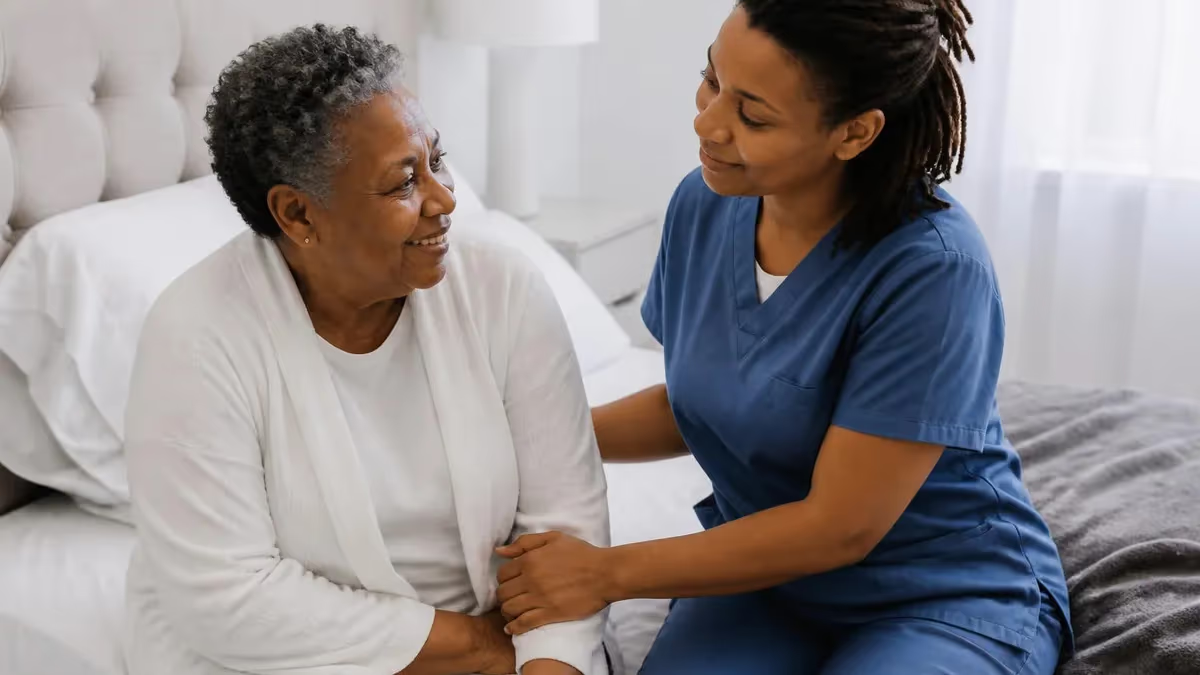
A home health aide certificate is the credential that lets you legally work in a patient's home under Medicare or Medicaid funding. The HHA title is regulated by the federal government, then layered with state-specific rules. That two-tier setup is the reason aides in Texas, California, and New York all study slightly different material — yet sit for an exam that follows the same federal 75-hour minimum.
Most aspiring aides don't realize that there are two parallel routes to certification. The first runs through Medicare-approved training programs at community colleges, vocational schools, or home health agencies. The second runs through state-run nurse aide registries, where the HHA badge is added on top of a CNA license. Both routes end at the same destination: your name listed on a state registry, which employers verify before hiring.
Demand for certified HHAs jumped 22% between 2022 and 2025, and the Bureau of Labor Statistics projects another 21% growth through 2032. That makes home health aide one of the fastest-growing healthcare roles in the country. Pay varies — $14 to $19 per hour is the common band — but agencies frequently sweeten the deal with sign-on bonuses, mileage reimbursement, and tuition reimbursement programs that cover certification fees retroactively.
This guide walks you through every step: training hour requirements by state, exam content, study strategies, cost breakdown, renewal cycles, and what to do when your test date arrives. By the end, you should know exactly which path fits your budget and timeline.
Home Health Aide Certificate by the Numbers
State-by-State Training Hour Requirements
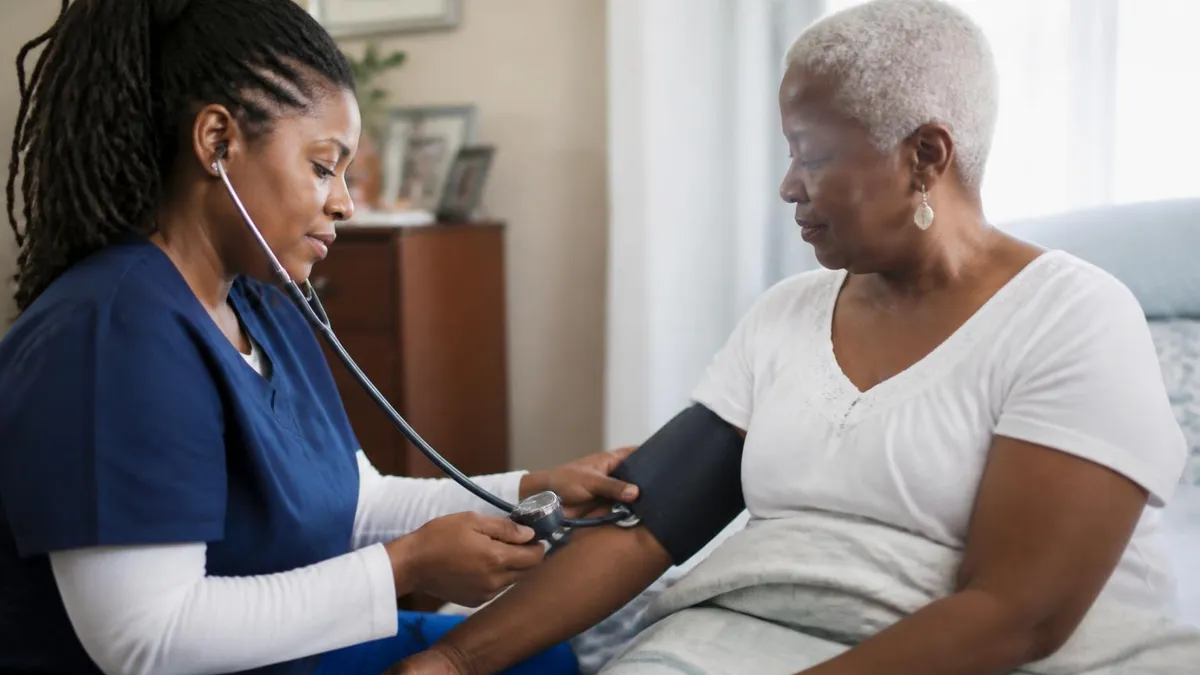
The federal floor sits at 75 hours of instruction with at least 16 hours of supervised clinical practice. But here's where it gets interesting — almost every state piles on extra hours. California, for instance, requires 120 hours. New York demands 75 plus a 16-hour supplemental module. Washington tops the chart at 85 hours. Texas sticks to the federal minimum but layers on a separate registry exam.
If you already hold a CNA license, you're in luck. Most states grant a partial waiver, knocking your HHA training down to 40 or even 20 hours of bridge content focused on home-environment skills. That bridge program covers safe medication reminders, infection control in non-clinical settings, and basic housekeeping that supports patient mobility. Check with your state's Department of Health before enrolling — paying for full hours when you qualify for a bridge is a costly mistake.
Online training has exploded since 2020. The catch? You cannot complete the clinical hours remotely. Hybrid programs let you finish lectures and quizzes at home, then schedule on-site lab days at partner facilities. Look for programs accredited by the National Association for Home Care & Hospice (NAHC) or your state's equivalent — accreditation determines whether your hours transfer if you move states.
One nuance many candidates miss: hour count alone doesn't predict difficulty. A 120-hour California program with weak clinical supervision can leave you less prepared than a tight 75-hour Texas course taught by a working nurse. Visit a program in person before enrolling when possible. Watch a skills lab. Talk to current students. The vibe of the classroom tells you more about pass rates than the brochure ever will.
Even though federal law mandates 75 hours, only 14 states accept that minimum without additions. The other 36 require supplemental coursework, ride-along shadowing, or a separate state competency exam. Always verify your state's specific requirements with the Department of Health before paying tuition — moving states later can mean repeating up to 40 hours of training.
Inside the Certification Exam: Format and Content Areas
The exam is split into two parts: a written (or oral) knowledge test and a hands-on skills evaluation. The written portion runs 60 to 80 multiple-choice questions across infection control, communication, basic body systems, nutrition, safety, emergency response, and patient rights. You'll see scenario questions like, "Mrs. Lee refuses her medication reminder. What's your next step?" — testing judgment, not just rote memorization.
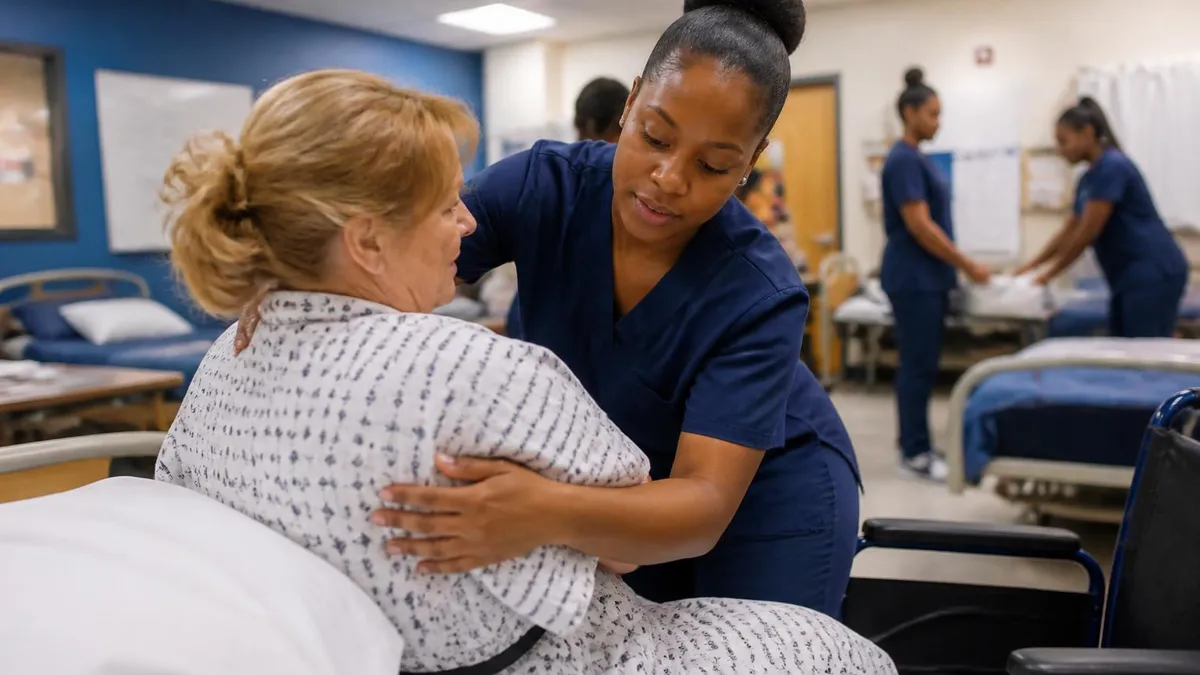
The skills portion is where most candidates stumble. You'll be asked to perform 5 randomly selected tasks in front of an evaluator. Common picks include hand hygiene, taking a radial pulse, transferring a patient from bed to wheelchair, measuring urinary output, and applying anti-embolism stockings. Each task has 8 to 15 checkpoints. Miss any critical checkpoint — like failing to wash hands or identify the patient — and you fail that skill outright, even if everything else was perfect.
Passing scores hover around 75% to 80% on the written, plus successful completion of all 5 skills demonstrations. If you fail one component, most states let you retake just that portion within 90 days. Fail twice, and you'll typically need to repeat your training program. That second-chance pressure is exactly why exam-day strategy matters as much as content knowledge.
The Four Pillars of the HHA Exam
Hand hygiene, PPE use, biohazard handling, and preventing cross-contamination in home settings.
Bathing, grooming, toileting, dressing, and assisting with mobility while preserving patient dignity.
Taking pulse, respiration, temperature, and recognizing changes that need nurse reporting.
Charting patient activities, reporting observations, and respectful family interactions.
Cost Breakdown: What You'll Actually Pay
Total out-of-pocket spending ranges from $0 to $2,500 depending on the route you choose. Free training exists — it just isn't well-advertised. Many home health agencies sponsor candidates in exchange for a 6 to 12 month employment commitment. The American Red Cross, certain workforce development boards, and state Medicaid programs also fund full scholarships for low-income applicants.
If you're paying directly, expect to split costs across four buckets: tuition ($600-$1,500), textbooks ($50-$120), exam fees ($75-$200), and background checks plus fingerprinting ($40-$80). A few states tack on a registry placement fee around $20. Hybrid online programs often cost less than in-person — sometimes as low as $399 — but the cheapest option isn't always the smartest. Read program completion and exam pass rates before enrolling.
Don't overlook hidden costs either. CPR certification is required in most states and runs $40 to $90. A two-step TB test costs $30 to $70 at retail clinics. Uniforms, watches with second hands, gait belts, and stethoscopes add another $80 to $150 if your program doesn't supply them. Add it all up, and the realistic budget for a self-paying student is closer to $1,400 than the headline tuition figure.
Worth noting: certain employers will reimburse certification costs after you complete a probationary employment period, typically 90 to 180 days. Larger home health agencies, hospice networks, and hospital-affiliated home care divisions are most likely to offer this benefit. Ask during your interview — not after you accept the offer. Tuition reimbursement combined with starting wages can turn an apparent $1,400 investment into a net-positive first quarter on the job, especially if you negotiate a small signing bonus.
Training Route Comparison
Cost: $0 (employment commitment 6-12 months)
Duration: 4-6 weeks
Best for: Job-ready candidates with reliable transportation and immediate availability. Agencies handle paperwork, exam scheduling, and often pay during training.
Watch out for: Contracts with early-departure penalties. Read the fine print before signing.
How to Pass on Your First Attempt
First-attempt pass rates nationally hover around 71%. That means roughly 3 in 10 candidates retake at least one section. The good news? The gap between passing and failing usually comes down to study habits rather than ability. Candidates who follow a structured 4-week plan pass at rates above 90%.
Start with the official candidate handbook from your state. It lists every skill that could appear on test day and the exact checkpoints evaluators score. Print it, highlight the critical steps marked with asterisks, and quiz yourself on them daily. Critical steps are the ones that cause automatic failure when missed — things like washing hands before patient contact and identifying the patient by name.
For the written test, build a daily 30-minute practice routine. Use practice tests that mirror the actual question style: situational, scenario-based, and ethics-heavy. Don't memorize answers — learn the reasoning. If a question asks why you turn a bedbound patient every two hours, the right answer connects to pressure ulcer prevention. Understanding the "why" lets you handle questions you've never seen before.
Two weeks before the exam, switch to skills rehearsal. Practice on a willing family member or friend. Time yourself — most skills should be completed in 4 to 8 minutes. Say each step out loud. Evaluators want to see that you know what you're doing and why. Silent demonstrations get fewer points even when technique is correct.
Most failed exams happen on the skills portion, not the written. Candidates over-prepare for the multiple-choice and walk in cold on hands-on demos. Plan at least 6 hours of supervised skills practice in the final 10 days before your test. Ask a friend to play the patient and use the official checklists to grade you. Repetition builds the muscle memory you'll need under evaluator pressure.
What Happens After You Pass
Within 10 business days of passing both portions, your name lands on the state nurse aide registry. Employers verify registry status before extending offers, so confirm your listing by checking your state's online portal. A few states issue physical certificates by mail; most simply provide an online verification record.
Your first job offer usually arrives faster than you'd expect. Agencies pre-screen candidates during training and many extend conditional offers before exam day. Average starting pay sits at $15 to $17 per hour for entry-level positions, with weekend differentials and overnight premiums adding $2 to $5 on top. Caregivers willing to work with dementia or hospice patients command rates of $19 to $24.
Some HHAs stop here. Others use the credential as a stepping stone — earning a CNA certification adds clinical facility opportunities; a CMA (Certified Medication Aide) credential expands what you can administer; and the LPN pathway nearly doubles potential income within two to three years. Each step builds on the foundation you just earned.
Your 30-Day Pre-Exam Checklist
- ✓Download official state candidate handbook and skill checklists
- ✓Schedule exam date 4 weeks out — gives you time without losing urgency
- ✓Complete 5 full-length practice tests across different topics
- ✓Drill all 22 testable skills at least 3 times each with timer
- ✓Master infection control steps — they appear in every skill demo
- ✓Memorize normal vital sign ranges for adults and elderly patients
- ✓Practice patient communication phrases including consent and privacy
- ✓Get 7-8 hours of sleep the three nights before exam day
- ✓Pack ID, registration confirmation, and watch with second hand night before
- ✓Eat protein-rich breakfast on test day — avoid heavy sugar
Renewal Rules: Keeping Your Certificate Active
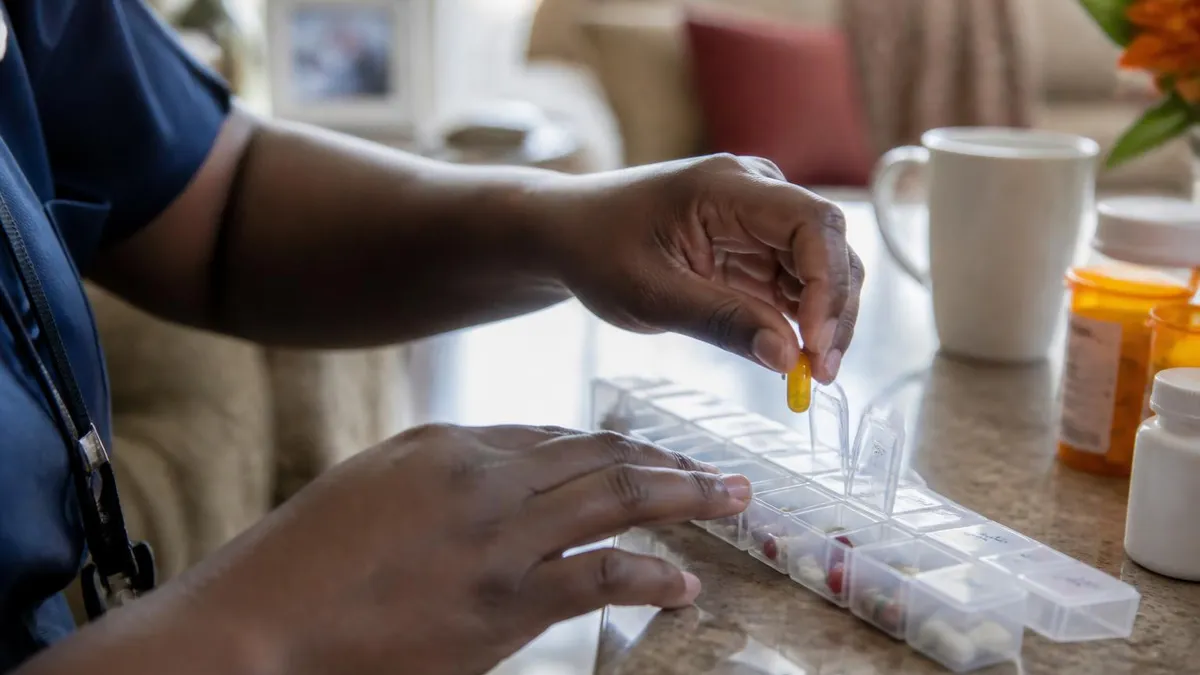
Most states require renewal every 24 months, with proof of at least 8 hours of paid HHA work during that window. Let your certificate lapse longer than the state allows — usually 24 to 36 consecutive months without work — and you'll likely need to retest. Some states require continuing education hours on top of work documentation, typically 12 hours covering topics like elder abuse prevention, HIPAA, and infection control updates.
Renewal fees are modest, ranging from $15 to $50. Background checks must be repeated, and a fresh TB screening is often required. Many employers cover these costs, especially for long-tenured aides. Mark your renewal date on your calendar a full 90 days in advance — registry rosters update overnight when certificates expire, and you don't want to lose your job because of a missed deadline.
If you relocate, reciprocity is possible but not automatic. States with similar training hour requirements honor each other's certificates after a brief application and fee. If your origin state's training is shorter than the destination's, you may need to complete bridge hours. Always apply for reciprocity before your first day of work in the new state — working without active registration can trigger fines for you and the agency.
One more practical note about renewal: keep a personal portfolio of your work hours, even if your employer documents them officially. Print pay stubs, save shift confirmations, and maintain a simple log of patients served and dates worked. If your agency closes or your manager leaves, official records can disappear. Your own backup documentation is the difference between smooth renewal and weeks of bureaucratic frustration. Treat it like your professional insurance policy.
Home Health Aide Career: The Honest Tradeoffs
- +Strong job security with 21% projected growth through 2032
- +Short path to credential — most aides certify in under 3 months
- +Meaningful work with measurable daily impact on patient lives
- +Flexible scheduling including part-time, weekend, and evening shifts
- +Clear advancement pathway to CNA, LPN, and beyond
- +Many employers reimburse certification costs after probation
- −Physical demands include lifting, bending, and long standing periods
- −Emotional weight of working with declining or terminal patients
- −Pay rates lag clinical settings until you gain 2+ years experience
- −Mileage and travel time between clients can eat into earnings
- −Schedule unpredictability when patients cancel or get hospitalized
- −Limited benefits at smaller agencies — verify health coverage before accepting
Common Mistakes That Sink Candidates
The single biggest mistake is treating the skills exam like a written test. Candidates memorize the order of steps but never physically rehearse them. On test day, nerves take over, the order scrambles, and a critical step gets skipped. Physical practice — actually performing each skill on a real person — creates motor memory that survives test anxiety far better than mental review.
Mistake number two: ignoring patient communication. Evaluators score interaction quality, not just technical accuracy. Failing to knock before entering, skipping introductions, or treating the test mannequin like a prop will cost points. Talk to your test "patient" the same way you'd talk to a grandparent — respectful, calm, explanatory.
Third pitfall: arriving exhausted. Many candidates pull all-nighters cramming the day before. The skills portion demands physical stamina and steady hands. Trade two hours of cramming for two hours of sleep — your performance will improve dramatically. The information you cram in the final hours rarely sticks; the rested brain that walked in the door does most of the work.
Fourth issue: skipping the optional walk-through. Some test centers offer brief site tours where you'll see the exact tables, beds, and equipment used for the skills portion. Candidates who take that 15-minute tour perform measurably better because nothing on test day surprises them. Familiarity reduces cognitive load, freeing your brain to focus on actually performing the skills well.
Finally, watch out for confidence collapse. Even prepared candidates have a moment of doubt during the skills demo. The trick is to keep moving. If you forget one minor step, continue with the next one; evaluators score on completion, not perfection. Stopping to second-guess yourself signals uncertainty and creates negative impressions that bleed into the rest of your demonstration. Treat each station like a clean slate. Breathe, smile, narrate your actions, and finish strong.
HHA Questions and Answers
Your Next Step Starts Today
Earning a home health aide certificate is one of the most direct paths into healthcare. In under three months you can move from no medical background to a registered, employable caregiver with real income potential and a clear ladder upward. The training is intense but finite. The exam is challenging but predictable. And the demand for aides who actually pass on the first try is enormous.
Make a decision this week. Pick your route — agency-sponsored, community college, hybrid online, or vocational school. Call three programs and ask three questions: What's your exam pass rate? Are clinicals included? What's the total all-in cost? The answers will narrow your choice fast. Then enroll, build a 30-day study schedule, and start drilling the skills checklists from day one.
The candidates who succeed aren't the ones with the best grades or the deepest pockets. They're the ones who showed up every day, drilled the critical steps, practiced communication with real people, and walked into the exam room rested and ready. You can be one of them. The certificate is waiting — go earn it.
About the Author

Registered Nurse & Healthcare Educator
Johns Hopkins University School of NursingDr. Sarah Mitchell is a board-certified registered nurse with over 15 years of clinical and academic experience. She completed her PhD in Nursing Science at Johns Hopkins University and has taught NCLEX preparation and clinical skills courses for nursing students across the United States. Her research focuses on evidence-based exam preparation strategies for healthcare certification candidates.
Join the Discussion
Connect with other students preparing for this exam. Share tips, ask questions, and get advice from people who have been there.
View discussion (8 replies)