
HAM Radio Prep: The Complete 2026 October Guide to Passing Your Amateur Radio Exam
Ham radio prep guide for Technician, General, and Extra license exams. Free study tools, question pools, exam day tips, and a proven 30-day plan. 🟢

Ham Radio Prep: The Complete 2026 Guide to Passing Your Amateur Radio Exam
Solid ham radio prep is the difference between walking into your exam session confident and walking out with a brand new FCC call sign, or walking out frustrated and out $35. The good news is that ham radi licensing in the United States has never been more accessible. The FCC offers three license classes, every single question on every exam is published in advance by the National Conference of Volunteer Examiner Coordinators (NCVEC), and free study tools have replaced the expensive correspondence courses of the 1980s.
This guide walks through the entire ham radio license pathway from your first practice exam to your call sign arriving in the FCC database. You will learn how the three license classes stack, where the questions actually come from, how much time and money realistic preparation requires, and which free resources beat the paid ones for most learners.
The Technician class sits at the entry level and unlocks VHF and UHF privileges plus limited high frequency operating. The General class adds voice and data privileges across nearly all the HF bands. The Amateur Extra class opens the remaining HF segments and confers full operating privileges on every amateur frequency. Each class requires passing a written 35 question multiple choice exam with a minimum score of 26 correct answers, which works out to exactly 74 percent.
If you are wondering whether Morse code is still required, the answer has been no since February 2007. You will not need to learn a single dit or dah to earn any class of license. Younger learners are welcome too, with seven year olds routinely passing the Technician exam after a few weeks of structured prep. The remainder of this guide breaks down the question pools, the proven study method, the exam day mechanics, and the equipment you will want once you pass.
One question every new candidate asks is whether to start with Technician or aim straight for General. The straightforward answer for most learners is to start with Technician, pass it cleanly, then decide whether to chase General within a few months. Technician sets the regulatory and safety foundations that General builds on, and the confidence boost from a first pass makes the General push easier. That said, if you already have an electronics background or have studied radio theory in the military or as an engineer, jumping into General prep directly is realistic and saves you one session day.
The amateur radio hobby is also far larger than the license itself. Operators chase international DX contacts, run emergency nets during hurricanes, bounce signals off the moon, ride digital modes like FT8 around the globe on five watts, and launch their own CubeSats. The prep work you do now teaches the rules and electronics that protect you on the air.
The fast facts on ham radio prep
- 3 license classes: Technician, General, and Amateur Extra, each with its own exam
- 35 multiple choice questions per exam, 26 correct to pass (74 percent)
- Every question is published in advance by NCVEC, pools rotate every 4 years
- Typical cost: $15 FCC application fee plus up to $14 VEC session fee
- No Morse code requirement for any class since 2007
- License is valid for 10 years and renewal is free
Ham Radio Exam Stats at a Glance
Key Facts at a Glance
| Item | Value | Details |
|---|---|---|
| Questions on Exam | 35 | |
| Typical Fee | $35 | |
| License Validity | 10 years |

The Three License Classes Compared
Technician Class (Entry Level)
The Technician license is the gateway to amateur radio. The exam draws 35 questions from a pool of 423, organized across nine subelements covering FCC rules, operating procedures, radio wave propagation, amateur radio practices, electrical principles, circuit components, station setup, antennas, and electrical safety. Most candidates pass after 10 to 30 hours of focused prep.
Privileges include all amateur bands at 50 MHz and above, which means full VHF and UHF access for local repeater work, simplex chats, satellite operation, and digital modes like DMR and D-STAR. Technicians also get limited high frequency privileges on 10 meters (28.000 to 28.500 MHz CW and 28.300 to 28.500 MHz voice), plus CW only segments on 80, 40, and 15 meters.
How the Question Pool Actually Works
The single most important fact about ham radio prep is that every question on every exam is drawn from a public question pool maintained by NCVEC. These pools are published years in advance, rotate on a four year cycle, and contain not just the question stems but every multiple choice answer with the correct answer marked. When you sit for your Technician exam, you have already seen all 423 possible questions during your study.
This is not a memorization scheme that the FCC tolerates by accident, it is deliberately designed to ensure candidates are exposed to the full body of regulatory and technical knowledge. The exam itself is a random 35 question slice, so you cannot anticipate which questions you will see. What you can do is recognize every question instantly because you have already worked through it during practice.
This is why ham radio license test preparation looks very different from preparing for an SAT or a college final. Instead of mastering concepts from a textbook and hoping the test maps to your knowledge, you grind through the entire question pool until the answers feel automatic. A typical study session means taking a 35 question simulated exam on HamStudy.org or HamExam.org, reviewing every wrong answer, and moving on.
The pools follow a strict update cadence. The Technician pool typically refreshes every four years on July 1st, with the General and Extra pools rotating on staggered cycles. The new pool is published roughly six months before it goes live, giving study apps and book publishers time to update their material. If you are taking the exam within a few weeks of a pool rotation date, check which pool is in effect, though most apps default automatically to the current pool.
The Proven Four Step Study Method
Almost every successful ham radio candidate follows the same four step loop. Start by taking an untimed practice exam on HamStudy or HamExam without studying first. Your score will be terrible, often 30 to 50 percent. That is fine and expected, because the baseline tells you how much ground you need to cover. Next, review every wrong answer with the explanation tools built into the practice platform.
Third, read the relevant book sections for any topic where you missed three or more questions. The ARRL License Manual organizes its chapters to match the question pool subelements, so weak areas map directly to specific chapters. Fourth, repeat the practice exams until you consistently score 85 percent or higher across multiple attempts. Then you are ready to schedule your session.
Realistic Exam Day Practice
One refinement that experienced examiners suggest is to take your last three or four practice exams under realistic conditions. Sit at a table, set a 45 minute timer, put away your phone, and work the 35 questions exactly as you would at the session.
This trains your brain to read the question stems carefully and resist the urge to glance at the answer key. Candidates who skip this step sometimes blank out on the real exam even though their unrealistic at home scores were strong. Treat the dress rehearsal as seriously as the real thing and your nerves will be far steadier on test day.
Free Versus Paid Study Resources
The amateur radio community has built an extraordinary set of free study tools that outperform most paid alternatives. HamStudy.org leads the pack with adaptive question selection, mobile apps for iOS and Android, full question pool coverage for all three classes, and a clean interface that makes drilling questions feel almost like a game. HamExam.org offers similar functionality with a slightly different interface preferred by some learners.
KB6NU's No Nonsense Study Guides are short PDF books that distill the question pools into roughly 100 pages of plain English explanations. They are free for Technician and inexpensive for General and Extra. On the paid side, the ARRL License Manual is the official text from the American Radio Relay League and runs about $30. Gordon West's books and audio CDs are popular among older learners who prefer auditory study.
YouTube is also surprisingly strong for ham radio prep. Channels like Ham Radio Crash Course, KB9VBR Antennas, and Dave Casler KE0OG publish hundreds of free walkthrough videos covering every question pool subelement in detail. Visual learners often pair the ARRL License Manual with these YouTube series and skip paid courses entirely. The total cash outlay can be zero if you stick to HamStudy plus YouTube, or about $30 if you add the ARRL book for a single authoritative reference.
5 Free Ham Radio Prep Resources
- Format: Web app and mobile apps (iOS, Android)
- Cost: Free (mobile apps $4 to unlock all features)
- Best For: Adaptive practice exams and weak area drills
- Coverage: All 3 license classes plus Canadian exams
- Format: Web only
- Cost: Free
- Best For: Quick simulated 35 question exams
- Coverage: Technician, General, Extra
- Format: PDF book, around 100 pages
- Cost: Free for Technician
- Best For: Plain English explanations of every question
- Coverage: All 3 classes (paid for General and Extra)
- Format: Web based question drill
- Cost: Free with ARRL membership trial
- Best For: Official source, matches the book
- Coverage: All 3 license classes
- Format: Free online quizzes
- Cost: Free
- Best For: Subject specific drills for safety, electronics, antennas
- Coverage: Technician with general review
30 Day Ham Radio Prep Study Plan
Days 1 to 3: Baseline and Orientation
Days 4 to 10: Rules, Operating, and Safety
Days 11 to 18: Electronics and Circuits
Days 19 to 24: Antennas and Propagation
Days 25 to 28: Full Practice Exams Only
Days 29 to 30: Exam Day Prep
Finding an Exam Session
Three major Volunteer Examiner Coordinators administer ham radio exams across the United States: ARRL VEC, W5YI VEC, and Laurel VEC. The ARRL session finder at arrl.org/find-an-amateur-radio-license-exam-session is the most comprehensive directory, but the W5YI and Laurel sites list additional sessions not covered there. Laurel VEC stands out for charging zero session fees, saving candidates the $14 most other VECs collect.
Most candidates find a session within 30 days of being ready to test. Urban and suburban areas typically have multiple sessions per month, while rural candidates may need to drive an hour or use remote proctored options. Sessions during major hamfests (Dayton Hamvention, Pacificon, Orlando HamCation) tend to have wait times because of high demand, so register early if you plan to test at one. Smaller club run sessions almost always accept walk in candidates.
In Person Versus Remote Sessions
Since 2020, online remote proctored sessions have become widely available and now account for roughly half of all exam administrations. Remote sessions use Zoom or GoToMeeting with two or three volunteer examiners watching via webcam while you take the exam in your own home. The setup requires a working laptop or desktop with a webcam, a smartphone as a second camera (to show your test environment), a government issued photo ID, and a quiet room.
In person sessions still happen, often at local amateur radio club meetings, hamfests, public libraries, and community centers. They typically have lower fees (some are free) and offer the chance to chat with local hams who can welcome you into the hobby. Either format administers the same exam under the same rules.
The Exam Day Cost Breakdown
The FCC charges a $15 application fee per call sign, which applies whether you pass one exam or all three in the same session. The VEC session fee runs $14 to $15 at most coordinators, though Laurel VEC charges nothing. Total typical cost is therefore $29 to $35 for a single license class. If you pass Technician, General, and Extra all in one session you still only pay one set of fees, saving up to $90 compared to taking them on three separate days.
Can You Take All Three Exams in One Day?
Yes, and many ambitious candidates do exactly this. The rule is simple: after passing each exam, you can immediately attempt the next class up. Pass Technician, then take General the same day, then take Extra. You only pay the FCC fee once and the VEC fee once. The downside is that 105 questions across three exams in a single sitting demands intense preparation and stamina. Plan on three to four hours at the session.
Candidates who attempt the triple usually report that General was the toughest of the three because the math density jumps significantly from Technician. Extra is broader and deeper but builds directly on General, so going straight from General into Extra often feels easier than the Technician to General transition. If you are aiming for the triple, plan your prep so you finish strong on General drills rather than peaking early on Technician.

Self Study Versus Taking a Class
- +Self study costs $0 to $30 versus $100 to $400 for a class
- +Self study lets you move at your own pace, faster or slower
- +Free apps like HamStudy adapt to your weak areas automatically
- +You can study during commutes, lunch breaks, or evenings
- +Online practice exams give immediate feedback on every question
- −A class provides expert instructors who can answer technical questions in real time
- −Classes create social accountability that helps procrastinators finish
- −Group study lets you learn from other students' questions
- −Some classes culminate in an on site exam session at the end
- −Hands on demonstrations of equipment and antennas are easier in person
Ham Radio Exam Day Checklist
- ✓Government issued photo ID (driver's license, passport, or state ID)
- ✓Your FCC Registration Number (FRN), obtained free at fcc.gov before the exam
- ✓Two pencils and an eraser (in person sessions usually provide these)
- ✓Calculator with a non programmable display (graphing calculators not allowed)
- ✓Payment method for the session fee, typically cash, check, or online portal
- ✓Webcam and smartphone with second camera for remote proctored sessions
- ✓Quiet room with no other people, blank walls visible to examiners (remote only)
- ✓Original copies of any existing amateur license documents if upgrading
- ✓Confirmation email from the VEC with session details printed or accessible
- ✓Arrive 15 minutes early for in person sessions, log in 15 minutes early for remote
What Happens After You Pass
The moment you pass, the volunteer examiners file the Certificate of Successful Completion of Examination (CSCE) with the VEC, which then transmits the results to the FCC. The FCC issues your call sign in 7 to 14 business days, sometimes as fast as 48 hours during low volume weeks. You can track the process by searching your name at qrz.com or by checking the FCC Universal Licensing System directly at wireless2.fcc.gov/UlsApp/UlsSearch.
Once your call sign appears in the FCC database, you are legally licensed and may transmit immediately. There is no waiting period, no certificate that must arrive in the mail, and no second test. The license remains valid for 10 years and renewal costs nothing if you renew online before expiration. Even if you let the license lapse, you have a two year grace period to renew without retesting, after which you would need to retake the exam.
Common Ham Radio Prep Mistakes
The most common mistake is pure rote memorization without understanding the concepts. Candidates who memorize answer letters (A, B, C, D) without grasping why an answer is correct often fail when the VEC randomizes answer order on the actual exam. Always learn the underlying reason. The second mistake is neglecting the math on General and Extra. The Technician exam has minimal math, but General and Extra require Ohm's law, power calculations, and basic AC concepts.
The third mistake is studying for too long. Candidates sometimes drag prep out over six months and burn out before exam day. Most people pass Technician with 2 to 4 weeks of focused effort. If you are studying longer than 6 weeks for Technician you are likely overthinking it. The fourth mistake is skipping practice exams in favor of reading. Reading the manual is necessary but practice exams are where the questions actually live. Spend at least 60 percent of your prep time on practice questions.
What Comes After the License
Once you have your call sign, you will need ham radio equipment to get on the air. Most new Technicians start with a handheld VHF or UHF radio costing $30 to $200, then add a mobile or base station as their interests develop. The Baofeng UV-5R is the most common first radio because of its $30 price tag, while Yaesu, Icom, and Kenwood handhelds in the $150 to $300 range offer better build quality and audio.
You will also want to learn the standard ham radio frequencies for your local repeaters and the simplex calling frequencies for your bands. The 2 meter band (144 to 148 MHz) hosts most VHF repeaters, while the 70 centimeter band (420 to 450 MHz) covers UHF repeaters. Local clubs maintain repeater lists and welcome new hams onto their nets.
Sample HAM - Radio Extra Class Test Practice Questions
Try these questions from our free HAM - Radio Extra Class Test practice tests. The correct answer and an explanation follow each question.
What is the purpose of a 'frequency coordinator' in amateur radio repeater operation?
- A. To control the accuracy of each repeater's transmit frequency
- B. To manage repeater frequency assignments in a geographic area to minimize interference between repeater systems
- C. To coordinate contest operating frequencies for clubs
- D. To assign call signs to new repeater trustees
Answer: B. To manage repeater frequency assignments in a geographic area to minimize interference between repeater systems
A frequency coordinator manages and assigns repeater input/output frequencies within a geographic area to avoid harmful interference between repeater systems.
What propagation advantage does operating during the 'greyline' provide for HF amateur radio communication?
- A. The F2 layer reaches its maximum height, allowing the highest usable frequency to peak
- B. Sporadic-E clouds form preferentially along the terminator, enhancing 6-meter contacts
- C. Both ends of the path can simultaneously experience an absent D layer while the F layer remains ionized, enabling strong low-noise long-path signals
- D. Tropospheric ducting is strongest along the day-night boundary, extending VHF range
Answer: C. Both ends of the path can simultaneously experience an absent D layer while the F layer remains ionized, enabling strong low-noise long-path signals
The greyline is the twilight terminator where day meets night. The D layer, which absorbs lower HF frequencies during daylight, is absent at twilight, while the F layer remains charged. When both the transmitting and receiving stations are simultaneously on or near the greyline, long-distance low-band propagation can be exceptionally strong with minimal absorption.
What is the purpose of a 'CQ' call on the amateur radio bands?
- A. To call a specific station
- B. To request emergency assistance
- C. To announce a general call inviting any station to respond
- D. To indicate the frequency is in use
Answer: C. To announce a general call inviting any station to respond
CQ is a general call to any and all stations, inviting anyone who hears the transmission to respond and establish contact.
How frequently must an amateur radio operator identify their station during a lengthy contact?
- A. Every 5 minutes
- B. Every 10 minutes and at the end of the contact
- C. Every 15 minutes and at the end of the contact
- D. Only at the beginning and end of the contact
Answer: B. Every 10 minutes and at the end of the contact
FCC rules require an amateur station to transmit its call sign at least every 10 minutes during a contact and at the end of each communication.
Ham Radio Questions and Answers
Related Ham Radio Articles
Ham Radio License Test: Complete 2026 Guide to Technician, General, and Extra Exams
Ham Radio License: What It Is and How to Get One
Ham Radio Equipment: Best Gear for Beginners and Enthusiasts
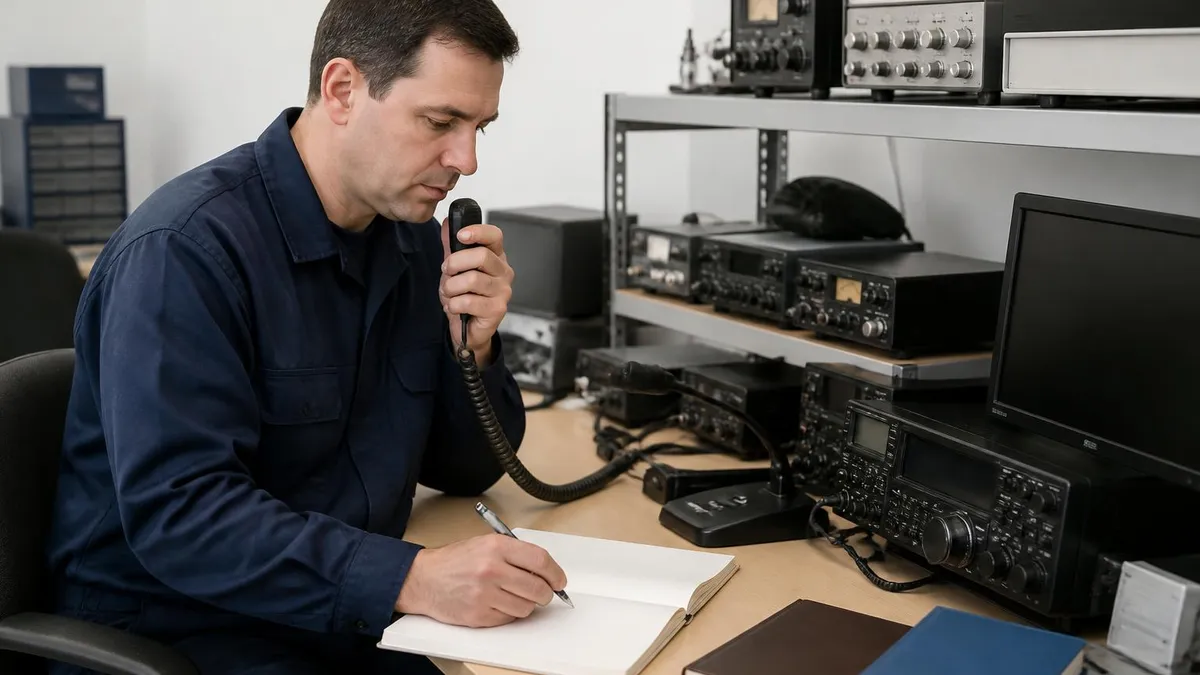
Ham Radio Frequencies: Complete US Band Plan, Calling Frequencies & Technician Class Reference
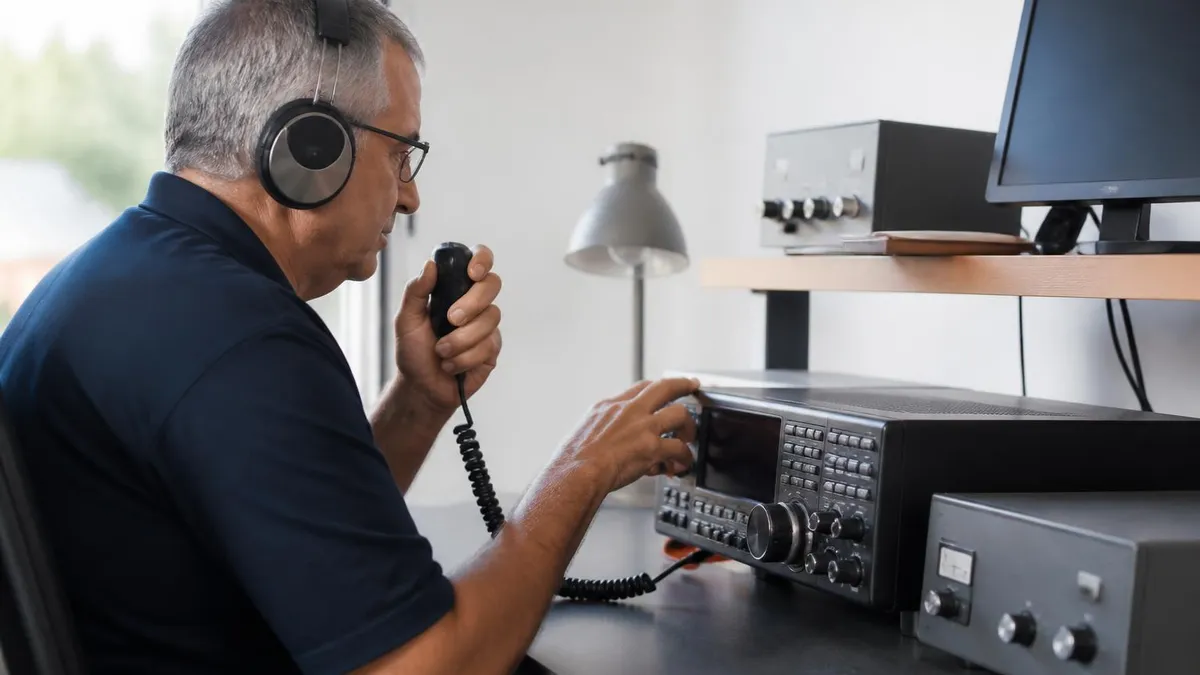
Ham Radio Bands: Complete US Amateur Radio Band Reference
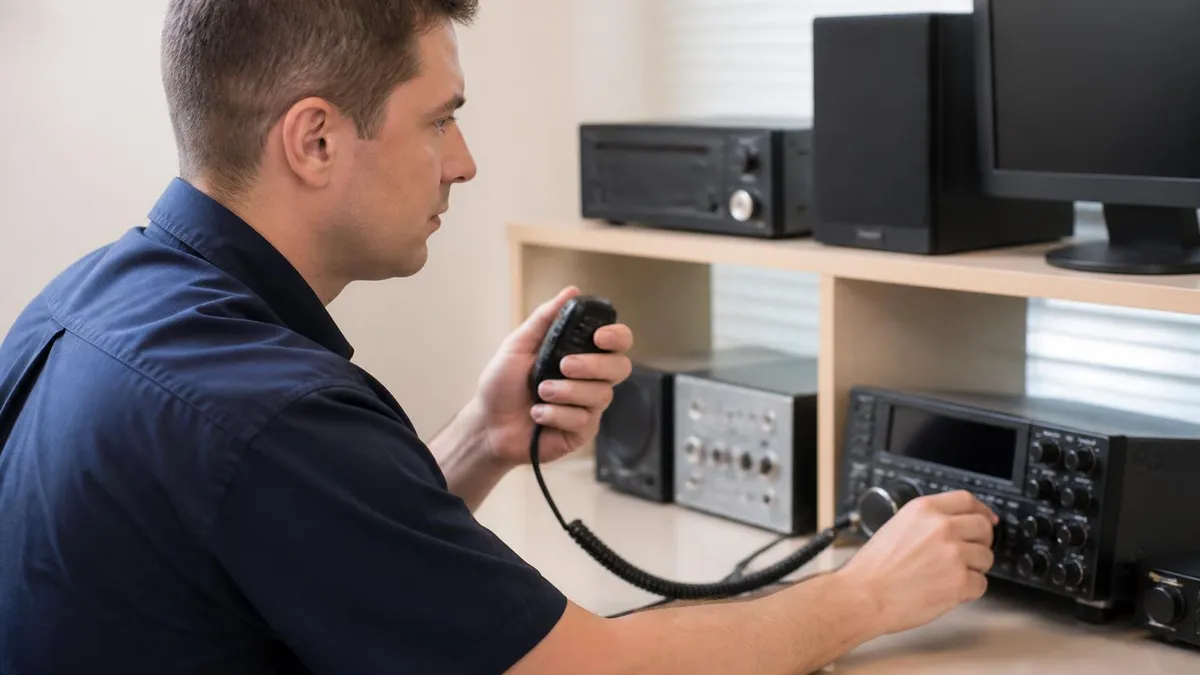
Ham Radio Antenna Guide: Types, Towers, Portable, and Satellite Antennas

HAM - Radio Extra Class Test: Complete Study Guide 2026
HAM - Radio Extra Class Test: Career Paths, Salary, and Requirements 2026
About the Author

Educational Psychologist & Academic Test Preparation Expert
Columbia University Teachers CollegeDr. Lisa Patel holds a Doctorate in Education from Columbia University Teachers College and has spent 17 years researching standardized test design and academic assessment. She has developed preparation programs for SAT, ACT, GRE, LSAT, UCAT, and numerous professional licensing exams, helping students of all backgrounds achieve their target scores.
Join the Discussion
Connect with other students preparing for this exam. Share tips, ask questions, and get advice from people who have been there.
View discussion (8 replies)