
HAM Radio License Test: Complete 2026 October Guide to Technician, General, and Extra Exams
❓ Ham radio license test guide: 35-question Technician exam, $15 VEC fee, three license levels, free practice tests, and how to pass on your first try.
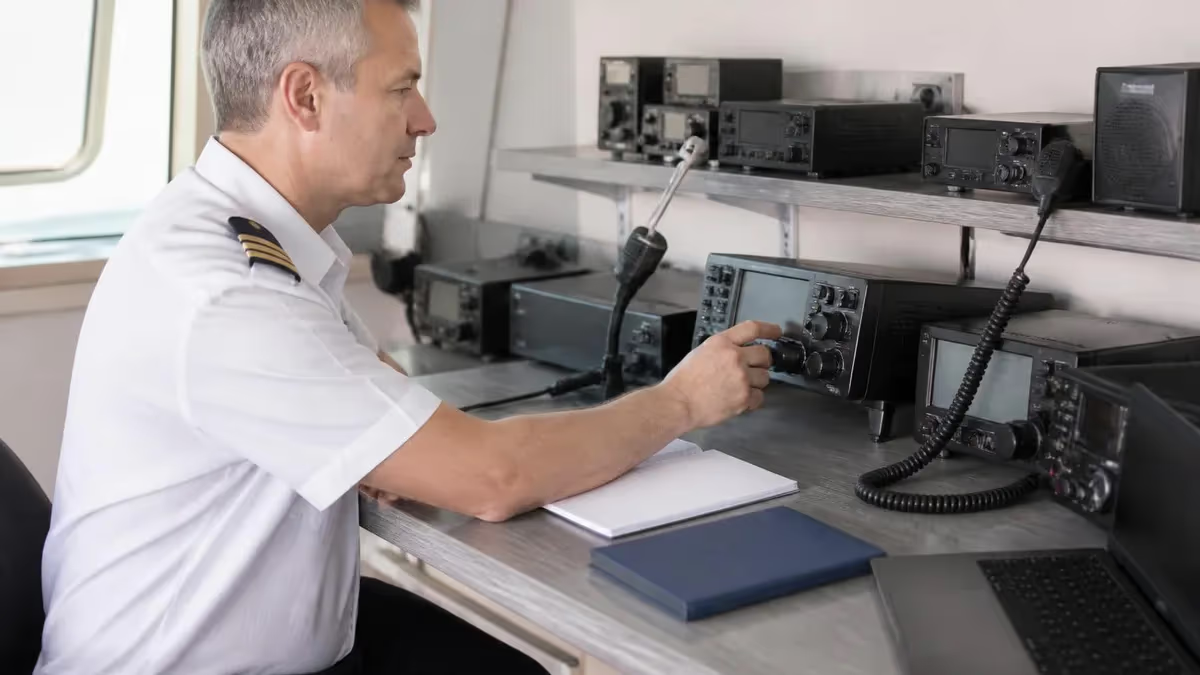
So you've decided to get your ham radio license. Good call. The ham radio license test is one of the most accessible technical certifications you can earn — entirely multiple choice, with the complete question pool published online before you ever sit down. No surprises. No trick questions. Just material you can study at your own pace, on your own schedule, with free tools that have been refined over decades by the amateur radio community itself.
Here's what makes it different from almost every other licensing exam: you can literally see every possible question in advance. The FCC publishes the pools, volunteer examiners (VEs) administer the test, and most people pass the Technician class after about two to four weeks of casual study. You'll pay roughly $50 total — $15 to the VEC and $35 to the FCC — and your license stays valid for ten years.
This guide walks you through everything: the three license classes, exactly what's on each test, how much it costs, where to find a session near you, what to bring on test day, and what happens after you pass. By the end you'll know whether to schedule the Technician exam this month or take an extra few weeks. Either way, you'll be ready.
Amateur radio has been licensed in the US since 1912, and the testing system has evolved through every major shift in radio technology. The current three-tier structure dates to 2000, when the FCC consolidated five license classes into Technician, General, and Extra. Morse code dropped in 2007. Online proctored testing arrived in 2020. The format you'll take today is simpler and more accessible than at any point in the hobby's history.
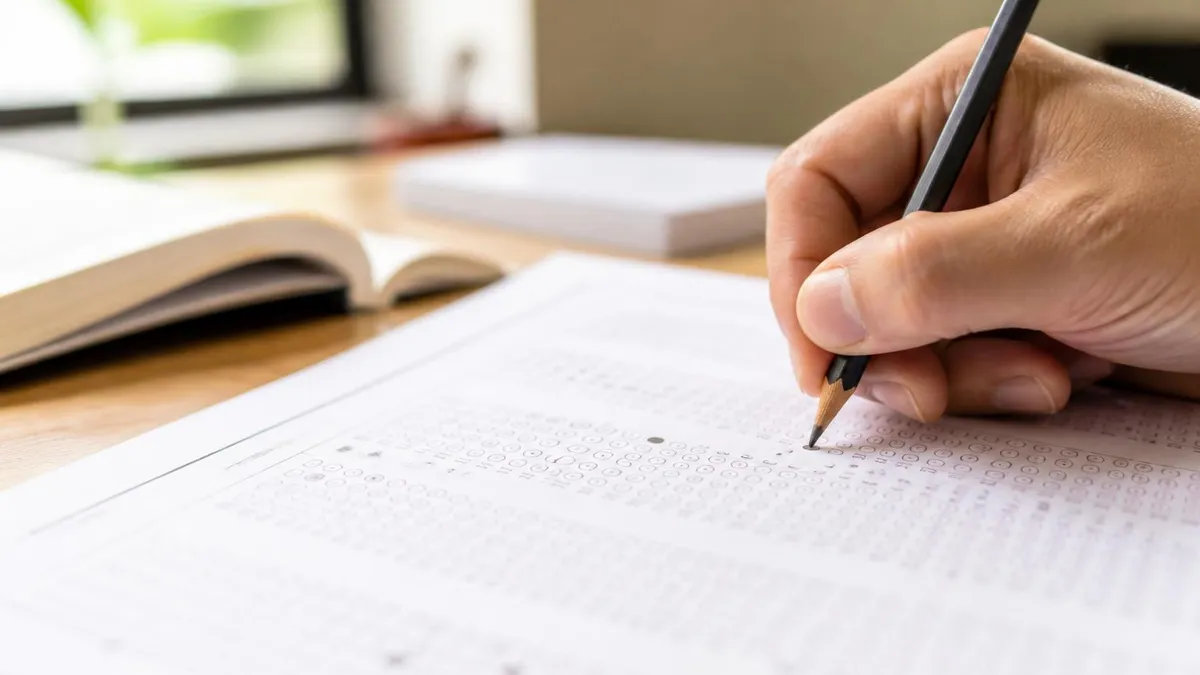
The ham radio license test in the US has three levels: Technician (entry, 35 questions, 74% to pass), General (mid-tier, 35 questions), and Amateur Extra (advanced, 50 questions). All three are multiple choice. VEC fee is $15 per session, and the FCC charges a one-time $35 application fee. No Morse code requirement since 2007. Your license is good for 10 years. Check our ham radio license guide for the full overview before scheduling your exam.
The three classes build on each other. Technician opens VHF and UHF voice privileges — that's the 2-meter and 70-centimeter bands most local repeaters use. General unlocks the bulk of HF (high frequency) operation, which is where long-distance contacts happen. Amateur Extra grants every privilege available to US amateurs, including the exclusive DX sub-bands where serious operators chase rare countries. You don't have to climb the ladder all at once. Many hams stay at Technician for years before deciding they want more.
Here's something most beginners don't realize: you can attempt all three exams in a single sitting at most VEC sessions. If you pass Technician, the examiners will offer to let you try General right there. Pass that, and Extra's on the table too. The $15 VEC fee covers the whole session. Plenty of well-prepared hams walk in as unlicensed and walk out as Extra-class operators the same afternoon.
Why bother with a license at all when GMRS, FRS, and CB radios exist without testing? Two reasons. First, the privileges are enormous — amateurs get exclusive access to dozens of frequency bands from 1.8 MHz all the way up to 275 GHz. Second, the power limits and equipment freedom are unmatched. CB tops out at 4 watts AM, GMRS at 50 watts on limited channels. As a Technician, you can run 1,500 watts (the legal max) on most VHF/UHF bands using any equipment you choose.
The Three License Classes Explained
The Technician class is your entry point into amateur radio. The test pulls 35 questions from a published pool of 423, and you need 26 correct (74%) to pass. The exam fee is $15 at the VEC session, plus a one-time $35 FCC application fee — so roughly $50 to get on the air.
Privileges focus on VHF and UHF: full voice rights on 2 meters (144-148 MHz) and 70 centimeters (420-450 MHz), plus limited HF access on the 10-meter band for SSB voice. You also get Morse code (CW) privileges on parts of 80m, 40m, 15m, and 10m. Most new hams start here and use a handheld radio to talk through local repeaters.
Study time runs 2-4 weeks for most adults using HamStudy.org or the ARRL Ham Radio License Manual. Pass rate sits around 78% for prepared candidates.
Ham Radio License Test by the Numbers
Key Facts at a Glance
| Item | Value | Details |
|---|---|---|
| Questions on Technician and General | 35 | |
| Questions on Amateur Extra | 50 | |
| Passing score on all three tests | 74% | |
| Typical total cost (VEC + FCC fee) | $50 | |
| License validity before renewal | 10 yrs |
Cost shouldn't be a barrier. The full bill to become a licensed ham looks like this in 2026: $15 to the VEC for the session, $35 one-time to the FCC for the application, and zero to one hundred dollars for study materials depending on whether you go free (HamStudy.org) or paid (ARRL manual, around $30). That's it. No annual fees, no equipment requirements, no membership dues.
If you want to pass all three classes in one session, you still pay just $15 to the VEC plus the one $35 FCC fee. Total: $50 for a lifetime of operating privileges. Compare that to drone certifications, HAM equivalents in other countries, or even a basic CDL endorsement — ham radi licensing is genuinely affordable.
Some VECs occasionally waive the $15 session fee for youth, scouts, or military veterans. Ask your local exam team when you register. ARRL also runs subsidy programs for new hams under 21. The $35 FCC fee, unfortunately, is not waivable by anyone — it's set in federal law and applies equally to every new licensee, upgrade, or vanity call sign application. Plan accordingly.
Compare ham radio licensing to professional certifications you might know. A drone pilot license (Part 107) runs about $175 and expires after two years. A basic real estate license can cost $500-$1,000 with continuing education requirements. Even a HAM radio license in Canada costs more than its US equivalent. At $50 for a decade of operating privileges across hundreds of MHz of spectrum, the US ham radio license is one of the best deals in licensed activities anywhere.
Question Pool Breakdown by Class
- Total questions: 423
- On exam: 35
- Pass threshold: 26 correct
- Subject areas: 9 sections
- Pool valid through: 2026
- Total questions: 432
- On exam: 35
- Pass threshold: 26 correct
- Subject areas: 10 sections
- Focus: HF operation and theory
- Total questions: 622
- On exam: 50
- Pass threshold: 37 correct
- Subject areas: 10 sections
- Focus: Advanced theory and rules
Finding a test session is straightforward. The ARRL VEC website at arrl.org maintains a searchable database — type in your zip code and you'll see upcoming sessions within driving distance. W5YI VEC runs its own site too. Local ham radio clubs almost always sponsor monthly exam sessions, and your nearest club is the best place to start asking around. Many sessions happen on Saturday mornings at libraries, fire stations, or club shacks.
Online testing has changed the game for rural hams. Anchorage VEC pioneered remote proctored exams, and dozens of teams now run them weekly. You schedule a slot, log in 15 minutes before, complete a room scan, take the test on your computer, and learn your result the moment you submit. The whole thing takes about an hour start to finish.
If you're in a metro area like Dallas, Atlanta, Phoenix, Seattle, or anywhere along the I-95 corridor, you'll find weekly or even daily testing options once you combine in-person sessions with the online VECs. Smaller cities typically have one or two monthly sessions through local clubs. Rural hams often drive an hour or more for in-person testing, which is why the online option has been so significant since 2020.

What Happens on Test Day
Arrive Early
Bring Required Items
Sit for the Exam
Immediate Grading
Receive Your CSCE
Pay FCC Fee
Get Your Call Sign
What's actually on the Technician exam? The pool covers nine subject areas: FCC rules and regulations, operating procedures, radio wave propagation, amateur radio practices, electrical principles, electronic components, antennas and feed lines, transmitters and receivers, and RF safety. Each section gets a roughly proportional number of questions. The rules section is heaviest, and the math is light — just basic Ohm's Law and power calculations.
The General exam goes deeper into the same territory plus signal types, modulation modes, and HF-specific propagation. Extra adds transmission line theory, oscillator circuits, amplifier classes, and detailed FCC Part 97 rules. None of it is calculus-level math, but Extra does expect you to understand reactance, impedance matching, and basic AC circuit analysis. If you took high school physics and remember any of it, you have a foundation.
Question pools rotate on a four-year cycle. The current Technician pool runs through 2026, the General pool refreshes in 2027, and the Extra pool follows on its own schedule. When a pool rotates, roughly half the questions get rewritten and the rest stay. If you're studying near a rotation date, double-check that your study materials match the current pool — outdated practice tests can waste weeks of your effort on questions that no longer appear on the exam.
The Question Pool Committee, run by the National Conference of Volunteer Examiner Coordinators, rewrites pools to track changes in technology and FCC rules. New pools usually add questions on digital modes, software-defined radio, and emerging amateur satellites. Older questions about obsolete equipment get retired. The pool size stays roughly constant — about 400-625 questions depending on class — but the content stays current with how hams actually operate today.
Technician Question Pool Topics
- ✓FCC rules, regulations, and station identification
- ✓Operating procedures and band plans
- ✓Radio wave propagation and characteristics
- ✓Amateur radio practices and station setup
- ✓Electrical principles and Ohm's Law
- ✓Electronic components and circuit basics
- ✓Antennas and feed lines
- ✓Transmitters, receivers, and amplifiers
- ✓RF safety and exposure limits
Free study tools have honestly replaced most of the paid options. HamStudy.org is the gold standard — it gamifies the question pool, tracks your weak areas, and lets you take unlimited practice exams that mirror the real format. AA9PW.com runs another excellent free practice site that's been around for decades. QRZ.com and Eham.net both offer free practice tests too. If you prefer a book, the ARRL Ham Radio License Manual is the classic at about $30 and walks through every topic with explanations.
YouTube has become a serious study resource. Channels like Ham Radio Crash Course (KC5HWB) and HamRadioConcepts publish hours of free video covering every section of every pool. For Extra-class students, Gordo West's video courses are widely considered the best paid option. The point is: you don't need to spend money to pass. Free resources alone will get most people through Technician and General comfortably.
Best Free Study Resources
- Type: Web app + mobile
- Cost: Free (donations welcome)
- Best for: All three classes
- Standout feature: Adaptive flashcards
- Type: Web-based
- Cost: Free
- Best for: Realistic exam simulation
- Standout feature: Random pool draws
- Type: Book (print or digital)
- Cost: $30 per class
- Best for: Deep conceptual learning
- Standout feature: Explanations beyond the pool
- Type: YouTube channel
- Cost: Free
- Best for: Visual learners
- Standout feature: Real-world demonstrations
Before you schedule your real exam, hit a consistent 85% on practice tests. That's the sweet spot where you've got enough buffer to handle a bad question or two and still pass comfortably. If you're scoring 70-80% on practice, you're not quite ready — keep grinding the flashcards for another week. If you're hitting 95%+, schedule the test today. Waiting longer doesn't help; you'll just forget material.
The Technician test gives you about 30-45 minutes for 35 questions, which works out to roughly 50 seconds per question. That's plenty. The Extra exam squeezes 50 questions into the same window, so you've got closer to 36 seconds each. Don't linger on questions you don't know — flag them, move on, and come back at the end. Closed book, but most VECs allow basic non-graphing calculators.
One underrated study technique: take every practice test through to completion, even when you're scoring badly. Stopping mid-test to look up answers feels productive but it doesn't build the stamina you need on test day. Sit down, set a timer for 35 minutes, and force yourself to finish. Review the wrong answers afterward. Repeat. Within a week of this pattern, your scores climb steadily because you're training the actual skill the exam measures — recognizing patterns under time pressure.
Self-Study vs Taking a Class
- +Self-study is free or very cheap
- +You learn at your own pace
- +HamStudy.org tracks weak areas automatically
- +Most people pass Technician with 2-4 weeks of casual study
- +Practice tests give instant feedback
- +Full question pool is public and predictable
- −Requires self-discipline to study consistently
- −Theory concepts can be confusing without a mentor
- −Easy to memorize without truly understanding
- −Extra-class material gets technical fast
- −No live Q&A unless you know a local ham
- −Test anxiety is harder to manage solo
You must have an FCC Registration Number (FRN) before test day. Get one free at fcc.gov/uls — click "Register," provide your SSN (privacy-protected), and you'll have an FRN in minutes. VEs cannot process your test result without it. Bring the number on paper or your phone. This is the single most common reason people delay getting their license issued. Take five minutes today and register before you do anything else.
What happens after you pass? The VEC team submits your results to the FCC within one to three business days. You'll need to pay the $35 FCC application fee electronically through the ULS portal — they'll email you a payment link. Once that clears, the FCC issues your call sign within 7-10 business days. You can check your status anytime by searching your name or FRN in the ULS database at fcc.gov/uls.
Once your call sign appears in ULS, you're legally allowed to transmit. Many new hams program their first repeater frequencies into a handheld radio that same evening and make their first contact within hours of seeing their call sign go live. If you want to learn more about the gear side of things, check our guide to ham radio frequencies so you know where to listen and transmit.
First contacts can feel awkward. Push through it. Local repeaters usually have a friendly crowd of regulars who actively welcome new operators. Identify yourself with your new call sign, say you're new, and someone will almost always respond within seconds. Most clubs run weekly nets — scheduled on-air gatherings — where you can practice talking on the radio without the pressure of starting a conversation cold.
Getting Your FRN Before Test Day
Visit fcc.gov/uls
Click Register
Provide Your SSN
Enter Personal Info
Receive Your FRN
Use It on Test Day
Your call sign is yours for ten years before renewal — and renewal is free and online. You won't take any test again. Just log into ULS within 90 days of expiration and click renew. Miss the deadline? You've got a two-year grace period, but you can't transmit during that window. After two years past expiration, you'd have to retake the exam to get a new license.
Call sign format follows a sequential pattern by region. New Technicians in the Midwest might get something like KE0AAA, then KE0AAB, then KE0AAC. After holding your license for 12 months, you can apply for a vanity call sign — something shorter, easier to remember, or meaningful to you. The vanity application costs nothing in most cases and takes a few weeks to process. Many Extra-class hams chase 1x2 call signs (one letter, one number, two letters) which are short and prestigious.
Region numbers in your call sign tell other operators where you're licensed: 0 for the central plains, 1 for New England, 2 for New York and New Jersey, 3 for the mid-Atlantic, 4 for the southeast, 5 for the south central, 6 for California, 7 for the Pacific Northwest and mountain states, 8 for the Great Lakes, and 9 for Illinois, Indiana, and Wisconsin. If you move, you can keep your old call sign or apply for a new one matching your new region. Most hams keep theirs as a matter of identity.
Test Day Packing List
- ✓Government-issued photo ID (driver's license or passport)
- ✓Your FRN written down or on your phone
- ✓Two number-2 pencils and an eraser
- ✓Basic non-graphing calculator with fresh batteries
- ✓$15 cash or check for the VEC session fee
- ✓A printed copy of any prior CSCE if upgrading
- ✓Bottle of water and a snack for between exams
Common mistakes to avoid: don't skip the math questions. Even Technician has a handful of Ohm's Law and power calculations, and they're easy points if you've practiced them. Don't underestimate the FCC rules section either — it's heavy on memorization, and questions about station identification timing, control operator privileges, and band edges trip up otherwise prepared candidates. Take timed practice exams in the last week before your real test so the format feels familiar.
Test anxiety is normal. Most VEs are former educators or retired engineers and they actively want you to pass. They're not adversarial. If you blank on a question, skip it and come back. If you fail, ask if you can retake the same day — many sessions allow it with a different test version at no extra charge. Even if you have to come back next month, it's not the end of the world. You'll pass eventually, and the license is good for a decade once you do.
Sleep matters more than last-minute cramming. Your brain consolidates the question pool patterns overnight, especially after spaced repetition with flashcards. The night before your exam, stop studying by 8pm, eat something normal, and get to bed early. Avoid caffeine spikes the morning of the test — a small cup of coffee is fine, but the jittery dose people drink before exams usually backfires and makes test anxiety worse, not better.
Study Timeline by Class
- Total prep time: 2-4 weeks
- Daily study: 30-60 minutes
- Practice exams: 5-10 before scheduling
- Target practice score: 85% or higher
- Total prep time: 3-6 weeks
- Daily study: 45-60 minutes
- Practice exams: 10-15 before scheduling
- Target practice score: 85% or higher
- Total prep time: 6-12 weeks
- Daily study: 60-90 minutes
- Practice exams: 15-20 before scheduling
- Target practice score: 85% or higher
If you want one focused starting point, here it is: register for an FRN today, download the HamStudy.org app, and commit to 30 minutes a day for the next three weeks. Take the ham radio technician test practice exams until you hit 85% three sessions in a row. Then book a session through arrl.org and go. Total cost from zero to licensed: about $50. Total time from decision to call sign: about a month. That's it.
Once you're licensed, the equipment side opens up. A solid handheld radio runs $25-$150, mobile rigs $200-$500, and HF transceivers $500-$2,000+. For your first antenna, browse our ham radio antenna setup guide — a basic dipole costs $20 in wire and outperforms many commercial options. You can also grab our ham radio technician practice test PDF to study offline between online practice sessions.
The hobby grows from there. Some hams chase awards like Worked All States or DXCC, contacting amateurs in every US state or 100+ countries. Others focus on emergency communications through ARES and RACES, providing backup comms when cell networks fail during hurricanes or wildfires. Others build their own equipment, experiment with digital modes like FT8 and JS8Call, or bounce signals off the moon. The license is just the door — what you do once you're through it is entirely up to you.
Sample HAM - Radio Extra Class Test Practice Questions
Try these questions from our free HAM - Radio Extra Class Test practice tests. The correct answer and an explanation follow each question.
What privilege does an Amateur Extra class license provide that a General class license does not?
- A. The ability to operate digital modes
- B. Access to all amateur frequency allocations including Extra-only sub-bands
- C. Permission to use more than 1500 watts PEP
- D. The right to build and sell amateur equipment
Answer: B. Access to all amateur frequency allocations including Extra-only sub-bands
Amateur Extra licensees have access to all US amateur allocations, including exclusive phone and CW sub-bands not available to General class.
A ham radio operator with an Extra Class license is operating from their vehicle in a different city but within the same call sign region. What is the correct way for them to identify their station?
- A. State their call sign followed by 'mobile' and their current grid square.
- B. Transmit their call sign followed by a '/M' and the name of the nearest city.
- C. Transmit their assigned call sign without any additional indicators.
- D. Announce their call sign and the new Maidenhead locator every 5 minutes.
Answer: C. Transmit their assigned call sign without any additional indicators.
According to FCC Part 97.119, an amateur station must transmit its assigned call sign at the end of each communication and at least every 10 minutes during a communication. While adding an indicator like '/M' for mobile operation is a common practice, it is not a regulatory requirement when operating within the same call sign region. Simply using the assigned call sign is fully compliant.
If an Extra Class licensee is the control operator for a station licensed to a General Class operator, and the station is operating on a frequency available only to Extra Class licensees, which of the following identification procedures is required?
- A. The station must identify with the General Class licensee's call sign, followed by the Extra Class operator's call sign.
- B. Only the Extra Class operator's call sign must be used.
- C. Only the General Class station's call sign must be used.
- D. The station must transmit both call signs at the beginning of each communication.
Answer: A. The station must identify with the General Class licensee's call sign, followed by the Extra Class operator's call sign.
According to FCC §97.119(e), when the operator license class held by the control operator exceeds that of the station licensee, an indicator consisting of the call sign assigned to the control operator's station must be included after the station's call sign. This allows operation using the higher privileges of the control operator.
What is the grace period during which an expired amateur radio license may be renewed without re-examination?
- A. 1 year
- B. 2 years
- C. 6 months
- D. 5 years
Answer: B. 2 years
Expired amateur radio licenses have a 2-year grace period during which the licensee may renew without retaking the exam, but cannot operate during this time.
Ham Radio License Test Questions and Answers
About the Author

Educational Psychologist & Academic Test Preparation Expert
Columbia University Teachers CollegeDr. Lisa Patel holds a Doctorate in Education from Columbia University Teachers College and has spent 17 years researching standardized test design and academic assessment. She has developed preparation programs for SAT, ACT, GRE, LSAT, UCAT, and numerous professional licensing exams, helping students of all backgrounds achieve their target scores.
Join the Discussion
Connect with other students preparing for this exam. Share tips, ask questions, and get advice from people who have been there.
View discussion (8 replies)