
Past GCSE Papers AQA: Where to Find Them, How to Use Them, and What to Avoid
📝 Past GCSE papers AQA are free on aqa.org.uk: find question papers, mark schemes and examiner reports, plus how to use mocks and avoid fake leaks.
Past GCSE papers AQA are free to download from the AQA website (aqa.org.uk), where each subject page lists question papers, mark schemes and examiner reports from previous exam series. Use them under timed conditions, mark your work against the official scheme, and ignore any site promising leaked GCSE papers.
Past Gcse Papers Aqa: Key Facts (Updated October 2026)
| Fact | Details | Source |
|---|---|---|
| How GCSEs are delivered | Two-year courses; students sit all their written exams in one series at the end of the course, at their school or college exam centre. | UK Government (DfE) |
| AQA GCSE Mathematics (8300) format | Three written papers worth 80 marks each: Paper 1 is non-calculator; Papers 2 and 3 allow a calculator. | AQA |
| June 2027 entry fee (English Language 8700 / Mathematics 8300) | £52.85 per entry for UK centres; £60.80 for international centres. | AQA |
| November 2026 resit fee (English Language / Mathematics) | £51.20 per entry for UK centres; £58.90 for international centres. | AQA |
| Late entry deadlines, June 2027 series | Late entry fee applies from 22 February 2027; very late entry fee applies after 21 April 2027. | AQA |
| Late entry surcharge | Late fee equals 100% of the original entry fee; very late fee equals 150%, on top of the normal fee. | AQA |
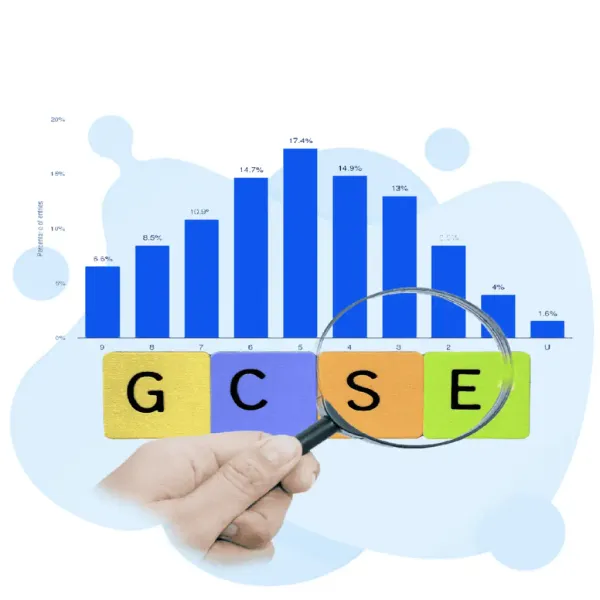
| Summer 2026 results | 67.3% of UK GCSE results were grade 4/C or above, compared with 67.4% in 2025. | JCQ |
| Resits in England | Outside the summer series, the only GCSE resits are English Language and Maths, every November. Students aged 16 to 19 without grade 4 in either must keep studying it. | UK Government (DfE) |
The meaning of GCSE is General Certificate of Secondary Education, the main qualification taken by students in England, Wales and Northern Ireland at about age 16. To define GCSE for a US reader, think of several subject-specific final exams, loosely comparable to taking multiple end-of-course tests at once. Our gcse hub explains the system in full, while this guide focuses on one job: using AQA papers well.
AQA is one of the exam boards that sets and marks GCSE papers, alongside Pearson Edexcel, OCR and WJEC Eduqas. Each board writes its own papers from its own specification, so the board printed on your entry decides which past papers are useful. Papers from another board still teach general technique, but command words, mark allocations and topic emphasis differ. Always check the specification code, such as 8700 for English Language or 8300 for Mathematics, before downloading anything.
Past papers matter because GCSEs are two-year courses with nearly all the marks awarded in final written exams. Practising on real papers shows you how questions are phrased, how many marks each line of working earns, and how long you can spend per mark. Students who only reread notes often discover on exam day that knowing the content and answering exam questions are two quite different skills.
The numbers are worth knowing. In summer 2026, 67.3% of UK GCSE results reached grade 4/C or above, almost identical to 2025. That standard pass is the line many colleges and employers use. Because grading depends on how a cohort performs rather than a fixed percentage of marks, a past paper score only estimates your grade. Use it as a trend across several papers, never as a single verdict on your ability.
Searches for leaked GCSE papers are enormous, and it is worth saying plainly what they lead to. Real exam papers are held under strict security until the exam begins, and anything claiming to be a leak is almost always a scam, a survey trap or an old paper relabeled. Official past papers cover the same skills, cost nothing and arrive with mark schemes, so there is nothing to gain from gambling on rumors.
This guide walks through where to find AQA papers, how the Maths format works, how to run a mock GCSE at home, and how to mark yourself honestly. It also covers fees and resits for readers who are planning ahead. Where we quote costs or dates, they come from AQA, JCQ or the UK government, and we date them so you can judge how current they are before relying on them.
Who is this for? Mostly students in Years 10 and 11, their parents, and US readers evaluating UK qualifications for transfers or admissions. You do not need to be an expert. If you can open a PDF, print it, set a timer and mark with a pen in a different color, you can follow every step here and turn raw past papers into measurable progress across every subject you study.
AQA GCSE Past Papers by the Numbers
What Is the Format of AQA GCSE Maths Past Papers?
| Section | Questions | Time | Weight | Notes |
|---|---|---|---|---|
| Paper 1 (Non-calculator) | 80 | 1 hr 30 min | 33.3% | 80 marks; the totals shown count marks, not individual questions |
| Paper 2 (Calculator) | 80 | 1 hr 30 min | 33.3% | 80 marks; calculator allowed |
| Paper 3 (Calculator) | 80 | 1 hr 30 min | 33.3% | 80 marks; calculator allowed |
| Total | 240 | 4 hours 30 minutes | 100% |
Where Do I Find AQA GCSE Past Papers?
The official home of AQA past papers is the assessment resources area of aqa.org.uk. Pick your subject, choose GCSE, and open the assessment resources section to see question papers, mark schemes and examiner reports sorted by series, usually June and, for English Language and Maths, November. For detail on aqa gcse courses such as the sciences or languages, always start from the specification page so you pick the right code.
Many AQA GCSEs are tiered. Maths, the sciences and modern languages offer Foundation and Higher tiers, and the papers differ. Foundation Maths targets the lower grades, while Higher stretches to grade 9. Download the tier your teacher has entered you for. Practising on Higher papers when you are entered for Foundation wastes time on content you will not see, while the reverse leaves gaps that cost marks.
Every paper has a mark scheme, and learning to read one is half the benefit. Look at how method marks, accuracy marks and independent marks are awarded in Maths, or the levels-of-response bands used in English and humanities essays. A mark scheme shows what examiners actually reward, which is often narrower and more specific than students assume when they write long answers hoping something will earn credit.
Examiner reports are the most underused resource. They summarize how thousands of students answered each question, list common errors, and quote sample responses. If a Maths question about ratio had a low average, the report explains why, such as students forgetting to simplify. Read the report after you mark a paper, and note two mistakes to avoid next time. It takes about ten minutes and often lifts marks noticeably.
Availability varies. Teachers can reach the newest papers through AQA's secure centre services, and the public site generally carries papers from earlier series. If the most recent June paper is not public yet, work backward and use the previous three or four series instead. That still gives you more than a dozen full papers in Maths, and plenty in English Language, to practice before the real exams arrive.
Students often search for specific papers, such as AQA GCSE English Language past papers Paper 2, and the same route works for each. Paper 2 (Writers' viewpoints and perspectives) pairs two non-fiction sources, so print the source booklet along with the question paper. Without the insert you cannot attempt the paper properly, and a surprising number of downloads are incomplete because students grab only the first PDF on the page.
Sciences deserve a note. Combined Science: Trilogy (8464) and separate Biology (8461), Chemistry (8462) and Physics (8463) each have their own papers, and a search for Higher combined biology leads to the Trilogy papers. Check the code on the front cover. Mixing up Trilogy and separate science papers is a common mistake, because question styles overlap but the content depth and the number of papers differ.
What Is a Mock GCSE and How Do GCSE Mocks Work?
A school mock GCSE is a set of exams sat in the school hall, usually in Year 11 around November to January and sometimes again in spring. Papers are often taken from previous AQA series and marked by your own teachers. The results feed predicted grades, which sixth forms and colleges use when deciding conditional offers, so take them seriously even though nothing is officially certified.
Schools also use GCSE mocks to set intervention groups, confirm tier entries in Maths and Science, and decide revision priorities. Ask your teacher for the breakdown by question or topic, not just the total. A Higher tier mock result near a grade 3 equivalent might prompt a conversation about moving to Foundation, so understanding the thresholds early can protect your final grade. Keep the marked scripts as revision material.
Are Past GCSE Papers Better Than Other Revision Methods?
- +They show the exact style, wording and mark allocation of real AQA questions.
- +Official mark schemes teach you precisely what examiners reward.
- +Timed sittings build stamina and pacing for exam day.
- +Examiner reports reveal common mistakes before you repeat them.
- +They are free to download from the exam board.
- +Repeated attempts give measurable evidence of progress.
- −The newest papers may not be public until later, so supply is limited.
- −Marking yourself can be too generous without discipline.
- −Papers do not teach content from scratch, so gaps need notes or lessons first.
- −Specification changes can make very old papers partly out of date.
- −Doing papers too early can feel discouraging before you have covered the course.
- −Scores are only estimates because grade boundaries move each year.
How Do I Prepare With Past GCSE Papers? A Checklist
- ✓Confirm your exam board and specification code on your entry or with your teacher.
- ✓Check whether you are entered for Foundation or Higher tier.
- ✓Download the question paper, insert and mark scheme from aqa.org.uk.
- ✓Print the paper and set a timer for the exact exam length.
- ✓Sit the paper without notes, phone or extra time.
- ✓Mark it the same day using only the official scheme.
- ✓Record every lost mark in an error log by topic and cause.
- ✓Read the examiner report for the questions you lost marks on.
- ✓Redo failed questions after three days without looking at answers.
- ✓Repeat with a new paper each week and track your average.
Mark honestly, then redo what you got wrong
Sitting more papers does not help much if you skip the review. The biggest gains come from logging every lost mark, reading the examiner report, and re-attempting the same question a few days later without help. If you can answer it cold, the learning has stuck.
How Do I Run a Mock GCSE at Home?
A mock GCSE at home is a full past paper sat under exam conditions, and it works only if you treat it like the real thing. Choose a quiet room, clear the desk, switch your phone off and set a timer for the exact paper length. Equipment should match the rules for that paper: a calculator for Maths Papers 2 and 3, none for Paper 1. Stopping early to check your notes defeats the whole purpose.
Schools usually hold their own gcse mocks in Year 11, often in December and again in spring. Those results shape predicted grades, which colleges and sixth forms use in offers. Home mocks are different: they are private and low-stakes, so you can run one every fortnight. Doing both gives the best picture, because school mocks test pressure while home mocks test steady improvement with no grade attached.
Plan the sequence. Start with topic-specific questions pulled from older papers, then move to whole papers once you have covered most of the course. In the last ten weeks, sit one full paper per subject each week, rotating subjects as you go. Space your mocks out so each result reflects knowledge rather than fatigue, and avoid cramming several papers into a single day just to feel productive.
Choose genuine papers only. Papers from 2019 and earlier series are legitimately public, so there is no reason to hunt for leaked gcse papers 2019 on unofficial sites, which are frequently relabeled copies of old papers or pages built to harvest your email address. If a download asks for a login, a survey or a payment, close the tab and return to aqa.org.uk, where every real paper is free.
Mark the paper the same day while your reasoning is fresh. Use a green or red pen, award marks exactly as the scheme states, and resist the urge to give yourself the benefit of the doubt. If the scheme wants a specific term such as increase in surface area and you wrote it gets bigger, that is zero. Write the lost marks beside each question and total them by topic, not just overall.
Build an error log. A simple table with columns for question number, topic, cause of error and fix is enough. Causes fall into three groups: you did not know it, you knew it but misread the question, or you ran out of time. Each group needs a different cure: revision, slower reading, or faster pacing. After four or five mocks, patterns in this log will show you where the next study hours should go.
Finally, convert marks to approximate grades carefully. AQA publishes grade boundaries after each series, and they move from year to year, so use the most recent ones as a rough guide rather than a promise. A paper scoring just above a boundary suggests you are close but fragile; a comfortable margin suggests security. Averaging three papers smooths out the luck of a favorable or unfavorable question set.
Real GCSE papers are kept secure until the exam starts. Sites claiming to offer leaked papers usually want your email, a survey or a payment, and the files are old papers relabeled. Use only aqa.org.uk or papers your teacher provides.
How Much Do AQA GCSE Entries and Resits Cost?
Most students never see an exam fee because schools pay for first entries, but private candidates and resit students often do. For the June 2027 series, AQA charges UK centres £52.85 per entry for GCSE English Language or Mathematics, and international centres £60.80. Other subjects have their own prices, so check AQA's published fee list before you commit. A centre may also add its own administration charge, so ask the exams officer for the full cost.
Resits follow a separate calendar. In England, the only GCSE resits outside the summer series are English Language and Maths, held every November. AQA's November 2026 fee is £51.20 per entry for UK centres and £58.90 for international centres. Students who want to improve a grade in any other subject must wait for the following summer series, which means planning a full year ahead and keeping revision momentum going meanwhile.
Deadlines carry real penalties. For AQA's summer 2027 series, a late entry fee applies from 22 February 2027, and a very late entry fee applies after 21 April 2027. AQA sets the late fee at 100% of the original entry fee and the very late fee at 150%, on top of the normal entry fee. Missing the date can therefore double the cost, or more, for exactly the same exam.
There is also a progression rule worth knowing. In England, students aged 16 to 19 who do not reach at least a grade 4 in GCSE English or Maths must keep studying that subject as a condition of funding for their post-16 course. For families comparing UK and US paths, that is a useful point: Maths and English are treated as gateway subjects, a bit like graduation requirements in a US high school diploma.
Because Maths carries so much weight, many resit students focus on algebra first. Practising functions maths gcse questions from older papers is a good example: function notation, composite functions and inverses appear on Higher tier papers and trip up students who skip them. Mark schemes show how method marks are awarded even when your final answer is wrong, which is why showing working matters.
Another note on dates: the summer 2020 exams in England were cancelled because of the pandemic, and grades were awarded through a different process. That means searches for leaked gcse papers 2020 cannot refer to genuine papers from that summer, because none were sat. Anything labeled that way is either a mislabeled older paper or a trap. Genuine papers from other years are free on AQA's site.
For context on pass rates, JCQ reported 67.3% of UK GCSE results at grade 4/C or above in summer 2026, compared with 67.4% in 2025. Grade 4 is the standard pass and grade 5 is a strong pass, while grade 9 is the top. Those figures help set expectations: aiming for a grade 5 or 6 in your weakest subjects is a realistic and worthwhile target for most students.
What Is the Best Way to Use AQA Past Papers Before the Exam?
Work backward from the exam date. Twelve weeks out, list every paper you will sit and the specification topics each covers. Eight weeks out, begin one timed paper per week for your priority subjects. Four weeks out, add a second paper for weaker subjects. Two weeks out, switch to reviewing your error log and redoing only the questions you lost marks on. This pacing prevents the usual last-minute cram and keeps stress manageable.
Do your first attempt at a topic untimed, with notes if needed. Accuracy comes before speed. Once you can answer a question type correctly, add the clock. A common rule of thumb is about one minute per mark, so an 80-mark paper in 90 minutes leaves a little spare time for checking. Practising that pace early makes the real thing feel familiar rather than rushed, and it exposes questions that eat too much time.
Learn the command words. AQA uses state, describe, explain, evaluate and compare deliberately, and each earns marks differently. State needs a fact, explain needs a reason joined with because, and evaluate needs a judgment supported by evidence on both sides. Highlight command words on each past paper question, then compare your answers to the mark scheme to see whether you actually matched the verb the examiner chose.
In Maths, redo failed questions after three days without looking at the solution. If you can complete the same question cold, the method has stuck. Show all working, since method marks are available even when the final answer is wrong. On the non-calculator Paper 1, practise fractions, surds and percentages by hand, because calculator habits cause avoidable mistakes when the calculator is not allowed.
For English Language, practise the writing tasks as seriously as the reading questions. Both papers are worth 80 marks, and the final writing question on each carries half of them. Plan for five minutes, write for about thirty-five, and check for five. Compare your answer with the sample responses in the examiner report and notice the vocabulary, paragraphing and punctuation that separate one band from the next. That is where much of the gain lies.
Be wary of shortcuts. The internet fills with claims of gcse 2020 papers leaked and similar promises every spring, and the pattern is always the same: a link, a form and nothing of value. Spend that time on one more real paper instead. Genuine past papers are free, they match the style of the actual exam, and each one comes with a mark scheme you can trust.
Protect your sleep and routine. Two focused hours on a past paper with careful marking beat five distracted hours of reading. Take real breaks, eat properly and stop studying at a fixed time on the night before an exam. Talk to your teacher if a topic is not improving, since they can often point to targeted questions. Confidence comes from evidence, and your marked papers are exactly that evidence.
GCSE Questions and Answers
GCSE 2026

AQA GCSE Biology Checklist: The Complete Skills & Revision List for 2026

GCSE Exam Prep: Mocks, Past Papers & Revision

GCSE Practice Tests: Past Papers & Question Banks

What Is GCSE? The UK System And Its US Equivalent

GCSE Exam Guide 2026: Dates, Format, Rules & What to Expect
GCSE French: Exam Format, Past Papers, Mocks and Revision Guide

GCSE Practice Test PDF (Free Printable 2026)
How this page was made: written with AI tools. Exam facts are checked against the official sources listed below. Not reviewed by a subject-matter expert. Editorial policy
Sources & references
Exam facts on this page (fees, format, dates, passing scores) are checked against these official sources; the date is our last check. Editorial policy
- gov.uk — Test delivery, retake policy, passing score · verified Oct 2026
- aqa.org.uk — Exam format, fees, late registration, retake fee · verified Oct 2026
- jcq.org.uk — Exam information · verified Oct 2026