
GCSE Descriptive Writing Questions: AQA Format, Examples and Tips 2026
📝 GCSE descriptive writing questions are worth 40 marks in about 45 minutes. See the AQA format, mark scheme levels, model openings and practice tips.
GCSE descriptive writing questions ask you to create a vivid scene, setting or moment from a picture or a written prompt, usually in about 45 minutes. On AQA English Language Paper 1, Question 5 is worth 40 marks: 24 for content and organisation and 16 for spelling, punctuation and grammar. You choose between a descriptive and a narrative task.
Gcse Descriptive Writing Questions: Key Facts (Updated October 2026)
| Fact | Details | Source |
|---|---|---|
| Where it appears | AQA GCSE English Language (8700), Paper 1, Section B, Question 5 | AQA |
| Marks | 40 marks: 24 for content and organisation, 16 for technical accuracy | AQA |
| Suggested time | About 45 minutes of the 1 hour 45 minute paper | AQA |
| Delivery | Two-year course, with all written exams sat in one series at the end, at your school or college exam centre | GOV.UK |
| Entry fee, June 2027 series | £52.85 per entry at UK centres and £60.80 at international centres for English Language | AQA |
| Late entry | Late fee from 22 February 2027 (100% of the entry fee) and very late fee after 21 April 2027 (150%) | AQA |
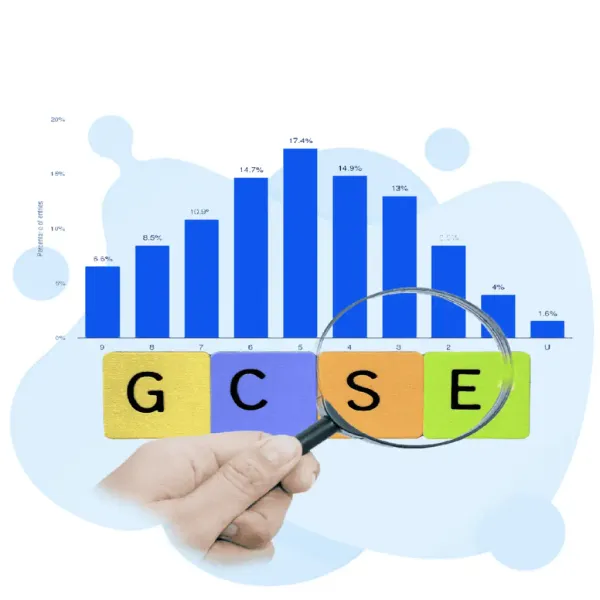
| Results benchmark | In summer 2026, 67.3% of UK GCSE results were grade 4/C or above, compared with 67.4% in 2025 | JCQ |
| Resits | In England, English Language and Maths are the only GCSEs resat outside summer, every November. Students aged 16 to 19 without a grade 4 in English must keep studying it | GOV.UK |
The gcse English Language exam ends with a creative writing task, and the meaning of GCSE is straightforward: General Certificate of Secondary Education, the main qualification students in England, Wales and Northern Ireland take around age 16. For readers in the US, it sits roughly alongside the end of 10th or 11th grade. To define GCSE in one line, it is a subject-by-subject exam, graded 9 to 1, that employers and sixth forms use as a baseline.
What Are GCSE Creative Writing Questions?
A descriptive prompt typically gives you a photograph, such as an empty seaside pier at dusk or a crowded market in the rain, and asks you to describe what you see. Another version gives a written title like 'A Place You Know Well.' Either way, the examiner is not looking for a plot. They want sensory detail, control of tone and precise vocabulary, written in a controlled structure that moves the reader's eye around the scene.
Many students search for leaked papers before exams, and the phrase leaked gcse papers is searched heavily around exam season. Here is the honest position: genuine exam papers are sealed until the sitting, so anything claiming to be leaked is almost always fake, recycled or a scam. Real past papers, mark schemes and examiner reports are published by the exam boards, and they teach far more than a rumour ever could.
Descriptive tasks reward a particular set of skills. You need a clear viewpoint, such as a camera moving from foreground to background. You need varied sentence lengths, deliberate figurative language and a consistent mood. You also need accurate spelling, punctuation and grammar, because 16 of the 40 marks go to technical accuracy. Students who treat Question 5 as a rushed afterthought often lose the easiest marks on the whole paper, which is why planning matters.
AQA structures the mark scheme in levels. Content and organisation is marked out of 24 across four levels, covering tone, style, register, vocabulary, structure and overall effect. Technical accuracy is marked out of 16, covering sentence demarcation, punctuation range, spelling and sentence forms. A strong answer lands in Level 4 for both. In practice, that means ambitious but controlled language, with errors so rare they never slow the reader down.
This guide covers the format, the marking, realistic prompts, model techniques and a practical prep routine. It also explains how a mock GCSE uses creative writing, why the GCSE's grade 4 threshold in English matters for sixth form and college, and how fees and deadlines work for the 2027 series. Everything is checked against official sources where a link is given, so you can plan with confidence, whether you are a student, a parent or a tutor.
A quick note on labels: students also search for 'gcse english imaginative writing' and 'creative writing for gcse english language.' These all point at the same single question. Whatever the name, the task is the same: 40 marks, about 45 minutes, and one finished piece of writing of roughly 450 to 700 words that shows control rather than length. Master that one skill and you secure a quarter of your whole English Language grade.
How Many Marks Do GCSE Descriptive Writing Questions Carry?
What Are the GCSE Creative Writing Questions on the AQA Paper?
A photograph, such as a deserted funfair or a rainy harbour, asks you to describe what you see. The image is a springboard, so you can zoom in on small details and invent sounds, smells and textures the picture cannot show.
A short title such as 'The Market at Dawn' leaves the setting entirely to you. Prepare flexible locations in advance, then adapt one to the title while keeping the focus on place, atmosphere and sensory detail rather than events.
The paper also offers a story task. If you pick it, you write an opening or complete story. Descriptive skills still carry marks here, but you must also manage plot, pace and character within the same 45 minutes.
Question 5 is judged on four levels. Content and organisation is out of 24 and technical accuracy is out of 16. Level 4 needs convincing, crafted language, secure structure and rare, minor errors in spelling and punctuation.
How Do You Answer GCSE English Language Creative Writing Questions?
Start by reading both options, then commit within two minutes. Choose the task that gives you the richest images to write about, not the one that sounds easiest. If a photograph shows a stormy harbour, ask what you can see, hear, smell and feel there. If you have nothing to say after 60 seconds of thinking, switch. Early indecision is the quiet killer of timed writing, because every minute spent dithering is a minute taken from the final paragraphs.
Next, spend five minutes planning. Sketch a simple structure of five or six paragraphs. A reliable pattern is a wide establishing view, a zoom into one striking detail, a shift in time or light, a contrast, a human or animal presence and a closing image that echoes the opening. Jot one strong simile and one precise verb beside each paragraph so you are never hunting for words mid-sentence.
Write for about 35 minutes. Aim for roughly 450 to 700 words of controlled prose; examiners reward quality over length, and a tight 500-word answer routinely beats a rambling 900-word one. Vary sentence openings and lengths, and use short sentences for impact. Avoid stacking adjectives. 'The cold, dark, wet, grey street' is weaker than 'Rain stitched the street to the sky.' Each sentence should add something the reader can picture.
Save the last five minutes for checking. Technical accuracy carries 16 marks, so scan for missing full stops, comma splices, inconsistent tense and misspelled common words such as 'definitely' and 'separate'. Read your final paragraph through in your head. If the ending simply stops, add one image that links back to your opening. Fixing five small errors can lift a Level 3 technical mark into Level 4 without any extra creativity.
Many students hunt for leaked gcse papers 2020 as if one hidden paper would unlock a grade. It will not. The 2020 summer exams were cancelled in England, so no genuine sitting took place that summer, and any file claiming to be a leaked paper from that year deserves suspicion. A better use of your time is learning how the real exam is structured, which our GCSE exam guide explains in plain language.
If you sit the aqa gcse English Language course, practise with AQA's own specimen papers and published mark schemes. The examiner reports are especially useful because they quote real student answers and explain why each earned its level. Read three reports and you will see the same mistakes repeat: over-long plans, flat endings, overloaded adjectives and weak paragraphing. Knowing those traps in advance is one of the cheapest ways to gain marks.
Finally, treat each practice answer as an experiment. Time yourself, mark it against the level descriptors, and rewrite just the opening paragraph. Comparing the two versions teaches you more than writing five new essays. Keep a word bank of sensory verbs, colours and sounds you have borrowed from good novels. After four weeks of this routine, most students find their first drafts are noticeably tighter and their timing is dependable.
How Do GCSE Mocks Use Descriptive Writing Prompts?
Picture prompts are the most common descriptive format in a mock GCSE. You might see a photograph of a deserted funfair, a snow-covered railway platform or a busy street food stall at night. The image is a springboard, not a checklist. You do not have to describe everything you see; you can zoom in on a single bench, a flickering bulb or a puddle reflecting neon, then build outwards.
Strong responses invent what the photograph cannot show: the smell of frying onions, the distant hum of traffic, the cold of metal railings. Choose a viewpoint and stay consistent, either standing still or slowly moving through the scene. Teachers marking GCSE mocks consistently reward writers who control atmosphere, so decide in advance whether the mood is eerie, nostalgic, joyful or tense, and let every image support it.
Is Descriptive Writing Easier Than Narrative Writing at GCSE?
- +It needs no plot, so you avoid rushed or unrealistic endings
- +You control the pace and can focus on one setting
- +It rewards the vocabulary and imagery you have already practised
- +Picture prompts give you instant ideas to start from
- +You can rehearse it with any photograph at home
- +Practised images and techniques are easy to reuse in the exam
- −It is easy to slip into long lists of adjectives
- −Weak structure can leave the piece feeling shapeless
- −Examiners expect a clear, consistent viewpoint
- −Finishing well is harder without a plot to resolve
- −Overwriting and purple prose can cost marks for control
- −Slow, detailed prose makes spelling and punctuation errors more visible
How Do You Prepare for Creative Writing GCSE Questions?
- ✓Download the AQA specification and read the Paper 1 mark scheme levels.
- ✓Collect twenty photographs and write a 200-word description of each.
- ✓Time one full Question 5 answer every week under exam conditions.
- ✓Plan every answer in five minutes with a five or six paragraph outline.
- ✓Build a word bank of sensory verbs, colours, sounds and textures.
- ✓Learn two fresh similes and one extended metaphor for common settings.
- ✓Write a final paragraph that echoes your opening image.
- ✓Keep a personal list of spelling and punctuation errors to avoid.
- ✓Ask your teacher to mark one piece against the level descriptors each month.
- ✓Read one descriptive passage from a novel each week and copy its best sentence.
Control beats decoration
Examiners reward writing that feels deliberate. A consistent viewpoint, a steady tone and a handful of crafted images will outscore a page crammed with every technique you know. Sixteen of the 40 marks also depend on accuracy, so a clean, controlled 500 words is usually worth more than an ambitious but messy 800.
What Does a Top-Mark Creative Writing GCSE AQA Answer Look Like?
A top-mark answer, usually Level 4 in both assessment objectives, reads like the work of a writer rather than a student completing a task. It opens with a precise, unusual image, holds a consistent tone and ends with a deliberate echo. Consider this opening for a seaside pier prompt: 'The pier leaned into the dusk like an old man into a doorway, its planks sighing under the weight of nothing.' It is short, visual and sets mood immediately.
Notice what that sentence does. The simile is fresh rather than the cliched 'as grey as the sea.' The verb 'leaned' gives the structure personality, and the phrase 'weight of nothing' hints at emptiness without stating it. Examiners call this crafted language. You do not need a dozen such lines; three or four per page, surrounded by clean, confident sentences, is enough to anchor a Level 4 judgement for vocabulary and effect.
Structure matters just as much. High-scoring responses often use a cinematic movement: wide shot, mid shot, close-up, then a pull back. Paragraphs vary in length, and at least one is a single sentence for emphasis. Obvious linking words are avoided in favour of shifts created by imagery, like moving from the glare of arcade lights to the dark water beneath. The reader feels progression even though no plot occurs.
Punctuation range is another quiet differentiator. Level 4 technical accuracy expects a variety of punctuation used correctly, including semicolons, dashes, colons and parenthetical commas. One well-placed semicolon is better than five forced ones. Practise with sentences like: 'The gulls wheeled overhead; below them, the tide dragged at the pilings, patient as a creditor.' Check each mark is doing a job, linking balanced ideas or adding a controlled aside.
The same expectations apply whichever british gcse subject combination you choose, because English Language is compulsory in England and a grade 4 is the usual benchmark for sixth forms and colleges. In England, students aged 16 to 19 who miss grade 4 in English must continue studying it. That makes Question 5 a high-value investment: it is worth a quarter of your whole English Language grade, and it is the part you can most directly rehearse.
Common weaknesses sit at the other end of the scale. Level 2 answers typically list features without linking them, use the same sentence opening repeatedly and drift into narrative. For example, 'I walked down the street and saw a shop' shifts to story and loses the descriptive focus. Another frequent problem is mixed tense: starting in present and sliding into past. Choose one tense in the planning stage and underline the verb in every sentence during checking.
To close the gap, take a Level 2 paragraph and upgrade it in three passes. First replace weak verbs and generic nouns. Second, add one sensory detail beyond sight, such as sound or touch. Third, vary the sentence rhythm by merging two short sentences and splitting one long one. Students who repeat this exercise with four or five old paragraphs usually see their own writing sharpen within a fortnight, with no new content knowledge needed.
Genuine exam papers are never released before the sitting, so sites selling 'leaked' questions are scams and using them risks disqualification. Also note AQA's late entry fee applies from 22 February 2027 and a very late fee applies after 21 April 2027, so private candidates should enter early.
Where Can You Find Real GCSE Creative Writing Practice Without Leaked Papers?
The safest source of practice is the exam board itself. AQA publishes past papers, mark schemes and examiner reports for English Language, and your school may provide mock papers too. Searches for leaked gcse papers 2019 mostly surface those same genuine past papers, which are legitimately public once the series has passed. Always check the paper code (8700/1) and the series date printed on the front page before you rely on a file.
Fees and deadlines also matter if you are a private candidate or resitting. For AQA's summer 2027 series, English Language or Mathematics entries cost £52.85 at UK centres and £60.80 at international centres. A late entry surcharge equal to 100% of the entry fee applies from 22 February 2027, and a very late surcharge of 150% applies after 21 April 2027. Mark both dates in your calendar well ahead of time.
Resits follow special rules. In England, the only GCSE resits held outside the summer series are English Language and Maths, every November. For November 2026, AQA charges UK centres £51.20 per entry and international centres £58.90. Students aged 16 to 19 without a grade 4 in English must keep studying it, so many colleges enrol them on a resit course and enter them in November.
Your school's gcse mocks are the best rehearsal you will get. They usually run in November or January of Year 11, use past papers under exam conditions, and produce predicted grades. Treat the creative writing question seriously there: ask your teacher for the marked script and level breakdown, and copy the feedback into a log. A mock result that shows Level 3 for content and Level 2 for accuracy tells you exactly what to fix.
Between mocks, build your own practice bank. Collect twenty photographs from newspapers, travel sites and museum archives, and write a 200-word description of one every other day. Keep each piece short and focused on one skill, such as weather, crowds or abandoned places. Swap pieces with a friend, mark them using the level descriptors, and note which images you reach for too often. Repetition across pieces is the clue to what to refresh.
Reading is the hidden multiplier. Descriptive passages in novels such as 'Jane Eyre', 'Great Expectations' or 'Rebecca' model how paragraphs build atmosphere. Copy out one paragraph each week and underline the strongest verb, the longest sentence and the shortest one. Then write your own version about a different setting. This borrowing trains your ear for rhythm, which no checklist or rumour of a leaked paper can supply, however many times you search for one.
Finally, be wary of any site selling answers for unseen papers. Genuine question papers are held securely until the exam, and exam boards investigate malpractice, which can lead to disqualification. If something seems to promise guaranteed questions, close the tab. Time spent on twenty well-marked practice answers will beat any shortcut, and you will walk into the exam knowing the format, the mark scheme and your own habits.
What Are the Best Tips for GCSE Creative Writing Prompts?
Three weeks before the exam, set up a simple routine. Write one timed descriptive piece every second day, alternating picture and title prompts. Mark each against the AQA levels, then rewrite only the weakest paragraph. Keep a single sheet listing your recurring errors, such as comma splices or lazy verbs. By the final week you should have eight to ten marked pieces, and a short, personal checklist that fits on one side of paper.
On the day, read the question paper carefully. Underline the key words in each task, and tick the one with the strongest images. Write a plan of five or six bullet points in the margin, not on a separate sheet, so you can see timing at a glance. Begin writing by around the ten-minute mark of your 45. Starting too late is the single most common reason for rushed, unfinished endings.
Tone is your steering wheel. Decide whether the piece is calm, ominous, joyful or melancholy, and choose vocabulary that fits. A foggy harbour can be peaceful or menacing depending on verbs: 'drifted' versus 'crept'. Keep that choice steady across paragraphs. Shifts in mood are fine if deliberate, but accidental switches confuse the reader. Examiners judge overall effect, so a consistent atmosphere often lifts a script that would otherwise sit between levels.
Ignore rumours. Searches like gcse 2020 papers leaked lead nowhere useful, and the hours spent chasing them are better used on structured revision. Even content-heavy topics such as the periodic table reward short, repeated and timed practice, and the same principle works for writing. Ten focused minutes on a single paragraph each evening produces better results than a panicked three-hour session the night before.
Look after the basics. Sleep well, eat a proper breakfast and bring two black pens, a water bottle and a watch. Wearing a watch matters because many exam halls have clocks that are hard to see. Write neatly enough for a stranger to read; illegible words can cost spelling marks. If your mind blanks, jot down the five senses on the page and pick one to begin. Starting small beats staring at the page.
Use your final five minutes wisely. Check every paragraph break, capital letter and full stop. Look for words you overuse, such as 'suddenly' or 'beautiful', and replace them with something concrete. Confirm that your last sentence leaves an image rather than a summary. If you realise a paragraph is weak but time is short, cross out neatly and rewrite the first sentence only. A strong first and last line shape the examiner's impression.
Keep the bigger picture in view. Creative writing is one question on one paper, but it is a quarter of your English Language grade and a skill you will use in applications, personal statements and work emails. Treat each practice piece as training for clear, vivid communication. Students who adopt that mindset tend to stay calmer in the exam and enjoy the writing, and the enjoyment often shows in the quality of the final piece.
GCSE Questions and Answers
GCSE 2026

AQA GCSE Biology Checklist: The Complete Skills & Revision List for 2026

GCSE Subjects 2026: Compulsory, Optional & How to Choose

GCSE Exam Prep: Mocks, Past Papers & Revision
Past Papers Arabic GCSE: Where to Find Real Edexcel Papers, Mark Schemes and Mocks

GCSE Exam Guide 2026: Dates, Format, Rules & What to Expect

GCSE Practice Test PDF (Free Printable 2026)
Periodic Table GCSE: Groups, Trends, Electrons and Revision Guide

England, UK and USA GCSE Requirements Explained for 2026
How this page was made: written with AI tools and published by Nathan Beja, founder of Practice Test Geeks, who is responsible for its content. Exam facts are checked against the official sources listed below. Not reviewed by a subject-matter expert. Editorial policy
Sources & references
Exam facts on this page (fees, format, dates, passing scores) are checked against these official sources; the date is our last check. Editorial policy
- gov.uk — Test delivery, retake policy, passing score · verified Oct 2026
- aqa.org.uk — Exam format, fees, late registration, retake fee · verified Oct 2026
- jcq.org.uk — Exam information · verified Oct 2026