
Forklift Pre-Operation Inspection: What a Forklift Operator Should Check, Including Height
✅ A forklift operator should check the height, tires, forks, brakes and fluids before every shift. Get the OSHA rules and a full daily inspection checklist.

Every shift on a warehouse floor starts with the same quiet question: is this machine safe to drive today? The answer begins before the key is turned. A forklift operator should check the height of the mast, the overhead guard, and the full lift path, along with the tires, forks, and fluids. A truck that clears a doorway at ground level can still strike a sprinkler line or low beam once the carriage rises.
Federal rules make this routine mandatory rather than optional. Under OSHA 29 CFR 1910.178(q)(7), powered industrial trucks must be examined before being placed in service and at least daily after that. Trucks used around the clock need an examination after each shift. A documented forklift pre-operation inspection is the simplest way to prove compliance, and it takes most trained operators five to ten minutes.
Many people searching for forklift training or a certification of forklift operation expect the course to focus mainly on driving. In reality, a large share of the classroom and evaluation time goes to the inspection routine, because most equipment failures are visible long before they cause an accident. A cracked fork heel, a slow hydraulic leak, or a soft tire rarely announces itself during operation. It shows up during a careful walk-around by someone who knows what normal looks like.
The word height deserves special attention because it covers several separate checks. Operators confirm the lowered mast height against door openings, the extended height against ceilings and racking, the overhead guard clearance above their own head, and the height of the load against hanging obstacles. They also check fork height while traveling, which should sit about four to six inches above the floor. Skipping any of these measurements is a common cause of struck racks and damaged product.
Equipment type changes the details but not the principle. An electric forklift needs a battery, cable, and connector check instead of fuel and exhaust checks. A stand up forklift requires testing the operator presence pedal and the side-entry gate. A cherry picker forklift, properly called an order picker, adds harness and platform inspections because the operator rides at elevation. Each of these variations is covered below with specific, practical steps you can use on the job.
Rental and purchase situations add another layer. If you search forklift rental near me and a unit arrives on a flatbed, the moment of delivery is your best chance to document its condition. The same applies when you are shopping for a forklift for sale on the used market. Run the full inspection, record the hour meter reading, photograph any damage, and refuse equipment that fails a basic brake, steering, or hydraulic test before you sign anything.
By the end of this article you will know what to inspect, in what order, what counts as a reason to tag out a truck, and how to record your findings. Use the checklist and the practice quizzes along the way to test yourself. Whether you are preparing for an OSHA-aligned evaluation, starting a new warehouse job, or supervising a team of forklifts operators, a consistent inspection routine is the cheapest safety measure available.
Forklift Inspection Rules by the Numbers
How to Complete a Forklift Pre-Operation Inspection Step by Step
Review the Last Report
Walk Around the Truck
Check Heights and Clearances
Inspect Power and Fluids
Test Controls and Safety Devices
Sign Off or Tag Out
Height Checks a Forklift Operator Should Never Skip
Start with the lowered mast height, because it determines whether the truck fits through the doors, trailers, and aisles on your route. Most forklifts have a data plate or manufacturer manual listing the collapsed mast height, often between 80 and 90 inches for a standard unit. Compare that number with the shortest doorway you will pass. Trailers, dock levelers, and roll-up doors are frequent culprits, and a mast that clips a door header can bend channels and damage hydraulic hoses.
Next, confirm the overhead guard. This steel cage protects the operator from falling objects, and OSHA expects it to be in place and undamaged. Look for bent bars, cracked welds, missing bolts, or any modification such as a homemade shelf. Then sit in the seat and check your head clearance. Operators who are tall, or who wear hard hats in some facilities, may find that low ceilings, sprinkler heads, or lighting fixtures sit uncomfortably close to the guard.
Extended height is a separate calculation. Every forklift has a maximum fork height and a rated capacity that decreases as the load rises, shown on the capacity plate. Before lifting, look up. Identify sprinkler pipes, ductwork, cable trays, lights, and overhead doors in the lift path. Fire codes generally require clearance beneath sprinkler heads, commonly around 18 inches, so a load placed too high can violate safety rules even if it does not touch anything.
Load height matters as much as truck height. A pallet stacked five feet high may block forward vision, forcing the operator to drive in reverse, and it may hit door headers that the empty truck clears easily. Add the carriage height, forks, and load together when planning the route. If the stack is too tall to see over, travel backward with a spotter where needed, and never lean out of the cab to look around the load.
Travel height deserves its own habit. When moving, keep forks roughly four to six inches off the floor and tilt the mast slightly back so the load rests against the backrest. Carrying loads high raises the center of gravity and makes tipovers more likely, especially on turns, ramps, or uneven surfaces. Raising forks only when positioned at the rack or stack, and lowering fully before leaving the truck, is a rule every certified operator learns early.
Rack and shelf height checks happen at the destination. Verify the beam level, the posted load rating, and whether the location is empty. Look for damaged uprights, missing beam clips, or overhanging pallets. Approach squarely, lift slowly, and use a fork positioner if the truck has one. Many costly accidents occur not because the truck was defective, but because the operator misjudged how high or far the load needed to travel during placement.
Finally, record anything unusual. If the overhead guard is damaged, the mast chains are uneven, or the mast stop or limit switch behaves oddly, report it immediately and tag the truck out. Height-related defects can appear minor but escalate quickly under load. The decision to stop is supported by OSHA: unsafe trucks must be removed from service, and supervisors cannot pressure operators to ignore a defect found during inspection.
Electric Forklift, Stand Up Forklift, and Cherry Picker Forklift Inspections
An electric forklift runs on a traction battery, so the inspection begins there. Check that the battery is securely restrained, the cables show no cracked insulation, and the connector is fully seated. On flooded lead-acid batteries, look at the electrolyte level, and wear eye protection and gloves when handling. Verify the discharge indicator on the dash, because operating on a nearly empty battery shortens its life and reduces lifting power late in the shift.
Because electric trucks are quiet, warning devices matter even more. Test the horn, backup alarm, and lights before every shift, particularly in busy aisles where pedestrians cannot hear an engine approaching. Charging areas should be well ventilated, with eyewash stations nearby and no smoking or open flames. Also confirm the floor is clean and dry, since cushion tires common on electric models have less grip than pneumatic tires on wet surfaces.
Daily Forklift Inspections: Are They Worth the Time?
- +Catches cracked forks, leaks, and worn tires before they cause accidents
- +Satisfies the OSHA daily examination requirement for powered industrial trucks
- +Reduces expensive unplanned downtime and emergency repair bills
- +Protects pedestrians, coworkers, and the operator from preventable injuries
- +Builds a paper trail that helps during audits and insurance reviews
- +Strengthens an operator's reputation and readiness for certification evaluations
- −Adds five to ten minutes to the start of every shift
- −Can feel repetitive, which tempts operators to rush or skip items
- −Requires paperwork or a digital system to be kept up to date
- −May reveal defects that take a truck out of service and slow production
- −Needs consistent training so every operator uses the same standard
- −Shared trucks may be hard to inspect when shifts overlap tightly
Forklift Operator Pre-Shift Checklist
- ✓Read the last inspection report and any open tags.
- ✓Measure lowered mast height against doors on your route.
- ✓Inspect the overhead guard for bends, cracks, or missing bolts.
- ✓Check forks for cracks, bends, and wear at the heel.
- ✓Examine tires for cuts, chunking, low pressure, and loose lugs.
- ✓Look under the truck for hydraulic, oil, or coolant leaks.
- ✓Inspect mast chains, rollers, and hoses for damage or uneven tension.
- ✓Check battery, cables, and connectors, or fuel and LP gas fittings.
- ✓Test horn, lights, backup alarm, seatbelt, and gauges.
- ✓Test brakes, steering, and every mast function, then sign the sheet.
If the Truck Is Unsafe, It Does Not Run
OSHA requires that any powered industrial truck found to be in need of repair, defective, or unsafe be taken out of service until it is restored to safe condition. No deadline, shortage of trucks, or supervisor request changes that rule. Tag it, report it, and wait for a qualified repair.
Tires, Forks, Fluids, and Brakes: The Rest of the Walk-Around
After the height checks, walk around the truck in a consistent pattern, usually clockwise, starting at the forks. Inspect each fork for cracks, especially at the heel where the blade bends upward, and for wear. A common industry guideline is to remove forks from service when thickness has worn by about 10 percent. Check that positioning latches work, the forks are level with each other, and the carriage and backrest show no cracks or bent members.
Tires come next. Cushion tires should not show chunking, deep cuts, or wear past the manufacturer's wear line, and pneumatic tires need correct pressure with no bulges or embedded objects. Lug nuts should be tight. A worn or damaged tire reduces stability and can lengthen stopping distance, which is especially dangerous when carrying a heavy load. Even a small difference in tire condition from side to side can make the truck pull or feel unstable during turns.
Mast and chain inspection requires a careful eye. Look for leaking hydraulic cylinders, frayed hoses, broken rollers, and chains that are dry, rusty, stretched, or uneven. Both chains should carry equal tension, and none of the links should be bent or cracked. Never place hands or fingers on chains while the mast moves. With the truck running, raise and lower the forks through the full range and listen for grinding, jerking, or chattering.
For internal combustion units, check engine oil, coolant, hydraulic fluid, and fuel or LP gas connections. Inspect LP cylinders for dents, proper seating, a working relief valve, and leaks, which you can detect by smell or a soapy water test. For an electric forklift, check the battery water level where applicable, cable condition, connector security, and charge level, and confirm the battery is properly restrained. Ventilation matters when charging because hydrogen gas can accumulate.
Operational tests happen after the visual check. Sitting in the seat, fasten the seatbelt, adjust the mirrors, and start the truck. Test the horn, headlights, strobe or blue light, backup alarm, and gauges. Press the service brake and confirm it feels firm rather than spongy, then check the parking brake on a slight incline if safe. Steering should move smoothly without excessive play. Any warning light that stays on after startup should be reported before work begins.
Attachments and special equipment need extra attention. Side shifters, clamps, rotators, and fork extensions each change the truck's capacity, and the data plate must reflect the actual configuration. Using an attachment without an updated plate can invite overload. Verify hoses and fittings, make sure guards are intact, and test the function before approaching a load. The operator should also know the weight of the load, since estimating by sight is unreliable and leads to unstable lifts.
When any check fails, follow your facility's tag-out procedure. Remove the key, attach a visible out-of-service tag, notify the supervisor, and write down the specific defect. Only qualified personnel may repair the truck, and it should be re-inspected before returning to service. Never assume the next shift will catch the problem. A short note describing what you found can prevent an injury, protect coworkers, and give the maintenance team the details it needs to fix it quickly.
Brake problems, damaged forks, leaking hydraulics, a bent overhead guard, or malfunctioning steering are all reasons to stop immediately. Driving a defective forklift can expose both you and your employer to citations, injury claims, and serious harm to people nearby.
Forklift Rental, Used Purchases, and Documentation
Renting equipment does not reduce your inspection duty. Whether you rent a unit for a week-long project or lease a fleet for seasonal peaks, the operator is still responsible for a pre-use check. Many companies ask for the same sign-off sheet they use on owned trucks. Forklift rental prices vary widely by capacity and type, from a few hundred dollars per week for a light-duty electric unit to far more for heavy-capacity or rough-terrain models.
When you search for a forklift rental near me, compare more than price. Ask whether the supplier performs a documented inspection before delivery, whether the unit has a current service record, and whether operator orientation is included. Confirm the capacity plate matches your loads and the mast height fits your doors. A cheaper truck that is taller than your loading dock opening, or too heavy for your floor rating, costs more in delays and damage than a well-matched machine.
On delivery, inspect before you accept. Walk around the truck with the driver or technician present, note any dents, leaks, or missing equipment, and photograph them with a timestamp. Test the lifts, brakes, horn, and lights. Check the hour meter and compare it with the paperwork. If you find a safety defect, refuse the unit. Rental contracts commonly assign damage liability to the renter after delivery, so an accurate condition report protects your company from unfair charges.
Buying a forklift for sale, new or used, calls for an even deeper inspection. Beyond the daily checklist, examine frame welds, mast rails, rust, hydraulic seep marks, and the quality of past maintenance records. Ask for the serial number to confirm the data plate matches the machine. Many buyers hire an independent technician for a pre-purchase evaluation. The fee is usually small compared with the cost of a replacement mast, transmission, or battery discovered after the sale.
Documentation matters because OSHA does not mandate a specific form for the daily check, but it does require that the examination happen and that defects be addressed. Most employers use a one-page checklist signed by the operator and reviewed by a supervisor. Keeping those sheets for a defined period, often at least several months, helps during audits, insurance reviews, and incident investigations. Digital checklist apps on tablets or truck-mounted devices can also prevent operation until the inspection is complete.
Training and certification link directly to inspection quality. A certification of forklift operation means the employer has trained the operator, evaluated performance, and verified competence on the specific truck type. The evaluation must be repeated at least every three years, and sooner after an accident, near miss, or change in workplace conditions. Online forklift training can cover the classroom portion, but the practical evaluation must be done in the workplace by a qualified person.
Different truck classes involve different inspection emphasis. Counterbalance trucks focus on the front axle and mast, narrow-aisle and order-picker equipment on guidance systems and fall protection, and rough-terrain trucks on tires, frame, and stabilizers. Being certified on one class does not automatically qualify you on another. Before operating an unfamiliar truck, request familiarization, read the operator's manual, and complete the manufacturer's inspection points with someone who already knows the machine.
Many readers pair this guide with the forklift lights to check their readiness before exam day.
Many readers pair this guide with the forklift battery maintenance to check their readiness before exam day.
Many readers pair this guide with the hyster forklift models to check their readiness before exam day.
Practical Tips for Building a Reliable Inspection Habit
Make the inspection routine physical and repeatable. Use the same path around the truck every shift, starting at the same point and finishing in the seat. Consistency helps your eyes notice what changed since yesterday. Carry a small flashlight for dark corners under the carriage, and wipe the data plate if it is dirty. Over time, the sequence becomes automatic and a five-minute check feels natural rather than like an obstacle before the real work starts.
Learn the numbers for your own equipment. Write down the lowered mast height, the extended height, the capacity at maximum lift, and the tire pressure and fluid specifications. Keep them on a card in your pocket or on the truck. When someone asks whether the truck fits through the new door or whether a pallet can go on the top beam, you can answer within seconds rather than guessing and risking a collision.
Treat the first few minutes of operation as a test drive. Move slowly through an open area and try the controls. Turn the wheel fully each way, brake gently, lift the mast to the top and lower it again, and tilt forward and back. Listen for unusual sounds, and notice any pulling, vibration, or delay. Problems that hide during a static check often reveal themselves in motion, and an open area gives you space to stop safely.
Speak up without hesitation. Many near-misses begin when an operator suspects a defect but hopes it will be fine until the end of the shift. OSHA protects workers who report safety issues, and responsible supervisors would rather lose twenty minutes than a pallet rack or a person. Use plain language on the tag: what you saw, where it is on the truck, and when it began. Specific reports get repaired faster than vague complaints.
If you are preparing for a forklift test, study the inspection like an exam topic. Expect questions on how often to inspect, what conditions require removing a truck from service, the correct fork travel height, the role of the data plate, and the stability triangle. Write your own flashcards from the checklist in this article, and try the practice quizzes linked below until you can answer without hesitation. Scenario questions matter more than memorizing definitions.
Consider the environment as part of the inspection. Wet floors, ramps, outdoor gravel, cold storage, and heavily trafficked intersections all change how a truck behaves. Cold temperatures stiffen hydraulics and shorten battery life, while dust can clog filters. Adjust your check accordingly, spend extra time on tires and brakes after rain, and verify that lights and alarms work in noisy or dim areas where pedestrians may not see or hear you coming.
Finally, treat the inspection as a professional skill. Employers look for operators who protect equipment, because careful habits reduce downtime and repair costs. Supervisors notice who catches problems early, and that reputation can open doors to lead positions and better shifts. Pair your hands-on practice with free practice questions, review the OSHA standard, and ask trainers to critique your walk-around. With steady repetition, the routine becomes second nature, and safer work follows.
Forklift Questions and Answers
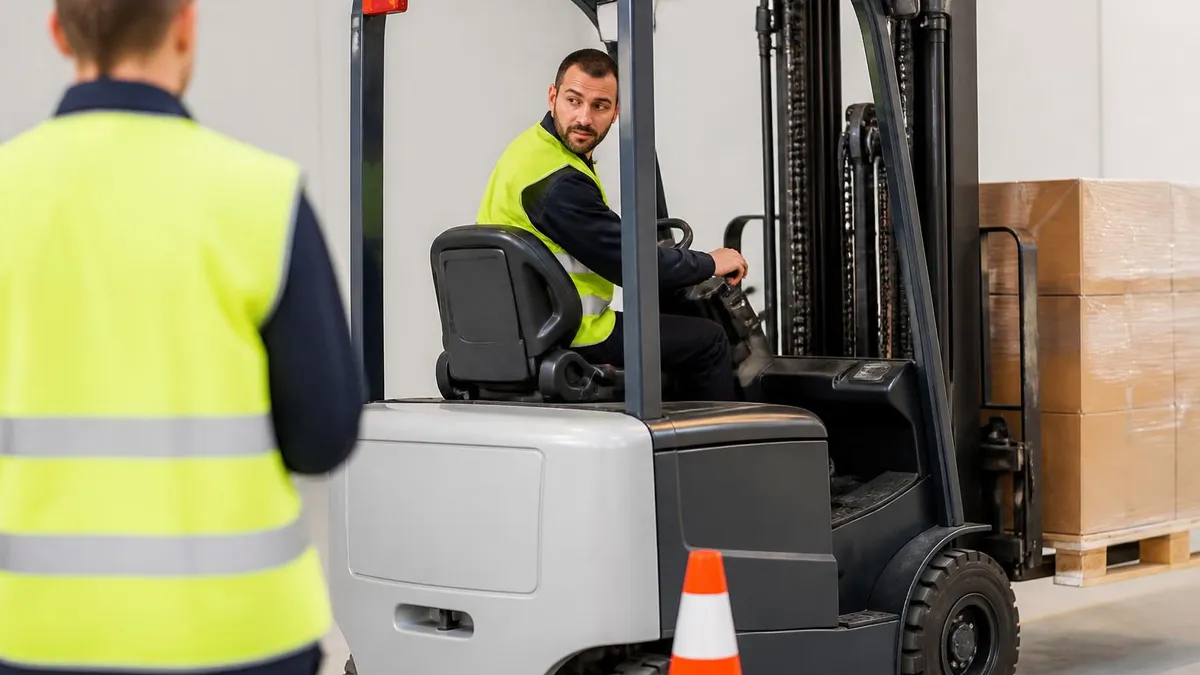
Forklift License vs Certification: OSHA Requirements, Cost, and Training
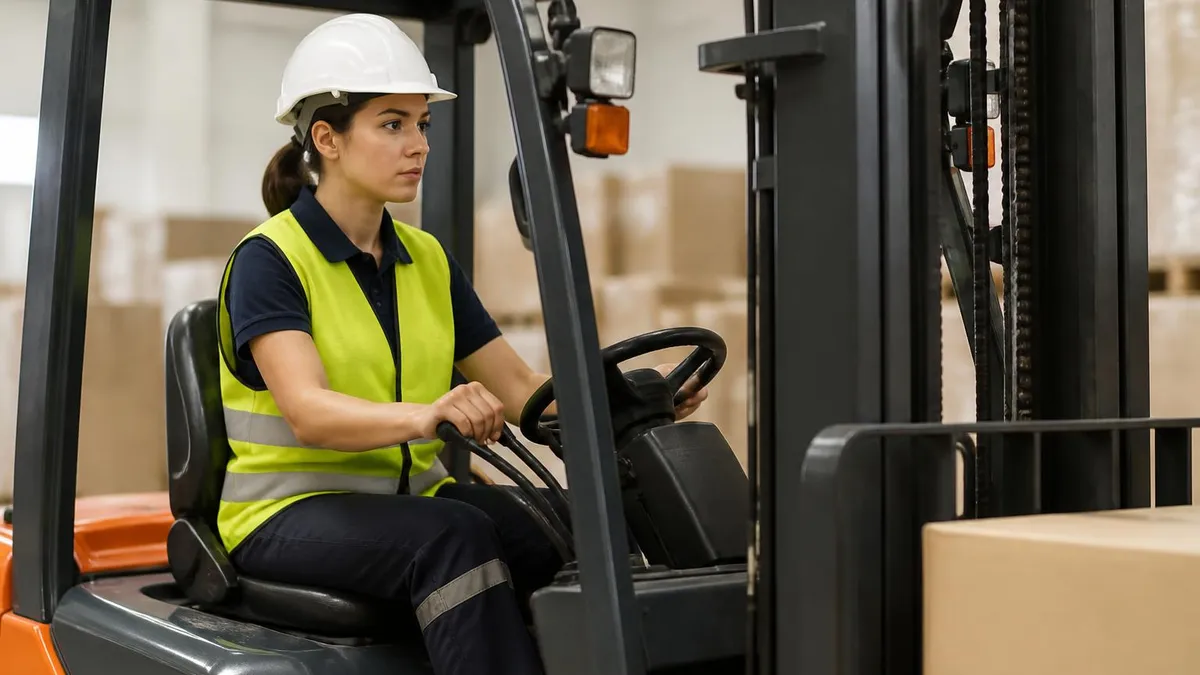
Forklift Price Guide 2026: New, Used, Rental, and Total Cost of Ownership Breakdown

Blue Forklift Light Guide: How Warning Lights and Other Forklift Safety Equipment Protect Pedestrians

Forklift Salary 2026: Complete Guide to Operator Pay, Certifications, and Career Growth

Forklift Maintenance Services: Complete Guide to Costs, Schedules, and Choosing the Right Provider for 2026
Written and edited by Nathan Beja, founder of Practice Test Geeks, with AI assistance. Exam facts are checked against the official sources linked below. Editorial policy
Sources & references
Exam facts on this page (fees, format, dates, passing scores) are checked against these official sources; the date is our last check. Editorial policy
- osha.gov — Test delivery, eligibility, renewal · verified Oct 2026