
1987 Hyster Forklift: Models, Specs, Operator Rules, and Buying Advice 2026
🔎 Learn what a 1987 Hyster forklift can do, how to identify it, and what OSHA requires before you buy, rent, or operate one in the US.

A 1987 Hyster forklift is a piece of industrial history that still shows up in warehouses, lumberyards, and auction listings across the United States. Hyster built trucks tough enough that many units from the Reagan era keep running nearly four decades later. Whether you are weighing a purchase, planning a forklift rental, or simply trying to identify a truck in your shop, this guide explains what a 1987 model typically is, what it can lift, and what rules govern its use today.
Hyster is one of the best-known names among forklifts, and its trucks from the 1980s earned a reputation for simple mechanical designs that ordinary maintenance crews could repair. Browsing the full range of hyster forklift models can feel overwhelming because model names, capacities, and power types vary widely. This article narrows the focus to one model year so you can make decisions based on facts rather than guesswork or seller enthusiasm.
Age alone does not make a truck unsafe, and youth does not make one safe. What matters is condition, documentation, attachments, and the person behind the wheel. A well-maintained 1987 truck with a clear data plate, working safety systems, and a trained forklift operator can be a sound workhorse. A neglected one with leaking hydraulics, cracked forks, and no nameplate is a liability. Learning to tell the difference is the central skill this guide teaches.
You will also see how a vintage truck compares with a modern electric forklift, why a stand up forklift behaves differently from a sit-down counterbalanced truck, and what people mean by a cherry picker forklift. These distinctions matter because buyers often search for one machine and discover that their real need is another. A short comparison now can save thousands of dollars and prevent a dangerous mismatch between the truck and the job.
Federal law adds another layer. Regardless of the truck's age, anyone who drives it at work must complete forklift training and be evaluated under OSHA rules. Employers cannot skip this step because a machine is old, borrowed, or rented for a weekend. Understanding the certification of forklift operators is just as important as understanding carburetors, mast chains, and tire types, and we cover both sides of that equation in detail below.
If you are shopping for a forklift for sale, you will quickly notice that a vintage Hyster looks cheap next to new equipment. The sticker price is only part of the story, though. Parts availability, fuel type, emissions, indoor air quality, and insurance requirements can shift the real cost dramatically. We walk through each of these factors with numbers so you can estimate total cost of ownership before you hand over a deposit or sign a lease.
By the end of this article you will know how to read a Hyster data plate, what to inspect on a truck from this era, when renting makes more sense than buying, and how to prepare for the operator evaluation that OSHA requires. You will also find practice quizzes, a checklist you can print, and answers to the questions buyers and operators ask most often. Let's start with the numbers that frame the topic.
1987 Hyster Forklift by the Numbers
How to Identify a 1987 Hyster Forklift
Find the metal nameplate, usually on the dash, frame, or near the operator seat. It lists the model, serial number, rated capacity, load center, and weight. Photograph it. A missing or painted-over plate is a serious red flag for any buyer or renter.
Hyster serial numbers contain letters and digits that identify the model series and production sequence. Contact a Hyster dealer with the number to confirm the build year and original configuration. Never trust a seller's verbal claim about the year without written confirmation.
Trucks from this era were commonly powered by gasoline, LP gas, or diesel engines, with electric models in separate series. The power type determines where the truck can work. Indoor use, fuel storage, and ventilation rules all depend on this single detail.
Note whether the mast is two-stage or triple-stage, the maximum lift height, and whether tires are cushion or pneumatic. Cushion tires suit smooth indoor floors, while pneumatic tires handle yards and rough pavement. Mismatched equipment limits safe use.
Hyster began in Portland, Oregon, in 1929, and its name came from the word hoister, a nod to the logging winches the company first built. Over the decades the brand grew into one of the largest lift truck makers in North America. Ownership and corporate structure changed several times, and today Hyster operates as part of Hyster-Yale Materials Handling. A truck built in 1987 therefore comes from a very different corporate era than current models.
Many internal combustion trucks of the mid-1980s carried names such as H40XL, H50XL, and H60XL. In that naming pattern, the number generally signals capacity in hundreds of pounds, so an H50XL is commonly a 5,000 pound truck. Treat this as a starting point, not proof. Always confirm capacity on the data plate, because attachments, mast type, and modifications can reduce the actual safe working load well below the nameplate figure.
Capacity is rated at a specific load center, typically 24 inches on standard counterbalanced trucks. If the load's center of gravity sits farther from the fork carriage, the safe capacity drops. For example, a 5,000 pound truck may handle only around 4,000 pounds when the load center moves out to 30 inches. Operators who ignore this relationship risk tipping the truck forward, which is among the most serious forklift accidents.
Engines of the period were generally simple four-cylinder designs with carburetors or basic mechanical governors, paired with powershift transmissions on many models. That simplicity is part of the appeal. Mechanics who worked in the 1980s can often diagnose problems by ear and touch. The tradeoff is emissions. Older gasoline and LP engines produce carbon monoxide, so indoor use demands strong ventilation, regular air monitoring, and a tuned engine to keep exposure within safe limits.
Mast configurations on trucks of this vintage often included two-stage masts that lift to roughly 130 inches and triple-stage masts that reach well above 180 inches while keeping a low collapsed height for trailers and doorways. Free lift, the distance the forks rise before the mast extends, matters in low-clearance spaces. Check that chains are evenly tensioned, rollers move smoothly, and the mast does not drift down under load, which signals worn hydraulic seals.
Safety equipment on a 1987 truck usually falls short of modern expectations. Many lack seat switches, operator presence sensing, strobe lights, backup alarms, or seat belts. None of these are optional if the truck will work around pedestrians. Retrofit kits are widely available, and our guide to forklift safety equipment explains how blue warning lights and alarms protect people on foot. Budget for these additions before you buy.
The OSHA standard 29 CFR 1910.178 applies to powered industrial trucks regardless of age. It requires trucks to be examined before each shift, removed from service if unsafe, and repaired only by authorized personnel. A truck used in hazardous locations must also carry the correct approval designation. A vintage Hyster that cannot show its original markings or a documented repair history may fail a compliance review, so gather paperwork early.
Forklift Rental, Forklift for Sale, and Electric Forklift Options
Forklift rental is often the smartest choice when your need is short or seasonal. Searching for a forklift rental near me usually turns up local dealers who deliver trucks that are inspected, serviced, and covered by a maintenance agreement. Daily rates for a 5,000 pound class truck often run from about $150 to $300, with weekly and monthly discounts that lower the effective cost considerably.
Rental fleets seldom include trucks as old as 1987, because dealers retire aging units for liability and reliability reasons. If you want a vintage Hyster for nostalgia or a low-use shop, you will likely need to buy. Whatever you rent, remember that the contract does not transfer training duty. Your employees still need documented instruction and evaluation before they operate the machine on your site.
Is a 1987 Hyster Forklift Worth Buying?
- +Low purchase price compared with new or late-model used trucks
- +Simple mechanical design that many technicians can repair
- +Rugged frames built for heavy daily use
- +Strong aftermarket parts supply for common wear items
- +Lower depreciation because the value has already bottomed out
- +Easy to add modern safety retrofits like lights and alarms
- −Original parts for some components may be hard to find
- −Older engines produce more emissions than modern units
- −Fuel economy is generally worse than current engines
- −May lack seat belts, operator presence sensing, and alarms
- −Higher risk of hidden wear, leaks, and deferred maintenance
- −Insurers or inspectors may ask for extra documentation
Pre-Purchase Checklist for a Used Forklift for Sale
- ✓Photograph the data plate and confirm model and serial number.
- ✓Verify rated capacity and load center match your needs.
- ✓Inspect forks for cracks, bends, and heel wear.
- ✓Check mast chains, rollers, and cylinders for leaks or drift.
- ✓Examine tires for chunking, flat spots, or cord exposure.
- ✓Test brakes, steering, and parking brake under load.
- ✓Look under the truck for fluid leaks and frame cracks.
- ✓Confirm horn, lights, and backup alarm all work.
- ✓Request maintenance records and the last service date.
- ✓Budget for retrofits and have a technician inspect before payment.
Capacity drops as the load center moves out
A 5,000 pound truck rated at a 24 inch load center does not safely lift 5,000 pounds at every distance. Longer loads, attachments, and tilted forks all reduce real capacity. Always read the data plate and the attachment plate together before you lift.
Anyone who drives a forklift at work in the United States must be trained and evaluated, and that applies to a 1987 Hyster exactly as it does to a brand-new truck. OSHA's rule in 29 CFR 1910.178(l) requires employers to ensure each operator is competent. The standard combines classroom instruction, practical training, and a workplace evaluation. Understanding this framework is the foundation of the certification of forklift operators across every industry.
Many people use the words license and certification interchangeably, but OSHA does not issue a forklift license. Instead, the employer certifies that the operator has completed training and evaluation for the specific type of truck. Our guide on forklift license versus certification explains the distinction clearly. Practically, that means a card from one employer does not automatically transfer to the next job without new evaluation.
Formal instruction typically covers truck controls, stability, load handling, fueling or battery charging, pedestrian safety, and workplace hazards. Practical training means supervised driving, stacking, and maneuvering on the actual equipment type. A person trained on a stand up forklift is not automatically qualified on a counterbalanced Hyster with an internal combustion engine. Each class of truck has different handling characteristics, and training must reflect the specific truck the person will drive.
After initial training, the employer must evaluate the operator's performance at least once every three years. Refresher training is also needed after an accident or near miss, after the operator is observed driving unsafely, or when the workplace changes in a way that affects safe operation. A new type of truck, such as moving from an electric truck to a vintage propane unit, also triggers additional training.
Online forklift training programs can satisfy the classroom portion, but they cannot replace the hands-on evaluation. A fully compliant program ends with a qualified person watching the operator drive the actual truck in the actual workplace. Employers should keep records that include the operator's name, training date, evaluation date, and the evaluator's identity. These records are among the first things inspectors ask for after an incident.
Age matters too. Federal child labor rules generally prohibit workers under 18 from operating forklifts in non-agricultural workplaces, with narrow exceptions for approved training programs. Anyone younger than 18 who is asked to drive a truck should be redirected immediately. Employers who ignore this restriction face significant penalties, and the liability for an injury involving a minor can far exceed any savings from skipping proper staffing.
Career-wise, being a trained forklift operator opens doors in warehousing, manufacturing, retail distribution, and construction. Pay depends on region, shift, and truck type, and specialty equipment often earns a premium. Our forklift salary guide covers current wage ranges and how additional certifications can help you earn more. Training is a small upfront investment that typically pays for itself within the first few weeks of employment.
OSHA training, inspection, and maintenance rules apply to every powered industrial truck, including a 1987 Hyster. Skipping operator evaluation or daily inspections can lead to citations and, more importantly, serious injuries.
Owning a vintage Hyster means owning a maintenance routine. Federal rules require a pre-shift inspection that covers tires, forks, chains, fluid levels, horn, lights, brakes, and steering. Many shops use a printed checklist and keep the signed sheets. For gas and LP models, add a check of fuel lines, the tank mounting, and the engine for leaks. Any defect that affects safety means the truck stays out of service until repaired.
Preventive maintenance schedules for trucks of this age are typically built around operating hours. A common pattern is an oil and filter service every 200 hours, a broader inspection every 500 hours, and a hydraulic and transmission service every 1,000 hours. Heavy use, dust, and extreme temperatures shorten these intervals. Keeping a log of every service makes future resale easier and helps technicians spot patterns before a small problem becomes a major failure.
Choosing a service provider matters as much as the schedule itself. A good shop will quote clearly, use quality parts, and document every repair. Our forklift maintenance services guide compares costs, contract types, and how to evaluate a provider. For older trucks, ask whether the technician has experience with mechanical governors, carburetors, and powershift transmissions, since those skills are less common than they once were.
Parts for a 1987 Hyster come from three main places: the manufacturer's dealer network, aftermarket suppliers, and salvage yards. Wear items such as filters, belts, hoses, brake shoes, and cushion tires are widely available. Specialized components such as older transmissions or control valves may require rebuilding. Before buying a truck, ask a dealer to confirm availability of the specific parts you are most likely to need within the first year.
Fuel and energy costs also shape the economics. An LP-powered truck running full shifts can consume several gallons of propane per day, while an electric forklift uses electricity at a lower per-hour cost but requires a charger, battery maintenance area, and proper ventilation for charging. When you compare a vintage Hyster with a modern electric truck, include fuel, maintenance, downtime, and safety upgrades in the calculation, not only the purchase price.
Insurance and compliance deserve attention before purchase. Some insurers charge more for older equipment or ask for inspection reports and operator training records before issuing a policy. Warehouses with strict safety programs may refuse to allow vintage trucks on site unless they have been retrofitted with current safety devices. Calling your insurer and your site manager before you buy can prevent an expensive truck from becoming a driveway ornament.
Finally, consider the exit plan. A well-documented, well-maintained truck can be resold, while a poorly documented one may struggle to find a buyer. Keep your data plate photos, service records, parts receipts, and operator training logs in one folder. If you decide later to switch to forklift rental or move to newer equipment, that record can add real value, and it demonstrates responsible ownership to auditors and buyers alike.
Start with a clear job description for the truck. Write down the heaviest load, the highest lift, the aisle width, the floor surface, and whether the work is indoors or outdoors. These five facts decide whether a 1987 Hyster, a newer internal combustion truck, an electric forklift, or a stand up forklift is the right tool. Buyers who skip this step often end up with a machine that does not fit their aisles.
Before you commit to a purchase, rent a similar truck for a week. A short forklift rental lets you test real tasks, learn which attachments you need, and see how your team handles the machine. The rental fee is small compared with the cost of buying the wrong truck. If a local dealer offers rent-to-own terms, ask how much of the rental payments apply to the purchase price.
Hire an independent technician to inspect any used truck before you pay. Expect to spend a few hundred dollars for a thorough review that covers the engine, transmission, hydraulics, mast, frame, and safety devices. A technician can often spot cracked welds, worn mast channels, or weak brakes that a casual buyer would miss. Treat the report as a negotiation tool and as protection against surprise repair bills.
Plan operator training before delivery day. Schedule classroom instruction, practical driving practice, and a documented evaluation so that nobody climbs onto the truck untrained. Use free practice questions to help new operators learn terms such as load center, tip-over, and stability triangle. Operators who study the material in advance usually perform better in the hands-on evaluation and make fewer mistakes during their first weeks on the job.
Create a daily inspection routine from day one. Print a checklist, place it where operators pick up the keys, and require a signature before the truck moves. Train supervisors to remove any truck from service when a defect appears. Over time, this habit reduces breakdowns, protects your insurance coverage, and creates a paper trail that shows you took safety seriously if an inspector ever visits.
Budget for safety upgrades immediately. A strobe or blue warning light, a backup alarm, a seat belt, and a fire extinguisher are inexpensive compared with the cost of one injury. Mark pedestrian walkways, install convex mirrors at blind corners, and post speed limits. A vintage truck can work safely in a modern facility when the environment around it is designed to protect the people who share the space.
Finally, keep learning. Forklift rules, technology, and best practices continue to change, and a refresher every year is worth the time even though OSHA only requires evaluation every three years. Take the practice quizzes below, review the answers to the questions you miss, and revisit the emergency procedures section. Operators who treat training as an ongoing habit tend to be safer, more productive, and more valuable to their employers.
Forklift Questions and Answers
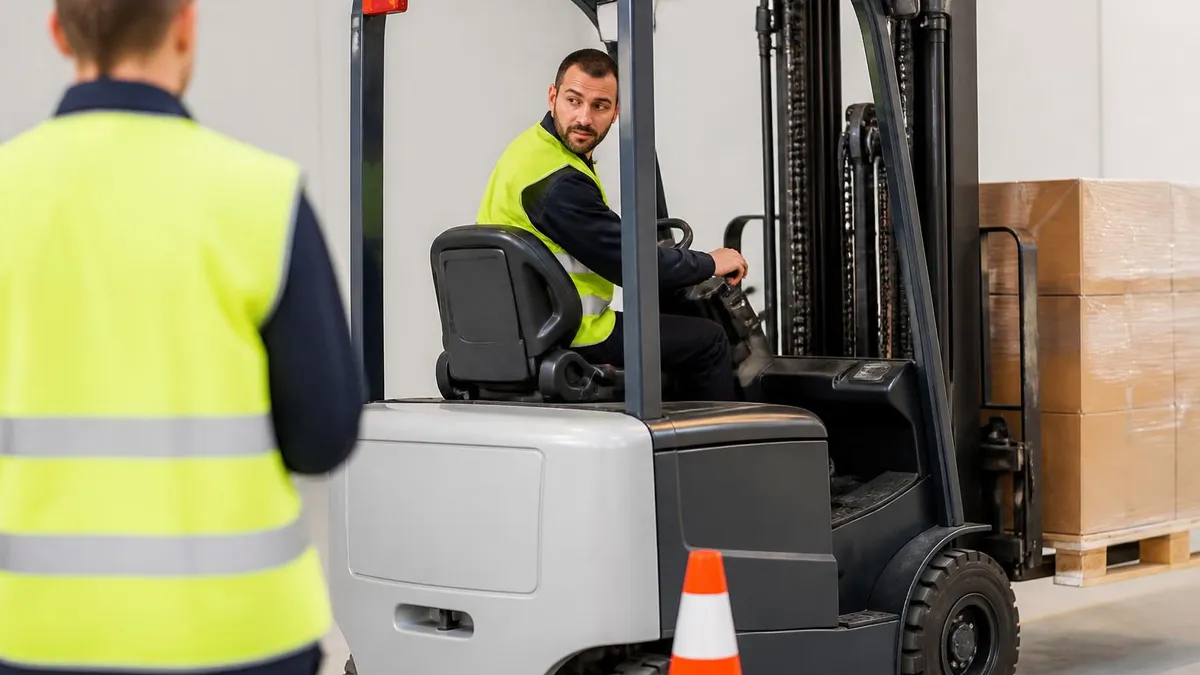
Forklift License vs Certification: OSHA Requirements, Cost, and Training
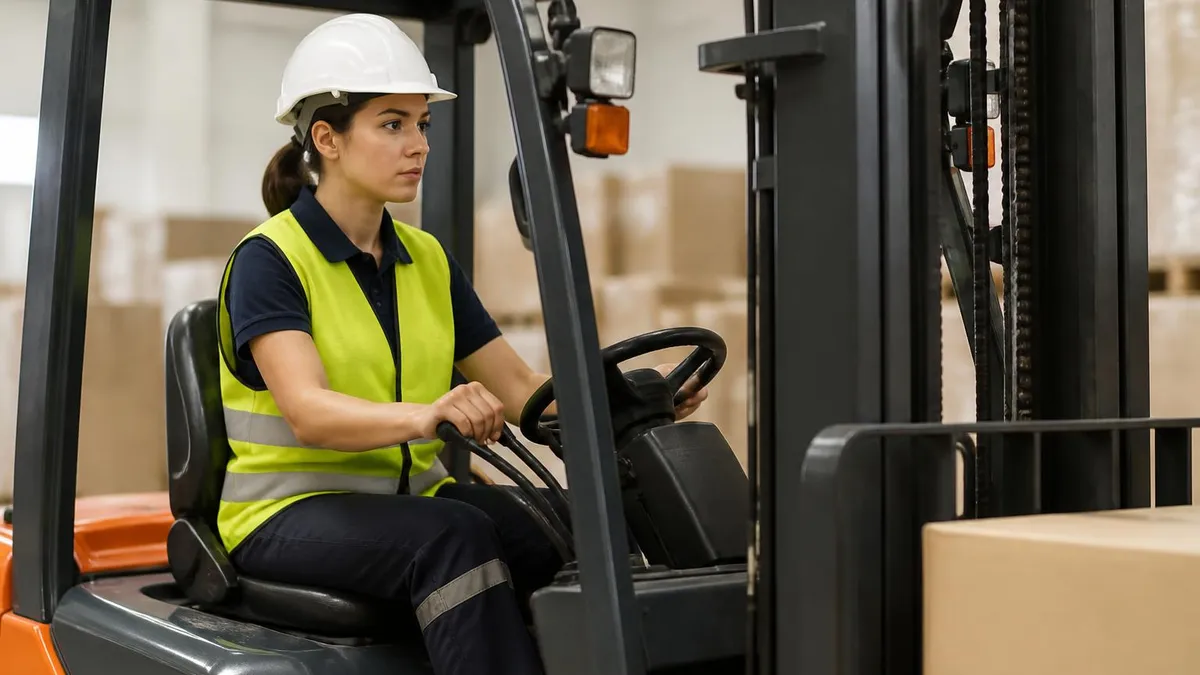
Forklift Price Guide 2026: New, Used, Rental, and Total Cost of Ownership Breakdown

Blue Forklift Light Guide: How Warning Lights and Other Forklift Safety Equipment Protect Pedestrians

Forklift Salary 2026: Complete Guide to Operator Pay, Certifications, and Career Growth

Forklift Maintenance Services: Complete Guide to Costs, Schedules, and Choosing the Right Provider for 2026
How this page was made: written with AI tools and published by Nathan Beja, founder of Practice Test Geeks, who is responsible for its content. Exam facts are checked against the official sources listed below. Not reviewed by a subject-matter expert. Editorial policy
Sources & references
Exam facts on this page (fees, format, dates, passing scores) are checked against these official sources; the date is our last check. Editorial policy
- osha.gov — Test delivery, eligibility, renewal · verified Oct 2026