
Psychological First Aid Training: Complete Guide to Mental Health First Aid, Wilderness First Aid, and Emergency Preparedness
Master psychological first aid training, mental health first aid, and wilderness first aid. Complete guide with certification steps, tips & free practice...

Psychological first aid training has emerged as one of the most critical skill sets for emergency responders, healthcare workers, educators, and everyday community members in the United States. Unlike traditional physical first aid, which focuses on treating wounds, burns, and cardiac events, psychological first aid (PFA) equips helpers with a structured, evidence-based approach to support individuals who have experienced traumatic events, disasters, or mass casualty incidents. The need for trained PFA providers has grown dramatically as communities face increasingly frequent natural disasters, public health emergencies, and acts of violence.
The framework for psychological first aid was developed collaboratively by the National Child Traumatic Stress Network and the National Center for PTSD, and it is now endorsed by the World Health Organization, FEMA, and the American Red Cross. When you complete psychological first aid training, you learn eight core actions: contact and engagement, safety and comfort, stabilization, information gathering, practical assistance, connection with social supports, information on coping, and linkage with collaborative services. These actions are not rigid steps but flexible tools that skilled helpers adapt to each unique situation they encounter.
Mental health first aid training complements psychological first aid by providing a broader framework for recognizing mental health and substance use challenges in everyday settings — not just disasters. The mental health first aid curriculum, developed in Australia and adapted for the US market by the National Council for Mental Wellbeing, has now trained over 3 million Americans. This widespread adoption reflects a growing national consensus that mental health literacy is just as important as physical health literacy for a prepared and resilient citizenry.
Many people first encounter first aid training through workplace requirements, community volunteer programs, or school-based initiatives. Youth mental health first aid programs have expanded significantly in recent years, with school districts across the country mandating training for teachers, counselors, and administrative staff. These programs teach adults how to identify warning signs of mental health crises in young people and provide initial support while connecting them with professional resources. The training typically takes eight hours and covers depression, anxiety disorders, trauma, eating disorders, and substance use.
For those who spend time in remote settings, wilderness first aid adds another critical dimension to emergency preparedness. Standard first aid protocols assume emergency medical services are minutes away, but in backcountry environments, help may be hours or even days away. Wilderness first aid courses range from two-day basic certifications to intensive Wilderness First Responder (WFR) programs spanning 70 to 80 hours of instruction. These courses teach improvised treatment techniques, patient assessment in austere environments, and the psychological management of injured or frightened companions who may experience acute stress reactions far from definitive care.
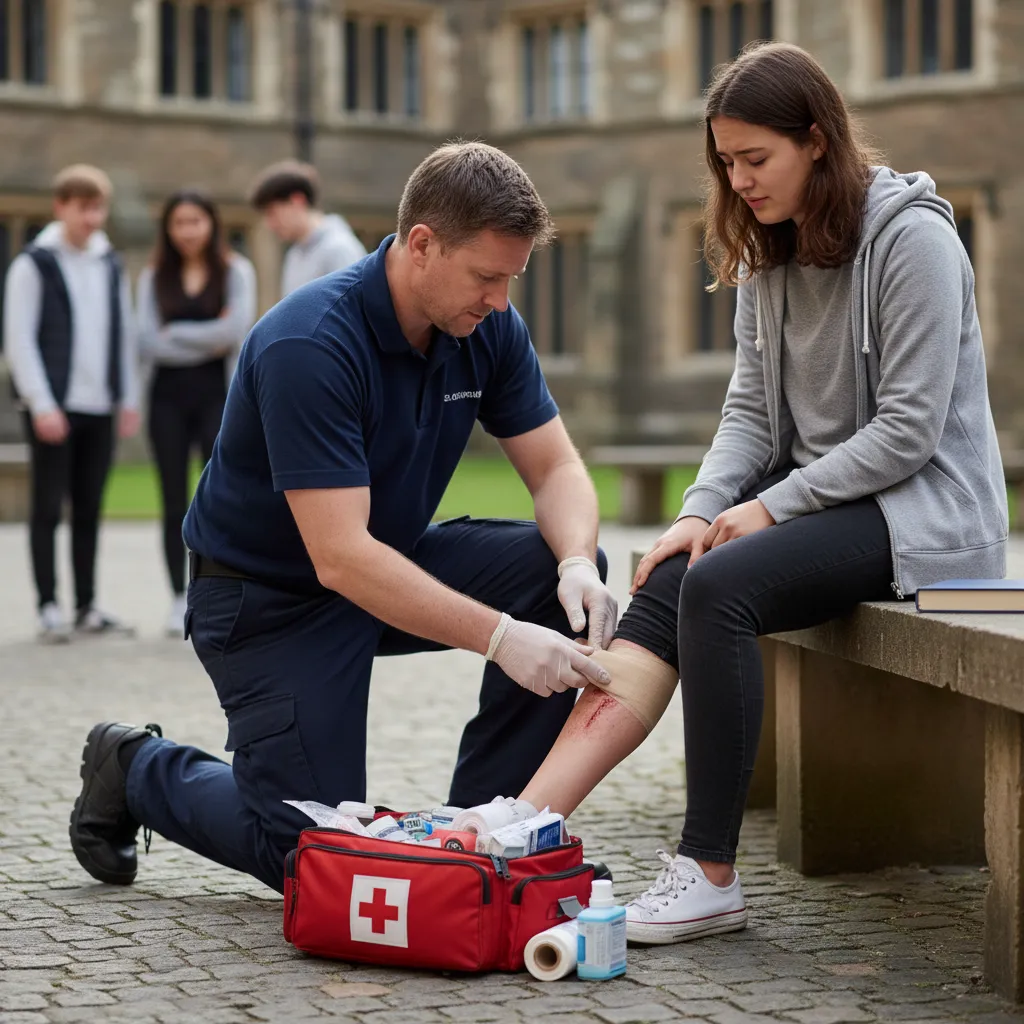
Assembling proper first aid kits is another foundational element of emergency preparedness that dovetails naturally with both physical and psychological readiness. Well-stocked first aid kits should include not only bandages, antiseptics, and medications, but also reference cards for psychological first aid techniques, crisis hotline numbers, and written guides for helping distressed individuals. The American Red Cross recommends maintaining both a home kit and a portable vehicle kit, with contents reviewed and refreshed annually to ensure medications have not expired and supplies remain adequate for your household size.
Whether you are a seasoned emergency medical technician expanding your skill set, a teacher seeking to better support students in crisis, or a parent building a safer home environment, this comprehensive guide will walk you through every aspect of psychological first aid training, mental health first aid certification, wilderness protocols, and practical preparedness strategies. By the end, you will have a clear roadmap for obtaining meaningful credentials and applying life-saving psychological support techniques in your community.
Psychological First Aid Training by the Numbers

Psychological First Aid Training Programs: What to Expect
The foundational 6-hour online or in-person course that covers the eight core PFA actions. Designed for first responders, disaster relief workers, and community volunteers who may encounter survivors of traumatic events in organized emergency settings.
An 8-hour certification course for the general public, covering recognition and initial response to mental health and substance use challenges. Available in Adult, Youth, Teen, and specialized versions including Higher Education and Public Safety editions.
A specialized 8-hour program training adults to support young people ages 12–18 experiencing mental health or substance use challenges. Widely adopted by school districts, faith communities, and youth-serving organizations across all 50 states.
Two-day (16-hour) basic certification or intensive 70-80 hour Wilderness First Responder program. Covers patient assessment, improvised treatment, evacuation decisions, and psychological support in remote environments with delayed access to EMS.
An intermediate-level course offered through the National Child Traumatic Stress Network for providers working with survivors weeks or months after disaster. Builds on PFA with more in-depth skills for addressing ongoing distress and functional impairment.
Understanding the core skills taught in mental health first aid training begins with recognizing the difference between a mental health problem and a mental health crisis. A mental health problem — such as persistent depression, generalized anxiety, or a developing substance use disorder — may unfold gradually over weeks or months and requires professional assessment and ongoing treatment.
A mental health crisis, by contrast, is an acute situation in which someone's behavior puts themselves or others at risk and demands immediate supportive intervention. Mental health first aid training prepares you to respond effectively to both scenarios while maintaining appropriate boundaries as a non-clinical helper.
The ALGEE action plan is the backbone of the US Mental Health First Aid curriculum. ALGEE stands for: Assess for risk of suicide or harm, Listen nonjudgmentally, Give reassurance and information, Encourage appropriate professional help, and Encourage self-help and other support strategies. This mnemonic gives trained helpers a memorable framework they can apply in high-stress situations when analytical thinking may be impaired. Research published in the journal Psychiatry Research found that MHFA training significantly improved participants' knowledge, attitudes, and helping behaviors compared to control groups, with benefits persisting at six-month follow-up.
One of the most powerful techniques taught in psychological first aid training is active listening — a deceptively simple skill that many people underestimate. Active listening involves maintaining appropriate eye contact, using open body language, reflecting back what you hear, and resisting the urge to immediately offer solutions or reassurances. In the immediate aftermath of a traumatic event, survivors most need to feel heard and safe rather than advised. Research consistently shows that feeling genuinely understood by another person activates the parasympathetic nervous system, reducing physiological stress responses and helping the brain begin to process traumatic memories more adaptively.
Stabilization is another foundational technique in PFA that first aiders learn to use when someone appears overwhelmed, disoriented, or dissociated after a traumatic event. Grounding exercises — such as asking the person to name five things they can see, four things they can touch, three things they can hear, two things they can smell, and one thing they can taste — help bring attention back to the present moment and interrupt the stress response cycle.
These sensory grounding techniques are evidence-based, require no equipment, and can be administered by any trained helper in virtually any setting from a disaster evacuation center to a school gymnasium.
Connecting survivors with their existing social support networks is among the most impactful actions a PFA provider can take. Research on resilience consistently identifies strong social support as the single greatest predictor of positive long-term outcomes following traumatic events.
PFA-trained helpers are taught to facilitate rather than replace natural support systems — helping survivors contact family members, connect with faith communities, or link with peer support groups rather than fostering dependency on the PFA provider. This empowerment approach respects survivors' autonomy and dignity while acknowledging that professional mental health treatment may be needed for those who develop acute stress disorder or PTSD.
Safety planning is a skill that overlaps both physical and psychological first aid, and it is emphasized heavily in both mental health first aid training and standard PFA curricula. When someone expresses suicidal ideation or intent to harm others, trained first aiders learn to ask directly about plans and means, take all statements seriously, remove or restrict access to lethal means where possible, and facilitate warm handoffs to crisis services such as the 988 Suicide and Crisis Lifeline.
Many people fear that asking directly about suicide will plant the idea, but extensive research has definitively shown this is not the case — direct inquiry actually reduces distress and increases help-seeking behavior.
Building a personal toolkit for psychological first aid means practicing these skills before you need them. Role-playing crisis conversations with colleagues, attending community trainings offered by the Red Cross or your local Mental Health America affiliate, and reviewing case studies of effective PFA interventions all help cement the knowledge and emotional preparedness needed to perform well under pressure.
Many providers find that the first aid beauty ultra repair cream of emotional healing — calm, consistent, compassionate presence — is what survivors remember long after the specific techniques have faded from memory. Preparing yourself psychologically to offer that presence is as important as memorizing any action plan or acronym.
Wilderness First Aid and Specialized PFA Training Tracks
Wilderness first aid courses fill a critical gap between standard urban first aid training and full paramedic certification. In backcountry settings — national parks, remote hiking trails, white-water rivers, and international expedition environments — help may be hours or days away, requiring improvised patient assessment and extended care techniques that standard 8-hour first aid courses never address. Courses range from 16-hour basic WFA to 70-hour Wilderness First Responder certifications offered by NOLS, Wilderness Medical Associates, and SOLO.
The psychological dimension of wilderness emergencies is consistently underestimated by novice outdoors enthusiasts. An injured hiker who is frightened, in pain, and separated from their gear in deteriorating weather faces acute psychological stressors that can worsen their physical condition through panic-induced hyperventilation, poor decision-making, and increased pain perception. Wilderness first aid training teaches bystanders how to manage their own stress response, establish calm authority with patients, communicate realistic reassurance without making promises, and maintain psychological support throughout potentially prolonged evacuation scenarios that can last many hours.

Psychological First Aid Training: Benefits and Limitations
- +Equips non-clinicians to provide meaningful support immediately after traumatic events before professional help arrives
- +Evidence-based framework endorsed by WHO, FEMA, American Red Cross, and major professional mental health associations
- +Relatively brief training commitment (6-8 hours) yields immediately applicable skills for everyday and emergency situations
- +Reduces stigma around mental health by normalizing supportive conversations in schools, workplaces, and communities
- +Teaches transferable communication skills — active listening, nonjudgmental presence — valuable far beyond crisis situations
- +Certification programs available online, in-person, and in hybrid formats to accommodate diverse schedules and learning preferences
- −PFA training does not qualify recipients to diagnose mental health conditions or provide therapy — scope of practice is limited
- −Skills may deteriorate without regular practice, refresher training, and real-world application opportunities
- −Cultural competency gaps exist in some curricula, which may not fully address diverse trauma responses across ethnic and linguistic communities
- −Helpers may underestimate their own vulnerability to secondary traumatic stress, especially without adequate organizational support
- −Certification renewal requirements vary by program, creating confusion about credential validity and continuing education obligations
- −Access to training remains uneven, with rural communities and low-income populations often having fewer training opportunities available to them
Psychological First Aid Training Certification Checklist
- ✓Choose the right program for your role: PFA for disaster responders, MHFA for everyday community settings, YMHFA for school or youth environments
- ✓Register through an accredited provider: National Council for Mental Wellbeing (MHFA), NCTSN, NOLS, or American Red Cross
- ✓Complete the required pre-course reading or online modules before attending in-person or live virtual training
- ✓Bring valid ID and any prerequisite documentation required by your employer or credentialing body
- ✓Actively participate in all role-play exercises and scenario simulations — these build muscle memory for high-stress situations
- ✓Take notes on the ALGEE or eight-action PFA framework and review them within 48 hours of course completion for maximum retention
- ✓Download or print your certificate immediately after course completion and store digital copies in at least two locations
- ✓Share your new skills by educating colleagues, family members, or community members about mental health warning signs and resources
- ✓Schedule your recertification reminder — most MHFA certifications are valid for three years, requiring a renewal course to maintain
- ✓Practice at least one skill monthly: active listening conversations, grounding exercises, or crisis line number drills to maintain readiness
Presence Over Perfection: What Survivors Actually Need
Research consistently shows that trauma survivors rate calm, compassionate presence as more helpful than any specific technique. You do not need to say the perfect words — you need to show up, stay present, listen without judgment, and help connect people with practical resources and natural support systems. Psychological first aid training gives you the framework; your humanity provides the healing.
Applying psychological first aid in real-world emergencies requires preparation that goes well beyond memorizing an action plan. The first challenge most PFA providers face is managing their own acute stress response so they can remain calm and effective while surrounded by chaos, suffering, and uncertainty. Emergency response training programs increasingly incorporate stress inoculation exercises — controlled exposure to simulated high-stress scenarios — to help providers build the physiological and psychological resilience needed to function effectively when they encounter actual disasters or mass casualty events.
Contact and engagement — the first core action in the WHO PFA model — seems simple but requires nuanced judgment in practice. Approaching a trauma survivor too quickly or too directly can feel intrusive and may cause them to withdraw. PFA-trained helpers learn to approach slowly, introduce themselves calmly, explain their role, and follow the survivor's lead about whether and when they want to engage. In large-scale disaster settings such as evacuation centers or reunification sites, helpers may work in teams, with some members doing active outreach and others stationed near food, water, and comfort supplies where survivors naturally congregate.
Safety and comfort — the second core PFA action — encompasses both physical and psychological dimensions. On the physical side, this means helping survivors access shelter, food, water, blankets, medications, and communication tools to reach family members.
On the psychological side, it means providing accurate, calm information about what has happened and what is being done to help, correcting rumors that may be increasing survivors' distress, and facilitating contact with loved ones whenever possible. Research on post-disaster psychological outcomes consistently shows that uncertainty is one of the most powerful drivers of acute stress reactions, making accurate information provision a genuinely therapeutic act.
Information gathering — the fourth PFA action — involves assessing survivors' immediate needs, concerns, and prior exposures to help prioritize assistance. Skilled PFA providers learn to gather this information through conversation rather than formal assessment, using open-ended questions and empathic listening to understand each person's unique situation.
A survivor who lost their home needs different practical assistance than one who witnessed violence but has secure housing. A parent who cannot locate their child has different psychological needs than someone who has already reunited with family. Tailoring assistance to individual circumstances requires asking, listening, and remaining flexible rather than applying a one-size-fits-all protocol.
Practical assistance — the fifth PFA action — often has the most immediate psychological benefit for survivors who feel helpless and overwhelmed. Helping someone charge their phone so they can reach family, navigating bureaucratic processes to access emergency funds, or simply providing a detailed map of shelter and resource locations can restore a sense of agency and control that traumatic events strip away. PFA providers are trained to offer concrete help proactively rather than waiting for survivors to ask, recognizing that people in shock may not know what they need or may be reluctant to make requests of strangers.
Linkage with collaborative services represents the culmination of PFA — connecting survivors with professional resources, community supports, and longer-term recovery services before the acute emergency phase ends. This requires PFA providers to maintain up-to-date knowledge of local mental health resources, substance use treatment services, domestic violence programs, faith-based community supports, and government assistance programs.
Many communities now maintain disaster resource hotlines and mobile apps that aggregate this information, making it easier for PFA providers in the field to quickly match survivors with relevant services. The first aid beauty face moisturizer recall of effective PFA is this warm handoff — ensuring that the bridge to professional care is not just built but walked across together.
Self-care for psychological first aid providers is not optional — it is a professional and ethical obligation that directly affects the quality of care survivors receive. Secondary traumatic stress, compassion fatigue, and burnout are occupational hazards for anyone doing sustained PFA work, whether as a professional disaster responder or a community volunteer.
Evidence-based protective factors include regular peer debriefing sessions after challenging deployments, maintaining clear boundaries between work and personal life, engaging in regular physical exercise, maintaining social connections outside the disaster response context, and seeking professional mental health support without stigma when needed. Organizations that deploy PFA providers have a corresponding obligation to create cultures that support helper wellbeing rather than normalizing or glorifying self-sacrifice.

Psychological first aid training does not qualify you to diagnose mental health conditions, provide therapy, or prescribe medications. If someone you are supporting shows signs of a mental health emergency — including active suicidal ideation with plan and means, psychosis, or severe dissociation — connect them immediately with licensed mental health professionals or emergency services. Your role is to provide initial support and facilitate the bridge to professional care, not to replace it.
Preparing for psychological first aid certification exams and competency assessments requires a different approach than studying for knowledge-based multiple-choice tests. While some PFA programs do include written knowledge checks covering terminology, the eight core actions, and legal considerations, the more meaningful assessments involve observed performance in role-play scenarios where evaluators assess your ability to apply skills naturally under simulated pressure. This means that effective study combines content review with active practice — reading the manual is not enough if you have never actually tried to actively listen to someone in distress while managing your own emotional reactions.
For mental health first aid certification, the eight-hour course itself serves as the primary assessment vehicle. Participants are evaluated on their engagement with course content, participation in role-play exercises, and demonstrated understanding of the ALGEE action plan. To get the most from this training day, arrive well-rested, review the pre-reading materials thoroughly, and approach role-play exercises with genuine engagement rather than self-conscious reluctance. Many participants report that the role-play simulations — initially intimidating — become the most valuable learning experiences of the entire course, revealing their default communication patterns and creating space for targeted skill development.
Knowledge retention after first aid training of any kind declines rapidly without deliberate practice and refresher exposure. Studies of CPR retention, for example, show that skill quality degrades measurably within three to six months of initial training without practice. The same principle applies to psychological first aid skills. To maintain certification competency between renewal dates, many experienced PFA providers create regular practice opportunities — conducting brief active listening exercises with colleagues, reviewing case studies from published disaster response literature, or participating in community emergency response drills that include psychological support components alongside physical first aid stations.
Building your first aid knowledge base also means staying current with evolving research on trauma, resilience, and psychological recovery. The field has advanced significantly in the past two decades, with neuroscience research illuminating the biological mechanisms of traumatic stress and randomized controlled trials testing the effectiveness of various early intervention approaches. Resources such as the National Child Traumatic Stress Network's free online learning center, the Substance Abuse and Mental Health Services Administration's Disaster Technical Assistance Center, and peer-reviewed journals like Psychological Trauma: Theory, Research, Practice, and Policy provide ongoing professional development opportunities that complement formal certification training.
Integrating first aid knowledge across physical and psychological domains creates the most capable and versatile emergency helpers. Someone who knows how to control bleeding, recognize the signs of shock, perform CPR, and manage acute traumatic stress reactions is exponentially more valuable in a crisis than someone trained in only one of these domains. Consider structuring your training trajectory to build competency in physical first aid, psychological first aid, and — if you spend time in remote environments — wilderness first aid, creating a comprehensive skill portfolio that prepares you for the full spectrum of emergencies you might realistically encounter.
Practice tests and knowledge assessments play an important role in consolidating first aid learning, even when the primary certification does not include a formal written exam. Using practice questions to test your knowledge of PFA principles, MHFA protocols, and wilderness first aid procedures helps identify knowledge gaps before they matter in real emergencies. Our comprehensive practice test library covers all major domains of first aid knowledge, from bleeding control and airway management to the nuances of crisis communication and disaster resource navigation. Regular self-testing using these resources is one of the most evidence-based study strategies available for any certification exam.
The investment you make in psychological first aid training returns dividends not only in emergency situations but in everyday life. The active listening skills, emotional regulation techniques, and crisis de-escalation approaches taught in PFA and MHFA courses improve relationships, enhance professional communication, and build the kind of psychological safety that allows the people around you to thrive.
When you become a certified psychological first aid provider, you are not just preparing for disasters — you are becoming a more present, empathic, and effective human being in every context you inhabit. That transformation, multiplied across millions of trained community members, is how psychological first aid is quietly building a more resilient America, one conversation at a time.
Practical preparation for any first aid certification — psychological or physical — begins with assembling the right study materials and establishing a consistent review schedule in the weeks before your course date. For mental health first aid, the National Council for Mental Wellbeing provides free pre-course materials through their online participant portal, including reading assignments that preview the ALGEE framework, video case studies demonstrating effective and ineffective crisis responses, and self-reflection exercises that help participants identify their existing helping strengths and communication blind spots before arriving at the training day.
For those pursuing more advanced credentials such as Wilderness First Responder or Psychological Recovery Skills certification, structured study schedules become even more important given the volume of content covered. A typical WFR preparation schedule spans two to three weeks before the course, with daily review of patient assessment systems, medical emergencies, environmental hazards, and the psychological aspects of wilderness emergencies. Creating study cards for anatomical terms, medication dosages, and treatment decision algorithms helps build the rapid recall needed when applying these skills under field conditions with a patient who needs immediate care.
Baby first aid kit preparation represents a practical application of first aid knowledge that every parent and caregiver should prioritize. Standard infant and toddler first aid kits differ meaningfully from adult kits, requiring age-appropriate fever reducers such as infant acetaminophen or ibuprofen (for children over six months), digital rectal thermometers for accurate temperature measurement in infants, sterile saline drops for nasal congestion, and pediatric oral rehydration solutions.
The psychological dimension of baby first aid also matters — parents who have practiced infant CPR and know what to do in common pediatric emergencies are calmer and more effective responders when their child is actually in distress.
Community preparedness exercises offer invaluable opportunities to practice first aid skills in realistic group settings that simulate the confusion and time pressure of actual emergencies. Many local fire departments, Red Cross chapters, and Community Emergency Response Teams (CERT) organize regular tabletop exercises and full-scale drills that combine physical first aid, search and rescue, and psychological first aid components. Participating in these exercises not only sharpens your individual skills but also builds the inter-agency relationships and communication protocols that determine how effectively communities respond when real disasters strike.
Documentation and reporting skills are often overlooked components of first aid training that become critically important in organized emergency response settings. PFA providers working in formal disaster response contexts are typically required to document their contacts with survivors using standardized forms that capture presenting needs, actions taken, and referrals made.
This documentation serves multiple purposes: it enables continuity of care when survivors transition between helpers, supports after-action review and quality improvement, and creates records that may be needed for legal or insurance purposes. Training yourself to document accurately and efficiently — without letting documentation interfere with the quality of the human connection you are providing — is a genuine professional skill.
The intersection of digital technology and psychological first aid is an evolving frontier that is reshaping how PFA training is delivered and how PFA services are provided. Mobile applications like the FEMA app, the Red Cross Emergency app, and various state-specific disaster preparedness tools now include PFA reference guides, crisis resource directories, and self-help exercises that trained providers can share with survivors.
Telehealth platforms have enabled remote delivery of psychological support to disaster survivors who cannot access in-person services due to geographic isolation, mobility limitations, or continued infrastructure disruptions. And social media monitoring tools help disaster response organizations identify community members expressing acute distress and proactively route PFA providers to those in greatest need.
Regardless of which specific certification path you choose — standard PFA, mental health first aid, youth mental health first aid, or wilderness first aid — the commitment you make to this training represents an investment in both your community's resilience and your own personal growth.
The skills you develop through structured first aid education will be called upon in moments that matter enormously: when a colleague breaks down in the conference room, when a hiker in your group twists an ankle miles from the trailhead, when a neighbor's teenager knocks on your door in crisis at midnight. Being ready for those moments is not about being a hero — it is about being the kind of neighbor, colleague, and community member who makes the world a measurably safer and more humane place for everyone around you.
First Aid Questions and Answers


About the Author

Registered Nurse & Healthcare Educator
Johns Hopkins University School of NursingDr. Sarah Mitchell is a board-certified registered nurse with over 15 years of clinical and academic experience. She completed her PhD in Nursing Science at Johns Hopkins University and has taught NCLEX preparation and clinical skills courses for nursing students across the United States. Her research focuses on evidence-based exam preparation strategies for healthcare certification candidates.
Join the Discussion
Connect with other students preparing for this exam. Share tips, ask questions, and get advice from people who have been there.
View discussion (5 replies)