
First Aider Training: Complete Guide to Certification, Skills, and Emergency Preparedness
Master first aider training: certification paths, mental health first aid, wilderness first aid, first aid kits & more. ✅ Free practice tests included.

First aider training is one of the most valuable skills any person can acquire, transforming ordinary individuals into lifesaving responders during the critical minutes before emergency services arrive. Whether you are pursuing workplace certification, community preparedness, or personal confidence in emergencies, structured first aider training equips you with the knowledge and muscle memory to act decisively when seconds count. From controlling severe bleeding to managing cardiac arrest, trained first aiders reduce mortality and improve outcomes in workplaces, schools, and public spaces across the United States every single day.
When most Americans hear the phrase "first aid beauty," they may think of the popular skincare brand known for its soothing formulations — but in the emergency preparedness world, first aid beauty refers to the elegance of a well-executed response under pressure. Just as the brand's products address skin emergencies with precision and care, certified first aiders address medical emergencies with confidence, speed, and skill. Bridging the gap between layperson bystander and trained responder is exactly what first aider training programs are designed to do, and this guide will walk you through every step of the process.
The landscape of first aider training in the US has expanded dramatically over the past decade. Traditional CPR and bleeding control courses are now complemented by mental health first aid programs, wilderness response certifications, pediatric emergency training, and even virtual reality simulation courses. Employers in construction, education, hospitality, manufacturing, and healthcare sectors are now legally required in many states to maintain a minimum ratio of certified first aiders on every shift, making this training not just personally enabling but professionally essential and economically significant.
Understanding which certification pathway is right for you depends on your role, your workplace environment, and the types of emergencies most likely in your setting. A schoolteacher in suburban Ohio faces very different emergency scenarios than a forest ranger in Montana or a factory floor supervisor in Texas.
Each environment demands a tailored set of skills, and modern first aider training programs have evolved to meet these diverse needs. This guide explores the full spectrum of training options, from basic adult first aid to mental health crisis intervention and remote wilderness response, so you can select the program that best fits your life and responsibilities.
Preparedness is not a passive state — it requires deliberate practice, periodic refreshers, and an honest assessment of the gaps in your current knowledge. Even experienced first aiders who completed their certification several years ago may be unaware of updated protocols for opioid overdose response, updated guidelines for tourniquet application, or revised pediatric CPR compression ratios published by the American Heart Association. Staying current with evolving best practices is a professional obligation for anyone who holds a first aider certificate and a moral obligation for anyone who wants to be genuinely helpful in a crisis.
This comprehensive guide is designed for anyone at any stage of their first aid journey — whether you are taking your very first certification course, preparing to renew an expiring certificate, or looking to expand your skills into specialized areas like first aid beauty face moisturizer recall awareness and product safety incidents.
We have organized the content into clear sections covering training types, costs, skill development, study strategies, and practice resources so you can move efficiently from interest to certification. By the time you finish reading, you will have a clear, actionable roadmap to becoming a confident and competent first aider.
Throughout this guide, you will also find links to free practice quizzes, study schedules, and related resources that will reinforce your learning and help you pass any required assessments with confidence. The goal is not just to earn a certificate — it is to genuinely internalize the skills so that when a real emergency occurs, your training kicks in automatically, calmly, and effectively. Let's begin building that foundation right now.
First Aider Training by the Numbers

Types of First Aider Training Programs
The foundational level covering CPR, AED use, choking response, bleeding control, and basic wound care. Ideal for general workplace compliance, parents, teachers, and community members seeking core emergency response skills. Typically completed in 4–8 hours.
An 8-hour certification course teaching adults to recognize signs of mental health crises, substance use disorders, and suicidal ideation. Participants learn the ALGEE action plan to provide initial support until professional help is available. Widely required in schools and HR departments.
A 16–70+ hour program designed for outdoor guides, camp counselors, and backcountry travelers. Covers patient assessment, improvised splinting, hypothermia management, and evacuation decision-making in settings where EMS response may be hours or days away.
Specialized training focused on infant and child emergencies including pediatric CPR ratios, choking in infants, febrile seizure management, and age-specific medication dosing guidelines. Required for daycare workers, preschool staff, and pediatric healthcare volunteers.
A 40–80 hour course bridging basic first aid and EMT-level care. Covers advanced assessment, oxygen administration, IV fluid basics, and multi-casualty triage. Often required for industrial safety officers, law enforcement, and occupational health coordinators.
Mental health first aid training has emerged as one of the fastest-growing sectors in the US emergency preparedness landscape, and for good reason. The National Alliance on Mental Illness estimates that one in five American adults experiences a mental health condition in any given year, yet fewer than half receive professional treatment. Trained mental health first aiders fill a critical gap, providing initial support, reducing stigma, and connecting individuals in crisis to appropriate professional resources before situations escalate into self-harm, violence, or acute psychiatric episodes requiring emergency hospitalization.
The standard Mental Health First Aid course, developed in Australia and adapted for the US by the National Council for Mental Wellbeing, is an eight-hour evidence-based program that has certified over three million Americans since its domestic launch. The curriculum uses the ALGEE action plan — Assess for risk, Listen nonjudgmentally, Give reassurance, Encourage professional help, and Encourage self-help strategies — to give participants a memorable, repeatable framework. Youth Mental Health First Aid is a parallel track specifically designed for adults who work with adolescents, incorporating developmentally appropriate communication strategies and school-specific crisis protocols that differ meaningfully from adult interventions.
Wilderness first aid training fills a very different but equally important niche in the first aider ecosystem. When you are three miles from the nearest trailhead and a hiking partner fractures an ankle, standard urban first aid protocols — call 911, keep the patient still, wait for EMS — simply do not apply.
Wilderness first aid programs taught by organizations like NOLS, Wilderness Medical Associates, and SOLO teach participants to conduct systematic patient assessments, improvise equipment from available materials, make evacuation decisions based on patient stability and terrain, and manage conditions like altitude sickness and envenomation that urban providers rarely encounter.
The Wilderness First Responder (WFR) certification, often called the "gold standard" for outdoor professionals, requires 70–80 hours of training covering advanced patient assessment systems, long-term patient care, and complex evacuation scenarios. Guides, search and rescue team members, and backcountry ski patrol personnel almost universally hold WFR or higher credentials.
The shorter Wilderness First Aid (WFA) certificate at 16–20 hours is appropriate for recreational users who spend significant time in remote settings but are not responsible for others' safety professionally. Recertification for wilderness credentials typically occurs every two to three years, with refresher courses available to update skills without repeating the full curriculum.
Car first aid kits represent another dimension of emergency preparedness that complements formal training. The American College of Emergency Physicians recommends that every vehicle contain a basic kit with adhesive bandages, sterile gauze, medical tape, nitrile gloves, an emergency blanket, CPR face shield, and a tourniquet.
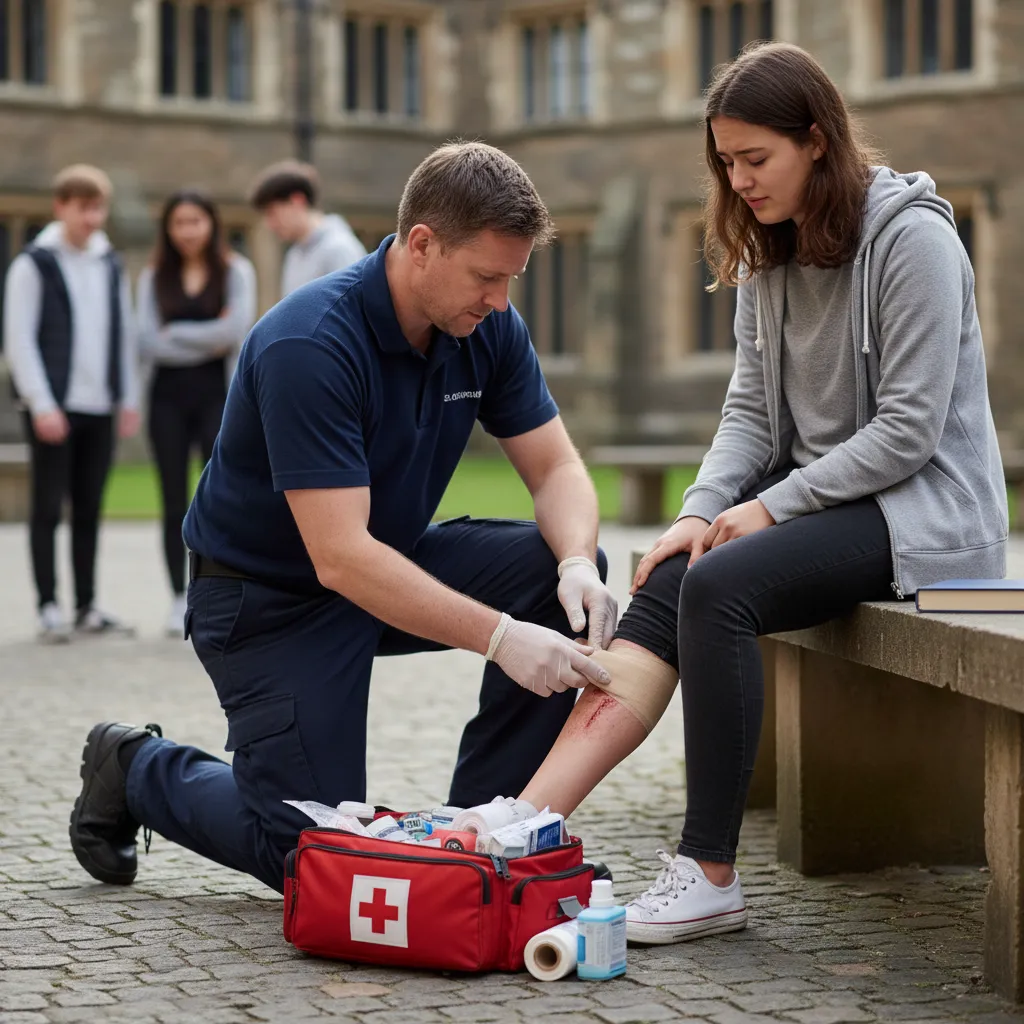
However, owning a kit without knowing how to use its contents is of limited value — which is why many first aid certification programs now integrate kit familiarization exercises directly into their curriculum. Students practice applying pressure dressings, packaging wounds, and improvising splints using exactly the materials found in standard kits they are likely to encounter in real situations.
The integration of first aid kits into training programs reflects a broader movement toward hands-on, scenario-based learning that has transformed first aider certification over the past decade. Research consistently shows that skills-based practice with immediate feedback produces far better retention than lecture-based instruction alone.
A student who physically practices tourniquet application on a simulated wound ten times during training will perform that skill confidently under stress; a student who only watched a demonstration will freeze. This evidence base has driven major certifying organizations to mandate minimum hands-on practice ratios, ensuring that certified first aiders can actually perform the skills they have theoretically learned. You can explore comprehensive training resources at first aid kits and related skill-building tools on this site.
One critical and often overlooked dimension of first aider training is documentation and legal protection. Many first aiders hesitate to intervene during emergencies out of fear of legal liability, but Good Samaritan laws in all 50 states protect individuals who provide reasonable emergency care in good faith.
Understanding these protections — what they cover, what they do not cover, and how they interact with workplace first aid policies — is an important component of comprehensive training that enables first aiders to act without hesitation. Training programs increasingly incorporate a brief legal literacy module to address these concerns directly and remove psychological barriers to intervention.
First Aid Beauty, Wilderness First Aid & Mental Health First Aid: Program Comparisons
Mental health first aid training is an 8-hour certification that teaches adults to recognize warning signs of depression, anxiety, psychosis, substance use disorders, and suicidal crisis. The ALGEE action framework gives participants a clear, repeatable protocol for providing initial support. The course is available in-person, online, and in blended hybrid formats through thousands of certified instructors nationwide, making it accessible for workplaces, faith communities, schools, and neighborhood organizations seeking to build community resilience.
Youth Mental Health First Aid follows the same evidence base but is tailored for adults who interact with children ages 12–18. It covers adolescent brain development, signs of eating disorders, cutting behaviors, bullying-related distress, and substance experimentation. Both tracks are recognized by SAMHSA as evidence-based programs, and several states now offer CE credits for mental health professionals who complete them. Certification is valid for three years and can be renewed through an abbreviated refresher course rather than the full eight-hour program.

Pros and Cons of Becoming a Certified First Aider
- +Save lives — trained bystanders dramatically improve survival rates in cardiac arrest, choking, and severe bleeding emergencies
- +Career advancement — many employers prefer or require first aid certification for supervisory and safety roles
- +Legal protection — Good Samaritan laws shield certified first aiders who act in good faith during emergencies
- +Personal confidence — knowing you can respond effectively in a crisis reduces anxiety in high-risk environments
- +Community value — trained first aiders create safer workplaces, schools, and neighborhoods for everyone
- +Transferable skills — first aid knowledge applies across professional settings, travel, outdoor recreation, and home environments
- −Time commitment — quality courses require 4–80 hours depending on the level of certification pursued
- −Ongoing cost — initial certification plus biennial renewal fees add up over a career, especially for multiple credentials
- −Skill decay — without regular practice, hands-on skills like CPR and tourniquet application deteriorate significantly within months
- −Emotional burden — responding to serious emergencies can cause acute stress reactions and secondary traumatic stress over time
- −Scope confusion — certified first aiders may feel pressure to exceed their training scope, creating liability risk
- −Equipment dependence — some skills require specific equipment like AEDs or epinephrine auto-injectors that may not always be available
Pros and Cons at a Glance
| Pros | Cons |
|---|---|
| Save lives — trained bystanders dramatically improve survival rates in cardiac arrest, choking, and severe bleeding emergencies | Ongoing cost — initial certification plus biennial renewal fees add up over a career, especially for multiple credentials |
| Career advancement — many employers prefer or require first aid certification for supervisory and safety roles | Skill decay — without regular practice, hands-on skills like CPR and tourniquet application deteriorate significantly within months |
| Legal protection — Good Samaritan laws shield certified first aiders who act in good faith during emergencies | Emotional burden — responding to serious emergencies can cause acute stress reactions and secondary traumatic stress over time |
| Personal confidence — knowing you can respond effectively in a crisis reduces anxiety in high-risk environments | Scope confusion — certified first aiders may feel pressure to exceed their training scope, creating liability risk |
| Community value — trained first aiders create safer workplaces, schools, and neighborhoods for everyone | Equipment dependence — some skills require specific equipment like AEDs or epinephrine auto-injectors that may not always be available |
First Aid Kit and Certification Readiness Checklist
- ✓Verify your current first aid certification is valid and not expired — check the expiration date on your card today
- ✓Ensure your workplace first aid kit meets OSHA 29 CFR 1910.151 requirements for your facility size and hazard level
- ✓Check that your car first aid kit includes a tourniquet, CPR face shield, nitrile gloves, and emergency blanket
- ✓Confirm your AED is registered with your local EMS system and that pads and batteries are within their expiration dates
- ✓Schedule your next certification renewal before your current credential expires to avoid a lapse in coverage
- ✓Practice CPR compressions and rescue breathing on a manikin at least once every six months to maintain muscle memory
- ✓Complete a mental health first aid refresher if you work in education, HR, healthcare, or community service roles
- ✓Review updated bleeding control guidelines from Stop the Bleed and Hartford Consensus at least annually
- ✓Identify the locations of all first aid kits, AEDs, and emergency eyewash stations in your workplace and confirm staff awareness
- ✓Document all first aid incidents using your employer's incident report system within 24 hours of any response
The First 3 Minutes Are the Most Critical
Research from the American Heart Association confirms that survival rates from out-of-hospital cardiac arrest drop by 7–10% for every minute without CPR or defibrillation. A trained first aider who begins CPR immediately and deploys an AED within 3–5 minutes can more than double a victim's chance of survival — before any ambulance arrives. Your training is not just a certificate; it is a direct lifesaving intervention that no technology can replace.
Preparing for a first aider certification exam requires a strategic approach that balances theoretical knowledge with practical skills rehearsal. Most certification programs include a written or online knowledge assessment covering anatomy basics, emergency recognition, protocol sequences, and decision-making scenarios. Understanding the structure of your specific exam — how many questions it contains, what percentage you need to pass, and whether it is timed — allows you to allocate study time efficiently rather than reviewing material with low likelihood of appearing on your assessment.
The most effective study strategy for first aid exams combines multiple learning modalities. Begin by reviewing the core curriculum materials provided by your certifying organization — American Red Cross, American Heart Association, or another accredited provider. Pay particular attention to the specific sequence steps for each major skill: the exact order of actions for responding to an unresponsive adult, the correct hand position for infant CPR, the criteria for applying a tourniquet versus a pressure dressing. These sequential protocols are the most heavily tested content area in virtually all first aider knowledge assessments.
Practice tests are among the most powerful study tools available for first aid exam preparation. Completing multiple practice exams under timed conditions familiarizes you with the question format, reveals knowledge gaps before the real assessment, and builds the type of automatic pattern recognition that allows you to answer questions quickly and confidently.
Research on test-enhanced learning consistently shows that students who complete practice tests significantly outperform students who spend the same amount of time re-reading notes or watching videos. The practice quizzes on this platform are designed specifically to mirror the format and difficulty level of accredited first aid certification assessments.
Scenario-based questions deserve special attention during your preparation, as they represent the most common format in modern first aid assessments. These questions present a realistic emergency situation — a coworker who collapses in the break room, a child who begins choking at a dinner table, a hiker who complains of crushing chest pain — and ask you to identify the correct sequence of responses.
The key to answering these questions correctly is to always begin with scene safety assessment, then primary survey (responsiveness, airway, breathing, circulation), then specific intervention. This systematic approach produces the correct answer for the vast majority of scenario-based questions regardless of the specific emergency presented.
Memory aids and mnemonics dramatically accelerate learning for first aid content, which involves many specific numerical parameters and protocol sequences. Common mnemonics include DRABC (Danger, Response, Airway, Breathing, Circulation) for primary survey, RICE (Rest, Ice, Compression, Elevation) for musculoskeletal injuries, FAST (Face drooping, Arm weakness, Speech difficulty, Time to call 911) for stroke recognition, and SAMPLE (Signs and symptoms, Allergies, Medications, Pertinent medical history, Last oral intake, Events leading to injury) for patient history collection. Building these mnemonics into your mental toolkit through active recall exercises makes them available under the stress of both exam conditions and real emergencies.
Group study sessions with fellow certification candidates provide significant benefits that solo study cannot replicate. Verbally explaining a protocol to a study partner reinforces your own understanding through the teaching effect, while your partner's questions may surface gaps you had not noticed.
Role-playing scenarios — one person playing the first aider, one playing the patient, and one observing and providing feedback — creates the type of stress inoculation that improves performance under real conditions. Many community recreation centers, workplaces, and libraries are willing to provide space for small study groups preparing for first aid certification, making this a low-cost and highly effective preparation strategy.
The week before your exam should focus on consolidation rather than introduction of new material. Review your practice test results to identify any persistent weak areas and do targeted review of those specific topics. Get adequate sleep in the days leading up to the exam, as sleep deprivation significantly impairs both recall and decision-making — two cognitive functions that are central to first aid assessment performance.
On exam day, arrive early, read each question carefully before answering, and trust the systematic approaches you have rehearsed. For first aid beauty ultra repair cream enthusiasts who are new to emergency training, remember that confidence in any new skill domain comes from preparation, not from any innate ability.

Most first aid certifications expire after two years, and some employers treat an expired certificate as equivalent to no certification for OSHA compliance purposes. If your certification has lapsed by more than six months, many providers require you to retake the full course rather than a shorter renewal session. Schedule your renewal at least 60 days before your expiration date to ensure you have time to complete training without a compliance gap.
Maintaining your first aid certification over a career requires more than simply renewing your card every two years. Genuine competence demands ongoing engagement with both the skills and the evolving evidence base that drives protocol updates. The American Heart Association, for example, publishes updated CPR and Emergency Cardiovascular Care guidelines every five years, and these updates sometimes include significant changes to recommended compression depths, ventilation ratios, or medication protocols that certified first aiders need to incorporate into their practice. Staying connected with your certifying organization's communications channels ensures you receive notification of any interim guideline updates between full publication cycles.
Refresher training between formal renewals represents one of the most effective strategies for maintaining skill quality. Many employers offer quarterly or biannual skills days where employees can practice CPR on manikins, review tourniquet application, and run through scenario exercises with coaching from trained facilitators. These sessions cost little to organize but deliver substantial returns in skill retention and responder confidence.
Research published in the journal Resuscitation demonstrates that CPR skill quality degrades to below-competency levels within three to six months of initial training without reinforcement — a finding that makes quarterly practice sessions not merely beneficial but arguably essential for workplace first aiders who may be expected to respond to real emergencies at any time.
Technology is increasingly playing a role in ongoing first aid skill maintenance. Several high-quality mobile applications now provide guided CPR practice with feedback on compression rate and depth using smartphone accelerometer data, allowing individuals to self-assess outside of formal training sessions. Virtual reality training platforms used by hospitals and large employers simulate complex emergency scenarios with realistic patient responses, helping first aiders build decision-making skills in high-fidelity environments without risk to real patients. While these technologies complement rather than replace hands-on training with certified instructors, they significantly expand the opportunities for meaningful practice between formal certification events.
Specialization is another dimension of first aider development that deserves consideration as you advance in your career. A first aider who begins with basic adult CPR certification might add pediatric first aid, then mental health first aid, then Stop the Bleed instructor certification over a period of several years.
Each additional credential expands your ability to serve your community and your professional credibility in safety-sensitive roles. Some employers offer tuition reimbursement or paid time off for employees pursuing advanced first aid credentials, recognizing the organizational value of a well-trained internal response team that can manage incidents before external emergency services arrive.
The relationship between first aid certification and broader emergency preparedness planning is an important one for both individuals and organizations to understand. A certified first aider operating without proper equipment, clear emergency response protocols, or a practiced chain of communication will be significantly less effective than one embedded in a well-designed emergency response system.
Organizations that invest in first aider training should simultaneously ensure they have adequate first aid supplies, functional AEDs in accessible locations, posted emergency contact information, and a clear incident command structure so that trained responders can focus on patient care rather than scrambling for resources or waiting for decision-making authority during a crisis.
Community-level first aider training initiatives have demonstrated impressive public health impacts in cities that have implemented them systematically. Seattle's Medic One Foundation has trained a higher percentage of its population in CPR than virtually any other American city, contributing to cardiac arrest survival rates that are roughly double the national average.
Similar community training programs in Nashville, Phoenix, and Minneapolis have shown measurable improvements in bystander response rates and patient outcomes. These results underscore that first aider training is not merely a personal or professional benefit — it is a genuine public health intervention with population-level effects on emergency mortality that justify significant community investment.
As you consider your own first aid training journey, remember that every level of skill development has value. Even a person who completed only a two-hour Hands-Only CPR course knows more than someone with no training at all, and that knowledge could save a life. The goal is continuous improvement — starting where you are, building competence deliberately, and committing to the regular practice and periodic renewal that keeps your skills sharp and ready when they are truly needed. Explore first aid kits and additional training resources to take your preparedness to the next level.
Building genuine first aider competence involves developing habits and routines that keep your skills accessible under stress. The most important habit is regular mental rehearsal — taking a few minutes each week to mentally walk through an emergency scenario in your specific workplace or home environment. Imagine where the nearest AED is located. Visualize yourself retrieving it. Mentally rehearse calling 911 while beginning CPR compressions. This type of cognitive practice, used by elite athletes and military personnel, activates the same neural pathways as physical practice and dramatically improves performance when real emergencies occur.
Equipment familiarity is a practical dimension of readiness that many certified first aiders neglect. If your workplace has an AED from a different manufacturer than the one you trained on, take fifteen minutes to read the device's specific instructions and familiarize yourself with its interface before an emergency.
If your first aid kit contains a hemostatic dressing brand you have not practiced with, open a training package and rehearse applying it to a surface. Equipment unfamiliarity under stress consumes critical seconds and degrades performance significantly. The five minutes you invest in equipment familiarization today could be the difference between an effective and an ineffective response when it matters most.
Communication skills are an underappreciated component of first aider effectiveness. During a multi-bystander emergency, the first trained responder on scene must quickly establish role clarity — designating specific individuals to call 911, retrieve the AED, manage crowd control, and provide crowd direction — while simultaneously beginning patient assessment.
Practicing clear, directive communication in training scenarios builds the confidence to use it effectively under stress. Phrases like "You in the red shirt — call 911 now," "You — go get the AED from the break room," and "Everyone else please step back" create the organized response environment that optimal patient outcomes require.
Post-incident support for first aiders who have responded to serious emergencies is an essential but frequently overlooked element of sustainable first aider programs. Witnessing a cardiac arrest, providing care to an injured child, or responding to a traumatic workplace accident can produce acute stress reactions and, in some cases, secondary traumatic stress or PTSD in otherwise well-functioning individuals.
Organizations with strong first aider programs provide mandatory defusing sessions within 24 hours of any serious incident, access to employee assistance program counseling, and peer support networks where first aiders can process their experiences with others who understand the unique psychological demands of emergency response.
The relationship between first aid training and overall physical and mental wellness is worth noting. People who pursue first aider certification tend to report higher levels of community engagement, greater sense of personal efficacy, and stronger workplace relationships with colleagues who appreciate their skills and commitment to safety.
The knowledge that you are genuinely capable of helping someone in crisis is a powerful contributor to personal confidence and purpose. Many first aiders describe their certification journey as one of the most meaningful professional development investments they have ever made, precisely because the skills have clear, direct human value that is immediately apparent.
For students preparing for formal first aid knowledge assessments, the final days before the exam are best spent reviewing practice questions that simulate the exact format of the actual test. Focus particularly on questions that involve multi-step sequences, since these require not just knowledge of individual facts but understanding of the correct order of actions.
Questions about cardiac arrest response, for example, test whether you know that chest compressions should begin before ventilations, that the compression-to-ventilation ratio for a lone rescuer performing adult CPR is 30:2, that high-quality compressions require a rate of 100–120 per minute and a depth of at least two inches, and that compressions should be minimally interrupted during AED analysis. Mastering these layered details through practice questions is the most reliable path to exam success.
Finally, remember that your first aider certification is not an end point but a beginning. Every renewal cycle is an opportunity to deepen your knowledge, update your skills to current guidelines, and expand into new areas of emergency preparedness.
The first aid community in the United States is a vast and generous network of instructors, volunteers, and practitioners who share a commitment to reducing preventable mortality and improving emergency outcomes for everyone. Joining that community — whether as a basic-certified workplace first aider or a highly trained wilderness first responder — places you among the people who make a genuine difference in the moments that matter most.
First Aid Questions and Answers
First Aid Practice Test PDF 2026: Free Questions & Answers

First Aid Refresher Course: Everything You Need to Know About Certification, Training, and Emergency Preparedness
First Aid: Complete Study Guide 2026

First Aid Training Classic WoW: Complete Guide to First Aid, Mental Health, Wilderness Skills, and Emergency Kits
First Aid 2026
About the Author

Registered Nurse & Healthcare Educator
Johns Hopkins University School of NursingDr. Sarah Mitchell is a board-certified registered nurse with over 15 years of clinical and academic experience. She completed her PhD in Nursing Science at Johns Hopkins University and has taught NCLEX preparation and clinical skills courses for nursing students across the United States. Her research focuses on evidence-based exam preparation strategies for healthcare certification candidates.
Join the Discussion
Connect with other students preparing for this exam. Share tips, ask questions, and get advice from people who have been there.
View discussion (5 replies)