
American Red Cross Wilderness First Aid Course: Complete Guide 2026 October
Master the American Red Cross wilderness first aid course. Learn skills, costs, kit essentials & mental health first aid. ✅ Free practice questions inside.

The American Red Cross Wilderness First Aid course is one of the most practical and respected certifications available to outdoor enthusiasts, camp counselors, hiking guides, and adventure travelers across the United States. Unlike standard urban first aid training, the wilderness curriculum prepares you to manage emergencies when professional medical help may be hours or even days away. Whether you are leading a backcountry expedition or simply spending a long weekend on a remote trail, understanding wilderness first aid principles can mean the difference between life and death for someone in your group.
Before diving into course logistics, it is worth noting the surge in demand for first aid training across all formats. Products like first aid beauty skincare lines have made the phrase "first aid" a household term, but real emergency preparedness demands far more than a tube of moisturizer. Enrollment in Red Cross wilderness programs has grown substantially over the past decade, driven by increasing participation in outdoor recreation and a national push toward community resilience. The American Red Cross reports that bystander intervention in emergencies dramatically improves survival rates, which is exactly why wilderness-specific training matters so much.
The course blends classroom instruction with hands-on scenario practice, giving students realistic exposure to situations like improvised splinting, patient packaging for evacuation, anaphylaxis management, and hypothermia treatment. Instructors emphasize decision-making under pressure, because in the backcountry you rarely have the luxury of a second opinion or a quick internet search. Students leave not just with a certificate but with a deeply internalized framework for assessing and responding to emergencies in austere environments.
Alongside wilderness skills, modern first aid education increasingly integrates mental health first aid concepts, recognizing that psychological crises — panic attacks, acute stress responses, and suicidal ideation — are just as likely to occur on a remote trail as a physical injury. Red Cross instructors are trained to acknowledge these intersecting needs, helping students respond holistically to a person in crisis rather than focusing exclusively on broken bones or bleeding wounds.
Understanding what a wilderness first aid course covers also helps you select the right kit. Well-stocked first aid kits tailored for backcountry travel differ significantly from the basic home or office variety. The Red Cross publishes recommended supply lists for wilderness kits, and course instructors typically walk students through each item, explaining both its purpose and the scenarios in which it becomes essential. Selecting the right supplies before you head into the field is a critical part of trip planning that many beginners overlook entirely.
This guide covers everything you need to know about the American Red Cross Wilderness First Aid course: what the curriculum includes, how to enroll, what the certification means for your career or volunteer work, how it compares to alternatives like Wilderness First Responder, and how to study effectively so you pass both the written and practical assessments on your first attempt. By the end, you will have a clear roadmap for achieving and maintaining your wilderness first aid certification with confidence.
American Red Cross Wilderness First Aid by the Numbers
Key Facts at a Glance
| Item | Value | Details |
|---|---|---|
| Course Duration | 16–20 hrs | Typically over 2 days |
| Certification Valid | 2 Years | Recertification required |
| Passing Score | 70%+ | Written + skills assessment |

How the American Red Cross Wilderness First Aid Course Works
Enrollment & Prerequisites
Day 1 — Core Concepts & Assessment
Day 2 — Scenario-Based Skills
Written Knowledge Assessment
Practical Skills Evaluation
Certification Issued
The skills curriculum in the American Red Cross Wilderness First Aid course is deliberately broad, because the backcountry does not limit itself to one type of emergency. Day one typically opens with the Patient Assessment System, a structured head-to-toe evaluation method that helps responders work through a scene systematically even under stress. Students practice calling out findings aloud, a technique borrowed from aviation crew resource management, which research shows reduces cognitive errors in high-pressure situations. The Patient Assessment System becomes the backbone of every scenario you will encounter during the course and afterward in the field.
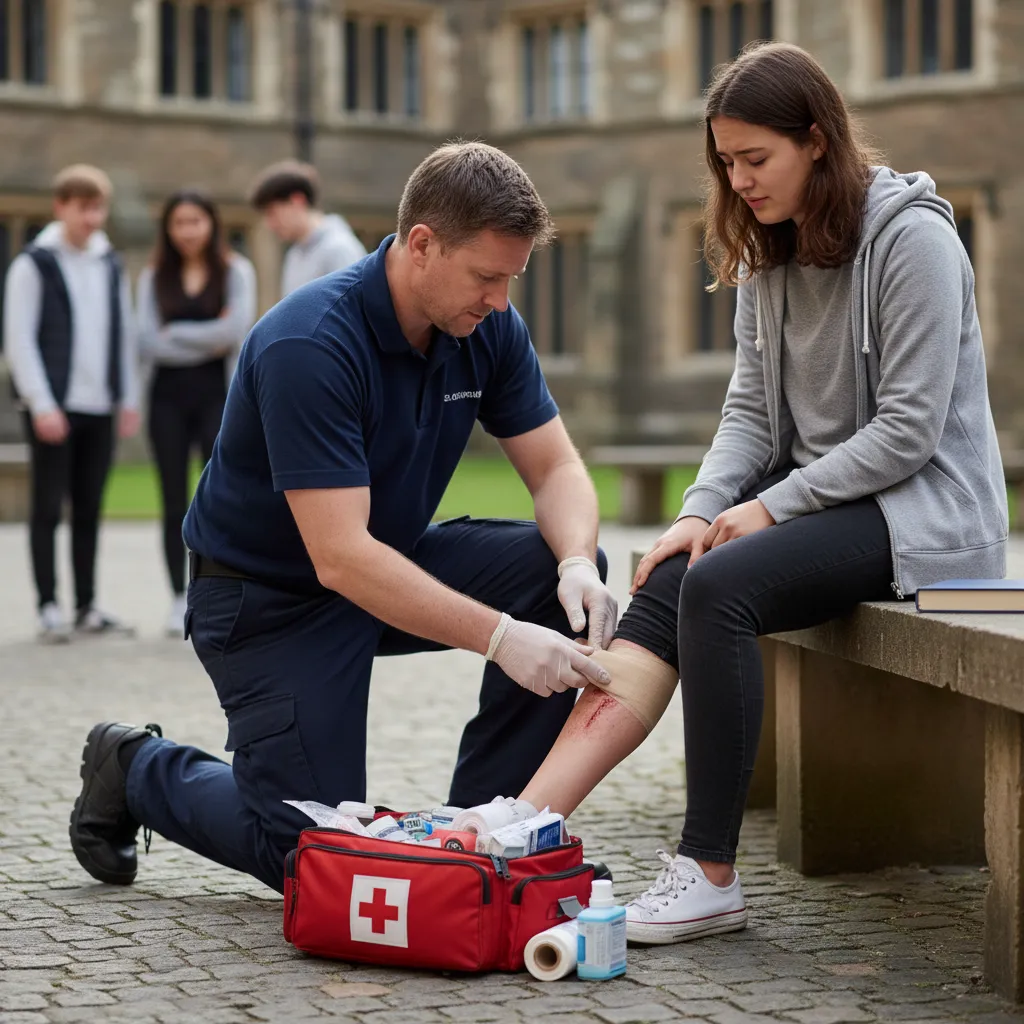
Wound care receives significant attention throughout both days. Instructors demonstrate irrigation techniques using a syringe and clean water, explaining why forceful irrigation removes more bacteria than simple pouring. Students learn to recognize signs of infection that develop over 24 to 48 hours — redness tracking along lymph vessels, swelling that worsens after initial improvement, and discharge that changes color or odor.
If you want to deepen your understanding of wound protocols before the course, reviewing the first aid beauty face moisturizer recall and safety documentation practices around topical products can give you context for how skin barrier management intersects with infection risk, though the course itself focuses on field-expedient irrigation and dressing rather than pharmaceutical products.
Musculoskeletal injuries — sprains, fractures, and dislocations — represent a large portion of backcountry emergencies, and the Red Cross course dedicates substantial time to improvised splinting. Students construct functional splints from trekking poles, sleeping pad foam, and clothing, then evaluate circulation, sensation, and movement in the injured limb before and after splinting. The course also introduces traction splinting concepts for femur fractures, which can cause life-threatening blood loss if the leg muscles spasm around a broken bone without proper support.
Environmental emergencies form the third major pillar of the curriculum. Hypothermia, heat exhaustion, heat stroke, lightning injury, high-altitude illness, and drowning aftercare all appear in the lesson sequence. Students learn the difference between mild, moderate, and severe hypothermia and why rewarming methods must be matched to severity — a mildly cold patient can generate their own heat with insulation and calories, while a severely hypothermic patient needs controlled external warming and extremely gentle handling to avoid triggering fatal cardiac arrhythmias during transport.
Anaphylaxis management is another critical component. Students practice recognizing the rapid onset of allergic reactions involving the airway, skin, and cardiovascular system, and they learn to use an epinephrine auto-injector with confidence.
Many first-time students are surprised to learn that a person may carry an EpiPen for years without ever using it, meaning the stress of an actual emergency is the first time they handle the device — which is exactly why hands-on practice in a low-stakes training environment is so valuable. The course also covers follow-up care after epinephrine administration and the importance of rapid evacuation even when a patient feels temporarily better.
For those interested in a comprehensive skincare product that shares the first aid name, the first aid beauty ultra repair cream has built a loyal following for its gentle formulation — but the real ultra repair skills you need in the wilderness are the ones taught in this course. Wound closure using steri-strips, managing blisters before they become infected, and treating sunburn on day three of a trip when your supplies are running low are all scenarios the Red Cross course addresses with practical, field-tested protocols developed over decades of outdoor education.
By the end of day two, students who engage fully with all scenarios and skill stations have typically internalized a calm, methodical approach to emergencies that transfers directly to real-world situations. The course deliberately creates moments of confusion and urgency in scenarios — calling for multiple simultaneous victims, introducing distracting bystanders, or cutting off access to a preferred supply — because the ability to adapt under pressure is ultimately what separates a trained responder from a panicked bystander.
The Red Cross instructors measure competency not just on whether you complete each skill, but on whether you maintain patient contact, communicate clearly with your team, and document your assessment findings for handoff to emergency medical services.
Wilderness First Aid, Mental Health First Aid Training & Kit Essentials
The American Red Cross Wilderness First Aid certification sits between a standard community first aid course and the more advanced Wilderness First Responder credential. It is designed for trip leaders, camp staff, and outdoor enthusiasts who operate in remote settings for one to five days. The 16-to-20-hour format makes it achievable over a single weekend, and the curriculum balances breadth with enough depth to prepare responders for the most statistically common backcountry emergencies: musculoskeletal injuries, anaphylaxis, environmental illness, and wound management.
Recertification is required every two years to keep the credential active. The Red Cross offers both in-person and blended-learning options, allowing students to complete the knowledge portions online before attending a condensed in-person skills day. This hybrid format has become increasingly popular since 2020 and reduces the total time away from work while maintaining the hands-on competency standards that make the certification meaningful to employers and program administrators.

Is the Red Cross Wilderness First Aid Course Right for You?
- +Nationally recognized credential accepted by camps, guiding services, and park agencies
- +Achievable in a single weekend — no multi-week commitment required
- +Blended learning options let you complete theory online before the in-person skills day
- +Practical scenario training builds real-world confidence under simulated stress
- +Covers environmental emergencies, trauma, and medical emergencies in a single course
- +Integrates psychological first aid and mental health awareness into the curriculum
- −Less comprehensive than Wilderness First Responder for extended or professional expeditions
- −Requires recertification every two years, adding ongoing time and cost
- −Course cost of $185–$250 may be a barrier for individual volunteers without employer sponsorship
- −Hands-on skills portions are not available fully online — in-person attendance is mandatory
- −Some employers in high-risk outdoor industries require WFR rather than WAFA certification
- −Limited evening or weekend course options in rural areas with fewer Red Cross chapters
Wilderness First Aid Certification Checklist: Before, During & After
- ✓Confirm you meet the minimum age requirement (15 years) and any CPR prerequisite before registering.
- ✓Register through the official American Red Cross website or an authorized licensed training provider.
- ✓Complete all online pre-course modules at least 48 hours before your in-person skills day.
- ✓Assemble a personal backcountry first aid kit and bring it to day two for instructor review.
- ✓Wear comfortable, layered clothing suitable for outdoor scenario exercises in variable weather.
- ✓Bring a notepad and pen — taking notes during lecture reinforces retention for the written exam.
- ✓Practice the Patient Assessment System aloud with a partner before arriving at the course.
- ✓Review the Red Cross Wilderness First Aid participant guide PDF, available free after registration.
- ✓Participate actively in all scenario rotations — passive observation does not build the same competency.
- ✓After passing, photograph your certificate and store a digital copy in cloud backup immediately.
The 10-Minute Patient Assessment Window
Research from wilderness medicine programs shows that responders who complete a systematic patient assessment within the first 10 minutes of arriving at an emergency scene make significantly better evacuation decisions. The Red Cross course trains this habit through timed scenario repetition — practice it until the sequence feels automatic, so stress does not disrupt your thinking when it matters most.
Comparing wilderness first aid to standard community first aid reveals both the depth and the intentional focus of the backcountry curriculum. A typical Red Cross community first aid course runs four to eight hours and emphasizes calling 911 as the primary action for any serious emergency — because in urban and suburban environments, EMS arrival within minutes is a reasonable expectation. In wilderness settings, that assumption collapses entirely.
A technical rescue team may take six to twelve hours to reach an injured hiker in a remote canyon, and a helicopter evacuation may not be possible due to weather, darkness, or terrain. The wilderness responder must be prepared to manage a patient for an extended time period, making ongoing assessment and treatment decisions without access to advanced diagnostics or medications.
The Wilderness First Responder credential sits one significant step above Wilderness First Aid and is the standard required for many professional outdoor roles including Outward Bound instructors, NOLS course leaders, commercial river guides, and ski patrol in many mountain resorts. WFR courses run 70 to 80 hours over eight to ten days and include topics like medication administration, advanced airway management, patient packaging for technical terrain evacuation, and management of obstetric emergencies.
The American Red Cross Wilderness First Aid course is best understood as the entry-level credential in this hierarchy — appropriate for recreational trip leaders, camp counselors, and outdoor enthusiasts who operate in low-risk wilderness settings with reasonably short evacuation windows.
For professionals who need to demonstrate a higher level of competency, the Wilderness Advanced First Aid (WAFA) credential offers an intermediate option at 40 hours, bridging the gap between WAFA and WFR. The Red Cross does not currently offer a WAFA course, making NOLS Wilderness Medicine and SOLO Schools the primary providers at that level. Understanding where the Red Cross Wilderness First Aid course fits in the credential hierarchy helps you make an informed decision about which training level your role and typical environment actually require, rather than over- or under-investing in preparation.
Cost is another key difference between credential levels. The Red Cross Wilderness First Aid course typically costs $185 to $250 depending on your location and whether you attend through a chapter, an employer, or a licensed training partner. WFR courses generally cost $700 to $900, reflecting their much greater time commitment and the more complex skill assessments involved. Many employers — summer camps, outdoor education nonprofits, national park concessionaires — cover the cost of training for staff who will be working in remote settings, so it is always worth asking your employer about reimbursement before paying out of pocket.
Equivalency questions arise frequently when people hold a WFR or EMT credential and want to know whether they need a separate Wilderness First Aid course. In most cases, higher-level credentials supersede lower ones, and a current WFR certification satisfies any requirement that specifies Wilderness First Aid. Conversely, a standard community CPR or First Aid certification does NOT satisfy a Wilderness First Aid requirement, because the protocols and decision-making frameworks are fundamentally different. Always read job listings and volunteer program requirements carefully to confirm exactly which credential is specified.
The intersection of wilderness medicine with skincare might seem unlikely, but sun protection and skin management are genuine topics in the curriculum. Severe sunburn at altitude compromises the skin barrier in ways that increase infection risk for any wounds a patient sustains, and instructors discuss how to prioritize patient comfort and skin protection during extended field care.
While products like first aid beauty facial radiance pads are designed for cosmetic skin refinement, the principles of maintaining a healthy skin barrier translate meaningfully into wilderness medicine when you are managing a patient whose skin integrity has been compromised by days of sun, wind, and physical exertion.
Ultimately, the decision to pursue wilderness first aid training is one of the most high-value investments a backcountry traveler can make — not because emergencies are common, but because the cost of being unprepared when one occurs is catastrophically high.
A friend who can manage your anaphylactic reaction while you cannot inject yourself, a trail partner who keeps your hypothermic shivering from progressing to cardiac arrest, a camp counselor who stabilizes a fractured ankle and makes a sound evacuation decision — these are the outcomes that wilderness first aid training makes possible, and the Red Cross course delivers them in an accessible, affordable, and nationally respected format.

The American Red Cross Wilderness First Aid certification expires after two years. Many employers, summer camps, and park concessionaires conduct annual audits of staff credentials and will remove untrained personnel from field roles immediately if a lapsed certification is discovered. Set a calendar reminder six months before your expiration date to locate a recertification course, since popular courses in peak seasons often fill two to three months in advance.
Preparing effectively for the American Red Cross Wilderness First Aid written exam requires a different strategy than cramming from a textbook the night before. The written assessment tests applied knowledge — it presents realistic scenarios and asks you to identify the correct next action, not simply recall a definition.
This means your study approach should mirror the course itself: work through practice scenarios rather than passively reading chapter summaries. Create flashcards for the major protocol sequences (the Patient Assessment System steps, the signs and symptoms of each environmental illness, the criteria for urgent versus delayed evacuation) and quiz yourself until you can recall them in order under mild time pressure.
The practical skills evaluation is where many students feel the most anxiety, but it is also where preparation pays off most directly. The skills being assessed — patient assessment, splinting, anaphylaxis response, wound management — are all teachable and learnable through repetition. Find a practice partner before the course and run through each skill station multiple times, alternating roles between patient and responder.
Pay particular attention to the communication elements of each skill: calling out your findings, asking permission before performing painful procedures, explaining to the patient what you are doing and why. Instructors evaluate these communication behaviors as part of competency, not just the technical execution of the skill itself.
Online resources from the Red Cross include a free participant guide that outlines the learning objectives for each course module. Download this guide before the course begins and use it as a study roadmap — work through each objective and ask yourself whether you could explain it to someone who knew nothing about first aid. If you cannot explain it clearly, that is a signal to dig deeper into that topic before your course date. For supplementary practice, exploring first aid kits and their contents in detail can reinforce your knowledge of equipment use in real wilderness scenarios.
Time management during the written exam matters more than most students expect. The exam contains multiple-choice questions with plausible-sounding distractors — wrong answers that are partially correct or that reflect common misconceptions. Read each question twice before selecting an answer, and eliminate obviously wrong choices first to narrow your options. If you are uncertain between two remaining choices, select the one that most closely aligns with the patient safety principle of doing no further harm and evacuating when in doubt.
Post-course maintenance of your skills is just as important as the initial training. Most wilderness first aid providers recommend reviewing your protocols at least once between certification and recertification, either through a one-day refresher workshop or through structured self-study using your participant guide and online practice tools. Skills that are never practiced between courses — particularly low-frequency but high-stakes skills like tourniquet application and epinephrine injection — decay significantly over two years, and a lapsed skill is nearly as dangerous as no skill at all in a real emergency.
Building a culture of first aid preparedness in your outdoor group adds a second layer of protection beyond your individual certification. Share the basics of your training with travel companions — teach them how to call for help, how to keep an injured person warm and still, and where your kit is stored in your pack. Even untrained bystanders who know these three things can meaningfully improve outcomes during the critical minutes before you arrive at the scene. The Red Cross encourages this peer education approach and provides free downloadable guides for non-trained companions of certified responders.
Finally, consider how your wilderness first aid certification connects to broader community preparedness goals. The skills you learn in this course transfer directly to natural disaster response, community emergency response team (CERT) training, and neighborhood resilience initiatives. Many Red Cross chapters actively recruit wilderness-certified volunteers for disaster relief operations, recognizing that the improvisation and extended-patient-care skills developed in backcountry training are precisely what disaster relief workers need when normal medical infrastructure is overwhelmed. Your weekend investment in wilderness first aid certification may ultimately serve your community far beyond the trails you originally trained for.
The practical application of wilderness first aid skills in real backcountry emergencies depends heavily on mental rehearsal and scenario familiarity built during training. Research in emergency medicine education consistently shows that students who have mentally walked through a scenario multiple times — imagining the sights, sounds, and decisions involved — respond more calmly and effectively when they encounter a real emergency. This is why the Red Cross course devotes so much time to scenario-based learning rather than lecture alone, and why continuing to review scenarios between course completions keeps your skills sharp and accessible under pressure.
Equipment familiarity is equally important. A responder who has to read instructions on an epinephrine auto-injector during an anaphylaxis emergency is a responder who is losing critical seconds. Handle every item in your first aid kit regularly — practice using your irrigation syringe, unwrap and repack your triangular bandages, and practice applying your tourniquet one-handed until the sequence is automatic. This kind of physical rehearsal embeds procedural memory that survives the cognitive narrowing that stress produces, meaning you will access the skill even when your working memory is overwhelmed by the emotional intensity of the situation.
Nutrition and hydration management are sometimes overlooked in first aid curricula but are explicitly addressed in the Red Cross wilderness program. A dehydrated responder makes worse decisions, tires faster, and is more susceptible to their own cold or heat illness while managing a patient.
Instructors recommend that wilderness responders establish the habit of monitoring their own physiological state continuously during an emergency response, not just at the beginning and end. Eating a snack and drinking water while a stable patient is being monitored is not selfish — it is how you maintain the physical and cognitive capacity to make good decisions for the next hour.
Communication with emergency services from a remote location requires preparation that most wilderness travelers neglect until they need it. The Red Cross course teaches the STOP pneumonic — Stop, Think, Observe, Plan — as a framework for calming the scene before initiating communication.
When you do reach emergency dispatch, providing a clear location description (GPS coordinates if available, terrain features, trail name and distance from trailhead), a concise patient report, and an accurate description of the incident is critical to ensuring the right resources are dispatched quickly. Practice this communication template before your next trip so it is ready when you need it.
Group size considerations affect both the likelihood and the management of backcountry emergencies. Larger groups generate more statistical exposure to injury, but they also provide more hands for patient care, evacuation assistance, and parallel communication tasks. The Red Cross course teaches simple team management skills: designating a scene commander, assigning roles to bystanders, and maintaining patient dignity and privacy during treatment. These organizational skills feel unnecessary during tabletop discussions but become essential when managing a real emergency with five panicked, well-meaning bystanders who all want to help simultaneously.
The role of technology in wilderness first aid is evolving rapidly. Personal locator beacons, satellite communicators like the Garmin inReach, and smartphone apps with offline maps have transformed the evacuation decision landscape by making it possible to summon professional rescue from locations where radio communication was previously impossible. The Red Cross course addresses these tools, teaching students when to activate a PLB (immediately for life-threatening emergencies, after exhausting local capabilities for serious but stable conditions) and how to prepare an accurate incident report message for satellite transmission when voice communication is not available.
Ultimately, the American Red Cross Wilderness First Aid course represents the ideal entry point into serious backcountry preparedness. It is rigorous enough to build genuine competency, accessible enough to complete in a single weekend, affordable enough for most individuals and small organizations, and respected enough to satisfy the credential requirements of the vast majority of outdoor recreation programs in the United States.
Whether your wilderness adventures involve day hikes, multi-week expeditions, or leading youth groups through national forest terrain, this certification gives you the tools, the confidence, and the systematic approach you need to keep your group safe when professional medical help is far away.
First Aid Questions and Answers

About the Author

Registered Nurse & Healthcare Educator
Johns Hopkins University School of NursingDr. Sarah Mitchell is a board-certified registered nurse with over 15 years of clinical and academic experience. She completed her PhD in Nursing Science at Johns Hopkins University and has taught NCLEX preparation and clinical skills courses for nursing students across the United States. Her research focuses on evidence-based exam preparation strategies for healthcare certification candidates.
Join the Discussion
Connect with other students preparing for this exam. Share tips, ask questions, and get advice from people who have been there.
View discussion (5 replies)