
FDNY Engine 160 and the FDNY Fire Station: How FDNY Ranks Work From Firefighter to Chief
🎓 Learn how fdny ranks work and what to know about FDNY Engine 160, from daily firehouse roles to the exam path for joining a New York City fire station.

FDNY Engine 160 is one of the engine companies protecting Staten Island, the least dense of New York City's five boroughs, where lot sizes, hydrant spacing, and response routes differ sharply from Manhattan or the Bronx. People search for the company for many reasons. Some live nearby, some are curious about the crew, and others are studying for a career in the department. This guide explains how an engine company works and how fdny ranks fit around it.
An engine company is the unit that puts water on the fire. Its apparatus carries hose, a pump, and a water tank, and its members stretch lines, connect to hydrants, and extinguish the flames. Ladder companies handle forcible entry, search, and ventilation. In many houses the two share one building. Every fdny fire station follows this same basic model, although staffing and workload vary widely across the city.
The Fire Department of the City of New York is the largest municipal fire department in the United States. It employs roughly eleven thousand uniformed firefighters and officers, plus thousands of emergency medical personnel and civilian staff. It operates more than two hundred firehouses spread across all five boroughs. A paid, professional department replaced the old volunteer system in 1865, and that history still shapes the traditions, nicknames, and company numbers you hear on the radio today.
Company numbers can look random, but they follow a pattern. Engine numbers in the 150s and 160s generally belong to Staten Island, while lower numbers cluster in Manhattan and the Bronx. When a dispatcher calls Engine 160, every firefighter in the borough knows roughly where that unit sits. Learning that geography is part of becoming a competent member, and it is also a useful tool for test takers who must interpret dispatch and map-based questions.
Many readers arrive with a simple question: who actually works at a station like this? The answer is a team built around a clear chain of command. A company officer, usually a lieutenant, leads each tour. Firefighters fill specific positions on the apparatus, such as the nozzle, the backup, and the control position at the pump. Understanding how fdny ranks connect to those roles makes everything else in the department easier to follow.
This article is awareness content, not an official department notice, so treat it as a starting point. It covers the structure of the ranks, what happens inside a firehouse during a typical shift, how a candidate becomes a probationary firefighter, and how promotion works over a long career. Specific dates, fees, and eligibility rules change with each exam announcement, so always confirm the details on the official New York City hiring pages before you apply.
If you are preparing for the civil service process, the practice resources linked below can help you build the reading, mechanical, and situational skills the department values. Building construction knowledge, emergency medical basics, and community education all appear in the modern fire service. Start with the overview sections that follow, then use the quizzes to test what you have learned and to find the gaps that deserve extra study time.
FDNY Fire Stations by the Numbers
How FDNY Ranks Are Structured
Every career begins as a probationary firefighter. After the probationary period and promotion exams, a firefighter can become a lieutenant, who leads a single company on a tour and directs crews at the scene of an incident.
Captains command a company and manage the firehouse, including training and discipline. Battalion chiefs oversee several firehouses in a battalion and act as incident commanders at working fires and larger emergencies.
Deputy chiefs supervise a division, covering many battalions. Assistant chiefs and deputy assistant chiefs run borough commands and major bureaus, shaping operations, staffing, and training across wide parts of the department.
The Chief of Department is the highest uniformed rank and leads all fire operations. The Fire Commissioner, by contrast, is a civilian appointed by the mayor and sets overall policy for the whole agency.
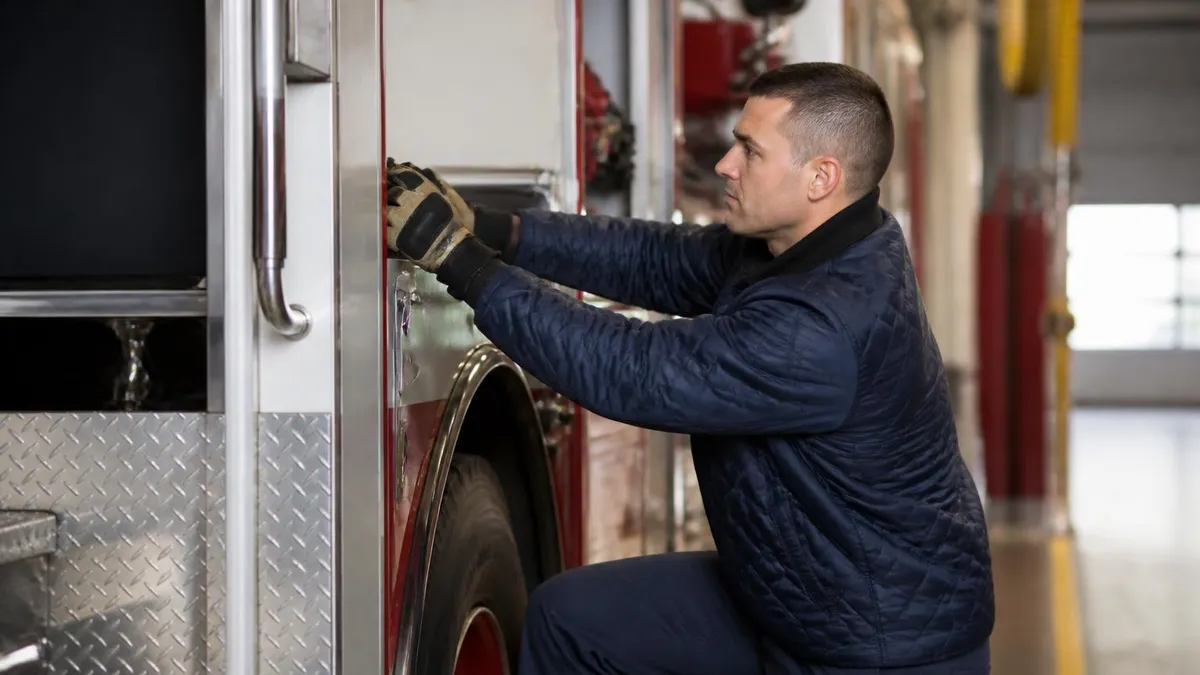
Inside an engine company such as Engine 160, a shift is called a tour, and tours usually run in long blocks with a set start time. At the beginning, members check the apparatus, test the saws and radios, inspect the hose, and record the findings. The officer reviews the roster and assigns positions for the day. This routine matters because a missing tool or a dead battery found at 9 a.m. is a minor fix, while the same problem found at a fire can be dangerous.
Positions on the engine have specific names. The nozzle firefighter advances the hose line toward the fire and operates the stream. The backup firefighter supports the line, feeds hose around corners, and helps keep the team coordinated. The control firefighter manages the pump and the water supply from the hydrant. The chauffeur drives the apparatus and handles the pump, so reliable water pressure depends on that person's skill and experience on every response.
Responses are not limited to fires. Modern firehouses answer medical calls, carbon monoxide alarms, gas leaks, car crashes, elevator rescues, and public assistance requests. In many neighborhoods, medical emergencies make up the largest share of runs. Firefighters are trained as certified first responders, and many also hold EMT credentials, so they can start care before an ambulance arrives. That means practical medical knowledge is as essential in an engine company as hose skills and hydrant procedures.
Between runs, the day is filled with drills, inspections, and community work. Crews practice stretching lines, forcing doors, and operating in smoke. Officers conduct building inspections to learn layouts, standpipe locations, and hazards in their response area. The unit may also visit schools and host safety talks. This preplanning is why a crew can find the right stairwell in a smoky hallway, because they have walked that building before and studied its construction.
Staten Island presents a different operating picture than the dense core of Manhattan. Many areas have detached homes, wood-frame construction, wider streets, and hydrants that sit farther apart. Brush and wooded areas can create wildland-style fires, and waterfront neighborhoods raise flood and storm concerns. A company like Engine 160 therefore trains for long hose stretches, water supply challenges, and construction types that burn and collapse differently than heavy masonry buildings in older neighborhoods.
Life in the firehouse is also a community. Members cook meals together, share chores, and spend long hours in close quarters, so teamwork and trust are built daily. Newer members, called probies, are expected to learn quickly, keep the house clean, and ask questions. Veterans pass along practical lessons that are not in any manual. That mentoring culture is one of the department's strongest traditions, and it helps explain why so many members stay for entire careers.
Safety is the thread through every task. Members wear protective gear, use self-contained breathing apparatus in smoke, and follow accountability systems that track who is inside a building. After significant incidents, crews review what went well and what did not. The goal is simple and constant: operate aggressively when lives can be saved, but never gamble when risks cannot be controlled. Candidates who understand this balance tend to perform better in interviews and training.
Engine, Ladder, and Specialty Units: Where fdny ranks Work
Engine companies are the backbone of the department's fire suppression effort. Each one arrives with a pump, a water tank, and hundreds of feet of hose in several sizes. The crew's first priority is to confirm the fire location, secure a water supply, and stretch a line to protect people and stop the spread. Engine 160 follows this standard model, and its tactics match those used by engines in every borough.
Because water is the main tool, engine members must understand friction loss, nozzle pressure, and hydrant operations. A line that is too short or kinked can mean the difference between control and escalation. Training emphasizes practical repetition so that hose evolutions become automatic under stress. Candidates who show comfort with basic mechanical ideas, such as pressure and flow, usually adapt faster in the academy and in the firehouse.
Is a Career at an FDNY Fire Station Right for You?
- +Strong civil service job security and clear promotion pathways
- +Competitive pay, overtime opportunities, and a robust benefits package
- +Meaningful work that directly protects lives and property
- +Close teamwork and a lasting sense of brotherhood and sisterhood
- +Pension eligibility after a full career of service
- +Constant variety, from medical calls to technical rescues
- −Physically demanding work with real risk of injury
- −Exposure to smoke, chemicals, and traumatic incidents
- −Rotating tours, nights, and holiday shifts
- −Highly competitive hiring with long waits between exams
- −Rigorous academy training and a demanding probationary year
- −Emotional strain from difficult calls and long hours
Checklist: Steps Toward Joining an FDNY Fire Station
- ✓Read the current notice of examination on the official NYC hiring site.
- ✓Confirm you meet the age, residency, and education requirements.
- ✓Create your online account and file within the announced window.
- ✓Pay the filing fee or request a fee waiver if you qualify.
- ✓Study reading comprehension, math, and mechanical reasoning topics.
- ✓Practice with timed questions to build speed and accuracy.
- ✓Start a cardio and strength routine well before the physical test.
- ✓Gather your documents for the background investigation early.
- ✓Maintain a clean driving record and avoid financial red flags.
- ✓Visit a firehouse event to ask members about daily life.
Rank is a chain of command, not just a title
Every FDNY rank carries specific responsibilities, and orders flow down the chain at an incident. Learn which officer commands which level, from the company lieutenant to the battalion chief. Questions about command structure are easier when you picture who answers to whom at a working fire.
The route to a probationary firefighter job begins with a civil service exam administered by the city. The department does not hire by interview alone. Candidates file during an announced period, take a written test, pass a physical test, and then move through a background investigation and medical review. Because the test is offered only occasionally, preparation matters. Many applicants wait years between opportunities, so treating each exam as a serious attempt gives you the best chance.
The written exam focuses on skills the job demands every day. Expect reading comprehension, following written directions, spatial orientation, and mathematics applied to practical situations. Questions reward careful reading more than memorized trivia. A typical item might give a map and a set of instructions, then ask you to choose the correct route or location. Practicing under time pressure helps you learn to pace yourself and avoid careless mistakes.
List placement depends on your score, and candidates are called in order from the eligible list. A higher score generally means an earlier call, which is why even a few extra points can change your timeline by months or years. Veterans and certain other groups may receive additional credit under civil service rules. Always read the official notice carefully, because the credit rules, deadlines, and documentation requirements are spelled out there and are applied strictly.
The physical test is a separate hurdle and is pass or fail. It simulates fireground tasks such as climbing, carrying equipment, dragging hose, and forcing a door, all while wearing protective gear and moving at pace. Many strong candidates fail because they train only for endurance or only for strength. A balanced program that includes stair climbing, carries, grip work, and conditioning will prepare you far better than a single type of workout.
After the tests come the character and medical stages. Investigators review employment history, driving records, references, and any police contact. Honesty is critical, because omissions often cause more damage than the original issue. Medical evaluations check vision, hearing, lung function, and cardiovascular health. Candidates should schedule routine checkups ahead of time, address manageable concerns, and keep records organized, so the process moves quickly once the department sends a notice requesting information.
Once hired, new members attend the Fire Academy on Randalls Island for an intensive training program. Recruits learn hose handling, ladder work, search and rescue, forcible entry, fire behavior, emergency medical care, and hazardous materials awareness. The days are long and physically demanding, and the program includes classroom exams. Recruits who arrive in good shape, with a willingness to learn and take instruction, tend to get through the pressure more smoothly than those who underestimate it.
Graduation is not the finish line. Members are assigned to companies and serve a probationary period during which officers evaluate performance, attitude, and reliability. The first assignment might be an engine in Staten Island, a ladder in Brooklyn, or any other unit with an opening. New firefighters should treat every assignment as a chance to learn. Reputation spreads quickly in a firehouse, and it follows members as they pursue later promotions or specialty positions.
Filing dates, fees, age limits, and requirements change with each announcement. This article is for awareness only, so confirm every detail on the official New York City exam notice before you apply or make any plans around a deadline.
A firefighter's career does not stop at the first assignment. Promotion in the FDNY is based on civil service examinations, and each rank has its own test, eligibility requirement, and list. Before a firefighter can take the lieutenant exam, they must serve a set period in the lower title. That structure rewards patience and preparation, and it explains why understanding fdny ranks early helps you plan a career rather than simply react to opportunities.
Promotion to lieutenant is the first major step and the one most members pursue. The test generally combines a written component with an evaluation of experience and, in some cycles, additional performance factors. Study topics usually include fire department procedures, building construction, tactics, and supervision. Members often form study groups, and many take prep courses. A lieutenant becomes responsible for a crew, so leadership judgment is tested alongside technical knowledge.
Moving from lieutenant to captain adds administrative duties and broader command responsibility. Captains often run a firehouse, oversee training, handle personnel matters, and make decisions at incidents that affect multiple units. Many captains also serve as acting battalion chiefs when needed. The promotion process continues to test tactical knowledge, but it also emphasizes management skills, communication, and the ability to prepare subordinate officers to take on greater responsibility.
Chief ranks sit above captain and reflect a very different scope. Battalion chiefs command at working fires and supervise several companies. Deputy chiefs oversee divisions, and assistant chiefs lead major commands or bureaus. Selection to the highest levels often involves appointments in addition to exams, so a record of strong performance, education, and leadership matters. Few members reach these positions, but the path is available to anyone willing to prepare consistently.
Medals and unit citations also shape how members are recognized throughout a career. The department honors acts of bravery, rescue, and exceptional service with formal awards, and those honors become part of a member's permanent record. Families, communities, and colleagues take them seriously. If you want to understand how the department recognizes courage, the related guide on FDNY medals explains each major award and the history behind it in detail.
Specialty paths offer another way to grow without changing rank. A member might join a rescue company, serve as an instructor at the academy, become a fire marshal, or work in fire prevention and community education. Each path requires its own qualifications and often additional training. These opportunities help members stay engaged for decades, and they strengthen the department by spreading expertise across many different areas of public safety.
Continuing education plays a role at every level. Many members earn associate, bachelor's, or master's degrees in fire science, public administration, or related fields, sometimes with tuition support. Credentials in emergency medicine, hazardous materials, and incident command add value. Combining on-the-job experience with formal learning prepares members for leadership, and it gives them options after retirement, such as consulting, teaching, or working in emergency management for other agencies.
Start your preparation with a realistic schedule. Most successful candidates study for several weeks or months before the written exam, using short, consistent sessions rather than last-minute cramming. Aim for four or five sessions a week, each lasting an hour or two. Track your scores after every practice set, and note the question types where you lose points. That feedback loop will show you exactly where your time is best spent.
Build reading skills deliberately. Many questions are written in a formal, dense style, and the correct answer often depends on one overlooked phrase. Practice underlining key words, restating the question in your own language, and eliminating options that conflict with the passage. When you review missed items, explain why each wrong choice fails. This habit trains your brain to spot patterns in how test writers build distractors.
Do not neglect the math and mechanical sections. Review fractions, percentages, ratios, unit conversions, and basic word problems until the steps feel automatic. For mechanical reasoning, study levers, pulleys, gears, and simple fluid concepts, since these show up in fireground tools and pump operations. Draw diagrams when you practice, because a quick sketch often reveals the relationship you need and prevents errors when the clock is running.
Train your body as seriously as your mind. Begin conditioning early with stair climbing, loaded carries, farmer walks, and hose-drag simulations using a heavy rope or sled. Add core and grip exercises, which support nearly every firefighting task. Increase intensity slowly to avoid injury, and schedule rest days. If possible, practice in a weighted vest, so the gear on test day feels familiar rather than punishing.
Learn about the department itself. Read about the structure of companies, the role of each rank, and the history of the organization. Visit a local firehouse during an open house, where members often answer questions about daily work. Our guide to FDNY open house events explains what to expect. Showing genuine knowledge during the investigation and interview stages demonstrates commitment, which investigators value alongside test scores and physical ability.
Protect your record while you wait. Pay bills on time, avoid unnecessary legal trouble, keep your driving history clean, and be careful about what you post online. Investigators look at the whole person, and small problems that seem harmless can raise concerns. If you have a past issue, gather documents and be ready to explain it honestly and directly. Candor and responsibility are traits the department wants in every member.
On exam day, arrive early with the required identification, eat a balanced meal, and bring approved supplies only. Read each question twice, mark difficult items for later, and keep an eye on the clock. If you finish early, use the remaining time to double-check calculations and unanswered questions. Stay calm, trust your preparation, and remember that steady, focused effort over many weeks matters far more than any single study session.
FDNY Questions and Answers

FDNY Medals: Honoring Courage, Sacrifice, and Exceptional Service in New York City
FDNY EMS — How New York City's Emergency Medical Service Works and How to Become an FDNY EMT or Paramedic
FDNY 10 Codes: Complete Guide to Fire Department Radio Communication

FDNY Open House 2025: Everything You Need to Know About Fire Station Events

FDNY Manhattan Firehouses: A Complete Guide to New York's Bravest Stations
Written and edited by Nathan Beja, founder of Practice Test Geeks, with AI assistance. We have not yet matched this exam's facts to an official source, so confirm fees, dates and rules with the exam body. Editorial policy