
FDNY Medals: Honoring Courage, Sacrifice, and Exceptional Service in New York City
Discover FDNY medals — who earns them, what they mean, and how they honor NYC firefighters' courage. 🏆 Full guide inside.

FDNY medals represent the highest form of recognition that the Fire Department of the City of New York can bestow upon its members. These awards are not handed out casually — each one carries a deep and specific meaning, tied to acts of extraordinary courage, selfless dedication, or exceptional service to the people of New York City. When a firefighter receives an FDNY medal, the entire department stands a little taller, because those honors reflect the shared values of bravery, sacrifice, and professional excellence that define the Bravest.
The tradition of honoring firefighters with formal medals in New York City stretches back well over a century. The department recognized early that words alone were insufficient to capture the significance of what some members were willing to do in the line of duty. A physical medal — worn with pride at ceremonial events and displayed with honor in homes across the five boroughs — became the tangible symbol of a community's gratitude. Over time, the FDNY developed a comprehensive awards system that covers a remarkably wide range of service and valor.
Among the most widely discussed honors is the James Gordon Bennett Medal, awarded for the most outstanding act of bravery in the line of duty during the year. This medal, first awarded in 1869, is one of the oldest continuously awarded firefighter medals in the United States. Competition for this top honor is intense — thousands of firefighters serve the city each year, and only one receives the Bennett Medal annually. The weight of that distinction is not lost on those who earn it or those who witness the ceremony.
Beyond the Bennett Medal, the FDNY has an entire hierarchy of valor awards, service medals, and unit citations. Some recognize individual heroism in specific rescue operations. Others acknowledge years of meritorious service, exceptional leadership during major incidents, or contributions to fire prevention and community safety. Understanding this landscape of recognition helps the public appreciate just how deeply the FDNY values and celebrates the full spectrum of what it means to serve New York City with distinction.
The annual FDNY Medal Day ceremony is one of the most anticipated events in the department's calendar. Held each spring, it brings together thousands of firefighters, their families, department leadership, and city officials in a solemn and celebratory gathering. The event is part military review, part community celebration, and part deeply personal recognition for the honorees and their loved ones. For many recipients, Medal Day is one of the most meaningful experiences of their careers — a moment when sacrifice and service are publicly acknowledged by peers and community alike.
For aspiring firefighters preparing for FDNY entrance exams and promotional tests, understanding the department's culture — including how it honors service and valor — is an important part of learning what it truly means to join the Bravest. Just as fdny medals of a different kind get celebrated on the ice rink, the formal awards system reflects how deeply the department cherishes both athletic camaraderie and professional excellence. Knowing the history and structure of FDNY recognition helps candidates internalize the values they will be expected to embody throughout their careers.
This comprehensive guide explores the full landscape of FDNY medals and honors: their history, categories, eligibility criteria, and the stories behind some of the most remarkable awards ever given. Whether you are a prospective firefighter, a history enthusiast, or simply a New Yorker who wants to better understand the institution that protects the city, this article will give you a complete picture of how the FDNY recognizes those who go above and beyond the already extraordinary call of duty.
FDNY Medals by the Numbers

The History of FDNY Medal Tradition
The James Gordon Bennett Medal is the FDNY's most prestigious individual award, first presented in 1869 and continuously awarded ever since. It honors the single most outstanding act of bravery in the line of duty each year, representing the pinnacle of firefighter valor recognition.
Following the September 11, 2001 attacks, the FDNY created special commemorative medals to honor the 343 members who gave their lives. These posthumous awards reflect the department's commitment to permanent remembrance and its recognition that some acts of courage transcend all formal categories.
Over 150 years, the FDNY awards system has evolved from a single annual medal to a comprehensive framework covering valor, meritorious service, community engagement, and unit excellence. Each new category was added to ensure no form of exceptional service goes unrecognized.
The FDNY Medal Day ceremony, held each spring, is the department's premier recognition event. Attended by thousands, it brings honorees, families, and city officials together in a formal setting that underscores the community's deep respect for those who protect New York City.
The FDNY awards system encompasses several distinct categories of medals, each designed to recognize a specific type of exceptional performance. At the very top sits the James Gordon Bennett Medal — the gold standard of individual valor recognition. Below it, in descending order of distinction, are medals such as the Hugh Bonner Medal, the Thomas Hyland Medal, and the Chief of Department's Medal. Each carries its own history and criteria, and each represents a different threshold of extraordinary action in the line of duty.
The Hugh Bonner Medal is awarded for the second most outstanding act of bravery during the year. Named after Chief of Department Hugh Bonner, who served in the late nineteenth century and was known for his progressive approach to firefighting technique, the award honors bravery at a level that would be the pinnacle of recognition at virtually any other fire department in the country. The fact that it ranks second within the FDNY's own system speaks to the extraordinary depth of courage the department has witnessed over its long history.
Service medals form another major category. These awards recognize members who have served with distinction over long periods, contributed to significant departmental improvements, or performed duties of exceptional merit that may not involve dramatic rescues but nonetheless reflect a profound commitment to the FDNY's mission. Service medals are often awarded to members who develop new training protocols, lead successful fire prevention campaigns, or mentor younger firefighters in ways that demonstrably improve the department's overall effectiveness.
Unit citations are awarded to entire companies or units that demonstrate exceptional teamwork during major incidents. These citations acknowledge that many of the FDNY's greatest achievements are collective rather than individual. When a ladder company executes a complex high-rise rescue under extremely difficult conditions, the entire unit — not just one standout member — may be recognized. This philosophy reinforces the department's core belief that firefighting is fundamentally a team endeavor, and that excellence at the unit level deserves formal acknowledgment.
Community service and public education awards recognize members who go above and beyond in their interactions with New York City residents. Firefighters who develop school fire safety programs, create community outreach initiatives, or build meaningful partnerships with neighborhood organizations may be eligible for these honors. The FDNY has long understood that fire prevention is at least as important as firefighting, and its awards system reflects that understanding by formally recognizing members who excel at the prevention side of the department's dual mission.
The department also awards posthumous medals to members who die in the line of duty. These awards are presented to the families of fallen firefighters, and they represent some of the most solemn moments in the entire FDNY medal tradition. When a firefighter gives their life protecting others, the medal becomes a permanent symbol of that ultimate sacrifice — a tangible reminder for the family, the department, and the city of what it truly means to serve. The ceremonies for posthumous awards are conducted with particular gravity and respect.
Special medals are sometimes created to mark extraordinary circumstances or historical milestones. The 9/11 commemorative medals are the most prominent example, but the FDNY has also created special awards for members who performed exceptionally during other major disasters and mass casualty events. These situation-specific medals ensure that the historical record of the department's service during New York City's most challenging moments is permanently documented and formally honored.
How FDNY Medals Are Nominated and Awarded
The nomination process for FDNY medals begins at the company level, where officers who witness exceptional acts of bravery or service document the incident in a formal report. These reports are reviewed by battalion chiefs, then by borough commanders, and finally by the department's Awards Committee. The process is deliberately rigorous — the FDNY wants to ensure that every medal given represents genuinely extraordinary performance, not merely good service that exceeds a basic threshold.
Officers who submit nominations must provide detailed written accounts of the incident, including specific actions taken, conditions faced, and the outcomes that resulted from the member's exceptional conduct. Supporting documentation — including incident reports, witness statements from other firefighters, and sometimes testimonials from members of the public — strengthens a nomination. The Awards Committee reviews all submissions and makes final recommendations to the Fire Commissioner and Chief of Department, who approve the awards before Medal Day.

Receiving an FDNY Medal: Recognition and Responsibility
- +Permanent recognition of courage that becomes part of the FDNY's official historical record
- +Significant boost to career advancement prospects, particularly for promotional consideration
- +Public acknowledgment that validates the personal and family sacrifices made in service
- +Invitation to represent the department at official events and community engagements
- +Connection to a long lineage of honored firefighters stretching back over 150 years
- +Tangible symbol of departmental and community gratitude that recipients can pass to future generations
- −The act required to earn a top valor medal almost always involves serious personal risk or tragedy
- −Recipients may feel the weight of representing fallen colleagues who deserved recognition but were not nominated
- −Public recognition can bring unwanted media attention that disrupts a firefighter's private family life
- −Some members feel uncomfortable with individual recognition for what they view as team achievements
- −The nomination process can be inconsistent across boroughs and commands, leading to perceived inequities
- −Posthumous medals, though honorable, are received in the context of irreplaceable loss by grieving families
Pros and Cons at a Glance
| Pros | Cons |
|---|---|
| Permanent recognition of courage that becomes part of the FDNY's official historical record | The act required to earn a top valor medal almost always involves serious personal risk or tragedy |
| Significant boost to career advancement prospects, particularly for promotional consideration | Recipients may feel the weight of representing fallen colleagues who deserved recognition but were not nominated |
| Public acknowledgment that validates the personal and family sacrifices made in service | Public recognition can bring unwanted media attention that disrupts a firefighter's private family life |
| Invitation to represent the department at official events and community engagements | Some members feel uncomfortable with individual recognition for what they view as team achievements |
| Tangible symbol of departmental and community gratitude that recipients can pass to future generations | The nomination process can be inconsistent across boroughs and commands, leading to perceived inequities |
What Every FDNY Candidate Should Know About the Medal System
- ✓Learn the name and history of the James Gordon Bennett Medal — it is the FDNY's highest annual valor award, established in 1869.
- ✓Understand that the Hugh Bonner Medal recognizes the second most outstanding act of bravery each year.
- ✓Know that unit citations recognize entire companies for collective excellence during major incidents.
- ✓Recognize that posthumous medals are awarded to families of members who die in the line of duty.
- ✓Familiarize yourself with Medal Day as the department's primary annual ceremony for recognizing honorees.
- ✓Understand that nominations begin at the company officer level and move upward through the chain of command.
- ✓Know that service medals and valor medals have distinct eligibility criteria and nomination processes.
- ✓Be aware that the Fire Commissioner and Chief of Department make final approval decisions on all awards.
- ✓Appreciate that community service awards recognize fire prevention and public education work, not just suppression activities.
- ✓Study how the FDNY's awards culture reflects the department's core values of courage, duty, and brotherhood.
America's Oldest Continuously Awarded Firefighter Medal
The James Gordon Bennett Medal has been awarded every single year since 1869, making it one of the oldest continuously presented valor awards in American history. This unbroken tradition — spanning wars, economic crises, the 9/11 attacks, and the COVID-19 pandemic — reflects the FDNY's enduring commitment to recognizing extraordinary bravery regardless of what else may be happening in the world.
Throughout the FDNY's history, the medal roll includes stories of courage that seem almost beyond belief. In 1899, just three decades after the Bennett Medal was established, Ladder Company firefighters were already earning recognition for ascending burning tenement buildings without the benefit of modern self-contained breathing apparatus, relying instead on wet rags held to the face and instincts honed through experience. The physical courage required was enormous, and the department was right to formalize its recognition of such acts.
The early twentieth century brought new industrial hazards to New York City, and with them new categories of heroism. Firefighters battling chemical fires, waterfront blazes, and high-rise building fires in an era before modern suppression technology faced odds that are difficult for contemporary firefighters to fully appreciate. The FDNY's medal records from this period document rescues performed under conditions that would be considered unsurvivable by modern risk assessment standards. These early recipients helped establish the cultural expectation that FDNY members would go beyond reasonable limits to protect civilians.
The Triangle Shirtwaist Factory fire of 1911 — which killed 146 garment workers and stands as one of the deadliest industrial disasters in American history — produced numerous acts of extraordinary courage by responding FDNY companies. While the fire ultimately overwhelmed the firefighters' ability to rescue everyone trapped, the efforts of those who responded were recognized and helped drive both formal departmental recognition and broader fire safety reform across the country. The lessons learned shaped both firefighting practice and the FDNY's awards criteria for decades afterward.
In more recent decades, some of the most powerful medal stories have emerged from incidents in New York City's public housing developments and densely populated residential neighborhoods. Firefighters have entered structurally compromised buildings, descended into flooded basements, and navigated smoke-filled corridors under near-zero visibility conditions to rescue trapped residents. Many of these rescues happen late at night, in neighborhoods where the first alarm may be delayed, increasing the danger exponentially by the time companies arrive on scene.
The September 11, 2001 attacks produced the largest single-day loss of firefighters in FDNY and indeed American history, with 343 members giving their lives. The department's response to this tragedy — including the creation of special commemorative medals and the restructuring of how fallen members are permanently honored — reshaped the awards culture in ways that still resonate today. Every Medal Day since 2001 includes a moment of recognition for September 11 that reminds both the department and the public of what ultimate sacrifice truly means.
More recently, firefighters responding to structural collapses, transit emergencies, and severe weather events have added their names to the medal roll. Climate change is producing more frequent and more intense weather events in the New York City area, creating new categories of emergency response that test the limits of what firefighters can accomplish. The FDNY's awards system has continued to evolve to recognize excellence in these new operational contexts, ensuring that the definition of extraordinary service stays current with the challenges of the modern era.
Individual stories from the medal roll often reveal dimensions of courage that go beyond the physical. Some recipients have spoken publicly about the psychological weight of making split-second decisions in life-threatening situations — the moment of choosing to go into a fully involved room, the calculation of risk when a structure shows signs of imminent collapse. These accounts remind us that FDNY medals honor not just physical bravery but the mental and emotional fortitude to act decisively under conditions of extreme uncertainty.

Medal Day is typically open to FDNY members and their families, with some public access depending on the venue. Dates and locations are announced through official FDNY communications channels each spring. Family members of honorees receive special accommodations and seating as part of the department's recognition that their sacrifice is as real as the member's own service.
For anyone pursuing a career with the FDNY, the department's medal culture offers important insights into the values and expectations that will shape your entire professional life. From the first day at the Fire Academy, recruits are immersed in the history of the department, including its tradition of honoring extraordinary service. Understanding why the FDNY places such high value on formal recognition helps new members internalize the standards they are expected to meet — not because they seek awards, but because they understand what the department's best performance looks like.
The connection between the FDNY's awards culture and its broader identity as an institution is difficult to overstate. The medals serve as physical embodiments of the department's values: courage under fire, teamwork in adversity, service to the community above self-interest. When a young firefighter looks at the medals worn by a senior officer at a formal ceremony, they are seeing a visual biography of that officer's professional life — a record of moments when the values of the department were tested and upheld. This kind of visible tradition is enormously powerful in shaping organizational culture.
The FDNY's approach to recognition also reflects a sophisticated understanding of what motivates people who choose careers in public safety. Research in organizational psychology consistently shows that public recognition — especially recognition from respected peers in a formal ceremony — is one of the most powerful non-financial motivators available to institutions. The FDNY has understood this intuitively for over 150 years. Medal Day is not just a ceremony; it is a major organizational investment in culture, morale, and the perpetuation of values across generations of firefighters.
For candidates preparing for FDNY entrance exams, knowledge of the department's history and culture — including its medals and awards tradition — can be an asset in multiple parts of the hiring process. Oral board interviews often include questions about what draws candidates to the FDNY specifically, and a nuanced understanding of the department's values, traditions, and culture of recognition demonstrates a level of preparation and commitment that selection panels notice and appreciate. Candidates who know their FDNY history project genuine interest rather than generic ambition.
Beyond the exam, the medal culture shapes how firefighters think about their daily work. Members who understand the history of extraordinary service in the department are more likely to bring that same spirit of excellence to routine tasks — knowing that the foundation for medal-worthy performance is built through consistent excellence in every alarm response, every building inspection, every community interaction. The greatest medal recipients often say that they were simply doing their jobs as well as they possibly could; the extraordinary moment happened to occur in their career, but the preparation for it was years in the making.
The FDNY also uses its awards tradition to strengthen bonds between active members and retirees. Medal Day frequently includes recognition of members who earned honors in past decades, and the presence of older recipients alongside current honorees creates a visible continuity of tradition that reinforces the department's identity as an institution defined by its people across generations. This intergenerational dimension of the awards culture helps combat the institutional memory loss that can occur in large organizations and keeps the department connected to its founding values even as it evolves technically and operationally.
For candidates who want to fully understand what the FDNY values and how it recognizes those values in action, studying the medals system is an excellent complement to the technical exam preparation that fills most of the pre-hire period. Just as understanding the community engagement mission of the department enhances a candidate's knowledge of topics covered in community engagement practice tests, understanding the medals tradition enhances a candidate's overall picture of what the FDNY is and why it occupies such a unique place in New York City life.
If you are preparing for the FDNY exam and want to use your understanding of departmental culture — including the medals tradition — there are several practical steps you can take to integrate this knowledge into your overall preparation strategy. Start by reading the official FDNY history, which is available through the department's public communications and through the FDNY Foundation. The foundation maintains extensive records of Medal Day ceremonies and past recipients, giving you access to the full sweep of the department's recognition tradition.
Next, pay attention to how the FDNY describes its own values in official materials. The language used to describe medal recipients — courage, duty, sacrifice, brotherhood — is not incidental. These words reflect the criteria against which all FDNY members are informally evaluated throughout their careers, from the first day at the Academy through retirement. When oral board panels ask about your values and motivations, mirroring this language authentically — because you actually understand and share it — demonstrates a genuine cultural fit that memorized answers cannot replicate.
Practice tests and study guides for the FDNY exam cover topics that directly relate to the department's mission in ways that connect to the medal tradition. Building construction knowledge, for example, is foundational to understanding why certain firefighting decisions involve extreme risk — and why the firefighters who make those decisions in the most challenging circumstances end up on the medal roll. When you study how different building materials behave in fire conditions, you are building the technical foundation that separates competent from exceptional performance in the field.
Community engagement and public education knowledge is similarly connected to the awards tradition. The FDNY's community service awards recognize members who demonstrate that fire prevention is as important as fire suppression. When you study community engagement topics for your exam, you are learning about a dimension of the department's mission that is formally valued — valued enough to have its own medal category. This integration of prevention and suppression in the awards system reflects the FDNY's holistic view of what it means to protect New York City.
Time management during exam preparation matters enormously. Most successful FDNY candidates dedicate consistent daily study time over a period of several weeks rather than cramming immediately before the exam. Build a schedule that covers all major topic areas: building construction, community engagement, fire behavior, emergency medical services, and FDNY history and culture. Rotating through these topics keeps preparation engaging and ensures comprehensive coverage without over-indexing on a single subject area.
Use practice questions strategically. Do not just check whether you got an answer right — analyze why each answer is correct and what principle it reflects. This deeper engagement with the material builds the kind of understanding that transfers well to novel questions on exam day, rather than producing rote recall that breaks down when questions are phrased unexpectedly. The FDNY exam is designed to test reasoning ability alongside content knowledge, and deep engagement with practice material builds both simultaneously.
Finally, take the long view on your FDNY preparation. Passing the entrance exam is the beginning of a career, not the end of a preparation process.
The members who eventually find their names on the FDNY medal roll are the ones who brought the same level of dedication to their daily work as they brought to their exam preparation — members who never stopped learning, never stopped trying to get better, and never stopped caring about the people they were hired to protect. Let the medal tradition inspire not just your exam preparation but your entire approach to the career you are working toward.
Sample Fire Department New York Practice Questions
Try these questions from our free Fire Department New York practice tests. The correct answer and an explanation follow each question.
What is the name of the FDNY's water rescue team stationed on the waterways surrounding New York City?
- A. Marine Division
- B. Harbor Unit
- C. Water Rescue Squad
- D. Coastal Response Team
Answer: B. Harbor Unit
The FDNY Marine Division, informally known as the Harbor Unit, operates fireboats and rescue vessels on the Hudson River, East River, and other surrounding waterways.
How many boroughs does the FDNY divide New York City into for administrative purposes?
- A. 3
- B. 4
- C. 5
- D. 6
Answer: C. 5
The FDNY organizes its operations across all five NYC boroughs: Manhattan, Brooklyn, Queens, The Bronx, and Staten Island.
What type of public service campaign might the FDNY run to promote fire safety?
- A. A campaign focusing on fire department recruitment
- B. A campaign to educate the public on the benefits of fire sprinklers and smoke alarms
- C. A campaign highlighting the history of the FDNY
- D. A campaign to advocate for higher budget allocations for the department
Answer: B. A campaign to educate the public on the benefits of fire sprinklers and smoke alarms
A common public service campaign run by the FDNY to promote fire safety would educate the public on the benefits of fire sprinklers and smoke alarms. These campaigns highlight how these devices provide early warning and suppression, significantly increasing survival rates and reducing property damage. By emphasizing the importance of these safety tools, the FDNY aims to make homes and businesses safer.
How does the FDNY coordinate with other city agencies during large-scale emergencies?
- A. By operating independently without collaboration
- B. Through the Citywide Incident Management System (CIMS)
- C. By delegating responsibilities to private contractors
- D. By contacting federal agencies directly
Answer: B. Through the Citywide Incident Management System (CIMS)
The FDNY coordinates with other city agencies during large-scale emergencies through the Citywide Incident Management System (CIMS). CIMS provides a standardized framework for inter-agency communication, resource allocation, and unified command, ensuring a cohesive and efficient response to complex incidents involving multiple city departments.
FDNY Questions and Answers

FDNY Hockey: The Rich Tradition of New York's Bravest on the Ice

FDNY Super Pumper: The Massive Fire-Fighting System That Transformed New York City's Firefighting
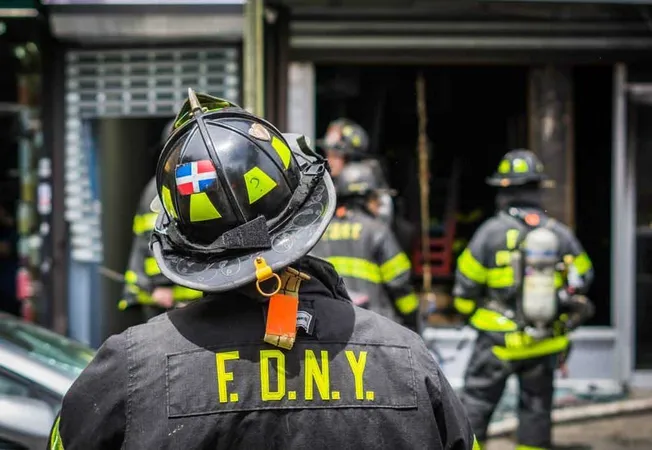
FDNY (Fire Department New York) Test: Your Guide
FDNY vs NYPD Hockey Game: Inside New York's Bravest vs Finest Heroes on Ice Rivalry
FDNY Runs and Workers: What the Numbers Really Mean
About the Author
Law Enforcement Trainer & Civil Service Exam Specialist
John Jay College of Criminal JusticeMarcus B. Thompson earned his Master of Arts in Criminal Justice from John Jay College of Criminal Justice and served 12 years as a law enforcement officer before transitioning to full-time academy instruction. He is a POST-certified instructor who has prepared candidates for police entrance exams, firefighter assessments, and civil service examinations across dozens of agencies.
Join the Discussion
Connect with other students preparing for this exam. Share tips, ask questions, and get advice from people who have been there.
View discussion (9 replies)