
Where Can I Take the Florida Civic Literacy Exam? Complete FCLE Testing Locations Guide 2026 September
Where can I take the Florida Civic Literacy Exam? See which campuses, testing centers, and remote-proctoring options administer the FCLE in 2026 September. 📍

FCLE Testing Locations by the Numbers
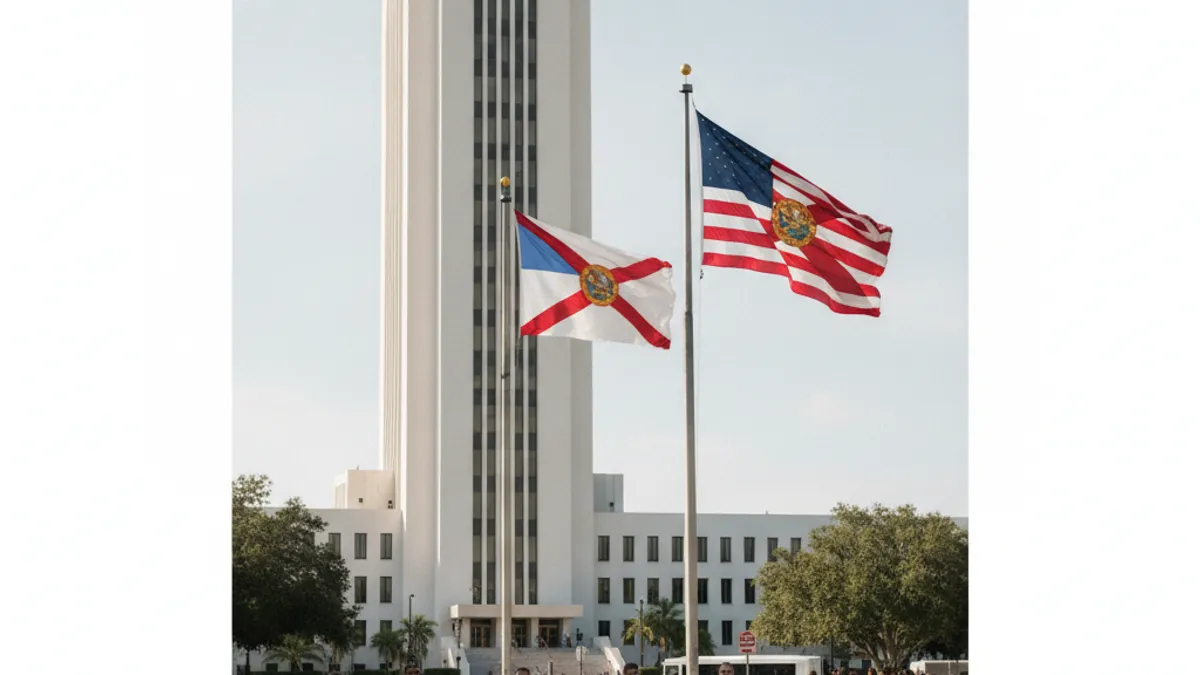
Florida's civic literacy requirement applies to every student earning an associate or bachelor's degree from a public Florida College System institution or a State University System school, and each of those campuses handles testing internally rather than sending students to a shared statewide site. That means the FCLE you take at Miami Dade College is administered by MDC's own testing services staff, using MDC's own scheduling system, even though the underlying fcle exam format and question bank are consistent across the state.
Community and state colleges typically run the exam out of their main testing center or assessment center, the same office that handles course placement tests, CLEP exams, and makeup finals. Universities usually fold it into a larger university testing services department that also proctors the CLAST-successor assessments and various certification exams for education majors.
A smaller number of institutions embed the exam directly into the civics course itself -- students complete it in a proctored classroom session or a monitored lab as part of finishing POS 2041 American Government or an equivalent course -- rather than requiring a separate trip to the testing center. Your syllabus or academic advisor is the fastest way to find out which model your specific college uses this semester.
It also helps to understand why the requirement is structured this way in the first place. Because Florida law makes civic literacy a statewide graduation condition rather than a single standardized statewide test event, each institution is responsible for verifying that its own students meet the requirement before conferring a degree. That decentralized model is exactly why the logistics feel less centralized than, say, a national admissions exam -- there simply isn't one company or one office running every administration.
The most reliable way to find your campus's exact FCLE location is the testing services page on your college or university's own website -- search "[your school name] testing center" and look for a section on civic literacy, general education assessments, or exemption exams.
Most schools list building numbers, room numbers, and whether appointments are required or walk-ins are accepted during posted hours. Some also post a downloadable calendar or an online booking widget right on that page, which is usually faster than calling the office directly during business hours and saves you a round of phone tag during a busy week.
If the website search comes up empty, your academic advisor or registrar's office can point you to the right department in under a phone call, since civic literacy compliance is tracked centrally as a graduation requirement even when the actual testing happens in a separate building. Many advisors will also tell you whether your fcle testing registration needs to happen through the testing center directly or through a student portal first.
Some larger universities operate more than one testing center across different campuses or satellite locations, so double-check which building corresponds to your specific campus if your school has multiple locations in different cities. Showing up completely at the wrong building with an otherwise carefully scheduled appointment is one of the more common last-minute scrambles students report during finals week.
A quick call to the testing center the day before, even after confirming online, catches the occasional schedule change -- a holiday closure, a room reassignment, or a shift to a different building for that week -- before it turns into a wasted trip. This is especially worth doing during the first or last week of a semester, when testing centers sometimes adjust hours around registration and finals traffic without updating the website right away.
In-Person vs. Remote-Proctored Testing
The traditional route is walking into your college's testing center, checking in with a photo ID, and taking the exam on a lab computer under staff supervision. This is still the most common option, especially at community and state colleges where the testing center already handles a steady stream of placement and makeup exams.
On-campus testing usually means shorter turnaround for scores and an easier path if you have a question mid-exam, since a proctor is physically present rather than reachable only through a webcam chat window.
Because each Florida institution runs its own FCLE program, the experience can differ meaningfully from school to school even though the exam content stays standardized statewide. Large state universities with tens of thousands of students often run testing centers with extended hours and multiple daily sessions, while smaller state colleges may only offer a handful of weekly time slots, especially outside peak enrollment periods.
Students juggling coursework at more than one Florida institution -- through dual enrollment, a 2+2 transfer pathway, or concurrent certificate programs -- sometimes ask whether they can take the exam at whichever campus is more convenient. In most cases, yes: since the FCLE tests the same statewide content and satisfies the same statutory requirement, a passing result from one eligible Florida public institution generally transfers with you, though it's always worth confirming directly with your new school's registrar before assuming automatic credit.
Specific location and process details for the major feeder institutions -- Miami Dade College, St. Petersburg College, Florida Atlantic University, Valencia College, Florida SouthWestern State College, the University of Central Florida, and Indian River State College -- are broken down individually on the fcle study guide guide, which is worth a look if your school is on that list.
Dual-enrollment high school students taking college courses through one of these institutions sometimes discover they're eligible to complete the FCLE early, before they've even finished high school, since the requirement attaches to the college credential rather than to a specific class year. If that applies to you, your dual-enrollment coordinator or the college's testing center can confirm whether early testing is available and how it's scheduled alongside your regular high school coursework.
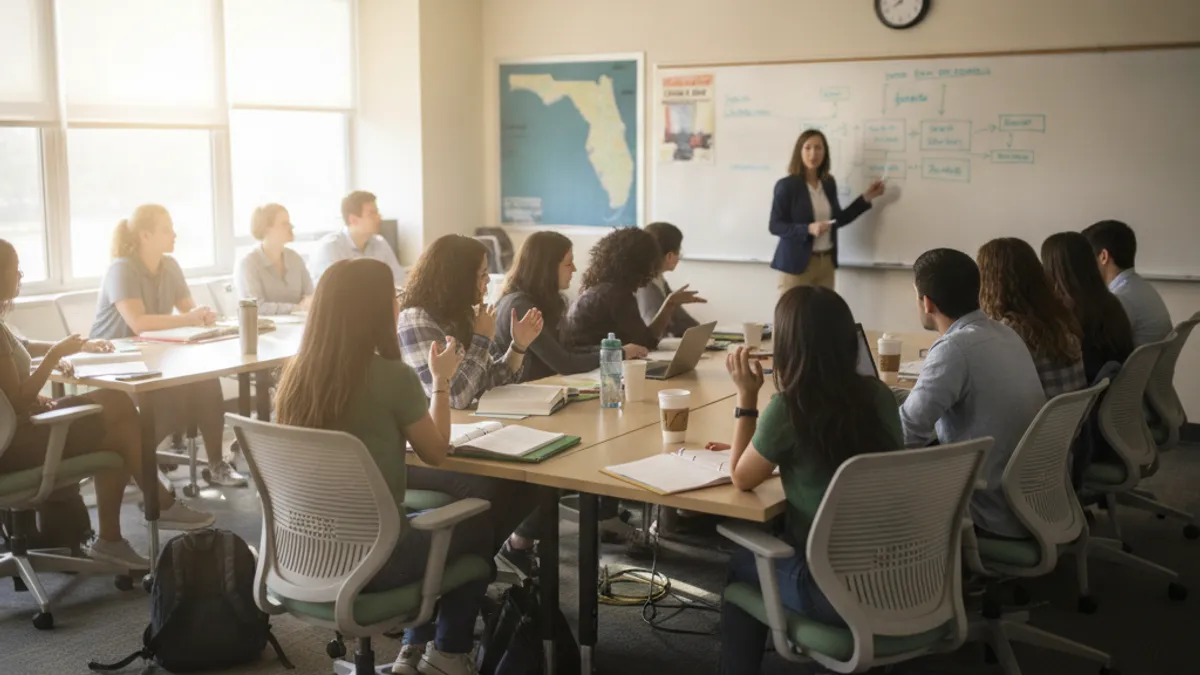
Where Students Commonly Test
The default option at most Florida colleges and universities; check-in with photo ID, computer-based delivery, staff proctor on site.
Home-based testing via webcam monitoring software, scheduled the same way as an on-campus slot but from any private, quiet room.
Administered as part of a scheduled class session for students enrolled in the relevant American Government or civics course.
Some smaller campuses route general-education assessments through a library-based computer lab instead of a dedicated testing center.
Testing centers generally require you to schedule ahead of time rather than showing up unannounced, even for a walk-in-friendly location, because seats and proctors are limited during peak weeks like midterms and finals. Booking two to three weeks before your target date gives you the most flexibility in choosing a convenient time slot, especially close to a graduation-application deadline when every other senior on campus is trying to book the same week.
Bring a valid, government-issued photo ID that matches the name on your student record -- a driver's license, state ID, or passport all typically work, but an expired ID or one with a mismatched name can get you turned away at check-in. Most testing centers don't allow phones, smartwatches, notes, or bags at the workstation, so plan to store personal items in a locker or leave them in your car.
If you've already reviewed the fcle practice exam structure and feel ready, arriving 15 minutes early to complete check-in paperwork is usually enough of a buffer. Students testing remotely should log in even earlier, since ID verification and room scans through a webcam often take longer than an in-person check-in line.
Transfer students are one of the groups most likely to get confused about testing locations, since a student who started at one Florida college and finished at another may have taken -- or need to take -- the FCLE at either institution depending on when they enrolled and which school certifies their degree. If you already passed the exam at a previous Florida public institution, request an official transcript showing the result and bring it to your new school's registrar rather than assuming the new campus will find it automatically.
Registrars can usually confirm within a few business days whether a prior FCLE result satisfies your new degree's requirement, and if there's any doubt, most institutions default to letting you retest rather than delaying graduation over a records mismatch. It's a good habit to raise this during your first advising appointment at the new school instead of waiting until the semester before you plan to graduate.
Military-affiliated students and returning adult learners face a similar question when there has been a long gap between enrollments, or when credit was earned at a Florida institution years earlier under an older version of the civics requirement. In most cases the same rule applies: a documented, passing result stays valid, but it is still worth a direct conversation with the registrar rather than assuming an old transcript will be recognized automatically by a newer degree-audit system.
Students transferring from a private or out-of-state school into a Florida public institution should assume they'll need to test locally, since the FCLE requirement is specific to Florida public colleges and universities and generally isn't satisfied by an equivalent civics course taken elsewhere, even if that course covered similar material.
It's a good idea to ask about this directly during new-student orientation or your first advising meeting, since finding out in your final semester that an out-of-state civics course doesn't count can force an unplanned testing appointment right when your schedule is already tightest.
On-Campus vs. Remote Testing: Which Fits You?
- +On-campus testing gives you a proctor to ask logistics questions in person
- +Remote proctoring removes the need to commute to campus
- +Both formats use the identical statewide question bank
- +Most schools let you switch formats between attempts if you retake
- +Campus labs typically have backup computers if one glitches
- +Remote testing often has more available time slots for working students
- −Remote testing requires a strict private, quiet room with no interruptions
- −Campus centers can fill up fast during finals and add/drop weeks
- −Not every Florida institution offers a remote option yet
- −Technical issues during remote proctoring can force a reschedule
- −Smaller campuses may have very limited weekly testing windows
- −Embedded classroom testing only works if your section offers it

Before You Head to Your FCLE Testing Appointment
- ✓Confirmed which testing center or portal your specific campus uses
- ✓Booked an appointment at least two weeks before a deadline
- ✓Verified your photo ID name matches your student record exactly
- ✓Checked whether a remote-proctoring option is available if preferred
- ✓Reviewed the exam format and section breakdown beforehand
- ✓Cleared your schedule for at least an hour, including check-in time
- ✓Stored phones, smartwatches, and notes before entering the testing room
- ✓Confirmed a quiet, private space is ready if testing remotely
- ✓Requested a transcript if you passed at a previous Florida institution
- ✓Saved your registrar's or testing center's contact info in case of an issue
Preparation matters just as much as knowing where to show up. Students who spend even a couple of sessions with practice questions ahead of test day tend to move through the real exam more quickly and with less second-guessing, since the format and pacing feel familiar rather than brand new. Working through sample civics questions is one of the most efficient ways to spot which topics -- founding documents, branches of government, landmark court decisions -- need another pass before your appointment.
A common mistake is treating the location logistics as an afterthought and only starting to look for a testing center a few days before a graduation-application deadline. Testing centers, especially during peak weeks, can be booked solid, and a remote-proctoring slot still needs to be scheduled and technically tested in advance, not improvised the morning of.
It also helps to build a short mental checklist the week before your appointment: confirm the building and room number, verify your ID is current, and skim the topics you feel shakiest on one more time. None of that takes more than twenty minutes total, but it turns test day into a formality instead of a scramble, and it means a last-minute schedule conflict or a forgotten ID doesn't cost you a whole rebooking cycle, or push a graduation application past its intended deadline entirely.
Beyond just passing the exam, knowing your options for where and how to test can make the whole process noticeably less stressful. Students who prefer a quiet, distraction-free environment often lean toward remote proctoring, while students who like having a proctor nearby for logistics questions tend to stick with the on-campus testing center. Neither option changes the content or difficulty of the exam itself -- it's purely a matter of which setting helps you focus.
If your schedule is unusually tight because of work or family obligations, ask your testing center staff about early-morning, evening, or weekend slots, since many campuses extend hours during peak graduation-application periods specifically to accommodate students who can't test during standard weekday hours.
Students balancing a job or childcare around their coursework often find that asking early, rather than waiting until the week they need to test, opens up options that aren't advertised on the general testing-center schedule. Staff can sometimes fit a student into a slightly earlier or later block than what's publicly posted, especially outside the busiest weeks of the semester, simply because someone asked directly instead of assuming the posted hours were the only option.
Your Campus, Not a Statewide Site, Runs the Exam
There's no single statewide FCLE testing site -- every Florida public college and university administers the exam through its own testing center or approved remote-proctoring platform, so your first stop should always be your own school's testing services page.
Testing centers can book up fast right before graduation-application deadlines. Schedule your FCLE appointment as soon as you know you need it, especially if you're hoping for a remote-proctoring slot, which tends to fill even quicker than in-person seats.
If you're still unsure which office handles FCLE registration at your specific school, the fastest path is usually your student portal's "holds" or "graduation requirements" section, which often links directly to the office responsible for scheduling the exam.
Academic advisors, the registrar's office, and the testing services department all typically have overlapping knowledge of the process, so any one of them is a reasonable starting point if you're not sure where else to look. A quick email to any of these offices, even before you've narrowed down the exact right one, almost always gets forwarded to the correct person within a day or two, so there's little downside to just asking rather than guessing.
Once you've confirmed your testing location and booked an appointment, the rest of the process is mostly about walking in prepared -- valid ID, a clear understanding of the exam format, and a little review of the core civics content most Florida students find helpful before test day.
It's also worth building in a small buffer for the unexpected -- a canceled appointment, a technical hiccup during a remote session, or a testing center closure due to weather. Florida institutions generally accommodate these disruptions by offering another slot within a reasonable window, but having your appointment booked well ahead of any hard deadline gives you the room to absorb a delay without it turning into a graduation-timeline problem.
The bottom line: the Florida Civic Literacy Exam is taken at your own institution's testing center, or through its approved remote-proctoring option, not at some separate statewide testing location. Start with your college or university's testing services page, confirm which format is available to you, and book early -- especially if a graduation deadline is anywhere on the horizon.
From there, a little review of the fcle review content, a confirmed appointment, and a valid photo ID are really all you need to walk in ready. Whether you ultimately test on campus or from the comfort of home, the exam content itself stays exactly the same either way.
And if you're weighing whether to test now or wait a semester, earlier is almost always the better call -- finishing the requirement well before a graduation application is due removes one more item from an already crowded final semester, and it gives you a comfortable buffer in case a retake or a rescheduled appointment ever becomes necessary.
FCLE Testing Location Questions and Answers

FCLE by College: MDC, SPC, FAU, Valencia, FSW, UCF, and IRSC Requirements
Can I Take the FCLE Online? Florida Civic Literacy Exam Complete Guide 2026
FCLE Sign Up: How to Register for the Florida Civic Literacy Exam
FCLE Test Format: How Many Questions, Time Limits & What to Expect
What Is the Florida Civic Literacy Exam? Complete FCLE Guide 2026
About the Author

Educational Psychologist & Academic Test Preparation Expert
Columbia University Teachers CollegeDr. Lisa Patel holds a Doctorate in Education from Columbia University Teachers College and has spent 17 years researching standardized test design and academic assessment. She has developed preparation programs for SAT, ACT, GRE, LSAT, UCAT, and numerous professional licensing exams, helping students of all backgrounds achieve their target scores.
Join the Discussion
Connect with other students preparing for this exam. Share tips, ask questions, and get advice from people who have been there.
View discussion (7 replies)