
FCLE Test Format: How Many Questions, Time Limits & What to Expect 2026 October
How many questions is the FCLE? Learn the Florida Civic Literacy Exam format, scoring, time limits & best prep strategies. ✅ Free practice included.

If you are preparing for the Florida Civic Literacy Exam and wondering about the FCLE how many questions are on it, you have come to the right place. The FCLE consists of 100 scored multiple-choice questions drawn from Florida and U.S. civic knowledge, and every Florida college student enrolled in a state college or university must pass it to earn an associate or bachelor's degree.
Understanding the exact test format before you sit down to take it is one of the most powerful advantages you can give yourself, because knowing what to expect removes anxiety and lets you direct your study energy where it matters most. You can also take an fcle practice test to familiarize yourself with real question styles.
The Florida Civic Literacy Exam was introduced in 2021 under Florida law as a requirement for all students enrolled at Florida public colleges and universities. The legislation mandated that graduates demonstrate a baseline understanding of American history, government structure, constitutional rights, and civic participation before receiving their diploma. The exam is administered by individual institutions, but the content is standardized statewide so that every student — regardless of which campus they attend — is assessed against the same knowledge base and the same passing threshold.
One important fact that surprises many first-time test-takers is that the FCLE does not have a strict time limit enforced the way some standardized exams do. Students are typically given a generous sitting window, often two to three hours, which means the primary challenge is not speed but depth of knowledge. Most well-prepared students finish well within the allotted period, leaving time to review flagged questions. However, complacency about timing has caused some students to rush through later sections after spending too much time on early ones, so pacing still matters.
The 100 questions on the FCLE cover a broad but well-defined curriculum. Content is drawn from two main domain areas: American Government and Political Institutions, and Citizenship Rights and Responsibilities. Each domain tests your knowledge of foundational documents like the U.S. Constitution and the Bill of Rights, key historical events and amendments, the structure and function of federal and state government branches, landmark Supreme Court decisions, and the duties and rights of American citizens. The breakdown of questions across these domains gives the exam a clear structure you can systematically prepare for.
Scoring on the FCLE uses a passing threshold rather than a percentage grade. To pass, a student must answer at least 60 out of 100 questions correctly, which corresponds to a 60% raw score. There is no partial credit and no penalty for guessing, which means you should always provide an answer for every question even when you are uncertain. Strategic elimination of wrong answers — ruling out two of the four choices before guessing — significantly improves your odds on any question where you are unsure of the correct response.
Students who do not pass the FCLE on their first attempt are allowed to retake the exam. Policies on retake timing and the number of attempts permitted vary slightly by institution, but most Florida colleges allow students to retake the test after a waiting period and may require additional civic literacy coursework before a third attempt. Because the retake process takes time and can delay graduation, the vast majority of students benefit enormously from investing in structured preparation before their first sitting rather than relying on a second chance.
The good news is that the FCLE is genuinely passable with a focused study plan, and many students who approach it strategically pass on their first try with room to spare. The content, while broad, is not obscure — it covers material most Americans encountered in middle and high school social studies, reinforced by college-level exposure to government and history. The key is systematic review, active recall practice, and enough exposure to real FCLE-style questions to feel confident walking into the testing room.
Florida Civic Literacy Exam by the Numbers
Key Facts at a Glance
| Item | Value | Details |
|---|---|---|
| Total Questions | 100 | All multiple-choice format |
| Passing Score | 60% | 60 correct answers required |
| Retake Attempts | Unlimited | Policies vary by institution |
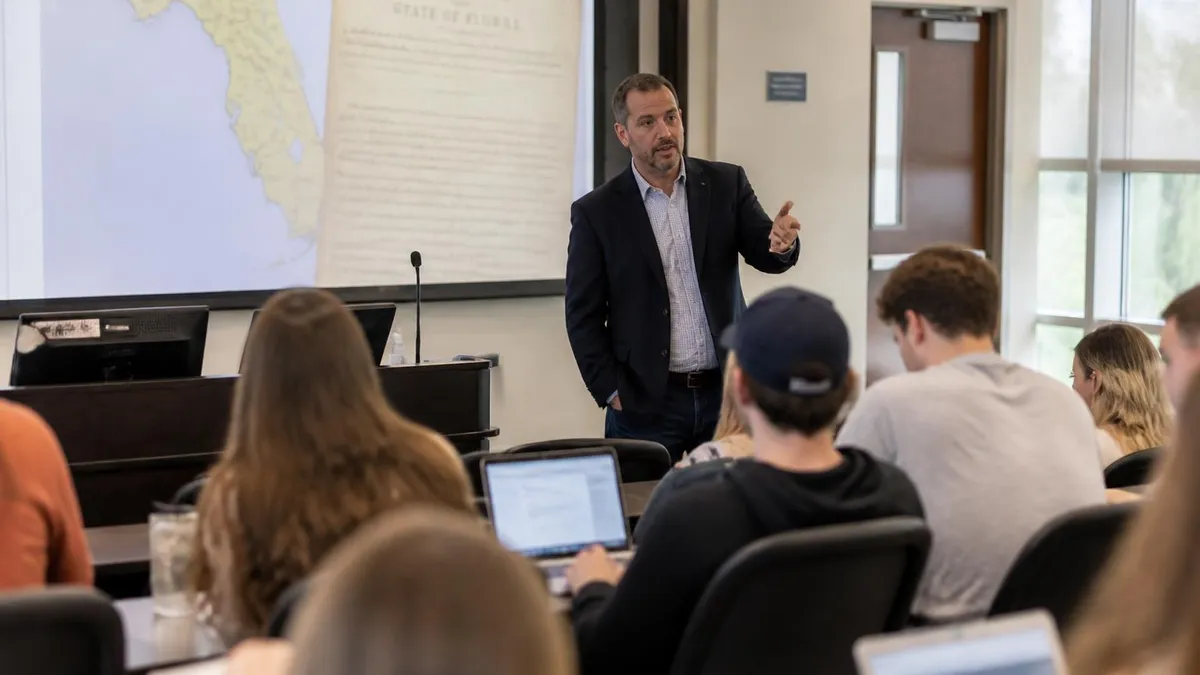
FCLE Exam Format
| Section | Questions | Time | Weight | Notes |
|---|---|---|---|---|
| American Government and Political Institutions | 55 | ~90 min | 55% | Constitution, branches of government, landmark legislation, Supreme Court cases |
| Citizenship Rights and Responsibilities | 45 | ~90 min | 45% | Civil rights, amendments, voter rights, civic duties, historical events |
| Total | 100 | ~3 hours | 100% |
The two content domains of the Florida Civic Literacy Exam each test a distinct slice of civic knowledge, and understanding what each domain covers in depth is essential for targeted preparation. The American Government and Political Institutions domain — which accounts for the largest share of FCLE questions — focuses on the structure, powers, and limitations of the three branches of the federal government: legislative, executive, and judicial.
You will need to know how Congress is organized, how a bill becomes law, the powers of the president, and how the federal judiciary interprets law. The fcle content blueprint also includes state government structure, particularly Florida's constitution and its relationship to federal authority.
Within the American Government domain, the U.S. Constitution is the centerpiece. Expect questions about specific articles — for instance, Article I establishing congressional power, Article II defining executive authority, and Article III creating the federal judiciary. The amendments are equally important, especially the first ten (the Bill of Rights) and later significant amendments like the 13th, 14th, 15th, 19th, and 26th. Many FCLE questions present short scenarios and ask you to identify which constitutional provision applies, so understanding the practical meaning of each amendment is more important than memorizing dates alone.
The Citizenship Rights and Responsibilities domain covers the real-world application of civic knowledge. This section includes questions about civil rights history — the abolition movement, Reconstruction, the civil rights movement of the 1950s and 60s, and landmark legislation like the Civil Rights Act of 1964 and the Voting Rights Act of 1965. Students are expected to understand how these events reshaped American society and law, and how the legal protections won during those eras are enforced today. Knowing the key figures, the key dates, and the key legislative outcomes is essential for this portion of the exam.
Supreme Court cases appear throughout both domains and deserve dedicated study time. The FCLE frequently tests knowledge of landmark decisions that defined constitutional interpretation — cases like Marbury v. Madison, which established judicial review; Brown v. Board of Education, which ended school segregation; and Tinker v. Des Moines, which affirmed student free speech rights. For each major case, you should know the parties involved, the constitutional question at stake, and the court's ruling. Cases that involve First, Fourth, Fifth, and Fourteenth Amendment issues appear most frequently on the exam.
Foundational documents are another high-yield area. The FCLE tests knowledge of the Declaration of Independence, the Federalist Papers, the Gettysburg Address, and Washington's Farewell Address. You do not need to memorize these documents word-for-word, but you should understand their purpose, their key arguments, and their historical significance. Questions in this category often ask students to identify which document contains a specific idea or to recognize how a document influenced American governance. Even a single focused reading session on each document can pay significant dividends on exam day.
Civic participation and the mechanics of voting round out the Citizenship domain. Expect questions about voter registration requirements, how elections are conducted at the federal and state level, the Electoral College system, and the role of political parties. The FCLE also covers the responsibilities of citizenship — jury duty, paying taxes, obeying laws — and distinguishes between rights that are constitutionally protected and responsibilities that are expected but not legally compelled. Understanding that distinction helps you answer scenario-based questions correctly when the exam asks whether a described behavior is a right, a duty, or simply a civic norm.
Students who identify their weaker domain early in their preparation can allocate study time more efficiently. A self-diagnostic practice test taken in the first week of prep reveals which content areas need the most attention. If you score well on government structure questions but struggle with civil rights history, you can weight your remaining study sessions accordingly. This data-driven approach to preparation is consistently more effective than reading through all the material in equal proportion, and it ensures that your weakest areas receive the reinforcement they need before exam day arrives.
FCLE Practice Test Study Strategies by Topic
Start your Constitution and Government prep by reading the seven articles of the U.S. Constitution in plain-language summary form. Focus on Article I (Congress), Article II (President), and Article III (Courts) first, since these generate the most FCLE questions. Then move to the amendments — work through the Bill of Rights one by one, understanding what each protects and why it was adopted. Create a simple chart listing each amendment, the right or restriction it establishes, and a real-world example of how it applies.
Once you have the structure down, shift to application practice. The FCLE frequently presents short scenarios — a police search, a student protest, a presidential veto — and asks which constitutional provision is relevant. Practicing with scenario-based questions is far more effective than re-reading the text because it trains the same cognitive skill the exam tests. Use the fcle practice test tsc resources available on this site to get realistic scenario-format questions and immediate feedback on your answers so you can correct misconceptions quickly.
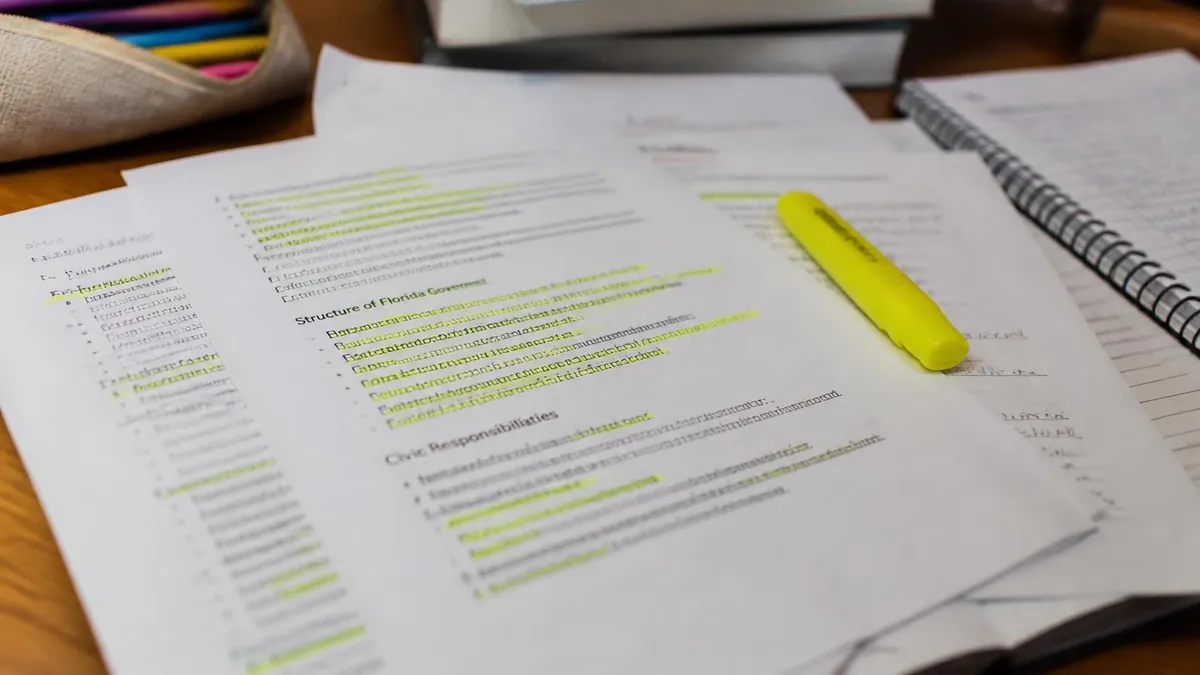
FCLE First Attempt vs. Relying on a Retake
- +Passing on your first attempt saves weeks and avoids graduation delays
- +The FCLE content is finite and well-defined, making first-attempt prep very achievable
- +No negative marking means strategic guessing can boost your score at zero risk
- +Generous time window lets most prepared students answer without rushing
- +Free practice resources including full-length tests are widely available online
- +Passing removes a graduation requirement so you can focus on your major coursework
- −Unprepared students can fail even though the material is foundational
- −Retake waiting periods vary by school and can delay graduation by a semester
- −Some institutions require additional coursework before allowing a third attempt
- −Underestimating content breadth is the most common preparation mistake
- −Multiple retakes can create stress and negatively impact other coursework
- −Relying on memory of high school civics without review often leads to gaps on exam day
FCLE Study Prep Checklist: 10 Steps to Pass the Florida Civic Literacy Exam
- ✓Take a full-length diagnostic practice test in week one to identify your weakest content areas.
- ✓Read and annotate a plain-language summary of the seven articles of the U.S. Constitution.
- ✓Memorize all 27 constitutional amendments, focusing on the Bill of Rights and Civil War amendments.
- ✓Study at least 15 landmark Supreme Court cases with focus on the constitutional issue each one resolved.
- ✓Review the Declaration of Independence, Federalist Papers, and Gettysburg Address for key themes.
- ✓Create a civil rights timeline from 1865 to 1968 covering major legislation and court rulings.
- ✓Practice scenario-based questions that ask you to apply constitutional provisions to real situations.
- ✓Learn the structure of the Electoral College including how electors are allocated and counted.
- ✓Review Florida's state government structure and its relationship to federal constitutional authority.
- ✓Complete at least three full-length FCLE practice tests under timed conditions before your exam date.
No Penalty for Guessing — Always Answer Every Question
The FCLE does not deduct points for wrong answers, so leaving any question blank is always the wrong strategy. Even if you can eliminate just one incorrect choice, your odds of guessing correctly improve from 25% to 33%. On a 100-question exam where the passing threshold is 60, strategic guessing on questions you are unsure about can realistically mean the difference between passing and failing.
Understanding the scoring mechanics of the Florida Civic Literacy Exam in detail gives you a strategic advantage that many test-takers overlook. The passing score is 60 out of 100 questions answered correctly, which is a 60% raw score threshold. There are no scaled scores, no curve adjustments, and no partial credit — each question is worth exactly one point. This straightforward scoring model means your preparation goal is equally clear: know the material well enough to answer at least 60 questions correctly, and you have met the graduation requirement regardless of how other students perform on the same exam day.
The first-time pass rate for the FCLE has varied somewhat across institutions and years, but data from Florida colleges consistently shows that students who engage in at least three to four weeks of structured preparation significantly outperform those who attempt the exam with little to no review. Institutions that offer preparatory civic literacy courses or workshops see notably higher pass rates among students who complete those programs. This correlation is strong enough that most academic advisors at Florida state colleges actively recommend pre-exam preparation resources rather than encouraging students to attempt the exam cold.
Retake policies are worth understanding well in advance, even before your first attempt. Most Florida public colleges allow an unlimited number of retakes but impose a waiting period — commonly 30 days — between attempts. Some schools require students who fail twice to complete a non-credit civic literacy course or attend a mandatory advising session before their third attempt is authorized. These policies are institution-specific, so checking with your school's registrar or academic advising office is the most reliable way to understand the rules that apply to you specifically.
One aspect of FCLE scoring that many students find reassuring is the predictability of content weighting. Because the exam is standardized statewide and the content blueprint is publicly available, there are no hidden surprises about what will or will not appear. The Florida Department of Education publishes the civic literacy standards that the exam is built on, and those standards map directly to the two domains covered in this article. Students who systematically work through all the standards before their exam date have covered everything the FCLE can test — there is no wild-card content outside the published blueprint.
Confidence going into the exam has a measurable effect on performance. Test anxiety causes students to second-guess correct answers, rush through later sections, or misread question stems in ways that lead to avoidable errors. The most effective way to build genuine confidence is through repeated exposure to realistic practice questions, because familiarity with the question format and content reduces the cognitive load of the actual exam. When you have answered several hundred practice questions across both domains, the real exam feels familiar rather than threatening, and you are far more likely to perform at the level your preparation actually supports.
Students often ask whether using multiple study resources — flashcard apps, textbook summaries, video lectures — is better than concentrating on a single source. The research on learning retention strongly favors varied practice over single-mode repetition. Using flashcards for amendments, video summaries for Supreme Court cases, and full-length practice tests for application combines different types of cognitive processing in ways that reinforce memory more effectively than any single method alone. The fcle quizlet community resources and dedicated practice platforms each contribute something unique to your preparation toolkit.
Finally, many students underestimate the value of reviewing their wrong answers during practice rather than just noting their overall score. When you answer a practice question incorrectly, that question reveals a specific knowledge gap — a misunderstood amendment, a confused court case, a blank spot in your civil rights timeline. Spending five minutes understanding why you got that question wrong and what the correct answer actually means is worth more than answering ten additional new questions. Building a systematic error-review habit during practice is one of the highest-use activities you can engage in during the weeks before your FCLE date.
Retake waiting periods and coursework requirements vary by Florida institution and can delay graduation if you are not aware of them in advance. Some schools impose a 30-day waiting period between attempts and may require mandatory advising or completion of a civic literacy module after a second failed attempt. Contact your registrar's office before your first sitting so you understand the full timeline and can plan your graduation schedule accordingly.
Test day preparation begins the week before the exam, not the morning of it. In the five to seven days leading up to your FCLE date, shift your focus from learning new material to reinforcing what you already know.
This means completing full-length practice tests, reviewing your personal error log, and doing targeted flashcard sessions on the specific amendments, court cases, or historical events that have tripped you up during your preparation. Adding large amounts of new content in the final week tends to create confusion rather than confidence, because freshly encountered information has not had time to consolidate in long-term memory.
Sleep is one of the most under-appreciated study tools available to FCLE test-takers. Memory consolidation — the process by which the brain converts short-term knowledge into retrievable long-term memory — happens primarily during sleep, particularly during the deep sleep stages that occur in the later hours of a full night's rest.
Students who cut their sleep short to squeeze in last-minute studying the night before the exam often find that they recall material less reliably during the test than they did the evening before. A full seven to nine hours of sleep the night before your FCLE is genuinely one of the highest-yield things you can do for your score.
On the morning of the exam, eat a balanced meal before arriving at the testing location. Sustained mental focus requires stable blood sugar, and skipping breakfast or eating something high in refined sugar can result in an energy crash midway through the exam. Hydration matters too — even mild dehydration has been shown in research studies to impair concentration and slow cognitive processing. Bring a water bottle if your testing site permits it, and plan your meal timing so that you are comfortably alert when the test begins rather than distracted by hunger or sluggishness.
When you sit down to begin the FCLE, read each question stem carefully before looking at the answer choices. Many test-takers lose points by reading too quickly and missing a key word like "not," "except," or "most directly" that changes what the question is actually asking.
After reading the stem, try to formulate your own answer before looking at the options — this approach reduces the influence of plausible-looking wrong answers, which are specifically designed to attract students who recognize related content but have not fully understood the question. Only after forming your own answer should you scan the choices and match against what you expected.
Eliminate wrong answers systematically before selecting your response. On most FCLE questions, at least one answer choice is clearly incorrect — it contradicts a well-established fact, confuses two different amendments, or applies the wrong court case to the scenario described. Crossing out that obviously wrong choice immediately narrows your decision to three or two options, and from that reduced set you can apply more careful reasoning. If two choices both seem plausible, look for the one that more precisely answers what the question stem asked rather than the one that simply contains accurate information in isolation.
Flag and return to difficult questions rather than spending excessive time on them during your first pass through the exam. The FCLE's generous time window means you can almost certainly complete all 100 questions and still have time to revisit flagged items. Moving forward when stuck prevents you from letting one hard question drain time and mental energy that you need for easier questions later in the exam.
When you return to flagged items after completing the rest of the test, you often find that other questions triggered your memory of the relevant fact, or that a fresh look at the choices makes the correct answer more apparent than it was initially.
After the exam, regardless of how you feel about your performance, avoid the temptation to immediately discuss individual questions with other students who just sat the same test. Post-exam comparison conversations often create unnecessary doubt about answers you were actually correct on, because different people interpret questions differently and one person's certainty about a wrong answer can shake your confidence in a right one. Trust your preparation, submit your responses with confidence, and wait for your official score before drawing any conclusions about your performance. The systematic preparation you invested is the most reliable predictor of your result.
Building a realistic study schedule is the single most important planning decision you can make before beginning FCLE preparation. Students who write down a weekly study plan with specific daily tasks consistently outperform students who study whenever they happen to find time, because the act of scheduling creates accountability and ensures that every content domain gets covered rather than only the topics a student happens to find most interesting.
A typical effective preparation timeline for the FCLE runs four to six weeks for students starting from a moderate baseline, or two to three weeks for students with recent exposure to American government and history coursework.
In the first week of preparation, prioritize completing a full diagnostic practice test and reviewing your results by domain. This initial test is not about performance — you are using it as a measurement instrument to identify your starting point. Note how many questions you got right in each domain, then rank the subcategories within each domain by how well you performed. This ranking becomes your study priority list for the weeks that follow. Topics where you scored below 50% correct deserve the most immediate attention, while topics where you scored above 75% can be maintained with lighter review sessions.
During the middle weeks of preparation, spend your primary study time on content-area deep dives. Use a mix of formats: read concise notes or textbook summaries, watch short video explanations of complex topics like how Supreme Court judicial review works, and then immediately apply what you learned by answering a set of targeted practice questions on that specific topic. This learn-then-test cycle is far more effective than passive reading alone because retrieval practice — the act of pulling information back out of memory — strengthens memory consolidation more powerfully than re-reading the same content multiple times.
Group study can be valuable if your study partners are equally committed to preparation. Teaching a concept to someone else — explaining how the Electoral College works, or walking through the sequence of events in a landmark court case — forces you to organize your knowledge in ways that reveal gaps you did not know you had.
If you can explain something clearly enough that another person understands it, you genuinely understand it yourself. If your explanation breaks down or becomes circular, you have identified a content area that needs more individual review before you rely on it during the actual exam.
Practice tests should become the centerpiece of your preparation in the final ten days before your exam date. At this stage, take full-length tests under realistic conditions — 100 questions, a quiet environment, no interruptions, and a simulated time window. After each test, spend as much time reviewing your wrong answers as you did taking the test itself.
Build a running log of the specific facts, cases, or concepts that you missed across multiple practice sessions, because any item that appears in your error log more than twice is a genuine knowledge gap that deserves focused remediation before the real exam.
Varied review methods help prevent the cognitive fatigue that comes from doing the same type of activity repeatedly. If you have been answering multiple-choice questions for two hours, switch to reading a brief timeline of civil rights legislation or watching a five-minute video summary of the three branches of government. The change in format keeps your brain engaged while still reinforcing content, and the context-switching between formats helps you encounter the same material from multiple angles — which the memory research consistently shows produces stronger long-term retention than single-format repetition.
The night before your FCLE, do a light review of your error log — just a quick pass through the facts and cases that have been hardest for you — then stop studying and invest the rest of your evening in rest and relaxation. Your preparation is complete. The knowledge is in your memory.
What you need now is a calm mind and a rested body so that the information you have worked hard to learn can be retrieved clearly and accurately when each question appears on the screen in front of you. Students who have done the work and then rested appropriately almost always perform better than the anxious last-minute crammers sitting beside them.
Sample FCLE - Florida Civic Literacy Exam Practice Questions
Try these questions from our free FCLE - Florida Civic Literacy Exam practice tests. The correct answer and an explanation follow each question.
What right did Griswold v. Connecticut (1965) recognize for the first time?
- A. The right to an abortion
- B. A constitutional right to privacy within marriage
- C. The right to refuse medical treatment
- D. Equal pay for equal work
Answer: B. A constitutional right to privacy within marriage
The Court found a right to marital privacy in the 'penumbras' of the Bill of Rights, striking down Connecticut's ban on contraceptive use by married couples.
Checks and balances limits government power by ________________; separation of powers limits government power by _____________.
- A. Dividing power across state and national government; giving distinct duties to each branch of government
- B. dividing power between state and national government; giving each branch some power over the others
- C. Dividing the government into three branches; giving each branch some power over the others
- D. Giving each branch some power over the others; dividing the government into three branches
Answer: D. Giving each branch some power over the others; dividing the government into three branches
Separation of powers is the principle of dividing governmental authority into distinct branches—legislative, executive, and judicial—each with its own specific responsibilities. Checks and balances, on the other hand, refers to the system where each branch is given some power to limit or oversee the actions of the other branches. This creates a system of mutual accountability, preventing any single branch from becoming too powerful.
What did the Supreme Court rule in Brown v. Board of Education (1954)?
- A. Segregation in public facilities was permitted under 'separate but equal'
- B. Racial segregation in public schools was unconstitutional
- C. States could set their own desegregation timelines
- D. Only Congress had the power to end school segregation
Answer: B. Racial segregation in public schools was unconstitutional
In Brown v. Board of Education, the Supreme Court unanimously ruled that racial segregation in public schools violated the Equal Protection Clause of the 14th Amendment, overturning Plessy v. Ferguson.
What is the significance of the Fourteenth Amendment's Equal Protection Clause?
- A. It guarantees equal pay for equal work
- B. It requires states to provide equal protection under the law to all persons
- C. It prohibits racial discrimination only in federal programs
- D. It ensures equal representation in the Senate
Answer: B. It requires states to provide equal protection under the law to all persons
The Equal Protection Clause prohibits states from denying any person within their jurisdiction equal protection of the laws.
Take the full FCLE - Florida Civic Literacy Exam practice test
FCLE Questions and Answers
FCLE Practice Test PDF (Free Printable 2026)
FCLE Practice Test TSC: Free Florida Civic Literacy Exam Questions
FCLE Practice Test: Florida Civic Literacy Exam Free Prep 2026

How Long Is the FCLE? Complete Florida Civic Literacy Exam Guide 2026

FCLE Supreme Court Cases: What You Need to Know for the Florida Civic Literacy Exam
About the Author

Educational Psychologist & Academic Test Preparation Expert
Columbia University Teachers CollegeDr. Lisa Patel holds a Doctorate in Education from Columbia University Teachers College and has spent 17 years researching standardized test design and academic assessment. She has developed preparation programs for SAT, ACT, GRE, LSAT, UCAT, and numerous professional licensing exams, helping students of all backgrounds achieve their target scores.
Join the Discussion
Connect with other students preparing for this exam. Share tips, ask questions, and get advice from people who have been there.
View discussion (7 replies)