
Can I Renew My Esthetician License Online? Complete State-by-State Renewal Guide
Can I renew my esthetician license online? Yes — most states allow it. Learn CE hours, fees, and deadlines. ✅ Complete 2026 October renewal guide.

If you are an esthetician wondering can I renew my esthetician license online, the short answer is yes — most states now allow online renewal through their cosmetology board portals, and many also permit you to complete your continuing education hours entirely online. Knowing the exact process for your state can save you from last-minute scrambles, costly late fees, and the nightmare scenario of practicing without a valid license. This guide walks you through every major step so you can renew with confidence.
The renewal process for an esthetician license varies considerably from state to state. Some boards, like California's Board of Barbering and Cosmetology, have fully digital renewal systems where you log in, confirm your continuing education completion, pay your fee, and receive a renewed license certificate by email within days. Others still require a paper form, a notarized signature, or a mailed check. Knowing which category your state falls into is the first and most important step.
Continuing education requirements are the most common stumbling block for license renewal. Depending on your state, you may need anywhere from 4 to 16 hours of approved CE credits per renewal cycle. Topics often include sanitation and infection control, chemical safety, state law updates, and business ethics. Many accredited online platforms now offer CE courses that are accepted by multiple state boards simultaneously, making it easier than ever to fulfill your hours without taking time off work.
Fees are another key consideration. State renewal fees for an esthetician license typically range from $40 to $150, and late renewal penalties can add another $50 to $200 on top of that. A handful of states also charge a separate fee for each CE course approval or for reinstating a lapsed license. Budgeting for these costs well before your renewal deadline prevents unpleasant surprises. Some states offer a two-year license cycle while others renew annually, so double-check your cycle length.
The distinction between an aesthetician vs esthetician is more than a spelling debate — it can actually affect how your renewal paperwork is categorized in certain states. Most U.S. licensing boards use the spelling "esthetician" on their official forms, though the two terms refer to the same profession. When filling out renewal applications or searching your board's online portal, always use the spelling your original license certificate shows to avoid a mismatch that delays processing.
Missing a renewal deadline does not always mean starting from scratch, but it does mean extra work and expense. Most states offer a grace period of 30 to 60 days beyond the expiration date during which you can still renew with a late fee. After that window, your license may be classified as lapsed or inactive, which typically requires a reinstatement application, proof of current CE completion, and sometimes a re-examination. Staying on top of your renewal calendar is simply good professional hygiene.
This article covers the full renewal landscape: online vs. in-person renewal options, continuing education requirements by topic area, state-specific timelines, costs, and the smartest strategies for staying compliant year after year. Whether you are renewing for the first time or the fifth, the guidance below will help you navigate the process efficiently and keep your career on track.
Esthetician License Renewal by the Numbers
Key Facts at a Glance
| Item | Value | Details |
|---|---|---|
| CE Hours Required Per Cycle | 4–16 | Varies by state |
| Typical License Cycle Length | 1–2 yrs | State dependent |
| States Offering Online Renewal | 45+ | As of 2026 |

Core Esthetician License Renewal Requirements
Your license must not be under suspension or disciplinary review at the time of renewal. Some states require a signed affirmation confirming you have not violated any cosmetology statutes during the previous renewal cycle before your application is processed.
Most states mandate between 4 and 16 hours of board-approved continuing education. Topics typically include sanitation protocols, chemical safety, and state law. Online CE providers must usually be pre-approved by your specific state board before their courses count.
Submit the official renewal form — either online through your state board portal or by mail — along with the required fee. Fees range from $40 to $150. Payment methods vary; online portals typically accept credit cards, while mail-in renewals may require a check or money order.
Most states do not require you to submit CE certificates upfront, but you must retain them for two to four years in case of an audit. A small number of states require CE providers to report completions directly to the board on your behalf electronically.
Some state boards require identity verification during online renewal, especially if your personal information has changed. Name changes due to marriage or legal proceedings typically require a supporting document such as a marriage certificate or court order alongside your renewal application.
Continuing education is the backbone of the esthetician license renewal system, and understanding exactly what qualifies as an approved CE hour can spare you from a rejected renewal application. At its core, CE is designed to ensure that working estheticians stay current with evolving techniques, safety standards, and state regulations. Boards want to know that the professionals serving clients have up-to-date knowledge of everything from chemical peel risks to infection control best practices — especially in the wake of increased public health scrutiny in the beauty industry.
The most universally required CE topic is sanitation and infection control. Nearly every state board that mandates CE hours includes at least one to two hours specifically covering disinfection protocols, bloodborne pathogen awareness, and the proper use of EPA-registered disinfectants in the treatment room. This is not merely a formality: improperly sanitized tools and workstations have led to documented infections among salon clients, which is why regulators treat this topic as non-negotiable. Always verify that the sanitation course you take is approved for your specific state, since approval lists are updated regularly.
Beyond sanitation, popular CE categories include advanced skin care techniques, chemical exfoliation safety, laser and light therapy awareness, business law and ethics, and diversity in client care. Medical estheticians or those working in clinical settings may pursue more specialized CE in areas like pre- and post-operative skin care, oncology esthetics, or advanced ingredient chemistry. These specialized courses can often count toward both your state CE requirement and any voluntary certifications you hold through professional associations like ASCP or NCEA.
Online CE has expanded dramatically since 2020. Platforms like Milady Pro, Oncology Skincare Education, Associated Skin Care Professionals, and the National Coalition of Estheticians offer fully asynchronous courses you can complete at your own pace, any time of day. The courses typically end with a multiple-choice assessment, and a certificate of completion is emailed instantly upon passing. Many of these providers are approved in 30 or more states simultaneously, which is ideal if you hold licenses in multiple states or plan to reciprocate your license in the future.
One often-overlooked nuance is the difference between "clock hours" and "credit hours" in CE calculations. Some states count only actual instructional minutes as clock hours, meaning a course listed as "2 credit hours" by a provider might only count as 1.5 clock hours toward your state requirement. Always cross-reference the course's listed clock hours against your state board's specific calculation methodology before enrolling. This detail trips up many estheticians who assume a course credit hour equals a board-recognized hour.
If you are a what does an esthetician do reader still building your understanding of the profession, it is worth knowing that CE courses are not just bureaucratic hurdles — they are genuine professional development tools. Many estheticians report that a CE course on LED light therapy or lymphatic drainage massage opened up a new service offering that meaningfully increased their income. Treating renewal as a growth opportunity rather than a compliance checkbox is the mindset that separates thriving estheticians from those who stagnate.
Timing your CE completion is as important as choosing the right courses. Most boards recommend completing at least half your required hours by the midpoint of your renewal cycle so you are not rushing at the end. Some estheticians spread their hours across the year by completing one or two online modules per quarter, which also helps with knowledge retention. Procrastinating until the week before your license expires is risky: popular CE courses sometimes sell out their live sessions, and even asynchronous online courses can experience technical issues right before major board renewal deadlines when traffic spikes.
How to Renew Your Esthetician License: Online, by Mail, and In Person
Online renewal is now available in more than 45 states and is the fastest, most convenient option for most estheticians. You log into your state cosmetology board's official portal, verify your personal and license information, confirm CE completion, pay the renewal fee by credit or debit card, and download or print a receipt. Processing is often instant, and your updated license certificate typically arrives by email within one to five business days, eliminating the weeks-long wait associated with mail-in applications.
Before starting your online renewal, gather your license number, Social Security number or state-issued ID number, CE certificates (for your records), and a valid payment method. Some state portals time out after 15 minutes of inactivity, so having everything ready before you log in prevents losing your progress. States like Texas, Florida, New York, and California all maintain strong online portals that handle thousands of esthetician renewals daily with minimal wait times, even during peak renewal seasons.

Pros and Cons of Online Esthetician License Renewal
- +Instant processing in most states — renewed license received within 1 to 5 business days
- +Available 24/7, so you can renew outside of business hours or from any location
- +No postage, mailing delays, or risk of lost paperwork
- +Immediate confirmation email serves as proof of renewal status for employers
- +Many portals pre-populate your information, reducing data entry errors
- +Online payment by credit card is convenient and creates an automatic digital receipt
- −Requires reliable internet access and a compatible device, which not all estheticians have
- −State portal outages during peak renewal periods can prevent timely submission
- −Some older state portals have poor mobile interfaces, making phone-based renewal frustrating
- −Identity verification steps can lock out users whose records have discrepancies
- −Online systems may not handle complex situations like name changes or reinstatements
- −Phishing scams mimicking official board portals put login credentials at risk if you are not careful
Esthetician License Renewal Checklist: 10 Steps to Stay Compliant
- ✓Log your license expiration date in your phone calendar with reminders set 90, 60, and 30 days out.
- ✓Confirm your state's exact CE hour requirement and list of approved topic categories for the current cycle.
- ✓Enroll in board-approved CE courses early in your renewal cycle to avoid last-minute availability issues.
- ✓Save all CE certificates of completion in a dedicated folder (digital and physical backup) for audit purposes.
- ✓Verify your mailing address and contact information on file with your state board are current before renewing.
- ✓Visit your state cosmetology board's official website to confirm the renewal fee amount for the current cycle.
- ✓Complete the online or paper renewal application accurately — mismatched names or license numbers cause delays.
- ✓Submit payment using an accepted method (credit card online, check by mail) and save your payment confirmation.
- ✓Download or screenshot the renewal confirmation page immediately after submitting your application.
- ✓Post or store your renewed license certificate in your treatment room where clients and inspectors can see it.
Renew Early — Never Wait Until the Expiration Date
State boards process renewal applications in the order received, and volume spikes dramatically in the two weeks before mass expiration dates. Submitting your renewal 60 to 90 days early guarantees you will have your updated license well before your current one expires, protecting you from any gap in licensure that could put your employment at risk.
Understanding the full cost of renewing your esthetician license helps you budget appropriately and avoid the financial shock of unexpected fees. The base renewal fee is just the beginning — when you add CE course costs, potential late fees, and any administrative charges, the total out-of-pocket expense for a single renewal cycle can range from under $100 to well over $500, depending on your state and your choices. Planning ahead financially is just as important as planning ahead logistically.
State renewal fees are set by the cosmetology board and typically range from $40 in states like Arkansas to $150 in states like California. These fees are non-refundable regardless of the outcome of your application, so make sure you are eligible to renew before submitting payment. Some states also charge a separate processing or technology fee of $5 to $25 on top of the base renewal fee when you renew online, though this is becoming less common as boards absorb those costs into their operating budgets.
Continuing education course costs vary widely depending on the provider, format, and topic. A single online CE module covering sanitation basics might cost as little as $15, while a comprehensive 8-hour online course package from a premium provider might run $120 to $200. In-person CE workshops and conferences tend to be more expensive due to venue and instructor costs, though they often offer valuable networking and hands-on learning that online courses cannot replicate. Shopping around among approved providers can save you $50 to $100 per renewal cycle without sacrificing quality.
Late renewal fees are among the most avoidable costs in the entire renewal process, yet thousands of estheticians incur them every year. The typical late fee ranges from $50 to $100 for renewals submitted within the grace period after expiration, and some states charge a percentage of the original fee rather than a flat amount. A handful of states escalate the penalty the longer you wait, charging more for renewals submitted 30 days late than for those submitted 15 days late. Setting calendar reminders eliminates this cost entirely.
Reinstatement fees apply when your license has lapsed entirely and can no longer be renewed through the standard process. These fees are almost always higher than standard renewal fees — often two to three times the base amount — and may be accompanied by an application fee, a re-examination fee, and the cost of completing additional CE hours.
In the most severe cases where a license has been lapsed for five or more years, some states require you to reapply as a new applicant, including completing your full training hours again. The esthetician salary you stand to earn makes renewal costs trivial by comparison.
If cost is a genuine barrier, there are resources available. Some state boards have fee waiver programs for estheticians experiencing financial hardship. Professional associations like the Associated Skin Care Professionals (ASCP) include CE credits as part of their membership benefits, effectively reducing the per-hour cost of CE to pennies. Employers at spas and salons often cover renewal fees for their licensed staff as a retention benefit — it is worth asking your employer directly, especially if you have been with them for multiple years.
Taxes add one more dimension to renewal costs worth noting. Renewal fees and CE course costs paid out of pocket are generally deductible as business expenses for self-employed estheticians who file a Schedule C. Even employed estheticians can often deduct unreimbursed professional licensing costs as itemized deductions, though tax law in this area changes periodically. Consulting a tax professional who works with beauty industry clients can help you recoup a portion of your renewal expenses through legitimate deductions, making the true net cost lower than the sticker price suggests.

Practicing as an esthetician after your license has expired — even by one day — can result in fines of $500 to $5,000, mandatory suspension, and a permanent disciplinary mark on your license record that appears in future employer background checks. Some states also hold the employing salon liable for allowing an unlicensed technician to perform services, putting your workplace at risk as well as yourself.
If your esthetician license has already lapsed, do not panic — reinstatement is possible in nearly every state, though the process is more involved than a standard renewal. The first step is to stop performing esthetician services immediately and contact your state board to confirm your license's current status. Board websites typically have a public license lookup tool where you can verify whether your license is listed as expired, inactive, or revoked, each of which carries a different reinstatement pathway and cost structure.
For licenses that lapsed within the past one to two years, most states allow reinstatement through a simplified process that involves completing any outstanding CE hours, submitting a reinstatement application, and paying both the standard renewal fee and a reinstatement penalty. The total time from application submission to having a valid license back in your hands is typically two to four weeks if you submit everything correctly the first time. Incomplete applications are the most common cause of delays, so read the reinstatement instructions thoroughly before submitting.
For licenses lapsed between two and five years, the reinstatement requirements become more stringent. Many states in this category require you to pass the written state board examination again before your license can be reinstated. This means studying state law, sanitation regulations, and general esthetics knowledge — essentially the same material you covered before your initial licensure. Review courses and practice tests designed for re-examination candidates are available through most esthetics schools and online platforms, and many candidates find that a focused four to six week study period is sufficient to pass.
Licenses lapsed for more than five years are treated by most state boards as effectively abandoned. In these situations, you will typically need to enroll in a state-approved esthetics program, complete the full training hours required for new applicants (typically 260 to 1,500 hours depending on the state), pass both the written and practical examinations, and apply for a new license from scratch.
This is a significant commitment, but for estheticians returning to the field after a career break for family, health, or other reasons, it is absolutely achievable. Understanding how long is esthetician school in your state will help you plan realistically for this re-entry timeline.
One important nuance in the lapsed license landscape is the difference between an expired license and a suspended or revoked license. An expired license simply means the renewal deadline was missed — there is no finding of wrongdoing, and reinstatement is an administrative process. A suspended license means a board action has temporarily barred you from practicing, usually due to a disciplinary matter. A revoked license means the board has permanently terminated your licensure, which requires a petition process to restore. These are legally and procedurally distinct situations, and confusing them can lead to misunderstanding your reinstatement options.
Becoming a licensed esthetician again after a lapse also requires attention to your employer relationships. Many spas, medical offices, and salons conduct periodic license audits of their staff and may have discovered your lapse before you addressed it. Being proactive — notifying your employer of the situation and your reinstatement timeline — is far better than being discovered. Employers generally respond better to transparency than to discovering a compliance issue during a routine state inspection, which can result in fines for the business as well as the individual practitioner.
Reciprocity agreements between states are another factor to consider if you are renewing or reinstating in a new state after relocating. Many states offer a reciprocity or endorsement pathway that allows you to obtain a license in the new state based on your existing (or recently reinstated) license from your home state, without retaking examinations.
Reciprocity requirements vary — some states require equivalent training hours, others simply require a clean license with no disciplinary history, and a few states like Louisiana have very limited reciprocity. Research your new state's endorsement requirements early so the move does not interrupt your ability to work.
Staying ahead of your esthetician license renewal is ultimately about building habits and systems that make compliance automatic rather than stressful. The estheticians who never miss a renewal deadline are not necessarily more organized by nature — they have simply set up the right reminders, relationships, and routines to make renewal a non-event. The strategies below are practical, immediately actionable, and drawn from the experiences of career estheticians who have successfully managed their licensure across multiple renewal cycles and even multiple states.
The single most impactful habit is marking your expiration date in every calendar system you use — your phone, your work scheduling app, your personal planner — the moment you receive your renewed license. Set recurring reminders at 90 days, 60 days, 30 days, and 7 days before expiration.
The 90-day reminder is your cue to start shopping for CE courses; the 60-day reminder is your cue to have your CE hours completed; the 30-day reminder is your cue to submit your renewal application; and the 7-day reminder is your last-chance check to confirm your new license certificate has been received.
Joining a professional association is one of the most cost-effective ways to manage CE requirements over your career. Organizations like ASCP, the National Esthetics, Barbering and Nail Association (NEBA), and the International Esthetics, Cosmetics and Spa Conference (IECSC) offer member benefits that include discounted or included CE credits, access to industry publications, professional liability insurance, and legal resources. Membership fees of $100 to $200 per year often pay for themselves in CE savings alone, with the insurance and professional support as valuable bonuses.
Tracking your CE completions throughout the year rather than all at once prevents the anxiety of trying to compress 16 hours of coursework into a single weekend before your deadline. A simple spreadsheet or notes app entry recording each course name, provider, hours earned, date completed, and certificate number gives you an instant audit-ready record at any time. Several CE platforms also maintain a transcript of your completed courses within your account, which you can export as a PDF — a convenient backup in case physical certificates are lost.
For estheticians who work in multiple states or plan to expand their practice, understanding the renewal calendar in each state where you hold a license is critical. States do not coordinate renewal dates with each other, meaning you could have renewals due in March, July, and November in three different states. A master spreadsheet tracking every license number, expiration date, CE requirement, and renewal fee across all your jurisdictions is invaluable for multi-state practitioners. Some professional license management software products are now available that automate tracking and send reminders across multiple licenses and jurisdictions.
Networking with other estheticians in your area or online community can surface practical renewal tips specific to your state that are not published anywhere officially. Local esthetician Facebook groups, subreddits, and professional association chapters are full of practitioners who have navigated the same renewal process and can share real-time updates about portal issues, CE provider approvals, fee changes, or board processing times. This peer knowledge complements the official information from your board and can help you avoid pitfalls that caught others off guard.
Finally, consider your renewal as an annual opportunity to assess the trajectory of your career. Are you building toward becoming a medical esthetician, which typically requires additional training and certifications beyond your state license? Are you interested in opening your own studio, which adds a business license and potentially a salon establishment license to your renewal obligations?
Each renewal cycle is a natural checkpoint to ask whether your current certifications and training align with where you want to be professionally in the next two years. Renewal is not just compliance — it is a career pulse check that the best estheticians use intentionally.
Sample Esthetician Practice Questions
Try these questions from our free Esthetician practice tests. The correct answer and an explanation follow each question.
A client's intake form states they are using tretinoin. Based on this information, which treatment should the esthetician avoid?
- A. A hydrating mask application
- B. A chemical exfoliation peel
- C. A basic cleansing facial
- D. A hand and arm massage
Answer: B. A chemical exfoliation peel
Tretinoin thins the stratum corneum and increases skin sensitivity, making chemical peels contraindicated due to the high risk of burns and irritation.
A client is concerned about fine lines and the overall plumpness of their skin. An esthetician would recognize that the continuous renewal and health of the epidermis is due to cell division (mitosis) that primarily occurs in which layer?
- A. Stratum Corneum
- B. Stratum Granulosum
- C. Stratum Spinosum
- D. Stratum Germinativum (Basale)
Answer: D. Stratum Germinativum (Basale)
The Stratum Germinativum, also known as the Stratum Basale, is the deepest layer of the epidermis. It is responsible for the regeneration of the epidermis through the process of mitosis, where new keratinocytes are formed and then pushed upwards.
A product brochure states that a serum is 'non-comedogenic.' Based on reading this claim, which client concern is this product most specifically formulated to address?
- A. Sensitive skin prone to redness and irritation
- B. Skin prone to clogged pores and breakouts
- C. Dehydrated skin lacking moisture retention
- D. Mature skin showing signs of aging
Answer: B. Skin prone to clogged pores and breakouts
Non-comedogenic means the product is formulated to not clog pores or promote the formation of comedones (blackheads and whiteheads), making it appropriate for acne-prone or breakout-prone skin types.
According to a state board sanitation standards document, which of the following correctly describes the difference between sanitation and sterilization?
- A. Sanitation eliminates all microbial life; sterilization reduces microbial count to a safe level
- B. Sanitation and sterilization are interchangeable terms in cosmetology regulations
- C. Sanitation reduces the number of pathogens to a safe level; sterilization destroys all microbial life including spores
- D. Sterilization uses chemical disinfectants; sanitation uses heat-based methods only
Answer: C. Sanitation reduces the number of pathogens to a safe level; sterilization destroys all microbial life including spores
Sanitation lowers microbial counts to safe public health levels, while sterilization is the complete destruction of all microorganisms, including bacterial spores — a critical distinction in state board regulations.
Esthetician Questions and Answers
Esthetician Salary: Pay by State, Setting, and Experience (2026)
Esthetician Resume Skills — Complete Guide (2026)
Esthetician Classes: Pre-Licensing, CE, Online & Specialty Courses
What Is an Esthetician? Definition, Duties, and Career Guide
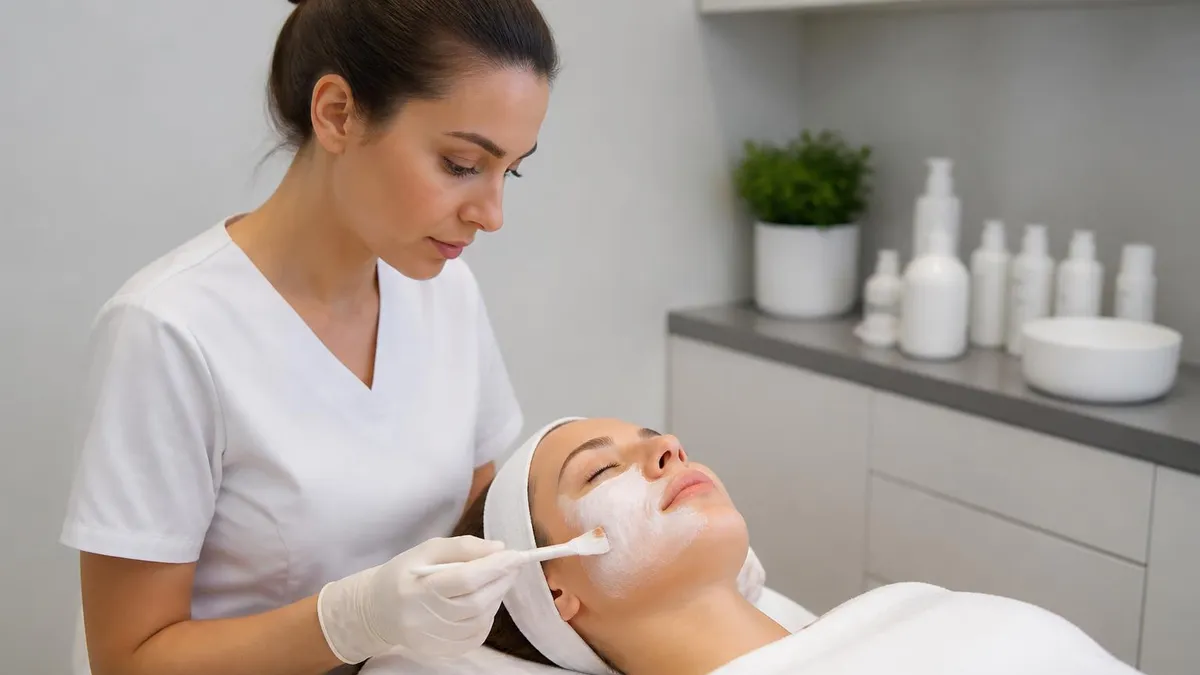
Holistic Esthetician: Complete Career Guide to Natural Skincare, Training, Certification, and Earnings in 2026
About the Author

Licensed Cosmetologist & Beauty Licensing Exam Specialist
Paul Mitchell SchoolsMichelle Santos is a licensed cosmetologist with a Bachelor of Science in Esthetics and Salon Management from Paul Mitchell School. She has 16 years of salon industry experience and 8 years preparing students for state cosmetology board exams in theory, practical skills, and sanitation. She specializes in licensure preparation for cosmetologists, estheticians, and nail technicians.
Join the Discussion
Connect with other students preparing for this exam. Share tips, ask questions, and get advice from people who have been there.
View discussion (4 replies)