
EPA Section 608 Regulations: Complete Guide for HVAC Technicians 2026 October
Master EPA section 608 regulations with our complete guide. Learn refrigerant rules, certification types, and exam tips. ✅ Updated for 2026 October.
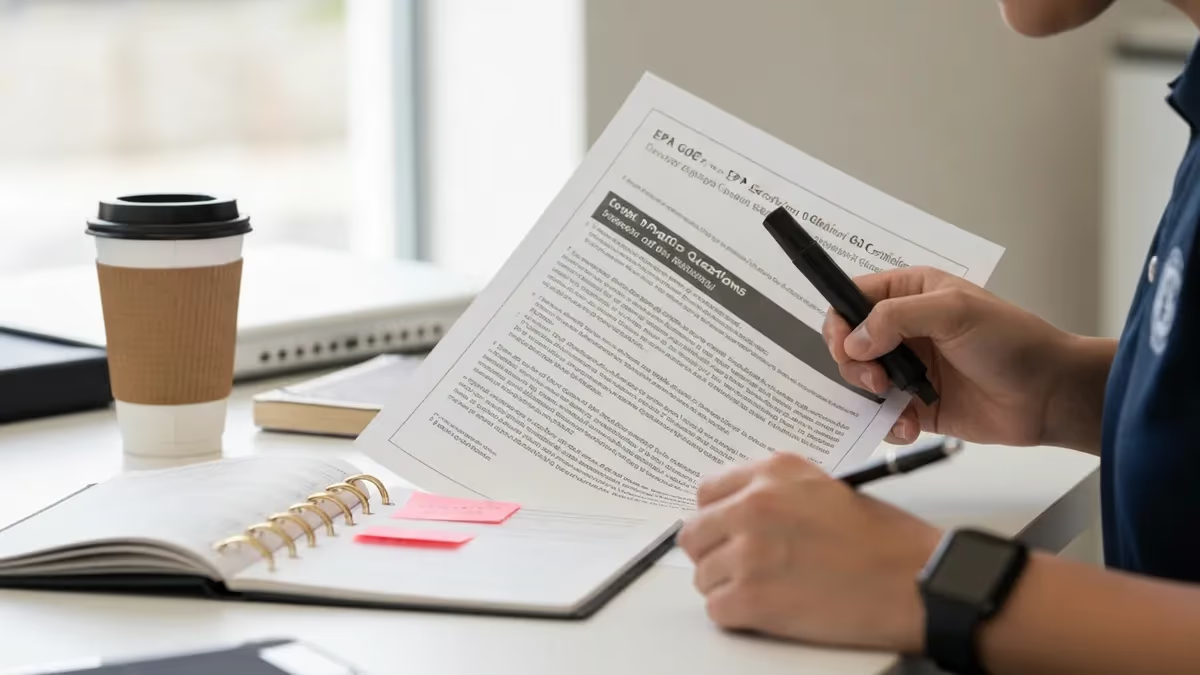
The epa section 608 regulations form the legal backbone of refrigerant handling in the United States, establishing mandatory standards that every HVAC technician must understand before servicing any refrigeration or air-conditioning equipment. Enacted under the Clean Air Act, these regulations are enforced by the Environmental Protection Agency and carry real consequences for violations, including civil penalties exceeding $44,539 per day per violation. Whether you are entering the HVAC trade for the first time or refreshing your knowledge before a recertification exam, understanding Section 608 inside and out is non-negotiable for a compliant and successful career.
At its core, Section 608 was designed to reduce the release of ozone-depleting substances and high-global-warming-potential refrigerants into the atmosphere. The regulations cover everything from the types of equipment technicians are permitted to service, to the specific recovery techniques required before opening a system, to the record-keeping obligations that must be maintained for audits. The EPA did not create these rules arbitrarily; each requirement connects directly to measurable environmental harm caused by refrigerant venting, which was once a common and widely accepted industry practice.
Technicians who hold an EPA 608 certification demonstrate to employers, inspectors, and clients that they have studied and internalized these legal requirements. The certification is divided into four types — Type I, Type II, Type III, and Universal — each corresponding to a different class of equipment. Choosing the right certification type depends on the systems you plan to service in your career. Universal certification, which covers all equipment classes, is the most popular choice among professionals who want maximum flexibility in the field and on the job market.
Understanding the regulatory framework also means knowing the difference between refrigerants that are subject to Section 608 controls and those that fall under separate rules. Traditional chlorofluorocarbon (CFC) and hydrochlorofluorocarbon (HCFC) refrigerants like R-22 have long been regulated under Section 608. More recently, the AIM Act of 2020 extended EPA authority to cover hydrofluorocarbons (HFCs) such as R-410A, which means the regulatory universe is actively expanding and technicians need to stay current with rule changes to remain compliant throughout their careers.
The examination that leads to EPA 608 certification tests your command of refrigerant recovery procedures, equipment classifications, leak detection and repair requirements, and safe handling practices. Many candidates underestimate the depth of knowledge required and walk into the exam without adequate preparation, only to find themselves surprised by the technical specificity of the questions. This guide is designed to help you build a thorough, exam-ready understanding of every major area covered by Section 608 regulations so you can pass confidently and apply what you know correctly on the job.
Beyond the exam itself, the regulations have practical day-to-day implications for how technicians document their work. Sales of refrigerants in containers larger than two pounds are restricted to certified individuals, and technicians must be able to produce proof of certification on demand. Employers in the HVAC industry routinely check certification status before hiring, and some state licensing boards require EPA 608 certification as a prerequisite for obtaining a state contractor's license. In short, this credential is not just an academic achievement — it is a professional necessity with legal teeth.
This article walks you through every essential dimension of EPA Section 608 regulations: what the law requires, how the certification system is structured, what to expect on the exam, how to build a study plan, and what practical habits will keep you compliant throughout your career. By the time you finish reading, you will have a clear roadmap for mastering these rules and earning the certification that opens doors across the HVAC industry.
EPA Section 608 by the Numbers

EPA 608 Certification Types: What Each Covers
Covers appliances manufactured, charged, and hermetically sealed at the factory with five pounds or less of refrigerant. Examples include household refrigerators, window air conditioners, and packaged terminal units. Unique recovery rules apply because access ports are rarely installed.
Applies to high-pressure and very high-pressure appliances other than small appliances and MVACs. Covers systems using refrigerants like R-22, R-410A, and R-134a in commercial and residential split systems, chillers, and rooftop units above the five-pound threshold.
Covers low-pressure appliances using refrigerants such as R-11 and R-123, typically found in large centrifugal chillers. These systems operate below atmospheric pressure, creating unique leak and recovery challenges that require specialized equipment and procedures.
The most comprehensive credential, covering all three equipment types plus general core knowledge. Universal is the preferred choice for technicians who want unrestricted ability to service any refrigerant-containing system and maximum employability across the industry.
All certification exams include a core section covering general environmental regulations, refrigerant safety, ozone depletion science, and record-keeping requirements. Passing the core is mandatory regardless of which type-specific section you attempt.
The key regulatory requirements under EPA Section 608 begin with the prohibition on knowing venting of refrigerants during the maintenance, service, repair, or disposal of refrigeration and air-conditioning equipment. This prohibition covers all refrigerants regulated under Section 608, including CFCs, HCFCs, and HFCs. The rule is not limited to large commercial systems — it applies equally to the residential split system in a backyard, the walk-in cooler at a local restaurant, and the large centrifugal chiller in a downtown office building. Technicians must recover refrigerant before opening any system, regardless of how small the charge or how routine the repair.
Recovery requirements specify minimum efficiency standards that must be met before a system can be opened. For systems manufactured before November 15, 1993, different efficiency thresholds apply compared to newer equipment. For high-pressure systems with more than 200 pounds of refrigerant, technicians must achieve at least 90 percent recovery efficiency using a recovery machine.
For systems with less than 200 pounds, the threshold is 80 percent. Low-pressure systems have their own set of standards tied to system pressure rather than weight of refrigerant recovered. Understanding which threshold applies to a given job is a core exam topic and a daily operational reality.
Leak repair requirements are another major pillar of Section 608. When refrigerant loss in comfort cooling equipment exceeds 10 percent of the system charge per year, the owner is required to repair the leak within 30 days of discovery. For commercial refrigeration systems, the threshold is lower at 20 percent, reflecting the larger charge sizes and economic considerations involved.
Industrial process refrigeration systems have a 35 percent threshold. The EPA requires that leak repairs be documented and, in many cases, verified by a follow-up leak test. Technicians who discover a leak are responsible for informing the equipment owner of their repair obligations under federal law.
Safe disposal regulations govern what happens to refrigerant-containing equipment at end of life. Appliance owners and scrap dealers who receive refrigerant-containing appliances are required to ensure the refrigerant is recovered before the appliance is disposed of or crushed. The only exemption applies to small appliances, where manufacturers certify that the refrigerant remaining in the system is below a de minimis threshold. For all other equipment, a certified technician must perform recovery before disposal, and records of that recovery must be maintained. Failing to comply with disposal requirements is a direct violation of Section 608 and subject to penalty.
Record-keeping requirements under Section 608 require technicians and equipment owners to maintain records of refrigerant purchases, recovery activities, and leak repair work. These records must be kept for a minimum of three years and made available to EPA inspectors upon request.
For commercial refrigeration and comfort cooling appliances with charges above 50 pounds, owners must maintain records of the amount of refrigerant added during each service visit, the date of each leak inspection, and the results of any leak repairs. This documentation requirement is not a bureaucratic formality — it is the mechanism by which the EPA tracks whether the industry is meeting its refrigerant stewardship obligations.
The refrigerant sales restriction is one of the most practically significant provisions for day-to-day HVAC work. Since 1995, the purchase of refrigerants in containers larger than two pounds has been restricted to EPA 608 certified technicians. Distributors are required to verify certification before completing a sale, and providing false certification information to obtain refrigerant is a federal offense.
This restriction exists because unrestricted access to bulk refrigerant makes it easier to vent rather than recover, and the certification requirement creates a de facto accountability mechanism. Technicians should always carry their certification card and be prepared to present it at supply houses.
The AIM Act of 2020 significantly expanded the EPA's regulatory authority by directing the agency to manage HFC phasedown in addition to the legacy CFC and HCFC requirements already in Section 608. The AIM Act authorized the EPA to regulate the production and consumption of HFCs through a cap-and-trade allowance system and to promulgate technology transition rules that restrict the use of high-GWP refrigerants in new equipment over time.
Technicians who entered the field working exclusively with R-410A systems will need to become familiar with lower-GWP alternatives like R-32 and R-454B as the industry transitions. Staying ahead of these changes is essential for career longevity.
Refrigerant Categories, Regulations, and Handling Rules
Chlorofluorocarbons (CFCs) such as R-11 and R-12 were phased out of production in the United States by 1996 under the Montreal Protocol and the Clean Air Act. Hydrochlorofluorocarbons (HCFCs) like R-22 followed a later phaseout schedule, with new production and import banned after January 1, 2020. Despite the production ban, reclaimed and recycled R-22 can still be legally used to service existing equipment, creating an active but shrinking supply market. Technicians working on legacy systems must understand the phaseout timeline and advise customers on long-term equipment replacement planning.
Servicing equipment that still contains CFCs or HCFCs requires the same recovery procedures as any other refrigerant-containing system. Recovery machines used for CFC and HCFC systems must meet EPA-certified recovery efficiency standards, and the recovered refrigerant must be either reclaimed to ARI 700 purity standards before resale or destroyed by an approved method. Technicians cannot legally transfer recovered refrigerant from one piece of equipment to another without reclamation unless it is returned to the same system. Violating these transfer restrictions is a common compliance error with real enforcement consequences.

Benefits and Challenges of EPA 608 Certification
- +Legally required to purchase refrigerants in containers larger than two pounds — essential for all field work
- +Credential does not expire, providing permanent value with a single exam investment
- +Universal certification opens access to all equipment classes, maximizing job opportunities across sectors
- +Demonstrates regulatory knowledge that reduces employer liability and improves hiring prospects
- +Foundation for additional credentials such as NATE, HVAC Excellence, and state contractor licenses
- +Prepares technicians to navigate the evolving AIM Act transition with confidence and competency
- −Exam covers extensive technical material that requires dedicated study time, particularly for the Universal credential
- −Test centers may be limited in rural areas, requiring travel to find an approved testing location
- −Some states impose additional licensing requirements beyond EPA 608, creating a multi-credential burden
- −The expanding regulatory landscape under the AIM Act means technicians must invest in ongoing education
- −Exam fees vary by provider and can range from $20 to $100 or more, creating a cost barrier for some candidates
- −No formal renewal process means technicians must self-monitor regulatory changes rather than relying on a renewal cycle to prompt updates
Pros and Cons at a Glance
| Pros | Cons |
|---|---|
| Legally required to purchase refrigerants in containers larger than two pounds — essential for all field work | Exam covers extensive technical material that requires dedicated study time, particularly for the Universal credential |
| Credential does not expire, providing permanent value with a single exam investment | Test centers may be limited in rural areas, requiring travel to find an approved testing location |
| Universal certification opens access to all equipment classes, maximizing job opportunities across sectors | The expanding regulatory landscape under the AIM Act means technicians must invest in ongoing education |
| Demonstrates regulatory knowledge that reduces employer liability and improves hiring prospects | No formal renewal process means technicians must self-monitor regulatory changes rather than relying on a renewal cycle to prompt updates |
EPA 608 Exam Prep Checklist
- ✓Study all four sections: Core, Type I, Type II, and Type III — even if pursuing a single type
- ✓Memorize refrigerant recovery efficiency thresholds for each equipment class and charge size
- ✓Learn the venting prohibition rule and the specific exemptions that apply to de minimis releases
- ✓Understand the leak repair timeline requirements for comfort cooling, commercial, and industrial refrigeration
- ✓Review ozone depletion and global warming potential values for common refrigerants
- ✓Practice identifying refrigerant cylinder color codes and safety classifications (A1, A2L, B1, etc.)
- ✓Study the record-keeping requirements, including what must be documented and for how long
- ✓Familiarize yourself with the AIM Act HFC phasedown schedule and its impact on common refrigerants
- ✓Take full-length timed practice tests to simulate exam conditions and build pacing skills
- ✓Locate an EPA-approved testing center and register early to secure your preferred exam date
Universal Certification Is the Industry Standard
More than 70 percent of working HVAC technicians in the United States hold Universal EPA 608 certification. Employers in commercial refrigeration and large-scale HVAC routinely require Universal as a condition of employment, and the exam is widely available through HVAC Excellence, ESCO Institute, and other approved providers for under $50 at many trade schools and union halls.
Recovery and leak repair standards are two of the most heavily tested areas on the EPA 608 exam, and understanding them in granular detail is essential for both passing the test and performing compliant field work. Recovery refers to the process of removing refrigerant from a system in any condition and storing it in an external container.
Recycling means cleaning refrigerant for reuse on-site using equipment that reduces moisture, acidity, and particulates. Reclamation is the highest standard, involving reprocessing recovered refrigerant to meet ARI 700 purity specifications, which is required before selling or transferring refrigerant to a different owner or a different piece of equipment.
The distinction between recovery, recycling, and reclamation matters because each process has different regulatory implications. Recovered refrigerant that has been recycled on-site can only be returned to the same system from which it was removed, or to another system owned by the same equipment owner. It cannot be sold or given to another party. Reclaimed refrigerant, which has been returned to virgin purity standards by an EPA-certified reclaimer, can be resold and used in any compatible system. This hierarchy is tested directly on the exam and misunderstanding it is a common source of incorrect answers.
Recovery equipment must meet EPA-established efficiency standards, which are tiered based on when the equipment was manufactured. Recovery machines manufactured before November 15, 1993, must meet lower efficiency thresholds than newer equipment. For technicians, the practical implication is that using an older machine that has not been maintained or calibrated may result in insufficient recovery, leaving too much refrigerant in the system before it is opened for service. This not only violates the regulations but also poses safety and warranty risks. EPA-certified recovery machines should be inspected and serviced regularly to ensure they continue to meet required efficiency levels.
Leak detection and repair requirements are triggered by annual refrigerant loss rates that exceed defined thresholds. For comfort cooling equipment with a charge of 50 pounds or more, the trigger rate is 10 percent per year. Technicians are expected to perform leak checks on equipment that shows signs of low charge, frost accumulation, or oil staining around fittings.
Once a leak is discovered and reported to the equipment owner, the owner has 30 days to complete the repair. If the leak cannot be repaired within that timeframe, the owner must apply for a 60-day extension from the EPA, demonstrating that parts are on order or that a contractor has been scheduled.
After a major repair — defined as one that involves the replacement of a compressor, evaporator coil, condenser coil, or a substantial portion of the refrigerant circuit — the technician must conduct an initial leak verification test before leaving the job site.
For systems subject to the full leak repair requirements, a follow-up verification leak test must be performed within 30 days of the repair to confirm that the system has been brought back into compliance. This follow-up test must be documented and the records kept for three years. Technicians who skip the follow-up test expose both themselves and their employer to compliance risk during an EPA inspection.
The concept of system-dependent versus system-independent recovery methods is another important exam topic. A system-dependent recovery process uses the refrigeration system's own compressor to assist in moving refrigerant into the recovery cylinder, and this method is only permitted for small appliances under Type I. For all other equipment categories, a system-independent recovery machine that does not rely on the system's compressor must be used. This rule exists because damaged or compromised compressors can fail during the recovery process, potentially releasing refrigerant into the atmosphere — exactly the outcome Section 608 is designed to prevent.
Cylinder safety is a critical aspect of refrigerant handling that the exam tests thoroughly. Recovery cylinders must be DOT-approved for the specific refrigerant being recovered and must never be filled beyond 80 percent of their capacity to allow for liquid expansion. Cylinders with a gross weight exceeding 119 pounds must be weighed to verify fill level because visual inspection alone is insufficient.
Gray cylinders with yellow tops are the standard color coding for recovered refrigerant, and mixing refrigerants in a single cylinder is prohibited because the resulting blend cannot be economically reclaimed. Technicians must always label recovery cylinders with the refrigerant type and purity status before storing or transporting them.

Knowingly venting regulated refrigerants is a federal violation subject to penalties of up to $44,539 per day per violation, and the EPA actively accepts tips through its enforcement hotline. Technicians who witness venting by coworkers or contractors have a legal right to report the activity without retaliation. Document refrigerant quantities and recovery activities on every job to protect yourself during potential EPA audits.
The career impact of EPA 608 certification extends well beyond satisfying a legal requirement. In a competitive HVAC job market, certified technicians consistently command higher wages than their uncertified counterparts, with the Bureau of Labor Statistics reporting median annual wages for HVAC technicians of approximately $57,300 as of the most recent survey. Technicians who hold Universal certification and specialize in commercial refrigeration or industrial process cooling often earn significantly more, particularly in metropolitan markets where demand for skilled refrigeration specialists outpaces supply. The certification is the entry-level credential that makes the rest of the career ladder accessible.
Employers use EPA 608 certification as a screening tool because it signals that a candidate understands not just the technical aspects of refrigerant handling but also the regulatory environment in which the company operates. Employers who allow uncertified technicians to purchase or handle refrigerants face liability under Section 608, and their insurance carriers may refuse to cover claims arising from refrigerant incidents involving uncertified personnel. As a result, most HVAC contractors will not hire service technicians who lack the credential, regardless of how much hands-on experience they claim to have. Getting certified early in your career eliminates this barrier completely.
The credential also opens doors to specialized work that offers both higher pay and greater job satisfaction. Certified technicians can pursue work in medical refrigeration, where vaccine storage and blood bank cooling systems require precise temperature control and strict compliance documentation.
They can enter the food service and grocery retail sector, where commercial refrigeration is mission-critical and breakdowns translate directly into food loss and lost revenue. They can work in data center cooling, a rapidly growing sector driven by the explosive growth of cloud computing and AI infrastructure. Each of these specializations rewards technicians who understand and respect the regulatory framework that Section 608 establishes.
Continuing education is increasingly important as the refrigerant landscape evolves. The AIM Act transition is introducing new refrigerant chemistries — particularly A2L mildly flammable refrigerants — that require updated handling protocols and equipment. R-32, R-454B, and R-466A are entering the market, and technicians who have not received training on their specific properties and safety requirements may be unprepared when they encounter these refrigerants in the field.
The EPA has emphasized that the existing Section 608 venting prohibition applies to all of these new refrigerants, and recovery requirements are being updated to reflect their characteristics. Proactive technicians who complete manufacturer training on new refrigerants will be ahead of colleagues who wait for mandatory updates.
State licensing requirements add another layer of complexity to the career planning process. Many states require HVAC contractors and their employees to hold both EPA 608 certification and a state-issued license or registration. In some states, the licensing exam itself covers Section 608 material in detail, meaning that your EPA 608 study investment pays dividends twice — once for the federal certification and again for the state licensing exam.
Technicians planning to work across state lines should research the licensing requirements in each jurisdiction where they intend to operate, as reciprocity agreements between states are limited and often require separate applications.
Mentorship and apprenticeship programs in the HVAC trade almost universally require apprentices to earn their EPA 608 certification within the first year of the program. Union apprenticeship programs through UA (United Association of Plumbers and Pipefitters) and SMART (Sheet Metal, Air, Rail and Transportation Workers) treat the certification as a milestone that unlocks progression to higher wage scales and more complex work assignments. Non-union apprenticeship programs at trade schools and community colleges follow similar patterns. Earning the certification early signals to supervisors that an apprentice is serious about the trade and ready for more responsibility on the job site.
Looking at the long-term career arc, many experienced technicians who hold EPA 608 certification go on to become service managers, project estimators, and contractors themselves. The regulatory knowledge embedded in the certification is directly applicable to running a compliant HVAC business, training new employees, and managing customer expectations around refrigerant costs and service timelines.
Business owners who lack this foundation often struggle with compliance audits and customer communications in ways that certified professionals do not. In this sense, EPA 608 certification is not just a credential you earn once — it is a foundation that supports every subsequent stage of your professional development in the HVAC industry.
Practical preparation for the EPA 608 exam requires more than reading the regulations once and hoping they stick. Successful candidates use a multi-modal study approach that combines reading, practice testing, hands-on review, and self-assessment to build genuine mastery rather than surface familiarity.
The exam is not a simple recitation test — it requires you to apply regulatory knowledge to realistic field scenarios, which means you need to understand the why behind each rule, not just the rule itself. Technicians who study this way not only pass the exam more reliably but also retain the information longer once they are in the field.
Begin your study plan by downloading the EPA 608 regulations themselves from the EPA website. While this document is dense and technical, reading it directly gives you an authoritative understanding of what is actually required versus what third-party study materials summarize or simplify. Pay particular attention to the definitions section, which establishes precise meanings for terms like appliance, technician, refrigerant, recovery, and reclamation. Many exam questions hinge on understanding these definitions exactly as the EPA intended them, and answers that seem correct based on common usage may be wrong based on the regulatory definition.
Use practice tests strategically throughout your study period, not just at the end. Taking a practice test early — even before you feel ready — reveals which topic areas you are strongest and weakest in, allowing you to allocate your study time more efficiently. Return to practice tests every few days to measure progress and reinforce retention. Research consistently shows that retrieval practice (testing yourself) is more effective for long-term retention than re-reading, so prioritize testing yourself over simply reviewing notes. Aim for consistent scores above 80 percent on practice exams before scheduling your actual exam appointment.
Pay special attention to the numbers and thresholds embedded in the regulations, as these are frequently tested and easy to confuse. Recovery efficiency thresholds (80 percent versus 90 percent), leak trigger rates (10 percent for comfort cooling, 20 percent for commercial refrigeration, 35 percent for industrial process), leak repair timelines (30 days standard, 60 days with extension), and record retention periods (3 years) are all fair game for exam questions.
Creating a simple reference chart that organizes these numbers by category is one of the most efficient study tools you can build. Review this chart regularly until the numbers are automatic.
Hands-on exposure to recovery equipment before the exam is valuable even if you cannot perform actual recovery work. Ask a mentor or instructor to walk you through the operation of a recovery machine, showing you how to connect recovery hoses, set up the recovery cylinder, monitor system pressure during the recovery process, and verify completion.
Understanding the physical process makes the regulatory requirements more concrete and helps exam questions about recovery procedures feel grounded in reality rather than abstract. If you are in an apprenticeship program, ask your journeyman supervisor for opportunities to observe recovery operations and ask questions about the decisions being made during each step.
On the day of your exam, arrive early and bring acceptable identification along with any required registration confirmation. The exam is typically 25 questions per section (core plus whichever type sections you are testing), and questions are multiple choice with four answer options. Read each question carefully before looking at the answer choices, as some questions include specific scenario details that narrow the correct answer.
Watch for qualifiers like always, never, only, and except — these words change the meaning of a question dramatically and can turn an obvious-seeming question into a trap. Manage your time carefully; most candidates have adequate time to complete the exam, but spending too long on difficult questions can create unnecessary pressure.
After passing and receiving your certification, establish habits that will keep you compliant throughout your career. Keep your certification documentation accessible — either as a physical card or a digital copy on your phone — because supply houses will ask to verify it before refrigerant sales. Stay subscribed to EPA regulatory updates, which are published in the Federal Register and summarized by industry organizations like AHRI and ACCA.
Join a professional association such as RSES (Refrigeration Service Engineers Society) or ACCA, which provide regulatory update briefings, technical training, and peer communities that help you stay current as the industry evolves. The effort you invest in ongoing education is the difference between a technician who stays compliant effortlessly and one who is perpetually scrambling to catch up with rules they did not know had changed.
Sample EPA 608 - EPA Section 608 Certification Practice Questions
Try these questions from our free EPA 608 - EPA Section 608 Certification practice tests. The correct answer and an explanation follow each question.
Under EPA 608 regulations, when must a certified technician recover refrigerant?
- A. Only when servicing appliances with more than 50 lbs of refrigerant
- B. Only when servicing commercial refrigeration systems
- C. Before opening the refrigerant circuit for service on any appliance containing refrigerant
- D. Only when the refrigerant is a Class I ozone-depleting substance
Answer: C. Before opening the refrigerant circuit for service on any appliance containing refrigerant
EPA Section 608 requires certified technicians to recover refrigerant before opening the refrigerant circuit on any appliance, regardless of system size or refrigerant type.
What is the consequence of non-compliance with mandatory regulations?
- A. Penalties including fines, license revocation, and potential legal action
- B. A verbal warning with no further consequences
- C. Automatic extension of compliance deadline
- D. Reduced insurance premiums
Answer: A. Penalties including fines, license revocation, and potential legal action
Non-compliance with mandatory regulations can result in serious consequences including financial penalties, loss of licensure, and legal proceedings.
Before transferring recovered refrigerant into a recovery cylinder, what capacity limit must the technician observe?
- A. Fill to no more than 60% of total capacity by liquid volume
- B. Fill to no more than 80% of total capacity by liquid volume
- C. Fill completely to maximize storage efficiency
- D. Fill to no more than 50% of total capacity by weight
Answer: B. Fill to no more than 80% of total capacity by liquid volume
Recovery cylinders must never be filled beyond 80% of their liquid capacity to allow for thermal expansion of the refrigerant, preventing dangerously high pressures that could rupture the cylinder.
What should be the first action when a new regulation is enacted that affects your practice?
- A. Review the regulation, assess its impact, and develop an implementation plan
- B. Wait for enforcement before making changes
- C. Assume existing procedures already comply
- D. Delegate review to the newest team member
Answer: A. Review the regulation, assess its impact, and develop an implementation plan
When new regulations are enacted, professionals should promptly review them, assess their impact on current practices, and develop a structured implementation plan.
Take the full EPA 608 - EPA Section 608 Certification practice test
EPA 608 Questions and Answers

Mainstream Engineering EPA 608: Complete Study Guide & Certification Prep
EPA 608 Practice Test 2026 — Free Questions

EPA 608 Universal Practice Test: Master All Refrigerant Sections Before Exam Day

EPA 608 Study Guide 2026 — Section 608 Certification Prep for HVAC
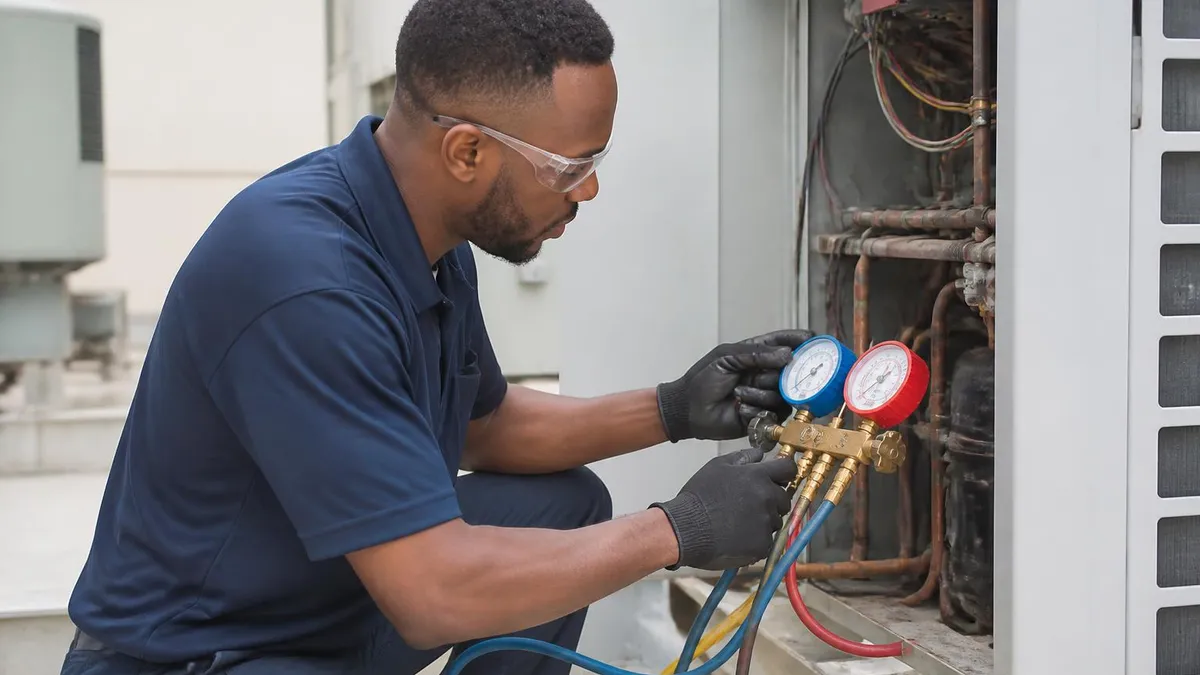
EPA 608 Certification Online: Complete Study Guide & Exam Prep 2026
About the Author

NATE Certified HVAC Technician & Licensing Exam Trainer
Universal Technical InstituteMike Johnson is a NATE-certified HVAC technician and EPA 608 universal-certified refrigerant handler with a Bachelor of Science in HVAC/R Technology. He has 19 years of commercial and residential HVAC installation and service experience and specializes in preparing technicians for NATE certification, EPA 608, A2L refrigerant safety, and state HVAC contractor licensing examinations.
Join the Discussion
Connect with other students preparing for this exam. Share tips, ask questions, and get advice from people who have been there.
View discussion (8 replies)