
EPA 608 Certification Online: Complete Study Guide & Exam Prep 2026 September
Get your EPA 608 certification online with our complete study guide, practice tests, and exam tips. Pass Section 608 on your first attempt in 2026 September. 🔎
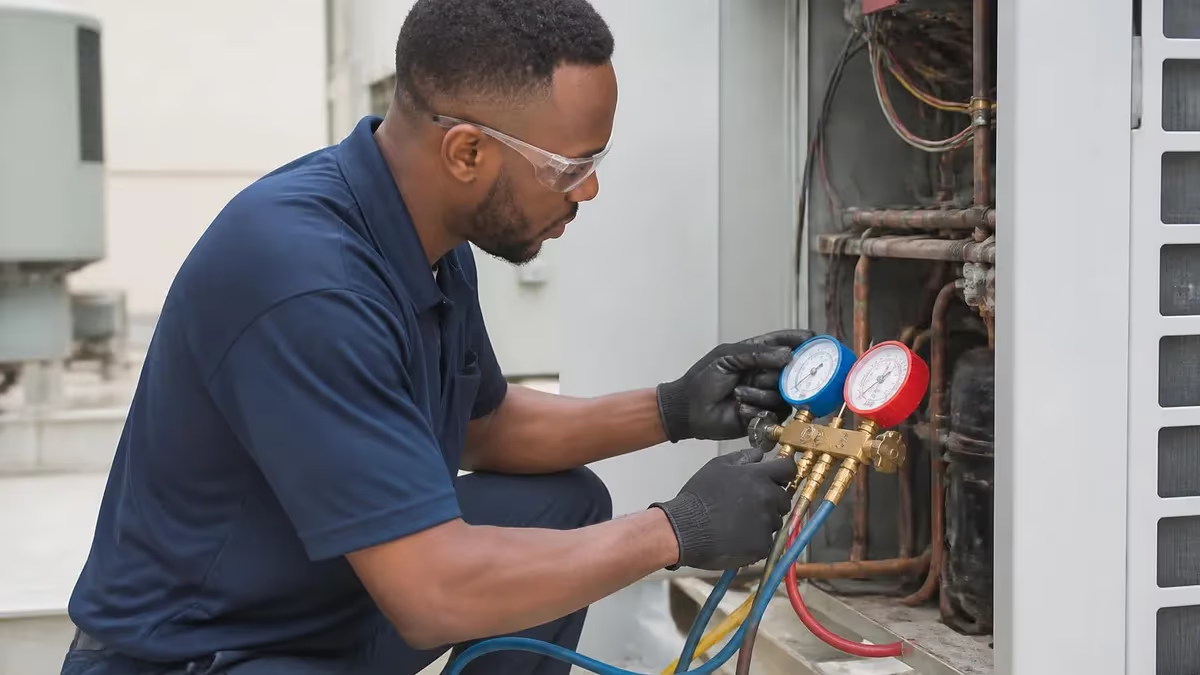
Earning your epa 608 certification online is the essential first step for any HVAC technician who wants to legally purchase, handle, or recover refrigerants regulated under Section 608 of the Clean Air Act. The Environmental Protection Agency mandates this certification for all professionals who work with refrigerants in stationary equipment, and failing to hold a valid credential can result in fines of up to $44,539 per day per violation. Thousands of technicians across the United States complete this certification each year, making it one of the most widely recognized credentials in the HVAC industry.
The Section 608 exam is divided into four certification types: Type I (small appliances), Type II (high-pressure systems), Type III (low-pressure systems), and Universal (covering all three categories plus a core section). Most working HVAC professionals pursue the Universal certification because it allows them to service the full range of equipment they encounter on residential and commercial jobs. Understanding which type aligns with your work focus is the first strategic decision you will make in this certification journey, and it directly shapes your study plan.
Online testing has transformed access to EPA 608 certification in recent years. Rather than scheduling a session at a physical testing center, candidates can now complete their exam from a home computer or mobile device through EPA-approved third-party proctoring platforms. This flexibility has dramatically reduced barriers for new technicians entering the field and for experienced workers who need to recertify or upgrade their credentials. The shift to online delivery also means faster score reporting and immediate access to your certificate upon passing.
Preparing effectively for the EPA 608 exam requires a structured approach that covers refrigerant properties, ozone depletion science, leak detection procedures, recovery equipment operation, and regulatory compliance under both Section 608 and Section 609 of the Clean Air Act. Many candidates underestimate the technical depth of the Universal exam, which includes questions spanning all three equipment categories plus a mandatory core section that every candidate must pass. Allocating sufficient study time across all domains is critical to achieving a passing score on the first attempt.
Practice testing is widely considered the most efficient preparation method for EPA 608. Research on professional certification outcomes consistently shows that candidates who complete multiple full-length practice exams before their test date significantly outperform those who rely solely on reading study materials. Practice questions help you identify knowledge gaps, build familiarity with EPA-style question phrasing, and develop the time management skills needed to work efficiently through a timed exam. This guide provides the roadmap, resources, and practice tools you need to pass with confidence.
Throughout this article you will find a detailed breakdown of the exam structure, a realistic study schedule, insider tips on the most frequently tested topics, and free practice questions that mirror the difficulty level of the actual Section 608 exam. Whether you are a first-time test taker, a student in an HVAC training program, or a seasoned technician refreshing your credentials, this guide is designed to give you everything you need to succeed. Bookmark this page and return to it throughout your study period for reference and additional practice resources.
EPA 608 Certification by the Numbers
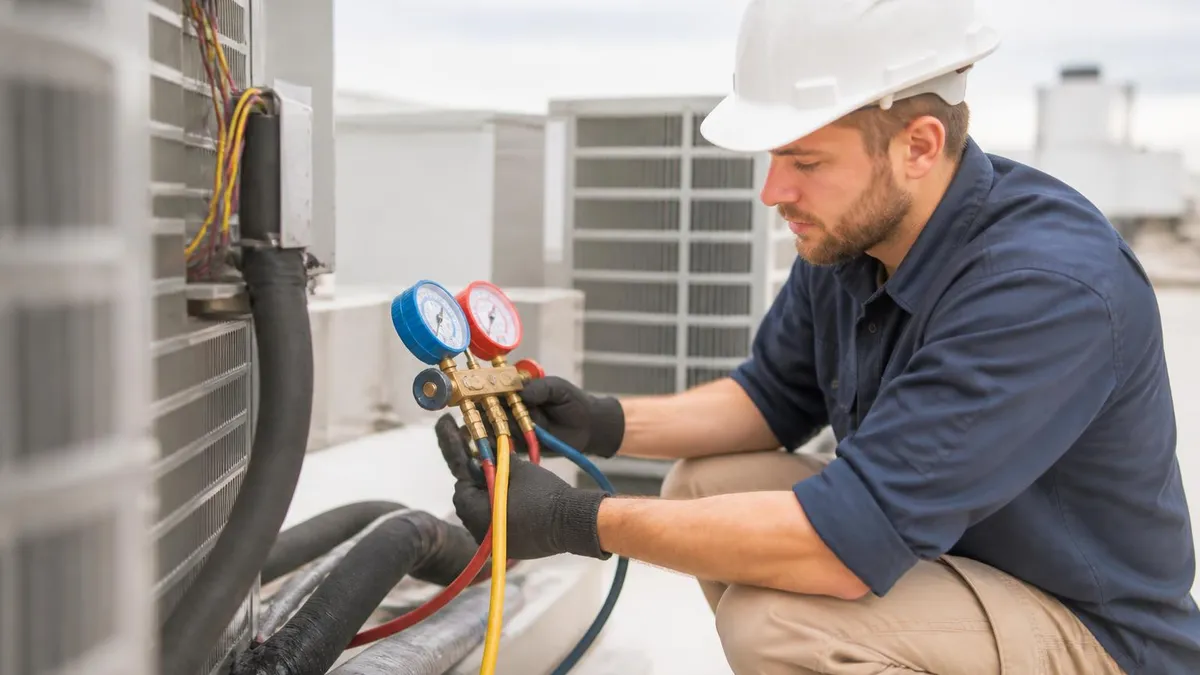
EPA 608 Certification Study Schedule
- ▸Read Clean Air Act Section 608 overview and key definitions
- ▸Study the ozone depletion mechanism and global warming potential concepts
- ▸Learn refrigerant numbering system and common refrigerant types
- ▸Complete 25 core section practice questions and review all incorrect answers
- ▸Review Type I equipment definitions and recovery requirements
- ▸Study passive and active recovery techniques for small appliances
- ▸Learn the 80% and 90% recovery efficiency rules by equipment age
- ▸Complete 30 Type I practice questions and note recurring themes
- ▸Master recovery cylinder color codes and pressure ratings
- ▸Study evacuation levels and system-dependent recovery procedures
- ▸Review low-pressure chiller purge unit regulations and leak rate thresholds
- ▸Complete 40 combined Type II and Type III practice questions
- ▸Take two full-length timed Universal practice exams under test conditions
- ▸Drill hardest missed topics using targeted flashcards and reference sheets
- ▸Review EPA 608 technician certification regulations one final time
- ▸Schedule online proctored exam and confirm technical requirements
The EPA Section 608 exam tests a carefully defined body of knowledge drawn directly from the Clean Air Act and EPA implementing regulations. At its core, every section of the exam — regardless of certification type — demands fluency with the fundamental science of refrigerants, how they affect the atmosphere, and why their controlled handling is legally required. The core section, which all Universal candidates must pass, focuses on ozone depletion theory, the Montreal Protocol, the regulatory framework, refrigerant identification, and the general responsibilities of certified technicians under federal law.
Type I questions focus specifically on small appliances containing five pounds or less of refrigerant, such as household refrigerators, window air conditioners, and small commercial refrigeration units. This section tests recovery techniques unique to small appliances, including the use of self-contained recovery machines and passive recovery methods. Candidates must understand the specific recovery efficiency standards that vary based on whether the equipment was manufactured before or after November 15, 1993, as well as the rules governing disposal of appliances with refrigerant still inside.
Type II covers high-pressure appliances excluding small appliances and motor vehicle air conditioning systems, including residential and commercial air conditioners, heat pumps, and refrigeration systems using refrigerants such as R-22, R-410A, and R-134a. Questions in this section address system evacuation to specific vacuum levels measured in inches of mercury or microns, the use of recovery and recycling equipment, cylinder safety, leak rate thresholds for commercial and industrial equipment, and proper handling of refrigerant containers. Knowing which evacuation standard applies in which scenario is one of the most heavily tested areas in Type II.
Type III examines low-pressure equipment, primarily large centrifugal chillers using refrigerants such as R-11 and R-113. These systems operate below atmospheric pressure, meaning that air and moisture can enter rather than refrigerant escaping. The test covers purge unit emission standards, the unique leak detection challenges of low-pressure systems, and the specific recovery procedures that differ substantially from those used on high-pressure equipment. Although Type III equipment is less common in general HVAC work, it is required for the Universal certification and carries a meaningful portion of the question bank.
Across all four sections, the exam places heavy emphasis on practical regulatory knowledge. You will encounter questions about leak inspection requirements for comfort cooling and commercial refrigeration systems, the required frequency of leak checks based on refrigerant charge size, how to calculate charge percentages for the purpose of determining whether a system needs to be repaired before refrigerant can be added, and the penalties for knowingly venting refrigerants. The EPA does not publish an official question bank, but accredited training organizations maintain up-to-date question pools that closely reflect the actual exam.
One area that consistently surprises candidates is the depth of refrigerant cylinder and container regulations. The exam tests knowledge of cylinder hydrostatic testing requirements, the significance of Dot-approved cylinder markings, the conditions under which a cylinder must be condemned, proper storage of refrigerant cylinders, and the rules governing the sale and transfer of refrigerants between certified and non-certified parties. These regulatory details may seem minor during study, but they are frequently tested because they represent real-world compliance risks for technicians in the field.
Finally, the exam covers refrigerant recovery equipment itself — how it works, what the approved equipment must be certified to do, and how recovery efficiency is verified. Candidates should understand the difference between recover, recycle, and reclaim as defined by the EPA, since confusing these terms is a common mistake on the actual exam.
Recovery removes refrigerant from a system into an external container without necessarily testing or processing it. Recycling cleans refrigerant for reuse on-site using oil separation and moisture removal equipment. Reclamation processes refrigerant to ARI-700 purity standards at an EPA-certified reclamation facility — only reclaimed refrigerant can be sold as a virgin product.
EPA 608 Practice Test Questions
Prepare for the EPA 608 - EPA Section 608 Certification exam with our free practice test modules. Each quiz covers key topics to help you pass on your first try.
EPA 608 Best Practices & Methodologies
EPA 608 Exam Questions covering Best Practices & Methodologies. Master EPA 608 Test concepts for certification prep.
EPA 608 Blueprint Reading & Interpretation
Free EPA 608 Practice Test featuring Blueprint Reading & Interpretation. Improve your EPA 608 Exam score with mock test prep.
EPA 608 Client Relations & Service Delivery
EPA 608 Mock Exam on Client Relations & Service Delivery. EPA 608 Study Guide questions to pass on your first try.
EPA 608 Code Compliance & Standards
EPA 608 Test Prep for Code Compliance & Standards. Practice EPA 608 Quiz questions and boost your score.
EPA 608 Continuous Improvement & Innovation
EPA 608 Questions and Answers on Continuous Improvement & Innovation. Free EPA 608 practice for exam readiness.
EPA 608 Core Concepts & Fundamentals
EPA 608 Mock Test covering Core Concepts & Fundamentals. Online EPA 608 Test practice with instant feedback.
EPA 608 Data Analysis & Reporting
Free EPA 608 Quiz on Data Analysis & Reporting. EPA 608 Exam prep questions with detailed explanations.
EPA 608 Environmental Considerations & Com...
EPA 608 Practice Questions for Environmental Considerations & Compliance. Build confidence for your EPA 608 certification exam.
EPA 608 Industry Regulations & Compliance
EPA 608 Test Online for Industry Regulations & Compliance. Free practice with instant results and feedback.
EPA 608 Inspection & Quality Control
EPA 608 Study Material on Inspection & Quality Control. Prepare effectively with real exam-style questions.
EPA 608 Installation & Assembly Techniques
Free EPA 608 Test covering Installation & Assembly Techniques. Practice and track your EPA 608 exam readiness.
EPA 608 Leadership & Team Management
EPA 608 Exam Questions covering Leadership & Team Management. Master EPA 608 Test concepts for certification prep.
EPA 608 Maintenance & Repair Procedures
Free EPA 608 Practice Test featuring Maintenance & Repair Procedures. Improve your EPA 608 Exam score with mock test prep.
EPA 608 Materials & Specifications
EPA 608 Mock Exam on Materials & Specifications. EPA 608 Study Guide questions to pass on your first try.
EPA 608 Professional Development & Certifi...
EPA 608 Test Prep for Professional Development & Certification. Practice EPA 608 Quiz questions and boost your score.
EPA 608 Risk Management & Assessment
EPA 608 Questions and Answers on Risk Management & Assessment. Free EPA 608 practice for exam readiness.
EPA 608 Safety Practices & Regulations
EPA 608 Mock Test covering Safety Practices & Regulations. Online EPA 608 Test practice with instant feedback.
EPA 608 Strategic Planning & Implementation
Free EPA 608 Quiz on Strategic Planning & Implementation. EPA 608 Exam prep questions with detailed explanations.
EPA 608 Tools & Equipment Operation
EPA 608 Practice Questions for Tools & Equipment Operation. Build confidence for your EPA 608 certification exam.
EPA 608 Certification Types: Which One Do You Need?
Type I certification covers technicians who service, maintain, or dispose of small appliances containing five pounds or less of a CFC or HFC refrigerant. This includes household refrigerators, freezers, room air conditioners, packaged terminal units, and small vending machines. Candidates must demonstrate knowledge of passive and active recovery techniques, proper disposal procedures, and the specific recovery efficiency standards that apply to pre-1993 and post-1993 equipment under EPA regulations.
While Type I is the narrowest of the four certifications, it remains an important standalone credential for technicians who work exclusively in appliance repair or residential refrigeration service. The exam questions are generally considered the most straightforward among the four sections, but candidates still need to study the applicable recovery efficiency percentages carefully, as these numbers are frequently tested and easy to confuse without deliberate review and practice before exam day.
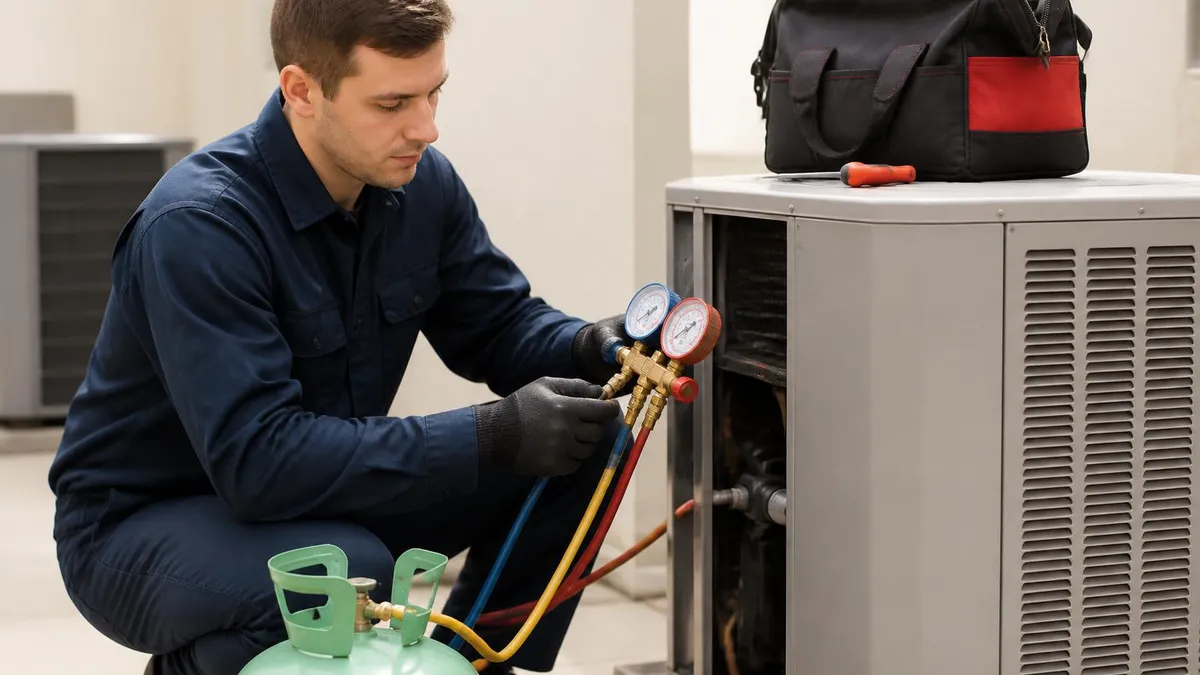
EPA 608 Online Certification: Pros and Cons
- +Test from home or any location with a reliable internet connection — no travel required
- +Faster scheduling with same-day or next-day appointment availability at most providers
- +Immediate score reporting so you know whether you passed before leaving your desk
- +Digital certificate delivery within 24 hours of passing — no waiting for mail
- +Lower total cost when factoring in eliminated travel time and transportation expenses
- +Retake scheduling is quick if needed, often available within a few days of a failed attempt
- −Technical issues — poor internet, webcam failure, or browser problems can disrupt your exam
- −Remote proctoring software requires a compatible device and operating system version
- −Your testing environment must meet strict requirements: private room, clear desk, no second monitors
- −Some candidates find the proctoring software intrusive or anxiety-inducing during the exam
- −Not all EPA-approved testing organizations offer online proctored options in every state
- −ID verification and check-in procedures can add 15–30 minutes to your total session time
EPA 608 Exam Day Readiness Checklist
- ✓Confirm your exam appointment date, time, and testing platform login credentials 48 hours in advance
- ✓Test your webcam, microphone, and internet connection speed using the proctoring platform's system check tool
- ✓Clear your desk completely — only allowed items (typically a whiteboard or blank paper) should be visible
- ✓Place your government-issued photo ID within reach for the check-in identity verification process
- ✓Close all browser tabs and applications other than the proctoring software before starting check-in
- ✓Ensure your testing room has a closeable door and no other people or pets are present during the exam
- ✓Review your highest-miss-rate topics one final time the morning of your exam — focus on recovery efficiency numbers and evacuation levels
- ✓Eat a full meal and hydrate before your session — the Universal exam can run 90 minutes or longer
- ✓Have the proctoring provider's technical support number ready in case of connectivity issues during check-in
- ✓After passing, save your digital certificate immediately and store a backup copy in cloud storage
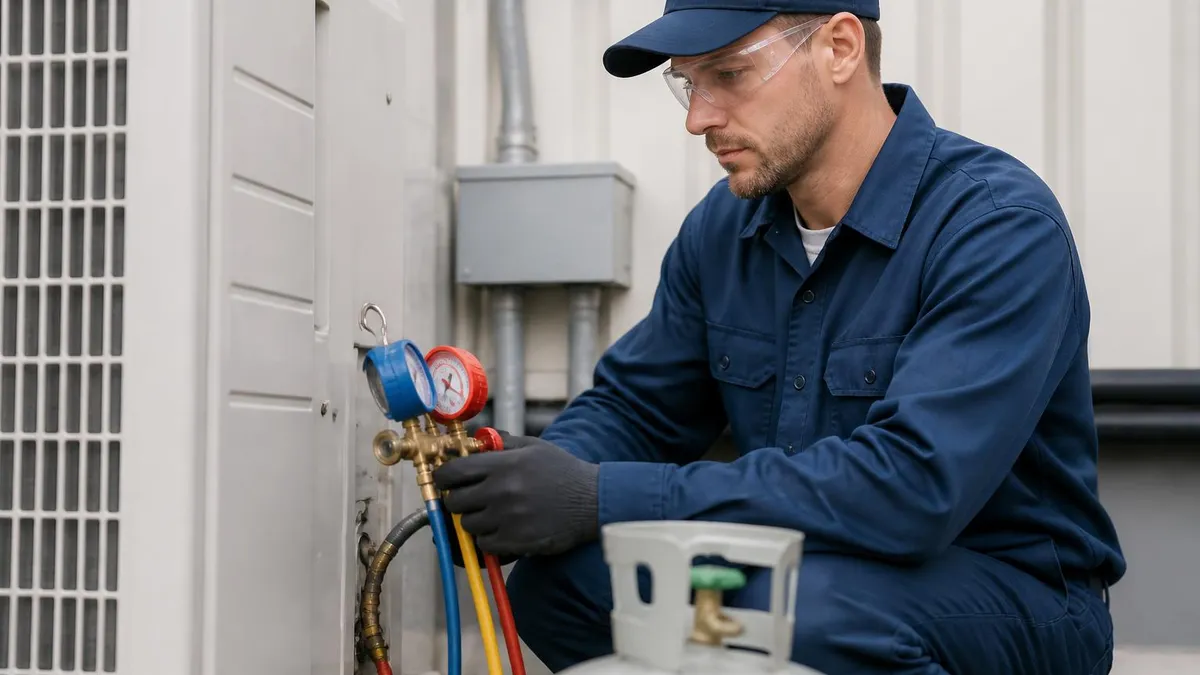
70% Is the Magic Number — On Every Section
Many candidates fail the Universal exam not because they perform poorly overall, but because they fall below 70% on one specific section. The EPA requires a minimum passing score of 70% on each individual section of the Universal exam — Core, Type I, Type II, and Type III — not just a 70% average across all sections. Identify your weakest section early in your study plan and allocate disproportionate review time to it before your exam date.
Developing an effective study strategy for the EPA 608 exam starts with an honest self-assessment of your existing knowledge. Experienced HVAC technicians who have worked on residential and commercial systems for several years will likely have strong intuitive knowledge of Type II material, but may find the Type III low-pressure chiller content unfamiliar because those systems are less common in day-to-day field work. Beginning with a diagnostic practice test that covers all four sections helps you pinpoint exactly where your time will be most productively spent before you commit to a fixed study schedule.
Spaced repetition is the most scientifically validated study technique for technical certification exams, and it works especially well for EPA 608 because of the sheer volume of specific numbers and regulatory thresholds that need to be memorized.
Rather than reviewing all your flashcards every day, spaced repetition software schedules each card for review at gradually increasing intervals based on how well you know it, concentrating your attention on the items you are most likely to forget. Free tools like Anki can be set up with an EPA 608 card deck in under an hour and will meaningfully improve your retention of refrigerant numbers, evacuation levels, and recovery percentages over a four-week study period.
Active recall — testing yourself rather than passively re-reading notes — is another high-leverage technique. Every time you encounter a new concept in your study materials, immediately close the book and try to explain it out loud or write it down from memory.
This effort forces your brain to retrieve and reconstruct information rather than merely recognizing it, which builds the kind of deep encoding that holds up under exam pressure. Many candidates who struggle on practice tests despite extensive reading find that switching from passive review to active recall transforms their scores within a single week of adjusted study habits.
Group study, while not always possible, offers a unique advantage for EPA 608 preparation: explaining concepts to a peer forces you to identify and fill gaps in your own understanding. If you can find one or two coworkers or classmates also preparing for the exam, scheduling weekly review sessions where each person teaches a different topic to the group dramatically accelerates learning for everyone involved. The process of preparing a mini-lesson on, say, the Type I recovery efficiency standards will reveal exactly which details you understand deeply and which ones you have only surface-level familiarity with.
Timed practice exams under realistic conditions are the single highest-value activity in the final week before your test date. Set a timer, close all reference materials, and simulate the actual exam environment as closely as possible — including taking the exam at the same time of day as your scheduled appointment. This practice conditions your nervous system to perform under pressure, surfaces any remaining knowledge gaps when you still have time to address them, and eliminates the unpleasant surprises that come from encountering question formats or timing constraints for the first time on the actual exam day.
One often-overlooked element of effective preparation is learning the specific vocabulary the EPA uses in its regulations. The exam questions are written using precise regulatory language, and a candidate who knows the underlying concept but is unfamiliar with the official EPA terminology may miss questions that they technically know the answer to. Pay particular attention to the definitions of terms like recover, recycle, reclaim, appliance, small appliance, comfort cooling appliance, and industrial process refrigeration, all of which have specific meanings under Section 608 that differ from their everyday usage in conversation and informal technical communication.
Finally, leverage the practice tests on this site as your primary benchmark for readiness. After each practice session, spend as much time reviewing the explanations for wrong answers as you spent taking the test itself. The explanation review is where the actual learning happens — not in the act of answering questions.
Build a running error log that categorizes your missed questions by topic, and use that log to drive your final-week review sessions. Candidates who approach their preparation this way consistently report higher first-attempt pass rates and shorter total study time compared to those who simply take practice test after practice test without structured reflection between sessions.
Knowingly venting refrigerants regulated under Section 608 of the Clean Air Act is a federal violation subject to fines of up to $44,539 per day per violation. This applies to all CFC, HCFC, and HFC refrigerants in stationary equipment — not just older ozone-depleting substances. The EPA actively enforces these regulations and accepts tips from the public. Always recover refrigerant using certified equipment before opening any system, regardless of refrigerant type or system size.
Taking your EPA 608 exam online requires preparation that goes beyond studying the content — you also need to prepare your testing environment and technology setup to avoid last-minute disruptions. Most EPA-approved online testing providers use remote proctoring software that monitors your exam session via webcam, microphone, and screen sharing. Before your exam date, run the full system check provided by your testing organization to confirm that your hardware, operating system, and browser all meet the technical requirements. Common failure points include outdated browser versions, disabled webcam permissions, and insufficient upload bandwidth.
Choosing the right testing provider is an important step that many candidates overlook. The EPA does not administer the Section 608 exam directly — it accredits third-party organizations to develop and administer tests that meet EPA specifications. Well-known approved providers include ESCO Group, Mainstream Engineering (testing through their certification website), and various vocational and trade schools with accredited testing programs. Each provider sets its own fees, scheduling procedures, and technical requirements, so comparing two or three options before registering can save both money and logistical headaches, particularly if you need a same-week appointment.
On the day of your online exam, budget extra time for the check-in process. Most proctored exams require you to log in 15 to 30 minutes before your scheduled start time to complete identity verification, complete a room scan with your webcam, and review the testing rules with your proctor. Rushing this process or logging in late can result in your appointment being cancelled and your fee forfeited. Treat the check-in window as the actual start of your exam session and eliminate all other obligations from your calendar for the two-hour block surrounding your appointment.
Internet connectivity is the most common technical problem candidates encounter during online proctored exams. A wired ethernet connection is strongly preferred over Wi-Fi for exam sessions because it provides more stable throughput and eliminates the interference issues that can cause video feeds to drop mid-session.
If a wired connection is not available, position yourself as close as possible to your wireless router and confirm that no other bandwidth-heavy activities — video streaming, large downloads, system updates — are running on your network during your exam. Some proctoring platforms allow you to pause and reconnect if your session drops, but the process adds stress and consumes exam time.
Your physical testing environment needs to meet specific requirements that vary slightly by provider but share common elements. You need a private room where no one else can enter during the exam, a desk or table that is completely clear of all materials except your permitted scratch paper and ID, and adequate lighting so your proctor can clearly see your face throughout the session.
Remove or cover any whiteboards, posters, or printed materials that are visible in your webcam's field of view, as these may be flagged as unauthorized reference materials and could result in your exam being invalidated. A quiet environment free from background noise is also essential — many proctors will halt an exam session if they detect voices or other sounds that could indicate unauthorized assistance.
After you complete the exam, most online platforms provide your score immediately upon submission. If you pass, your digital certificate is typically generated within 24 hours and accessible through your account portal on the testing provider's website. Print or save a PDF copy immediately and store it somewhere secure, as replacement certificates can involve administrative fees and processing delays.
Your certification does not expire under current EPA regulations, but some employers and contracting agencies may ask for a certified copy as part of their hiring or compliance documentation, so having quick access to your certificate file is practically useful throughout your career.
If you do not pass on your first attempt, most providers allow you to retake the exam after a short waiting period that varies by organization — typically 24 hours to one week. Use the score report you receive to identify which section or sections fell below the 70% threshold and build a targeted review plan before rescheduling.
A focused one-week review concentrated on your weakest section is usually far more effective than re-reading all your study materials from the beginning. Many candidates pass on their second attempt after a disciplined targeted review, particularly when they combine content study with high-volume practice testing in the specific topic areas where they struggled.
Practical preparation tips for the EPA 608 exam begin with building a strong foundation in the physical chemistry of refrigerants. Understanding why certain refrigerants have high ozone depletion potential while others have zero ODP — and why global warming potential is now equally emphasized in EPA regulations — gives you the conceptual framework to answer unfamiliar questions by reasoning from first principles rather than pure memorization.
The transition from R-22 to R-410A and the ongoing transition toward lower-GWP alternatives like R-32 and R-454B reflects decades of regulatory evolution under the Clean Air Act, and the exam expects candidates to understand the reasoning behind these changes, not just the names of the refrigerants involved.
Recovery cylinder management is a topic that generates a disproportionate number of questions on all sections of the EPA 608 exam. Know the color codes: gray body with yellow top indicates a mixed or unknown refrigerant cylinder that is not approved for reuse; all other color combinations indicate single-refrigerant cylinders with specific meanings by refrigerant type.
Understand when a cylinder must be sent for hydrostatic testing, what the safe fill level by weight is (typically 80% of water capacity), and the conditions under which a cylinder must be condemned. These details appear in the exam regardless of which certification type you are taking.
The leak rate regulations that took effect under EPA's 2019 rule update significantly changed the compliance landscape for larger commercial systems. For equipment with more than 50 pounds of refrigerant, technicians must understand the concept of an appliance leak rate — expressed as a percentage of total charge per year — and know the different threshold percentages that trigger mandatory repair obligations for comfort cooling versus commercial refrigeration versus industrial process refrigeration equipment.
The 2019 rule extended these requirements to HFCs, not just CFCs and HCFCs, which is a frequent source of exam questions because the extension was a significant policy change.
When studying refrigerant recovery equipment, pay close attention to the distinction between system-dependent and self-contained recovery machines. System-dependent equipment uses the compressor within the appliance being serviced to push refrigerant into the recovery cylinder, while self-contained machines have their own internal compressor and can recover refrigerant even from systems with inoperative compressors.
The EPA requires that any recovery equipment manufactured after November 15, 1993 be certified by an EPA-approved equipment testing organization. Questions about which type of recovery machine is appropriate in a given scenario — particularly for inoperative equipment or small appliances — are common on the Type I and Type II sections.
Refrigerant identification and handling procedures form another consistently tested topic cluster. Candidates should know the classification of refrigerants by ASHRAE safety group (A1, A2, A2L, B2L, etc.), the physical properties that distinguish low-pressure from high-pressure refrigerants, how to identify an unknown refrigerant using temperature-pressure charts, and the safety precautions specific to flammable refrigerants in the A2L category. The growing adoption of A2L refrigerants in residential and light commercial equipment means these questions are becoming more prominent in updated exam question banks, and candidates who take the exam in 2025 or 2026 should ensure their study materials reflect this shift.
For candidates targeting the Universal certification, the most efficient approach to the multi-section exam is to study the Core section first, then study Type II (the longest and most heavily tested section for most candidates), then Type I, and finish with Type III.
This sequencing works because the Core section provides the regulatory and scientific foundation that makes the type-specific questions easier to understand, and Type II is both the most relevant to practical field work and the section with the most content to cover. Types I and III are shorter in scope and easier to master once you have the Core and Type II content fully absorbed.
In the final days before your exam, shift from study mode to review mode. Stop trying to learn new material and focus entirely on consolidating what you already know. Review your error log, run through your highest-priority flashcards, and take one final full-length timed practice exam to confirm your readiness. Get a full night of sleep before your exam day — sleep deprivation measurably impairs recall and reasoning ability, and no last-minute cramming session will compensate for a fatigued brain during a timed professional certification exam. You have done the work; trust your preparation and approach the exam with confidence.
EPA 608 Questions and Answers

EPA 608 Study Guide 2026 — Section 608 Certification Prep for HVAC

EPA 608 Practice Test PDF (Free Printable 2026)
EPA MVAC System Components & Performance Testing Practice Test Video Answers
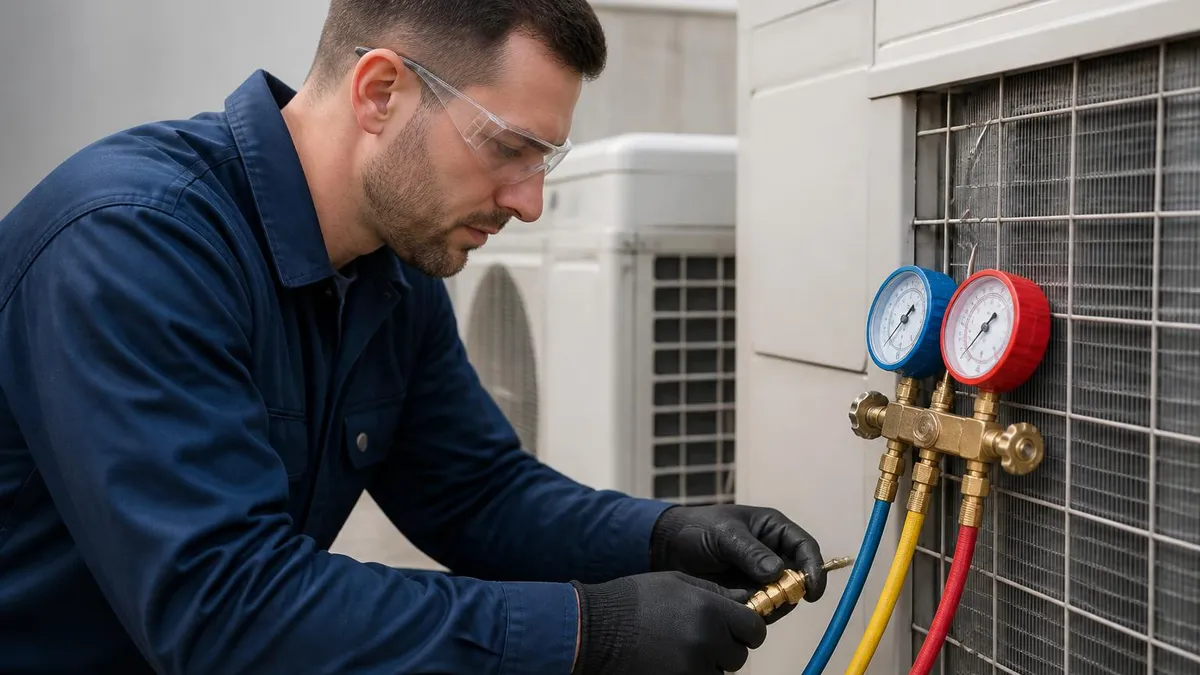
ESCO EPA 608 Certification: Complete Guide to Testing, Study Materials, and Passing the Section 608 Exam
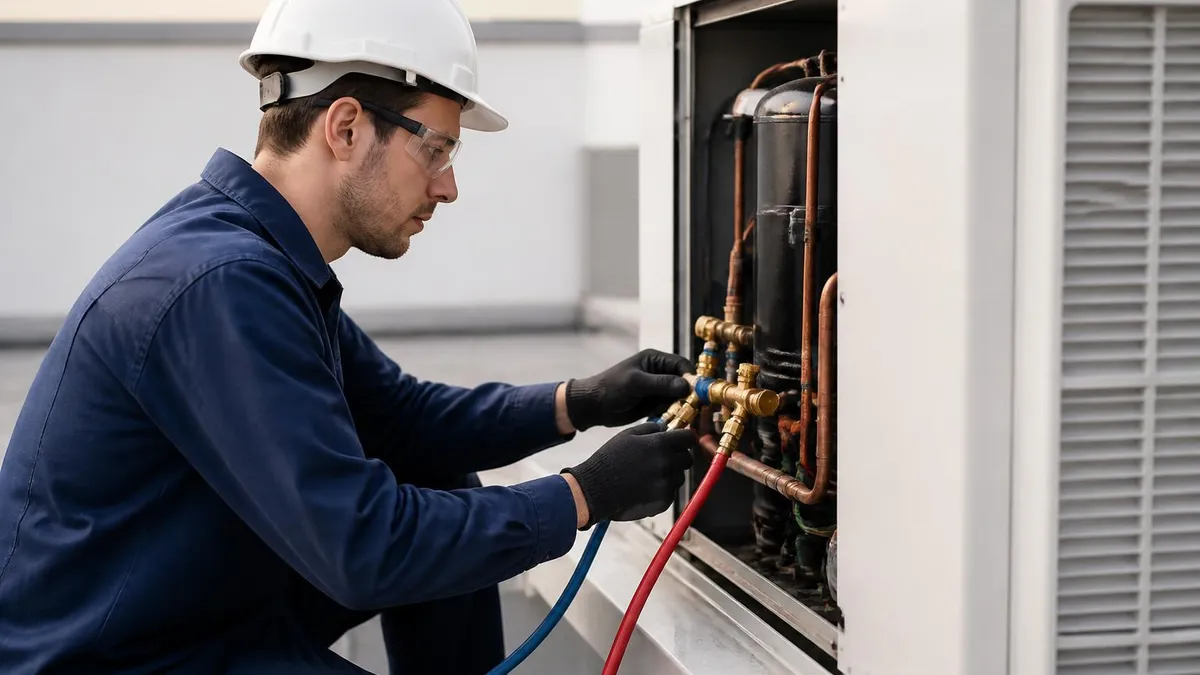
EPA 608 Certification: Complete Guide
About the Author

NATE Certified HVAC Technician & Licensing Exam Trainer
Universal Technical InstituteMike Johnson is a NATE-certified HVAC technician and EPA 608 universal-certified refrigerant handler with a Bachelor of Science in HVAC/R Technology. He has 19 years of commercial and residential HVAC installation and service experience and specializes in preparing technicians for NATE certification, EPA 608, A2L refrigerant safety, and state HVAC contractor licensing examinations.
Join the Discussion
Connect with other students preparing for this exam. Share tips, ask questions, and get advice from people who have been there.
View discussion (8 replies)