
ESCO EPA 608 Certification: Complete Guide to Testing, Study Materials, and Passing the Section 608 Exam
🔎 ESCO EPA 608 certification guide covers exam format, study materials, costs, pass rates, and prep strategies for HVAC technicians in 2026.
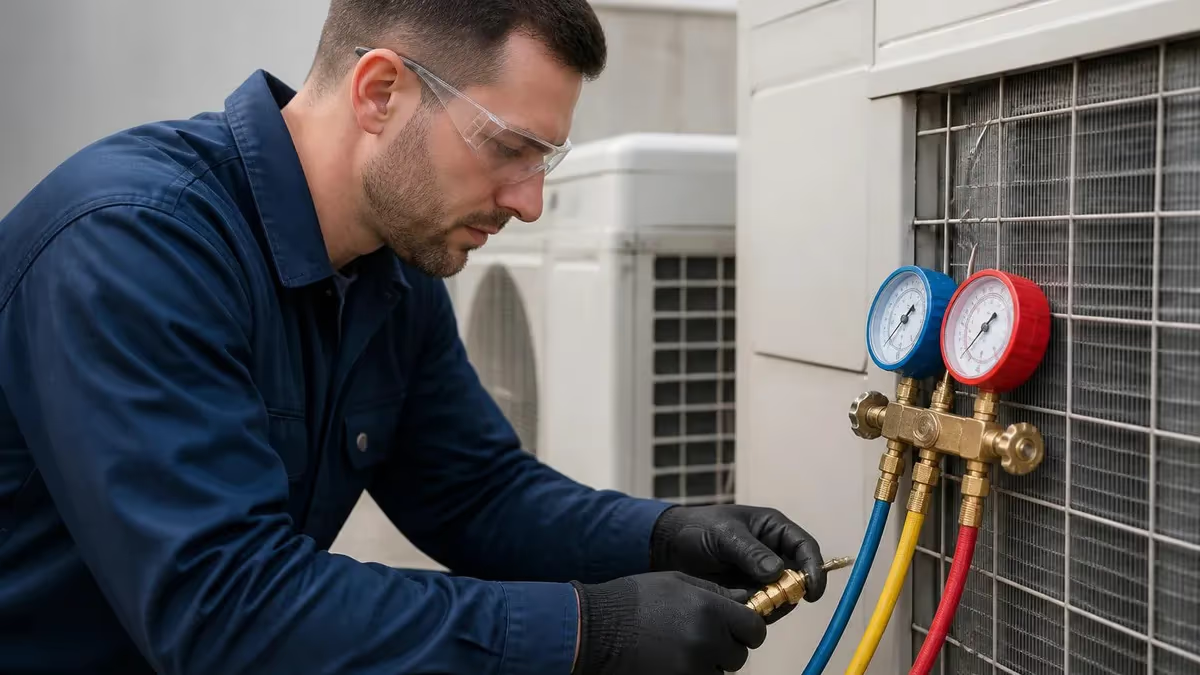
The ESCO EPA 608 certification is the most widely recognized pathway for HVAC technicians to become federally certified to handle refrigerants under Section 608 of the Clean Air Act. ESCO Institute, also known as the Educational Standards Corporation, administers one of the largest EPA-approved certification programs in the United States, with over a million technicians certified through its testing network. If you're entering the HVAC trade or upgrading your existing credentials, understanding the ESCO program is essential for compliance, employability, and long-term career growth in refrigeration and air conditioning. Practice with the free EPA 608 - EPA Section 608 Certification practice test on PracticeTestGeeks (7 questions with answer explanations).
EPA Section 608 certification has been mandatory since November 14, 1994, for any technician who maintains, services, repairs, or disposes of equipment that could release refrigerants into the atmosphere. The law applies whether you're working on a small residential split system or a 500-ton industrial chiller. ESCO's exam program covers all four certification categories — Type I, Type II, Type III, and Universal — giving candidates a single trusted source for both proctored and online testing options that meet federal requirements.
What makes ESCO particularly popular among HVAC schools and apprentices is its dual approach: candidates can take the Core and Type I sections online from home through a remote proctor, while Types II, III, and the Universal exam require in-person proctoring at an approved testing site. This flexibility, combined with ESCO's extensive textbook and practice material library, has made it the default choice for community college HVAC programs, union apprenticeships, and individual technicians studying independently.
The ESCO EPA 608 exam itself consists of 100 multiple-choice questions covering ozone depletion science, the Montreal Protocol, refrigerant recovery procedures, leak repair requirements, recordkeeping rules, and safety protocols. Each section requires a 70% passing score, and certifications are permanent — once you pass, you never need to recertify, though you must keep your wallet card available whenever you purchase refrigerant or service equipment. That permanence makes thorough preparation worth the investment up front.
This guide walks you through everything you need to know about ESCO EPA 608: the exam format, study materials offered by ESCO Institute, costs and registration steps, pass rates by certification type, recommended study schedules, and the most common mistakes candidates make on test day. Whether you're preparing for Type I residential work, Type II high-pressure commercial systems, Type III low-pressure chillers, or going for the full Universal certification, the strategies and resources below will give you a clear roadmap to passing on your first attempt.
We'll also cover how ESCO's program compares to other EPA-approved testing organizations like Mainstream Engineering, ESCO's RSES partnership, and the differences between closed-book proctored exams and the open-book Type I mail-in option. By the end, you'll know exactly which exam path fits your career goals, what study materials deliver the best return on your prep time, and how to schedule your test with confidence.
Free EPA 608 - EPA Section 608 Certification Study Tools
Interactive EPA 608 - EPA Section 608 Certification resources on PracticeTestGeeks, free to start:
- EPA 608 - EPA Section 608 Certification flashcards — review key terms and concepts card by card
- EPA 608 - EPA Section 608 Certification study guide — topic-by-topic overview of what the exam covers
- EPA 608 - EPA Section 608 Certification cheat sheet — one-page printable summary for last-minute review
ESCO EPA 608 by the Numbers
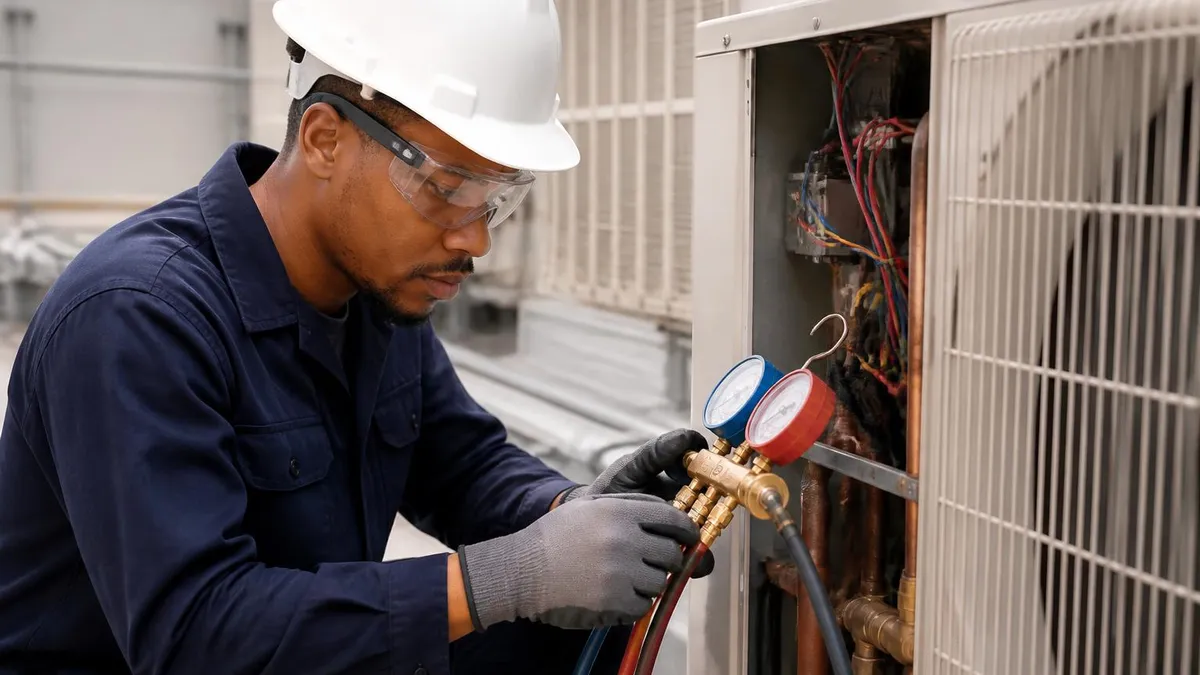
ESCO EPA 608 Exam Format
| Section | Questions | Time | Weight | Notes |
|---|---|---|---|---|
| Core Section | 25 | 30 min | Required for all | Ozone science, regulations, safety |
| Type I | 25 | 30 min | Small appliances | 5 lb or less refrigerant charge |
| Type II | 25 | 30 min | High-pressure systems | Residential AC, heat pumps, supermarket racks |
| Type III | 25 | 30 min | Low-pressure systems | Centrifugal chillers, R-123 |
| Total | 100 | 2 hours | 100% |
ESCO Institute publishes the most widely used EPA 608 preparatory manual in the industry: the EPA Section 608 Technician Certification Study Guide, often bundled with a practice exam booklet. The guide runs about 80 pages and is organized to mirror the actual exam — one chapter for the Core section, followed by dedicated chapters for Types I, II, and III. Many HVAC instructors require this manual because it tracks the exam blueprint almost question by question, making it the single best investment for self-studying candidates.
Beyond the printed manual, ESCO offers a comprehensive online learning portal called HVACR Learning Solutions. Students get access to interactive lessons, video walkthroughs of refrigerant recovery procedures, animated explanations of the refrigeration cycle, and unlimited practice quizzes that simulate the real testing environment. The portal tracks your progress section by section, flagging weak areas so you know where to focus additional study time before scheduling the proctored exam.
For instructor-led programs, ESCO provides a complete classroom package: PowerPoint presentations, lesson plans, hands-on lab activities, and bulk exam vouchers at discounted rates. Community colleges, vocational schools, and apprenticeship programs typically purchase these packages and integrate the EPA 608 prep into a broader HVAC fundamentals course. Students benefit from the structure while still using the same ESCO study guide they would purchase individually, ensuring consistency across the industry.
One often overlooked resource is the ESCO mobile app, which delivers flashcards, practice questions, and brief lesson refreshers in bite-sized formats perfect for studying during lunch breaks or commutes. The app pulls from the same question bank used in the official exam pool, so spending 15 minutes a day for two weeks can dramatically improve retention compared to cramming the night before. Reading our EPA 608 Study Guide 2026 — Section 608 Certification Prep for HVAC alongside the official ESCO materials gives you a balanced perspective on the test.
Free resources also exist within the ESCO ecosystem. The organization publishes sample exam questions on its website, hosts free webinars during industry events, and partners with refrigerant manufacturers like Honeywell, Chemours, and Arkema to distribute updated technical bulletins covering new refrigerants like R-454B and R-32. Staying current on these low-GWP alternatives is increasingly important as the AIM Act phase-down accelerates through 2026 and beyond.
If you prefer learning by watching, several HVAC YouTube channels — including HVAC School, AC Service Tech, and Quality HVAC — have produced full EPA 608 video courses that align with the ESCO study guide chapters. Pairing these free video walkthroughs with the official ESCO manual and practice tests creates a strong three-pronged study approach that addresses visual, auditory, and reading-based learning styles simultaneously, dramatically improving your chances of passing all four sections on the first attempt.
Finally, don't underestimate the value of study groups. Many technicians who pass on their first try credit informal study sessions with coworkers or fellow apprentices, where complex topics like superheat, subcooling, and recovery cylinder fill limits can be discussed aloud until they click. ESCO encourages this collaborative approach and often references real-world job site scenarios in its written material to make abstract regulations more concrete and memorable for working technicians.
EPA 608 Practice Test Questions
Prepare for the EPA 608 - EPA Section 608 Certification exam with our free practice test modules. Each quiz covers key topics to help you pass on your first try.
EPA 608 Best Practices & Methodologies
EPA 608 Exam Questions covering Best Practices & Methodologies. Master EPA 608 Test concepts for certification prep.
EPA 608 Blueprint Reading & Interpretation
Free EPA 608 Practice Test featuring Blueprint Reading & Interpretation. Improve your EPA 608 Exam score with mock test prep.
EPA 608 Client Relations & Service Delivery
EPA 608 Mock Exam on Client Relations & Service Delivery. EPA 608 Study Guide questions to pass on your first try.
EPA 608 Code Compliance & Standards
EPA 608 Test Prep for Code Compliance & Standards. Practice EPA 608 Quiz questions and boost your score.
EPA 608 Continuous Improvement & Innovation
EPA 608 Questions and Answers on Continuous Improvement & Innovation. Free EPA 608 practice for exam readiness.
EPA 608 Core Concepts & Fundamentals
EPA 608 Mock Test covering Core Concepts & Fundamentals. Online EPA 608 Test practice with instant feedback.
EPA 608 Data Analysis & Reporting
Free EPA 608 Quiz on Data Analysis & Reporting. EPA 608 Exam prep questions with detailed explanations.
EPA 608 Environmental Considerations & Com...
EPA 608 Practice Questions for Environmental Considerations & Compliance. Build confidence for your EPA 608 certification exam.
EPA 608 Industry Regulations & Compliance
EPA 608 Test Online for Industry Regulations & Compliance. Free practice with instant results and feedback.
EPA 608 Inspection & Quality Control
EPA 608 Study Material on Inspection & Quality Control. Prepare effectively with real exam-style questions.
EPA 608 Installation & Assembly Techniques
Free EPA 608 Test covering Installation & Assembly Techniques. Practice and track your EPA 608 exam readiness.
EPA 608 Leadership & Team Management
EPA 608 Exam Questions covering Leadership & Team Management. Master EPA 608 Test concepts for certification prep.
EPA 608 Maintenance & Repair Procedures
Free EPA 608 Practice Test featuring Maintenance & Repair Procedures. Improve your EPA 608 Exam score with mock test prep.
EPA 608 Materials & Specifications
EPA 608 Mock Exam on Materials & Specifications. EPA 608 Study Guide questions to pass on your first try.
EPA 608 Professional Development & Certifi...
EPA 608 Test Prep for Professional Development & Certification. Practice EPA 608 Quiz questions and boost your score.
EPA 608 Risk Management & Assessment
EPA 608 Questions and Answers on Risk Management & Assessment. Free EPA 608 practice for exam readiness.
EPA 608 Safety Practices & Regulations
EPA 608 Mock Test covering Safety Practices & Regulations. Online EPA 608 Test practice with instant feedback.
EPA 608 Strategic Planning & Implementation
Free EPA 608 Quiz on Strategic Planning & Implementation. EPA 608 Exam prep questions with detailed explanations.
EPA 608 Tools & Equipment Operation
EPA 608 Practice Questions for Tools & Equipment Operation. Build confidence for your EPA 608 certification exam.
ESCO EPA 608 Certification Types Explained
Type I certification covers small appliances containing 5 pounds or less of refrigerant. This includes household refrigerators, window air conditioners, package terminal air conditioners (PTACs), vending machines, and dehumidifiers. The Type I exam focuses heavily on recovery techniques specific to sealed systems, including system-dependent versus self-contained recovery equipment, and the unique challenges of accessing refrigerant in hermetically sealed appliances without service valves.
One major advantage of Type I is that ESCO offers an open-book mail-in option for this certification only. Candidates can purchase the manual, study at their own pace, complete the exam at home, and mail it in for grading. While convenient, the mail-in version only certifies you for Type I — if you want to work on larger systems, you must take the proctored exam for those types separately at an ESCO testing site.
Is the ESCO EPA 608 Program Right for You?
- +Largest EPA-approved certifier with over one million technicians certified nationwide
- +Convenient mail-in open-book option available for Type I certification only
- +Comprehensive study materials including manual, online portal, and mobile app
- +Bundled discounts available when purchasing the full Universal exam package
- +Permanent certification with no renewal or continuing education required
- +Wide network of proctored testing sites at colleges, distributors, and HVAC schools
- +Industry-standard credential accepted by all US employers and refrigerant suppliers
- −Proctored exams for Types II, III, and Universal require travel to approved sites
- −Study guide costs $25-40 in addition to the exam fee itself
- −Online portal subscription adds extra cost for those who want digital resources
- −Mail-in Type I only certifies for small appliances, not larger systems
- −Some testing sites have limited weekend availability for working technicians
- −Retake fees apply if you fail any section and need to repeat the exam
- −No partial credit — must score 70% or higher on every section attempted
Pros and Cons at a Glance
| Pros | Cons |
|---|---|
| Largest EPA-approved certifier with over one million technicians certified nationwide | Proctored exams for Types II, III, and Universal require travel to approved sites |
| Convenient mail-in open-book option available for Type I certification only | Online portal subscription adds extra cost for those who want digital resources |
| Comprehensive study materials including manual, online portal, and mobile app | Mail-in Type I only certifies for small appliances, not larger systems |
| Bundled discounts available when purchasing the full Universal exam package | Some testing sites have limited weekend availability for working technicians |
| Permanent certification with no renewal or continuing education required | Retake fees apply if you fail any section and need to repeat the exam |
ESCO EPA 608 Registration and Testing Checklist
- ✓Decide which certification type or Universal level fits your career goals
- ✓Purchase the ESCO Section 608 Technician Certification Study Guide
- ✓Locate an ESCO-approved testing site using the proctor finder on the ESCO website
- ✓Contact the proctor directly to confirm exam availability and current fee
- ✓Complete at least two full practice exams scoring 80% or higher before scheduling
- ✓Bring two forms of government-issued photo identification on test day
- ✓Arrive 15 minutes early with payment ready in the form accepted by the proctor
- ✓Bring an approved non-programmable calculator and pencils if allowed
- ✓Review pressure-temperature charts and recovery cylinder fill limits one final time
- ✓Wait 30 days before retaking any section you fail and bring proof of prior attempt
Take the Universal Exam in One Sitting
Even if you only plan to work on residential equipment today, paying once for the Universal exam and taking all four sections in a single sitting is almost always cheaper than coming back later to add Type II or Type III credentials. Most candidates who pass the Core and Type II sections also pass Type I and Type III with minimal additional study, since the underlying refrigeration principles overlap significantly across all three system categories.
The cost of ESCO EPA 608 certification varies based on which type you pursue and where you take the exam. The official ESCO study guide runs $25-35, the mail-in Type I exam costs around $25, and proctored exams typically range from $24 to $40 per attempt depending on the testing site's policies. Universal certification — covering all four sections — generally costs $40-75 total when bundled at a single sitting, making it the most cost-effective option for technicians planning to work across multiple equipment categories throughout their careers.
Compared to other professional credentials in the HVAC field, EPA 608 is remarkably affordable. NATE certification can cost $75-160 per specialty exam, RSES designations require ongoing membership dues, and state contractor licenses often run several hundred dollars in application and exam fees. The 608 credential remains one of the highest-ROI certifications a technician can earn because it's federally mandated, permanent, and immediately increases your employability and earning potential in any market across the United States.
Salary data from the Bureau of Labor Statistics shows HVAC technicians earn a median wage of approximately $51,390 per year as of 2023, with the top 10% earning over $82,000. While EPA 608 alone won't push you into the top income bracket, it's a prerequisite for nearly every entry-level technician position. Without it, you can't legally purchase refrigerant or service most HVAC equipment, which means employers won't hire you for billable field work — making this certification the literal price of entry to the trade.
Beyond the direct salary impact, EPA 608 certification opens doors to specialized work that commands premium pay. Commercial refrigeration technicians, supermarket refrigeration specialists, and chiller mechanics typically earn $30-50 per hour or more, and all of these positions require advanced 608 credentials. Type III certification in particular is rare enough that technicians with chiller experience often command top salaries in metropolitan markets with significant commercial real estate, hospital, and data center cooling infrastructure that requires continuous expert maintenance.
For technicians considering self-employment or contracting, the 608 certification is equally critical. State contractor licensing boards in most jurisdictions require proof of EPA 608 certification before issuing an HVAC contractor license, and refrigerant wholesalers will not sell to unlicensed buyers under federal law. Even if you plan to subcontract refrigerant work to certified employees, holding the certification yourself signals professionalism to customers and protects you legally if a job site issue ever arises during an EPA inspection or audit.
Apprenticeship programs through unions like the UA (United Association of Plumbers and Pipefitters) and SMART (Sheet Metal, Air, Rail, and Transportation Workers) typically include EPA 608 certification as part of their first-year curriculum. Apprentices study the ESCO materials as part of their classroom instruction and take the exam at their training center, often with the cost covered by the union's training fund. This integrated approach removes financial barriers and ensures every apprentice enters the field properly certified before being dispatched to job sites.
Veterans transitioning from military HVAC roles often find that the GI Bill and various workforce development grants cover EPA 608 testing costs, and ESCO Institute participates in several veteran-focused certification programs. If you're a recent military separator with HVAC experience from the Navy, Air Force, or Army Corps of Engineers, contact your local VA representative about funding options — many veterans pass the Universal exam on their first attempt due to extensive hands-on experience and benefit from waived fees through transition assistance programs.
Working on refrigerant-containing equipment without EPA 608 certification can result in federal fines up to $44,539 per day per violation under current EPA enforcement guidelines. Wholesalers who sell refrigerant to uncertified buyers face the same penalties, which is why every distributor verifies your wallet card before any sale. Don't risk your career or your employer's business — get certified before performing any billable refrigerant work in the field.
On test day, your preparation should peak with confidence rather than last-minute cramming. Arrive at the testing site at least 15 minutes early with two forms of government-issued identification — typically a driver's license and a Social Security card or passport. Many proctors will not admit candidates who show up late, and rescheduling often requires paying the full exam fee again. Plan your route, account for traffic, and treat the appointment with the same seriousness you'd give a job interview because that's exactly what passing the exam unlocks.
Time management during the exam itself is straightforward but important. The combined Universal exam runs about two hours for 100 questions, which gives you roughly 72 seconds per question. Don't get stuck on any single question for more than two minutes — mark difficult ones, move on, and return to them after answering everything you know. Most candidates finish with 20-30 minutes to spare, leaving plenty of time to review flagged questions and double-check answers that involved calculations or specific regulatory thresholds you weren't 100% certain about.
Pay special attention to questions involving pressure-temperature relationships, recovery cylinder fill limits (80% by volume for refillable cylinders), and the differences between recovery, recycling, and reclamation. These topics appear repeatedly across all three Type exams and the Core section because they form the regulatory foundation of refrigerant handling.
Memorize the key numbers: 80% fill limit, 70% passing score, 30-day repair requirement for commercial systems with leak rates above the threshold, and the various evacuation levels required by appliance size and type. For comprehensive practice, work through our epa 608 practice test pdf the week before your scheduled exam.
Many candidates struggle with the Core section more than the Type-specific sections because it covers broad regulatory content rather than hands-on procedures. Spend extra time memorizing the Montreal Protocol timeline, the difference between Class I and Class II ozone-depleting substances, the major events in Clean Air Act amendments, and the SNAP program's role in approving alternative refrigerants. These regulatory facts don't change based on what equipment you service, so they're consistently tested across all certification levels you might pursue.
Common mistakes that cause first-time failures include confusing the recovery requirements between high-pressure and low-pressure systems, misremembering the leak repair timeline (30 days for commercial, never for residential), and overlooking the differences between Type I open-drive and self-contained recovery units. Read every question twice before answering, particularly when the question uses qualifiers like "always," "never," "except," or "least likely" — these words completely change what the correct answer should be and trap candidates moving too quickly under exam pressure.
Don't forget the practical safety questions. ESCO regularly tests on personal protective equipment requirements, the dangers of refrigerant exposure (including the suffocation risk in confined spaces), proper handling of recovered refrigerant cylinders, and the warning signs of refrigerant contact with open flames (which produces phosgene gas, a deadly chemical weapon). These questions are straightforward if you've studied, but they catch candidates who skip the safety chapters thinking they're just common sense rather than tested material with very specific required answers.
Finally, after you pass, ESCO will mail your permanent wallet card within 4-6 weeks, though many proctors provide a temporary printed certificate immediately. Photograph both sides of your card and save the image in your phone — you'll need to show it every time you purchase refrigerant. Some technicians laminate their original cards, but be aware that lamination can void the document if a future regulation requires updates. The card itself never expires, but losing it requires paying a replacement fee, so treat it as carefully as you would your driver's license or passport documents.
Final preparation in the week before your ESCO EPA 608 exam should focus on reinforcement rather than learning new material. By this point, you should have read the ESCO study guide twice, completed at least three full practice exams scoring 80% or higher, and worked through any weak areas identified by your practice scores. The week-of strategy is about peaking on test day — not exhausting yourself with last-minute information overload that confuses what you already know cold.
Build a one-page cheat sheet of the most commonly missed facts: pressure-temperature relationships for common refrigerants (R-22, R-410A, R-134a, R-404A, R-454B), recovery requirements by appliance type, evacuation levels in inches of mercury, the EPA-approved recovery efficiency standards, leak rate thresholds for commercial refrigeration, and the dates of major regulatory milestones like the Montreal Protocol (1987), AIM Act (2020), and the HFC phase-down schedule running through 2036. Reviewing this single page daily reinforces critical facts without overwhelming you.
Get a full night's sleep before the exam and eat a moderate breakfast with protein and complex carbohydrates. Avoid heavy caffeine that might cause jitters, but a normal cup of coffee is fine if that's your routine. Wear comfortable clothing — testing centers can be uncomfortably warm or cool, and you'll be sitting for up to two hours. Bring water if allowed, and avoid drinking too much beforehand so you don't lose time to bathroom breaks during the timed portions of the exam.
Mental preparation matters as much as content review. Most candidates who fail report that anxiety, not lack of knowledge, caused their wrong answers. Practice deep breathing techniques if you're prone to test anxiety, and remind yourself that you can retake any failed section after a 30-day waiting period. This isn't a one-shot opportunity — it's a manageable assessment of skills you've prepared thoroughly to demonstrate over weeks of focused study and hands-on practice with the materials provided.
After completing the exam, you'll typically receive your score immediately for proctored computer-based versions, or within a few weeks for paper-based mail-in submissions. If you pass, congratulations — your federal certification is permanent and you can start handling refrigerant legally the moment you receive your card or temporary certificate from the proctor. If you fail one or more sections, request a detailed score report showing which areas you struggled with so you can focus your retake preparation specifically on those weak points.
Many technicians who pass on the first attempt go on to pursue additional credentials like NATE, RSES CMS, or manufacturer-specific certifications from Carrier, Trane, Lennox, or Daikin. These advanced credentials build on the foundation EPA 608 establishes and signal increasing expertise to employers and customers. Some technicians also pursue contractor licensing in their state, which typically requires EPA 608 as a prerequisite alongside a separate business law and trade knowledge examination administered by the state licensing board.
The journey from EPA 608 certification to a successful HVAC career is a marathon, not a sprint. The federal certification is the starting line, opening the door to apprenticeship completion, journeyman status, master technician roles, and eventually contractor ownership for those who pursue it. Whatever your long-term goals, getting your ESCO EPA 608 certification done correctly and on the first attempt sets the tone for the rest of your professional development in this growing, recession-resistant skilled trade that will remain essential for decades to come.
Sample EPA 608 - EPA Section 608 Certification Practice Questions
Try these questions from our free EPA 608 - EPA Section 608 Certification practice tests. The correct answer and an explanation follow each question.
Which factor is MOST important when selecting materials for a EPA Section 608 Certification project?
- A. Compliance with specifications and suitability for the intended application
- B. Lowest available price regardless of quality
- C. Brand recognition and popularity
- D. Availability at the nearest supplier
Answer: A. Compliance with specifications and suitability for the intended application
Material selection must prioritize compliance with project specifications and suitability for the intended application to ensure safety, performance, and longevity.
Take the full EPA 608 - EPA Section 608 Certification practice test
EPA 608 Questions and Answers


About the Author

NATE Certified HVAC Technician & Licensing Exam Trainer
Universal Technical InstituteMike Johnson is a NATE-certified HVAC technician and EPA 608 universal-certified refrigerant handler with a Bachelor of Science in HVAC/R Technology. He has 19 years of commercial and residential HVAC installation and service experience and specializes in preparing technicians for NATE certification, EPA 608, A2L refrigerant safety, and state HVAC contractor licensing examinations.
Join the Discussion
Connect with other students preparing for this exam. Share tips, ask questions, and get advice from people who have been there.
View discussion (8 replies)