
EFM Employment: Your Complete Guide to Electronic Fetal Monitoring Jobs and Careers
Explore efm employment opportunities, salary ranges, required certifications, and career paths in electronic fetal monitoring. ✅ Updated for 2026.

EFM employment is one of the fastest-growing specialties in labor and delivery nursing, driven by rising birth rates, expanded high-risk obstetric units, and updated national safety standards that require continuous fetal surveillance on virtually every laboring patient. Whether you are a new graduate RN exploring your first specialty or a seasoned perinatal nurse looking to advance, understanding the full landscape of electronic fetal monitoring jobs — from bedside positions to remote surveillance roles — is essential before you begin your job search.
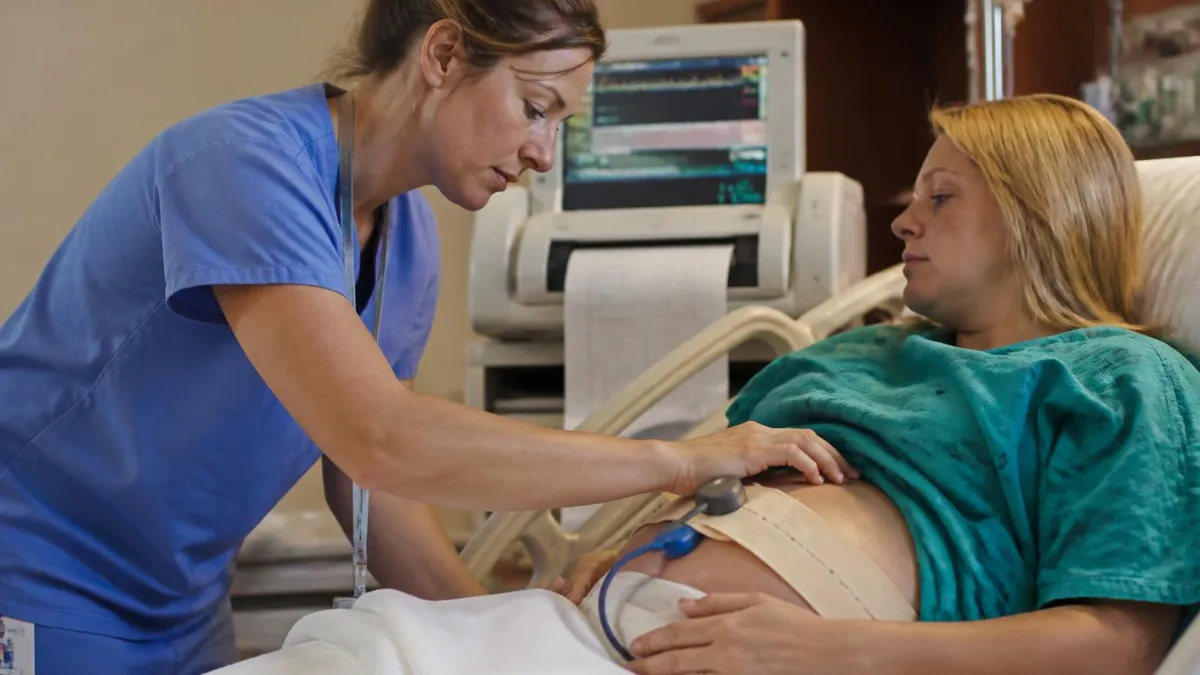
The field encompasses far more than simply attaching a tocometer and walking away. Nurses, midwives, and allied health professionals working in EFM-related positions must interpret complex strip patterns in real time, communicate urgent findings to physicians, and document every intervention according to strict medicolegal standards. These cognitive and communication demands create a distinct professional identity that separates EFM-focused clinicians from general medical-surgical staff, and that distinction is reflected in competitive compensation packages across the country.
Hospitals are not the only employers seeking EFM-trained professionals. Outpatient antepartum testing centers, fetal diagnostic clinics, telehealth fetal monitoring companies, perinatal quality organizations, and medical simulation programs all hire nurses and technicians with strong EFM backgrounds. Some roles are entirely remote, with experienced clinicians reading strips transmitted from rural hospitals that lack on-site specialists. This diversification has opened career paths that would have been unimaginable a decade ago.
Certification is a powerful differentiator in the EFM job market. The C-EFM credential, administered by the National Certification Corporation, signals to employers that a candidate has verified, standardized competency in fetal heart rate interpretation and is committed to patient safety beyond the minimum required by licensure. Many Magnet-designated hospitals now list C-EFM as a preferred or required qualification for senior staff positions, charge nurse roles, and perinatal education jobs, making early credentialing a smart career investment.
Geographic location plays a significant role in EFM salary and opportunity. Urban academic medical centers in high-cost states such as California, New York, and Massachusetts typically offer the highest base wages, often exceeding $95,000 per year for staff nurses in labor and delivery. Community hospitals in the Southeast and Midwest tend to offer lower base pay but frequently compensate with sign-on bonuses ranging from $5,000 to $25,000, tuition assistance, and generous shift differentials that can add 15–25 percent to annual income.
If you are preparing to enter or advance within efm jobs, structured exam preparation is a non-negotiable step. The C-EFM exam tests nuanced knowledge of Category I, II, and III fetal heart rate patterns, intrauterine resuscitation techniques, and documentation protocols — all content areas that appear directly in clinical competency evaluations and interview scenarios at top perinatal programs nationwide.
This guide walks you through every dimension of EFM employment: typical roles and work settings, national salary benchmarks, the credentials that open doors, the skills employers test in interviews, and actionable steps to position yourself for the highest-paying and most rewarding positions in this specialty. By the end, you will have a clear, realistic roadmap tailored to where you are today and where you want to be within the next two to five years of your perinatal career.
EFM Employment by the Numbers

Types of EFM Jobs and Work Settings
The most common EFM role, requiring continuous fetal strip interpretation, intrauterine resuscitation, and real-time physician notification. Staff positions typically offer 12-hour shifts, shift differentials, and direct patient care experience essential for advancement.
Outpatient role focused on non-stress tests, biophysical profiles, and contraction stress tests. Requires strong interpretation skills in a lower-acuity setting with regular business hours, making it attractive for nurses seeking work-life balance.
A fully remote position interpreting fetal monitor strips transmitted from rural or critical-access hospitals. Requires advanced certification, strong communication skills, and the ability to guide bedside nurses through urgent interventions via telephone.
Hospital-based or traveling educator responsible for staff competency, fetal monitoring simulation labs, and regulatory compliance. Typically requires C-EFM certification, BSN or MSN, and 5+ years of L&D experience.
Analyzes EFM documentation, adverse event trends, and protocol adherence across labor units. Often reports to CNO or patient safety officer. Ideal for experienced nurses transitioning out of direct care while staying connected to their specialty.
EFM salary data varies considerably depending on setting, geographic region, years of experience, and whether a nurse holds the C-EFM credential. According to national compensation surveys from 2024 and 2025, staff registered nurses working in labor and delivery units with dedicated EFM responsibilities earn a median base salary of approximately $78,000 per year. However, that figure can range from $58,000 in lower-cost rural markets to more than $110,000 in high-cost urban centers when shift differentials and overtime are factored in.
Night shift and weekend differentials are a major component of total compensation in EFM employment. Most hospitals pay an additional $3.00 to $8.00 per hour for evening and overnight shifts, and many add 5–10 percent premiums for weekend hours. A full-time labor and delivery nurse consistently working three night shifts per week can realistically increase their effective hourly rate by 15–20 percent above the base rate, which translates to $10,000–$18,000 in additional annual income without any promotion required.
Travel nursing assignments focused on labor and delivery EFM skills are among the most lucrative short-term opportunities available. Contract agencies routinely post 13-week L&D travel positions paying all-inclusive packages of $2,800 to $4,200 per week, which includes tax-free housing stipends, travel reimbursement, and completion bonuses. Nurses willing to relocate temporarily can earn $130,000–$180,000 in a single year through strategic travel assignments, particularly if they hold active licenses in compact states.
Tele-EFM positions represent a newer but increasingly well-compensated niche within EFM employment. Companies that contract with rural hospitals to provide remote fetal monitoring interpretation services typically offer salaries between $80,000 and $105,000 per year for fully remote roles. These positions often require two to three years of direct L&D experience, C-EFM certification, and demonstrated proficiency with multiple monitoring platforms such as Philips Avalon, GE Corometrics, and Natus Neoventa systems.
Perinatal educators and EFM quality specialists command salaries in the $85,000–$120,000 range, reflecting the advanced expertise and reduced supply of candidates who combine strong clinical backgrounds with teaching or analytical skills. Hospital systems that have implemented obstetric hemorrhage and maternal safety bundles often hire dedicated perinatal quality nurses at the manager level, with titles such as Perinatal Safety Coordinator or OB Quality Improvement Nurse, carrying salaries at the upper end of this range.
Sign-on bonuses remain a widely used recruitment tool in competitive EFM labor markets. A 2025 survey of hospital systems in high-demand metropolitan areas found that 68 percent of L&D postings included sign-on bonuses averaging $12,500, with some Magnet hospitals offering up to $30,000 for experienced candidates who commit to a two-year service agreement. Loan forgiveness programs through the National Health Service Corps and individual health system partnerships add further financial incentives for nurses choosing to build long-term EFM careers.
Salary negotiation strategies specific to EFM nursing differ slightly from general nursing negotiations because the specialty skill set is narrow and verifiable. Candidates who arrive at salary discussions with documented C-EFM certification, a portfolio of clinical competency achievements, and data on regional market rates consistently negotiate 8–15 percent higher starting offers than unprepared candidates. Understanding your market value before the first conversation with a recruiter is one of the highest-return investments you can make in your EFM career.
EFM Certifications, Qualifications, and Employer Expectations
The Certified Electronic Fetal Monitoring (C-EFM) credential from the National Certification Corporation is the gold standard for EFM employment. Candidates must be licensed RNs or midwives with at least 2,000 hours of perinatal clinical experience within the past 24 months. The exam consists of 140 scored questions covering fetal physiology, strip interpretation, intrauterine resuscitation, and documentation. Most employers actively prefer certified candidates, and many Magnet hospitals require C-EFM for charge nurse or senior staff positions.
Recertification occurs every three years through either re-examination or continuing education hours. Maintaining the credential demonstrates ongoing professional commitment, which matters to hiring managers who want long-term staff retention. Nurses who earn C-EFM before applying to positions report receiving higher initial salary offers — an average of $2.50–$4.00 more per hour in recent recruitment surveys — making the approximately $325 exam fee one of the best financial returns in perinatal nursing education.

Pros and Cons of Pursuing an EFM-Focused Nursing Career
- +Competitive salaries with strong shift differential potential in most US markets
- +High demand and low unemployment: L&D units consistently face staffing shortages
- +Clear certification pathway (C-EFM) that directly boosts earning power
- +Diverse work settings from bedside to fully remote tele-EFM roles
- +Emotionally rewarding work directly tied to positive birth outcomes
- +Travel nursing in L&D/EFM is among the highest-paying contract specialty assignments
- −High-stakes environment with significant medicolegal liability exposure
- −Mandatory overtime and on-call requirements are common at many facilities
- −Emotional burnout risk from managing obstetric emergencies and adverse outcomes
- −Certification renewal every three years requires ongoing time and financial investment
- −Limited career advancement without additional education (BSN, MSN) at many hospitals
- −Night shift and holiday coverage often required, especially for new staff nurses
Pros and Cons at a Glance
| Pros | Cons |
|---|---|
| Competitive salaries with strong shift differential potential in most US markets | High-stakes environment with significant medicolegal liability exposure |
| High demand and low unemployment: L&D units consistently face staffing shortages | Mandatory overtime and on-call requirements are common at many facilities |
| Clear certification pathway (C-EFM) that directly boosts earning power | Emotional burnout risk from managing obstetric emergencies and adverse outcomes |
| Diverse work settings from bedside to fully remote tele-EFM roles | Certification renewal every three years requires ongoing time and financial investment |
| Emotionally rewarding work directly tied to positive birth outcomes | Limited career advancement without additional education (BSN, MSN) at many hospitals |
| Travel nursing in L&D/EFM is among the highest-paying contract specialty assignments | Night shift and holiday coverage often required, especially for new staff nurses |
EFM Job Search Checklist: Steps Before You Apply
- ✓Verify your RN license is active and in good standing in your target state or compact state network.
- ✓Log and document your perinatal clinical hours to confirm eligibility for C-EFM examination (minimum 2,000 hours).
- ✓Register for and pass the C-EFM exam through the National Certification Corporation before submitting applications to Magnet hospitals.
- ✓Update your resume to highlight specific EFM competencies: NICHD classification, Category II management, IUPC/FSE placement.
- ✓Gather two to three professional references from charge nurses, nurse managers, or physicians who can speak to your EFM clinical skills.
- ✓Research target employers' EFM protocols and monitoring platforms (Philips, GE, Natus) to tailor your cover letter effectively.
- ✓Join the Association of Women's Health, Obstetric and Neonatal Nurses (AWHONN) for job board access and networking opportunities.
- ✓Complete AWHONN Intermediate or Advanced Fetal Monitoring course if you have not done so within the past three years.
- ✓Prepare concrete examples of EFM strip management decisions for behavioral interview questions using the STAR method.
- ✓Set up job alerts on Indeed, LinkedIn, and hospital career portals filtered by keywords including labor and delivery, perinatal, and fetal monitoring.
C-EFM Certification Can Add $5,000–$8,000 to Your Annual Income
Nurses who obtain C-EFM certification before applying for labor and delivery positions consistently report higher starting salary offers. A 2024 perinatal workforce survey found certified nurses received starting pay averaging $2.75 per hour higher than non-certified peers — which equals approximately $6,000–$8,000 per year on a full-time 36-hour schedule. Pursuing certification before your job search, not after, is the highest-return investment you can make in your EFM career.
Advancing within EFM employment requires a deliberate strategy that combines clinical excellence, formal credentialing, and visible professional engagement. Nurses who reach charge nurse, educator, or manager roles within five to seven years of entering labor and delivery consistently describe a common pattern: they pursued C-EFM early, volunteered for quality improvement projects, and sought mentorship from senior perinatal nurses who sponsored their advancement within the organization.
The charge nurse role is often the first formal step in EFM career advancement. Charge nurses in labor and delivery manage patient assignments, support bedside nurses interpreting complex strips, coordinate with physicians during urgent escalations, and serve as a resource for new staff. Many hospitals offer a $1.50–$3.00 per hour charge differential in addition to base pay, and charge experience is universally listed as a preferred qualification for perinatal educator and manager positions. If your unit does not rotate charge opportunities, ask your manager directly how to get on the charge rotation.
Perinatal education is a natural progression for nurses who excel at teaching and protocol development. Hospital-based perinatal educators design fetal monitoring skills labs, conduct new employee orientation, coordinate AWHONN fetal monitoring course offerings for staff, and manage annual competency assessments required by The Joint Commission. This role typically requires three to five years of L&D experience, C-EFM certification, and either a BSN with demonstrated education experience or an MSN in nursing education. The salary range of $82,000–$105,000 reflects the advanced skill set required.
Quality improvement roles represent another high-impact advancement pathway in EFM employment. Perinatal quality nurses and patient safety specialists review adverse event data, analyze strip interpretation trends, and develop unit-level protocols in response to regulatory guidance from organizations such as ACOG, AWHONN, and The Joint Commission. These positions connect clinical expertise to institutional decision-making, offering nurses significant influence over how EFM practices evolve across an entire hospital or health system. CPHQ (Certified Professional in Healthcare Quality) certification enhances competitiveness for these roles.
Travel nursing in labor and delivery provides an accelerated path for building experience across diverse clinical settings while earning substantially higher compensation. Nurses who complete three to five travel assignments at different hospital types — community hospital, level III NICU, academic medical center — develop an unusually broad EFM skill set that is highly attractive to permanent employers. The breadth of experience also strengthens C-EFM exam preparation because travelers encounter a wider range of high-risk patient populations and monitoring scenarios than many staff nurses see in a single facility.
Remote tele-EFM positions represent the frontier of career advancement for experienced perinatal nurses who want to exit direct patient care while remaining clinically engaged. Companies providing remote fetal monitoring services to rural hospitals typically hire nurses with a minimum of five years of L&D experience, C-EFM certification, and demonstrated competency with multiple monitoring platforms. The fully remote nature of these roles appeals to nurses managing family obligations or living in areas with limited local hospital opportunities, and the salaries of $85,000–$105,000 are competitive with senior staff positions at urban hospitals.
Graduate education opens the most expansive career trajectories in perinatal nursing. A Master of Science in Nursing with a Women's Health Nurse Practitioner or Certified Nurse-Midwife track qualifies nurses for independent and collaborative practice roles with annual compensation of $95,000–$145,000. DNP programs with a perinatal systems focus prepare nurses for director-level hospital administration, research roles at academic medical centers, and policy positions at state health departments. Tuition assistance programs at many health systems, combined with Public Service Loan Forgiveness, make graduate education increasingly accessible for working L&D nurses.

The National Certification Corporation requires a minimum of 2,000 hours of perinatal clinical experience in the 24 months immediately preceding your application — not your total career hours. If you are approaching the two-year mark at a labor and delivery unit, begin tracking your hours now with pay stubs or employer verification letters. Candidates who fail to document hours correctly face eligibility delays of three to six months, which can significantly push back job search timelines that depend on certification status.
Interview preparation for EFM employment positions requires a different approach than general nursing interviews because hiring managers specifically assess fetal strip interpretation judgment, emergency response decision-making, and communication under pressure. Most labor and delivery units incorporate a clinical skills assessment or structured scenario into the interview process, expecting candidates to verbally walk through their assessment and response to a presented fetal monitor tracing — for example, a Category II strip with late decelerations and minimal variability in a patient with preeclampsia.
Behavioral interview questions for EFM roles follow predictable patterns. Common questions include: describe a time you escalated a fetal heart rate concern to a physician and experienced pushback; explain how you manage multiple laboring patients when two strips require simultaneous attention; give an example of how you documented a rapidly evolving fetal status change in a way that supported the medical record and protected the patient. Preparing three to five STAR-format (Situation, Task, Action, Result) narratives from your actual clinical experience before the interview is essential preparation.
Knowledge of your target employer's clinical policies and accreditation status demonstrates serious interest and differentiates you from candidates who conduct no research. Review the hospital's Joint Commission survey history, Magnet status, birth volume statistics, and any publicly available perinatal quality data. If the unit recently implemented a maternal safety bundle or hemorrhage protocol, mentioning your familiarity with those initiatives and your interest in contributing to ongoing implementation signals both competence and cultural fit to the hiring team.
Negotiation skills are underutilized by most nursing candidates but have a disproportionate impact on career-long earnings. The salary agreed upon in your first position in a specialty often sets the baseline for future offers, sign-on bonuses, and internal promotion bands. Research market rates using Bureau of Labor Statistics data, specialty nursing salary surveys, and conversations with peers before your first offer. Approach negotiation professionally by citing certification, experience, and market data rather than personal financial needs — employers respond to evidence-based requests with higher approval rates.
References matter more in specialty nursing than in many professions because perinatal hiring managers often know each other professionally across hospital networks. A strong reference from a respected charge nurse, clinical educator, or OB attending physician can meaningfully accelerate your hiring timeline. Cultivate reference relationships by doing excellent work, following up after critical clinical events, and staying in professional contact with mentors even after leaving a position. A warm, specific reference letter from a physician who recalls your management of a specific fetal distress scenario is worth more than a generic HR confirmation of employment dates.
Continuing education investments signal long-term career seriousness to employers and increase your effectiveness in EFM roles. AWHONN's Advanced Fetal Monitoring course, NRP (Neonatal Resuscitation Program) certification, and STABLE program training are all frequently listed on EFM job postings as preferred qualifications. Many health systems reimburse these courses as part of education benefits, meaning the financial barrier is lower than most nurses assume. Completing them before your job search rather than after demonstrates initiative and reduces the time an employer must invest in your onboarding.
Networking within the perinatal nursing community generates job leads, salary intelligence, and peer mentorship that formal job boards cannot replicate. AWHONN local chapter meetings, state perinatal network conferences, and social media communities specifically for L&D nurses are all active forums where EFM employment opportunities circulate before formal postings go live. Nurses who build visible professional reputations through conference presentations, published letters to editors of perinatal journals, or active engagement in professional association committees are consistently sought out by recruiters without ever applying through a traditional job application portal.
Practical preparation for EFM employment goes beyond updating your resume and studying for the C-EFM exam. Experienced perinatal nurses who have navigated multiple job searches consistently emphasize that the candidates who land the best positions are those who can demonstrate concrete, recent clinical competencies at every stage of the hiring process — from application screening to final interview to skills assessment. Intentional preparation in the months before your job search begins pays dividends that persist for years.
Strip interpretation fluency is the single most tested competency in EFM job interviews, and regular deliberate practice is the only way to maintain and sharpen this skill. Pull up fetal monitoring case libraries through AWHONN resources, NCC practice materials, or clinical education platforms your hospital subscribes to, and challenge yourself to interpret at least three to five strips per week outside of your clinical shifts. Focus on cases involving Category II patterns with ambiguous management implications, since those scenarios reflect the real-world complexity that interviewers and clinical managers want to assess.
Building your EFM documentation portfolio before your job search is another high-value preparation strategy. With appropriate de-identification and facility approval, collecting examples of your own documentation in challenging clinical situations — a cord prolapse response, an emergent cesarean preparation, a prolonged deceleration that resolved with repositioning — gives you concrete material to discuss in behavioral interviews. Hiring managers react positively to candidates who can describe specific clinical moments with precision, because that detail signals genuine ownership of their clinical practice rather than rehearsed generalities.
Technology proficiency is increasingly important in EFM employment as hospitals migrate to advanced monitoring platforms and centralized surveillance systems. Familiarize yourself with the specific equipment used at your target employers by reviewing their public-facing clinical information or asking during interviews which systems the unit runs. If you have used Philips Avalon FM20 or GE Corometrics 250cx at your current facility, say so explicitly. If you have not, express your interest in cross-training and your history of quickly learning new clinical technology — employers understand that monitoring systems vary across facilities and value candidates who demonstrate adaptability.
Professional association membership is a low-cost, high-return investment for EFM job seekers. AWHONN membership costs approximately $100 per year and provides access to an exclusive job board, discounted continuing education, evidence-based practice guidelines, and a professional network spanning labor and delivery nurses nationwide. NCC membership similarly provides access to exam resources and a community of certified perinatal nurses. Listing active AWHONN or NCC membership on your resume signals professional engagement to hiring committees who review hundreds of applications from candidates with otherwise similar clinical backgrounds.
Mentorship relationships with nurses five to ten years ahead of you in EFM careers provide irreplaceable guidance for career decisions. A mentor who has navigated the transition from staff nurse to educator, or from bedside to tele-EFM, can help you avoid common mistakes in timing, positioning, and negotiation. Seek mentors through AWHONN chapter meetings, your current unit's senior staff, or LinkedIn connections with perinatal nurses in roles you aspire to. Most experienced nurses are generous with career guidance when approached respectfully and with specific questions rather than vague requests for general advice.
Finally, maintaining your physical and emotional wellbeing is a practical career strategy, not a luxury. EFM nursing involves sustained vigilance, high-stakes decisions, and exposure to traumatic birth outcomes that create cumulative stress over time.
Nurses who build sustainable self-care routines — adequate sleep schedules compatible with shift work, peer support relationships, and access to employee assistance programs — demonstrate longer career longevity and higher performance on clinical competency assessments than those who neglect wellbeing. Employers increasingly recognize burnout prevention as a clinical safety issue, and candidates who articulate healthy professional boundaries tend to be viewed as sustainable long-term investments rather than short-term hires.
Sample EFM - Electronic Fetal Monitoring Practice Questions
Try these questions from our free EFM - Electronic Fetal Monitoring practice tests. The correct answer and an explanation follow each question.
An EFM tracing shows a baseline of 125 bpm. Over the last 30 minutes, there have been recurrent late decelerations. However, variability has remained moderate throughout this period. What is the correct interpretation of this FHR pattern?
- A. Category I, as variability is moderate.
- B. Category II, due to the recurrent late decelerations with moderate variability.
- C. Category III, as any recurrent late deceleration is abnormal.
- D. Category I, because the baseline is normal.
Answer: B. Category II, due to the recurrent late decelerations with moderate variability.
According to the NICHD guidelines, recurrent late decelerations in the presence of moderate variability classify a tracing as Category II. The pattern only becomes Category III if the recurrent late decelerations are accompanied by absent baseline variability. The presence of moderate variability is a key factor that prevents this from being a Category III tracing.
Amnioinfusion is an appropriate intervention for which of the following clinical scenarios?
- A. Recurrent late decelerations with minimal variability
- B. Recurrent severe variable decelerations
- C. Fetal tachycardia greater than 170 bpm
- D. A sinusoidal fetal heart rate pattern
Answer: B. Recurrent severe variable decelerations
Amnioinfusion involves instilling a sterile, warmed isotonic fluid into the uterine cavity. Its primary indication is to relieve recurrent variable decelerations caused by umbilical cord compression, as the fluid provides cushioning. It is not indicated for late decelerations, tachycardia, or sinusoidal patterns, which are related to uteroplacental insufficiency or severe fetal anemia.
Which fetal blood vessel carries oxygenated blood FROM the placenta TO the fetus?
- A. Umbilical artery
- B. Umbilical vein
- C. Ductus arteriosus
- D. Ductus venosus
Answer: B. Umbilical vein
The umbilical vein carries oxygenated, nutrient-rich blood from the placenta to the fetus.
When documenting fetal heart rate accelerations, which detail is required to meet the standard NICHD definition in a term fetus?
- A. Peak ≥15 bpm above baseline lasting ≥15 seconds
- B. Peak ≥10 bpm above baseline lasting ≥10 seconds
- C. Peak ≥20 bpm above baseline lasting ≥30 seconds
- D. Any visible increase in FHR above the baseline
Answer: A. Peak ≥15 bpm above baseline lasting ≥15 seconds
In a term fetus, an acceleration is defined by NICHD as a peak of at least 15 bpm above baseline with a duration of at least 15 seconds.
Take the full EFM - Electronic Fetal Monitoring practice test
EFM Questions and Answers

C-EFM Practice Questions: Free Electronic Fetal Monitoring Exam Prep (2026)
C-EFM Certification: Complete Study Guide and Exam Prep for 2026

EFM Guidelines: Complete Training Guide to Electronic Fetal Monitoring Requirements

EFM Books: The Complete Guide to Electronic Fetal Monitoring Study Resources
EFM Practice Test PDF (Free Printable 2026)
How this page was made: written with AI tools and published by Nathan Beja, founder of Practice Test Geeks, who is responsible for its content. Exam facts are checked against the official sources listed below. Not reviewed by a subject-matter expert. Editorial policy
Sources & references
Exam facts on this page (fees, format, dates, passing scores) are checked against these official sources; the date is our last check. Editorial policy
- nccwebsite.org — Fees, exam format, passing score, retake policy, score validity, eligibility, test delivery, time limit, exam information · verified Oct 2026