
C-EFM Certification: Complete Study Guide and Exam Prep for 2026
c efm certification prep: study guide, exam format, pass rates, costs, and free EFM practice questions to help you pass the C-EFM exam in 2026. 🎓

The c efm credential is one of the most recognized subspecialty certifications in perinatal nursing, and earning it tells employers, colleagues, and patients that you can read a fetal heart tracing accurately under pressure. Administered by the National Certification Corporation (NCC), the C-EFM certification validates that a registered nurse, physician, or other qualified clinician has mastered the interpretation of electronic fetal monitoring strips, the standardized NICHD terminology, and the clinical decision-making that protects mothers and babies during labor. This guide walks you through every step of the journey.
If you have spent any time on a labor and delivery unit, you already know how high the stakes are. A single misread deceleration can change an outcome, which is exactly why the c efm exam emphasizes pattern recognition, category classification, and timely communication. The test does not simply ask you to memorize definitions; it asks you to apply them to realistic tracings and clinical scenarios. That practical orientation is what makes structured preparation so valuable, and it is why thousands of clinicians invest weeks of focused study before sitting for the exam.
This article serves as a central hub for your preparation. We cover eligibility requirements, the exam blueprint, registration costs, pass rates, and a realistic study schedule. We also point you toward free practice questions so you can test your readiness before paying the registration fee. Whether you are a new graduate aiming to strengthen your resume or a seasoned charge nurse renewing your credential, you will find actionable guidance here. For a broader overview, explore our c-efm certification resource hub anytime.
One thing to understand early is the difference between general EFM competency and formal certification. Many hospitals require staff to complete annual EFM education modules, but those internal checkoffs are not the same as the NCC C-EFM credential. The national certification is portable, employer-independent, and recognized across all fifty states. It carries weight in job interviews, supports clinical ladder advancement, and in some facilities earns a pay differential. That portability is one reason demand for the credential continues to climb year after year.
The c efm exam draws heavily from the standardized language adopted by the National Institute of Child Health and Human Development. Understanding baseline rate, variability, accelerations, and the three categories of deceleration patterns is non-negotiable. You will also need to interpret Category I, II, and III tracings and know what each category implies for intervention. Because the terminology is precise, candidates who learn the exact definitions rather than approximations consistently outperform those who rely on bedside shorthand picked up during shifts.
Beyond raw knowledge, the exam rewards clinical judgment. Questions frequently present a tracing alongside maternal history and ask what you would do next. Should you reposition the patient, administer oxygen, increase IV fluids, discontinue oxytocin, or notify the provider immediately? These intervention sequences are testable and clinically meaningful. The remainder of this guide breaks down the format, costs, timeline, and study strategy so you can walk into the testing center confident, well-rested, and ready to demonstrate the competence the credential represents.
The C-EFM Certification by the Numbers
Key Facts at a Glance
| Item | Value | Details |
|---|---|---|
| Total Exam Questions | 125 | 100 scored + 25 pretest |
| Time Allotted | 3 hr | Computer-based testing |
| Exam Fee | $325 | NCC application cost |
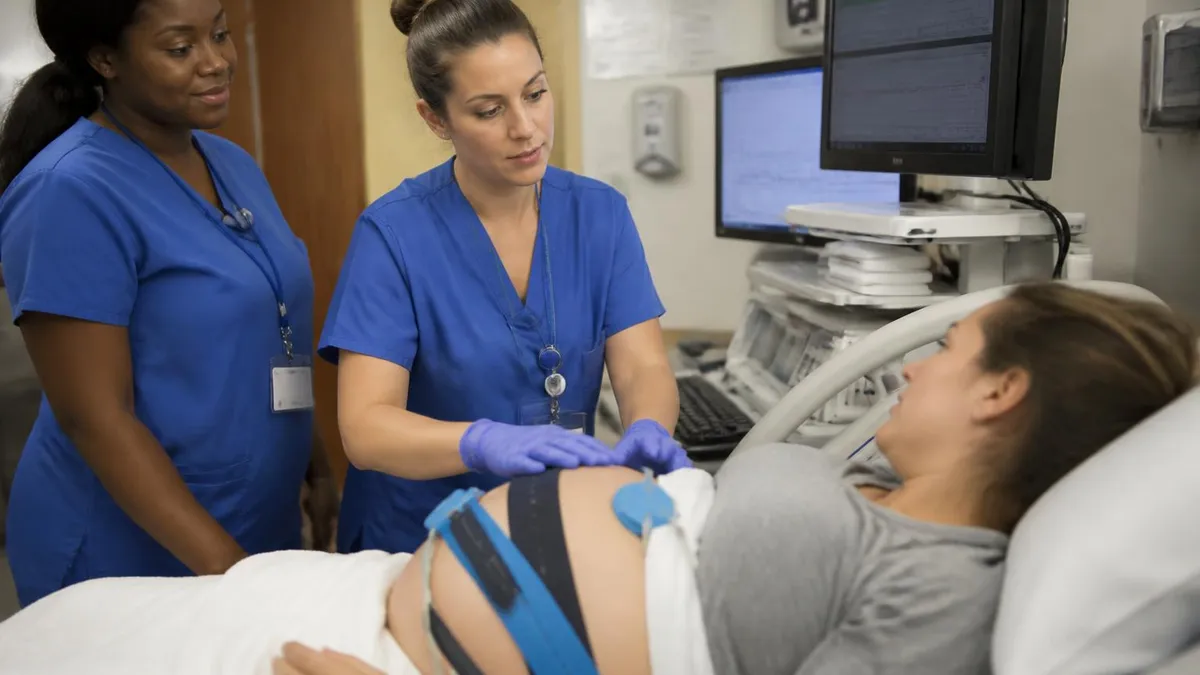
C-EFM Exam Format
| Section | Questions | Time | Weight | Notes |
|---|---|---|---|---|
| EFM Physiology & Terminology | 30 | 45 min | 30% | Baseline, variability, NICHD terms |
| Pattern Interpretation | 40 | 60 min | 40% | Category I/II/III tracings |
| Clinical Intervention | 20 | 30 min | 20% | Intrauterine resuscitation |
| Documentation & Communication | 10 | 15 min | 10% | SBAR, charting standards |
| Total | 125 | 3 hours | 100% |
Eligibility for the C-EFM exam is broader than many candidates expect. The NCC opens the credential to registered nurses, advanced practice nurses, physicians, certified nurse-midwives, and other licensed clinicians who hold a current, unrestricted license in the United States or Canada. There is no minimum number of clinical hours required to sit for the exam, which means motivated new graduates can pursue it early. That said, practical experience interpreting real tracings dramatically improves your odds, because the test rewards applied judgment over rote memorization of isolated facts.
So who actually benefits most from this certification? Labor and delivery nurses are the largest group, but antepartum nurses, triage nurses, perinatal educators, and even neonatal team members find value in it. Physicians and midwives sometimes pursue it to standardize terminology across a unit and to model best practice for their teams. If your role involves placing, reading, or responding to fetal monitors, the credential aligns directly with your daily work and strengthens both your clinical confidence and your professional standing.
Timing your application matters. NCC offers continuous testing windows throughout the year, so you are not locked into a single annual exam date. Once your application is approved, you typically receive an authorization to test that remains valid for ninety days. Most candidates schedule their seat three to four weeks out, giving themselves a firm deadline to finish reviewing. A concrete test date is one of the most effective motivators for completing a study plan, so apply only when you are ready to commit to focused preparation.
Cost is another planning consideration. Beyond the exam fee itself, factor in any review courses, textbooks, or practice question banks you purchase. Many employers reimburse certification costs or offer paid study time, so check your facility's education benefits before paying out of pocket. Some hospitals even host group review sessions led by clinical nurse specialists. Tapping into these resources reduces your expense and connects you with colleagues preparing alongside you, which improves accountability and makes the process less isolating overall.
It helps to understand what the credential is not. Passing the C-EFM exam does not license you to practice independently, nor does it replace your facility's competency validation. Instead, it complements those processes by demonstrating standardized national knowledge. Think of it as a portable proof of expertise that travels with you between jobs and across state lines. That portability is especially valuable for travel nurses and clinicians who relocate, since it eliminates the need to re-prove EFM competence from scratch at each new assignment.
Finally, consider how the certification fits into your longer career arc. Many clinical ladder programs award points for national certifications, and C-EFM is frequently on the approved list. It can also serve as a stepping stone toward advanced perinatal roles, charge positions, or educator tracks. If you eventually pursue our full c-efm certification pathway resources, you will see how this credential connects to broader competencies in obstetric nursing and quality improvement. Investing in it early pays dividends throughout a long perinatal career.
Core EFM Knowledge Domains for the c efm Exam
The baseline fetal heart rate is the average rate over a ten-minute window, rounded to the nearest five beats per minute, excluding accelerations, decelerations, and marked variability. A normal baseline ranges from 110 to 160 bpm; below that is bradycardia and above is tachycardia. Mastering these thresholds is foundational because every interpretation question builds on a correctly identified baseline. Spend real time anchoring these numbers firmly in memory before moving on.
Variability describes the fluctuations in the baseline and is classified as absent, minimal, moderate, or marked. Moderate variability is the reassuring finding most clinicians want to see, signaling an intact fetal nervous system and adequate oxygenation. Absent or minimal variability paired with decelerations raises concern. The exam frequently tests your ability to quantify variability from a described tracing, so practice translating word descriptions into the correct classification quickly and accurately.
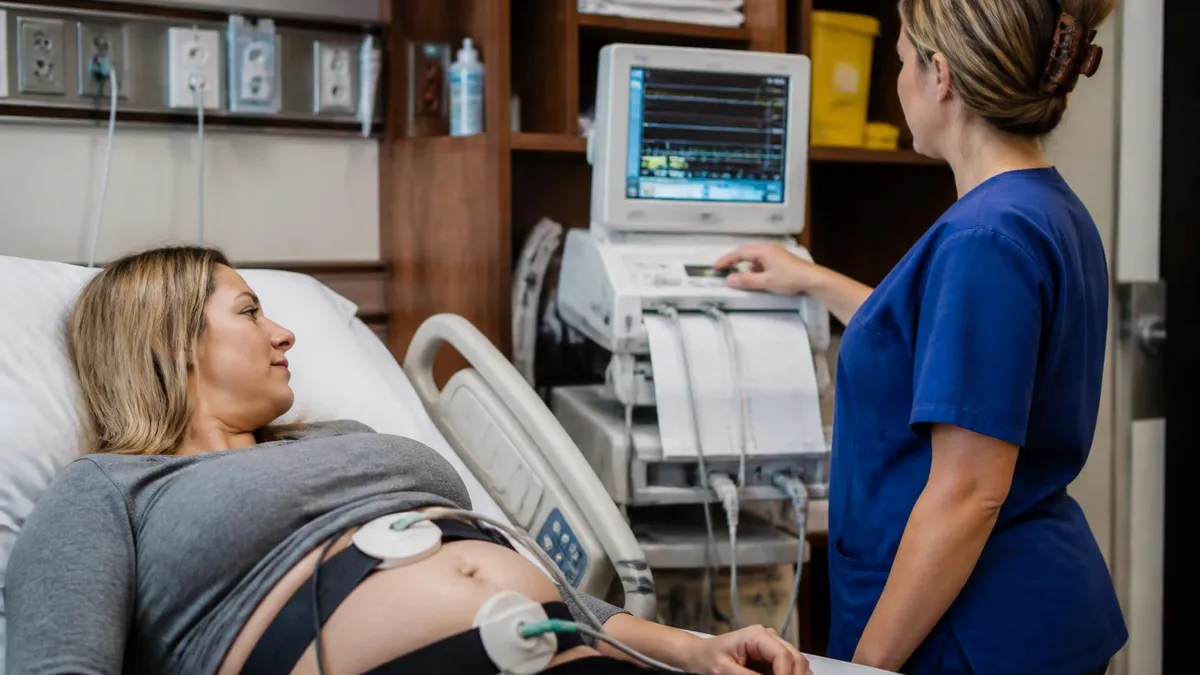
Is the C-EFM Certification Worth It?
- +Nationally recognized credential portable across all fifty states
- +Strengthens resumes and supports clinical ladder advancement
- +May earn a pay differential at many hospitals
- +Standardizes EFM terminology across your unit and team
- +No minimum clinical hours required to sit for the exam
- +Continuous testing windows mean flexible scheduling
- +Reinforces patient-safety skills that directly protect mothers and babies
- −Exam and prep costs can exceed three hundred dollars
- −Requires several weeks of focused, disciplined study
- −Three-year renewal demands ongoing continuing education
- −Does not replace facility competency validation
- −Pattern interpretation can be challenging for newer clinicians
- −Out-of-pocket cost if employer does not reimburse
Your c efm Registration and Prep Checklist
- ✓Confirm you hold a current, unrestricted RN or clinician license.
- ✓Create an account on the NCC certification portal.
- ✓Submit your C-EFM application and pay the exam fee.
- ✓Verify your authorization-to-test window and expiration date.
- ✓Schedule your testing appointment three to four weeks out.
- ✓Gather a current EFM textbook and NICHD terminology reference.
- ✓Complete at least three full practice question sets.
- ✓Review baseline, variability, and deceleration definitions daily.
- ✓Drill Category I, II, and III classification criteria.
- ✓Practice intrauterine resuscitation intervention sequences.
- ✓Take a timed practice exam to build test-day stamina.
- ✓Confirm your testing center location and required ID.
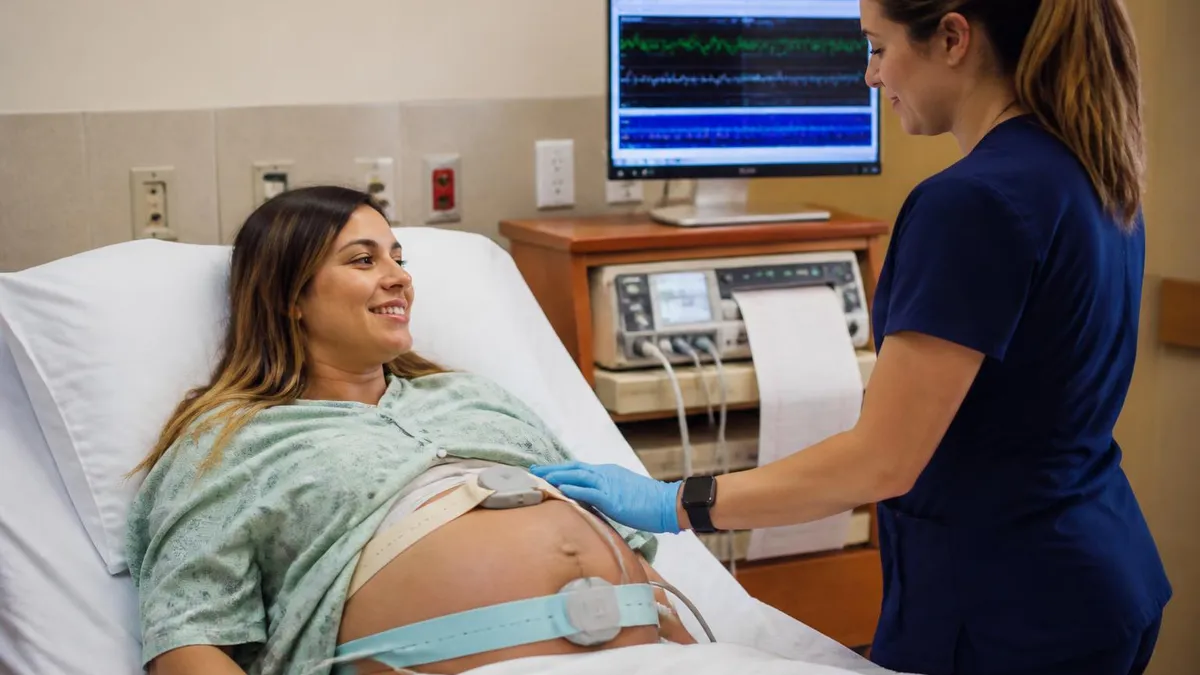
Timing relative to the contraction is everything.
The single most common error on the C-EFM exam is confusing late and variable decelerations. Anchor your interpretation to the contraction: lates begin after the peak and have a gradual onset, while variables are abrupt and unrelated to contraction timing. Master this distinction and a large share of interpretation questions become straightforward.
Understanding pass rates and scoring helps you set realistic expectations and study with the right intensity. The NCC does not publish a simple percentage-correct cutoff because the C-EFM exam uses a scaled scoring model. Different test forms vary slightly in difficulty, and the scaling process adjusts for that so every candidate is held to an equivalent standard. In practical terms, most well-prepared candidates need to answer roughly seventy percent of scored questions correctly, but the exact raw number shifts based on the form you receive.
The exam includes unscored pretest questions mixed in with the scored items. These pretest questions are how NCC validates new content before it counts toward scores, and you cannot identify which questions are which. This is actually good news: it means you should answer every question with full effort and never waste energy trying to guess which ones matter. Treat all 125 questions as equally important, pace yourself across the three-hour window, and avoid spending excessive time on any single item.
First-time pass rates for nationally recognized perinatal certifications generally land in a healthy range when candidates prepare properly, and C-EFM is no exception. The clinicians who struggle are usually those who rely solely on bedside experience without reviewing standardized terminology. Real-world shorthand and the precise NICHD language do not always match, and the exam grades on the official definitions. Closing that gap between practical habit and formal terminology is the highest-yield thing you can do to improve your score.
Scoring is reported as pass or fail, not as a class rank or percentile you must share with employers. You will typically receive your result at the testing center immediately after completing the computer-based exam, which spares you an anxious wait. If you do not pass on your first attempt, NCC allows retakes after a defined waiting period and an additional fee. Many candidates who fail narrowly pass comfortably on a second attempt after targeting their weak domains identified in the score report feedback.
To interpret your readiness before test day, use timed practice exams rather than untimed quizzes alone. Sitting for a full-length, clock-running practice session reveals whether your pacing holds up and whether fatigue erodes your accuracy in the final third of the exam. Aim to consistently score above your target threshold on practice tests with time to spare. That margin gives you a buffer for test-day nerves and the inevitable handful of unusually tricky items every exam contains.
Finally, remember that the score is a snapshot of a specific competency, not a verdict on your worth as a clinician. Plenty of excellent nurses need a second attempt because the standardized format differs from their daily workflow. Approach the result analytically: where did you lose points, which domain needs reinforcement, and what resources will close that gap? This growth-oriented mindset turns even a disappointing first result into a clear, actionable roadmap toward earning the credential.
Once NCC approves your application, your authorization to test is valid for a limited window, typically ninety days. If you let it lapse without scheduling, you may have to reapply and pay again. Mark the expiration date on your calendar and book your seat early to avoid losing your fee.
Once you earn the C-EFM credential, maintaining it becomes part of your ongoing professional rhythm. NCC requires recertification on a three-year cycle, and you maintain the credential through a continuing competency assessment rather than retaking the full exam each time. This maintenance process typically involves completing targeted continuing education modules tied to your assessed knowledge gaps. The model is designed to keep your skills current as evidence and terminology evolve, which is especially important in a field where practice guidelines are periodically updated.
The financial picture extends beyond the initial exam fee. Plan for renewal costs every three years, plus any continuing education you complete to satisfy maintenance requirements. The good news is that many of these continuing education activities overlap with the contact hours you already need for state license renewal, so a single well-chosen course can serve double duty. Coordinating your perinatal CE around both requirements is an efficient way to minimize cost and study time over the long run.
Career value is where the credential truly shines. In a competitive job market, a C-EFM certification on your resume signals initiative and verified expertise to hiring managers. Some facilities list it as a preferred or required qualification for labor and delivery and high-risk antepartum roles. It can tip a hiring decision in your favor, support a request for a higher starting step on the pay scale, and qualify you for charge nurse or preceptor responsibilities that come with additional compensation and influence.
For nurses pursuing clinical ladder advancement, national certifications like this one frequently carry the most points in the certification category. Climbing the ladder usually translates into meaningful raises and recognition, so the certification effectively pays for itself over time. If you are weighing whether the upfront investment is worthwhile, calculate the potential pay differential and ladder bonuses over even a single year; for most clinicians, the math favors certifying sooner rather than later in their careers.
The credential also opens doors to teaching and quality roles. Experienced C-EFM holders are natural candidates to lead unit-based fetal monitoring education, serve on perinatal safety committees, or mentor new graduates through their EFM competencies. These roles deepen your expertise, expand your professional network, and often serve as a launching pad toward advanced practice, clinical nurse specialist, or nursing education positions. The certification is rarely an endpoint; it is more often a catalyst for broader professional growth.
If you want to map out where this credential leads, our complete EFM resources connect monitoring mastery to the wider landscape of obstetric nursing competencies and continuing education planning. Treat the certification as one milestone in a deliberate, long-term career strategy. The knowledge you build preparing for the exam, particularly the standardized terminology and intervention logic, will sharpen your bedside practice every shift, long after the credential itself is hanging proudly on your wall.
With the format, costs, and career value mapped out, the final piece is a practical study strategy that actually fits a working clinician's schedule. The most reliable approach is spaced, active review rather than a single weekend cram. Block twenty to thirty minutes of focused study on most days for several weeks. Short, consistent sessions beat marathon cramming because they let your memory consolidate between sittings, especially for the precise NICHD definitions that the exam grades so strictly. Treat these blocks as standing appointments you do not cancel.
Begin each study cycle by drilling the foundational vocabulary until it is automatic: baseline ranges, the four variability classifications, and the timing signatures of early, late, and variable decelerations. Use flashcards or a quick self-quiz to confirm recall before moving to harder material. Once the vocabulary is solid, shift to applied practice with full tracing scenarios. The goal is to reach a point where identifying a pattern feels instant, freeing your mental energy for the harder intervention and category-assignment questions.
Practice questions are the single highest-yield study tool available to you. They reveal not only what you know but, more importantly, the gaps you did not realize existed. Work through question sets in the documentation, communication, and high-risk population domains, and review every rationale carefully, even for questions you answered correctly. Understanding why the right answer is right and why the distractors are wrong builds the discriminating judgment the exam demands. Keep a running list of concepts you miss and revisit them deliberately.
As test day approaches, transition to timed, full-length practice sessions. These build the stamina and pacing you need to stay sharp across a three-hour exam. Simulate test conditions as closely as you can: a quiet room, no phone, and a single uninterrupted block. Note where your accuracy dips, often in the final third when fatigue sets in, and train yourself to maintain focus through that stretch. Stamina is a skill you can practice, and it pays off measurably on exam day.
Take care of the logistics so they do not derail you. Confirm your testing center address, parking, and the acceptable forms of identification a few days in advance. Lay out your documents the night before, plan to arrive early, and get a full night of sleep rather than studying until midnight. Cramming the night before an applied-judgment exam rarely helps and often hurts by increasing anxiety. Trust the preparation you have done over the preceding weeks and arrive calm and rested.
On the exam itself, read each question carefully and watch for qualifying words like first, most, or initial that signal a prioritization question. When a tracing is described, identify the baseline, then variability, then any decelerations in that order, exactly as you practiced. If a question stumps you, eliminate the clearly wrong options, make your best choice, and move on without dwelling; you can flag it and return if time allows. Methodical pacing prevents one hard item from costing you several easier ones at the end.
After you pass, keep the momentum going. Document your new credential with your employer, update your resume and licensing records, and explore the continuing education that will satisfy your eventual renewal. Share what worked with colleagues preparing for their own exams; teaching the material is one of the best ways to cement it. The disciplined habits you built preparing for the C-EFM exam, consistent review and evidence-based practice, will serve you across your entire perinatal nursing career.
Sample EFM - Electronic Fetal Monitoring Practice Questions
Try these questions from our free EFM - Electronic Fetal Monitoring practice tests. The correct answer and an explanation follow each question.
At birth, a clamped segment of the umbilical cord is collected for blood gas analysis. Which vessel provides the most accurate information regarding the fetal metabolic state at the time of delivery?
- A. Maternal artery
- B. Umbilical vein
- C. A single, mixed sample from the cord
- D. Umbilical artery
Answer: D. Umbilical artery
The umbilical artery carries deoxygenated blood and metabolic waste products away from the fetus to the placenta. Therefore, its blood gas values most accurately reflect the fetal acid-base status at the moment of birth. The umbilical vein carries oxygenated blood from the placenta to the fetus and is more reflective of placental function.
When assessing uterine contraction intensity via manual palpation of the fundus, which finding corresponds to a 'strong' contraction?
- A. The uterine wall feels soft, like the tip of the nose.
- B. The uterine wall feels firm, like the chin.
- C. The uterine wall cannot be easily indented by the examiner's fingertips.
- D. The uterine wall remains firm for more than 2 minutes.
Answer: C. The uterine wall cannot be easily indented by the examiner's fingertips.
The standard subjective measure for palpating contraction intensity compares the feel of the uterine fundus to parts of the face. A 'strong' contraction is one where the uterine wall is very firm and cannot be indented, similar to the feel of a forehead. 'Mild' is compared to the tip of the nose, and 'moderate' is compared to the chin. A contraction lasting over 2 minutes would be defined as tetanic or prolonged, which is a measure of duration, not intensity.
A laboring patient's EFM tracing shows an abrupt FHR decrease from a baseline of 145 bpm to a nadir of 90 bpm. The onset of the deceleration to the nadir is less than 30 seconds. This change is best described as a:
- A. Late deceleration
- B. Variable deceleration
- C. Early deceleration
- D. Prolonged deceleration
Answer: B. Variable deceleration
A variable deceleration is defined by its abrupt onset (onset to nadir in <30 seconds). It is a visually apparent decrease in the FHR of at least 15 bpm, lasting at least 15 seconds but less than 2 minutes. This pattern is typically caused by umbilical cord compression. [1, 5, 6]
For internal monitoring of uterine contractions, an Intrauterine Pressure Catheter (IUPC) is inserted. Which of the following is a prerequisite for its placement?
- A. The fetus must be in a vertex presentation.
- B. The patient must have an epidural in place.
- C. The cervix must be fully dilated.
- D. The amniotic membranes must be ruptured.
Answer: D. The amniotic membranes must be ruptured.
An IUPC is a flexible catheter that is placed inside the uterine cavity, alongside the fetus, to directly measure the pressure generated by contractions. To insert the catheter into the uterus, the amniotic sac must be broken (ruptured membranes).
Take the full EFM - Electronic Fetal Monitoring practice test
EFM Questions and Answers



How this page was made: written with AI tools and published by Nathan Beja, founder of Practice Test Geeks, who is responsible for its content. Exam facts are checked against the official sources listed below. Not reviewed by a subject-matter expert. Editorial policy
Sources & references
Exam facts on this page (fees, format, dates, passing scores) are checked against these official sources; the date is our last check. Editorial policy
- nccwebsite.org — Fees, exam format, passing score, retake policy, score validity, eligibility, test delivery, time limit, exam information · verified Oct 2026