
Remote EEG Reading Jobs: What Neurodiagnostic Professionals Need to Know
Explore remote EEG reading jobs, EEG test basics, cost, and career paths. 🎯 Learn what it takes to read EEGs from home in 2026 September.

If you have ever searched for remote eeg reading jobs, you already understand that the neurodiagnostic field is changing fast. Telehealth technology now allows credentialed EEG readers — neurologists, epileptologists, and advanced EEG technologists — to interpret brain wave recordings from virtually anywhere, connecting hospital systems, outpatient clinics, and long-term monitoring units with expert analysis without requiring on-site presence. This shift has opened a growing job market that blends clinical expertise with digital infrastructure.
An eeg test, or electroencephalogram, measures electrical activity in the brain using small metal electrodes placed on the scalp. During the recording, billions of neurons fire in coordinated patterns that appear as wave patterns on a graph. Trained readers analyze these wave patterns to identify abnormalities associated with epilepsy, sleep disorders, brain injuries, encephalopathy, and other neurological conditions. Understanding the fundamentals of what an EEG test captures is essential before pursuing any reading role, remote or otherwise.
So what is an eeg test from a technical standpoint? It is a passive, non-invasive procedure that records spontaneous electrical signals via surface electrodes following the International 10-20 placement system. A standard diagnostic study typically lasts 20 to 40 minutes and may include activation procedures such as hyperventilation, photic stimulation, and sleep deprivation to provoke latent abnormalities. Longer ambulatory studies can extend to 24, 48, or even 72 hours of continuous recording.
For remote readers, the workflow replaces a light box or physical EEG machine with a secure web-based or software-driven platform. Recordings are digitized at the bedside, transmitted over an encrypted network, and opened in a review workstation anywhere with reliable internet access. The reader navigates the recording epoch by epoch, adjusts display filters, marks clinically relevant events, and generates a structured report that feeds directly into the ordering physician's electronic health record.
The appeal of remote eeg reading jobs extends beyond convenience. Neurologists in academic centers can consult for community hospitals that lack in-house expertise. Epileptologists can cover multiple intensive care units simultaneously during off-hours. EEG technologists with advanced credentials can provide preliminary reads or continuous EEG monitoring support without commuting to a hospital campus every shift. This model improves patient access to neurodiagnostic expertise while expanding earning opportunities for qualified professionals. For those preparing for credentialing exams, exploring remote eeg reading jobs resources can help clarify what clinical competencies are assessed.
It is important to note that credentialing requirements differ significantly between reading roles. A neurologist or epileptologist who remotely interprets studies typically holds a medical license in each state where the receiving facility operates. A technologist providing preliminary or overnight reads may need the R.EEG T. credential from ABRET, additional state-level requirements, and employer-specific competency verification. Interstate medical licensure compacts and telemedicine regulations continue to evolve, so professionals entering this space must stay current with their state medical board or credentialing body.
Remote EEG reading is not entry-level work. Most employers require several years of hands-on experience acquiring and interpreting studies before a candidate is trusted to review recordings independently from a home office. The stakes are high: an undetected seizure pattern in a critically ill patient can have life-altering consequences. That clinical responsibility is why comprehensive exam preparation, continuing education, and a strong foundation in EEG theory are non-negotiable for anyone targeting these roles.
Remote EEG Reading by the Numbers

Types of Remote EEG Reading Roles
Board-certified neurologists or epileptologists who read routine and complex EEG studies for hospitals, outpatient clinics, and epilepsy monitoring units via secure digital platforms. Requires state licensure in each jurisdiction served.
Credentialed EEG technologists who watch continuous ICU brain wave streams overnight or on long weekend shifts. They flag critical patterns and alert the on-call neurologist without being physically present in the facility.
Specialists who analyze 24- to 72-hour outpatient EEG recordings after the patient has returned home. Studies are uploaded digitally; reviewers annotate events, classify sleep stages, and prepare a comprehensive written report.
Experienced technologists who review acquired recordings for electrode artifact, technical adequacy, and documentation completeness before studies are queued for physician interpretation. A critical quality-control role in high-volume reading services.
Earning the credentials required for remote EEG reading roles is a multi-year journey that begins with formal neurodiagnostic training. The American Board of Registration of Electroencephalographic and Evoked Potential Technologists (ABRET) administers the primary credentialing exams in the United States. The R.EEG T. (Registered EEG Technologist) designation is the foundational credential, covering electrode application, artifact recognition, activation procedures, and basic pattern identification. Without this baseline credential, most remote employer platforms will not grant system access.
Beyond the R.EEG T., technologists pursuing continuous monitoring roles should target the CLTM (Certified Long-Term Monitoring) credential, which validates competency in extended ICU and epilepsy monitoring unit studies. This exam tests knowledge of seizure identification in critically ill patients, artifact differentiation from true ictal discharges, and escalation protocols — all skills that are directly exercised in remote overnight monitoring positions. Many employers list CLTM as a preferred or required qualification for cEEG remote roles.
For physician readers, board certification in neurology through the American Board of Psychiatry and Neurology (ABPN) is the minimum expectation. Epileptologists add a fellowship year and may pursue the Clinical Neurophysiology or Epilepsy subspecialty certification. These credentials signal depth of training that independent remote reading demands. Hospitals and telehealth companies conducting medical staff credentialing will request primary source verification of all certifications before granting reading privileges.
State licensure is one of the most operationally complex aspects of remote EEG reading for physicians. A neurologist reading studies for a patient in California must hold a valid California medical license, even if the physician is physically located in Texas. The Interstate Medical Licensure Compact (IMLC) simplifies this process for some states, allowing eligible physicians to obtain multiple state licenses through a coordinated application. However, not all states participate, and the compact does not eliminate per-state fees or renewal obligations.
Continuing education requirements add another layer of complexity for remote readers. ABRET requires 20 continuing education units (CEUs) every two years to maintain R.EEG T. status. ABPN requires Maintenance of Certification (MOC) activities that include a written exam every ten years, ongoing professional development credits, and practice performance assessments. Remote readers often fulfill these requirements through online CME platforms, national neurology conferences, and EEG-specific workshops offered by the American Clinical Neurophysiology Society (ACNS).
Malpractice insurance considerations are also different for remote readers than for traditional on-site clinicians. Tail coverage, multi-state policy endorsements, and telehealth-specific riders may be required depending on the states served. Physicians contracting independently with telehealth companies should have an attorney review the indemnification clauses before signing, since liability allocation between the reading physician, the acquiring facility, and the telehealth platform can vary significantly across contracts.
Technologists and physicians alike benefit from joining professional societies early in their careers. The American Clinical Neurophysiology Society (ACNS), the National Society of EEG Technologists (NASET), and the Epilepsy Foundation all publish practice guidelines, host job boards, and facilitate peer networking that can surface remote reading opportunities before they appear on public job boards. Active society membership signals professional engagement and often provides access to credentialing exam preparation resources that independent study cannot replicate.
EEG Medical Test Basics Every Remote Reader Must Know
An EEG medical test records electrical signals produced by neurons through electrodes affixed to the scalp with conductive gel or paste. The 10-20 International System places 21 standard electrodes at precise anatomical landmarks so that any lab worldwide can reproduce the same montage. Each electrode pair creates a channel, and the final recording typically displays 16 to 32 channels simultaneously, revealing spatial relationships between different brain regions during the recording epoch.
For remote readers, understanding the what is an eeg test question from a technical standpoint means recognizing how amplifier settings, filter choices, and sensitivity adjustments affect what appears on screen. A high-frequency filter set too low can suppress fast activity; a notch filter applied incorrectly can mask artifact patterns that mimic true pathology. Remote readers must be comfortable adjusting these parameters within the review software to accurately characterize every waveform they encounter, since they cannot physically inspect the recording setup after the fact.

Pros and Cons of Remote EEG Reading Jobs
- +Work from home or any location with stable internet, eliminating commute time and geographic restrictions
- +Access higher-paying markets by contracting with facilities in high-cost states without relocating
- +Flexible scheduling options including per-diem, part-time, and shift-based overnight coverage arrangements
- +Reduced exposure to hospital-acquired infections and the physical fatigue of shift work in busy clinical environments
- +Ability to work for multiple employers simultaneously, diversifying income and reducing dependence on any single contract
- +Growing demand driven by neurologist shortages in rural and community hospital settings nationwide
- −Requires multi-state medical licensure for physicians, adding significant cost and administrative burden each renewal cycle
- −Home office technical failures — internet outage, software crash, hardware malfunction — can delay critical reads
- −Professional isolation without the peer consultation and mentorship that comes from working in a clinical team environment
- −EEG test cost pressures at the facility level can translate into lower reimbursement rates for remote reading contracts
- −Liability exposure can be complex across jurisdictions, requiring specialized malpractice insurance with telehealth endorsements
- −Regulatory landscape for telemedicine continues to shift, meaning compliance requirements may change mid-contract
Remote EEG Reading Setup Checklist
- ✓Verify your R.EEG T. or medical license is active and in good standing in every state you plan to read for
- ✓Obtain a HIPAA-compliant workstation with full-disk encryption and automatic screen lock enabled
- ✓Install the EEG review software required by your employer and complete all vendor training modules
- ✓Set up a wired ethernet connection with a minimum 50 Mbps upload speed to handle large EEG file transfers
- ✓Purchase a high-resolution monitor (minimum 1920x1080, preferably 2560x1440) to display full montage detail
- ✓Establish a dedicated, private workspace with a door that locks to prevent accidental HIPAA disclosure
- ✓Complete a telehealth-specific malpractice insurance policy review and confirm multi-state coverage is included
- ✓Join at least one professional society (ACNS, NASET) to access peer networks and continuing education resources
- ✓Document your home office setup in writing and submit it to your employer's compliance or credentialing department
- ✓Create a downtime protocol — backup internet source and contact list — for when your primary connection fails during a critical read
The EEG Test Price Gap Creates Opportunity
The average eeg test price at an outpatient clinic ranges from $200 to $900 before insurance. Hospitals charge significantly more. This billing reality means facilities are motivated to maximize throughput — and remote reading services that can deliver fast turnaround times at competitive rates have a structural advantage. Remote readers who can consistently report studies within 1 to 2 hours of upload, even on nights and weekends, will find steady contract opportunities in an underserved market.
Understanding eeg test cost and reimbursement is important context for any professional considering remote reading roles, because payment structures directly shape how remote reading contracts are priced and negotiated. The professional component of EEG interpretation is billed separately from the technical component, which covers electrode application, acquisition, and supplies. Remote readers are typically paid for the professional component only, making per-study rates or salary arrangements based on anticipated volume the standard compensation model.
Medicare reimbursement for routine EEG interpretation (CPT code 95816) averages approximately $45 to $75 depending on geographic locality adjustments. Longer studies, sleep-deprived recordings, and continuous ICU monitoring carry higher reimbursement rates. Private insurer rates often run 120% to 180% of Medicare, and some commercial contracts pay significantly more for specialized services like prolonged video-EEG monitoring reports. Remote readers employed by telehealth companies typically receive a salary rather than direct per-study billing, but understanding these underlying rates helps during contract negotiations.
Annual salaries for neurologists who include remote EEG reading in their practice typically range from $220,000 to $380,000 depending on specialization, geography, and hours worked. Epileptologists on the higher end of that range often supplement clinical income with medical director roles at reading services. For EEG technologists in remote monitoring positions, base salaries generally range from $55,000 to $85,000, with overnight differential pay and productivity bonuses that can push total compensation meaningfully higher for those willing to work non-traditional hours.
The question of eeg test price also affects patients considering whether to pursue studies recommended by their providers. Uninsured patients often negotiate cash-pay rates directly with imaging centers or outpatient neurodiagnostic labs, sometimes paying as little as $150 to $300 for a routine study. Telehealth-enabled reading services can reduce facility overhead costs, which occasionally results in more competitive pricing passed on to patients — a secondary benefit of the remote reading model that improves access to neurodiagnostic care in underserved communities.
Remote EEG reading services are proliferating as health systems recognize the value of on-demand specialist coverage. National telehealth neurology companies, staffing agencies specializing in neurodiagnostics, and direct hospital contract models all compete for credentialed readers. Compensation benchmarks vary significantly across these arrangements: staffing agency placements may pay a higher hourly rate but offer fewer benefits, while employed telehealth positions often include health insurance, malpractice coverage, and CME allowances that have meaningful dollar value when compared on a total compensation basis.
Demand for remote neurodiagnostic services is projected to grow alongside the broader telehealth market. The COVID-19 pandemic accelerated telemedicine adoption and relaxed regulatory barriers in ways that have largely persisted. Wearable EEG devices and miniaturized ambulatory recorders are also expanding the pool of patients who can have studies performed without visiting a clinical facility, which increases the volume of recordings that need remote review. Professionals who invest now in advanced credentialing and technology proficiency are well-positioned to benefit from this structural market shift over the next decade.
One underappreciated advantage of remote reading roles is the data exposure they provide. A remote reader covering multiple facilities in different regions will encounter a broader variety of pathology — rare epilepsy syndromes, complex ICU encephalopathies, pediatric patterns — than a reader working exclusively at a single community hospital. This diversity accelerates pattern recognition development and builds the depth of interpretive experience that supports both clinical excellence and career advancement into leadership or academic roles.

State medical boards and telemedicine regulations are actively evolving. Temporary COVID-era waivers that allowed cross-state practice without full licensure have expired in most states. Before accepting a remote EEG reading contract, verify your licensure status in each patient state with the relevant medical board or credentialing body. Practicing without a valid license — even remotely — constitutes unlicensed medical practice and carries serious legal and professional consequences.
Landing your first remote EEG reading position requires a targeted job search strategy that goes beyond uploading a resume to general healthcare job boards. The most productive channels for remote neurodiagnostic roles include the ACNS job board, NASET's career center, LinkedIn searches filtered by "remote" and "EEG," and direct outreach to telehealth neurology companies. Hospital systems in rural states — particularly in the Mountain West and Great Plains — often post remote reading needs directly on their human resources portals when they cannot recruit on-site neurologists.
Your application materials must communicate clinical competency quickly. A strong CV for remote reading roles highlights the volume of studies you have interpreted (or acquired), the specific EEG platforms you are trained on (Natus NeuroWorks, Nihon Kohden, Persyst, Cadwell), and any continuous monitoring or ambulatory experience. Certifications should appear in the header of the CV, not buried in a credentials section. A brief cover letter that addresses your home office setup, internet reliability, and prior experience with remote workflows signals to employers that you understand the operational realities of the position.
Preparing thoroughly for credentialing exams is a prerequisite for entering any remote reading role, and this preparation doubles as proof of clinical competency. The R.EEG T. exam from ABRET tests fundamental knowledge of EEG technology, anatomy, and pattern recognition. Advanced credentials like CLTM go deeper into ICU monitoring protocols. Both exams require consistent, focused study using practice questions, reference texts like Ebersole and Pedley's Current Practice of Clinical Electroencephalography, and hands-on review of annotated EEG samples. Candidates who prepare systematically and track their weak areas systematically outperform those who rely on experience alone.
Networking within the neurodiagnostic community accelerates job discovery and career advancement in ways that solo job searching cannot replicate. Attending the annual ACNS meeting, joining regional EEG interest groups, and participating in online communities for EEG technologists and neurophysiologists exposes you to colleagues who may know of openings before they are advertised. Informal mentorship relationships with experienced remote readers can also provide frank advice about which companies offer fair contracts, reasonable study volumes, and responsive technical support — information that is rarely available from job postings alone.
The interview process for remote reading positions often includes a technical competency component in addition to standard HR screening. Expect to be asked about your ability to differentiate artifact from pathology, your escalation protocol when you identify a critical finding, and how you manage your workspace for HIPAA compliance. Some employers administer a reading test — presenting you with a set of anonymized EEG recordings and asking for written interpretations — to directly evaluate your clinical judgment before extending an offer. Preparing sample reports in the format your target employer uses is excellent interview preparation.
Contract negotiation for independent contractor remote reading roles deserves careful attention. Key terms to review include exclusivity clauses (which may prevent you from working with competing reading services), indemnification provisions, termination notice requirements, and whether the contract specifies a minimum or maximum study volume. An attorney experienced in physician or allied health contracts can identify problematic language that a generalist reviewer might miss. The upfront investment in legal review is modest compared to the risk of signing a contract that limits your income or exposes you to liability you did not anticipate.
For those building toward senior remote reading roles, consider developing expertise in a subspecialty area that commands premium rates. Neonatal EEG interpretation, intraoperative neurophysiological monitoring (IONM) with EEG components, and quantitative EEG analysis are three areas where demand consistently outpaces supply of qualified readers. These subspecialties also have clearer continuing education pathways and professional society frameworks, making credentialing progress more structured and visible to employers evaluating candidates for competitive remote positions.
Building a sustainable remote EEG reading career requires both clinical excellence and operational discipline. On the clinical side, commit to reviewing at least 200 to 300 annotated EEG recordings per year beyond your regular workload — structured review of labeled examples with expert commentary is the fastest path to pattern recognition improvement. The ACNS publishes critical care EEG terminology guidelines and epileptiform pattern classification documents that serve as the shared language of the field; memorizing these terminologies ensures your reports align with what ordering physicians and referring colleagues expect.
On the operational side, treat your home office with the same professionalism as a clinical workspace. Establish fixed reading hours that are clearly communicated to your employer and build in buffer time between studies so you are never rushing through a recording. Create a personal report template that includes all required clinical elements — clinical indication, recording conditions, activation procedures performed, background description, abnormal findings, and clinical correlation — so that your reports are consistently thorough and defensible under peer review or legal scrutiny.
Technology literacy is increasingly a differentiator among remote EEG readers. Familiarity with automated seizure detection algorithms, quantitative EEG trend displays, and AI-assisted pattern flagging tools allows you to use these aids appropriately without becoming dependent on them. Current AI tools in EEG are assistive, not autonomous: they can reduce the time spent scanning hours of data by surfacing candidate events, but the clinical interpretation remains the reader's responsibility. Understanding each tool's sensitivity, specificity, and known failure modes is part of professional competency for modern remote readers.
Time management across a shift is a skill that develops with experience in remote monitoring roles. During continuous ICU monitoring coverage, you may be responsible for reviewing alarms, scanning the most recent recording epochs, writing interim reports, and flagging critical findings for the on-call neurologist — all while managing the documentation requirements of multiple patients simultaneously. Developing efficient workflows, keyboard shortcuts within your review software, and clear escalation communication templates before your first shift reduces cognitive load during high-stakes moments.
Self-care and professional sustainability matter more in remote roles than many new remote workers anticipate. The absence of a physical workplace community means motivation, professional development, and quality control are more self-directed. Build deliberate touchpoints into your schedule: monthly case review with a peer, quarterly CEU activities, and regular participation in professional society webinars or forums. These habits maintain clinical sharpness and combat the professional isolation that can erode both quality and job satisfaction over time for remote healthcare workers.
Documentation habits developed early in a remote reading career compound significantly over time. Every report you generate is a permanent record that may be reviewed by peers, regulators, or attorneys years after it was written. Write clearly, avoid abbreviations that are not universally recognized in neurodiagnostics, and always include an explicit clinical correlation statement — even when the study is normal. A normal EEG does not exclude epilepsy; a thorough report that explains this nuance protects patients and physicians alike from misinterpretation of a negative result.
The future of remote EEG reading looks robust. Wearable EEG headsets designed for outpatient and home monitoring are moving from research settings into clinical validation trials, with several devices now FDA-cleared for specific indications. Cloud-based EEG review platforms continue to improve, with better collaboration tools that allow a remote reader to flag a segment and share it with a referring neurologist via a secure link in real time.
As these technologies mature, the boundary between in-person and remote neurodiagnostic services will continue to blur, creating more opportunities for credentialed professionals who have invested in both their clinical skills and their digital fluency.
EEG Questions and Answers
EEG Electroencephalography Practice Test PDF (Free Printable 2026)
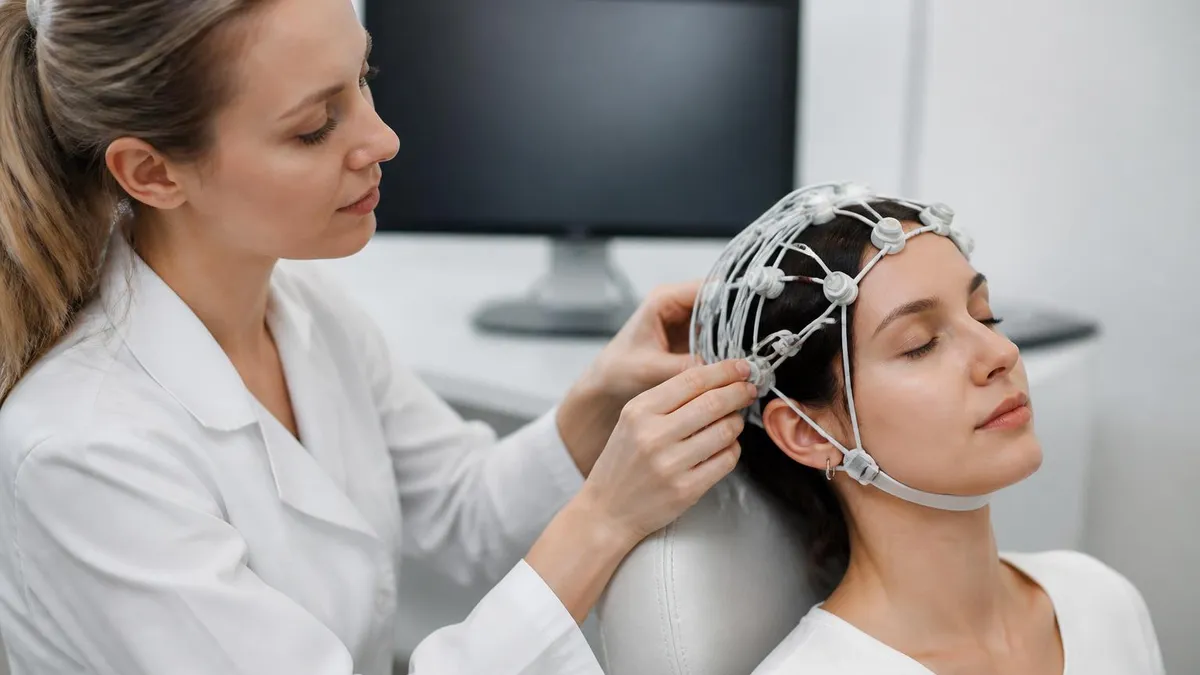
Sleep EEG: How Overnight Brain Wave Testing Works and What Your Results Mean
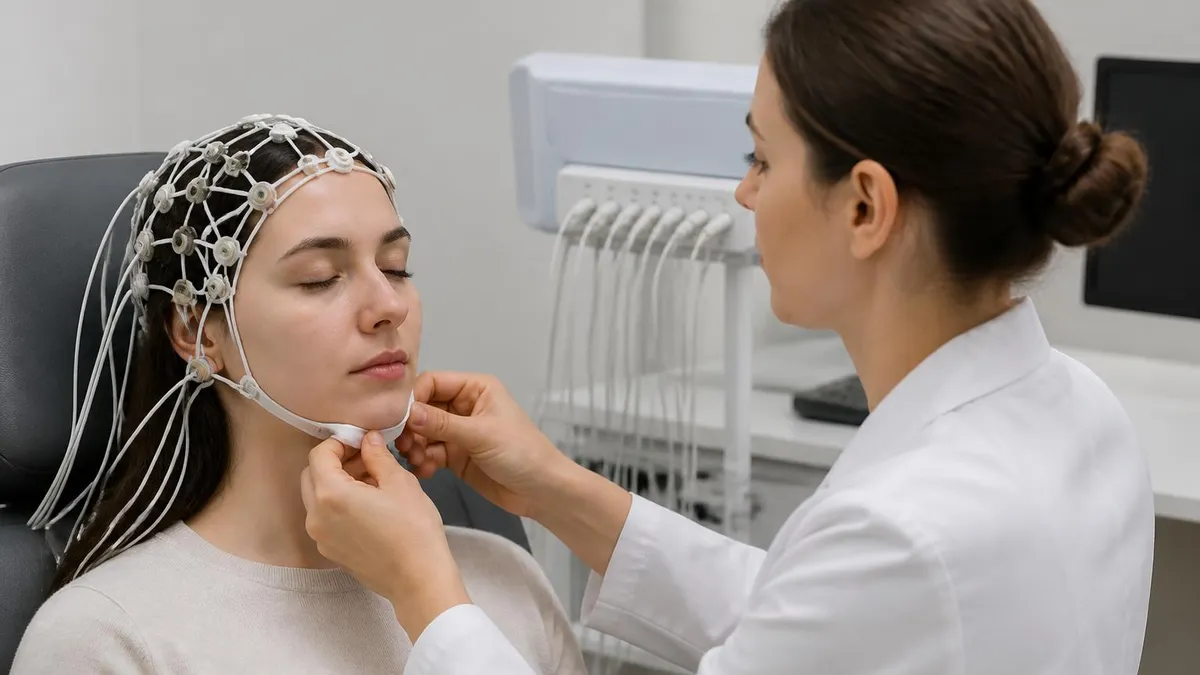
EEG Test Cost in 2026: Prices, Insurance Coverage, and How to Save

Travel EEG Tech Jobs: The Complete Guide to Working as a Mobile Electroencephalography Technologist

EEG Test: What Is Mapping EEG, How It Works, and What to Expect
About the Author

Educational Psychologist & Academic Test Preparation Expert
Columbia University Teachers CollegeDr. Lisa Patel holds a Doctorate in Education from Columbia University Teachers College and has spent 17 years researching standardized test design and academic assessment. She has developed preparation programs for SAT, ACT, GRE, LSAT, UCAT, and numerous professional licensing exams, helping students of all backgrounds achieve their target scores.