
EEG Test Duration: How Long It Takes, From a 30-Minute Routine Study to EEG 72 Hours
🧠 How long is an EEG test? Routine EEGs take 20–40 minutes, while an EEG 72 hours at home catches rare seizures. See costs, prep, and side effects.
An EEG test records the brain's electrical activity through small sensors on the scalp, and one of the first questions patients ask is how long it will take. The answer depends on what your neurologist is looking for. A routine study runs about 20 to 40 minutes, while an EEG 72 hours recording at home can capture rare events that a short visit misses. Knowing the difference helps you plan your day, your work schedule, and your expectations.
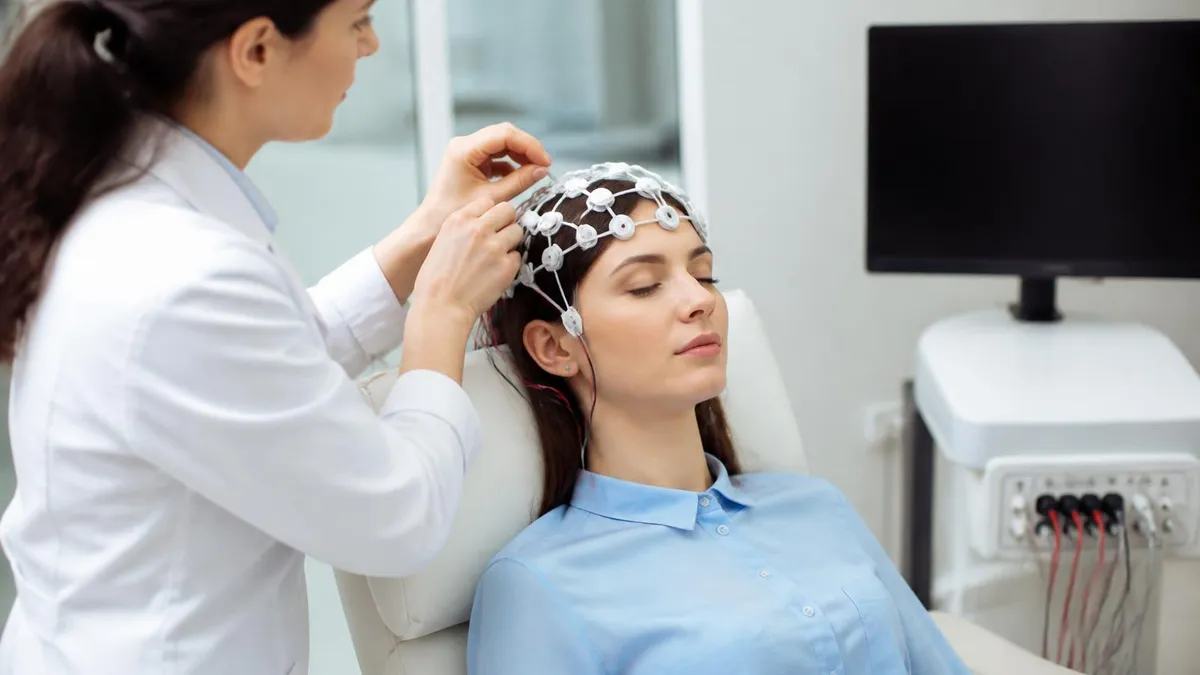
Most people searching for what is an EEG test want a plain answer. An electroencephalogram, or EEG, is a painless medical test that uses thin metal discs called electrodes to pick up the tiny voltage changes produced by neurons. A technologist attaches about 21 electrodes to your head, connects them to an amplifier, and a computer displays the waves. Nothing electrical enters your body; the equipment only listens. That is why the test is safe for infants and older adults alike.
So what is an EEG medical test used for? Doctors order it to evaluate seizures, unexplained fainting spells, sudden confusion, sleep disorders, the effects of head injury, and some forms of encephalopathy or coma. It does not diagnose every condition, and a normal tracing does not rule out epilepsy, because abnormal discharges may appear only occasionally. That limitation is exactly why test length matters. A longer recording gives you a better chance of catching an abnormality that comes and goes.
Think of recording time as a trade-off between convenience and yield. A 30-minute routine EEG is easy to schedule and inexpensive, but it records only a thin slice of your life. Studies of people with confirmed epilepsy show that a first routine EEG reveals epileptiform activity roughly one-third to one-half of the time, and repeat studies raise that figure considerably. Longer formats, such as ambulatory or hospital video monitoring, exist to close that gap for patients whose first results are unclear.
Appointment time and recording time are different numbers, and mixing them up causes confusion. When a lab says your EEG takes 20 to 40 minutes, it means the actual data collection. Add measuring and marking your scalp, applying electrodes, checking impedance, and cleanup, and the visit commonly lasts 60 to 90 minutes. Plan on roughly an hour and a half door to door, and ask the scheduler whether your lab runs on time or batches several patients.
Reading the result takes longer than recording it. A neurologist reviews the entire tracing, often several hundred pages of waves, and sends a report to your ordering clinician, usually within a few days. For a deeper look at why parts of a tracing get discarded, this overview of an eeg test for brain signal problems explains how muscle tension, blinking, and sweat distort the waves and can extend a session.
This guide walks through every common format and how long each one really takes. You will see why technicians spend most of the visit on setup and what changes if you must arrive sleep-deprived. We also cover the eeg test cost range, typical side effects, and how to prepare. If you are a student or trainee, the practice questions linked below reinforce the waveforms behind the recordings, including epileptiform patterns and activation procedures.
EEG Test Duration by the Numbers
How Long Is an EEG Test? Step-by-Step Timeline
Check-In and History (10–15 min)
Measuring and Electrode Placement (20–30 min)
Baseline Recording (10–15 min)
Activation Procedures (5–10 min)
Sleep Recording if Ordered (20–40 min)
Removal and Discharge (10–15 min)
EEG Test Types and How Long Each One Takes
A routine EEG is the standard first step and the answer to most searches for how long is an EEG test. The recording lasts 20 to 40 minutes, during which you rest with your eyes closed, open and close them on request, and complete short activation tasks. Most outpatient labs book 60 to 90 minutes in total. You go home right after, resume normal activities, and your results are typically reported to your doctor within a few business days.
A sleep-deprived EEG is a routine study with a twist. Your doctor asks you to sleep only four to five hours the night before, or stay up later than usual, because drowsiness and light sleep often bring out epileptiform discharges that are hidden while you are fully awake. Recording time stretches to 60 to 90 minutes so you can fall asleep naturally, and the whole appointment may take two hours. Arrange a ride home, since you will likely be tired.
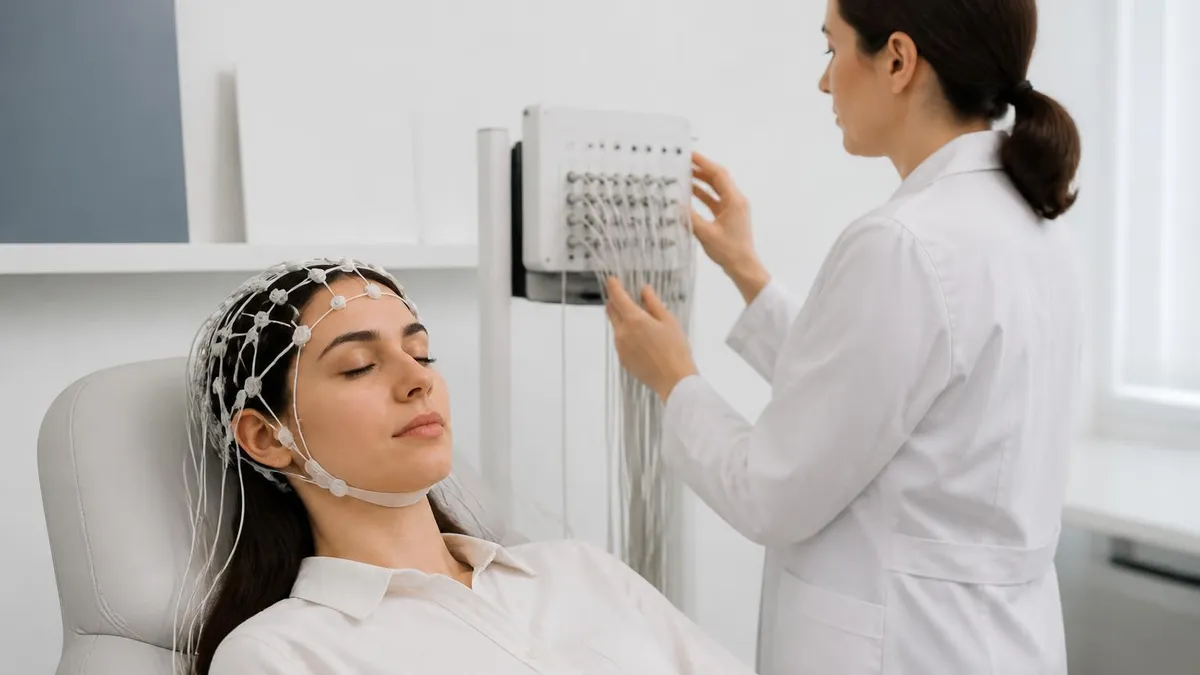
An ambulatory EEG sends you home wearing electrodes and a portable recorder for 24 to 72 hours. The EEG 72 hours format is chosen when seizures are infrequent, when events happen mostly at night, or when a routine study came back normal despite strong suspicion. You keep a diary of symptoms and press an event button during episodes. A technologist applies and removes the electrodes, so expect two visits, each lasting about an hour.
Video EEG monitoring in an epilepsy monitoring unit is the most intensive format. You stay in a hospital room for roughly three to seven days, sometimes longer, while cameras and EEG record simultaneously. Medication may be reduced under supervision to provoke seizures safely. The synchronized video lets specialists match behavior to brain waves, which separates epileptic seizures from psychogenic nonepileptic events and helps surgical teams localize where seizures start before epilepsy surgery.
Continuous EEG in an intensive care unit serves critically ill patients, including those after cardiac arrest, stroke, or brain injury, where seizures may occur without visible movement. Monitoring typically runs 24 to 48 hours and can last longer if abnormalities appear. Nurses and technologists check electrodes regularly, and neurologists review trends remotely. This is a bedside tool for managing treatment rather than a one-time diagnostic test, and the schedule follows the patient's clinical course.
Each format uses the same basic hardware, so setup quality matters at every length. If you are curious how placement follows the international 10-20 system, this explainer on the eeg brain test cap and electrodes shows where each sensor sits and why small placement errors change what the tracing looks like. Longer recordings demand sturdier attachment, which is why ambulatory studies often use collodion glue and gauze wraps instead of simple paste.
Children and infants follow similar timelines, with adjustments. Pediatric routine EEGs often run 30 to 60 minutes, and technicians may time the study around nap schedules so the child falls asleep during recording. Parents can usually stay in the room, bring a comfort item, and hold the child for reassurance. Newborn studies in the nursery can be shorter or longer depending on the question, because neonatal brain waves change quickly in the first weeks of life.
EEG Test Cost: What an EEG Test Price Looks Like
A routine EEG usually carries the lowest eeg test price. Billed charges in the United States commonly range from about $200 to $3,000, depending on whether the study occurs in a hospital outpatient department, a neurologist's office, or an independent lab. Hospital facilities tend to charge more because of facility fees. Insured patients typically pay a copay, coinsurance, or the remaining deductible rather than the full billed amount.
The final eeg test cost has two parts: the technical component for equipment and technologist time, and the professional component for the physician who interprets the tracing. Both may appear on separate bills. Ask for the procedure codes before you go, since the same study may be listed under several codes. Self-pay patients should request a cash discount, which is often substantially lower than the listed charge.
Is an EEG 72 Hours Recording Better Than a Routine EEG?
- +Captures rare or intermittent events that a 30-minute study misses
- +Records natural sleep in your own bed at home
- +Covers several sleep-wake cycles for a fuller picture
- +Avoids a hospital stay and its higher cost
- +Lets you keep most daily routines during the study
- +Diary and event button link symptoms to exact moments on the tracing
- −No showering or swimming for the whole recording period
- −Electrodes can loosen with sweat or movement
- −Costs more than a routine EEG
- −Results take longer because far more data must be reviewed
- −Adhesive or glue may irritate the skin
- −Home systems often lack video, so artifacts are harder to interpret
How to Prepare for Your EEG Test
- ✓Confirm whether your study is routine, sleep-deprived, or ambulatory.
- ✓Wash your hair the night before with no conditioner or styling products.
- ✓Skip hair gel, oil, spray, and leave-in treatments on test day.
- ✓Ask your doctor whether to take your usual medications.
- ✓Avoid caffeine on the day of the test unless told otherwise.
- ✓Eat a normal meal so low blood sugar does not alter the tracing.
- ✓Follow the exact sleep-restriction schedule if one was given.
- ✓Wear a comfortable button-front shirt and leave jewelry at home.
- ✓Bring your medication list, insurance card, and a symptom diary.
- ✓Arrange a ride home if you will be sleep-deprived or drowsy.
A Normal Short EEG Does Not Rule Out Epilepsy
A single 20 to 40 minute routine EEG shows epileptiform activity in only about one-third to one-half of people who truly have epilepsy. If your symptoms continue after a normal result, ask whether a sleep-deprived study or an EEG 72 hours recording is appropriate.
EEG Test Side Effects, Safety, and What It Feels Like
The most common question about eeg test side effects has a reassuring answer: the test itself is considered very safe. Electrodes only record; they never send current into your head. Most people feel a light scrubbing as the technologist cleans the skin, a cool dab of conductive paste, and the mild pressure of a cap or wraps. Nothing hurts, and you can tell the technologist if anything feels uncomfortable during the session.
Skin reactions are the most frequent complaint. Some patients notice redness or tenderness where electrodes sat, especially after a 72-hour recording with adhesive or glue. Acetone, used to remove collodion, can irritate sensitive skin, and people with allergies to tape or adhesives should say so beforehand. Mild irritation usually fades within a day or two. Washing your hair thoroughly afterward removes leftover paste, though a stubborn residue may need a second shampoo.
Activation procedures carry the only meaningful risk. Hyperventilation involves breathing deeply and quickly for about three minutes, which can cause tingling, lightheadedness, or a brief dizzy feeling. Photic stimulation uses a strobe light at various flash rates, and in a small number of people with photosensitive epilepsy it can provoke a seizure. Labs are prepared for this, with trained staff beside you. Tell the technologist about your seizure history, triggers, and any past reaction to flashing lights.
Another reason people ask about side effects is medication. Your doctor may ask you to continue your anti-seizure drugs as usual, or in rare cases to adjust them for monitoring. Never stop a prescribed medication on your own before an EEG. In hospital monitoring, any reduction happens under supervision with seizure precautions such as padded rails and continuous observation. If you are told to change anything, get the instructions in writing from your neurologist's office.
Sleep deprivation can be harder than the test. Staying up late or sleeping only a few hours may leave you foggy, irritable, or unsafe to drive afterward. For anyone with epilepsy, lack of sleep can also lower the seizure threshold, so a seizure during or after the study is possible. Arrange a driver, keep snacks in the car, and plan a nap at home. Most labs ask you to stay for a brief check before leaving.
Ambulatory recording adds practical side effects rather than medical ones. You cannot shower or swim for the full 24 to 72 hours, sweating can loosen electrodes, and sleeping with a head wrap takes getting used to. Wires may catch on clothing, so wear button-front shirts instead of pullovers. Skip heavy exercise that causes sweat or movement artifact. A lightweight bag carries the recorder, and many patients say they stop noticing it by the second day.
Serious complications are extraordinarily rare. Infection is unlikely because needle electrodes are used only in specialized intraoperative settings, not routine scalp studies. Emotional stress, however, is real: waiting for results can be anxious. Ask when to expect a call and who will explain the findings. A normal EEG does not guarantee that nothing is wrong, and an abnormal one does not always mean epilepsy, so the report must be read with your history and symptoms.
If flashing lights, hyperventilation, or sleep loss have triggered seizures for you before, say so at check-in. The technologist can adjust activation procedures and keep emergency equipment close. Never stop anti-seizure medication before an EEG unless your neurologist gives written instructions.
When Doctors Order an EEG 72 Hours or Longer
Doctors move beyond a routine study when the question is unanswered. If you have faints, spells of staring, or unusual movements and your 30-minute recording looks normal, the next step is often a prolonged recording. The goal is to capture an actual event on tape. Without that correlation, a normal short EEG leaves clinicians guessing, and treatment decisions such as starting or stopping medication would rest on history alone.
Frequency of events drives the choice. If you have a spell daily, a 24-hour ambulatory study is probably enough. If events occur weekly or monthly, 72 hours improves the odds but may still miss them, and a hospital stay with medication reduction can be more efficient. Physicians estimate how often episodes happen from your diary, then match the recording window to that rhythm so you are not wearing electrodes needlessly.
Timing of events matters just as much. Nighttime seizures, jerks on awakening, and sleepwalking-like episodes may only show up during sleep, so the recording must include at least one full night. Ambulatory systems excel here because you sleep in your own bed, which many people find more natural than a hospital. Video capability on some home systems also lets families film episodes, adding behavioral context that raw waves cannot provide.
Hospital-based care sits at the other end of the spectrum. Inpatient programs use video and continuous recording, described in detail in this guide to eeg test hospital monitoring, and they are best for complex diagnoses, surgical evaluation, and patients who cannot safely be monitored alone. Teams include epileptologists, nurses, and technologists who respond immediately during a seizure, medicate if necessary, and ensure that the recording yields clear, interpretable data.
Medication management is another reason for longer studies. Neurologists use prolonged EEG to judge whether a drug is controlling subclinical seizures, which produce brain discharges without obvious symptoms. In children with developmental regression or sudden school difficulties, an extended sleep recording may reveal electrical status epilepticus in sleep. These findings change treatment strongly, and they are almost impossible to detect in a brief awake tracing alone.
Quality control affects how long you actually record. If electrodes loosen, impedance rises and the technologist reapplies them, adding time. Excess artifact from movement or muscle tension may require repeating segments. Ambulatory studies sometimes extend by a day if no events occurred but the physician still wants more data. Ask the lab ahead of time what happens if your recorder fails or shows no events, and who authorizes an extension.
What the final report looks like also depends on duration. Short studies yield a one or two page summary describing background rhythm, sleep features, and any epileptiform discharges. Prolonged recordings generate event logs, spike counts, and seizure detection summaries reviewed by software and then by a physician. Expect results in several days to two weeks for a 72-hour study, because reviewers must scan tens of hours of data carefully and cross-check them with your diary entries.
Practical Tips for a Smooth EEG Visit
Start by confirming logistics with the lab. Ask how long to expect, whether the study is awake or sleep-deprived, and which medications to take. Request the instructions in writing and check parking, check-in time, and whether a companion may stay with you. If you are searching for an eeg test near me, compare labs on wait times, technologist experience, and whether they accept your insurance before you book.
Wash your hair the night before, using no conditioner, gel, oil, hairspray, or leave-in products. Clean, dry hair lets electrodes stick and produces a cleaner signal. Remove braids, weaves, or extensions if possible, and tell the lab about hairstyles that cannot be changed so they can plan extra time. Avoid caffeine on the day of the test unless your doctor says otherwise, because it can alter the recording.
Eat a normal meal beforehand. Low blood sugar can change brain waves and mimic abnormalities, so do not fast unless specifically told to. Wear comfortable, button-front clothes and leave jewelry and hair accessories at home. Bring a list of current medications with doses, a summary of recent events, and your insurance card. If a child is the patient, pack a favorite toy, tablet, and snack for afterward.
Prepare for the sleep-deprived version by following the exact schedule you were given. Set a plan such as going to bed late and waking at a fixed early hour, and avoid energy drinks that undermine the purpose. Use podcasts or conversation to stay awake rather than screens in bed. Once at the lab, be honest about how little you slept. The technologist will note it, and the reader will interpret findings accordingly.
For a home EEG 72 hours study, treat the setup like a small project. Charge any phone or app the lab provides, stock easy meals, and plan low-activity days. Keep your diary within reach and note times, what you were doing, and how you felt. Press the event button immediately whenever something unusual happens. Take photos of the headwear if instructed, and call the lab right away if electrodes loosen or the recorder alarms.
Afterward, ask when results will be ready and who will contact you. Insurance and billing questions are easier before the visit: request a cost estimate with billing codes, ask whether the physician interpretation is billed separately, and find out your deductible status. Compare eeg test price quotes between hospitals and independent labs, because charges can differ widely for the same service. Keep copies of the report for future neurology appointments.
Finally, keep expectations realistic. One EEG rarely settles a diagnosis, and repeating the test is common, not a sign that something went wrong. Pair the results with MRI, blood tests, and your clinical history. If you are studying EEG interpretation yourself, practice recognizing patterns repeatedly using question banks, and review how activation procedures change the tracing. Consistent short sessions beat long cramming marathons for retaining waveform recognition skills.
EEG Questions and Answers

EEG Artifacts: How to Identify, Eliminate, and Document Common Recording Interference

ERP vs EEG: What Each Test Measures, How They Differ, and What to Expect

EEG Cap Electrodes: Everything You Need to Know About the EEG Test
EEG Monitoring: What Is an EEG Test, How It Works, Cost, and What to Expect
Ambulatory EEG: 24-72 Hour Home Recording for Suspected Seizures
How this page was made: written with AI tools and published by Nathan Beja, founder of Practice Test Geeks, who is responsible for its content. Exam facts are checked against the official sources listed below. Not reviewed by a subject-matter expert. Editorial policy
Sources & references
Exam facts on this page (fees, format, dates, passing scores) are checked against these official sources; the date is our last check. Editorial policy
- abret.org — Late registration, score validity, test delivery, fees, exam format, passing score, retake policy, score release, test dates · verified Oct 2026