
EEG Technician Training Programs: Your Complete Guide to Certification and Career Success
EEG test explained + top technician training programs nyc & nationwide. Costs, schedules, certification tips. 🎯 Start your career today.

If you are exploring eeg technician training programs nyc or searching nationwide for the best path into neurodiagnostic technology, understanding what an EEG test is and how it works will sharpen your clinical edge before you ever touch an electrode. An EEG, or electroencephalogram, is a non-invasive medical test that records the brain's electrical activity through small sensors placed on the scalp. Neurologists order this test to investigate seizures, epilepsy, sleep disorders, and other neurological conditions, making EEG technicians indispensable in hospitals, outpatient clinics, and research settings across the United States.
The demand for credentialed EEG technicians has grown steadily as neurology departments expand their diagnostic capabilities. According to the Bureau of Labor Statistics, employment of cardiovascular and neurodiagnostic technologists is projected to grow significantly over the next decade, with salaries for experienced R.EEG.T.-credentialed technicians reaching $70,000 or more annually in high-cost metropolitan areas like New York City. Completing an accredited program is the single most reliable pathway to earning that credential and securing competitive employment in one of healthcare's fastest-growing allied specialties.
Before enrolling in any program, it helps to understand exactly what the EEG medical test entails on a day-to-day basis. Technicians prepare patients by measuring and marking the scalp, applying conductive gel and electrodes according to the international 10-20 system, and then monitoring real-time brainwave tracings during the recording session. They must recognize normal and abnormal waveforms, manage patient anxiety, troubleshoot artifact interference, and document clinical findings accurately so neurologists can render a definitive interpretation. These skills are developed over months of coursework and hands-on clinical hours.
Training programs typically combine didactic instruction with substantial supervised clinical experience. Coursework covers neuroanatomy, EEG instrumentation, electrode placement, waveform identification, artifact recognition, pharmacology relevant to neurodiagnostics, and patient care across age groups from neonates to geriatric adults. Most accredited certificate programs run 12 to 18 months, while associate degree programs extend to 24 months and include broader general education requirements. Both tracks qualify graduates to sit for ABRET credentialing examinations, the industry benchmark for professional competence.
New York City is home to several highly regarded EEG technician programs affiliated with hospital systems and community colleges. Programs at institutions such as Bellevue Hospital Center, SUNY Downstate, and various proprietary schools offer clinical rotations at major medical centers where students encounter a rich variety of EEG findings — from routine outpatient recordings to continuous ICU monitoring and intraoperative neuromonitoring. The density of neurology cases in the NYC metro area gives students unparalleled exposure that accelerates competence and builds a strong professional portfolio before graduation.
Choosing the right program means evaluating CAAHEP accreditation status, NCLEX-style pass rates for ABRET exams, faculty credentials, clinical site quality, and program cost. Tuition for accredited EEG technician programs ranges from roughly $5,000 at community colleges to over $20,000 at proprietary schools, and many programs offer federal financial aid for eligible students. For anyone preparing for the written and practical components of ABRET credentialing, supplementing classroom study with targeted practice resources is essential. Our curated eeg technician training programs practice materials help you master waveform identification and clinical scenarios so you pass on your first attempt.
This comprehensive guide covers everything you need to know: how EEG tests work, what training programs look like from the inside, the certification pathway, costs, career outlook, and practical study strategies. Whether you are a prospective student researching your first step into healthcare or an experienced technician preparing for credential renewal, the information below will help you make confident, informed decisions about your professional future in neurodiagnostic technology.
EEG Technician Training by the Numbers

EEG Technician Training Program Study Schedule
- ▸Review cortical lobes and their EEG correlates
- ▸Study neuron action potentials and synaptic transmission
- ▸Learn basic electrode nomenclature (Fp1, F3, C3, etc.)
- ▸Complete neuroanatomy flashcard deck through the brainstem
- ▸Practice measuring and placing electrodes on a training mannequin
- ▸Memorize all 21 standard electrode positions and their labels
- ▸Learn impedance testing and how to troubleshoot poor contacts
- ▸Study conductive gel application and skin prep techniques
- ▸Identify alpha, beta, theta, and delta rhythms on sample tracings
- ▸Study age-specific EEG patterns from neonates to elderly adults
- ▸Learn drowsiness and sleep stage signatures on the EEG
- ▸Practice waveform frequency and amplitude measurement drills
- ▸Study generalized spike-and-wave, focal spikes, and sharp waves
- ▸Review seizure onset patterns and ictal-interictal distinction
- ▸Complete abnormal epileptiform pattern practice quiz sets
- ▸Learn how medications alter EEG background rhythms
- ▸Study hyperventilation and photic stimulation protocols
- ▸Learn sleep deprivation and pharmacological activation uses
- ▸Identify common artifacts: EMG, eye movement, electrode pop
- ▸Practice distinguishing artifact from true epileptiform activity
- ▸Review ICU continuous EEG monitoring indications and setup
- ▸Study pediatric and neonatal EEG special considerations
- ▸Complete two full-length timed ABRET practice examinations
- ▸Review all missed questions and reinforce weak topic areas
Earning ABRET (American Board of Registration of Electroencephalographic and Evoked Potential Technologists) credentialing is the central goal of any serious EEG technician training program. The primary credential, the R.EEG.T. (Registered EEG Technologist), is recognized by employers nationwide as the professional standard and is often required for hospital positions in major metropolitan areas including New York City. The credentialing pathway begins with fulfilling specific eligibility requirements before you can even submit an application, so understanding those milestones early in your training will help you plan strategically.
To sit for the R.EEG.T. examination, candidates must demonstrate a combination of education and supervised clinical experience. ABRET accepts several routes: completion of a CAAHEP-accredited neurodiagnostic technology program is the most straightforward, but candidates who completed a non-accredited program may still qualify if they have logged at least one year of full-time work experience performing EEGs under the supervision of a credentialed technologist. The written examination consists of 170 multiple-choice questions covering neurophysiology, instrumentation, electrode application, waveform interpretation, clinical procedures, and patient safety, administered over three hours at Pearson VUE testing centers.
The ABRET written examination is widely considered moderately difficult, with first-time pass rates hovering around 54 percent nationally. This means that roughly half of all candidates who sit for the exam on their first attempt do not pass — a sobering statistic that underscores the importance of rigorous preparation.
Candidates who rely solely on classroom notes or clinical experience without dedicating structured time to exam-specific practice consistently underperform compared to those who use targeted study resources, timed practice tests, and waveform identification drills. Treating the certification exam like a final exam from your first day of clinical rotations is the mindset that produces first-attempt success.
After passing the written examination, candidates must also demonstrate practical competence through the ABRET practical skills assessment, which evaluates real-world ability to set up EEG equipment, apply electrodes correctly, and produce a technically acceptable recording. Clinical supervisors at your training site typically sign off on these practical skills, so establishing a strong mentorship relationship with your preceptor early in your rotations pays dividends when it comes time to document your competencies. Many programs schedule mock practical assessments in the final semester so students experience the evaluation format before the real thing.
Credential maintenance is ongoing. R.EEG.T. holders must renew every four years by earning continuing education credits and demonstrating continued active practice. ABRET offers a variety of approved CE activities including webinars, journal-based learning, and national conference attendance. Staying current with evolving neurodiagnostic technology — including high-density EEG systems, ambulatory recording devices, and quantitative EEG analysis software — is not just a credentialing requirement but a professional necessity in a field that continues to advance rapidly with new clinical applications.
Beyond the R.EEG.T., experienced technicians can pursue advanced ABRET credentials including the CLTM (Continuous Long-Term Monitoring) and the CNIM (Certified Neurophysiologic Intraoperative Monitoring). These specialty credentials command higher salaries and open doors to subspecialty roles in epilepsy monitoring units, neurocritical care, and the operating room. Many technicians begin working toward these advanced credentials within two to three years of earning their R.EEG.T., once they have accumulated sufficient case exposure and clinical confidence to tackle the more demanding examination content.
For those still early in their preparation journey, pairing your program coursework with practice-based study tools makes a measurable difference in examination outcomes. The ABRET exam tests not just factual recall but pattern recognition — the ability to look at a 10-second EEG tracing and immediately identify the waveform type, its clinical significance, and the appropriate technician response.
This skill is built through repetition, and our practice question sets are specifically designed to accelerate that process. Review the full suite of preparation resources available through our eeg technician training programs PDF collection to build the systematic waveform recognition skills that differentiate high scorers from the rest of the field.
What Is an EEG Test? Types, Duration, and Side Effects
An EEG medical test measures electrical impulses produced by neurons communicating across synapses in the brain. Electrodes placed on the scalp detect tiny voltage fluctuations — typically in the microvolt range — which an amplifier converts into visual waveform tracings that neurologists interpret. The test is entirely non-invasive and painless; it does not involve electricity being sent into the brain but rather passively records the brain's own natural electrical output with remarkable temporal resolution, capturing changes on a millisecond-by-millisecond basis.
Neurologists order EEGs to evaluate epilepsy and characterize seizure type, assess altered consciousness in ICU patients, investigate sleep disorders including narcolepsy and REM sleep behavior disorder, confirm brain death, and monitor depth of anesthesia during surgery. Routine outpatient EEGs typically last 20 to 40 minutes, while continuous ICU recordings may run for days. Understanding exactly what an EEG test involves — and what normal versus abnormal findings look like — is the foundational clinical knowledge every EEG technician training program builds upon from day one.

EEG Technician Career: Advantages and Challenges
- +Strong and growing job demand in hospitals, epilepsy centers, and neurology clinics nationwide
- +Competitive salaries with R.EEG.T. credential, especially in high-cost cities like New York
- +Direct patient interaction and meaningful clinical contribution to neurological diagnosis
- +Clear certification pathway with multiple advanced credentialing options (CLTM, CNIM)
- +Diverse work settings including outpatient, inpatient ICU, operating room, and research
- +Relatively short training timeline compared to nursing or therapy professions
- −ABRET first-time pass rates around 54% require serious dedicated exam preparation
- −EEG electrode application is time-consuming and physically demanding during long shifts
- −ICU and intraoperative roles involve high-stress environments with critically ill patients
- −On-call requirements are common in hospital settings, affecting work-life balance
- −Continuing education and credential renewal require ongoing time and financial investment
- −Career advancement into supervisory roles typically requires years of clinical experience
EEG Technician Certification Exam Prep Checklist
- ✓Verify your eligibility requirements (education hours and clinical hours) before submitting your ABRET application
- ✓Register for the R.EEG.T. examination at least 8 weeks before your target test date to secure your preferred Pearson VUE location
- ✓Complete at least two full-length timed mock examinations under realistic testing conditions
- ✓Review all 21 standard 10-20 electrode positions and confirm you can place them accurately from memory
- ✓Study normal EEG patterns for each age group: neonatal, pediatric, adult, and elderly
- ✓Master the six core abnormal epileptiform patterns: generalized spike-wave, focal spikes, sharp waves, PLEDs, GPDs, and hypsarrhythmia
- ✓Practice identifying the five most common EEG artifacts: electrode pop, EMG, ECG, eye movement, and sweat artifact
- ✓Review hyperventilation and photic stimulation activation procedure protocols and normal evoked responses
- ✓Study pharmacological effects on EEG: benzodiazepines, barbiturates, antiepileptic drugs, and anesthetic agents
- ✓Complete at least 50 waveform identification practice questions per study session in the final two weeks before exam

Waveform Identification Is the Single Highest-Yield Skill on the ABRET Exam
ABRET examination analysis consistently shows that waveform recognition questions account for the largest single category of test items. Candidates who spend at least 60% of their study time on pattern identification — rather than reading about waveforms — outperform those who rely on text review alone. Use image-based practice questions daily in the final month before your exam date to build the rapid visual pattern recognition that the test demands.
Understanding the full cost picture of EEG technician training programs is essential before you commit to enrollment, and the variation across program types is substantial. Community college certificate programs accredited by CAAHEP represent the most affordable pathway, with tuition ranging from approximately $4,000 to $9,000 for the entire program — roughly 12 to 18 months of coursework and clinical rotations. Many community colleges also offer federal financial aid, Pell Grants for qualifying students, and institutional scholarships specifically designated for allied health programs, which can significantly reduce or even eliminate out-of-pocket costs for eligible applicants.
Hospital-based training programs are another cost-effective option that often includes a paid stipend during the training period. In New York City, major academic medical centers have historically operated their own in-house training programs, partially because recruiting credentialed technicians from outside the region is difficult. These programs typically run 12 to 18 months and combine classroom instruction with full-time clinical work. The tradeoff is that hospital-based programs often require graduates to commit to working at the sponsoring institution for a defined period — usually one to two years — after completing training, which is worth understanding before signing any enrollment agreement.
Proprietary schools and online-hybrid programs tend to carry higher tuition costs, ranging from $12,000 to $25,000, reflecting additional services like career placement support, flexible scheduling, and sometimes accelerated completion timelines. If you are considering an online or hybrid program, verifying CAAHEP accreditation is non-negotiable: ABRET requires that candidates from non-accredited programs have additional years of supervised work experience to qualify for the exam, which can delay your credentialing timeline by two or more years compared to graduates of accredited programs. Always verify accreditation status directly on the CAAHEP website rather than relying solely on the school's marketing materials.
Beyond tuition, prospective students should budget for additional costs associated with the training program and subsequent credentialing. ABRET application fees run approximately $250 to $300. Pearson VUE testing center fees add another $150 to $200 for the written examination. Study materials, including textbooks like Ebersole and Pedley's Practical Approach to Electroencephalography and Blume's Atlas, range from $80 to $200 each. Clinical uniform requirements, background check fees, immunization documentation, and CPR certification are standard requirements across most programs and typically add $200 to $400 in upfront costs before you see your first patient.
Financial aid options extend beyond federal programs. The American Society of Electroneurodiagnostic Technologists (ASET) administers several annual scholarship awards specifically for students enrolled in accredited neurodiagnostic technology programs. These awards range from $500 to $2,000 and are highly competitive but represent free money that reduces your loan burden. State workforce development grants and employer tuition reimbursement programs are additional avenues worth exploring, particularly if you are already employed in a hospital setting and your employer has a relationship with a training program or reimburses allied health education costs as part of its benefits package.
Return on investment for accredited EEG technician training is generally favorable. Entry-level technicians in non-metropolitan areas typically start in the $42,000 to $52,000 salary range, while credentialed technicians in New York City and other major metro markets commonly earn $60,000 to $75,000 annually.
Technicians who add CNIM credentialing and move into intraoperative neuromonitoring roles — a growing subspecialty driven by the expansion of spine surgery volumes — regularly earn $80,000 to $110,000, with some traveling CNIM technicians earning even more through per-diem contracts. Factoring in a $9,000 community college tuition against a $65,000 starting salary yields a payback period of well under two years, making this one of the strongest return-on-investment propositions in healthcare education.
Scholarships, stipends, and loan forgiveness programs for healthcare workers in underserved communities add another financial dimension worth investigating. The National Health Service Corps offers loan repayment assistance for qualifying clinicians working in Health Professional Shortage Areas, and while EEG technicians are not always listed as primary eligible providers, hospital systems operating in these areas sometimes offer supplemental incentives to attract and retain neurodiagnostic staff. Researching these opportunities before finalizing your program selection and employment strategy can materially reduce your net cost of entry into the profession.
Enrolling in a non-CAAHEP-accredited EEG technician program means you will need at least one to two additional years of full-time supervised clinical work before you qualify to sit for the ABRET R.EEG.T. examination. Always verify accreditation status directly on the CAAHEP website (caahep.org) before paying any deposit or signing an enrollment agreement — program marketing materials are not a reliable substitute for official accreditation verification.
The career outlook for credentialed EEG technicians is genuinely strong, and the forces driving that demand show no signs of reversing. The aging of the U.S. population is the most significant structural factor: neurological conditions including epilepsy, stroke, dementia, and sleep disorders all become more prevalent with age, and the diagnostic workup for each of these conditions frequently includes an EEG. As the baby boom generation moves through its seventies and eighties over the next decade, neurology departments across the country will face increasing patient volume that can only be served by adding trained technician staff.
Technology expansion is a second major demand driver. Continuous EEG monitoring in neurological intensive care units has become the standard of care at academic medical centers, and community hospitals are rapidly adopting this practice as clinical evidence for its benefit in detecting non-convulsive status epilepticus accumulates. Each new continuous EEG monitoring bed requires dedicated technician coverage, often around the clock. Ambulatory EEG devices, which patients wear home for extended recordings, are reducing barriers to diagnosis for patients who cannot access inpatient monitoring but generating additional workload for outpatient technicians who review and annotate the recordings.
Intraoperative neuromonitoring represents the fastest-growing subspecialty within neurodiagnostics. As spine surgery, brain tumor resection, and vascular surgery volumes grow, demand for CNIM-credentialed technicians who can monitor neural function in real time during high-risk procedures has outpaced supply in many regions of the country. Traveling CNIM technicians who contract with surgical centers across multiple facilities can command premium hourly rates and significant signing bonuses. For EEG technician program graduates who are willing to invest in the additional preparation required for CNIM credentialing, this subspecialty offers a clear and financially rewarding career trajectory.
Geographic considerations matter significantly to salary and employment prospects. New York City, Los Angeles, Boston, Chicago, and Seattle represent the highest-paying markets for neurodiagnostic technicians, reflecting both high costs of living and concentrated academic medical center density. However, rural and suburban markets often offer competitive salaries relative to cost of living and may actively recruit credentialed technicians with relocation assistance.
Traveling technician contracts — which place technicians at short-staffed hospitals for 13-week assignments — offer a way to explore different markets while earning premium pay, with many positions offering housing stipends, travel reimbursement, and completion bonuses on top of competitive hourly rates.
Professional advancement within the field follows a reasonably clear ladder. Entry-level technicians typically start as EEG-I or EEG Technician I, then advance to senior technician, lead technician, and eventually supervisory or department director roles as they accumulate experience and additional credentials. Leadership roles in larger EEG laboratories require both clinical credentialing and administrative competencies including scheduling, quality assurance, budget management, and staff training. Some experienced technicians transition into technical sales roles with EEG equipment manufacturers, leveraging their clinical expertise to educate hospital customers on product features and best practices.
Networking through ASET — the American Society of Electroneurodiagnostic Technologists — accelerates career development significantly. ASET hosts an annual national conference where technicians connect with peers, attend advanced clinical workshops, and meet representatives from hiring hospitals and equipment companies.
Student membership in ASET is available at reduced rates and opens access to the member job board, mentorship programs, and scholarship applications. Joining a professional society during training rather than after graduation signals commitment to the field and builds relationships that translate into job referrals and career guidance from experienced practitioners who have navigated the same credentialing journey you are undertaking now.
For technicians in New York City specifically, the NYC Health + Hospitals system, Memorial Sloan Kettering Cancer Center, New York-Presbyterian, and NYU Langone each maintain active neurodiagnostic departments that regularly hire credentialed technicians and often offer competitive benefits packages including pension plans, health insurance, and tuition reimbursement for further education. Monitoring job postings on these institutions' career pages and applying proactively — even before graduation, in the final semester of your program — is a strategy that frequently results in job offers contingent on credential attainment, eliminating the post-graduation job search gap that less proactive candidates experience.
Practical preparation strategies make the difference between an average performance and a first-attempt pass on the ABRET R.EEG.T. examination, and the most effective approach combines spaced repetition, active recall, and clinical simulation rather than passive reading. Begin your formal exam preparation at least eight to twelve weeks before your scheduled test date.
Create a weekly study schedule that allocates specific topics to each session, ensuring you cover every content domain in the ABRET exam blueprint at least twice before test day. The blueprint is publicly available on the ABRET website and specifies exactly how many questions come from each content area, so use it as your master planning document.
Waveform identification deserves dedicated daily practice separate from your topical content review. Set aside 20 to 30 minutes each day specifically for looking at EEG tracings — whether from textbook atlases, online image libraries, or question bank visual exhibits — and identifying the waveform type before checking the answer.
This deliberate practice builds the automatic pattern recognition that the exam tests under time pressure. Treat each tracing like a clinical encounter: describe the frequency, amplitude, morphology, distribution, and clinical significance before moving to the next image. This structured approach mirrors the way experienced technicians mentally process tracings in real time during recordings.
Practice examinations under timed, test-like conditions are irreplaceable preparation tools. Completing a 170-question mock examination in three hours — without pausing, checking references, or discussing questions with others — reveals your true performance level and identifies which content domains need additional attention. Review every question you answered incorrectly and understand not just the right answer but why each wrong answer was wrong. This error analysis process, often called deliberate error review, is one of the highest-yield study activities available and is systematically neglected by candidates who focus only on reviewing correct answers.
Clinical site learning should be approached with intentionality. During your supervised rotations, ask your preceptor to narrate their real-time decision-making: why they chose a particular montage, how they recognized and managed a specific artifact, what clinical information they communicated to the reading neurologist. Passive observation produces far less learning than active participation in clinical reasoning.
Request permission to set up and run at least a portion of each study independently, with your preceptor observing, so you build confidence and competence simultaneously. Document each new EEG finding you encounter in a personal clinical log — these real case examples become powerful memory anchors during exam review.
Study groups can be highly productive if structured correctly. The most effective study groups use active formats: members take turns presenting a clinical scenario or waveform to the group, other members respond with their interpretation, and the group debates and resolves disagreements using reference materials. Passive group study — where members sit together reading their own notes — provides social motivation but limited cognitive benefit.
If you join or form a study group, commit to the active format and establish clear expectations for preparation and participation from the first session. Online study communities through ASET's student forum and social media groups for neurodiagnostic students provide access to peers in other programs who share practice resources, study tips, and moral support through the credentialing process.
Stress management and physical preparation in the week before the examination are frequently underestimated factors in performance outcomes. Sleep deprivation impairs the rapid pattern recognition and working memory retrieval that the EEG examination demands, so prioritizing seven to eight hours of sleep per night in the final week is not optional. Light exercise, hydration, and familiar nutrition routines in the days before the exam support cognitive performance.
On examination day, arrive at the Pearson VUE testing center at least 30 minutes early, bring two valid forms of identification, and review the ABRET candidate handbook for any items prohibited in the testing room. The goal is to spend all your cognitive resources on answering questions, not managing logistical surprises at check-in.
After passing the examination, invest in your professional development immediately. Join ASET, attend at least one regional or national conference in your first year of practice, and identify a senior technician or department director who is willing to serve as a mentor. The credentialing exam marks the beginning of your professional development, not the end.
The most successful EEG technicians treat every shift as a learning opportunity, seek out the most complex and challenging cases, and actively work toward the advanced credentials that will expand both their clinical impact and their earning potential over the arc of a long and rewarding career in neurodiagnostic technology.
EEG Questions and Answers

Seizure EEG: What the EEG Test Shows, How It Works, and What to Expect
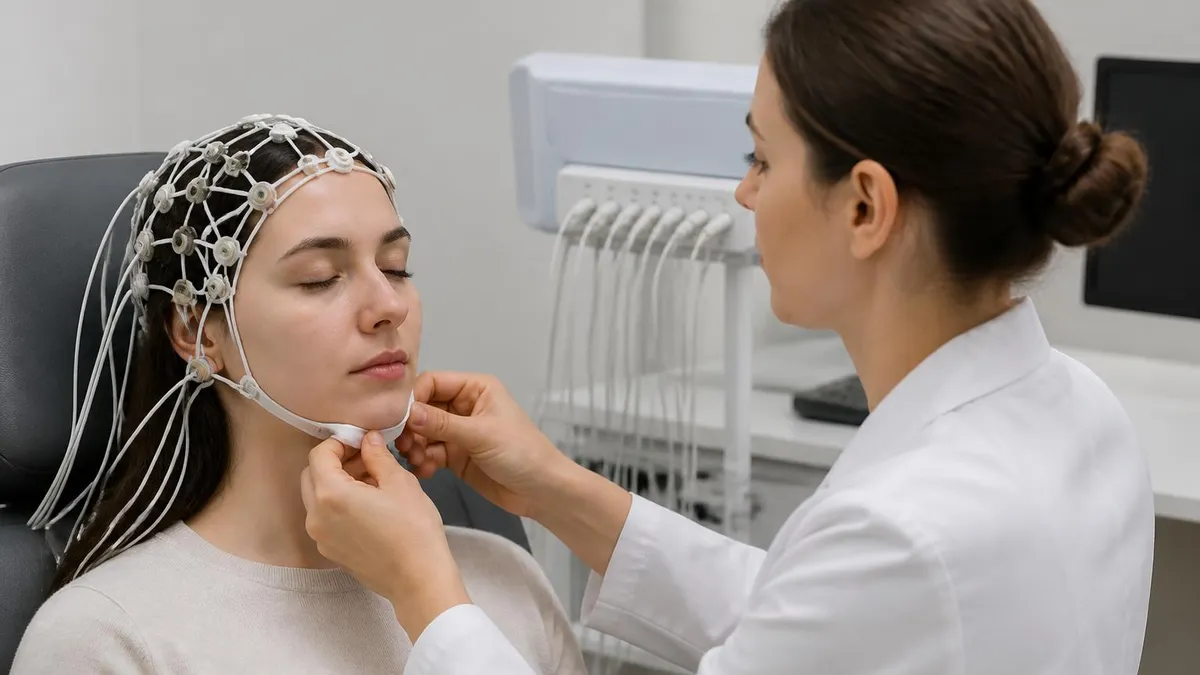
EEG Test Cost in 2026: Prices, Insurance Coverage, and How to Save

EEG Coherence: What It Is, How It Works, and What It Reveals About Brain Connectivity
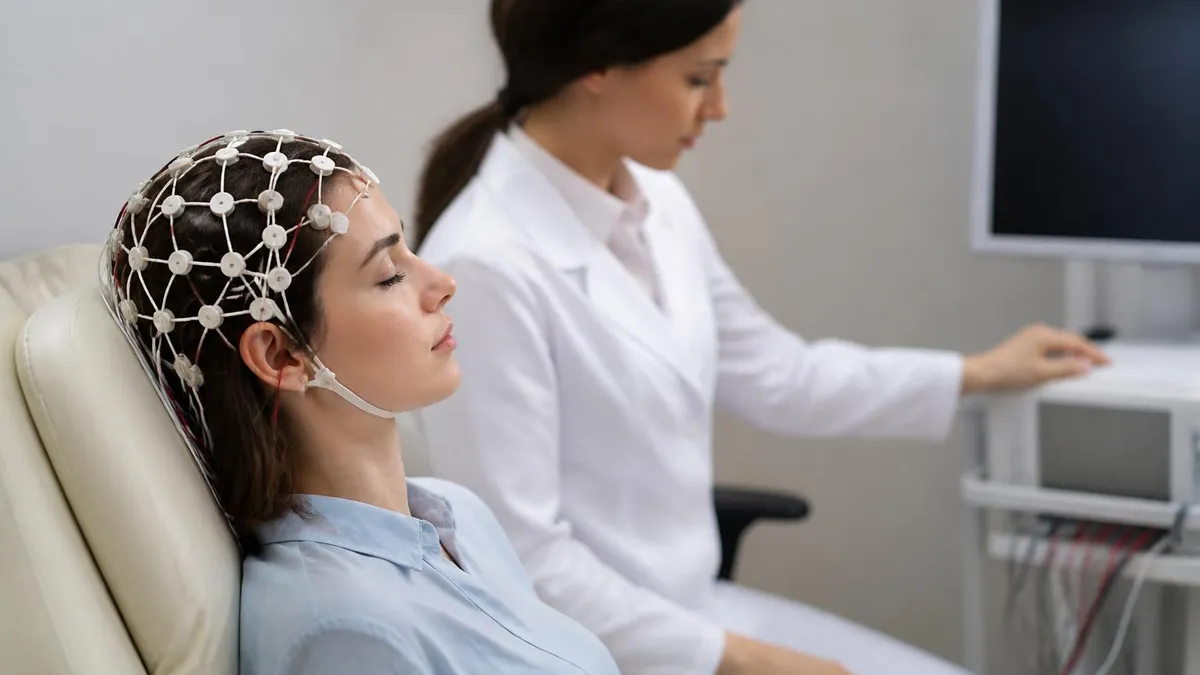
EEG vs ECG vs EKG: What Each Test Measures, How They Differ, and What to Expect
About the Author

Educational Psychologist & Academic Test Preparation Expert
Columbia University Teachers CollegeDr. Lisa Patel holds a Doctorate in Education from Columbia University Teachers College and has spent 17 years researching standardized test design and academic assessment. She has developed preparation programs for SAT, ACT, GRE, LSAT, UCAT, and numerous professional licensing exams, helping students of all backgrounds achieve their target scores.