
How to Pass Road Test: Practical Driving Test Tips That Actually Work in 2026 October
How to pass road test first time: 🟢 UK practical driving test tips covering manoeuvres, faults, show-me-tell-me and examiner expectations for 2026 October.

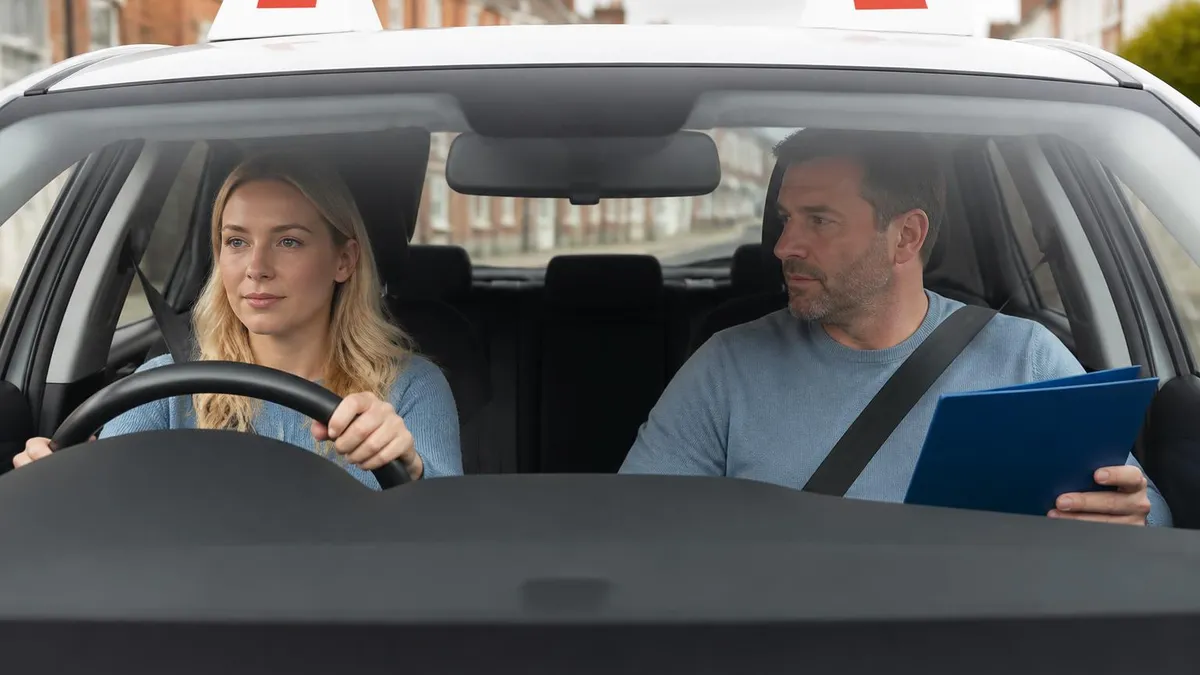
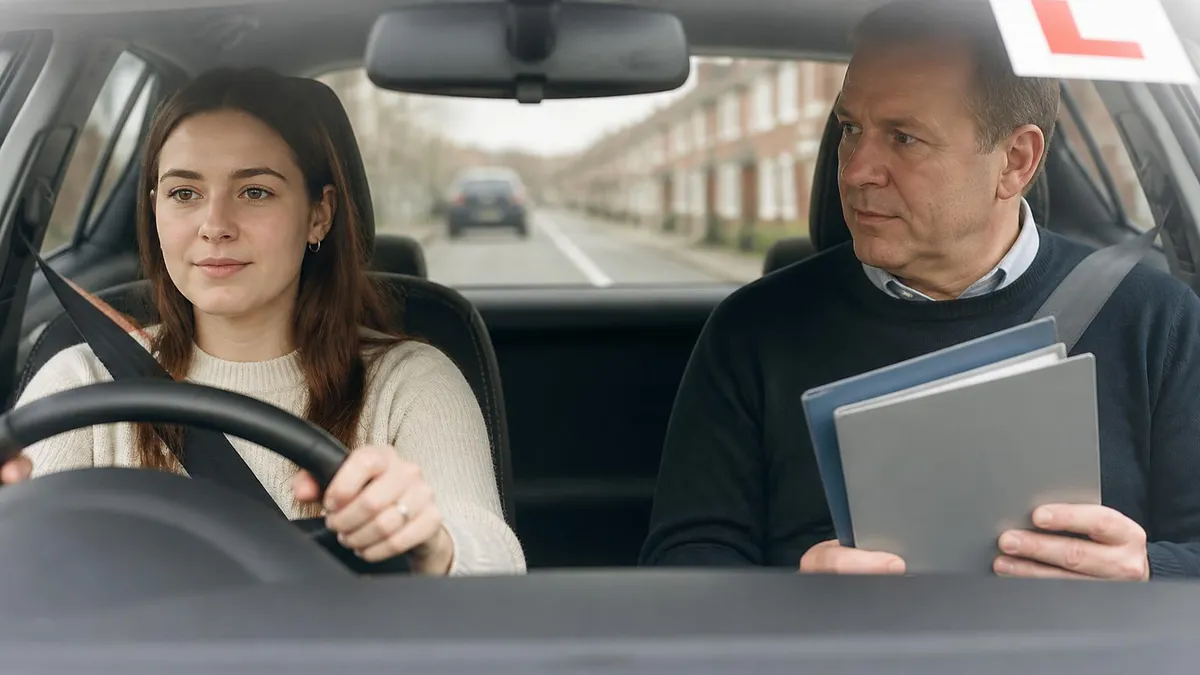
Learning how to pass road test on your first attempt is the goal of nearly every UK learner, and with the national first-time pass rate hovering around 48% according to DVSA statistics, careful preparation makes a measurable difference. The practical driving test is a 38 to 40 minute assessment of your ability to drive safely, independently and confidently on real roads. It includes an eyesight check, two vehicle safety questions, around 20 minutes of independent driving and one set manoeuvre. Understanding exactly what the examiner expects is the foundation of every successful test day.
The DVSA practical test is not designed to catch you out. Examiners use a standardised marking sheet that records driving faults, serious faults and dangerous faults. You can pick up as many as 15 driving faults and still pass, provided none of them repeat into a serious pattern. A single serious or dangerous fault, however, ends your chance of passing that day. This is why consistency, observation and smooth control matter far more than perfection. Knowing the marking rules removes a huge amount of test-day anxiety.
Most candidates who fail do so for predictable reasons: poor observation at junctions, weak mirror checks before signalling, incorrect positioning during turns, and hesitancy at roundabouts. These are habits that develop during lessons and follow you into the test. The good news is that every one of these areas can be drilled and corrected with focused practice. Pairing real-world driving hours with structured revision, including a strong handle on the theory side of the syllabus, dramatically improves your readiness.
Before booking your practical, you must already hold a valid theory test pass certificate, which is valid for two years. Many learners underestimate how closely the theory knowledge connects to practical performance — hazard perception, stopping distances, speed limits and meaning of road signs all reappear during the drive. Keeping your theory sharp right up to test day pays off because the examiner expects you to demonstrate that knowledge in action, not just recall it on a screen.
Your instructor's recommendation matters too. Pupils who take the test only when their Approved Driving Instructor (ADI) confirms they are consistently driving at test standard have significantly higher pass rates than those who book based on hours alone. The DVSA suggests an average learner needs around 45 hours of professional tuition plus 22 hours of private practice. Some pick it up faster, but rushing the booking is the single most common reason for a wasted £62 test fee.
This guide walks you through every stage of the practical test in the order it happens on the day, from the moment you arrive at the test centre to the debrief at the end. You'll learn what the examiner is actually looking for, the small habits that earn easy ticks on the marking sheet, the manoeuvres most likely to appear, and the calm, repeatable mindset that turns nervous learners into confident first-time passes.
Whether your test is next week or three months away, the principles below apply equally. Treat each lesson as a mini test, drive every junction as if being marked, and you'll arrive on the morning of your appointment ready rather than rattled. Pass rates reward preparation, not luck — and the steps in this guide are designed to load the odds firmly in your favour.
UK Practical Driving Test by the Numbers
Your Practical Test Day Step by Step
Arrival and Documents
Eyesight Check
Show Me Tell Me Questions
General Driving and Manoeuvre
Independent Driving
Debrief and Result
The DVSA marking sheet, known as the DL25, is the single document that decides your fate on test day. It groups every possible error into 27 assessable categories, ranging from precautions before starting the engine through to use of speed and awareness of other road users. Each fault is recorded as a tick in one of three columns: driving fault (minor), serious or dangerous. Understanding this structure helps you focus practice on the high-frequency categories that cause the most failures rather than worrying about everything equally.
According to DVSA's published failure data, the top six reasons people fail are observation at junctions, use of mirrors when changing direction, steering control, response to traffic lights, moving off safely and incorrect positioning on the road. Together these account for over 60% of all serious faults issued nationally. If you can master these six areas, you've already handled the majority of risk on the marking sheet. None of them are difficult skills in isolation — the challenge is performing them consistently for 40 minutes under pressure.
Observation at junctions is the single biggest fault. Examiners want to see you actually look — head turning visibly left, right and left again at every closed junction, and effective scanning at open junctions. A glance that only moves your eyes will be marked down as 'effective observation not made'. Practise the rhythm 'mirrors, signal, position, speed, look' as a habitual sequence so it becomes automatic regardless of how you're feeling.
Mirror checks are the second largest fault category. The rule is simple: mirrors before any change of speed, direction or signal. The DVSA wants to see you check the interior mirror plus the relevant door mirror before signalling. A signal given before the mirror check is a driving fault even if it's safe. Examiners are trained to spot whether you actually move your head slightly toward each mirror, not just flick your eyes. Exaggerate the head movement during your test so it's unmistakable.
Speed and positioning faults often go together. Driving too slowly is just as marked down as driving too fast — making good progress is part of the syllabus and hesitancy at clear junctions counts as a fault. On a 30 mph road, aim for 28-30 mph where safe. In a 60 mph national speed limit area on a clear A-road, anything below 50 mph without good reason will be flagged. Position your wheels about a metre from the kerb and stay centred in your lane.
Many learners pass with as many as 10-12 minor faults. The examiner is not looking for perfection but for safety, awareness and control. A serious fault is anything that involved potential danger, even if no incident occurred. A dangerous fault means actual danger was created during the test. Two repeated minor faults in the same category — for example, three weak mirror checks during the same drive — can be totalled up into a single serious fault on review.
The most reassuring fact for nervous candidates is that examiners are not your enemy. They want safe drivers on the road, and they assess what you actually do, not what you intended. If you make a mistake, recover calmly, drive on and don't dwell on it. Many candidates fail because one early error rattles them into a series of further errors. Treat each junction as independent and the marking sheet won't snowball against you.
DVSA Practice Test Questions
Prepare for the DVSA - UK Driving Theory Test exam with our free practice test modules. Each quiz covers key topics to help you pass on your first try.
DVSA Eco-Friendly Driving and Vehicle Loading
DVSA Exam Questions covering Eco-Friendly Driving and Vehicle Loading. Master DVSA Test concepts for certification prep.
DVSA Hazard Awareness
Free DVSA Practice Test featuring Hazard Awareness. Improve your DVSA Exam score with mock test prep.
DVSA Incidents, Accidents and First Aid
DVSA Mock Exam on Incidents, Accidents and First Aid. DVSA Study Guide questions to pass on your first try.
DVSA Motorway Rules and Smart Motorways
DVSA Test Prep for Motorway Rules and Smart Motorways. Practice DVSA Quiz questions and boost your score.
DVSA Rules of the Road (Highway Code)
DVSA Questions and Answers on Rules of the Road (Highway Code). Free DVSA practice for exam readiness.
DVSA - UK Driving Theory Hazard Awareness ...
DVSA Mock Test covering - UK Driving Theory Hazard Awareness and Perception. Online DVSA Test practice with instant feedback.
DVSA - UK Driving Theory Motorway Rules an...
Free DVSA Quiz on - UK Driving Theory Motorway Rules and Regulations. DVSA Exam prep questions with detailed explanations.
DVSA - UK Driving Theory Road and Traffic ...
DVSA Practice Questions for - UK Driving Theory Road and Traffic Signs. Build confidence for your DVSA certification exam.
DVSA - UK Driving Theory Rules of the Road
DVSA Test Online for - UK Driving Theory Rules of the Road. Free practice with instant results and feedback.
Manoeuvres and Independent Driving Explained
You will be asked to perform exactly one of four set manoeuvres during your test: parallel parking at the side of the road, bay parking forwards into a marked space, bay parking reverse into a marked space, or pulling up on the right-hand side of the road, reversing about two car lengths and rejoining traffic. The examiner picks which one — you cannot choose. Practise each one until you can do it without prompts.
The two most commonly failed manoeuvres are bay parking reverse and pull-up-on-the-right because they both demand strong observation behind. Examiners want to see you scan over both shoulders, check blind spots and use mirrors throughout the reverse. Hitting the kerb is a serious fault. Finishing badly positioned within the bay is a driving fault. Going slowly and observing thoroughly is far better than rushing and clipping a line.
Taking Your Test Sooner vs Later: What Should You Do?
- +Booking earlier locks in lower waiting times in high-demand test centres
- +Skills stay fresh between intensive lessons and the test date
- +Less time for nerves and over-thinking to build up before the appointment
- +Cheaper overall if you avoid extending lessons by months
- +You can rebook quickly if you fail and momentum continues
- +Encourages disciplined revision rather than open-ended preparation
- −Risk of testing before you're consistently driving to standard
- −Wasted £62 fee and a 10-working-day wait to rebook if you fail
- −Less exposure to varied weather and road conditions
- −Limited time to fix recurring faults flagged by your instructor
- −Potential confidence damage from a premature failure
- −Insufficient private practice hours alongside professional tuition
Pros and Cons at a Glance
| Pros | Cons |
|---|---|
| Booking earlier locks in lower waiting times in high-demand test centres | Risk of testing before you're consistently driving to standard |
| Skills stay fresh between intensive lessons and the test date | Less exposure to varied weather and road conditions |
| Less time for nerves and over-thinking to build up before the appointment | Limited time to fix recurring faults flagged by your instructor |
| Cheaper overall if you avoid extending lessons by months | Potential confidence damage from a premature failure |
| You can rebook quickly if you fail and momentum continues | Insufficient private practice hours alongside professional tuition |
Pre-Test Day Checklist for How to Pass Road Test
- ✓Check your photocard driving licence is valid and bring it with you
- ✓Confirm your theory test pass certificate is still within its two-year validity
- ✓Ensure the test vehicle is roadworthy, taxed, insured and has L-plates
- ✓Verify tyres have at least 1.6 mm tread and correct pressures
- ✓Test indicators, brake lights, headlights, horn and windscreen washers
- ✓Practise reading a number plate from 20 metres with any glasses you'll wear
- ✓Revise the show-me-tell-me question bank in the week before the test
- ✓Sleep at least seven hours the night before — fatigue causes silly mistakes
- ✓Eat a balanced meal an hour before to avoid blood-sugar nerves
- ✓Arrive at the test centre 10-15 minutes early — never rush in late
Drive every lesson like a real test
Instructors who insist that pupils complete mock tests under exam conditions report significantly higher first-time pass rates. Treat your last six lessons as full tests with no coaching, manoeuvres on demand, and a 20-minute independent driving leg. The habits you build under pressure are exactly the habits the examiner will see on the day.
Test-day nerves are the silent reason behind a huge number of failures. The DVSA estimates that around a third of candidates who fail did so because anxiety caused them to forget habits they had previously demonstrated comfortably during lessons. Managing nerves is a skill in itself, and it begins long before the morning of the appointment. The candidates who perform best are those who treat the practical test as a familiar, repeatable experience rather than a one-off make-or-break moment that defines their driving career.
The most effective anti-nerves strategy is exposure. By the time you sit your test you should already have driven from a test centre with your instructor at least three or four times along likely test routes. Most areas have predictable junctions, manoeuvre spots and dual carriageways that examiners use repeatedly. Familiarity with these reduces cognitive load on the day, leaving more mental capacity for observation and decision-making. Ask your instructor specifically to cover test routes in your final block of lessons.
Breathing technique sounds basic but works. Slow inhale for four seconds, hold for four, exhale for six. Repeat three times before you start the engine. This activates the parasympathetic nervous system and lowers heart rate within 60 seconds. Many learners hold their breath unconsciously during manoeuvres, which tightens the shoulders and degrades fine steering control. A quick reset at junctions or while waiting at lights can rescue a wobbly test before it spirals.
What you eat and drink also matters. Avoid energy drinks, large coffees and sugary snacks in the two hours before the test — the resulting blood-sugar spikes amplify the physical symptoms of nervousness. Aim for slow-release carbohydrates such as porridge, wholemeal toast or a banana. Stay hydrated but don't drink so much that you need the toilet during the assessment. Examiners cannot pause the test for comfort breaks except in genuine emergencies.
Mindset reframing helps surprisingly well. Many candidates view the examiner as someone trying to catch them out, which triggers defensive driving and over-cautious behaviour. In reality, examiners are professional assessors who actively want candidates to pass — their job satisfaction depends on certifying competent drivers, not failing learners. Visualise the examiner as a slightly stricter version of your instructor, sitting silently beside you, and the dynamic immediately feels more manageable.
If you make a mistake during the test, the worst response is to dwell on it. A driving fault is recoverable; a chain of distracted faults is not. Adopt a rule that you have until the next junction to forget any error. Saying out loud (or silently) 'next junction, fresh start' helps reset focus. Examiners often comment in debriefs that they passed candidates who made early errors but recovered well, and failed candidates who made one small error then unravelled completely.
Finally, treat the result as data, not destiny. The first-time pass rate is below 50%, which means failing on the first attempt is statistically normal. Second-attempt candidates often pass with confidence because they know exactly what the test feels like. Whatever happens, the debrief contains specific feedback that turns directly into practice priorities. Either way, you leave the test centre a better driver than you arrived — and that is the real point of the exercise.
If you arrive at the test centre without your full UK photocard driving licence, the examiner cannot legally conduct the test and you forfeit your fee. A digital licence on the DVLA app is not accepted. Keep your licence in a wallet pocket dedicated to test day and check it the night before.
DVSA examiners themselves have provided remarkably consistent advice when asked what separates strong candidates from weak ones, and their tips are worth taking seriously because they reflect thousands of tests observed each year. The most common piece of feedback is simple: drive the way you've been taught, not the way you think examiners want to see. Over-elaborate manoeuvres, exaggerated stops at empty junctions and theatrical mirror checks often introduce errors that wouldn't otherwise exist. Smoothness, normality and confidence beat performance every time.
Examiners consistently flag commentary as a useful tool for candidates who struggle with observation. Quietly saying 'mirrors, signal, mirrors, manoeuvre' to yourself as you approach junctions reinforces the rhythm and makes the head movements visible to the assessor. You don't need to give a running narrative — a few key phrases at decision points are enough. Discuss this approach with your instructor; some pupils find it grounding while others find it distracting, so test it in lessons first.
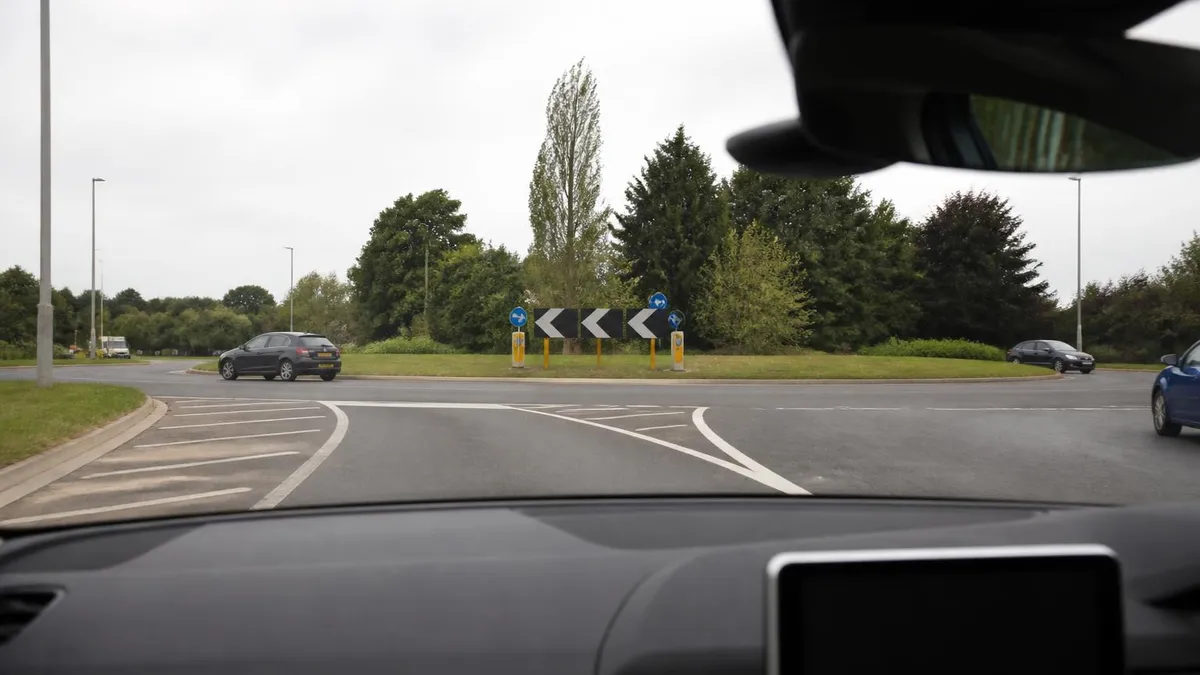
Position on the road is one of the easiest areas to fix in the final week of preparation. Aim to keep the front-left of the bonnet aligned with the white lane markings on a single carriageway, leaving roughly a metre to the kerb. At roundabouts, take the lane that matches your exit and don't drift across white lines. Examiners particularly notice candidates who cut left-hand bends, which is both a positioning fault and a potential serious mark for endangering oncoming traffic.
Speed management during the independent driving section deserves special attention. The temptation when following an unfamiliar sat nav route is to slow down to give yourself extra reaction time. This frequently produces an 'undue hesitancy' driving fault. Trust the road signs, drive at the legal limit where safe, and let the sat nav recalculate if you make a wrong turn. Reading our DVSA Car Practical Test: Complete Guide to Passing First Time alongside this article gives a deeper breakdown of route navigation expectations.
The 'pull up on the right' manoeuvre is worth rehearsing more than the others because it's the newest and most commonly fumbled. The examiner will ask you to pull up on the right at a safe place, observe traffic for a couple of minutes, then reverse approximately two car lengths and rejoin traffic on the left. Many candidates forget to check the blind spot over their right shoulder before moving off again, which is an immediate serious fault.
Use of dashboard controls during the show-me question trips up otherwise excellent drivers. Examiners want to see you operate the control while continuing to drive safely. If asked to demonstrate the rear demister, don't take your eyes off the road for more than half a second to locate the button. If the control is genuinely hard to find while driving, tell the examiner you'll demonstrate it at the next safe opportunity rather than fumbling dangerously.
Finally, treat the final debrief as a learning opportunity even if you've passed. Ask the examiner to walk through any minor faults so you know what to work on as a newly qualified driver. Statistics from road safety bodies show that new drivers are most at risk in the first six months after passing, and the marking sheet is essentially a free post-test coaching report. The best candidates leave the test centre with a clear plan for the next stage of driving, whether that's a Pass Plus course or motorway lessons under the new rules.
Many readers pair this guide with the dva hazard perception practice online free to check their readiness before exam day.
The final week before your practical test is where preparation either consolidates or unravels. Resist the urge to drive for hours every day in the days leading up to the test — fatigue produces sloppy habits and you risk arriving at the test centre over-tired. Two or three focused sessions of 90 minutes each, including at least one full mock test on real test routes, is more effective than continuous practice. Treat the day before the test as a light revision day rather than an intensive cram.
Sleep is your secret weapon. A consistent seven to eight hours the three nights before the test is more valuable than any amount of last-minute manoeuvre rehearsal. Sleep consolidates motor memory, so the steering, clutch control and observation patterns you practised in the previous weeks become more automatic. Avoid alcohol entirely for 48 hours before — even small amounts disrupt REM sleep and slow reaction times the following day, both of which examiners notice immediately.
On the morning of the test, run through a brief mental rehearsal rather than reading manuals. Picture yourself arriving at the centre, completing the eyesight check confidently, answering one tell-me question, driving smoothly through the first three junctions and starting the independent driving section. Sports psychologists call this 'mental contrast', and research consistently shows it improves performance under pressure. Spend five minutes on it after breakfast and you'll feel calmer when you arrive.
Get to the test centre 10 to 15 minutes early but not earlier — sitting in the waiting room for half an hour amplifies nerves. Use the time to visit the bathroom, take a few slow breaths and have a final two-minute drive around quiet local streets with your instructor to warm up. Many test centres have a designated waiting area; introduce yourself politely to the examiner when called and answer their initial questions calmly. First impressions don't affect marking, but they do affect your own confidence.
During the drive itself, keep your hands at quarter-to-three or ten-to-two on the steering wheel, change gear smoothly without looking down, and check mirrors visibly. If you stall — and many learners do — don't panic. Apply the handbrake, select neutral, restart calmly and move off safely. A stall in itself is not necessarily a fault unless it happens in a dangerous situation. Examiners care far more about how you recover than about the stall itself.
If the examiner says little during the test, that's a good sign. Examiners only intervene when safety is at risk. Silence usually means you're driving competently and safely. If they do issue instructions, follow them precisely without questioning. Hearing 'take the next available left' does not require analysis — just check mirrors, signal, position, and turn. Overthinking instructions is a hallmark of nervous candidates and often leads to missed observations.
When the test ends and the examiner gives you the result, accept it with grace whether pass or fail. If you've passed, you'll receive a pass certificate and can drive home unaccompanied — many candidates choose to swap with the instructor for the journey, which is fine. If you haven't passed, request specific feedback, book a debrief lesson with your instructor and rebook the test within 10 working days while everything is fresh. Most second-attempt candidates pass — preparation always pays off in the end.
DVSA Questions and Answers

About the Author
Licensed Driving Instructor & DMV Test Specialist
Penn State UniversityRobert J. Williams graduated from Penn State University with a degree in Transportation Management and has spent 20 years as a certified driving instructor and DMV examiner consultant. He has personally coached thousands of applicants through written knowledge tests, skills assessments, and commercial driver licensing programs across more than 30 states.