
New Theory Test 2026 September: Everything UK Learner Drivers Need to Know
Everything about the new theory test in 2026 September — format, pass marks, hazard perception & prep tips. ✅ Free practice included.
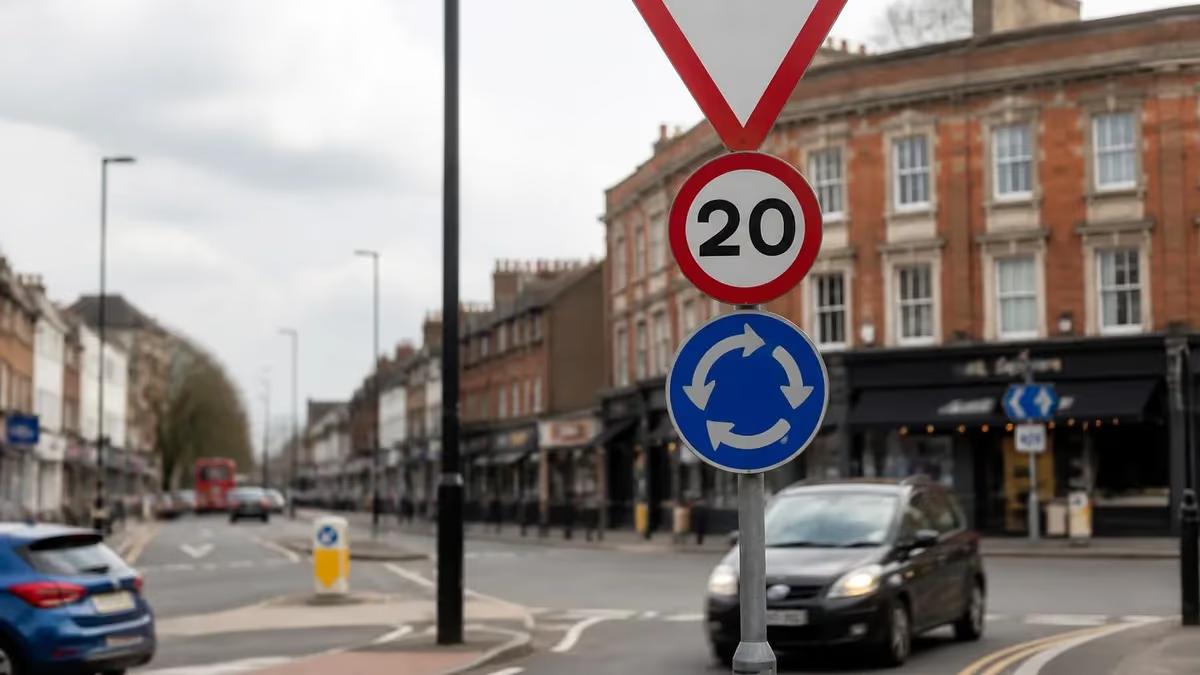
The new theory test is one of the most talked-about changes in UK driving licence history, and for good reason. The Driver and Vehicle Standards Agency (DVSA) has been overhauling the way learner drivers are assessed to ensure the roads of Britain become safer for everyone. Whether you are just starting your learning journey or you have already booked your test date, understanding exactly what the updated assessment looks like — and how it differs from the previous format — is essential if you want to walk out of that test centre with a pass certificate in hand.
The theory test has existed in its current basic structure since 1996, but the driving landscape has changed enormously since then. Electric vehicles now make up a growing proportion of new car sales, smart motorways have introduced new rules that confused even experienced drivers, and road safety data consistently shows that young drivers remain disproportionately involved in serious collisions. The DVSA recognised that a test designed for the nineties was simply not fit for purpose in a twenty-first-century driving environment, and that recognition drove the push for comprehensive reform.
At its core, the theory test still consists of two distinct parts: a multiple-choice question section and a hazard perception clip section. However, the content within both sections has been refreshed substantially. New question banks now include topics covering electric and hybrid vehicle safety, updated motorway regulations including smart motorway protocols, and a greater emphasis on eco-friendly driving. Candidates who studied using older revision materials may find they encounter questions that do not match what they have practised, which is why using up-to-date resources matters so much.
The hazard perception element has also seen meaningful updates. The DVSA has introduced a broader variety of clip scenarios that reflect modern road conditions, including urban areas with cycling infrastructure, mixed-traffic situations involving e-scooters, and rural roads with limited visibility. Candidates are now expected to demonstrate not just reaction speed but genuine situational awareness across a wider range of driving environments. Practising with clips that mirror real-world complexity is therefore far more important than simply clicking quickly.
One common misconception is that the new theory test is dramatically harder than what came before. In reality, the pass marks have remained consistent — 43 out of 50 on the multiple-choice section and 44 out of 75 on the hazard perception clips. What has changed is the breadth of knowledge required. You can no longer pass by memorising a small bank of recycled questions; you need to genuinely understand the principles behind safe driving, the Highway Code, and modern vehicle technology to score consistently well across the full range of questions now included.
For many candidates, the biggest practical concern is preparation time. Research consistently shows that learners who use structured practice tools — including mock tests that mirror the actual test format — perform significantly better on test day than those who rely on passive reading alone. The DVSA itself recommends a minimum of twenty hours of theory study before sitting the assessment, though many successful candidates report spending closer to thirty hours spread across several weeks. Building that study time into a realistic schedule, rather than cramming in the final days, makes an enormous difference to retention and performance under pressure.
This article walks you through every aspect of the updated assessment: the format, the content changes, the scoring system, preparation strategies, and the common mistakes that cause candidates to fail. Whether you are a complete beginner wondering where to start or a repeat candidate trying to pinpoint where you went wrong last time, you will find practical, accurate, and up-to-date guidance here to help you pass the new theory test first time.
UK Theory Test by the Numbers
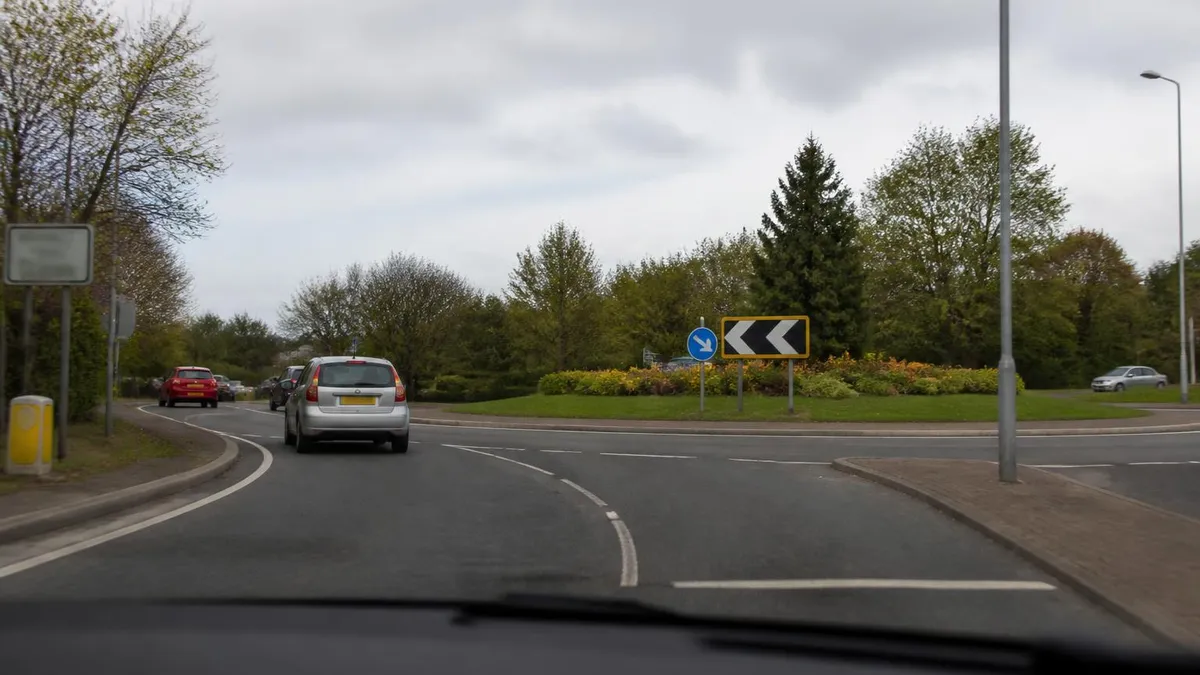
Theory Test Format at a Glance
| Section | Questions | Time | Weight | Notes |
|---|---|---|---|---|
| Multiple Choice | 50 | 57 min | Pass/Fail | Pass mark: 43/50. Can review and flag answers. |
| Hazard Perception | 14 | Approx 20 min | Pass/Fail | Pass mark: 44/75. One clip contains two developing hazards. |
| Total | 64 | 57 minutes | 100% |
Understanding what has genuinely changed in the new theory test format helps candidates focus their revision on the right areas rather than wasting time on outdated material. The DVSA began its most recent round of updates in stages, with the question bank expanding considerably to include topics that were barely mentioned — or completely absent — in earlier versions of the assessment. These additions reflect real changes to UK roads and vehicle technology rather than arbitrary difficulty increases.
Electric and hybrid vehicle content is now firmly embedded throughout the question bank. Candidates can expect questions covering how regenerative braking works and how it differs from conventional braking, what range anxiety means in practical driving terms, where and how to safely charge a vehicle in public spaces, and the specific hazards associated with electric vehicle operation in car parks and low-speed environments. As EV ownership grows rapidly across the UK, the DVSA correctly identified this as a knowledge gap that needed addressing for newly qualified drivers.
Smart motorway rules represent another area of significant expansion. Questions now probe understanding of All Lane Running (ALR) motorways where the hard shoulder is permanently used as a running lane, the meaning and legal obligations associated with red X signals on overhead gantries, how to correctly use emergency refuge areas (ERAs), and what to do if your vehicle breaks down in a live running lane. These scenarios are not hypothetical edge cases — they are situations real drivers face, and the updated test rightly demands that new drivers understand them before being licensed.
The Highway Code revisions of 2022 introduced a new hierarchy of road users that placed pedestrians and cyclists at the top of the priority pyramid. The new theory test now incorporates questions that test understanding of this hierarchy, particularly in relation to the updated rules around pedestrians crossing at junctions, cyclists at roundabouts, and the responsibilities of drivers when approaching crossings where pedestrians have already started to cross. Candidates who have not studied the post-2022 Highway Code are likely to encounter surprising questions in this area.
Eco-friendly driving has also become a much more prominent topic. The question bank now covers fuel-efficient driving techniques such as reading the road ahead to reduce unnecessary braking, optimal gear change points, the environmental impact of idling engines, and how vehicle loading affects fuel consumption and handling. These questions align with the UK government's broader net-zero transport commitments and are designed to instil good environmental habits from the very start of a driver's career rather than treating economy as an afterthought.
Vehicle safety and first aid questions have been updated to reflect contemporary guidance. Questions about what to do at the scene of an accident now align with updated first aid protocols, including the recovery position, how to handle a casualty wearing a helmet, and when to call 999 versus 101. The DVSA works with emergency services to ensure these questions reflect current best practice, which means answers that were correct under older guidance may no longer match the updated answer bank — another compelling reason to use current revision materials rather than second-hand books from previous years.
Importantly, the format of the test centre experience has also evolved. Digital question interfaces now include accessibility features such as font size adjustment and screen reader compatibility, and candidates are given a tutorial period before the real test begins so they can familiarise themselves with the interface. Knowing how to use the flagging and review tools effectively is a small but genuinely useful part of preparation — spending the first five minutes of your allotted time panicking over the interface is time wasted that could cost you crucial marks on borderline questions.
Multiple Choice, Hazard Perception and Pass Marks Explained
The multiple choice section presents 50 questions drawn from the DVSA's official question bank, which contains over 700 questions across categories including alertness, attitude, safety and your vehicle, safety margins, hazard awareness, vulnerable road users, other types of vehicle, vehicle handling, motorway rules, rules of the road, road and traffic signs, documents, accidents, and vehicle loading. Each question offers four possible answers, and you must select the single correct one. Some questions include photographs or diagrams, which require careful visual analysis rather than simple recall.
You have 57 minutes for the multiple-choice section, though most candidates complete it well within this time. A key technique is to use the flagging feature to mark any question you are unsure about, work through the full set of 50 questions without lingering too long, and then return to flagged items in the time remaining. The pass mark is 43 correct out of 50 — meaning you can afford to get seven questions wrong. However, targeting a score in the high forties is wise, as it gives you a buffer against questions that catch you off guard.

New Theory Test Format: Advantages and Challenges
- +Updated content reflects modern UK road conditions including smart motorways and EVs
- +Broader question bank prevents rote memorisation and rewards genuine understanding
- +Immediate results at the test centre eliminate anxious waiting periods
- +Digital interface includes accessibility features for candidates with reading difficulties
- +Hazard perception clips filmed on real roads provide realistic practice scenarios
- +Two-year validity window gives flexibility between theory pass and practical test
- −Wider topic coverage means more study hours required than under the old format
- −Older revision books and apps may contain outdated questions and incorrect answers
- −Hazard perception cheating detection can penalise candidates who click cautiously but frequently
- −No retake on the same day if you fail — minimum three working days before rebooking
- −Both sections must be passed in one sitting; partial passes carry over to the next attempt
- −Test centre slots can be scarce in busy urban areas, leading to longer waiting times
Theory Test Preparation Checklist
- ✓Download or purchase the latest edition of the official Highway Code (post-2022 updates included).
- ✓Use only DVSA-approved revision materials dated 2024 or later to ensure question accuracy.
- ✓Complete at least three full mock multiple-choice tests under timed conditions before your test date.
- ✓Study all 14 topic categories in the official question bank, not just the ones you find easiest.
- ✓Practise hazard perception clips daily for at least one week before your test.
- ✓Learn the rules for smart motorways including red X signals and emergency refuge areas.
- ✓Review updated Highway Code rules on pedestrian and cyclist priority at junctions and roundabouts.
- ✓Study electric and hybrid vehicle content including regenerative braking and charging safety.
- ✓Familiarise yourself with the digital test interface by using online mock tests that replicate the centre format.
- ✓On test day, arrive at least 15 minutes early and bring your valid UK provisional driving licence.
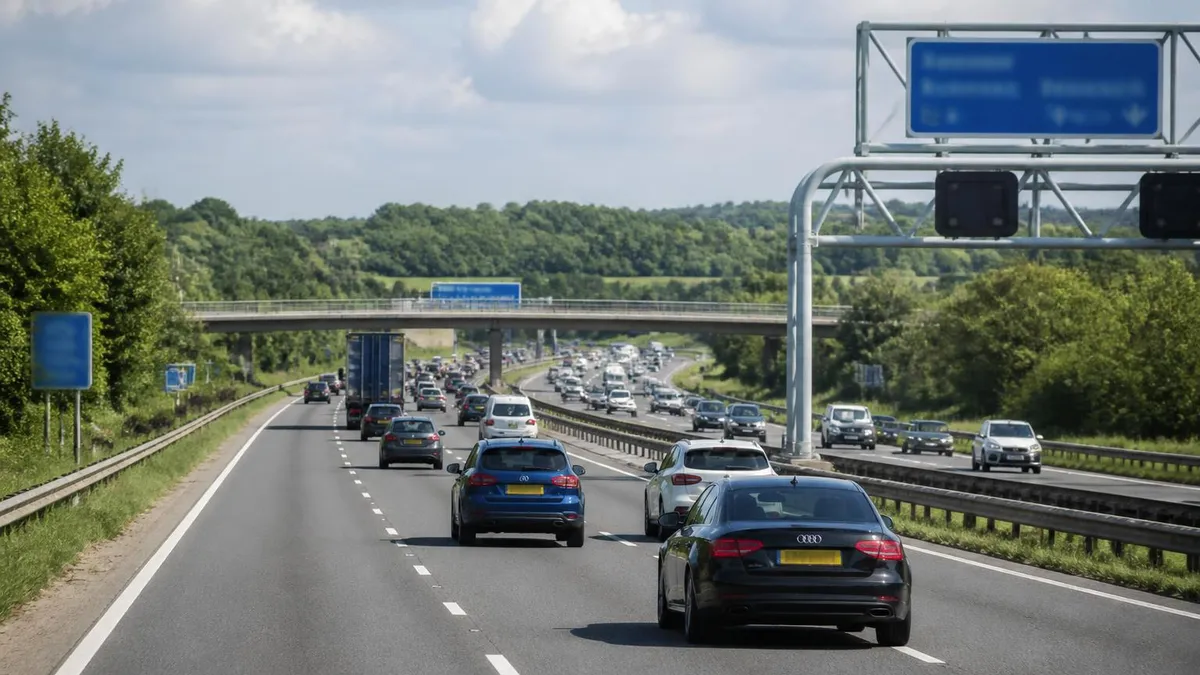
Study the Highway Code changes from 2022 — they are now tested directly
The 2022 Highway Code revisions introduced a formal hierarchy of road users and updated dozens of rules covering pedestrians, cyclists, and horse riders. These changes are now embedded throughout the theory test question bank, and candidates who study older materials may confidently select answers that are no longer correct. Always verify that your revision source includes the 2022 updates before you rely on it.
Effective preparation for the theory test is less about how many hours you spend and more about the quality and structure of those hours. Research in cognitive science consistently shows that active recall — testing yourself rather than passively re-reading — is one of the most powerful learning techniques available. Candidates who read through question banks without attempting to answer them are engaging in recognition rather than recall, which produces far weaker retention. The moment you cover the answer and force yourself to retrieve it from memory is the moment genuine learning begins.
Spaced repetition is equally powerful and works particularly well for theory test revision. Rather than studying all fifty topics in a single marathon session, spaced repetition systems present questions you have previously answered correctly less frequently and questions you have struggled with more frequently, ensuring that your limited study time is concentrated where it is most needed. Several dedicated theory test apps incorporate spaced repetition algorithms, and candidates who use these tools consistently report better mock test scores than those using static question banks alone.
The topic of safety margins deserves particular attention in your study plan because it is consistently one of the areas where candidates lose the most marks. Stopping distances are a perennial source of error — many candidates underestimate the total stopping distance at higher speeds because they forget to add thinking distance to braking distance.
At 70 mph, the total stopping distance is 96 metres, or roughly the length of nine cars. In wet conditions, you should double this figure, and in icy conditions you may need up to ten times the dry stopping distance. These numbers appear frequently in the question bank and must be memorised precisely.
Road signs represent another consistently high-failure topic. The UK has over one hundred standard road signs, and while many are self-explanatory, a significant proportion require specific knowledge. Warning triangles, regulatory circles, and informational rectangles each have distinct meanings, and the colour coding within these shapes adds further layers of distinction. Dedicated sign revision sessions — ideally using flashcard-style tools — are more effective than simply reading a reference list and hoping the signs stick through familiarity.
For the hazard perception section, the most effective preparation strategy is not simply watching lots of clips but actively engaging with each one by narrating what you see as you watch. Describe the potential hazards aloud — the pedestrian stepping off the pavement, the cyclist wobbling near the kerb, the car waiting to pull out of a side road.
This verbal processing forces you to identify hazards consciously rather than reacting on instinct, which builds the deliberate scanning habit that the DVSA is testing. Many candidates who fail the hazard perception section do so not because they cannot see hazards but because they click too late, having identified the hazard visually but not reacted promptly.
Understanding the scoring window for hazard perception is also critical. Each developing hazard has a scoring window that opens when the hazard begins to develop — not when it becomes dangerous. If a car is indicating to pull out of a side road, the scoring window typically opens when the car first starts to move, not when it enters your path.
Clicking during the early part of this window earns maximum points, clicking later earns fewer points, and clicking after the window closes earns nothing. Practising with official DVSA clips or high-quality third-party clips that use the same scoring window logic is therefore essential; informal YouTube clips of hazards are entertainment, not preparation.
Finally, managing your mental state on test day is a genuine part of preparation that is often overlooked. Anxiety impairs working memory — the cognitive system you need to recall stopping distances, sign meanings, and driving rules under time pressure.
Candidates who arrive at the test centre having slept well, eaten something light, and given themselves enough time to settle in before the test begins consistently perform better than those who arrive stressed and rushed. A few minutes of slow breathing before the test starts is not mysticism; it is evidence-based stress management that costs nothing and may save you the £23 rebooking fee.
Your theory test pass is only valid for two years from the date you pass. If you do not pass your practical driving test within this window, your theory test result expires and you must sit and pass the theory test again before you are eligible to book another practical test. Book your practical driving test as soon as possible after receiving your theory pass certificate to avoid having to resit.
Among the most common reasons candidates fail the theory test, overconfidence on familiar topics ranks surprisingly high. Many learners assume that because they travel in cars regularly as passengers they already understand road rules intuitively.
This assumption leads them to under-invest in studying areas like documents and legal requirements, motorway driving rules, and the rules specific to towing, which feel abstract when you have never done them but appear regularly in the question bank. The test is not assessing whether you can observe what drivers do — it is assessing whether you know what drivers are supposed to do according to law and Highway Code guidance.
Confusing similar road signs is another frequent source of lost marks. The red circle with a diagonal line through it (no entry for vehicular traffic) is commonly confused with a give way sign or a no-through-road sign by candidates who have not specifically studied sign categories.
Similarly, warning signs involving animals — particularly horse riders, cattle, and wild animals — look superficially similar and require candidates to have genuinely memorised the specific pictogram on each one rather than guessing from context. Flashcard-style revision tools that show you the sign image without the label are the most effective way to build this recognition reliably.
Misunderstanding the hierarchy of road users introduced in the 2022 Highway Code causes specific problems in questions about junction behaviour. Under the updated rules, drivers turning into or out of a junction must give way to pedestrians who are crossing or waiting to cross the road they are turning into.
Many candidates who studied under the pre-2022 rules — including those who passed their test before 2022 and are now helping younger family members revise — are not aware of this change. The updated rule requires a genuine behavioural shift, not just a knowledge update, and the question bank tests it from multiple angles.
Timing errors on the hazard perception section remain one of the most persistent failure patterns. Analysis of DVSA feedback data shows that a significant proportion of hazard perception fails come not from candidates who missed hazards entirely but from candidates who clicked too late within the scoring window.
The developmental phase of a hazard — the period when a pedestrian is stepping towards the road but has not yet reached it, or when a vehicle is slowing ahead of you but has not yet stopped — is precisely when the scoring window opens. Candidates who wait for the hazard to become visually obvious before clicking are typically clicking after the highest-scoring portion of the window has already closed.
Neglecting to review the flagged questions at the end of the multiple-choice section is a straightforward but costly mistake. Under time pressure, candidates often flag a handful of questions and then, feeling satisfied after completing the remaining questions, fail to return to their flagged items before the time runs out.
Building a personal rule — always check flagged items before finishing, no matter how confident you feel — is a simple process discipline that can recover two or three marks per test, which may be the difference between a pass and a fail when you are scoring close to the 43-mark threshold.
Finally, arriving at the test centre without the correct identification is an instant failure with no discretion. The DVSA requires you to bring your valid UK provisional driving licence — either the photocard licence on its own if it shows your current address, or the photocard and paper counterpart if your address has changed and not been updated.
Forgetting your licence means you cannot sit the test, you forfeit your booking fee, and you must rebook from scratch. Checking your licence validity, your address details, and the expiry date the night before your test is a two-minute task that costs nothing and guarantees you at least get through the door.
Candidates who combine thorough content knowledge with smart test technique — using the flagging system, timing their hazard perception responses correctly, and managing their mental state effectively — consistently outperform candidates who simply know more but lack the procedural habits to translate that knowledge into a high score on the day. The theory test rewards both preparation and process, and mastering both gives you the best possible platform for becoming a safe, confident, and licence-holding UK driver.
When it comes to the final weeks and days before your theory test, your revision strategy should shift from broad coverage to targeted consolidation. At this stage, you should already have worked through all the major topic categories at least once. The focus now is on identifying and closing gaps — the specific question types or topic areas where your mock test scores are consistently lower than your overall average. Most modern revision apps provide a performance breakdown by category, and this data is invaluable for directing your final effort where it will have the greatest impact on your score.
Mock tests taken under genuine timed conditions — meaning no pausing, no looking things up, and no retrying questions — give you the most accurate picture of where you actually stand. A score of 43 or above on a full 50-question mock test, taken without any assistance, suggests you are in a reasonable position for the real assessment.
Aiming to consistently score 46 or higher on mocks before your test date gives you a comfortable buffer against the natural variability of which specific questions appear on your actual test day, since the question bank is large and the 50 questions you see will never be identical to any mock.
In the two or three days immediately before your test, avoid attempting to learn large volumes of new material. The cognitive science evidence on pre-test cramming is clear: trying to load new information into memory in the final 48 hours typically interferes with consolidated knowledge rather than adding to it, particularly under anxiety.
A light review of your weakest areas and a single timed mock test the day before your actual test is a sensible final preparation approach. On the evening before, prioritise sleep over a late revision session — sleep is when the brain consolidates memories, and a well-rested mind performs measurably better on recall tasks than a tired one.
On the day itself, read every multiple-choice question carefully and fully before looking at the answer options. A significant number of incorrect answers are chosen because candidates skim-read the question, miss a qualifying word like "must" or "should not", and select a plausible but incorrect option. The questions are written to be precise, and the difference between "you must" and "you should" has specific legal implications in UK driving law that the test exploits regularly. Treating every question as a careful reading exercise rather than a quick pattern-match is a habit that reduces careless errors substantially.
During the hazard perception section, remember that each clip is continuous and cannot be paused or replayed. Focus your full attention on the screen and treat each clip as a real driving scenario — scan the full field of view rather than fixating on the centre of the image, because many hazards develop in the peripheral areas of the clip.
A pedestrian stepping off a pavement at the side of the road, a child on a bicycle approaching from a side street, or a bus pulling away from a stop are all examples of hazards that candidates miss because they are watching the road surface directly ahead rather than scanning the full scene as a good driver would.
After completing your test, the results screen at the test centre will show your scores for both sections and confirm whether you have passed or failed. If you pass, you will receive official confirmation that can be used when booking your practical driving test. If you fail, the results screen will show your scores by category, which is the most useful diagnostic information available for planning your next revision cycle. Candidates who read and act on this feedback systematically almost always improve significantly on their next attempt compared to candidates who simply rebook without changing their approach.
Above all, remember that the theory test exists for a genuine reason: it is designed to ensure that every new driver understands the rules, risks, and responsibilities that come with being in charge of a vehicle on public roads. The knowledge you build while preparing for this test is not just exam material to be discarded after you receive your pass — it is the foundation of the safe driving habits that will protect you, your passengers, and every other road user for the decades of driving ahead of you.
DVSA Questions and Answers
UK Theory Test Pass Mark: Car, Bike, LGV, PCV & ADI Scores

Free Theory Test App: The Complete UK Guide to Choosing, Using and Passing With Mobile Practice in 2026

Cancelling Driving Test: The Complete UK Guide to Refunds, Rebooking and Avoiding Lost Fees in 2026
Theory Test Certificate: Complete UK Guide to Passing and Using Your DVSA Pass Letter in 2026
Driving Test Nerves: The Complete UK Guide to Calming Anxiety and Passing First Time in 2026
About the Author

Licensed Driving Instructor & DMV Test Specialist
Penn State UniversityRobert J. Williams graduated from Penn State University with a degree in Transportation Management and has spent 20 years as a certified driving instructor and DMV examiner consultant. He has personally coached thousands of applicants through written knowledge tests, skills assessments, and commercial driver licensing programs across more than 30 states.