
Majors on Driving Test: Complete UK Guide to Avoiding Serious Faults and Passing First Time
Majors on driving test explained: learn what counts as a serious or dangerous fault, common DVSA failures, and how to pass your UK practical first time. 💯

Understanding majors on driving test day is the single most important piece of preparation a UK learner can do before sitting the DVSA practical. A major, formally recorded as either a serious or dangerous fault, is the type of mistake that automatically ends your chance of passing, no matter how flawless the rest of your drive looks. Many candidates lose their test in the first ten minutes simply because they did not understand how examiners categorise faults or what behaviours trigger an instant fail on the marking sheet.
The driving test is not designed to catch you out, but it is rigorous, and the assessment criteria are stricter than most learners assume after a year of casual lessons. Examiners follow a national standard called the DT1, which lists exactly how each fault must be marked. Knowing the difference between a driver fault (minor), a serious fault and a dangerous fault gives you a huge psychological advantage on the day, because you can drive proactively rather than fearfully second-guessing every mirror check.
Most learners are surprised to discover that you are allowed up to fifteen minor faults and still pass the test. What you cannot afford is a single major. That single moment, whether it is rolling backwards on a hill start into the path of another car or missing a STOP line at a junction, instantly converts your attempt into a fail. This guide breaks down the categories, the most common majors recorded by the DVSA, and the exact techniques driving instructors use to coach pupils through them.
We will also cover what the examiner is genuinely looking for, the body language and mirror routines that signal a confident driver, and the manoeuvres that statistically generate the highest number of serious faults across Great Britain. Whether you are booked in next week or still working through mock tests with your instructor, this information will sharpen your awareness and dramatically increase your first-time pass probability.
The current national first-time pass rate hovers around forty-eight percent, which means more than half of all candidates leave the test centre without a licence. The encouraging news is that the majority of those failures come down to a small, predictable set of major fault categories. Observation at junctions, control on the move and use of mirrors account for roughly three quarters of all serious faults recorded each year. Once you can recognise the situations where these majors happen, you can drill them in your lessons until they become automatic.
Throughout this guide you will find data drawn from official DVSA reports, examiner interviews and approved driving instructor (ADI) experience. You will also find practical drills, mock-driving test checklists and a structured study plan that you can use in the final two weeks before your appointment. For broader exam prep on the written side, our Gov UK Theory Test resource pairs perfectly with this practical guide.
By the time you finish reading, you should have a clear mental map of every situation where a major is likely to occur, how to recover smoothly if you make a small error, and how to project the calm, decisive control that examiners reward. Let's begin with the numbers that explain why majors matter so much.
Majors on the UK Driving Test by the Numbers
DVSA Practical Driving Test Format
| Section | Questions | Time | Weight | Notes |
|---|---|---|---|---|
| Eyesight Check | 0 | 1 min | Pass/Fail | Read a number plate at 20 metres |
| Show Me Tell Me | 2 | 2 min | 1 minor max | Vehicle safety questions |
| General Driving | 0 | 20 min | Core scoring | Roads of varying difficulty |
| Independent Drive | 0 | 20 min | Core scoring | Sat-nav or signs |
| One Manoeuvre | 0 | 5 min | High-risk | Parallel, bay or pull up on right |
| Emergency Stop | 0 | 2 min | 1 in 3 tests | Random selection |
| Total | 0 | approx 40 minutes | 100% |
A major fault on the UK driving test falls into one of two recorded categories: a serious fault, marked with an S on the marking sheet, and a dangerous fault, marked with a D. Both end your test attempt immediately in terms of pass eligibility, although the examiner will usually allow the drive to continue so that you still get the full experience and constructive feedback at the end. Understanding the technical definition of each helps you anticipate situations where you might cross the line.
A serious fault is any action, or failure to act, that could potentially cause danger to yourself, your passenger, other road users or property. The key word here is potentially. You do not have to actually cause an incident. Stalling at a roundabout in a position where you would block emerging traffic, or failing to check your blind spot before pulling out, both count as serious because of the potential outcome rather than what actually happened.
A dangerous fault is one degree more severe. It involves actual danger, meaning another road user had to take evasive action, brake hard, swerve, or where the examiner physically intervened on the dual controls. Cutting across the path of an oncoming car at a junction, drifting into the opposite lane on a country road or running a red light all qualify as dangerous. Examiners are trained to call these out clearly when they happen.
The minor fault, technically called a driving fault, is a mistake that does not cause danger but is not the standard expected of a competent driver. Crossing your hands slightly on the wheel, hesitating one beat too long at a junction or steering wide on a turn can all be marked as minors. You are allowed up to fifteen minors across the test. Sixteen tips you into a fail, but most candidates pass with five to nine.
One important nuance is the repeated minor pattern. If you make the same minor mistake several times, examiners can mark the cluster as a single serious fault. For example, three weak mirror checks at separate junctions might be one minor each, but a consistent pattern of poor mirror use across the entire drive is a serious fault for observation. This is why building a strong mirror-signal-manoeuvre routine into every move matters so much.
Many learners also misunderstand the role of the examiner during the test. Examiners are not trying to fail you. They follow a standardised national document called the DT1, which gives them objective criteria for marking each behaviour. They want consistent, observable evidence of safe driving. If you study how that document categorises behaviour, you can effectively reverse-engineer your preparation. Our Hazard Perception Test: Complete DVSA Guide to Passing First Time covers a complementary skill that examiners look for live on the road.
Finally, remember that an examiner will not record a major lightly. If you almost make a mistake but correct it cleanly using your mirrors and a small adjustment, that is competent driving and will not be marked. The line is crossed when the situation creates risk, even briefly. Awareness and self-correction are your best defence against the dreaded major.
DVSA Practice Test Questions
Prepare for the DVSA - UK Driving Theory Test exam with our free practice test modules. Each quiz covers key topics to help you pass on your first try.
DVSA Eco-Friendly Driving and Vehicle Loading
DVSA Exam Questions covering Eco-Friendly Driving and Vehicle Loading. Master DVSA Test concepts for certification prep.
DVSA Hazard Awareness
Free DVSA Practice Test featuring Hazard Awareness. Improve your DVSA Exam score with mock test prep.
DVSA Incidents, Accidents and First Aid
DVSA Mock Exam on Incidents, Accidents and First Aid. DVSA Study Guide questions to pass on your first try.
DVSA Motorway Rules and Smart Motorways
DVSA Test Prep for Motorway Rules and Smart Motorways. Practice DVSA Quiz questions and boost your score.
DVSA Rules of the Road (Highway Code)
DVSA Questions and Answers on Rules of the Road (Highway Code). Free DVSA practice for exam readiness.
DVSA - UK Driving Theory Hazard Awareness ...
DVSA Mock Test covering - UK Driving Theory Hazard Awareness and Perception. Online DVSA Test practice with instant feedback.
DVSA - UK Driving Theory Motorway Rules an...
Free DVSA Quiz on - UK Driving Theory Motorway Rules and Regulations. DVSA Exam prep questions with detailed explanations.
DVSA - UK Driving Theory Road and Traffic ...
DVSA Practice Questions for - UK Driving Theory Road and Traffic Signs. Build confidence for your DVSA certification exam.
DVSA - UK Driving Theory Rules of the Road
DVSA Test Online for - UK Driving Theory Rules of the Road. Free practice with instant results and feedback.
Top Categories That Generate Majors on Driving Test
Observation is the single biggest source of major faults across all UK test centres, accounting for roughly one third of every recorded serious mark. The classic example is pulling out of a junction without effectively scanning for cyclists, motorbikes or vehicles approaching at speed. Examiners are not looking for a theatrical head-turn but for evidence that you genuinely processed what you saw before committing to the move.
The fix is to slow your decision-making at every junction. A useful drill is the two-second rule at give ways: stop your eyes on the approaching road, identify the nearest vehicle, decide if it is safe, then move. Cyclists and pedestrians count just as much as cars. A missed pedestrian at a side road is one of the most common dangerous faults recorded nationally.
Sitting the Practical Test Sooner vs Waiting Longer
- +Booking early keeps lesson momentum and skills fresh
- +Shorter waits at busy test centres if you grab cancellations
- +Less time for nerves and overthinking to build up
- +Lower total cost if you avoid extra months of lessons
- +You can re-book a retest quickly while skills are sharp
- +Confidence builds through real test exposure rather than endless practice
- −Risk of failing if foundational skills are not yet automatic
- −Manoeuvres may still feel rushed under pressure
- −You may underestimate complex independent drive scenarios
- −Fewer mock tests completed means less mental rehearsal
- −Test fee of £62 is lost on a clear major fault fail
- −Insurance premiums can rise after multiple failed attempts
Pre-Test Checklist to Avoid Majors on Driving Test
- ✓Read a number plate at 20 metres in the test centre car park before you set off
- ✓Confirm your provisional licence and theory pass certificate are valid and uploaded
- ✓Adjust mirrors, seat and head restraint before the examiner gets in the car
- ✓Complete a full POM routine (Prepare, Observe, Move) on every pull-away
- ✓Use mirror-signal-manoeuvre before every change of speed or direction
- ✓Practise all four manoeuvres in unfamiliar locations, not just outside the test centre
- ✓Do at least three full mock tests with your instructor in the final fortnight
- ✓Memorise common Show Me Tell Me answers, especially demist and headlight checks
- ✓Rehearse independent drive routines using a real sat-nav on quiet routes
- ✓Get a full night's sleep and arrive at the test centre at least ten minutes early
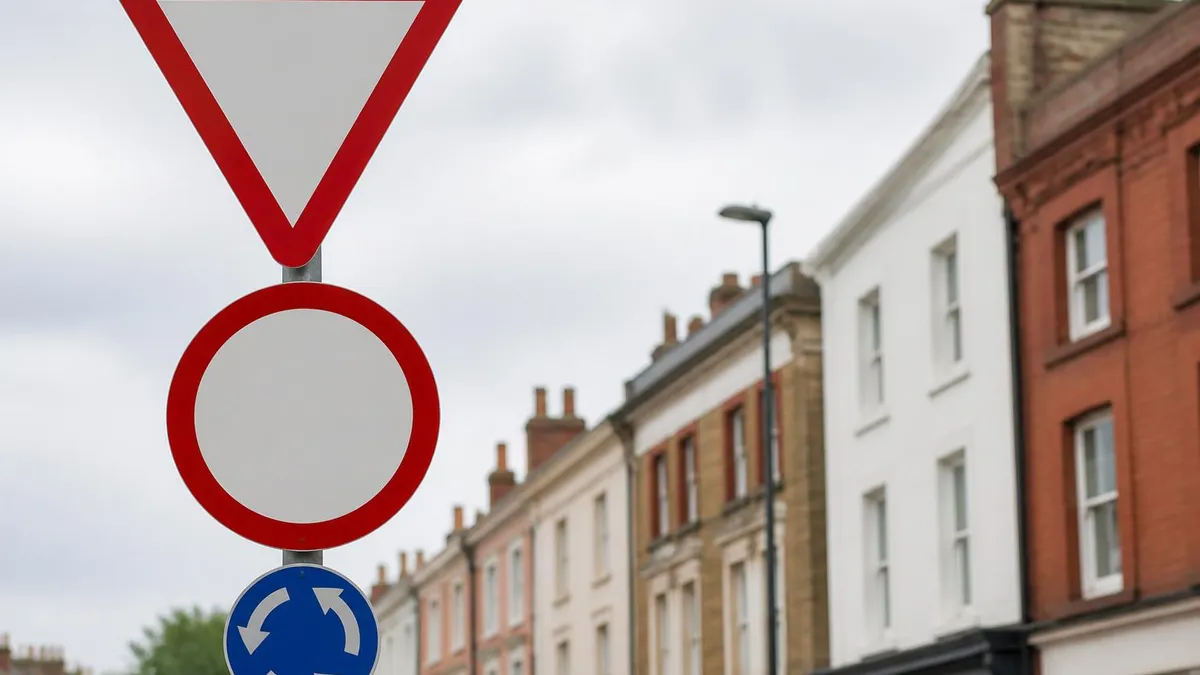
Drive the test, do not perform it
One of the most consistent pieces of feedback from senior DVSA examiners is that learners who try to drive perfectly are more likely to make a major than those who drive normally. Treat the appointment like a regular lesson with a quiet passenger. Smooth, predictable, defensive driving is what triggers a pass, not exaggerated mirror checks or rehearsed lines.
Manoeuvres remain one of the most concentrated sources of major faults on the driving test, despite the fact that you only perform one out of four possible options. Since the DVSA dropped the three-point turn and reversing around a corner from the test in late 2017, the current four options are parallel parking on the road, bay parking either forwards or reverse in a car park, and pulling up on the right then reversing two car lengths before rejoining the traffic. Each carries its own pattern of risk.
The reverse bay park is statistically the most common manoeuvre to generate majors, particularly at test centres with tight car parks and uneven surfaces. Examiners are watching three things: control, accuracy and observation. You are allowed to be slightly over the white line, but ending up overlapping or finishing across two bays is a serious fault for accuracy. Looking through the rear window, with regular all-round checks, is non-negotiable.
Parallel parking generates majors primarily through poor observation. Drivers focus so intently on the kerb and the gap that they forget to monitor traffic approaching from behind. A useful drill is to pause halfway through the manoeuvre, complete a full 360-degree check, and only continue if it is safe. This is not penalised. Pausing is correct, hesitant rushing is not. Aim to finish within one car length of the front vehicle and roughly thirty centimetres from the kerb.
Pulling up on the right is the manoeuvre most learners practise least, partly because it feels unnatural to park against the flow of traffic on a regular road. Examiners specifically choose it to test your judgment about safety. You must avoid stopping near junctions, on bends, opposite parked vehicles or close to driveways. Once stopped, you reverse two car lengths in a straight line, then signal and rejoin traffic with full observation, including a strong blind-spot check.
The emergency stop, although only conducted on roughly one in three tests, can also trigger an instant major if handled badly. Skidding on dry tarmac suggests you stamped on the brake without progressive pressure. Stalling at the end and rolling forward is acceptable. Failing to check mirrors thoroughly before moving off again is not. Treat the restart as a fresh pull-away with a complete observation routine.
Independent driving is the longest single phase of the modern test, lasting around twenty minutes. Examiners use it to assess whether you can navigate using a sat-nav or road signs without losing focus on the actual driving task. Taking a wrong turn does not fail you. Reacting to a missed turn by stopping in a dangerous position, swerving across a lane or panicking absolutely will. Practise reading instructions calmly while maintaining smooth control.
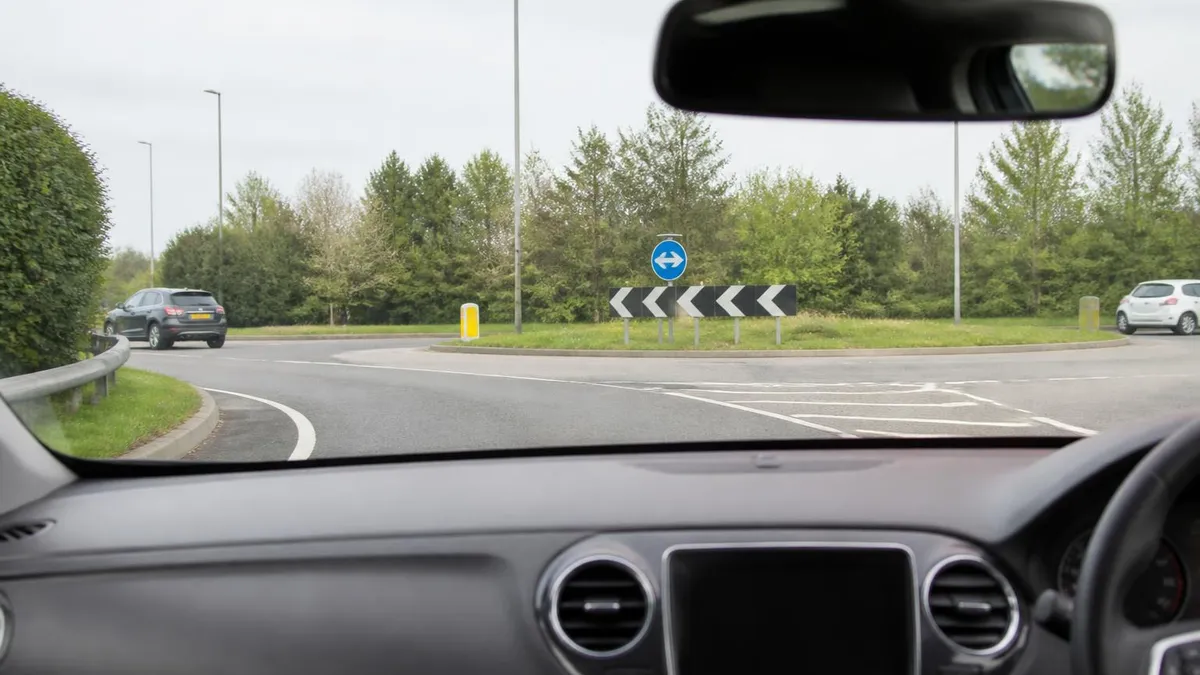
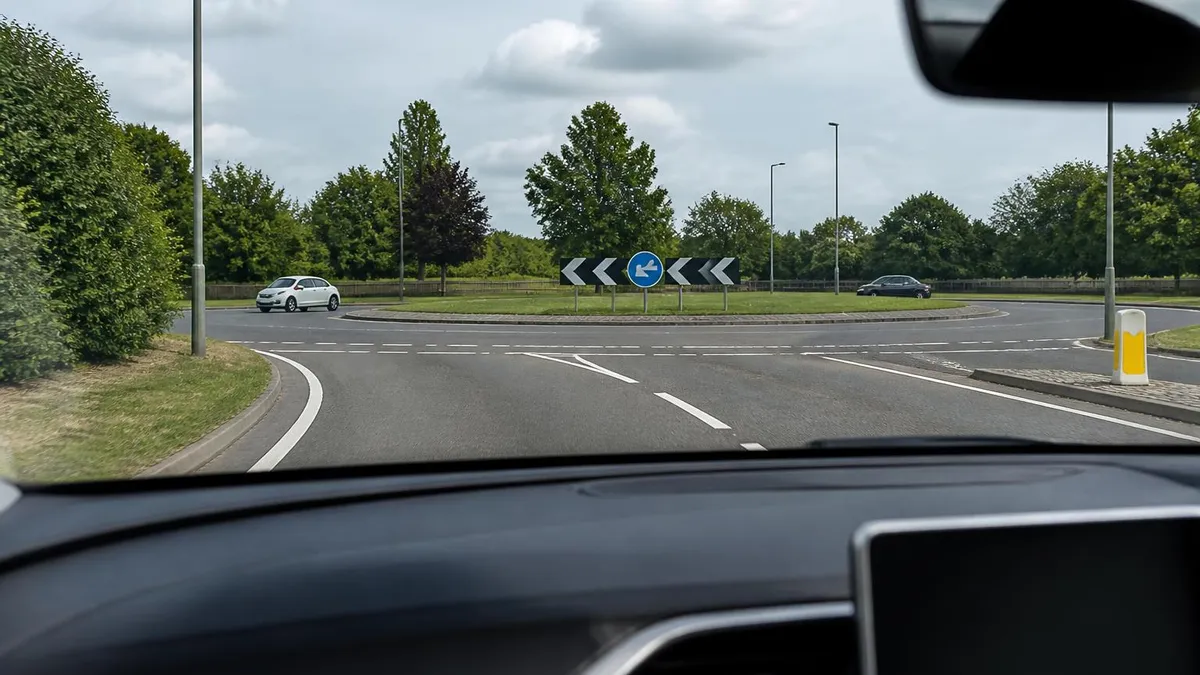
Roundabouts deserve a final mention as a high-risk environment. Approach speed, lane choice, signal timing and observation must all combine. The common major here is changing lanes within the roundabout without checking the blind spot, or hesitating at the give-way line when a clear gap was available. Decisive but safe is the balance examiners want to see in every roundabout you negotiate.
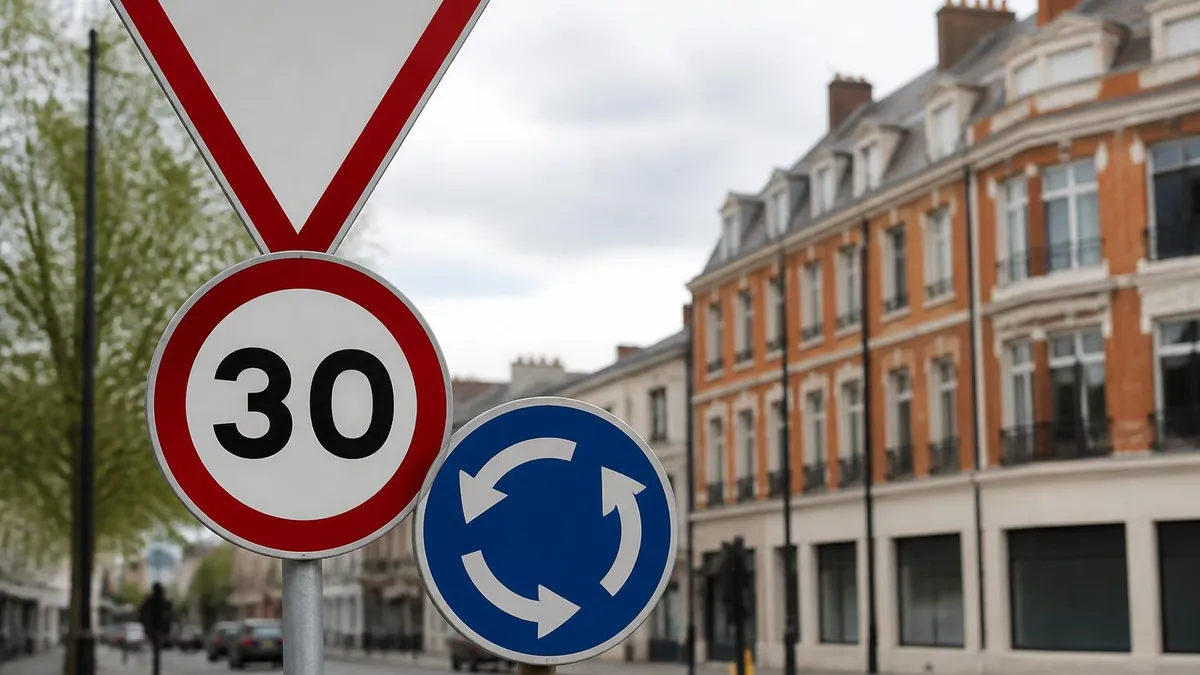
Going more than a couple of miles per hour over the posted limit, even briefly, is treated as a serious fault and ends your test. Pay extra attention to 20mph and 30mph zones near schools, and reduce speed promptly when you see the white circle with a diagonal line, which means the national speed limit applies but only if the road class supports it.
Recovering from a small mistake during your test is a skill in itself, and one that separates pass candidates from fail candidates more often than people realise. The first rule is to keep driving. Many learners hear a tiny noise from the examiner's pencil, assume they have just earned a major, and then fall apart over the next two minutes. That collapse is what actually fails the test. The original mistake was probably only a minor.
Examiners are explicitly trained not to give running commentary on faults. Silence does not mean failure. The only feedback you receive is at the end, when the examiner parks the car and reads through the marking sheet with you. If you can hold your composure for the remaining minutes after any wobble, you preserve your chance of passing. Treat every fresh junction as a clean slate.
Breathing technique is genuinely useful here. A slow four-second inhale and six-second exhale, repeated twice at the next red light, lowers your heart rate enough to restore good decision-making. Combine this with a quick mental reset: feet, hands, mirrors, road. That four-word internal script brings your focus back to the controls and away from the imagined disaster.
Mindset before the test matters as much as technique. Sleep the night before is more valuable than a final two-hour lesson. Eat a substantial meal an hour or two before your appointment so blood sugar does not crash mid-drive. Avoid caffeine if you are already nervous, since it amplifies the physical symptoms of anxiety such as tight grip and quick breathing.
Familiarity with the test centre area also reduces risk. Most centres are based around a network of routes that examiners use repeatedly. Your instructor will know these and should drive them with you in the final few lessons. You do not need to memorise turns, but you should know which junctions are notorious for blind exits, which roundabouts have unusual lane markings and which residential streets have a hidden 20mph zone.
Equally important is mastering the written side. The practical builds on the foundation of road sign recognition, hazard prediction and rules of the road that your theory test certified. If you feel rusty, revisit a structured revision tool. The Theory Test Book: Best Study Books to Pass in 2026 remains the most up to date written guide and pairs well with on-road preparation.
Finally, accept that nerves are normal. Even seasoned drivers who retake the test for licensing reasons report shaky hands at the start. The aim is not to eliminate nerves but to perform competently despite them. Knowing exactly which behaviours trigger a major fault, and rehearsing the correct alternatives until they become automatic, gives you the calm authority that examiners reward with a pass certificate.
In the final fortnight before your test, structure becomes more valuable than volume. Two focused ninety-minute lessons per week, paired with one full mock test under realistic conditions, will deliver more progress than five rushed sessions. Ask your instructor to mark you using the actual DVSA fault categories so that you become familiar with how examiners think. The shift from being told you did well to being told you collected two minors for steering and one for observation is mentally important.
Use the days between lessons to revise the Highway Code and rehearse the Show Me Tell Me questions out loud. There are only nineteen possible questions in the current bank, and the examiner picks two. Memorising answers verbatim is unnecessary, but understanding why each safety check matters helps you describe it confidently. A wrong or guessed answer is one minor fault, not a major, but cumulative minors still matter.
On the morning of the test, drive somewhere familiar for around thirty minutes before your appointment to warm up. Avoid attempting any new manoeuvre that you have not nailed in lessons. Your goal is to arrive at the test centre with your habits already running smoothly, not to cram a last-minute lesson. Park, take a short walk if you feel restless, and arrive at reception about ten minutes before the appointment time.
When the examiner calls your name, they will ask you to sign a declaration confirming your residency and that the car you are using is insured for the test. They will then walk with you to the car, ask you to read a number plate from twenty metres, and pose the Show Me Tell Me questions. None of this is scored heavily, but a confident start sets a positive tone for the rest of the appointment.
Once driving, focus on three priorities: mirror routine, observation at junctions, and smooth control. If you maintain those three, you will avoid the vast majority of major faults. The remaining minors will rarely add up to fifteen unless something has gone seriously wrong with your basics, in which case you would not have been ready to book the test in the first place.
If the worst happens and you fail, do not book your retest in the same panic that you just experienced. Take a debrief lesson with your instructor within forty-eight hours while the examiner's feedback is still fresh. Identify whether the issue was technical, environmental or psychological. Most second-attempt passes follow a clear plan that targets the specific category of fault that ended the first test.
Many passing candidates report that their successful attempt felt no different from a normal lesson. That feeling is the goal. When the manoeuvres are automatic, the observation routine is habitual and the nerves are managed, the test simply becomes another forty minutes of driving with a quiet passenger. Get to that point through deliberate practice, and your majors on driving test risk shrinks to almost nothing.
DVSA Questions and Answers

About the Author

Licensed Driving Instructor & DMV Test Specialist
Penn State UniversityRobert J. Williams graduated from Penn State University with a degree in Transportation Management and has spent 20 years as a certified driving instructor and DMV examiner consultant. He has personally coached thousands of applicants through written knowledge tests, skills assessments, and commercial driver licensing programs across more than 30 states.