
Best Driving Instructors Near Me: How to Find the Right ADI in 2026 October
🎯 Find the best driving instructors near me with our 2026 October UK guide. Compare ADI grades, prices, pass rates, lesson formats and red flags before booking.
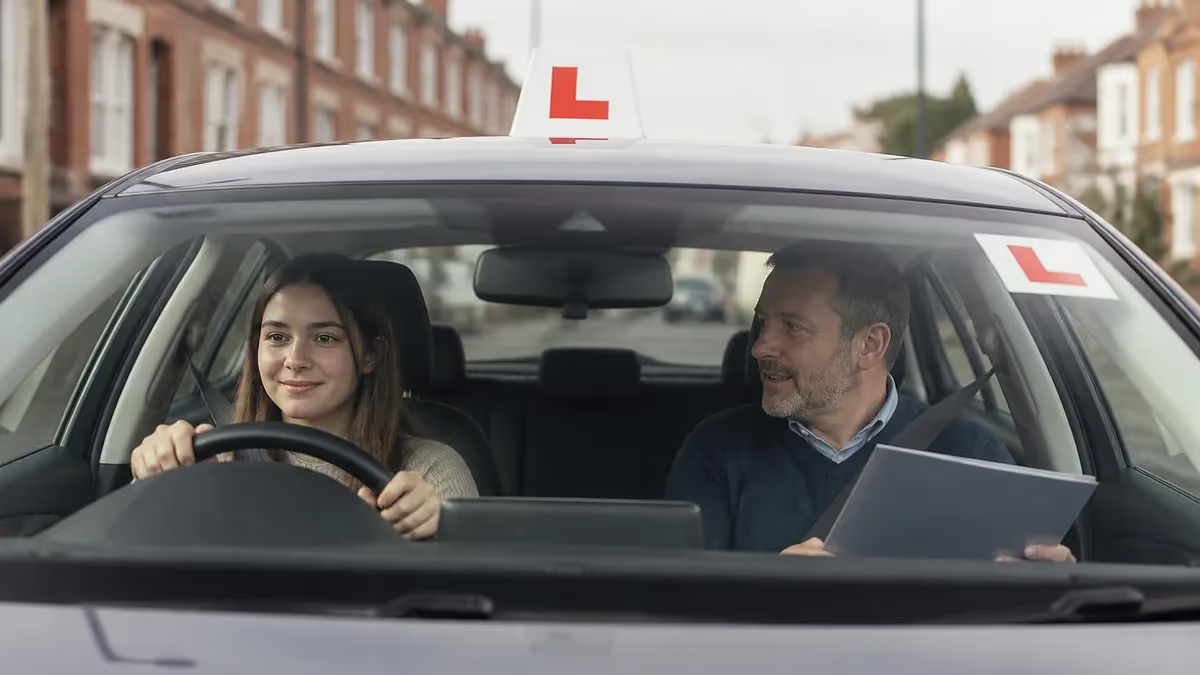
Searching for the best driving instructors near me is one of the most important decisions any learner driver in the UK will make in 2026, and getting it right can save you hundreds of pounds, dozens of wasted hours and the heartbreak of a failed practical test. The instructor you choose shapes not just whether you pass first time, but the safety habits you carry for the rest of your driving life on increasingly congested British roads.
Most learners assume that any approved driving instructor will do the job, yet the gap between an average ADI and an exceptional one is enormous. The Driver and Vehicle Standards Agency grades instructors from Grade A down to those still on a trainee licence, and the difference in lesson quality, structure and pass-first-time rates between the top and bottom of that scale is the difference between confident motorway driving and white-knuckled roundabouts.
This guide walks you through exactly how to find, vet and book the right Approved Driving Instructor for your postcode, learning style and budget. We cover what the DVSA grading actually means, how to read genuine reviews, the warning signs of a rogue instructor, the price you should expect to pay per hour in 2026, and how to combine practical lessons with strong theory preparation so you arrive on test day genuinely ready rather than merely hopeful.
We will also explain why theory knowledge matters even after you have started practical lessons, because hazard perception, eco-driving and vehicle handling are tested both in your written exam and judged silently by your examiner on the road. If you want to feel prepared, mixing structured lessons with self-paced revision is the formula that works. You can start by sharpening your knowledge with our free Practice Theory Test while you shortlist instructors locally.
You will learn how to compare independent instructors against the big national driving schools, what questions to ask on the very first phone call, how to structure your first ten hours of lessons, and how to negotiate block-booking discounts without locking yourself into a contract you cannot escape. We have built this around what learners actually search for, not what driving schools want you to read.
By the time you finish this article, you will have a clear, repeatable process for shortlisting at least three credible ADIs in your area, a script for the introductory call, a checklist for your first lesson, and a realistic budget for the full journey from provisional licence to pink one. Whether you are seventeen and just received your provisional or a returning learner restarting after a long break, the framework below applies.
Most importantly, this guide is built around UK regulations, DVSA standards and the realities of the 2026 driving test, including the latest expectations around independent driving, sat-nav use and eco-friendly vehicle operation. Let's get started.
UK Driving Instructor Landscape by the Numbers
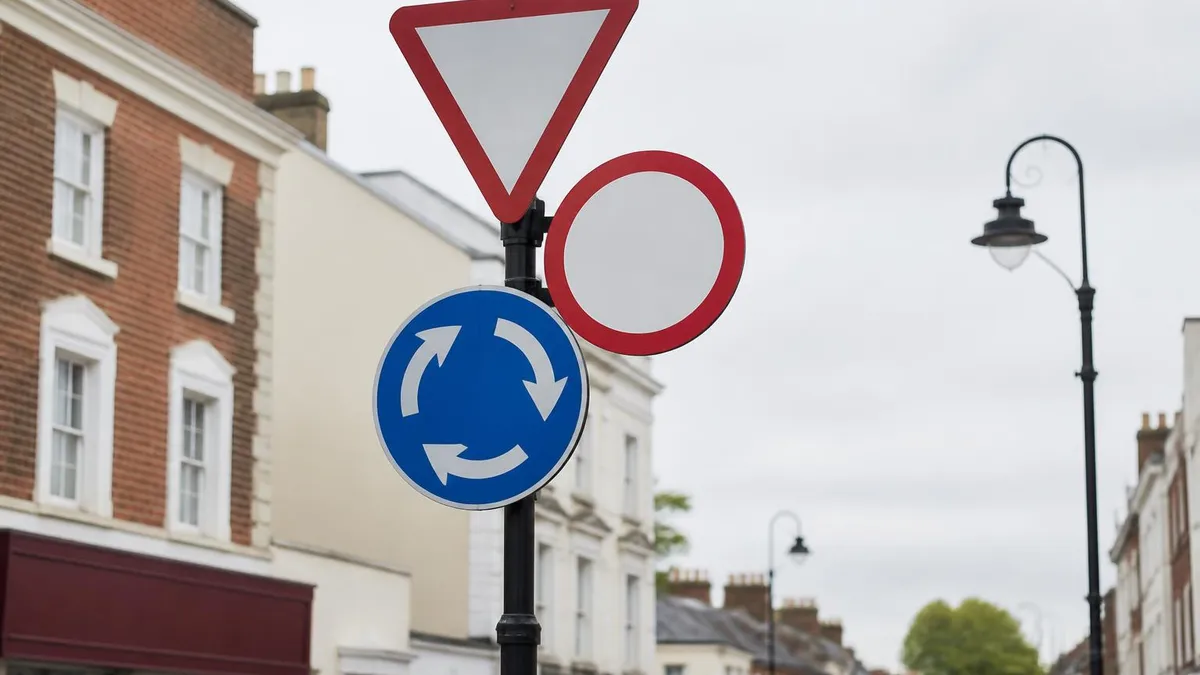
How to Shortlist the Best Driving Instructors Near Me
Use the official find your nearest driving instructor service on GOV.UK. Filter by postcode, automatic or manual, female or male instructor, and disability adaptations. Only instructors listed here are legally permitted to charge for lessons.
Cross-reference each shortlisted name on Google Maps and Trustpilot. Look for at least 20 reviews, a rating above 4.6 and recent feedback from learners who mention both the test journey and the instructor's patience under pressure.
Post in your local Facebook group, NextDoor or sixth-form chat asking for recent recommendations. Personal referrals from drivers who passed in the last six months are far more reliable than glossy school websites.
Every legitimate instructor must display a green octagonal ADI badge or a pink trainee badge on their windscreen during paid lessons. If they cannot produce it on request, walk away regardless of price or charm.
Most quality instructors offer a discounted introductory hour. Use it to assess communication, calmness, the condition of the car and whether they teach to your understanding rather than reciting a fixed script.
Understanding the DVSA grading system is the single biggest shortcut to finding genuinely good instruction in your area. Since 2014 the Driver and Vehicle Standards Agency has graded every Approved Driving Instructor as Grade A or Grade B following a Standards Check, and those who fail the check three times are removed from the register entirely. Grade A means the instructor demonstrated a high overall standard; Grade B means they met the minimum competency required to keep teaching.
Roughly one in four registered ADIs holds a Grade A. The remaining majority sit at Grade B, which is perfectly safe but indicates more variable lesson quality. When you ring around, ask outright what grade the instructor holds and when their last Standards Check took place. A confident professional will share this immediately; a defensive one will mumble about the question being irrelevant, which itself is a clear answer.
Trainee instructors hold a pink licence and are still working towards full qualification. They can legally charge for lessons, but they must complete their qualifying tests within six months. Pink badge instructors are not automatically bad, and many work under the close supervision of an experienced trainer, but you should expect a lower hourly rate and ask how much of their teaching is observed by a qualified ADI.
The other dimension to grade is specialisation. Some instructors focus on nervous learners, others on intensive courses, and a growing minority now teach exclusively in automatic or fully electric vehicles. Given the rapid shift away from manual transmission in new UK car sales, learning automatic in 2026 is no longer the second-tier choice it once was, especially if you intend to drive an EV or hybrid as your first car.
You should also weigh how long the instructor has been teaching. A newly qualified Grade A is often more up to date on the modern test format, including the independent driving section and sat-nav use, than a Grade B veteran who has not refreshed their methods in fifteen years. There is no perfect rule; what matters is structure, clarity and feedback after every lesson. Once you have a shortlist, you can also book your written exam through the official DVSA Theory Test Booking portal in parallel so practical lessons do not stall.
Pass rates are tempting to use as a single metric, but be careful. A school that only takes confident learners and refuses to put nervous students forward until they are guaranteed ready will report a glittering pass rate. A more inclusive instructor working with anxious or neurodivergent learners may show a lower headline figure but actually deliver better life outcomes. Ask how they handle test-readiness conversations, not just the percentage.
Finally, remember that the DVSA register is updated regularly, so an instructor who was excellent two years ago may have lapsed or retired. Always confirm current registration on the day you book, and never pay for a block of lessons up front without seeing the green badge with your own eyes.
DVSA Practice Test Questions
Prepare for the DVSA - UK Driving Theory Test exam with our free practice test modules. Each quiz covers key topics to help you pass on your first try.
DVSA Eco-Friendly Driving and Vehicle Loading
DVSA Exam Questions covering Eco-Friendly Driving and Vehicle Loading. Master DVSA Test concepts for certification prep.
DVSA Hazard Awareness
Free DVSA Practice Test featuring Hazard Awareness. Improve your DVSA Exam score with mock test prep.
DVSA Incidents, Accidents and First Aid
DVSA Mock Exam on Incidents, Accidents and First Aid. DVSA Study Guide questions to pass on your first try.
DVSA Motorway Rules and Smart Motorways
DVSA Test Prep for Motorway Rules and Smart Motorways. Practice DVSA Quiz questions and boost your score.
DVSA Rules of the Road (Highway Code)
DVSA Questions and Answers on Rules of the Road (Highway Code). Free DVSA practice for exam readiness.
DVSA - UK Driving Theory Hazard Awareness ...
DVSA Mock Test covering - UK Driving Theory Hazard Awareness and Perception. Online DVSA Test practice with instant feedback.
DVSA - UK Driving Theory Motorway Rules an...
Free DVSA Quiz on - UK Driving Theory Motorway Rules and Regulations. DVSA Exam prep questions with detailed explanations.
DVSA - UK Driving Theory Road and Traffic ...
DVSA Practice Questions for - UK Driving Theory Road and Traffic Signs. Build confidence for your DVSA certification exam.
DVSA - UK Driving Theory Rules of the Road
DVSA Test Online for - UK Driving Theory Rules of the Road. Free practice with instant results and feedback.
Lesson Costs and Booking the Best Driving Instructors Near Me
The 2026 UK average sits at around £38 per hour for a standard manual lesson, but the spread is wide. Expect £30 in northern towns and rural counties, £42 to £50 in London, Brighton, Edinburgh and Manchester city centres. Automatic lessons typically cost £4 to £8 more per hour because demand outstrips supply and the cars are pricier to maintain.
Single-hour lessons are the most expensive way to learn. Two-hour blocks are standard once you progress beyond the basics because there simply is not enough time in sixty minutes to drive somewhere new, attempt the manoeuvre, debrief properly and return home. Always ask whether the hourly rate is the same regardless of block length, because some instructors quietly charge a premium for single hours.
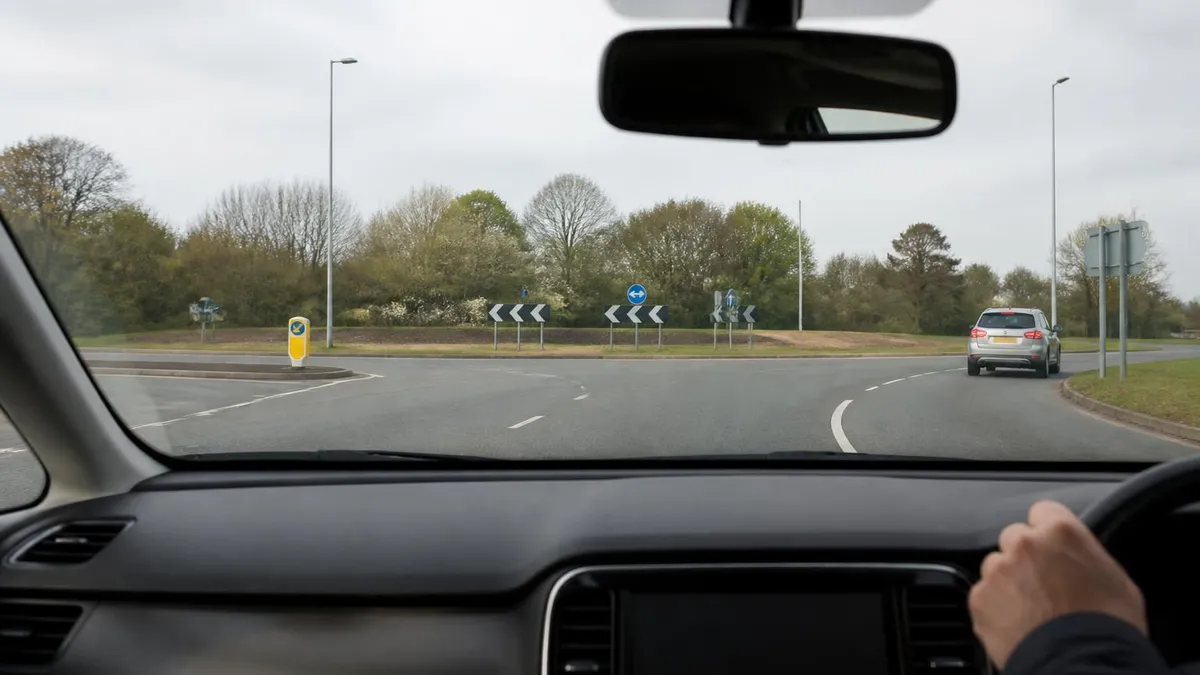
Independent ADI vs National Driving School: Which Wins?
- +Independent instructors usually offer lower hourly rates with no franchise fees baked in
- +Direct relationship with one teacher means consistent feedback and tailored progression
- +More flexibility on pickup points, lesson times and route choices for your test centre
- +Smaller diaries mean you can often book earlier morning or late evening slots
- +Independents typically own their car and keep it immaculate as a point of pride
- +Easier to negotiate refunds, pauses and bespoke intensive plans without corporate red tape
- −No instant replacement if your independent instructor is ill, on holiday or retires suddenly
- −Lone-operator instructors may have less structured lesson plans than franchised schools
- −Harder to switch transmission type if you decide to move from manual to automatic mid-course
- −National schools sometimes secure earlier test slots through bulk DVSA booking arrangements
- −Independent quality varies enormously with no central training department backing them up
- −Marketing reach is smaller so you must do your own due diligence instead of relying on a brand
Pros and Cons at a Glance
| Pros | Cons |
|---|---|
| Independent instructors usually offer lower hourly rates with no franchise fees baked in | No instant replacement if your independent instructor is ill, on holiday or retires suddenly |
| Direct relationship with one teacher means consistent feedback and tailored progression | Lone-operator instructors may have less structured lesson plans than franchised schools |
| More flexibility on pickup points, lesson times and route choices for your test centre | Harder to switch transmission type if you decide to move from manual to automatic mid-course |
| Smaller diaries mean you can often book earlier morning or late evening slots | National schools sometimes secure earlier test slots through bulk DVSA booking arrangements |
| Independents typically own their car and keep it immaculate as a point of pride | Independent quality varies enormously with no central training department backing them up |
| Easier to negotiate refunds, pauses and bespoke intensive plans without corporate red tape | Marketing reach is smaller so you must do your own due diligence instead of relying on a brand |
First Lesson Checklist with Your New Instructor
- ✓Bring your provisional licence card — no lesson can begin without it
- ✓Wear flat, thin-soled shoes that allow you to feel the pedals clearly
- ✓Confirm the instructor's green ADI badge is displayed on the windscreen
- ✓Ask for a written or emailed lesson plan covering the next ten hours
- ✓Check that the car has dual controls and is fewer than seven years old
- ✓Discuss whether you prefer running commentary or quieter, observational teaching
- ✓Agree on a clear feedback format at the end of every lesson — verbal plus written notes
- ✓Set realistic goals for lessons three, ten and twenty before you finish today
- ✓Confirm cancellation policy and whether late cancellations are charged in full
- ✓Take a short video of yourself describing what you learned to embed the lesson
Why £25 per hour usually ends up costing you more
The cheapest instructor in your area is rarely a bargain. Learners who chase bottom-of-market pricing typically need ten to fifteen more hours of tuition than those who pay the local average, because lessons are unstructured, feedback is vague and bad habits go uncorrected. Paying £38 an hour for forty hours costs less than paying £28 an hour for sixty hours, and you reach test standard faster, with safer instincts and fewer retests on your record.
Red flags matter more than green flags when choosing an instructor, because the warning signs of a poor ADI are usually visible on the very first contact whereas the deeper qualities of an excellent one only emerge after several lessons. Train yourself to spot trouble early and you will avoid the most common cause of failed tests in the UK, which is not lack of talent but bad teaching that learners felt too polite or too invested to walk away from.
The first red flag is pressure to pay a large block of lessons up front before you have driven a single mile with the instructor. Reputable ADIs are confident that you will want to continue after a trial hour and never push for hundreds of pounds in advance. If a school insists on a non-refundable package on day one, that is a cash-flow problem of theirs, not yours, and you should refuse politely.
The second warning sign is an instructor who is consistently late, distracted by their phone or vague about where the lesson is heading. Time is the most valuable thing you are buying, and a teacher who turns up ten minutes late and finishes ten minutes early is quietly stealing 33% of every lesson. Note start and end times for the first three sessions and raise it directly if the pattern repeats.
A third red flag is dismissive language about your nervousness, your previous instructor or other road users. Phrases like idiot, woman driver or you're being silly tell you everything about the cultural environment of the car. Good instructors are calm, patient and never insult anyone, because the same script they use about a stranger at a roundabout is the script they will use about you when you stall on the way to the test centre.
Watch out, too, for instructors who refuse to teach independent driving with a sat-nav, on the grounds that it is a fad. The independent driving section is twenty minutes of the real test and uses a TomTom or written directions. If your instructor will not teach it from lesson five onwards, they are not preparing you for the test you are actually going to sit. The same applies to motorway lessons after your test once permitted under current rules.
The fourth red flag is poor record-keeping. A serious instructor logs your progress against the official DVSA syllabus, week by week, and shares it with you. If lessons feel like random drives with no reference to where you sit on the path from beginner to test-ready, you are essentially paying for driving experience rather than driving instruction, and those are very different products at very different price points.
Finally, beware instructors who promise a guaranteed pass. The DVSA explicitly forbids this language, and any ADI using it is either ignorant of their professional code or willing to bend it for sales reasons. Either way, look elsewhere. A guaranteed pass does not exist; what exists is a learner who is genuinely ready and an examiner who agrees on the day.

Some unscrupulous instructors offer a small discount for cash payment with no paperwork. This protects them from HMRC scrutiny, not you. Without a receipt you have no proof of payment if a dispute arises, no record of hours taught, and no consumer rights protection if the school folds. Always pay by bank transfer or card and insist on email confirmation of every booking and balance.
Maximising the value of every lesson is about more than just turning up on time. The learners who pass first time and drive confidently afterwards are the ones who treat lessons as one part of a structured learning routine that includes theory revision, private practice with a supervising driver, reflective notes and a clear progression plan. Your instructor provides the framework, but you supply the effort between sessions.
Start by writing down two specific goals before every lesson. Not vague ambitions like get better at roundabouts, but concrete behaviours like approach the Tesco roundabout in second gear, check mirror-signal-position, and exit without coasting. Share those goals with your instructor at the start of the hour. They will appreciate the focus and will often restructure the route to give you ten attempts at the exact skill you want to nail.
Spend the last five minutes of every lesson on a structured debrief. Ask your instructor for one thing you did well, one thing to work on, and one specific drill or observation task to complete between now and the next lesson. Write those three points down in a notebook or phone note. Over twenty lessons you will build a personal driving diary that becomes priceless during pre-test revision.
Private practice with a parent, friend or partner who has held a full UK licence for at least three years adds enormous value, but only if it reinforces what your instructor teaches rather than introduces conflicting habits. Invite your supervising driver to sit in on a lesson if your instructor allows it, so everyone teaches the same mirror routine, the same gear-change technique and the same approach to junctions.
Pair every practical lesson with a focused chunk of theory revision. The DVSA hazard perception clips, eco-driving questions and vehicle loading scenarios are not just exam content; they describe the exact judgements your examiner expects to see on the road. Twenty minutes of theory revision the evening before a lesson dramatically improves your in-car decision making, especially around anticipation and forward planning.
Keep a running log of mock test scores from week one. Use the same provider, ideally one designed around the official DVSA syllabus, so the data is comparable. You should not book your practical test until you are consistently scoring above 90% on full mock tests and clearing the hazard perception section comfortably. You can manage your booking, including rescheduling if needed, through the Change Theory Test service.
Finally, sleep, hydration and nutrition matter more than learners realise. Driving uses sustained attention, working memory and fine motor coordination, all of which decay rapidly when you are tired or dehydrated. Schedule lessons for the time of day when you naturally feel sharpest, never immediately after a heavy meal, and never the morning after a late night. The cost of a hungover lesson is the same as a focused one but the learning is almost zero.
As you move into the final stretch before test day, your relationship with your instructor should shift from teacher and student to coach and athlete. By lesson thirty or so, the basic mechanics of driving should be automatic, and your sessions should focus on examiner-style routes, independent driving, the show me tell me questions and the specific manoeuvres that the local test centre tends to use. Ask your instructor exactly which routes are favoured at your booked centre.
Book a mock test with a different ADI from the same school, ideally one who has examined or trained examiners in the past. A second pair of eyes catches blind spots that your regular instructor has stopped noticing, much as a sports coach brings in a guest coach before a big competition. Treat the mock as the real thing, dress accordingly, and resist the urge to ask for hints mid-drive.
Plan your test day backwards from the start time. Eat a light breakfast at least ninety minutes beforehand, arrive twenty minutes early, and ask your instructor for a thirty-minute warm-up drive through familiar territory. Do not introduce new manoeuvres on test morning; the goal is to feel that your hands and feet remember what to do regardless of what your nervous brain is telling you.
If you fail, do not panic and do not rebook immediately the next day in a panic. Most candidates who pass on the second attempt take a structured two to four weeks to address the specific minors and any majors highlighted on the examiner's debrief sheet. Share that sheet with your instructor line by line, and build the next ten hours of lessons explicitly around those weak points rather than starting over from scratch.
Once you pass, the temptation is to never look at a theory question again, but the DVSA produces these resources because the knowledge keeps you safe. Treat your first year as a full licence holder as a probationary period under your own discipline. Drive in different weathers, on motorways, at night and with passengers progressively, and consider the Pass Plus scheme or an advanced driving course in your second year for cheaper insurance and stronger habits.
Keep in touch with your instructor for the first six months. A short refresher lesson at the three-month mark is one of the smartest investments a new driver can make, because it is exactly when bad habits crystallise. An experienced ADI will spot in twenty minutes what would otherwise take you a near-miss to learn the hard way, and the cost is a fraction of an insurance excess.
Most of all, remember that finding the best driving instructors near me is the start of a journey, not the end of one. The qualities you valued in your instructor — patience, structure, honesty and calm — are the same qualities you should now build into yourself as a driver. Your future passengers, your insurer and every other road user will thank you for it for decades to come.
Sample DVSA UK Driving Theory Practice Questions
Try these questions from our free DVSA UK Driving Theory practice tests. The correct answer and an explanation follow each question.
What is the main hazard of driving through a ford or flood water?
- A. Your brakes may become less effective afterwards
- B. The water may damage your exhaust pipe
- C. Other vehicles may splash water onto your windscreen
- D. Your sat-nav may stop working
Answer: A. Your brakes may become less effective afterwards
After driving through water, your brakes may be wet and less effective. You should test your brakes gently after passing through water and dry them out by applying light pressure while driving slowly.
While driving, you approach a sign with a red triangle pointing downwards. What is the primary instruction of this sign?
- A. Warning of a hazard ahead
- B. Give way to traffic on the major road
- C. Stop, even if the road is clear
- D. Information about a tourist attraction
Answer: B. Give way to traffic on the major road
The inverted red triangle is the 'Give Way' sign. You must give way to traffic on the road you are joining. Unlike other triangular signs which warn of a potential hazard, this one gives a direct order to yield priority.
You are driving at night on an unlit road. What should you do if you are dazzled by the headlights of an oncoming vehicle?
- A. Flash your headlights to signal the other driver
- B. Look towards the left-hand edge of the road
- C. Speed up to get past the oncoming vehicle quickly
- D. Stare directly at the headlights to judge their distance
Answer: B. Look towards the left-hand edge of the road
If dazzled by oncoming headlights, you should slow down or stop if necessary, and avoid looking directly at the lights. Looking towards the left-hand edge of the road helps you maintain your lane position without being blinded.
You are driving on a country lane with no pavement. What should you be particularly aware of on a left-hand bend?
- A. Oncoming traffic cutting the corner.
- B. Pedestrians walking on the left, towards you.
- C. The road surface being more worn on the bend.
- D. Pedestrians walking on the right, with their back to you.
Answer: A. Oncoming traffic cutting the corner.
On a blind or sharp left-hand bend, a common and dangerous hazard is an oncoming vehicle cutting the corner and encroaching into your lane. You should reduce your speed and keep well to the left to mitigate this risk. Pedestrians on a road with no pavement should walk on the right, facing oncoming traffic.
DVSA Questions and Answers

About the Author

Licensed Driving Instructor & DMV Test Specialist
Penn State UniversityRobert J. Williams graduated from Penn State University with a degree in Transportation Management and has spent 20 years as a certified driving instructor and DMV examiner consultant. He has personally coached thousands of applicants through written knowledge tests, skills assessments, and commercial driver licensing programs across more than 30 states.