
DMV CA DMV Website Guide: How to Speak to a DMV Representative and Navigate Services in 2026 October
Learn how to use the CA DMV website, reach a dmv customer service representative, 💡 and resolve issues fast. Complete 2026 October guide with tips and FAQs.

Navigating the dmv ca dmv website in 2026 can feel like decoding a small bureaucracy in your browser, but once you understand how the portal is structured, almost every common task becomes a 10 to 15 minute job rather than an all-day ordeal. Whether you are renewing a license, transferring a title, scheduling a behind-the-wheel test, replacing a stolen registration card, or trying to reach a real human, the website is your first stop. This guide walks you through the entire experience, from logging in to escalating a complex case.
A dmv customer service representative is the person who actually moves your application through the system when something stalls. They verify identity documents, override system flags, accept proof of insurance corrections, and process complicated transactions like out-of-state title transfers or salvage rebuilds. Knowing when to call, when to chat, and when to walk into a field office is the difference between a single-day resolution and weeks of back-and-forth emails. Self-service handles roughly 70 percent of requests, but the remaining 30 percent need a representative who can see your full record.
The California DMV website at dmv.ca.gov is organized around four primary hubs: vehicle registration, driver licensing, identity and REAL ID, and online services such as appointments, address changes, and fee calculators. Each hub has a public-facing information page and a logged-in self-service portal called MyDMV. Most users only need MyDMV, which lets you view your driving record, pending notices, registration status, and prior transactions in one dashboard. New York, Texas, Florida, and other states follow a similar two-layer model.
If you have ever asked yourself, "dmv customer service representative options — which one is fastest?", the honest answer is that it depends on the issue type and the time of day. Phone wait times average 22 minutes statewide but spike past 45 minutes on Mondays and the first business day after a federal holiday. Live chat is faster for status questions, while email and the contact form are best for documentation-heavy issues that need a paper trail.
Identity verification is the single most common reason transactions stall on the website. The portal uses a combination of last-four SSN, date of birth, driver license number, and a one-time mailed PIN for first-time registrations. If any field mismatches what is on file — for instance, a maiden name still listed because a marriage certificate was never submitted — the system will lock the account and force a call to a representative. Have your most recent renewal notice, vehicle title, and a government-issued photo ID nearby before you start.
This guide is built for the practical user who wants to finish a task, not study DMV trivia. By the end you will know exactly which page to open, which buttons to press, which fields trip people up, and what to say when a representative finally picks up the phone. We also cover the dmv representative practice test universe for anyone preparing for the customer-service-representative civil exam, since many readers searching this topic are job applicants studying for the role itself.
One more thing before we dive in: the website changes. The California DMV pushed a major redesign in early 2026 that consolidated 14 separate microsites into a single responsive portal. Most screenshots and instructions floating around online still reference the 2023 layout. Where there is a conflict, trust the current dmv.ca.gov navigation labels rather than older guides. We have updated every step in this article to match the May 2026 interface.
DMV Website Usage by the Numbers
Core DMV Website Services
Renew, replace, or upgrade to REAL ID. Schedule knowledge and behind-the-wheel tests. Check the status of provisional permits and update name or address records online without visiting a field office.
Renew registration, transfer titles, request duplicate stickers, calculate use tax, and submit smog certifications. Most renewals can be completed in under 10 minutes when you have your last billing notice handy.
Upload identity, residency, and Social Security documents before your appointment. Pre-uploading documents shortens in-person visits by an average of 18 minutes and cuts rejection rates by roughly 40 percent.
Order driving records, vehicle history reports, and certified copies of past transactions. Employer-pull records require notarized consent forms that you can download, sign, and re-upload through MyDMV.
Book field office visits, behind-the-wheel tests, and commercial license appointments. Download more than 200 official forms — REG 343, DL 44, DMV 14 — directly as fillable PDFs.
MyDMV is the single most useful part of the dmv.ca.gov website, and most users never realize it exists. Creating an account takes about five minutes: you provide your driver license number, last four of your SSN, date of birth, and a current email. The system then mails a five-digit activation code to the address on file. That mailed code is the security gate the DMV uses instead of a phone-based two-factor system, so plan for a three to seven business day delay the first time you set up access.
Once inside MyDMV, the dashboard displays every vehicle registered to you, every license or ID, pending suspensions, upcoming renewal dates, and a history of fees paid in the last 24 months. You can click any vehicle to see its registration expiration, smog status, and whether a planned non-operation (PNO) filing is active. This dashboard is the single best place to confirm that a recent payment posted, because the public lookup pages sometimes lag 48 to 72 hours behind your actual account.
The renewal flow is straightforward but has three landmines. First, if your smog check is more than 90 days old at the moment you click submit, the system will reject the payment and ask you to re-test. Second, if there is an outstanding parking citation registered against your plate by any California city, the renewal is blocked until you pay the citation through the issuing city — not through DMV. Third, addresses that do not match USPS standardization (think "Apt 4" versus "#4") will sometimes trigger a manual review and a 10-day mailing delay on your sticker.
Online payment accepts Visa, Mastercard, Discover, American Express, and bank ACH transfers. ACH is free, while credit and debit cards carry a 2.1 percent service fee charged by the third-party processor, not the DMV itself. If your card is declined three times in a row, the system flags the account for fraud review and requires a phone call to lift the hold. This is one of the most common reasons users end up needing a representative on day one of their renewal cycle.
The site also supports a feature called Virtual Field Office for complex transactions like out-of-state title transfers, salvage vehicle rebuilds, and lost-title duplicates. You schedule a video appointment, upload documents in advance, and a remote clerk processes the file while you watch. It launched in late 2024 and now handles roughly 8 percent of total transactions. Average appointment length is 28 minutes, considerably faster than the 90-minute in-person equivalent.
For readers studying the customer-service-representative civil exam, MyDMV is also the system you will be trained on. The exam includes scenario questions where you are shown a partial account record and asked to identify the next correct action — release a hold, escalate to a supervisor, request a document, or deny the transaction. Reviewing a strong set of how do i speak to a dmv representative in ny-style questions and California equivalents helps you internalize the order of operations representatives follow on every call.
Mobile usage now accounts for 61 percent of dmv.ca.gov traffic, and the 2026 redesign was mobile-first. Every form that previously required a desktop Java applet — including REG 343 title transfers — now works on iOS and Android. The one exception is large multi-page document uploads, which still time out on slower cellular connections. If you have more than five pages to submit, switch to Wi-Fi or use a desktop. The session timeout is 18 minutes of inactivity, with a 60-second warning popup before you are logged out.
DMV Practice Test Questions
Prepare for the DMV - Representative Exam exam with our free practice test modules. Each quiz covers key topics to help you pass on your first try.
DMV - Representative Consumer Protection a...
DMV Exam Questions covering DMV - Representative Consumer Protection and Dispute Resolution. Master DMV Test concepts for certification prep.
DMV - Representative Vehicle Inspections a...
Free DMV Practice Test featuring DMV - Representative Vehicle Inspections and Safety Standards. Improve your DMV Exam score with mock test prep.
DMV - Representative Advertising and Sales...
DMV Mock Exam on - Representative Advertising and Sales Practices. DMV Study Guide questions to pass on your first try.
DMV - Representative Bonds and Business Re...
DMV Test Prep for - Representative Bonds and Business Records. Practice DMV Quiz questions and boost your score.
DMV - Representative Dealer-Specific Regul...
DMV Questions and Answers on - Representative Dealer-Specific Regulations. Free DMV practice for exam readiness.
DMV - Representative Registration and Tran...
DMV Mock Test covering - Representative Registration and Transfer Fees. Online DMV Test practice with instant feedback.
DMV - Representative Sales Contracts and D...
Free DMV Quiz on - Representative Sales Contracts and Disclosures. DMV Exam prep questions with detailed explanations.
DMV - Representative Salesperson Licensing...
DMV Practice Questions for - Representative Salesperson Licensing Requirements. Build confidence for your DMV certification exam.
DMV - Representative Unlawful Acts and Con...
DMV Test Online for - Representative Unlawful Acts and Conduct. Free practice with instant results and feedback.
DMV - Representative Vehicle Code Definitions
DMV Study Material on - Representative Vehicle Code Definitions. Prepare effectively with real exam-style questions.
DMV - Representative Vehicle Registration ...
Free DMV Test covering - Representative Vehicle Registration Procedures. Practice and track your DMV exam readiness.
DMV Representative Basic Arithmetic
DMV Exam Questions covering Representative Basic Arithmetic. Master DMV Test concepts for certification prep.
How Do I Speak to a DMV Representative — Three Channels
The California DMV main number is 1-800-777-0133 and is open 7 a.m. to 5 p.m. Pacific Time, Monday through Friday. The fastest times to call are Tuesday through Thursday between 7:00 and 8:00 a.m. PT, when wait times average 7 to 9 minutes. Avoid Mondays, the day after a holiday, and the last business day of any month, when waits commonly exceed 45 minutes and the call-back option fills up by 9 a.m.
When the menu plays, press 2 for vehicle registration or 3 for licensing, then 0 for an operator at the next prompt. The system no longer hangs up on you for repeated zero presses as it did before 2024. If offered a call-back, take it — actual hold time is identical but you keep your phone free. Have your driver license number, plate, and last renewal notice on your desk before the agent picks up so the call wraps in 6 to 10 minutes.
DMV Website vs. Calling a Representative
- +Available 24/7 with no hold time
- +Handles 94 percent of routine renewals successfully
- +Saves the credit-card service fee if you use ACH
- +Generates an immediate confirmation number
- +Stores transaction history for two years inside MyDMV
- +Mobile-friendly after the 2026 redesign
- +Lets you upload REAL ID documents in advance
- −Cannot override identity-verification holds
- −Will not process transactions tied to outstanding citations
- −Times out after 18 minutes of inactivity
- −Requires a mailed activation PIN on first use
- −Does not accept hand-signed power-of-attorney forms
- −Provides no live human guidance for complex titles
Pros and Cons at a Glance
| Pros | Cons |
|---|---|
| Saves the credit-card service fee if you use ACH | Cannot override identity-verification holds |
| Generates an immediate confirmation number | Will not process transactions tied to outstanding citations |
| Stores transaction history for two years inside MyDMV | Requires a mailed activation PIN on first use |
| Lets you upload REAL ID documents in advance | Does not accept hand-signed power-of-attorney forms |
Pre-Call Checklist Before You Dial the DMV Representative
- ✓Have your driver license or ID number and date of birth ready
- ✓Pull up your most recent renewal or correspondence notice
- ✓Confirm the address on file matches your current mailing address
- ✓Locate the vehicle title, registration card, or smog certificate if relevant
- ✓Note the exact error message or transaction ID you encountered online
- ✓Charge your phone above 50 percent — calls average 12 to 25 minutes
- ✓Have a pen and paper to record the representative's badge number
- ✓Be near a scanner or phone camera in case documents are requested
- ✓Know which county you reside in for tax and citation routing
- ✓Clear 30 uninterrupted minutes; transfers between departments are common
The 8:05 a.m. PT Rule
Call the California DMV at 1-800-777-0133 at exactly 8:05 a.m. Pacific Time, five minutes after the lines open. The 7:00 a.m. opening floods the system with overnight queued callers, but the rush clears by 8:00. Calling at 8:05 typically connects you in 4 to 9 minutes — less than half the daily average — and representatives are fresh, patient, and willing to make policy exceptions a tired afternoon agent will not.
California is the largest DMV operation in the country, but every state runs its own portal, and the rules differ in ways that surprise even experienced drivers. New York handles its website through dmv.ny.gov and a mobile app called MyDMV-NY. The most common search phrase from New York residents is literally "how do i speak to a dmv representative in ny," and the answer is 1-518-486-9786 between 8 a.m. and 4 p.m. ET. New York also uses a heavy in-person model — only 41 percent of New York transactions happen online compared to 68 percent in California.
Texas operates txdmv.gov for vehicle services and a separate site, dps.texas.gov, for driver licensing. This split confuses out-of-state movers because a Texas license renewal happens at Department of Public Safety, not DMV. Florida's flhsmv.gov consolidates both functions under one roof and is widely considered the most modern state portal, with a chatbot that resolves an estimated 38 percent of inquiries without human escalation. Illinois, by contrast, runs a Secretary of State portal that still uses 2010-era forms in several flows.
For commercial drivers, the federal CDLIS system shares data across all 50 states within 24 hours, so any moving violation, suspension, or medical card update entered in one state surfaces in another quickly. This is why a CDL holder who picks up a speeding ticket in Arizona while living in California will see the citation on their California record within two business days. Civilian license records do not share this quickly — interstate transfers take three to six weeks for most ordinary licenses.
REAL ID enforcement, which finally took full effect on May 7, 2025, is identical across states in concept but different in document acceptance. California accepts a passport plus a single utility bill as proof of residency. Texas requires two separate residency documents from a list of nine approved sources. New York is the strictest, requiring proof of physical presence in the state for at least 90 days before issuing a REAL ID. If you are moving, check the destination state's residency rules before booking an appointment.
Online fee structures vary widely. California charges a flat $10 plus 2.1 percent processing fee for credit-card registration renewals. Florida charges no processing fee on ACH but adds a $2.50 convenience fee on card payments. Texas runs a tiered fee schedule based on county. New York charges no processing fee but caps online renewals at $250 — anything above that amount must be paid in person. Always check the fee page before clicking submit; the totals shown on third-party comparison sites are routinely outdated.
Customer service representative roles are also structured differently. California operates regional call centers in Sacramento, Los Angeles, and Stockton, while Florida outsources approximately 30 percent of its phone overflow to a private contractor during peak weeks. New York keeps every representative in-state and pays at the upper end of the national scale, which is one reason the New York representative civil exam is more competitive than California's. Salaries range from $39,000 entry-level to $68,000 senior in 2026 dollars.
If you are studying for any state's representative exam, focus on the common core — consumer protection rules, dispute resolution procedures, vehicle inspection standards, REAL ID document hierarchy, and customer de-escalation. Roughly 70 percent of exam content is identical across California, New York, Texas, and Florida; the remaining 30 percent covers state-specific statutes you will memorize from each state's representative study guide.

Search results in 2026 still contain dozens of look-alike domains — dmv-renew.com, ca-dmv.org, california-dmv.us — that charge $40 to $90 for services the official site provides free or for nominal state fees. Always confirm the URL ends in .gov before entering any personal information. The official California site is dmv.ca.gov. Report fraudulent sites to the FTC and to the DMV Investigations Division.
When something goes wrong on the DMV website, the issue almost always falls into one of six categories: identity mismatch, payment failure, expired secondary document, address discrepancy, citation hold, or system outage. Recognizing the category early saves an enormous amount of time, because each one has a different resolution path. A payment failure on a Sunday night, for instance, is almost always a temporary processor outage that clears by Monday morning — calling Sunday gets you nowhere because the call center is closed.
Identity mismatches are the most stubborn problem. The DMV verifies your name, DOB, SSN, and license number against the Social Security Administration and other databases in real time. If your name was legally changed but not updated on your SSN record, the website will reject your login indefinitely. Resolution requires fixing the upstream record first — typically a visit to the Social Security Administration with a marriage certificate or court order — then waiting 10 to 14 business days for the DMV system to refresh.
Payment failures break down into three flavors. Card declines trip the standard 3-strike fraud rule mentioned earlier. ACH returns happen when the bank account number is mistyped or insufficient funds bounce the transfer; the DMV charges a $25 returned-payment fee plus reinstates the original balance. Processor outages are rare but do happen — the 2026 March 14 outage took the payment gateway down for 11 hours. Check status.dmv.ca.gov before assuming the problem is on your end. The how do i speak to a dmv representative in ny training videos walk through the exact troubleshooting tree representatives use.
Address discrepancies are usually invisible until you try to do something. The system may accept your renewal payment but mail the sticker to the wrong place because the USPS Address Matching System normalized your apartment number differently than you typed it. Always verify the mailing address shown on the confirmation page before you close the browser. If it is wrong, file a DMV 14 change-of-address form online immediately, then call the next morning to request a duplicate sticker be mailed to the corrected address.
Citation holds are perhaps the most frustrating category because the DMV cannot lift them — only the issuing city, county, or court can. A $35 unpaid parking ticket in West Hollywood from three years ago will block a $400 registration renewal until paid. The DMV website shows the hold but not always the issuing agency's contact information; you have to look up the citation number on the agency's own portal. Once paid, the hold typically clears within 48 hours but can take up to 10 business days if the agency batch-uploads to DMV weekly rather than daily.
System outages and slow responses are normal during peak periods, especially the first week of every month when registration renewals surge. The website is fastest between 5 a.m. and 7 a.m. Pacific, before the daily traffic curve begins. If you absolutely need to renew on the last day of your grace period, do it overnight rather than at lunch. Late penalties are unforgiving — 10 percent of fees if you miss by less than 11 days, 20 percent at 11 to 30 days, and up to 60 percent for renewals more than a year past due.
Finally, remember that representatives have discretion. A good representative can waive a late fee for a first-time mistake, expedite a sticker mailing, override a mismatched address flag, and call internal departments on your behalf. Always be polite, never threaten escalation in the first 60 seconds, and ask early what the representative is empowered to do. If they cannot help, ask for a supervisor by name and by badge number — supervisors have a separate set of overrides not available to first-line agents.
Practical preparation for either side of the DMV counter — using the website as a consumer or working as a representative — comes down to repetition with realistic scenarios. If you are a job applicant, take at least three full-length practice tests covering consumer protection, vehicle inspections, and dispute resolution before your civil exam date. Score yourself honestly on each one and re-review every missed question. The actual exam is 80 multiple-choice questions in 90 minutes, with a 70 percent passing score and one retake allowed within 90 days.
If you are a consumer trying to finish a transaction, batch your DMV tasks. Doing your registration renewal, smog certificate upload, and address change in a single 30-minute session is dramatically more efficient than three separate sessions, because MyDMV caches your identity verification across the workflow. The system was redesigned in 2026 to remember your last 10 minutes of activity even if you accidentally close the tab, which is a quietly useful improvement most users have not discovered.
Always print or save the PDF confirmation page after any transaction. The on-screen confirmation number is the single piece of evidence that proves the transaction occurred, and the DMV's internal logs occasionally take 12 to 24 hours to reflect a completed payment. If you walk into a field office showing a printed confirmation page, the representative can override almost any "pending" status on the spot. Without that printout, you are at the mercy of system sync time, which can stretch to three business days during peak periods.
Keep a personal DMV folder either physical or digital with your title, registration card, smog certificate, insurance declaration page, and last three renewal receipts. When something goes wrong, having everything in one place turns a frustrating afternoon into a 15-minute phone call. The most prepared callers we observe finish their issues in under 8 minutes because they can answer every verification question on the first try without rummaging through drawers.
For representative job applicants, study the official California Customer Service Representative civil exam study guide alongside our practice tests. The exam emphasizes situational judgment — what would you do if a customer becomes verbally abusive, refuses to provide a document, or escalates beyond your authority? These are not trivia questions; they are scenarios with multiple defensible answers where one is best. Practice tests with thorough explanations help you internalize the reasoning, not just the right letter choice.
Build your test-taking stamina. The civil exam is 90 minutes of dense reading, which exhausts candidates who only practiced 15-minute mini-quizzes. Sit for at least one timed 90-minute simulation in the week before your exam date. Treat your phone as off-limits, sit at a desk rather than a couch, and replicate the testing environment as closely as you can. Candidates who do this score on average 7 percentage points higher than those who only practice in short sessions.
Finally, remember that the DMV is a public service institution, and every interaction — yours, ours, the representative's — is part of a system that processes more than 60 million transactions a year in California alone. Patience is a strategic asset. The agent on the other end of the phone has heard every story, every complaint, and every demand. Coming in calm, prepared, and specific puts you in the top 10 percent of callers and consistently produces better outcomes than any other tactic.
Sample DMV - Representative Exam Practice Questions
Try these questions from our free DMV - Representative Exam practice tests. The correct answer and an explanation follow each question.
Under the FTC's Used Car Rule, the Buyers Guide must be retained by the dealer after the sale for a minimum of:
- A. 6 months
- B. 1 year
- C. 2 years
- D. 5 years
Answer: B. 1 year
The FTC requires dealers to retain their copy of the Buyers Guide for at least one year after the date of sale.
Under federal law, which vehicles are required to display a Buyers Guide (Monroney sticker equivalent for used cars) before being offered for sale?
- A. All vehicles regardless of age
- B. Used vehicles with fewer than 125,000 miles
- C. Used vehicles sold by dealers
- D. All new and used vehicles sold by dealers
Answer: C. Used vehicles sold by dealers
The FTC Used Car Rule requires dealers to display a Buyers Guide on all used vehicles offered for sale.
What information is NOT required to be disclosed on the FTC Buyers Guide for a used vehicle?
- A. Whether the vehicle comes with a warranty
- B. The dealer's name and address
- C. The vehicle's service history
- D. Whether the vehicle is sold 'as-is'
Answer: C. The vehicle's service history
The FTC Buyers Guide requires warranty status and 'as-is' disclosure but does not mandate disclosure of the vehicle's prior service history.
Which of the following vehicles is EXEMPT from the FTC Used Car Buyers Guide requirement?
- A. Vehicles sold at auction to the public
- B. Vehicles with fewer than 10,000 miles
- C. Vehicles sold between private parties (not dealers)
- D. Vehicles older than 10 years
Answer: C. Vehicles sold between private parties (not dealers)
The FTC Used Car Rule applies to dealers — private party sales between individuals are exempt from the Buyers Guide requirement.
DMV Questions and Answers
DMV Road Sign Test: Complete Guide to Passing on Your First Try in 2026
DMV Practice Questions: Topics, Strategy and Where to Find Them
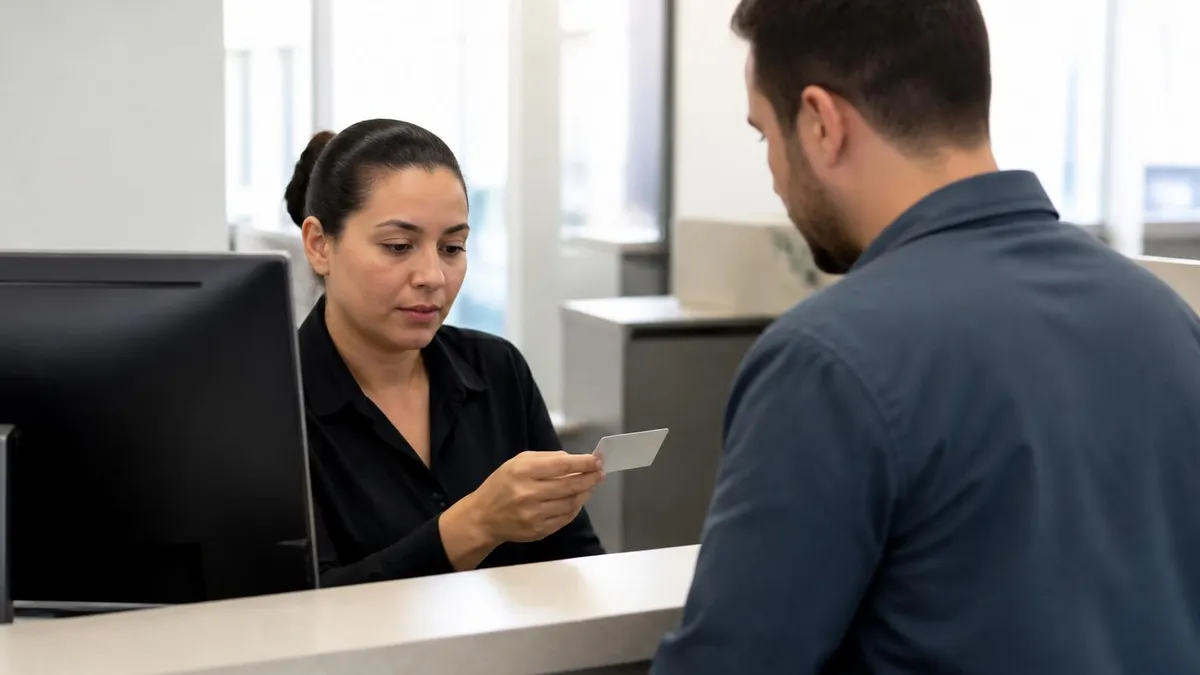
DMV Learners Permit Practice Test: Complete 2026 Prep Guide for First-Time Test Takers
DMV Representative Practice Test Video Answers

Virginia DMV Driving Test: Complete 2026 Guide to Passing Your Road Skills Exam
About the Author
Licensed Driving Instructor & DMV Test Specialist
Penn State UniversityRobert J. Williams graduated from Penn State University with a degree in Transportation Management and has spent 20 years as a certified driving instructor and DMV examiner consultant. He has personally coached thousands of applicants through written knowledge tests, skills assessments, and commercial driver licensing programs across more than 30 states.
Join the Discussion
Connect with other students preparing for this exam. Share tips, ask questions, and get advice from people who have been there.
View discussion (8 replies)