
What to Wear for Your DMV Photo: A Complete Guide for DMV Customer Service Representatives and License Applicants
What to wear for your DMV photo & how a DMV customer service representative can help. Tips for a great license photo. ✅
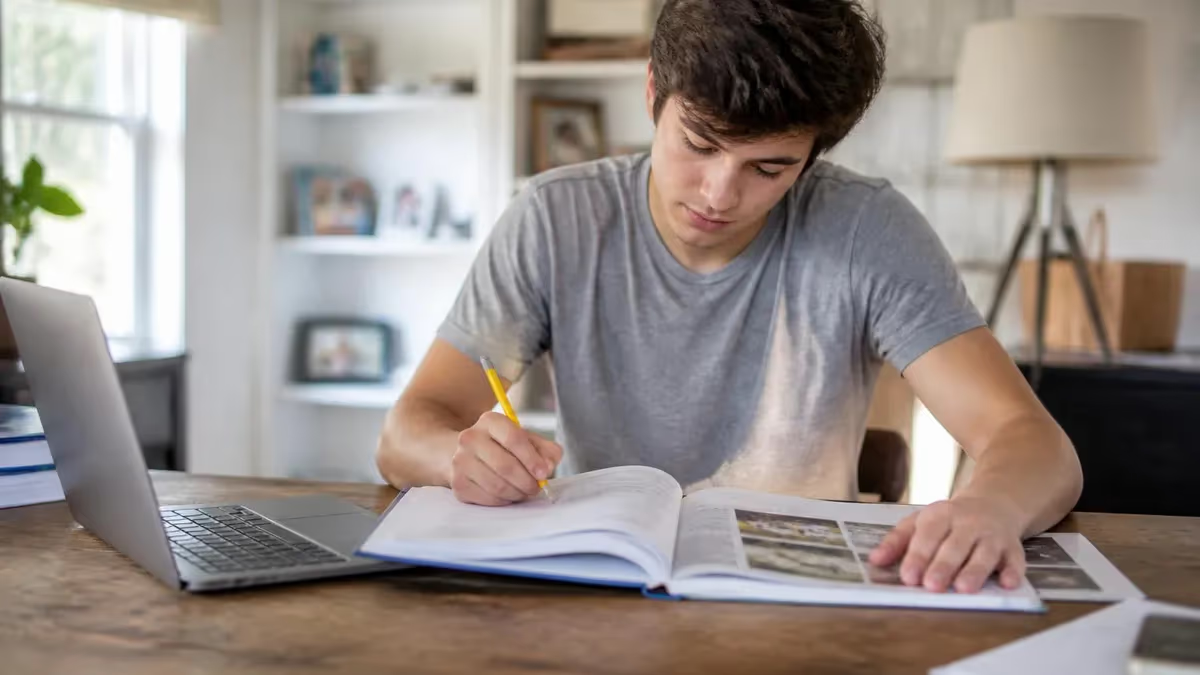
Knowing what to wear for your DMV photo is more important than most people realize. Your driver's license photograph will appear on official identification used at airports, banks, polling places, and dozens of other venues for the next four to eight years. A poorly chosen outfit — or a shirt whose collar blends into the background — can make an otherwise clear photo look unprofessional or even cause identification problems down the road. That is why understanding dmv photo attire matters long before you walk through the door.
A DMV customer service representative is the frontline professional who guides applicants through every step of the licensing process, including photo capture. These trained staff members operate the digital camera systems, review your attire for potential image issues, and can sometimes allow a retake if a technical problem occurs. Understanding their role helps you arrive prepared and interact with them efficiently, saving time for yourself and everyone else in line.
The most important thing to remember about DMV photo guidelines is that rules vary by state. California, Texas, New York, Florida, and other large states each maintain their own specific standards about what is and is not acceptable to wear. Some states prohibit eyeglasses entirely following updated REAL ID standards, while others still permit them with conditions. Always verify your specific state's current policy before your appointment because rules have changed significantly in recent years.
Color choice plays a huge role in photo quality. Most DMV systems use a light gray or white backdrop, which means wearing white or very pale clothing can cause your upper body to blend into the background. Dark solid colors — navy, charcoal, hunter green, burgundy — photograph cleanly against these backdrops and ensure your face and shoulders remain the visual focal point. Avoid busy patterns like plaids, stripes, or floral prints because they can create visual noise that distracts from facial recognition software.
Many applicants wonder whether they should wear their everyday clothing or dress up slightly for their license photo. The practical answer is to wear what you typically look like, because the purpose of the license photo is identification. If you regularly wear a collared shirt, wear one. If you usually wear a crew-neck sweater, that works well too. The goal is a photo that matches your day-to-day appearance so officers and security personnel can easily confirm your identity in real-world situations.
Preparing your dmv photo attire the day before your appointment is a smart strategy that eliminates last-minute stress. Lay out your outfit, check it for wrinkles and stains, and try it on in good lighting to see how the color reads. Take a selfie against a light-colored wall to simulate the DMV backdrop — this simple test can reveal whether your shirt color will create blending issues before you ever leave the house.
This guide covers everything from color and fabric choices to accessories, religious head coverings, and how to work effectively with your DMV representative to ensure a smooth photo session. Whether you are applying for your first learner's permit, renewing an expired license, or upgrading to a REAL ID-compliant credential, the attire advice here will help you look your best and pass the photo step on the first try.
DMV Photo Attire by the Numbers
How to Prepare Your DMV Photo Outfit Step by Step
Check Your State's Current Photo Policy
Choose a Dark, Solid-Color Top
Test Your Outfit Against a Light Wall
Remove Problematic Accessories
Prepare Hair and Grooming Night Before
Arrive Early and Review with the DMV Representative
Understanding what NOT to wear for your DMV photo is just as important as knowing the right choices. White shirts are the single most common attire mistake applicants make. Because virtually every DMV in the United States uses a white or light gray seamless background, a white top causes your torso to disappear into the backdrop. The resulting image looks like a floating head — a problem that makes facial recognition software less accurate and can trigger secondary screening at security checkpoints.
Uniforms, including military dress uniforms, police uniforms, and some occupational uniforms, are restricted in most states. The rationale is straightforward: the license must identify the individual regardless of their employment status on any given day. Someone who leaves law enforcement should still be identifiable from their license photo. Check your state's specific policy, but as a general rule, arrive in civilian clothing even if you came directly from a shift. A DMV representative can clarify this before you reach the photo station.
Neon and very bright colors — electric yellow, hot pink, fluorescent orange — can interact poorly with the studio lighting used in DMV photo booths. These colors sometimes cause color bleeding in digital images, where the bright pigment appears to radiate outward and slightly discolor the surrounding skin tones in the photograph. This effect can make the resulting ID photo look artificially altered, raising concerns at identity verification checkpoints that use automated color-analysis tools.
Camouflage patterns are prohibited in several states, including Alabama and Tennessee, which have specific statutory language banning camo in official identification photos. Even in states without an explicit ban, camouflage can reduce photo quality because the disruptive coloration pattern confuses facial detection algorithms. If you regularly wear camo and forgot this rule, a DMV customer service representative will stop you before the photo is taken and request that you change or wear an available cover garment.
Large logos, text, and graphics on clothing are not technically banned in most states, but they can create problems. A shirt with a large slogan across the chest draws the eye away from your face and can be misread or misinterpreted in situations where your license is quickly scanned. More practically, some photo systems digitally crop the image to a tight head-and-shoulders frame, meaning the logo may not even be visible in the final product — making the whole question moot. Still, it is better to choose a clean, logo-free garment.
Scarves, turtlenecks, and high-necked garments that cover significant portions of the neck can sometimes be flagged by DMV staff because the photo guidelines require your full face, neck, and chin to be visible. This does not mean you cannot wear a turtleneck — but a very thick, bunched collar that rises above the chin will be asked to be adjusted before the shutter clicks. A standard turtleneck worn smoothly is generally acceptable in most jurisdictions.
Reflective fabrics — sequins, metallic threads, satin blouses with a high sheen — interact poorly with the ring flash or strobe units used in DMV photo stations. The reflection creates hot spots on the image that distort facial features and can cause automatic quality-failure flags in the digital processing system. Matte fabrics like cotton, jersey knit, and brushed wool photograph most reliably under artificial lighting conditions, which is one reason a simple cotton shirt remains the gold-standard choice for DMV photos across all fifty states.
State-by-State DMV Representative Photo Rules
If you are wondering how do I speak to a DMV representative in NY about photo rules, the answer is to call 1-518-486-9786 or visit a local DMV office. New York prohibits eyeglasses in all license photos and requires applicants to present a neutral expression with both eyes open. Background must be plain white, and uniforms of any kind — including religious vestments that cover the face — require prior written exemption approval from the DMV commissioner's office before the appointment date.
New York's DMV photo system uses automated facial recognition scoring, meaning your photo is instantly evaluated for image quality before the representative finalizes it. If the software scores your image below the minimum threshold due to lighting issues caused by reflective clothing or background blending from a white shirt, the system will prompt an automatic retake. New York DMV representatives have limited override authority, so arriving in the correct attire the first time is critical to avoiding long wait times from retake processing.
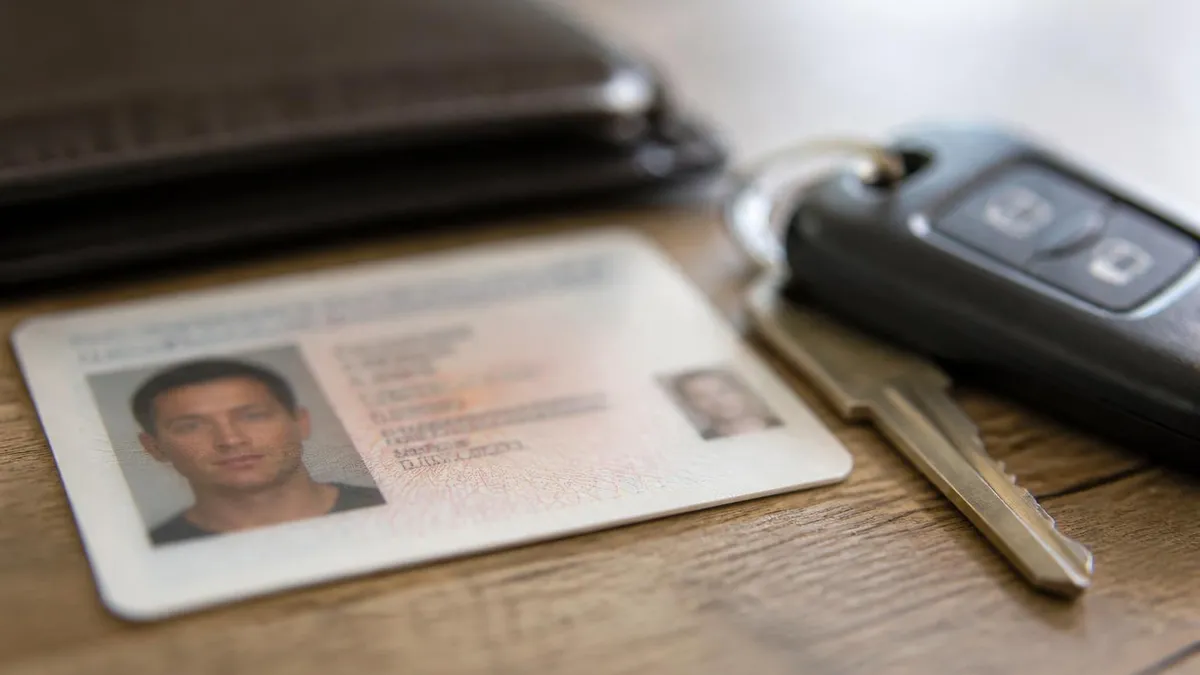
Dark vs. Light Clothing: Which Is Better for Your DMV Photo?
- +Dark colors contrast sharply against the standard light gray DMV backdrop, ensuring your face is the clear focal point of the image
- +Solid dark fabrics minimize visual distractions and help facial recognition software process your image more accurately
- +Navy, charcoal, and hunter green photograph cleanly under ring-flash DMV lighting without causing color bleeding or hot spots
- +Dark clothing conceals minor fabric texture irregularities that might show under harsh studio lighting conditions
- +A dark top ensures your photo looks professional and polished across the full 4–8 year lifespan of your license
- +Dark matte cotton tops do not reflect the strobe flash, eliminating the glare artifacts that force expensive retake sessions
- −Very dark black tops can sometimes appear to merge with dark hair in lower-resolution DMV camera systems
- −Dark colors may feel too formal for applicants who normally dress casually, creating a photo that does not match typical day-to-day appearance
- −Dark fabrics can show lint, pet hair, and dust more visibly under bright DMV lighting if not carefully prepared beforehand
- −A dark top worn over a dark complexion can sometimes reduce the overall tonal range of the image in older DMV camera systems
- −Some dark fabrics with subtle patterns — like dark-on-dark paisley — can still create texture artifacts under flash photography
- −Wearing dark colors in hot climates or during summer months may cause visible perspiration that the DMV camera will capture clearly
DMV Photo Day Attire Checklist
- ✓Choose a solid, dark-colored top in navy, charcoal, hunter green, or burgundy — no patterns or prints.
- ✓Avoid white, ivory, cream, or very pale pastel tops that blend with the light gray DMV backdrop.
- ✓Remove all eyeglasses unless you have a signed medical waiver accepted by your specific state DMV.
- ✓Take off hats, beanies, and baseball caps unless required for documented religious or medical reasons.
- ✓Remove large dangling earrings, necklaces near the jaw line, and any hood attached to your outerwear.
- ✓Check that your collar sits flat and does not bunch up around your chin, which can obstruct required facial area visibility.
- ✓Avoid reflective, sequined, satin, or metallic fabrics that create glare under DMV studio flash lighting.
- ✓Do not wear a uniform — including military, law enforcement, or occupational uniforms — unless explicitly permitted by your state.
- ✓Test your outfit at home with a selfie against a white wall to confirm no background blending before you leave.
- ✓Arrive 15 minutes early so a DMV customer service representative can confirm your attire before your number is called.
Navy Blue Is the Single Best Color to Wear for a DMV Photo
DMV photo specialists and professional photographers consistently recommend navy blue as the optimal color for license photos. It contrasts perfectly against both white and light gray backdrops, reads clearly at thumbnail sizes, does not cause color bleeding under flash lighting, and looks equally professional on people of every skin tone. When in doubt, go navy — it works every time in every state.
The role of the DMV customer service representative extends far beyond simply clicking the camera button. In most states, the representative at the photo counter is responsible for conducting a pre-photo review that includes checking the applicant's documentation, verifying the name and date of birth against the application form, confirming the applicant's identity through any required biometric comparison, and performing a brief visual inspection of the applicant's attire and appearance before the photo is taken. This inspection is why arriving early and being cooperative with the representative's questions is essential.
A DMV representative is also empowered to make real-time decisions about photo quality. If the lighting is uneven due to your outfit's reflectivity, if a background blending issue is detected in the preview screen, or if the software flags a quality score below the minimum acceptable threshold, the representative can initiate a retake. However, most DMV offices limit free retakes to cases involving equipment failure or staff error — not applicant attire errors. Understanding this policy is a powerful motivator to get your outfit right the first time.
If you are unsure about a specific garment and want to verify before your appointment, calling your local DMV branch is the fastest route to an answer. In New York, how do I speak to a DMV representative in NY is one of the most commonly searched questions related to license applications. The main New York DMV phone number is 1-518-486-9786, and representatives there can confirm current photo attire policies, schedule appointments, and answer questions about accepted religious head coverings or medical exemptions for glasses in under five minutes.
The broader DMV representative role also encompasses processing title transfers, registering vehicles, administering written knowledge tests, and handling fee collection — all functions that rely on the representative having up-to-date knowledge of state regulations. The photo process is just one facet of what these professionals manage daily. In busy urban DMV offices, a single representative may process sixty or more photo sessions per day, which means they have strong pattern recognition for common attire problems and can often spot an issue the moment you walk up to the counter.
Representatives are trained to be tactful when they ask an applicant to change their attire. They understand that being told your shirt creates a background-blending problem can be embarrassing, especially if others are in line behind you. Many offices keep a supply of dark-colored cover garments — simple dark cardigan-style tops or hospital-style gowns — that applicants can drape over problematic shirts before the photo is taken. This service is not universally available, so do not rely on it, but knowing it exists can reduce anxiety if you realize on the day that your top is wrong.
Advanced booking is available at most state DMV offices and is strongly recommended for any visit that includes a photo session. Walk-in appointments for photo licenses often involve waits of 90 minutes to three hours at urban locations. When you book ahead, you can note any special circumstances — medical exemptions for glasses, religious head covering accommodation, or documentation for name changes — so the representative handling your appointment is already briefed when you arrive. This pre-briefing dramatically reduces the chance of a photo session delay related to attire or documentation surprises.
Customer service representatives at the DMV are also first responders for applicant concerns about photo quality after the fact. If you receive your physical license in the mail and the photo looks significantly different from what you saw on the preview screen — darker, overexposed, or with visible artifacts — the representative can initiate a quality complaint review process. This process rarely results in a free retake at home, but it does create a documentation trail that may support a waived-fee retake at your next eligible renewal date depending on your state's quality guarantee policies.
Since the federal REAL ID Act enforcement began, more than 40 states have updated their photo guidelines to prohibit eyeglasses in all standard license photos. If you wore glasses in your previous license photo, you cannot assume the same is allowed for your renewal. Always verify current rules on your state's DMV website before your appointment, because arriving in non-compliant attire cannot be fixed on the spot without a significant wait-time penalty.
Religious head coverings present one of the most nuanced attire questions in the DMV photo process. All fifty states are legally required to accommodate religious head coverings under the Religious Land Use and Institutionalized Persons Act (RLUIPA) and applicable civil rights statutes.
However, the accommodation has a firm condition: the head covering must not obscure any part of the face from the hairline to the chin, ear to ear. Coverings that meet this standard — hijabs, Jewish kippot, Sikh turbans, Christian veils that rest behind the head — are accepted in every state with appropriate documentation or, in many cases, without any documentation at all.
The practical process for religious accommodation varies by state. In some states, the DMV customer service representative simply makes a notation in your file and proceeds with the photo without additional steps. In others, you may need to sign a brief religious accommodation form before the photo session. California, New York, Texas, and Florida all have standardized religious accommodation forms available at the photo counter, and representatives in these states are specifically trained to process these accommodations quickly without disrupting the normal appointment flow.
Medical head coverings present a slightly different situation. Post-surgical caps, chemotherapy-related head coverings, and coverings worn due to alopecia are accommodated in most states, but they typically require supporting documentation — a signed letter from a licensed physician on official letterhead stating the medical necessity. Submit this documentation to your state's DMV medical review unit before your appointment if possible, so the accommodation is pre-approved and noted in your file before you reach the photo counter. This eliminates the need to explain and justify the situation to the representative in person during a busy appointment session.
Makeup and cosmetic grooming are generally unrestricted in DMV photo guidelines, but there is an important caveat: the photo must represent your natural day-to-day appearance for identification purposes. Theatrical or stage makeup, prosthetics, and face paint are prohibited because they significantly alter your appearance. Standard everyday cosmetics — foundation, eyeliner, lipstick, blush — are not only permitted but encouraged if they represent how you normally look, since the photo's identification function is best served when you look the way you typically appear to others in real life.
Contact lenses that change your eye color — colored contacts — are increasingly scrutinized in DMV photo processes as facial recognition systems become more sophisticated. Some states have begun flagging eye color inconsistencies between the self-reported eye color on the application and the eye color captured in the photo. If you wear color-altering contacts regularly and your license will reflect your natural eye color, be prepared for the representative to ask clarifying questions. Wearing your natural lenses or no contacts at all for the photo session eliminates this potential complication entirely.
Facial hair — beards, mustaches, sideburns — is entirely unrestricted in all fifty states. However, the identification principle applies here as well: the photo should reflect how you actually look. If you are clean-shaven for the photo but maintain a full beard in daily life, officers comparing your face to your license may notice a significant discrepancy. Conversely, if you shave a distinctive beard between license renewals, you can request a name-flag note in some states to alert verification systems to the potential appearance change. Your DMV representative can advise you on whether this option is available in your state.
Sunglasses are categorically prohibited in all DMV photos in every state, with no exceptions. Unlike prescription eyeglasses, which have medical exemption pathways in some states, no state permits tinted glasses or sunglasses in license photos. The requirement that eyes be clearly visible and unobstructed is absolute.
If you arrive wearing sunglasses on your head or hanging from your collar, the representative will ask you to set them aside before the photo — but wearing them during the photo is never permitted under any circumstances, regardless of medical sensitivity claims. Photosensitive conditions are accommodated through prescription transitions lenses, which must also be fully clear for the photo.
For a fuller set of questions on this topic, see our dmv motor vehicle resource.
On the day of your DMV photo appointment, your mindset and physical preparation are as important as your outfit. Start with good posture — stand or sit up straight when you approach the camera station. Many DMV photo systems use a fixed focal point, and slouching or leaning forward can throw your face out of the optimal focus range.
The representative will typically direct you to look straight into the camera lens and maintain a neutral, relaxed expression. A slight natural smile is permitted in most states, but teeth should not be showing in states that follow federal passport photo standards.
Lighting in DMV photo stations is standardized but can still interact unexpectedly with your skin tone and clothing. If you have a very light complexion, wearing an extremely pale color creates low overall contrast in the image. If you have a very dark complexion, some older DMV camera systems may underexpose slightly, which means a medium-dark rather than jet-black top will preserve more facial detail. These are subtle considerations, but they matter for a photo that needs to identify you clearly in all lighting conditions over four to eight years of real-world use.
Hair should be worn in a style that does not cover your eyes or any significant portion of your face. Long bangs that fall below the brow line will typically be flagged by the representative, who will ask you to push them to the side or pin them back. If you wear your hair this way regularly, consider whether the photo accurately represents your typical appearance. The same applies to voluminous hairstyles that extend unusually wide — while not prohibited, they can be cropped awkwardly by the photo system's automatic frame detection.
Clothing that has been through a long commute may arrive at the DMV wrinkled, stretched, or disheveled. A wrinkled shirt looks significantly worse under the harsh flat lighting of a DMV photo station than it does in natural light.
Carrying your photo outfit in a garment bag or folded neatly in a tote — then changing in the DMV restroom before your appointment — is a strategy used by applicants who commute long distances and want to ensure their appearance is fresh when they reach the photo counter. It may seem excessive, but the results speak for themselves over a multi-year license period.
If you are accompanying a child or teenager who is obtaining their first driver's license or learner's permit, help them think through their photo outfit in advance. Teenagers in particular tend to wear logo-heavy, graphic-print clothing that can look cluttered in a tight license crop. A quick conversation about the background blending and contrast rules — and a trip to the closet to pick a solid navy or dark gray top — takes two minutes and saves the family a stressful situation at the counter when a representative asks the teen to change their shirt.
After your photo is taken, the representative will show you the image on a small preview screen and ask for your approval. This is your one clear opportunity to request a retake — but only for technical issues like severe overexposure, a visible blink, or a shadow crossing your face.
Requesting a retake because you do not like how you look is typically not accommodated unless the DMV's own quality standards were visibly not met. Review the preview critically but quickly, focusing on technical clarity rather than aesthetic preference, and approve it once the identification-relevant elements — clear facial features, visible eyes, proper exposure — are confirmed.
Finally, remember that the DMV photo process is just one element of a broader licensing journey that also includes knowledge tests, vision screenings, and documentation verification. If you are studying for the written knowledge test while also preparing for your photo appointment, PracticeTestGeeks.com offers a comprehensive library of practice questions covering every topic on the DMV exam. Combining solid exam preparation with smart photo-day planning gives you the best possible chance of walking out of the DMV with a completed, high-quality license on your very first visit.
DMV Questions and Answers
DMV Drivers License: Application, Tests, REAL ID and Renewals
DMV Learners Permit Practice Test: Complete 2026 Prep Guide for First-Time Test Takers
DMV Road Sign Test: Complete Guide to Passing on Your First Try in 2026

Colorado DMV Walk-In Locations: How to Talk to a DMV Customer Service Representative
How this page was made: written with AI tools and published by Nathan Beja, founder of Practice Test Geeks, who is responsible for its content. Exam facts are checked against the official sources listed below. Not reviewed by a subject-matter expert. Editorial policy
Sources & references
Exam facts on this page (fees, format, dates, passing scores) are checked against these official sources; the date is our last check. Editorial policy
- calcareers.ca.gov — Test delivery, passing score, registration deadline, retake policy, time limit, score validity · verified Oct 2026