
DMV Monday Hours & How to Reach a DMV Customer Service Representative
What time does DMV open on Monday? 🎯 Get hours, tips to reach a DMV representative fast, and career info for the CSR exam.

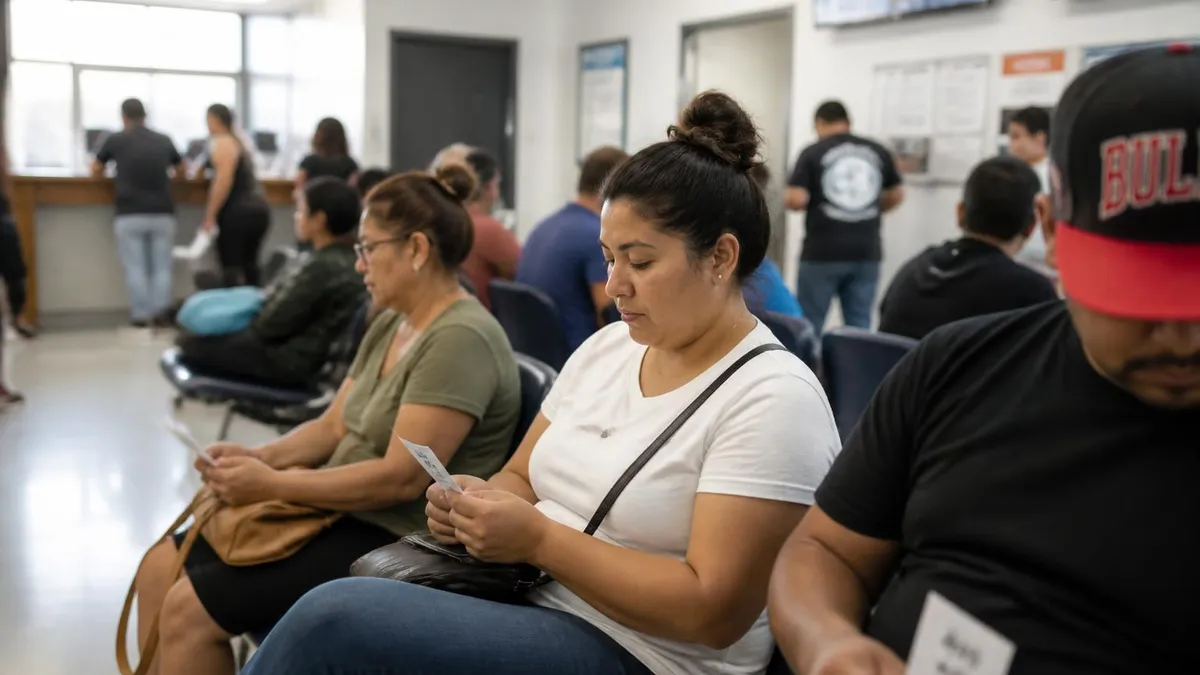
If you have ever wondered what time does dmv open on monday, you are far from alone. Millions of Americans visit a DMV office every week, and Monday is consistently one of the busiest days because it follows the weekend closure. Most state DMV offices open their doors between 8:00 a.m. and 8:30 a.m. on Monday mornings, though hours vary significantly by state and even by individual branch location. Checking your specific office online before you drive over can save you a frustrating wasted trip.
Behind every DMV counter is a dmv customer service representative whose job is to process your transaction accurately and efficiently. These professionals handle everything from driver's license renewals and vehicle registrations to title transfers and road test scheduling. Understanding their role — and knowing the best strategies to get their attention quickly — can make your Monday DMV visit far less stressful than you might fear.
DMV offices in heavily populated states like California, New York, Texas, and Florida often open at 8:00 a.m. but begin accepting appointments as early as 7:45 a.m. for the first slot of the day. Smaller rural branches may not open until 9:00 a.m. and might close by 4:00 p.m. Some states, including New York, have offices that stay open until 6:00 p.m. on Mondays to accommodate working adults who cannot visit during standard business hours.
One of the most important things to know is that arriving right at opening time on Monday gives you the best odds of short wait times for the week. However, if you cannot make it first thing in the morning, many DMV offices experience a secondary lull between 1:00 p.m. and 2:30 p.m. after the lunch rush. Planning your visit around these windows can cut your wait from an hour or more down to as little as fifteen minutes in some locations.
If you are considering a career as a dmv representative, understanding peak hours and office operations is genuinely useful professional knowledge. DMV customer service representatives must be deeply familiar with the policies, procedures, and daily workflow of their offices. The representative exam tests candidates on exactly this kind of operational knowledge, alongside consumer protection, vehicle inspection standards, and dispute resolution protocols that govern how transactions are handled.
State DMV websites have become significantly more sophisticated in recent years, and most now offer real-time or near-real-time wait time estimates for individual branch locations. California's DMV website, for example, shows current wait times and the option to join a virtual queue from home. New York's DMV site lets you check Monday hours for any office by zip code. Taking two minutes to visit your state's DMV portal before heading out can completely transform your experience.
Whether you are visiting the DMV to renew your license, register a newly purchased vehicle, or studying for the dmv monday hours exam prep resources, knowing how the system works puts you ahead of the crowd. This guide covers everything you need to know about DMV Monday hours, how to reach a representative by phone or in person, and what the DMV customer service representative career path looks like for those interested in working on the other side of the counter.
DMV Monday Hours by the Numbers
DMV Monday Hours: A State-by-State Overview
Early Openers (7:30–8:00 AM)
Standard Open (8:00–8:30 AM)
Mid-Morning Openers (9:00 AM)
Extended Evening Hours
Online & Self-Service Options
Knowing what time the DMV opens is only the first hurdle. Actually getting assistance from a live dmv customer service representative — especially by phone — can feel like its own challenge. Most state DMV call centers open at the same time as their physical offices, typically 8:00 a.m. on Monday, but phone lines fill up extraordinarily fast. If you need to speak with someone on the phone, call right at opening time and be prepared to hold for anywhere from five to forty-five minutes depending on the state and the complexity of the issue.
For residents of New York wondering how do i speak to a dmv representative in ny, the answer is to call 1-518-486-9786, which is the main New York State DMV customer service line. This number connects you with a live agent during business hours. The DMV also offers online chat for many routine inquiries, which can be significantly faster than waiting on hold. New York's DMV website also allows you to schedule a callback, so you can hang up and receive a return call when an agent is available.
In California, reaching a live DMV representative requires calling 1-800-777-0133 during business hours. California's DMV phone lines are among the busiest in the nation, so call volume on Mondays is particularly high. The state strongly encourages residents to use the online portal for routine tasks. For complex issues — like clearing a suspended license or resolving a title dispute — a phone call or in-person visit is typically necessary, and a Monday morning appointment secured in advance is your best bet.
Across most states, the fastest way to reach a dmv representative in person is through the appointment system rather than walking in. Nearly every state DMV now offers an online appointment scheduler. Appointments typically become available several weeks in advance and are released on a rolling basis, so checking daily if your preferred time is unavailable often yields results. Some states release cancellation slots within 24 to 48 hours of the appointment, so checking the day before your intended visit can uncover last-minute openings.
When you arrive for your appointment, head directly to the appointment check-in desk rather than joining the general walk-in queue. This alone can save thirty minutes or more. Have all your documents organized and ready before your number is called. The dmv representative handling your case will appreciate your preparation, and a well-organized packet can reduce processing time significantly. Most transactions require a government-issued photo ID, proof of residency, and the specific form for your transaction type — available to download and pre-fill from your state's DMV website.
If your DMV visit is related to studying for the DMV customer service representative exam, use every in-person visit as a learning opportunity. Watch how representatives greet customers, how they verify documents, and how they handle situations where a customer's paperwork is incomplete. The exam tests candidates on real-world scenarios, and observing actual DMV operations gives you context that no study guide can fully replicate. Take mental notes on the flow of transactions from arrival to completion.
Technology is steadily reducing the need for in-person DMV visits, but certain transactions still require face-to-face contact with a representative. Knowledge tests for new driver's licenses, commercial driver's license road tests, REAL ID document verification, and reinstatement hearings all require a physical visit. For these appointments, arriving five to ten minutes early, bringing extra copies of your documents, and having your confirmation email ready on your phone are small steps that collectively make the process much smoother.
How to Talk to a DMV Customer Service Representative
Calling your state DMV on Monday morning requires strategy. The optimal window is within the first five minutes of the office opening — call at exactly 8:00 a.m. and redial immediately if you get a busy signal. Most state DMV phone systems use an automated menu; listen carefully and select the option for customer service or speak to a representative early in the menu flow to avoid being routed to a dead end. Have your driver's license number, vehicle VIN, and any relevant case numbers ready before you dial.
If you repeatedly cannot get through by phone, consider using your state's online chat feature or email contact form for non-urgent matters. New York offers a structured callback system that eliminates hold time entirely. California residents can use the Virtual Field Office for many transactions. Keep a record of every contact attempt including the date, time, agent name if reached, and what was discussed — this documentation becomes important if your issue escalates to a formal dispute with the DMV.
Visiting the DMV on Monday: Advantages and Drawbacks
- +First appointment slots of the week are available, often with the shortest waits
- +Phone lines open fresh with lower hold times right at 8:00 a.m.
- +Staff energy is typically higher early in the week, leading to smoother service
- +Online systems reset over the weekend, so glitches from Friday are often resolved
- +Some states offer extended Monday hours until 6:00 p.m. for working adults
- +Appointment cancellations from the weekend often free up Monday slots last-minute
- −Monday is statistically the busiest DMV day — walk-in waits can exceed 90 minutes
- −Phone lines fill within minutes of opening, making live agent contact difficult
- −Parking lots at DMV offices are often packed on Monday mornings
- −New processing batches start Monday, meaning some weekend mail requests may not yet appear in the system
- −Staff scheduling sometimes means fewer experienced representatives on Monday mornings
- −Technical issues following weekend system maintenance occasionally affect Monday service
Monday DMV Visit Checklist: Everything You Need
- ✓Verify your specific DMV branch's Monday hours online the night before your visit.
- ✓Schedule an appointment through your state's DMV website at least one week in advance.
- ✓Download and pre-fill all required forms for your transaction type before arriving.
- ✓Gather a government-issued photo ID and at least two proofs of current address.
- ✓Bring your vehicle's title, registration, or insurance card depending on your transaction.
- ✓Print or screenshot your appointment confirmation and have it accessible on your phone.
- ✓Arrive ten to fifteen minutes before your appointment time for check-in.
- ✓Bring payment in accepted forms — most DMVs accept credit card, debit card, and check.
- ✓Have your Social Security number memorized or on a secure document for identity verification.
- ✓Check real-time wait times on your state DMV app or website before departing for a walk-in visit.
The Best Time to Visit the DMV on Monday Is Right at Opening
Data from multiple state DMV systems consistently shows that the first thirty minutes after opening on Monday have the shortest average wait times of the entire week. Walk-in customers who arrive at or before the 8:00 a.m. opening regularly report being in and out in under twenty minutes, while those who arrive between 10:00 a.m. and noon face waits of forty-five to ninety minutes or more. Set your alarm and go early.
Preparing for the DMV customer service representative exam requires a structured approach that mirrors how you would prepare for any professional licensing test. The exam is administered by individual states, and while the exact format varies, most DMV CSR exams cover four to six core subject areas: consumer protection and dispute resolution, vehicle inspections and safety standards, driver licensing procedures, vehicle registration and titling, accessible service delivery, and office operations and ethics. Understanding the weight of each section helps you allocate your study time efficiently.
Consumer protection is typically one of the highest-weighted sections on the dmv representative exam. Questions in this category ask you to apply state and federal consumer protection laws to realistic scenarios involving vehicle sales, title fraud, odometer rollback, and complaint resolution procedures. Candidates who perform best in this section are those who not only memorize the rules but can reason through novel fact patterns using legal principles they have internalized. Practice questions that present ambiguous scenarios are the most valuable study tool for this section.
Vehicle inspections and safety standards form another major pillar of the exam. Representatives must know which vehicles require safety inspections, what inspectors check, which defects are automatic failures, and what documentation must accompany a passed or failed inspection report. Some states integrate emissions testing with safety inspections, and the rules around exemptions — for antique vehicles, electric vehicles, or out-of-state vehicles recently registered — are frequent exam topics. Make flashcards for each category of inspection item and the corresponding pass/fail criteria.
Driver licensing procedures cover the full lifecycle of a driver's license in your state, from initial knowledge test eligibility requirements through graduated licensing for minors, commercial driver's license classifications, medical certificate requirements, and the reinstatement process after suspension or revocation. Representatives must know the exact fee schedule for each transaction type, the identification documents required at each stage, and the waiting periods that apply after certain violations. These details vary significantly by state, so always study your state's official DMV candidate handbook as your primary source.
Studying effectively for the DMV CSR exam means using multiple formats. Reading the official handbook builds foundational knowledge. Taking timed practice tests reveals which areas need more work and simulates the real exam pressure. Joining a study group with other candidates allows you to discuss ambiguous questions and share mnemonics for hard-to-remember details. Many successful candidates report spending six to eight weeks of consistent daily study before sitting for the exam, with the final two weeks focused almost entirely on practice tests under timed conditions.
Time management during the actual exam is an underrated skill. Most DMV representative exams allow between two and three hours for completion. Candidates who finish too quickly often miss nuanced details in longer scenario-based questions. Those who spend too long on early questions may run short of time at the end. A reliable approach is to answer questions you are confident about first, flag uncertain questions for review, and return to flagged questions in the final thirty minutes. This prevents second-guessing on easy questions while ensuring difficult ones get a second look.
Beyond passing the exam, working as a DMV customer service representative means continuing to learn on the job. State DMV policies update regularly in response to new legislation, federal mandates like REAL ID compliance changes, and evolving technology like digital license plates and online titling systems. Most state DMV agencies provide ongoing training for representatives, and staying current with policy updates is both an employment requirement and a professional responsibility that directly serves the public.
DMV offices are typically closed on federal and state holidays, including Martin Luther King Jr. Day, Presidents' Day, Memorial Day, Labor Day, Columbus Day, Veterans Day, Thanksgiving, Christmas, and New Year's Day — all of which fall on or are observed on Mondays. If you plan to visit on a Monday that coincides with a holiday, verify through your state's official DMV website. Driving to a closed office wastes your time and can cause you to miss registration or license renewal deadlines.
The career path of a DMV customer service representative offers stability, public service, and meaningful advancement opportunities within state government. Entry-level DMV representatives typically start at hourly wages ranging from $18 to $24 per hour, with the median annual salary for the role sitting around $47,000 nationally. States with strong public employee unions and cost-of-living adjustments — like California, New York, and Washington — offer higher compensation packages, often including generous pension plans, health insurance, and paid leave accrual from day one.
Advancement within the DMV system usually follows a clearly defined civil service ladder. After serving one to three years as a front-line representative, performers can advance to lead representative, senior representative, or field supervisor roles. Each promotion typically requires passing an additional civil service examination, demonstrating satisfactory performance reviews, and in some cases completing specific training programs offered by the state DMV training academy. The structured advancement system makes the DMV an attractive employer for those who value transparent career progression.
One aspect of the DMV customer service representative role that surprises many new hires is the emotional intelligence it requires. Representatives interact with dozens of people every day, many of whom are frustrated, confused, or dealing with a stressful situation — a suspended license, a totaled vehicle, or a failed road test. Managing these interactions professionally, de-escalating tension, and finding solutions within the rules is genuinely skilled work. The representative exam tests communication and customer service principles precisely because these skills are so central to daily job performance.
For candidates interested in the enforcement or investigative side of DMV operations, there are specialized roles such as DMV investigator and fraud examiner that require additional credentials beyond the standard CSR exam. These roles focus on detecting and prosecuting vehicle title fraud, odometer tampering, identity fraud in driver licensing, and dealer licensing violations. Investigators often work closely with law enforcement agencies and district attorneys' offices, making these positions attractive to candidates with a background in criminal justice or fraud examination.
The dmv representative pathway also offers an entry point into broader state government careers. Many DMV employees eventually transfer to other agencies, using their public administration experience as a foundation. Skills developed in DMV work — document verification, regulatory compliance, public customer service, database management, and report writing — transfer well to positions in other licensing agencies, social services departments, and administrative law offices. The DMV is often cited as one of the more accessible entry points into state civil service for candidates without a four-year degree.
If you are actively preparing for the DMV representative exam, remember that practice questions are your most effective tool. The exam is designed to test applied knowledge, not just memorization, which means reading the handbook once is rarely sufficient. Completing at least 200 to 300 practice questions across all topic areas, reviewing every missed question carefully, and re-testing on those topics a week later is the approach that consistently produces passing scores. You can explore additional dmv monday hours practice resources to reinforce your understanding of DMV operations and policies.
State DMV agencies are also actively modernizing, and representatives who embrace technology — including the digital transaction platforms, electronic verification systems, and online appointment management tools — will be better positioned for advancement as agencies continue to evolve. Staying adaptable, maintaining a customer-first mindset, and committing to ongoing professional development are the qualities that define successful long-term careers in DMV customer service.
Practical preparation for both visiting the DMV and passing the DMV customer service representative exam comes down to knowing the system from the inside out. Whether you are a customer trying to get in and out quickly on a Monday morning or a candidate trying to earn a passing score on the licensing exam, the same principle applies: gather complete information before you act. For visitors, that means verifying hours, preparing documents, and booking appointments in advance. For exam candidates, it means studying the official handbook, taking timed practice tests, and reviewing every area of the exam blueprint.
The most common mistake DMV visitors make on Monday mornings is underestimating how many documents they need. Different transactions have different requirements, and even experienced DMV visitors occasionally show up missing one critical piece of paperwork. The DMV website for your state will list exactly what is required for each transaction type. Print that list and use it as a checklist the night before. Bringing a folder with all your documents organized in the order you expect to present them makes the interaction with the representative faster and less stressful for everyone involved.
For phone contacts, persistence combined with smart timing is the key. If you cannot reach a live representative on your first attempt, note the exact time and try again in thirty minutes. Many state DMV call centers show a mid-morning dip in call volume between 9:30 a.m. and 10:30 a.m. as the opening rush subsides.
Some states also route calls to regional centers that may be in a different time zone, meaning call volume patterns do not always align perfectly with local opening times. Using your state's online virtual assistant for common questions can also resolve simple issues without any wait time at all.
DMV customer service representatives are evaluated in part on transaction accuracy — getting it right the first time matters enormously in a system that processes millions of records. When you interact with a representative, give clear and complete answers to their questions. If they ask for a specific document, provide exactly that document rather than a substitute.
If you are unsure whether a document qualifies, ask before arriving by calling the office or checking the FAQ section of the state DMV website. A single incorrect document can require a return visit, adding days or weeks to your timeline for time-sensitive transactions.
From the career side, exam candidates should know that the DMV representative exam scoring in most states requires a minimum score of 70 percent to pass, with some states setting the bar at 75 percent. Candidates who score below the cutoff must wait a specified period — often thirty days — before retaking the exam. Some states limit the number of attempts within a twelve-month period, so treating each attempt seriously and arriving well-prepared is essential. The investment in thorough preparation pays dividends by avoiding the cost and delay of retakes.
Understanding Monday DMV hours also means understanding what changes throughout the day. Service windows may be staffed at full capacity at 8:00 a.m. but reduced after 4:00 p.m. as some representatives end their shifts. Complex transactions like title transfers and reinstatement hearings are best handled earlier in the day when supervisors are available and representatives have more time per customer. Simpler transactions like registration sticker pickup or fee payment can typically be handled at any point during operating hours without concern about reduced staff availability.
Finally, whether you are visiting the DMV as a customer or preparing to work there as a dmv representative, the single most valuable thing you can do is treat the interaction with respect and preparation. Representatives handle enormous transaction volumes under significant public scrutiny. Customers who arrive prepared, respectful, and patient consistently report better outcomes than those who arrive frustrated and unprepared. The system is designed to serve you — and understanding how it works is the first step to making it work for you on a Monday morning or any other day of the week.
DMV Questions and Answers

DMV Customer Service Representative: Complete Career Guide & Permit Test Practice
DMV Drivers License: Application, Tests, REAL ID and Renewals

Colorado DMV Walk-In Locations: How to Talk to a DMV Customer Service Representative

How to Get a Car Title from DMV: Complete Guide for 2026

DMV Cheat Sheet 2026: Complete Guide for DMV Customer Service Representative Exam Success
About the Author
Licensed Driving Instructor & DMV Test Specialist
Penn State UniversityRobert J. Williams graduated from Penn State University with a degree in Transportation Management and has spent 20 years as a certified driving instructor and DMV examiner consultant. He has personally coached thousands of applicants through written knowledge tests, skills assessments, and commercial driver licensing programs across more than 30 states.
Join the Discussion
Connect with other students preparing for this exam. Share tips, ask questions, and get advice from people who have been there.
View discussion (8 replies)