
DMV Customer Service Representative: How to Reach a DMV Representative and Pass Your License Test
🏆 Learn how to reach a DMV customer service representative, prep for the dmv license test nc, and use free practice tests to pass on your first try.
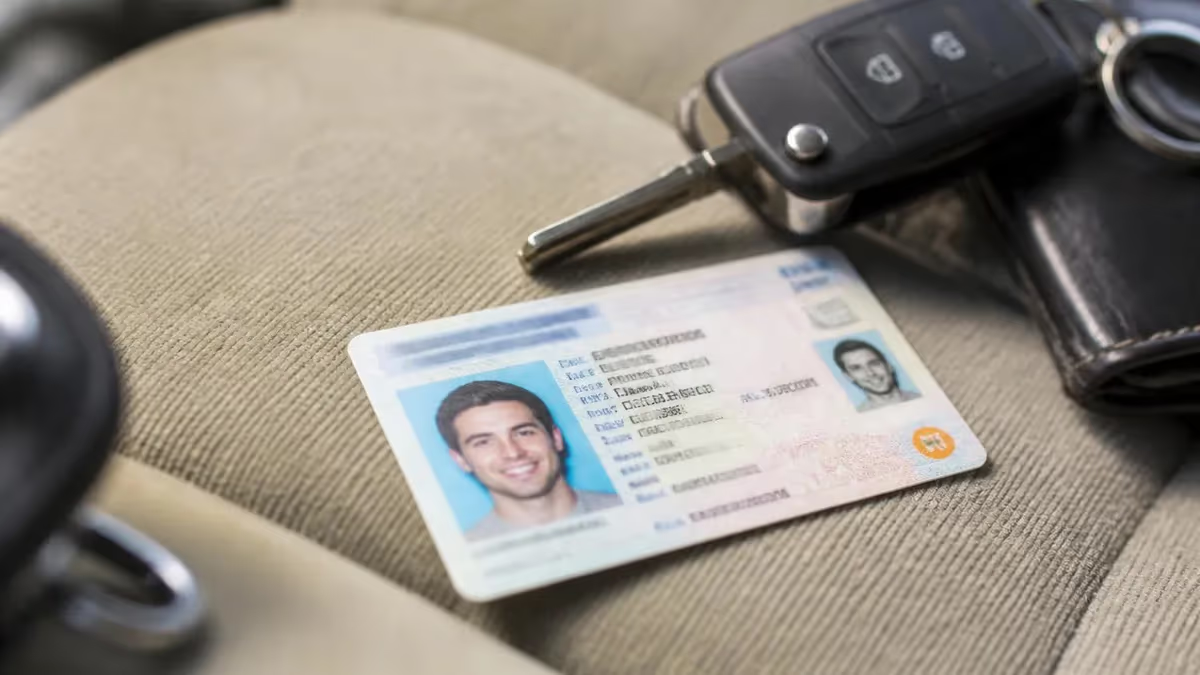
Preparing for the dmv license test nc means more than memorizing road signs — it often means knowing how to navigate the agency itself, and that journey usually starts with a dmv customer service representative. Whether you are scheduling a knowledge exam, fixing a registration error, or confirming which documents you need, the person on the other end of the phone or counter can save you weeks of frustration. This guide explains how representatives work, what they can do for you, and how to prepare so your license test goes smoothly.
North Carolina, like every state, routes drivers through a mix of self-service portals, phone lines, and in-person field offices. The dmv license test nc itself covers traffic laws, signs, and safe driving practices, but the surrounding logistics — appointments, fees, identity verification — are handled by staff. Understanding the difference between automated systems and a live human helps you choose the fastest path. Many applicants waste hours in line when a five-minute call could have resolved their question entirely.
A dmv representative is trained to interpret policy, look up your record, and explain exactly what stands between you and a valid license. They cannot take your exam for you, but they can clarify retake rules, transfer out-of-state credentials, and flag missing paperwork before you arrive. Because requirements shift each year, talking to a current employee is often more reliable than older forums or outdated blog posts that describe rules that no longer apply in 2026.
This article also covers a question many people search for directly: how do i speak to a dmv representative in ny, and the same logic applies in North Carolina and beyond. The menus, hold times, and verification steps follow predictable patterns once you know them. We will walk through phone trees, online chat tools, and the in-person experience so you feel confident no matter which channel you choose to use first.
Beyond logistics, passing the actual exam requires structured study. We will show you how free practice questions mirror the real test, why certain categories trip up first-timers, and how to build a realistic study schedule. The goal is simple: reduce anxiety, eliminate avoidable mistakes, and help you walk out with a passing score and a printed temporary license on your very first attempt rather than scheduling a costly retake.
Finally, we will tackle consumer-protection topics that fall under the representative's role, including disputes over fees, vehicle inspections, and safety standards. These subjects appear on representative certification exams and matter to everyday drivers too. By the end, you will understand both sides of the counter — how to prepare as a test taker and how the staff who serve you are trained to resolve the problems you bring to them every single day.
DMV Service & Testing by the Numbers
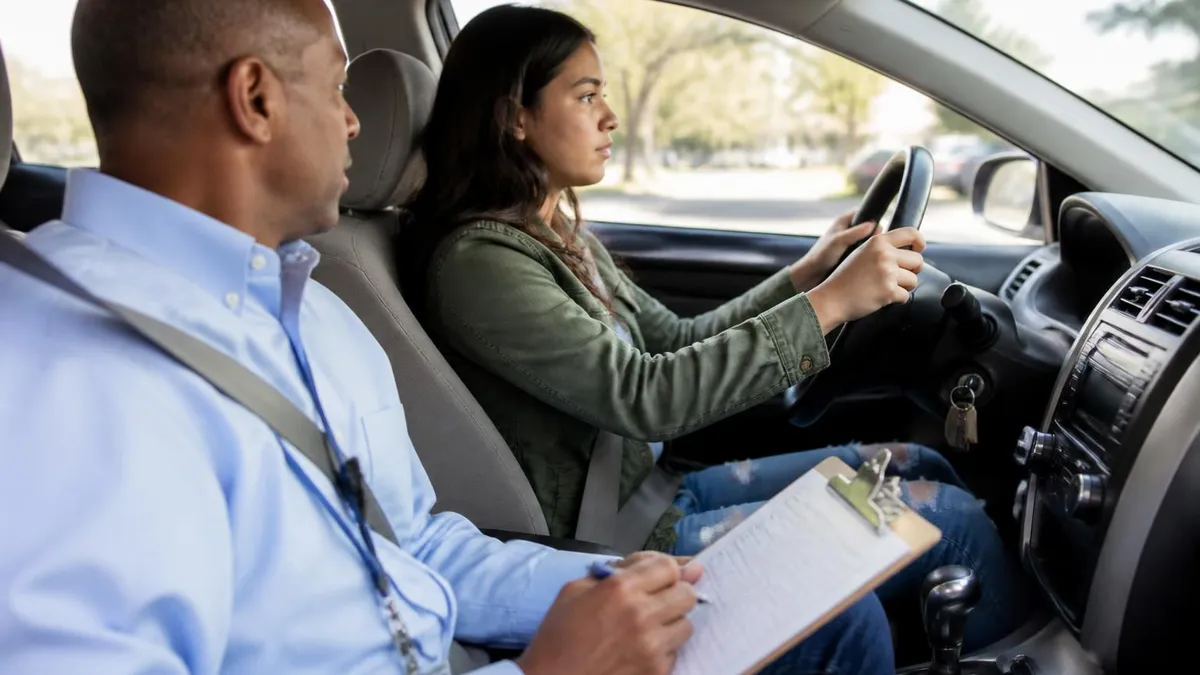
What a DMV Customer Service Representative Can Do for You
Representatives can pull your driving history, license status, and any holds or suspensions that might block testing. This lets them tell you exactly what to resolve before your exam date.
They book knowledge and road test appointments, confirm available time slots at nearby field offices, and explain cancellation windows so you avoid losing a reserved spot or paying twice.
A representative reviews your identity, residency, and Social Security paperwork against current REAL ID rules, flagging missing items before you waste a trip to the office.
They clarify testing fees, retake costs, and refund policies, and they can open a dispute if you were charged incorrectly or denied a service you qualified for.
Moving from another state? Representatives handle out-of-state license transfers, surrender requirements, and which exams you can skip based on your existing valid credential.
Reaching a live dmv representative is the single most common hurdle drivers face, and the frustration is universal. Automated menus, callback queues, and identity checks can feel designed to keep you out. The reality is that most state systems route calls efficiently once you understand the menu logic. Listen for options tied to "existing record," "license services," or "speak to an agent," and avoid the self-service branches that loop you back to the recording without ever connecting you to a human being.
People frequently search how do i speak to a dmv representative in ny, and the technique transfers to North Carolina. Call early — phone lines open at 8:00 a.m. local time, and the first hour has the shortest waits. Pressing zero repeatedly sometimes triggers an operator transfer, though modern systems may require you to first state the reason for your call. If a callback option is offered, accept it; you keep your place in line without holding your phone to your ear for twenty minutes.
Before dialing, gather your driver's license number, last four digits of your Social Security number, and date of birth. A dmv customer service representative will verify your identity before discussing any record details, and fumbling for information adds minutes to every call. Keep a pen ready to write down the agent's name, a reference or confirmation number, and any deadline they mention. Documentation protects you if a dispute or follow-up call becomes necessary later.
Online channels are increasingly the fastest route. Many states offer live chat, secure email, and account portals where you can complete tasks without waiting on hold at all. If your question is routine — checking appointment availability, confirming a fee, or downloading a form — the website often resolves it in seconds. Reserve phone calls for complex issues like suspensions, identity mismatches, or disputes that require a human to interpret policy and update your file directly.
In-person visits remain essential for the actual license test and for certain document verifications that cannot happen remotely. If you do visit a field office, an appointment dramatically cuts your wait. Walk-ins are accepted at many locations but face the longest lines, especially midday and at month-end. Arrive with originals, not photocopies, and bring backup documents in case the primary set is rejected. A prepared visitor finishes in a fraction of the time an unprepared one spends.
If you reach a representative who cannot solve your problem, politely ask to escalate to a supervisor or to be directed to the correct department. Frontline agents handle the majority of issues, but specialized teams manage hearings, suspensions, and commercial licensing. Knowing when to escalate — and staying courteous while you do — gets results faster than repeating the same request. The goal is always to leave the conversation with a clear next step and a written record of what was promised.
DMV Practice Test Questions
Prepare for the DMV - Representative Exam exam with our free practice test modules. Each quiz covers key topics to help you pass on your first try.
DMV - Representative Consumer Protection a...
DMV Exam Questions covering DMV - Representative Consumer Protection and Dispute Resolution. Master DMV Test concepts for certification prep.
DMV - Representative Vehicle Inspections a...
Free DMV Practice Test featuring DMV - Representative Vehicle Inspections and Safety Standards. Improve your DMV Exam score with mock test prep.
DMV - Representative Advertising and Sales...
DMV Mock Exam on - Representative Advertising and Sales Practices. DMV Study Guide questions to pass on your first try.
DMV - Representative Bonds and Business Re...
DMV Test Prep for - Representative Bonds and Business Records. Practice DMV Quiz questions and boost your score.
DMV - Representative Dealer-Specific Regul...
DMV Questions and Answers on - Representative Dealer-Specific Regulations. Free DMV practice for exam readiness.
DMV - Representative Registration and Tran...
DMV Mock Test covering - Representative Registration and Transfer Fees. Online DMV Test practice with instant feedback.
DMV - Representative Sales Contracts and D...
Free DMV Quiz on - Representative Sales Contracts and Disclosures. DMV Exam prep questions with detailed explanations.
DMV - Representative Salesperson Licensing...
DMV Practice Questions for - Representative Salesperson Licensing Requirements. Build confidence for your DMV certification exam.
DMV - Representative Unlawful Acts and Con...
DMV Test Online for - Representative Unlawful Acts and Conduct. Free practice with instant results and feedback.
DMV - Representative Vehicle Code Definitions
DMV Study Material on - Representative Vehicle Code Definitions. Prepare effectively with real exam-style questions.
DMV - Representative Vehicle Registration ...
Free DMV Test covering - Representative Vehicle Registration Procedures. Practice and track your DMV exam readiness.
DMV Representative Basic Arithmetic
DMV Exam Questions covering Representative Basic Arithmetic. Master DMV Test concepts for certification prep.
Understanding the DMV License Test and the Representative Role
The dmv license test nc knowledge exam contains a road-signs section and a general-knowledge section. You typically answer 25 questions and must score at least 80 percent, meaning 20 correct, to pass each portion. Questions cover speed limits, right-of-way rules, parking regulations, and the meaning of warning and regulatory signs displayed across North Carolina roadways.
A dmv customer service representative cannot take this exam for you, but they explain retake policies, waiting periods, and which study handbook edition is current. If you fail, most offices allow a retake after a short waiting period, sometimes the next business day. Knowing these rules in advance reduces panic and helps you schedule a second attempt without losing momentum or paying unexpected duplicate fees.
Phone vs. In-Person DMV Service: Which Should You Use?
- +Phone calls resolve simple questions without travel time
- +Callback options let you keep your place in the queue
- +Online chat handles routine tasks in seconds
- +Representatives can pre-check documents before you visit
- +Early-morning calls have the shortest hold times
- +You get a reference number for follow-up and disputes
- −Phone hold times can exceed 18 minutes at peak
- −Identity verification slows every interaction
- −Some tasks legally require an in-person visit
- −Walk-in office lines are longest midday and month-end
- −Complex disputes may need supervisor escalation
- −Document originals cannot be verified over the phone

DMV License Test Day Checklist
- ✓Confirm your appointment date, time, and field office location
- ✓Bring proof of identity, residency, and Social Security number
- ✓Verify your vehicle's registration and insurance are current
- ✓Check that all lights, signals, and brakes work for the road test
- ✓Review the current North Carolina driver handbook one final time
- ✓Take at least three full-length practice tests beforehand
- ✓Arrive 15 minutes early to complete check-in paperwork
- ✓Bring an acceptable form of payment for any required fees
- ✓Get a good night's sleep and eat before testing
- ✓Save your confirmation number and the representative's name
Practice tests do more than memorize answers
Drivers who complete three or more full practice exams pass the knowledge test at noticeably higher rates than those who only skim the handbook. Practice questions train you to recognize how concepts are phrased on the real exam, so you spend less time decoding tricky wording and more time answering confidently.
A reliable study strategy turns the dmv license test from a source of dread into a predictable checkpoint. Start with the official North Carolina driver handbook, because every question on the knowledge exam derives directly from its contents. Read it once for general understanding, then return to chapters covering signs, right-of-way, and speed regulations — the three areas that generate the most missed questions. Reading actively, with a notebook beside you, anchors the material far better than passive skimming ever will on its own.
After your first read-through, shift to practice questions immediately. Repetition under test-like conditions is the fastest way to expose gaps in your knowledge. When you miss a question, do not just note the correct answer — read the explanation, then locate the relevant rule in the handbook. This loop between testing and reviewing converts weak spots into strengths. Most successful candidates report that their scores climbed sharply once they treated practice exams as a diagnostic tool rather than a one-time rehearsal.
Space your study sessions across at least one to two weeks rather than cramming the night before. Memory research consistently shows that distributed practice produces stronger long-term recall than a single marathon session. Twenty focused minutes each day beats three exhausting hours in one sitting. If your schedule is tight, prioritize the highest-yield categories first: traffic signs, intersection rules, and special driving conditions like school zones, work zones, and adverse weather scenarios that examiners love to include.
Track your scores so you can see measurable progress. Aim to consistently score above 85 percent on practice tests before booking the real exam, giving yourself a comfortable margin above the 80 percent passing line. If you plateau, identify which categories drag your average down and drill those exclusively. A dmv customer service representative can confirm the exact passing threshold and number of questions for your state, removing any uncertainty about the target you are studying toward.
Simulate test conditions during at least one full practice run. Sit somewhere quiet, set a timer, avoid your notes, and answer every question in one continuous sitting. This rehearsal reduces test-day anxiety because the format will feel familiar rather than foreign. Many people who know the material still underperform simply because the testing environment rattles them. Removing that surprise factor is one of the easiest ways to protect a score you have genuinely earned through preparation.
Finally, combine self-study with realistic question banks like the practice tests linked throughout this guide. They cover representative-level topics such as consumer protection and vehicle inspections, but the discipline of answering, reviewing, and re-testing builds the exact habits that pass any DMV exam. Whether you are pursuing a driver's license or a career as a dmv representative, the proven path is the same: study the source material, test relentlessly, review every error, and walk in prepared.
Many field offices charge a fee or impose a waiting period if you miss a scheduled test without canceling in advance. Always confirm the cancellation window with a representative, and reschedule at least 24 to 48 hours ahead to avoid penalties. Arriving with an expired registration or a non-working brake light can also void your road test on the spot.
Consumer protection sits at the heart of what a dmv customer service representative is trained to handle, and it matters to every driver who interacts with the agency. When you pay a fee, you have the right to an accurate charge, a receipt, and a clear explanation of what the payment covers. If you believe you were overcharged or billed for a service you never received, a representative can open a dispute, document your complaint, and route it to the team authorized to issue refunds or corrections.
Dispute resolution follows a structured process. You typically begin by explaining the issue to a frontline dmv representative, who attempts to resolve it directly. If they cannot, the matter escalates to a supervisor or a specialized review unit. Throughout, you should keep copies of receipts, confirmation numbers, and the names of everyone you speak with. This paper trail is your strongest protection if a disagreement drags on or if you eventually need to file a formal written complaint with the agency.
Vehicle inspections and safety standards are another area where representatives guide the public. Many states require periodic safety or emissions inspections before you can renew a registration. A representative explains which inspections apply to your vehicle, where to get them done, and what to do if your car fails. Understanding these rules prevents last-minute surprises, such as discovering at the counter that your registration cannot be renewed until an overdue inspection is completed and properly recorded.
For drivers transferring from another state, consumer protection rules ensure you are not forced to pay for duplicate testing you do not need. Representatives review your existing valid credential and apply reciprocity policies that may waive part of the exam. This is exactly the kind of nuanced situation where a phone call beats guessing. The same applies to surrendering plates, transferring titles, and confirming which inspection a newly purchased used vehicle requires before you can legally drive it.
If you are studying to become a representative yourself, expect detailed exam coverage of these consumer-protection and inspection topics. The certification material tests whether you can apply policy fairly, recognize fraud, and treat the public with consistency. Drivers benefit when staff know this material cold, because confident, well-trained representatives resolve problems quickly instead of bouncing customers between departments. Strong product knowledge is ultimately a form of customer service in its own right.
You can deepen your understanding by working through targeted question banks, and reviewing related resources like our DMV Practice Questions guide helps connect these consumer-protection concepts to the broader testing experience. Whether your goal is passing the license exam or earning a role behind the counter, knowing your rights and the rules that govern them makes every DMV interaction faster, fairer, and far less stressful than going in unprepared.
With your study plan in place and your understanding of the system complete, a few practical tips will carry you across the finish line. First, treat the days before your dmv license test like an athlete tapering before a competition. Avoid frantic last-minute cramming, which raises anxiety and rarely adds knowledge. Instead, do one calm review of your weakest category, get solid rest, and trust the preparation you have already banked through weeks of consistent practice and honest self-assessment.
On test day, read every question completely before choosing an answer. DMV exams frequently include answer choices that are partially correct or that describe a rule from a different context. Slowing down by even a second or two prevents the careless errors that cost otherwise-prepared test takers their passing score. If a question stumps you, eliminate the clearly wrong options first, then choose the best remaining answer rather than leaving it blank or second-guessing yourself into a worse choice.
Keep your documents organized in a single folder you can hand over instantly. A disorganized scramble at check-in starts your visit on a stressful note and can even delay your test slot. Bring originals of every required document, plus a backup form of identification. If you are unsure whether something qualifies, a quick call to a dmv customer service representative the day before confirms it, saving you from a rejected document and a wasted trip to the office.
For the road portion, do a personal pre-drive inspection in your driveway. Check that headlights, brake lights, turn signals, horn, and windshield wipers all function, and confirm your registration and insurance cards are inside the vehicle. Examiners routinely cancel road tests over equipment failures before the drive even begins. Catching a burned-out bulb at home costs a few dollars; discovering it at the test site costs you the entire appointment and forces a reschedule.
Manage your nerves with simple, proven techniques. Slow, deliberate breathing lowers your heart rate and sharpens focus. Remind yourself that the examiner wants safe drivers on the road, not perfection — minor hesitations rarely fail you, while dangerous mistakes do. If you do not pass on the first attempt, treat it as information, not failure. Note which maneuvers gave you trouble, practice them deliberately, and rebook once you feel genuinely ready rather than rushing back unprepared.
Finally, keep the bigger picture in mind. A driver's license is a credential you will use for decades, and the habits you build now — checking signals, respecting right-of-way, staying alert — protect you long after the test ends. The same diligence that earns a passing score makes you a safer driver for life. Approach the entire process, from your first call to a dmv representative through your final road test, as the foundation of responsible driving rather than a hurdle to clear and forget.
DMV Questions and Answers
DMV Practice Questions: Topics, Strategy and Where to Find Them

DMV ID Card Cost: Complete 2026 Guide to Fees, Requirements, and Application Steps
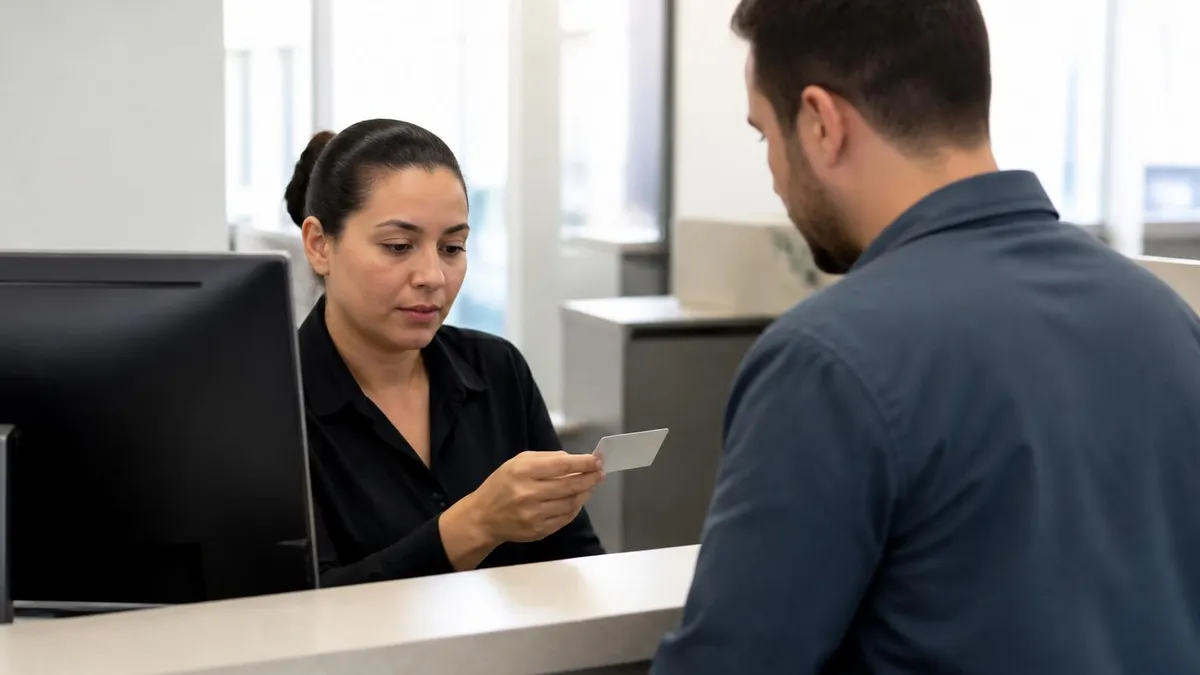
DMV Learners Permit Practice Test: Complete 2026 Prep Guide for First-Time Test Takers
DMV Representative Practice Test Video Answers

Virginia DMV Driving Test: Complete 2026 Guide to Passing Your Road Skills Exam
About the Author
Licensed Driving Instructor & DMV Test Specialist
Penn State UniversityRobert J. Williams graduated from Penn State University with a degree in Transportation Management and has spent 20 years as a certified driving instructor and DMV examiner consultant. He has personally coached thousands of applicants through written knowledge tests, skills assessments, and commercial driver licensing programs across more than 30 states.
Join the Discussion
Connect with other students preparing for this exam. Share tips, ask questions, and get advice from people who have been there.
View discussion (8 replies)