
First Aid CPR AED Meaning: What the Terms Cover, Plus ACLS, PALS, and Infant CPR Basics
🎯 First aid CPR AED meaning explained: what each term covers, adult and infant CPR steps, recovery position, ACLS and PALS basics. Start learning today.
The first aid cpr aed meaning question sounds simple, yet many people mix up the three terms. First aid is the immediate care given to an injured or ill person before professionals arrive. CPR stands for cardiopulmonary resuscitation, a technique that keeps blood moving when the heart stops. AED stands for automated external defibrillator, a portable device that analyzes heart rhythm and delivers a shock. Together they form the core of what the public can do during a cardiac emergency.
Cardiopulmonary resuscitation combines chest compressions with, when trained, rescue breaths. The word cardio refers to the heart, while pulmonary refers to the lungs. When the heart stops, oxygen-rich blood stops reaching the brain, and brain damage can begin within about four to six minutes. Compressions manually pump blood to vital organs and buy time. For adults, rescuers push hard and fast in the center of the chest at 100 to 120 compressions per minute, allowing full recoil between pushes.
Many readers search what does AED stand for before they ever see one on a wall. It stands for automated external defibrillator. Automated means the device analyzes the rhythm itself and decides whether a shock is needed. External means the pads go on the outside of the chest. Defibrillator describes its purpose: stopping a chaotic heart rhythm so the heart can restart a normal beat. Modern units give clear voice prompts, so untrained bystanders can use them safely.
First aid is the broadest of the three terms. It covers bleeding control, choking relief, burns, fractures, allergic reactions, and the recovery position for someone who is unresponsive but breathing. CPR and AED use are considered part of first aid, but they apply only to a narrow situation: a person who is unresponsive and not breathing normally. Knowing which skill fits which emergency matters, because performing compressions on someone who has simply fainted wastes seconds and can cause unnecessary injury.
Beyond the basics, you will see terms such as life support, BLS, ACLS, and PALS. Basic life support covers CPR and AED skills for everyone. Advanced cardiac life support adds medications, airway devices, and the ACLS algorithm for healthcare teams, while pediatric advanced life support focuses on infants and children. This article explains each layer in plain English, compares training options, and shows how a lay rescuer's first aid, CPR, and AED knowledge connects to professional resuscitation care.
One more clarification helps with search confusion. The letters CPR also appear in business names, including CPR Cell Phone Repair, a retail chain that fixes screens and batteries. That company has nothing to do with resuscitation, and a cpr phone repair search will not teach you chest compressions. Everything below concerns cardiopulmonary resuscitation, written for a US audience, and it is educational only. Hands-on training from a recognized provider is still the best way to build real confidence.
First Aid, CPR, and AED by the Numbers
First Aid, CPR, AED, and Life Support: What Each Term Covers
First aid is the immediate, temporary care given to someone who is hurt or suddenly ill until professional help arrives. It includes controlling bleeding, treating burns, helping a choking person, stabilizing fractures, and placing an unresponsive breathing person in the recovery position. Its goal is to preserve life and prevent worsening.
CPR stands for cardiopulmonary resuscitation. It uses forceful chest compressions, and rescue breaths when trained, to circulate blood and oxygen to the brain and heart after cardiac arrest. Adults need compressions at least two inches deep at 100 to 120 per minute, with full chest recoil between pushes.
AED stands for automated external defibrillator. This portable, battery-powered device checks heart rhythm through two adhesive pads and delivers a controlled electric shock only when needed. Voice and visual prompts guide anyone through each step, which is why AEDs sit in airports, schools, gyms, and workplaces for public use.
Life support is the umbrella term for resuscitation care. Basic life support covers CPR and AED skills, ACLS adds drugs and advanced airways for adult emergencies, and PALS covers infants and children. Each level builds on the one before it, and professionals typically renew certification every two years.
Start with the chain of survival, the sequence that gives cardiac arrest patients their best odds. Link one is recognizing the emergency and calling 911. Link two is immediate high-quality CPR. Link three is rapid defibrillation with an AED. Then come advanced care from paramedics, post-arrest hospital treatment, and recovery. Each link depends on the one before it, which is why bystanders, not professionals, usually control the most time-sensitive steps in the first critical minutes.
Recognition is the first skill. Tap the person's shoulders, shout their name, and look at the chest for no more than ten seconds. An unresponsive adult who is not breathing, or only gasping, is in cardiac arrest. Gasping, called agonal breathing, is a common trap because it looks like breathing but moves almost no air. If you are unsure, treat it as cardiac arrest, because starting CPR on someone who does not need it rarely causes serious harm.
Next, call 911 or direct a specific bystander to call while you begin. Point at one person and tell them to call 911 and bring the AED. Dispatchers can coach you through compressions on speakerphone. Place the heel of one hand on the center of the chest, put the other hand on top, lock your elbows, and push at least two inches deep, but no more than about 2.4 inches, at 100 to 120 per minute.
Once the AED arrives, turn it on and follow its voice prompts. Bare the chest, dry it if wet, and apply the pads exactly as the diagrams show, usually one on the upper right chest and one on the lower left side. Plug in the connector if needed. Stand clear while the device analyzes. If it advises a shock, make sure nobody touches the person, press the button, and resume compressions immediately for another two minutes.
AED speed matters enormously. Survival falls roughly seven to ten percent for every minute that passes without defibrillation, and when a shock is delivered within three to five minutes of collapse, survival can reach 50 to 70 percent in some settings. That is why airports, schools, gyms, and offices increasingly mount AEDs in visible cabinets. Many states also protect good-faith rescuers with Good Samaritan laws that limit liability when someone acts to help in an emergency.
Rescuers also ask about breathing. A trained rescuer using the 30:2 ratio gives two breaths after every 30 compressions, each lasting about one second and making the chest visibly rise. Untrained bystanders are encouraged to use hands-only CPR, continuous compressions with no breaths, because it is easier to remember and still effective in the first minutes of an adult collapse. Rescue breathing matters more for drowning, drug overdose, and children, where low oxygen often causes the arrest.
ACLS Algorithm, PALS Certification, and Infant CPR Compared
The ACLS algorithm is a decision map for healthcare teams managing cardiac arrest, bradycardia, tachycardia, and post-arrest care. The cardiac arrest pathway starts with high-quality CPR, oxygen, and a monitor or defibrillator. A rhythm check every two minutes then splits the path into shockable and non-shockable branches, and each branch has its own medications and timing, which the team leader calls out loud so everyone stays synchronized.
In practice, a team might shock ventricular fibrillation at 200 joules on a biphasic device, resume compressions, place an IV or IO line, and give 1 mg of epinephrine after the second shock. For asystole, epinephrine is given as soon as access exists. Lay rescuers do not need the full algorithm, but it explains why professionals ask for rhythm checks and brief pauses. These details are why ACLS requires structured training and regular renewal.
Is Advanced Life Support Training Worth It Compared With Basic First Aid CPR?
- +Teaches team-based resuscitation that raises survival odds in hospitals
- +Opens doors to nursing, paramedic, and emergency department jobs
- +Builds confidence in recognizing rhythms and reversible causes
- +Covers advanced airway and medication knowledge beyond basic CPR
- +Includes realistic simulations that sharpen decision speed
- +Meets employer and licensing requirements in many clinical roles
- −Costs far more than a basic CPR and AED class
- −Requires a current BLS card before you can enroll
- −Takes one to two days instead of a few hours
- −Demands renewal every two years to stay valid
- −Includes drug dosing and rhythm content that casual rescuers will not use
- −Skills fade quickly without regular clinical practice
Life Support Readiness Checklist: Infant CPR, AED, and More
- ✓Locate the nearest AED at home, work, and school.
- ✓Confirm the AED readiness light shows green.
- ✓Check that AED pads and batteries are not expired.
- ✓Book a hands-on CPR and AED class this month.
- ✓Practice compressions to a 100 to 120 beat song.
- ✓Learn infant CPR two-finger and two-thumb techniques.
- ✓Memorize the recovery position steps.
- ✓Save your certification card as a photo.
- ✓Set a renewal reminder 60 days before expiration.
- ✓Teach one family member the hands-only CPR steps.
Imperfect CPR beats no CPR
A person in cardiac arrest has almost no chance without help, so any attempt improves their odds. Cracked ribs are possible and acceptable. Call 911, push hard and fast in the center of the chest, and use an AED as soon as one arrives.
Respiratory rate is the number of breaths a person takes in one minute, and it is one of the quickest signs a rescuer can read. A healthy resting adult breathes about 12 to 20 times per minute. Newborns breathe roughly 30 to 60 times per minute, slowing to about 20 to 30 by early childhood. Count one rise of the chest as one breath, watch for 30 seconds, and double the number for a rough estimate.
Abnormal respiratory rate points to trouble. Fewer than 10 breaths per minute in an adult can signal an opioid overdose or head injury, while more than 24 may indicate asthma, infection, panic, or heart failure. Noisy, gurgling, or labored breathing deserves a 911 call. In cardiac arrest, breathing is absent or agonal. During rescue breathing for an adult with a pulse, give one breath every six seconds, about ten per minute, and recheck the pulse about every two minutes.
Rescue breath rates change for younger patients. For an infant or child who has a pulse but is not breathing adequately, give one breath every two to three seconds, which equals 20 to 30 breaths per minute. Use gentle puffs only until the chest rises, because large breaths can inflate the stomach and trigger vomiting. A pocket mask with a one-way valve protects both rescuer and patient and improves the seal on a small face.
Now consider position recovery, more correctly called the recovery position. It is used for a person who is unresponsive but breathing normally and has no suspected spine injury. Kneel beside them, extend the near arm above the head, bring the far arm across the chest, bend the far knee, and roll them toward you onto their side. Tilt the head back slightly so the airway stays open and fluids can drain from the mouth.
Check the recovery position carefully. The top leg should hold the body steady so the person cannot roll onto their face or back. Stay with them, monitor breathing continuously, and be ready to start CPR if breathing stops. Avoid moving anyone with a suspected neck or spinal injury, such as after a fall or crash, unless the airway is blocked or you are in danger. Emergency dispatchers can guide you based on what you describe.
Remember that the recovery position is not a substitute for compressions. If the person is not breathing normally, they need CPR on a firm, flat surface, not a side-lying position. Rescuers sometimes confuse the two because both begin with an unresponsive person. Use the simple rule: breathing normally means recovery position and waiting for help, while not breathing or only gasping means 911, compressions, and the AED. Practicing both in a class makes the decision automatic under stress.
This guide explains concepts for a US audience and does not replace a hands-on class with a qualified instructor. Guidelines are updated periodically, so confirm current techniques and employer or licensing requirements before you enroll or renew a certification.
Choosing a certification can feel confusing because so many organizations use similar names. The American Heart Association and the American Red Cross are the most widely recognized, and many employers, including hospitals and schools, specify one of them. Other providers, such as the National CPR Foundation, offer online courses with certificates for workplace or personal needs. Always check with your employer, licensing board, or school before paying, because acceptance rules differ widely by job and state.
Online-only courses are convenient and often inexpensive, but some employers require a hands-on skills session. Blended learning, where you complete cognitive modules online and then practice on manikins with an instructor, satisfies most requirements for healthcare workers. Lay responders such as babysitters, coaches, and office staff can often use online-only certificates. Verify that a provider follows current resuscitation science guidelines and that the card lists a two-year expiration, which is standard for CPR, AED, and first aid.
Healthcare professionals typically start with Basic Life Support, which teaches high-quality CPR, AED use, bag-mask ventilation, and team-based resuscitation for adults, children, and infants. From there, nurses, paramedics, and physicians in acute settings add ACLS. Pediatric units and emergency departments often require PALS certification. Each course usually runs one to two days for initial certification, with shorter renewal classes every two years. Prerequisites commonly include a current BLS card and basic ECG rhythm recognition.
The ACLS algorithm organizes care during adult cardiac arrest. After starting CPR and attaching a monitor, the team identifies whether the rhythm is shockable, either ventricular fibrillation or pulseless ventricular tachycardia, or non-shockable, either asystole or pulseless electrical activity. Shockable rhythms get a defibrillation, two minutes of CPR, and then reassessment. Medications such as epinephrine every three to five minutes, and amiodarone or lidocaine for refractory shockable rhythms, are added while the team hunts for reversible causes.
Those reversible causes are often remembered as the Hs and Ts: hypovolemia, hypoxia, hydrogen ion excess, hypo- or hyperkalemia, hypothermia, tension pneumothorax, tamponade, toxins, and thrombosis, either pulmonary or coronary. Learning them helps a team move beyond shocks and drugs to fix the underlying problem. Lay rescuers do not need to memorize these lists, but understanding that advanced care builds on early CPR and defibrillation explains why every minute of good bystander effort matters.
PALS certification applies the same systematic thinking to children. Instead of beginning with the cardiac rhythm, PALS emphasizes assessing respiratory failure and shock first, because pediatric cardiac arrest more often follows breathing problems than primary heart disease. Learners practice the pediatric assessment triangle, weight-based dosing, and team roles in simulated cases. Parents rarely need PALS, but daycare staff and pediatric nurses benefit from understanding why infants and children need breaths as well as compressions in many emergencies.
Reading about CPR helps, but muscle memory comes from practice. Book a hands-on class within the next month and treat it like any other skill, such as driving. Most courses for lay rescuers last two to four hours, and the manikins often include feedback lights or clickers that tell you whether your depth and rate are correct. Many people discover their compressions are too shallow until a device shows them.
Practice the rhythm of 100 to 120 compressions per minute with music. Songs such as Stayin' Alive or Baby Shark hit the right tempo, and many instructors use them for exactly that reason. Try a two-minute set while counting aloud, since two minutes is the interval after which rescuers switch roles to prevent fatigue. Quality drops sharply after about two minutes of continuous compressions, even in fit adults, so planning a swap is part of good technique.
Learn the differences for infant CPR before you need them. Use two fingers placed just below the nipple line in the center of the chest, push about one and a half inches, and keep the same 100 to 120 pace. Give two gentle breaths after every 30 compressions when alone, or 15 and two with two rescuers. Support the head, keep the infant on a firm surface, and use pediatric pads or a pediatric key on the AED if available.
Know your environment. Locate the nearest AED at home, work, gym, and your child's school, and notice whether the cabinet is alarmed. Check that the readiness indicator shows green, and that pads and batteries are in date, because pads usually expire after two to five years. Register any AED you own with your local emergency medical services office so dispatchers can direct rescuers to it. Public-access devices save lives only when people can find them.
Stay current. Certifications expire after two years, and skills fade within months without refreshers. Set a calendar reminder 60 days before expiration, and note that guideline updates sometimes change details like compression technique or choking sequences. Keep a digital photo of your card and note the issuing organization. If you work in healthcare, track your BLS, ACLS, and PALS dates separately, since each course has its own renewal window and employers audit them regularly.
Finally, manage the emotional side. Many rescuers freeze because they fear hurting someone or doing it wrong. Remember that a person in cardiac arrest is already in grave danger without help, so imperfect CPR is far better than none. Ribs may crack, and that is acceptable. Afterward, talk to someone about the event, because rescuers often feel shaken. Use the practice questions below to test yourself, review missed answers, and then schedule your hands-on session.
CPR Questions and Answers

Mouth to Mouth CPR: When to Use Rescue Breathing, How to Do It Safely, and Why Hands-Only CPR Often Replaces It in 2026
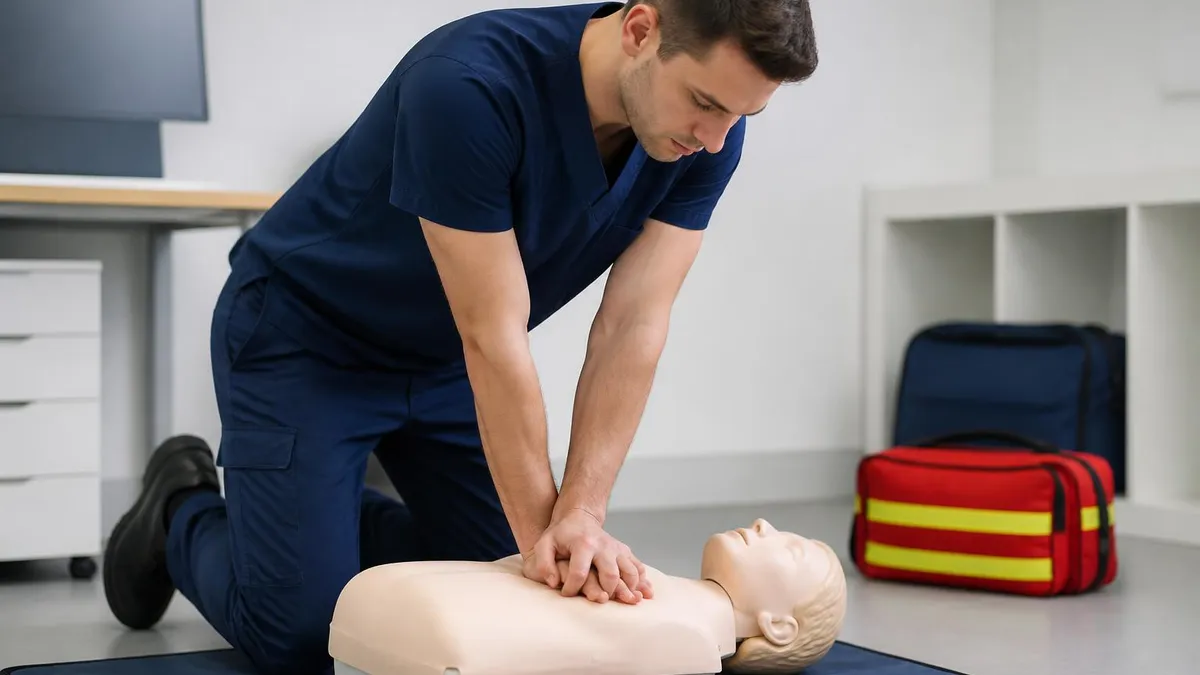
Adult CPR: Complete Step-by-Step Guide to Hands-Only and Standard CPR in 2026

CPR Scenarios: Real-Life Practice Cases for Adult, Child, and Infant Emergencies
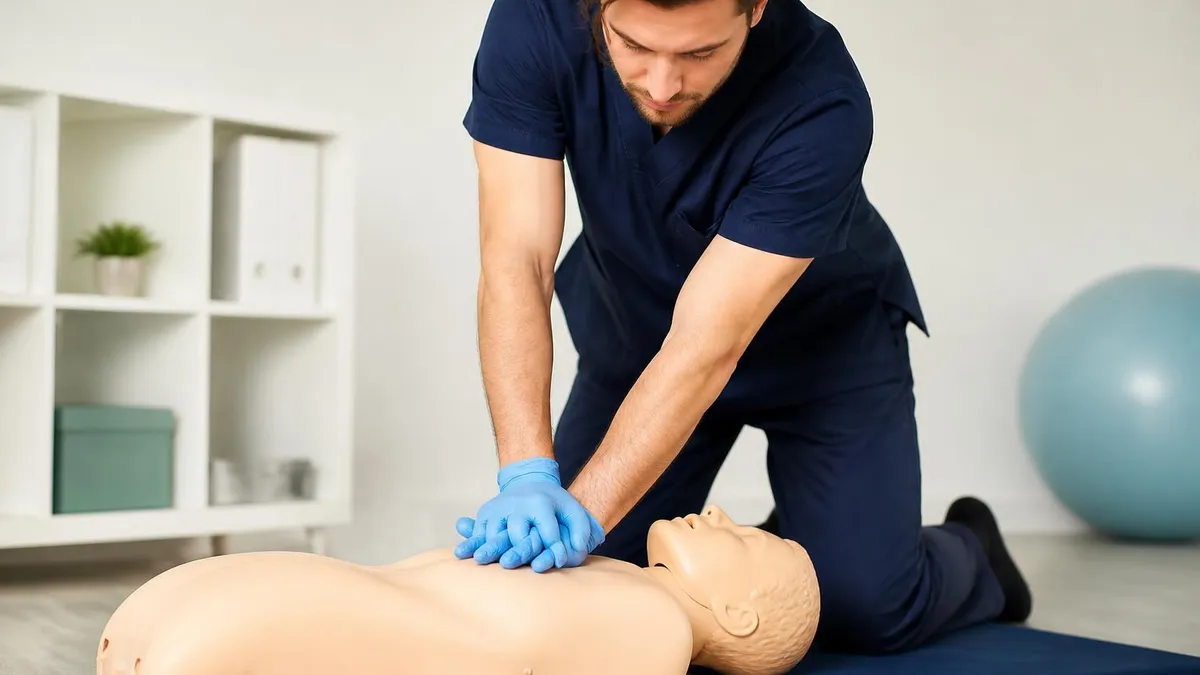
CPR Course: How to Choose the Right Training Program

CPR Card: What It Is, How to Verify & Replace (2026)
How this page was made: written with AI tools and published by Nathan Beja, founder of Practice Test Geeks, who is responsible for its content. Exam facts are checked against the official sources listed below. Not reviewed by a subject-matter expert. Editorial policy
Sources & references
Exam facts on this page (fees, format, dates, passing scores) are checked against these official sources; the date is our last check. Editorial policy
- redcross.org — Test delivery, score validity, renewal, passing score · verified Nov 2026
- cpr.heart.org — Test delivery, eligibility, score validity · verified Nov 2026
- elearning.heart.org — Fees, passing score · verified Nov 2026