
CPR Training Provider Legitimacy — Complete Guide (2026 September)
How to verify CPR training provider legitimacy. 🏆 Red flags, AHA Training Center lookup, Red Cross verification, and real verdicts on cpr.com, cpr.io
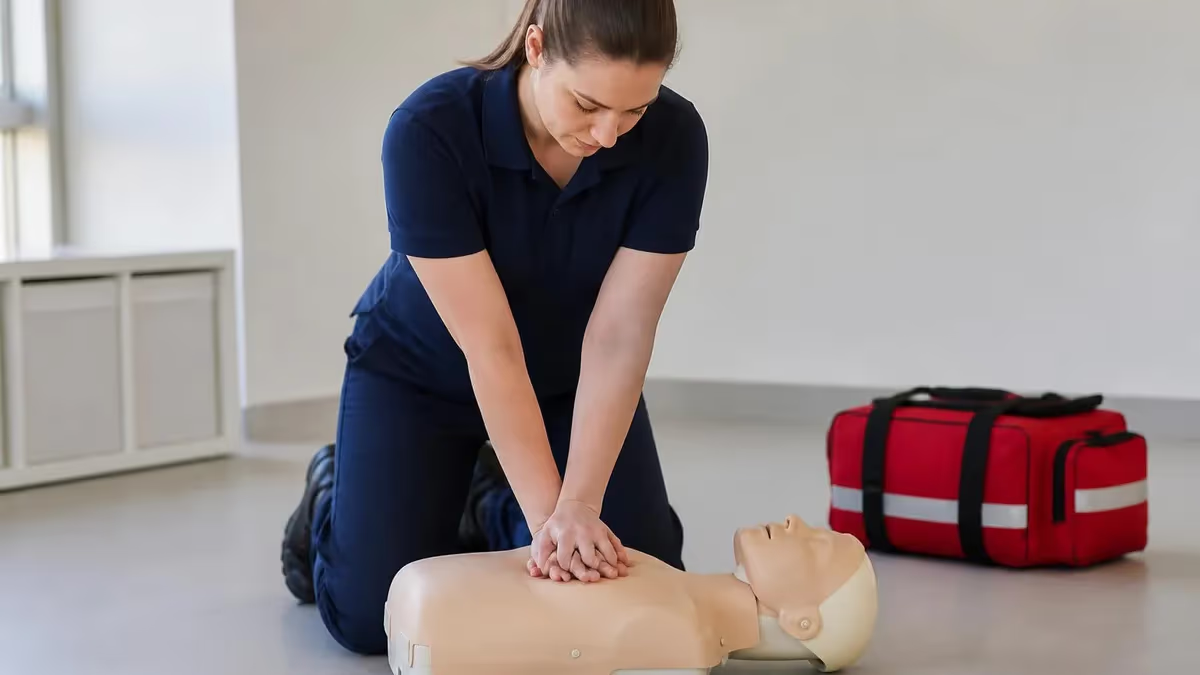
CPR Training Provider Legitimacy: How to Tell Real from Fake (2026)
A CPR card looks the same whether it cost you fifteen dollars on a one-page checkout site or sixty dollars at a community hospital with an instructor in the room. The paper is identical. The trouble starts when you hand the card to a hiring manager, and they pick up the phone.
Every year, thousands of nurses, lifeguards, teachers, and daycare workers find out the hard way that cpr training provider legitimacy matters more than any certificate design. Employers reject cards from unrecognized providers. State licensing boards do too. Some healthcare systems keep an internal blacklist of training brands they will not accept, and applicants only learn the name is on that list after the rejection email.
This guide walks through the verification steps a hiring manager actually uses. You will get specific verdicts on the providers people search most: cpr.com, cpr.io, cprtoday.com, cprsavers.com, and cprselect.com. You will also see the red flags that mark a card mill, the legitimate accreditation paths, and the simple lookups you can run in two minutes before paying any provider a cent.
If you want a quick refresher to keep your knowledge sharp between renewals, the red cross cpr recertification guide walks through the Red Cross renewal pathway with current cost figures and acceptance notes. Use it to plan your next card before any in-person skills station.
The short answer to the legitimacy question: a CPR provider is legitimate when an accreditation body publicly lists it, an instructor with verifiable credentials signed your card, and the issuing body provides a working verification lookup. Everything else is marketing.
Before paying: Search the provider's name plus "AHA Training Center" on aha.training-center.heart.org. No result means the provider is not AHA-aligned, regardless of what their homepage claims. Also check lookup.redcross.org for Red Cross issuance and confirm any ASHI/HSI/ECSI claim through hsi.com. A site that mails a card without ever asking you to perform skills on a manikin is not issuing a real Healthcare Provider credential — full stop.
Five Red Flags That Mean Card Mill
- Why it's a flag: Real Healthcare Provider courses cost $40 to $90 because instructors, manikins, and AED trainers cost money.
- What it usually means: Unaccredited PDF generator. Card will fail employer verification.
- Why it's a flag: AHA mandates an in-person skills station for any Healthcare Provider or Heartsaver card. There is no exception.
- What it usually means: Provider is selling completion certificates, not a true CPR certification.
- Why it's a flag: Legitimate cards carry the named instructor and their credential number. Card mills issue cards signed by a generic 'Director of Education'.
- What it usually means: There is no human instructor backing the card. Nothing to verify.
- Why it's a flag: Hiring managers call to verify cards. A site with only a chat widget and no phone number signals an offshore checkout funnel.
- What it usually means: Employer verification will fail at the first hurdle.
- Why it's a flag: No accrediting body issues lifetime cards. AHA and Red Cross both require renewal every two years.
- What it usually means: Marketing language designed to hook people who do not know the renewal rule.
What Employers Actually Verify
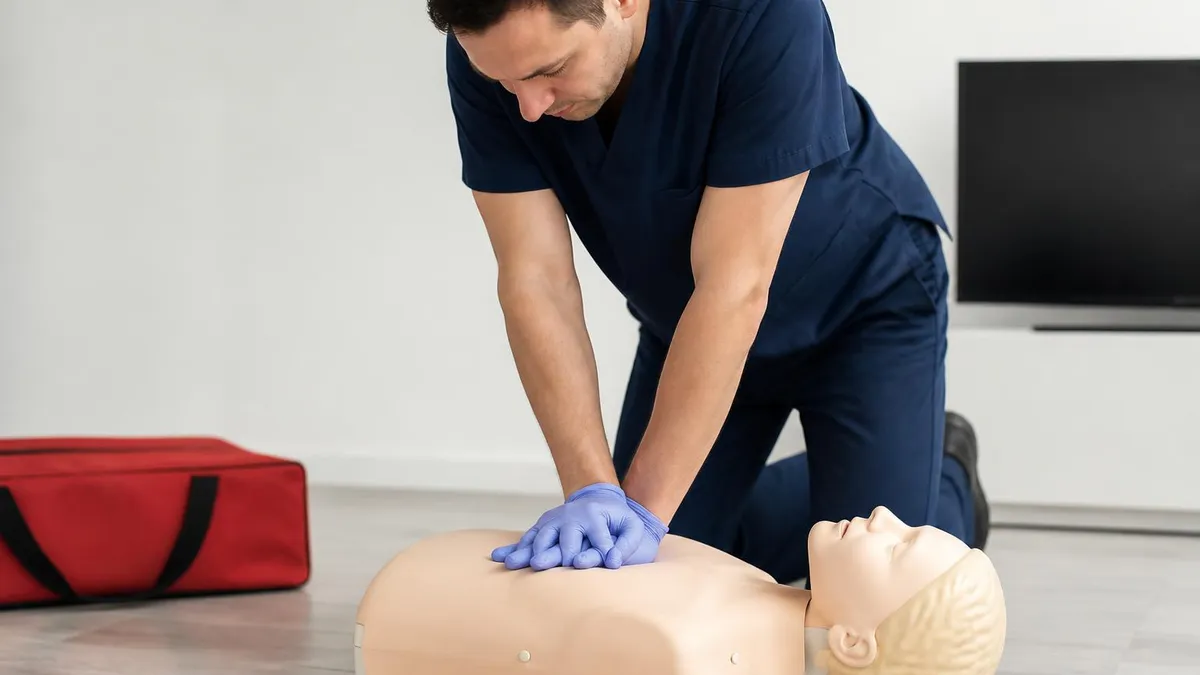
Hospital HR teams and clinical compliance officers run a predictable check. The card goes into a folder. The verification clerk pulls the issuing provider's name and runs three lookups: AHA Training Center registry, Red Cross verification portal, and the relevant accreditor (NSC, ASHI/HSI, ECSI). If any of those return a hit and the card details match, the certification clears. If none return a hit, the card gets flagged.
This matters because the verification process never relies on the look of the card itself. Card mills know how to design a card that looks polished. What they cannot fake is presence on the AHA roster. The AHA publishes its Training Centers publicly, and TCs are audited. If a provider is not on that roster but claims to issue AHA-aligned cards, the claim is false. There is no shortcut. A simple cpr certification renewal path through a listed Training Center is the only way to walk into a hospital with a card that clears verification on the first call.
What HR Calls Sound Like
A hiring manager picks up the phone, dials the provider's listed number, and asks two questions. Was a specific person certified on a specific date? Who was the instructor? If the person on the other end cannot answer both, the card does not count. Some employers also ask whether the course included a hands-on skills evaluation. If the provider admits it was 100% online, the card is rejected for any Healthcare Provider role.
State Licensing Boards Add Their Own Filter
Nursing boards in California, New York, Texas, and Florida explicitly require AHA or Red Cross BLS for licensure or relicensure. Some boards accept ASHI for non-clinical roles only. Daycare licensing in many states allows ASHI or NSC. School coaching certifications often allow any nationally recognized provider but require renewal every two years. Always check your specific board's published list before paying.
The Accreditation Hierarchy (What Each Body Actually Means)
Four accreditation paths matter in the United States. American Heart Association sits at the top for clinical settings — every hospital, urgent care, dialysis center, and most outpatient clinics will require AHA BLS Healthcare Provider. American Red Cross runs a parallel system that is accepted by most hospitals and almost all non-clinical employers, including schools, daycares, and pools. The National Safety Council (NSC) accredits occupational safety programs and is widely accepted for workplace responders. ASHI, HSI, and ECSI accredit lay-rescuer and some Healthcare Provider courses — accepted by some employers, rejected by others, so always check before enrolling.
Why AHA Sits at the Top
AHA writes the guidelines that every other body teaches from. The 2025 Guidelines, the 2030 Guidelines — they all originate from AHA's International Consensus on CPR Science. Other accreditors translate those guidelines into their own courses, but AHA holds the master copy. That is why hospitals default to AHA BLS — when the science changes, AHA pushes the update first.
Why Online-Only Cards Fail
Online-only cards from any provider fail the Healthcare Provider standard because compressions and ventilations require physical practice. You cannot learn the depth of a chest compression by watching a video. Real BLS courses are blended — you complete the cognitive portion online, then do a skills station in person with an instructor and a manikin that gives feedback on compression depth and rate.
Specific Provider Verdicts
Verdict: Not AHA-aligned. Acceptance varies by state and employer.
CPR.com is a separate brand and is not listed in the AHA Training Center registry. The site offers a 100% online certification with no in-person skills component, which immediately disqualifies it from any hospital Healthcare Provider role. Some daycare licensing boards and small employers will accept the card; most clinical settings will not. If you need a card for hospital, EMT, or nursing work, do not use cpr.com.
Verify Any CPR Provider in Five Steps
- ✓Search the provider name on aha.training-center.heart.org. Hit = AHA-aligned. No hit = not AHA.
- ✓If the provider claims Red Cross, search lookup.redcross.org with the certification number after enrollment.
- ✓For ASHI/HSI/ECSI claims, look up the Training Center on hsi.com under the 'Find a Class' or 'Verify' tools.
- ✓Confirm the course includes an in-person skills station. If the card arrives without one, it cannot be Healthcare Provider level.
- ✓Phone the provider before buying. If no human answers and there is no return number on the site, walk away.
How to Read the AHA Training Center Registry
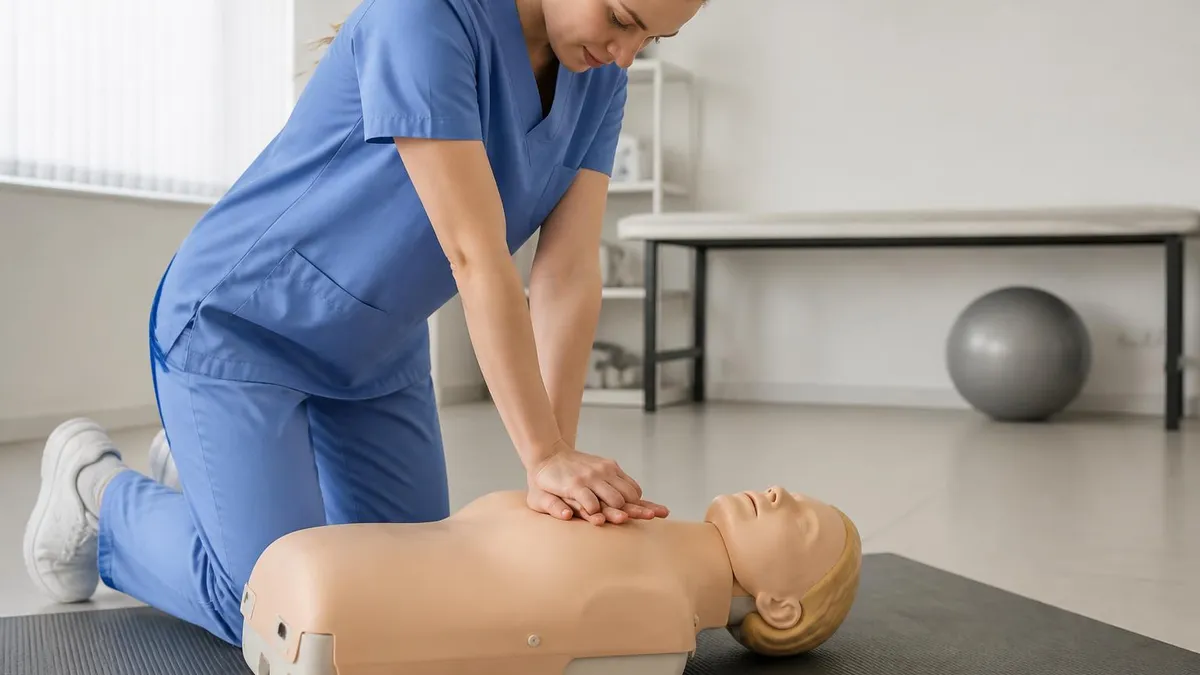
The AHA Training Center finder lives at aha.training-center.heart.org. Type the provider's business name into the search box and hit enter. The result page lists the Training Center number, the assigned Regional Training Center, and the courses they are authorized to teach. If the provider is real, this lookup is the proof. Bookmark this page before you start shopping — it is the single most important tool for confirming cpr training legitimacy.
Pay attention to course authorization. A Training Center might be authorized for Heartsaver CPR/AED but not for BLS Healthcare Provider. If you need a BLS card and the TC is only authorized for Heartsaver, the card will not clear hospital verification — not because the TC is fake, but because they are not approved to issue that specific course. The registry shows exactly which courses each TC can teach.
What the TC Number Tells You
Each Training Center carries a unique number. When you receive your card, that number should appear on the card itself. If a hiring manager calls to verify, the AHA can pull up the TC, confirm the instructor who issued the card, and confirm the date of the course. Card mills sometimes print fake TC numbers — when an HR clerk runs the number through AHA and it does not match the provider name, the card is flagged immediately.
Red Cross Verification
Red Cross runs its own portal at lookup.redcross.org. After completing a course, the Red Cross issues a digital certificate with a unique ID and QR code. Hiring managers can scan the code or type the ID into the lookup tool to confirm authenticity. The portal returns the holder's name, course name, issue date, and expiration. Red Cross cards are accepted by virtually every non-clinical employer and most clinical employers, with the exception of a small number of hospitals that strictly require AHA BLS.
What ASHI, HSI, and ECSI Mean
These three accreditors operate similarly to AHA and Red Cross but with narrower acceptance. HSI (Health & Safety Institute) owns both ASHI and ECSI as brands. Cards from any HSI brand are accepted by many occupational safety, workplace responder, and daycare licensing programs. They are not universally accepted in clinical settings. If a provider claims ASHI accreditation, the provider should appear in HSI's Training Center directory at hsi.com. No directory hit means the claim is unverifiable.
Online-Only Card Reality Check
If the provider does not require you to come in person, on video with an instructor, or visit a local skills site, you are not receiving a Healthcare Provider level certification. Period. AHA published guidance in 2023 reaffirming the in-person skills station requirement for all BLS Healthcare Provider courses.
Red Cross enforces the same rule. The only exception is the cognitive-only renewal pathway some Red Cross digital products allow, and even those still trigger a skills check at the renewal interval. Plan for an in-person component, budget the time, and use the saved evening to brush up by browsing an authoritative review of the AHA renewal track.
Online-Only vs Blended Courses
- +Blended courses: AHA and Red Cross both accept this format for Healthcare Provider cards.
- +Blended courses: Real skills station with instructor feedback on depth and rate.
- +Blended courses: Card clears employer verification because the TC is registered.
- +Blended courses: Renewal pricing is competitive — usually under $70.
- −Online-only courses: No skills component, so no Healthcare Provider credential.
- −Online-only courses: Many sites claim AHA alignment without being on the TC registry.
- −Online-only courses: Cards often rejected by hospitals, nursing schools, and EMT programs.
- −Online-only courses: Refunds are rare when employers refuse the card.
Renewal Specifics — Why the Two-Year Rule Matters
Every legitimate CPR card has an expiration date two years out from the issue date. AHA, Red Cross, NSC, and HSI all enforce the two-year rule. If a provider sells you a lifetime card or a five-year card, they are not following any major accreditor's rules. The two-year cycle exists because guidelines evolve — the 2025 update changed compression-to-ventilation ratios for certain pediatric scenarios, and the 2030 cycle will likely revise AED placement guidance. Cards older than two years cannot reflect current science. That is why hospitals reject expired cards even by a single day.
When you renew, the same verification rules apply. Whatever provider issues the renewal card needs to be on the appropriate accreditor's registry. Many people who passed the first time through a hospital-run course try to save money on renewal by switching to a card mill — and that is when their card gets rejected. The renewal card is held to the same standard as the original. Renewing through a verified cpr renewal path saves you from rebuying a card later.
How to Renew Without Repeating the Full Course
Most AHA and Red Cross Training Centers offer a renewal-specific course that is shorter than the initial certification — typically two to four hours instead of the full six. The cognitive portion is online; the skills station is in person. Cost is usually $50 to $80. Some employers cover renewal through HR; ask before paying out of pocket. If your current card has been expired for more than 30 days, some TCs require the full initial course instead of the renewal track.
Special Cases — Healthcare, Education, Childcare
Healthcare workers should default to AHA BLS Healthcare Provider. Anything else carries acceptance risk. Even when an employer says they accept Red Cross or ASHI, the contracted healthcare staffing agencies often require AHA, and you do not want to discover the mismatch during onboarding. Nursing licensure renewal in most states accepts only AHA or Red Cross — verify with your state's nursing board directly.
Teachers, daycare workers, and coaches have more flexibility. Most state daycare licensing boards accept any nationally recognized accreditor. School coaching certifications usually accept Red Cross, AHA, ASHI, or NSC. Lifeguards must hold the specific lifeguarding-plus-CPR-and-First-Aid card issued by either Red Cross or Ellis & Associates. Generic CPR cards do not satisfy lifeguard requirements.
What to Do If Your Card Was Already Rejected
If an employer rejected your card, save your money — do not try to argue with HR. Find an AHA or Red Cross Training Center near you, enroll in the appropriate course, and get a card that will clear verification. The cost of the second card is much less than the cost of losing a job offer when you cannot start orientation. Many TCs run weekend courses specifically for last-minute hires.
What to Ask Before You Pay Any Provider
- ✓What is your AHA Training Center number, and may I confirm it on aha.training-center.heart.org?
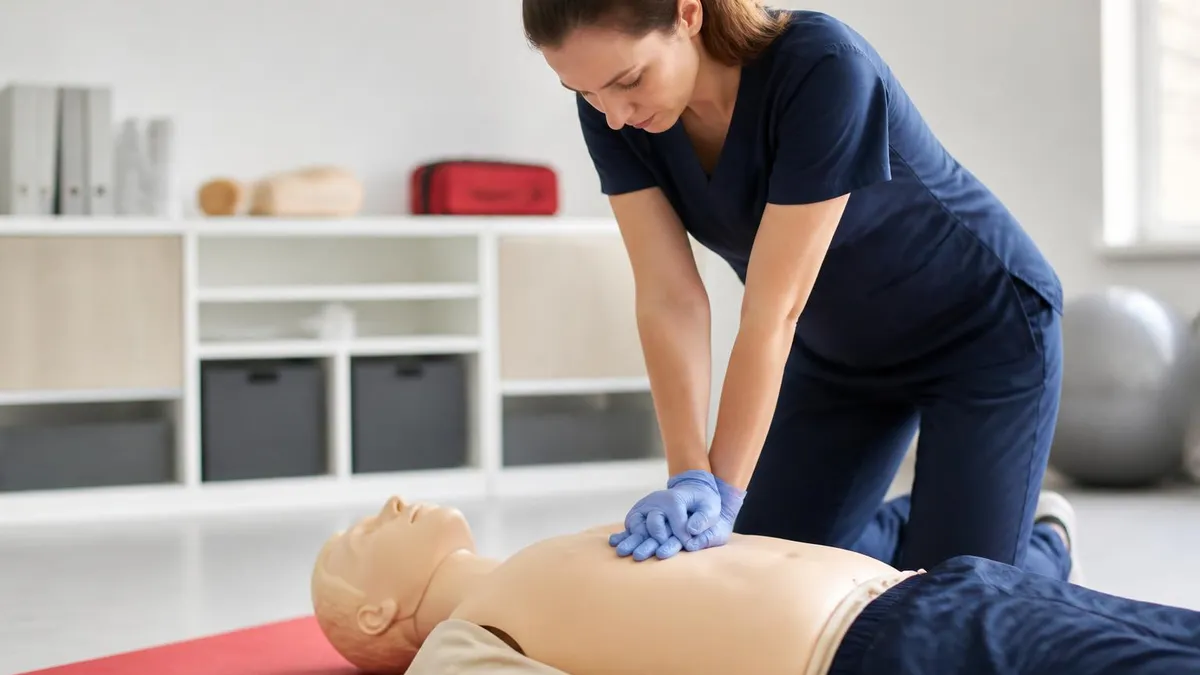
- ✓Will the course include an in-person skills station? On what date and at what address?
- ✓What is the name of the instructor who will sign my card?
- ✓Does the card expire in two years, and what is the renewal pathway?
- ✓Will my employer be able to call you to verify the certification?
Cost Reality — What Real Courses Should Actually Run
Real BLS Healthcare Provider courses through AHA Training Centers cost between $40 and $90 in most U.S. markets. Heartsaver CPR/AED runs $35 to $70. Renewal courses sit at $50 to $80 because the skills station still has to happen. Group rates at hospitals and large employers can drop the price to $25 per person, but those slots are usually internal-only. Anything advertised under $20 for an in-person Healthcare Provider course is either subsidized by an employer, a one-time community outreach event, or a card mill.
Online-only Heartsaver cards aimed at babysitters and coaches run $15 to $35 from legitimate providers. The price is lower because the skills component is shorter and the audience does not need hospital-grade verification. Even at that price, you should still see an accreditor logo on the certificate, a Training Center number where applicable, and a published lookup tool. If none of those exist, treat the card as a souvenir.
The Instructor Question — Who Signed Your Card
Every legitimate BLS card carries the instructor's name and credential number. The instructor is the verification anchor — when HR calls the Training Center, the TC pulls up the roster for that instructor on that date and confirms the holder's attendance. Card mills bypass this entirely by issuing cards signed by a generic title like Director of Education or Chief Medical Officer with no individual instructor identified. That alone is a red flag. AHA requires an individual instructor of record for every course.
Before paying, ask the provider for the name of the instructor who will sign your card. A real provider answers immediately. A card mill cannot, because they do not employ instructors — they employ checkout funnels. Pair that question with a second one: ask whether the instructor holds a current AHA Instructor card and what their TC affiliation is.
Take a Quick Skills Check Before Your In-Person Station
The cognitive portion of a blended course is easier to pass when you have already reviewed the rate, depth, and AED placement basics. A short practice set reveals which sections you remember and which you have lost since the last cycle. Run through a quick refresher the day before your scheduled skills station, then walk in confident, prepared, and ready to ace the skills station.
Legitimacy Numbers at a Glance
CPR Questions and Answers
Related CPR Guides
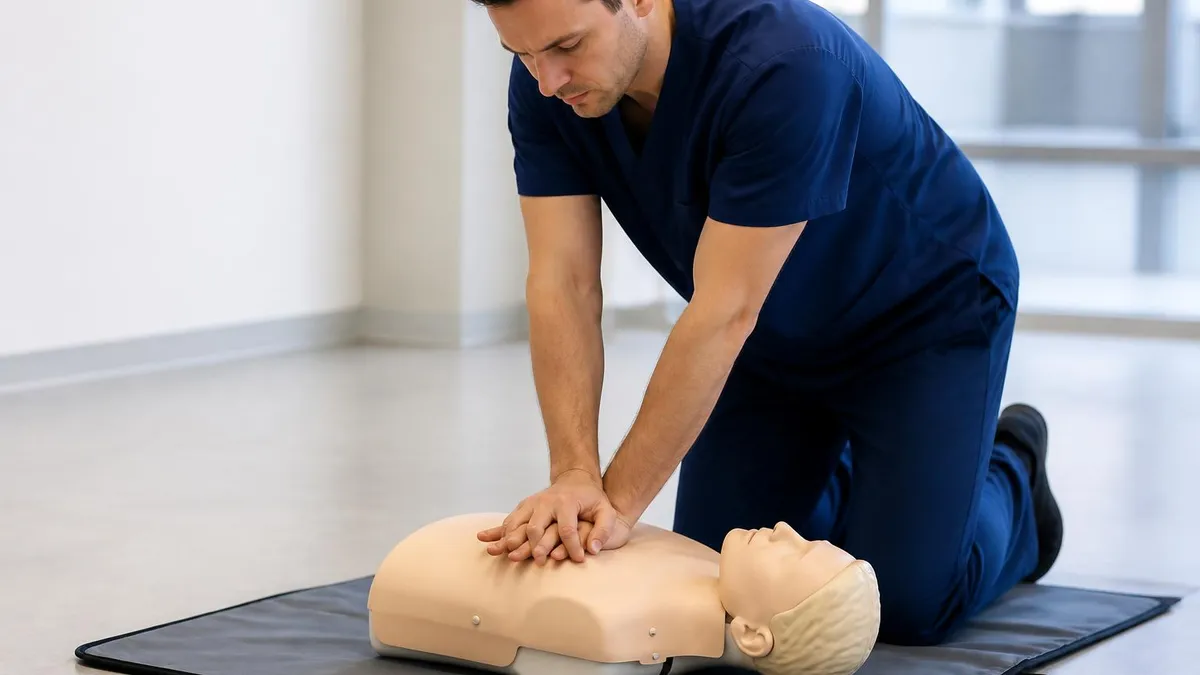
CPR How To: Step-by-Step Guide to Saving a Life 2026
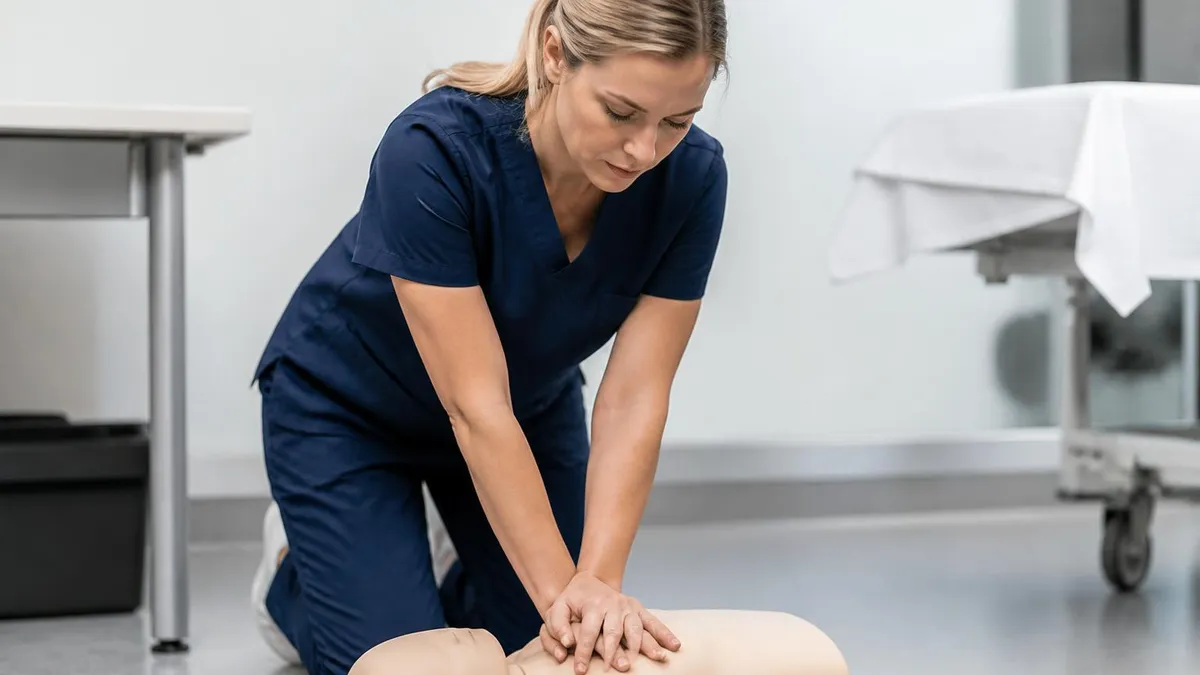
AHA CPR Certification: American Heart Association Course Guide
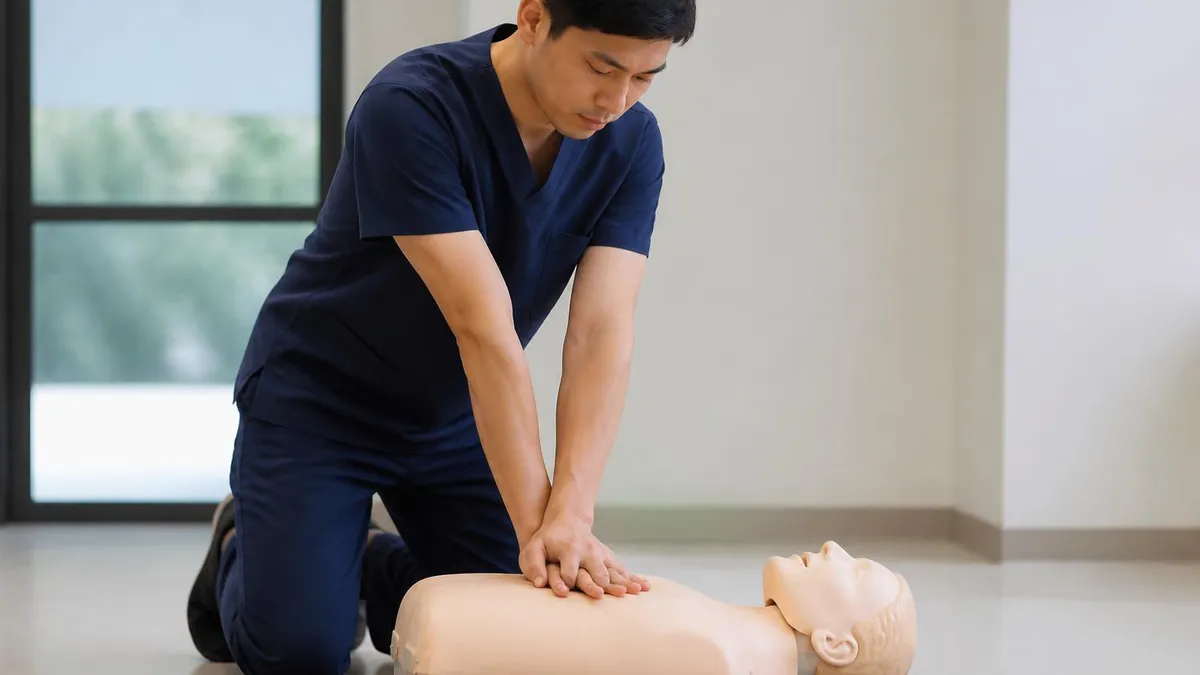
CPR Renewal Online: AHA, Red Cross and Blended Options
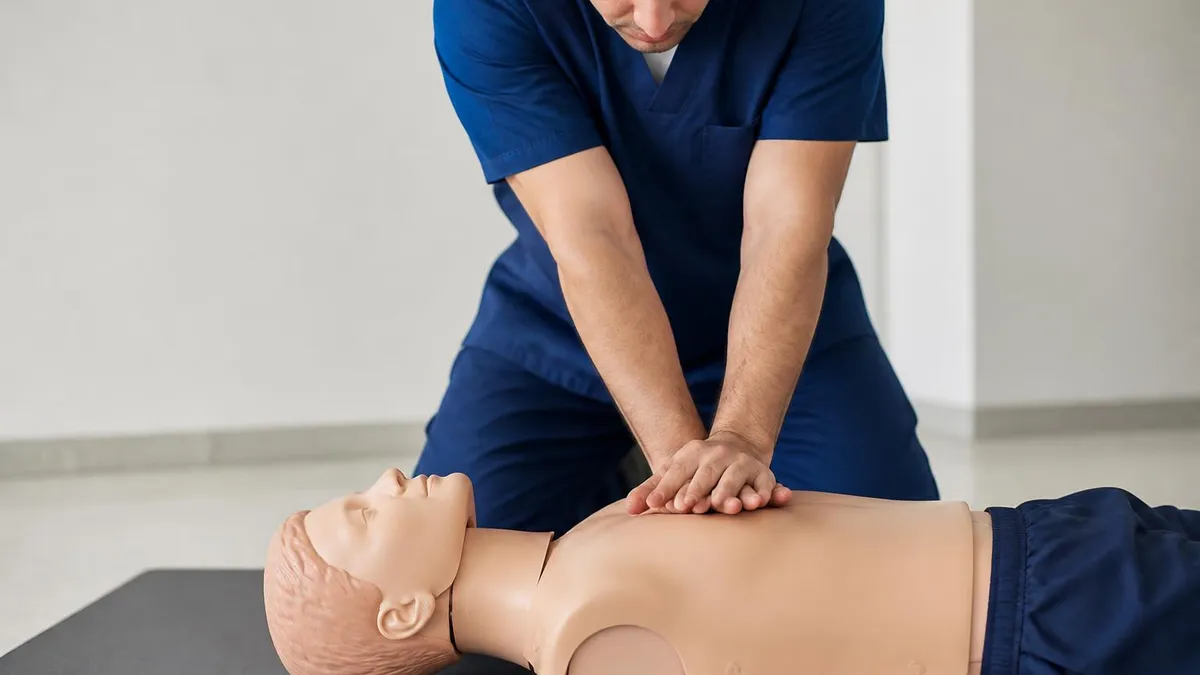
CPR Certification Verification: How to Confirm, Validate, and Prove Your CPR Status in 2026
Red Cross CPR Certification: Cost, Classes & How to Get Certified
About the Author

Registered Nurse & Healthcare Educator
Johns Hopkins University School of NursingDr. Sarah Mitchell is a board-certified registered nurse with over 15 years of clinical and academic experience. She completed her PhD in Nursing Science at Johns Hopkins University and has taught NCLEX preparation and clinical skills courses for nursing students across the United States. Her research focuses on evidence-based exam preparation strategies for healthcare certification candidates.