
CPR Maximum Time: How Long to Perform CPR, When to Stop, and What ACLS Teams Do
🎯 CPR maximum time explained: how long to perform CPR, when to stop, ACLS algorithm basics, infant CPR, AED use, and life support steps for US rescuers.

The cpr maximum time question comes up in nearly every class, and the honest answer surprises people: a lay rescuer has no fixed cutoff. You keep going until an AED is ready to analyze, trained responders take over, the person shows clear signs of life, the scene becomes unsafe, or you physically cannot continue. This guide explains how that works, why two-minute cycles matter, and how the ACLS algorithm guides hospital teams.
Most people imagine CPR as a short burst of effort lasting a minute or two. Real cardiac arrest rarely resolves that quickly. In the United States, roughly 350,000 people suffer out-of-hospital cardiac arrest every year, and ambulance response times often run seven to ten minutes, sometimes far longer in rural areas. That gap is exactly why bystander compressions matter so much. Your hands act as a mechanical pump, moving oxygenated blood to the brain and heart.
Understanding the broader cpr procedure knowledge base makes the time question much easier to answer. The sequence is consistent: check for responsiveness, call 911, begin compressions at 100 to 120 per minute, use an AED as soon as it arrives, and keep going. Every decision about when to stop flows from that chain of survival, and quitting early, even when you feel exhausted, can cost the patient their only real chance.
Time works against the patient in a second way. Brain cells begin to suffer damage after roughly four to six minutes without oxygen, and the chance of survival falls by about 7 to 10 percent for every minute that passes without defibrillation. Compressions slow that decline but do not stop it. This is why starting immediately, with no hesitation and no waiting for a perfect setting, matters far more than getting every technique detail flawless.
This article covers the rules for how long CPR lasts, the ACLS algorithm used by professional teams, the national CPR foundation question for online cards, PALS certification for pediatric providers, infant CPR differences, respiratory rate targets for rescue breathing, position recovery basics, and what AED stands for. You will also find a short note on the confusing search term CPR cell phone repair, so you can sort out which kind of CPR you actually need.
Everything here follows American Heart Association guidance, including the most recent guideline updates, and is written for readers in the United States. It supplements, but never replaces, hands-on training with a certified instructor. Reading about compressions is useful, yet practicing on a manikin with real-time feedback builds the muscle memory that keeps you calm when seconds count. Use the free practice questions along the way to test what you learn.
CPR Timing by the Numbers
CPR Procedure Step by Step: From Collapse to Handoff
Check the Scene and Responsiveness
Call 911 and Send for an AED
Start High-Quality Compressions
Add Breaths and Use the AED
Continue Until a Stop Condition
How Long Does CPR Last? The Real Stopping Rules
The American Heart Association teaches five conditions that end a lay rescuer's CPR. First, an AED is ready to analyze the heart rhythm. Second, emergency medical services or other trained responders arrive and take over. Third, the person shows signs of life, such as normal breathing, coughing, or purposeful movement. Fourth, the scene becomes unsafe. Fifth, you are too exhausted to continue. Notice that none of these is a clock; the cpr maximum time is really a set of decision points.
Fatigue is the most common reason compressions fail. Research with manikins shows that compression depth begins to decline after about one to two minutes of continuous effort, even though rescuers often report feeling fine. That is why the guideline is to switch compressors every two minutes whenever a second person is available. A well-practiced swap takes under five seconds, and the fresh rescuer should already be kneeling beside the patient, ready to begin.
So how long does a typical bystander session actually last? Ambulances commonly arrive in eight to twelve minutes, and once paramedics take over they usually work the patient for another twenty to forty minutes on scene. That means a bystander may perform CPR for ten to fifteen minutes before handing off. Plan mentally for a long effort rather than a short one, and you will pace yourself and recruit helpers more effectively.
Resist the urge to pause and check for a pulse. Lay rescuers are not expected to find one, and hunting for it wastes precious seconds. Pauses for rhythm analysis, shocks, or switching should stay under ten seconds. Experts track a number called chest compression fraction, the share of total resuscitation time spent actually compressing. The target is above 60 percent, and high-performing teams reach 80 percent or more, which is strongly linked to better survival.
If you have not been trained in breaths, or you are uncomfortable giving them to a stranger, hands-only CPR is an excellent choice for an adult who suddenly collapses. Push continuously in the center of the chest at 100 to 120 compressions per minute, roughly the tempo of the song Stayin' Alive. Do not stop to give breaths or to reposition. Keep going until an AED arrives or professionals relieve you, even if that takes many minutes.
Finally, do not stop because the situation looks hopeless or because you hear a rib crack. Rib or sternum fractures occur in roughly a third of CPR recipients and are an expected result of effective compressions, not a reason to quit. A broken rib heals; cardiac arrest without circulation does not. Every state has Good Samaritan protections for rescuers acting in good faith, so you should never let fear of liability slow your hands.
National CPR Foundation, Life Support Levels, and Choosing a Course
Basic life support, often shortened to BLS, is the foundation of all life support training. It covers high-quality compressions, rescue breaths, AED use, choking relief, and team-based resuscitation for adults, children, and infants. Healthcare workers, firefighters, and lifeguards typically hold a BLS Provider card, while workplaces and community groups often choose a lighter Heartsaver-style course focused on lay rescuers.
Most BLS cards stay valid for two years, after which you complete a renewal course and skills check. BLS is also the prerequisite for advanced credentials, because every advanced algorithm assumes that excellent CPR is already happening. If you are unsure which course you need, ask your employer, school, or licensing board for the exact card name before you register and pay.
Is Continuing CPR Until Help Arrives Always Worth It?
- +Compressions keep oxygenated blood flowing to the brain and heart during the critical early minutes.
- +Immediate bystander CPR can double or even triple the chance of survival from cardiac arrest.
- +Continuing until EMS arrives avoids a gap in circulation that could undo earlier effort.
- +Rotating rescuers every two minutes keeps compression quality high over a long resuscitation.
- +Using an AED alongside CPR gives the best chance of restoring a normal rhythm.
- +Dispatchers coach you in real time, so you never have to manage the situation alone.
- −Prolonged compressions are physically exhausting, especially for a single untrained rescuer.
- −Rib or sternum fractures are common and can be distressing to witness.
- −Survival odds are still modest, with only about one in ten out-of-hospital patients surviving.
- −Emotional stress after a long resuscitation, even a successful one, can be significant.
- −Fatigue lowers compression depth and rate, which reduces effectiveness without a helper.
- −Rescuers may feel pressure to stop too early when the outcome looks bleak.
CPR Readiness Checklist: Know Your Maximum Time Rules
- ✓Confirm the person is unresponsive and not breathing normally before starting.
- ✓Call 911 immediately and keep the phone on speaker.
- ✓Send a specific bystander to fetch the nearest AED.
- ✓Compress at 100 to 120 per minute and at least 2 inches deep.
- ✓Allow full chest recoil between every compression.
- ✓Keep any pause in compressions under 10 seconds.
- ✓Switch compressors every 2 minutes when help is available.
- ✓Attach the AED pads as soon as the device arrives.
- ✓Resume compressions immediately after every shock.
- ✓Continue until EMS takes over, signs of life appear, or the scene is unsafe.
There is no fixed time limit for lay rescuer CPR
Do not quit at five, ten, or fifteen minutes just because the clock says so. Stop only when an AED, EMS, signs of life, danger, or true exhaustion tells you to. Imperfect, continuous CPR is always better than perfect CPR that stops.
ACLS Algorithm and Life Support in the Hospital: When Teams Stop
The ACLS algorithm for cardiac arrest begins exactly where bystander training ends: with high-quality CPR. A team leader assigns roles, attaches a monitor or defibrillator, and quickly determines whether the rhythm is shockable. Ventricular fibrillation and pulseless ventricular tachycardia are shockable. Asystole and pulseless electrical activity are not. That single branching decision shapes every step that follows, which is why rhythm recognition is a core skill taught in advanced life support courses.
For shockable rhythms, the team delivers a shock and immediately resumes two minutes of compressions before the next rhythm check. Epinephrine, 1 mg every three to five minutes, is given during the resuscitation. For refractory ventricular fibrillation, an antiarrhythmic such as amiodarone, with a first dose of 300 mg, or lidocaine is added. Each two-minute cycle gives the team a built-in moment to reassess, rotate compressors, and think about what could be causing the arrest.
For nonshockable rhythms, the priority is giving epinephrine as early as possible while continuing uninterrupted CPR. The team then searches for reversible causes, often remembered as the Hs and Ts: hypovolemia, hypoxia, hydrogen ion excess, abnormal potassium, and hypothermia, along with tension pneumothorax, cardiac tamponade, toxins, and thrombosis in the lungs or coronary arteries. Treating the underlying cause is frequently the only way a nonshockable arrest turns around.
Once an advanced airway such as an endotracheal tube is in place, the pattern changes. Compressions become continuous at 100 to 120 per minute, with one breath every six seconds, about ten breaths per minute, delivered without pausing the chest. Teams watch waveform capnography closely. An end-tidal carbon dioxide reading that stays below 10 mmHg after twenty minutes of resuscitation suggests a poor prognosis and may inform the decision to stop.
In the hospital there is also no universal maximum duration. Many teams consider terminating efforts after roughly twenty to thirty minutes without return of spontaneous circulation, but the team leader weighs several factors: whether the arrest was witnessed, whether bystander CPR was given, the initial rhythm, capnography readings, age, and underlying illness. Efforts are often extended for hypothermia, drug overdose, pregnancy, pulmonary embolism, or when mechanical circulatory support is available.
These advanced skills sit on top of a ladder of life support training. BLS teaches the foundation, ACLS adds rhythm interpretation and medications for adults, and PALS covers pediatric patients. Each level assumes the one below it is mastered, because no drug or device can compensate for poor compressions. If you plan a healthcare career, treat BLS as the skill you will use most often and refresh it deliberately, long before your card expires.
If you are alone and exhausted, keep pushing as long as you safely can, and ask any bystander to take over. Stopping early removes the only blood flow the person has. Leave only if the scene becomes dangerous or someone qualified relieves you.
Infant CPR, PALS Certification, and Respiratory Rate Targets
Infant CPR applies to babies under one year of age, and it differs from adult technique in important ways. A single rescuer places two fingers on the lower half of the breastbone, just below the nipple line. When two rescuers are present, the preferred method is the two-thumb encircling technique, with the hands wrapped around the chest. Compress about one-third of the chest depth, roughly 1.5 inches or 4 centimeters, at the same 100 to 120 per minute rate used for adults.
The compression-to-breath ratio also changes. One rescuer uses 30 compressions to 2 breaths for infants and children, while two rescuers use 15 compressions to 2 breaths. Children from age one to puberty typically receive compressions with one or two hands, about 2 inches or 5 centimeters deep. If you are alone and did not see the collapse, give about two minutes of CPR before leaving to call 911. If you witnessed a sudden collapse, phone first.
Respiratory rate matters whenever you give rescue breaths to someone who has a pulse but is not breathing adequately. For adults, give one breath every six seconds, which is ten breaths per minute. For infants and children, give one breath every two to three seconds, or twenty to thirty per minute. Each breath should last about one second and make the chest visibly rise. Giving breaths too fast or too forcefully can fill the stomach and cause vomiting.
For comparison, normal resting respiratory rates differ widely by age. Healthy adults breathe about 12 to 20 times per minute, while infants breathe roughly 30 to 60 times per minute. Recognizing a rate that is far too slow, too fast, or labored is a core skill, because pediatric cardiac arrest usually follows respiratory failure rather than a primary heart problem. That is also why breaths are more important in children than in most adult arrests.
PALS certification prepares clinicians to recognize and treat those pediatric emergencies before they become arrests. The course uses the pediatric assessment triangle, which looks at appearance, work of breathing, and circulation, then moves through algorithms for respiratory distress, shock, bradycardia, tachycardia, and cardiac arrest. Participants run simulated cases as team leaders, complete a written exam and a skills test, and renew about every two years. Nurses and physicians in pediatric units and emergency departments usually need it.
Position recovery is the last piece rescuers should know. If a person is unresponsive but breathing normally and you do not suspect a spine injury, roll them onto their side with the top knee bent and one hand under the cheek. This keeps the airway open and lets fluid drain. Keep watching their breathing. If it stops or becomes only gasping, roll them onto their back and begin CPR immediately.
Practical Tips: AED Use, Course Choices, and Final Prep
People often ask what does AED stand for: it means automated external defibrillator. The device analyzes the heart rhythm and delivers a shock only when one is needed, so you cannot hurt someone with a normal rhythm. Turn it on, follow the spoken instructions, and attach the pads. For adults, place one pad on the upper right chest below the collarbone and the other on the lower left side, below the armpit.
A few safety steps keep the shock effective. Dry the chest if it is wet, remove any medication patches from the pad area, and trim or shave heavy chest hair if a razor is included. Make sure nobody is touching the person when the AED says to stand clear. Use child pads for kids under eight if available. Public AEDs are in airports, gyms, schools, and offices, and apps such as PulsePoint can show nearby devices.
When choosing a course, match the card to your real need. Hands-on classes from the American Heart Association or American Red Cross are the safest choice for healthcare jobs, while online providers may suit personal learning or roles with relaxed requirements. If you are considering the national CPR foundation or any similar online provider, send your employer the course name first and ask whether it will be accepted. Keep your expiration date on your calendar.
Do not be confused by unrelated search results. CPR Cell Phone Repair is a business that fixes phones and tablets and has nothing to do with resuscitation, so add words like cardiopulmonary or certification to your searches. Likewise, a CPR index is not an official AHA measure. Feedback manikins report scores for depth, rate, and recoil, and some learners loosely call the combined score a CPR index. Use those scores to find which habit needs work.
Build a simple practice plan over two weeks. Spend ten minutes a day pressing a firm pillow while listening to music at 100 to 120 beats per minute, and say the 30 to 2 ratio aloud. Review the steps in order: check, call, compress, shock, continue. Take a short practice quiz every few days to catch gaps, and write down any question you miss so you can study the reason rather than just the answer.
Finally, prepare your mindset as carefully as your technique. In a real emergency your heart will race and your hands may shake, and that is normal. Put the phone on speaker, listen to the dispatcher, and focus on the next single action. Imperfect CPR started immediately is far better than perfect CPR that never begins. Whenever the question is how long to continue, the answer is the same: keep going until someone else can take over.
CPR Questions and Answers

AHA CPR Instructor: Complete Guide to ACLS Algorithm, PALS Certification, and Life Support Training in 2026
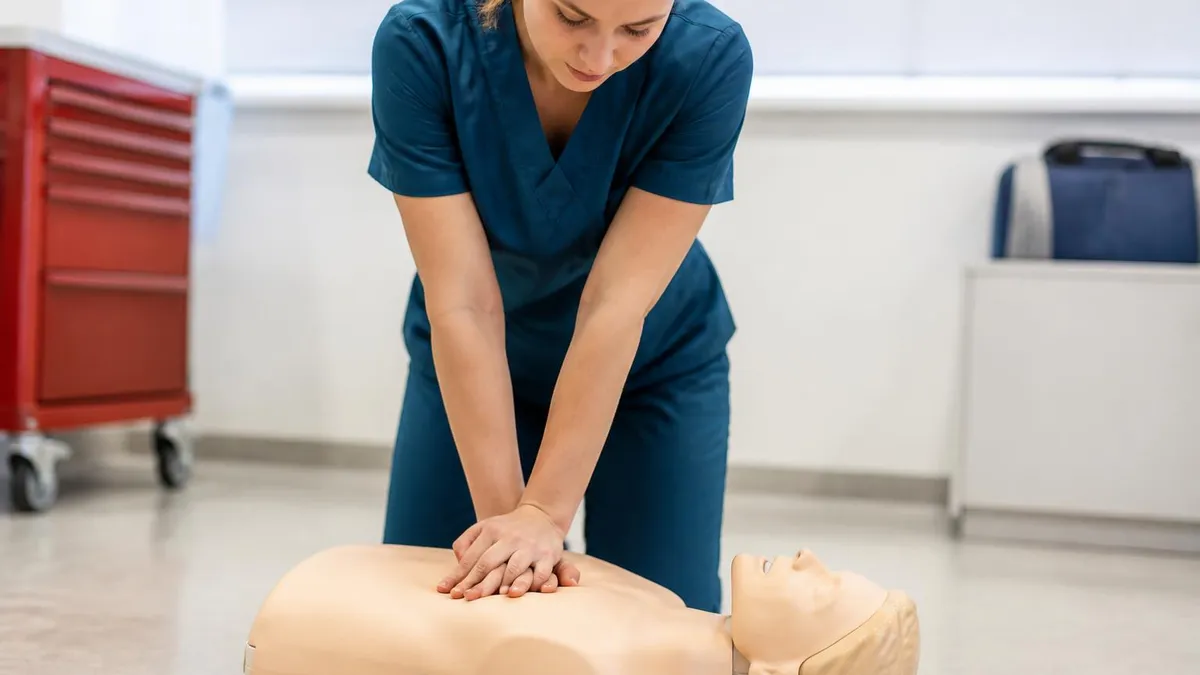
What to Wear to CPR Class: Complete Clothing and Preparation Guide for Every Certification Level
CPR Certification: How to Get Certified in CPR for 2026
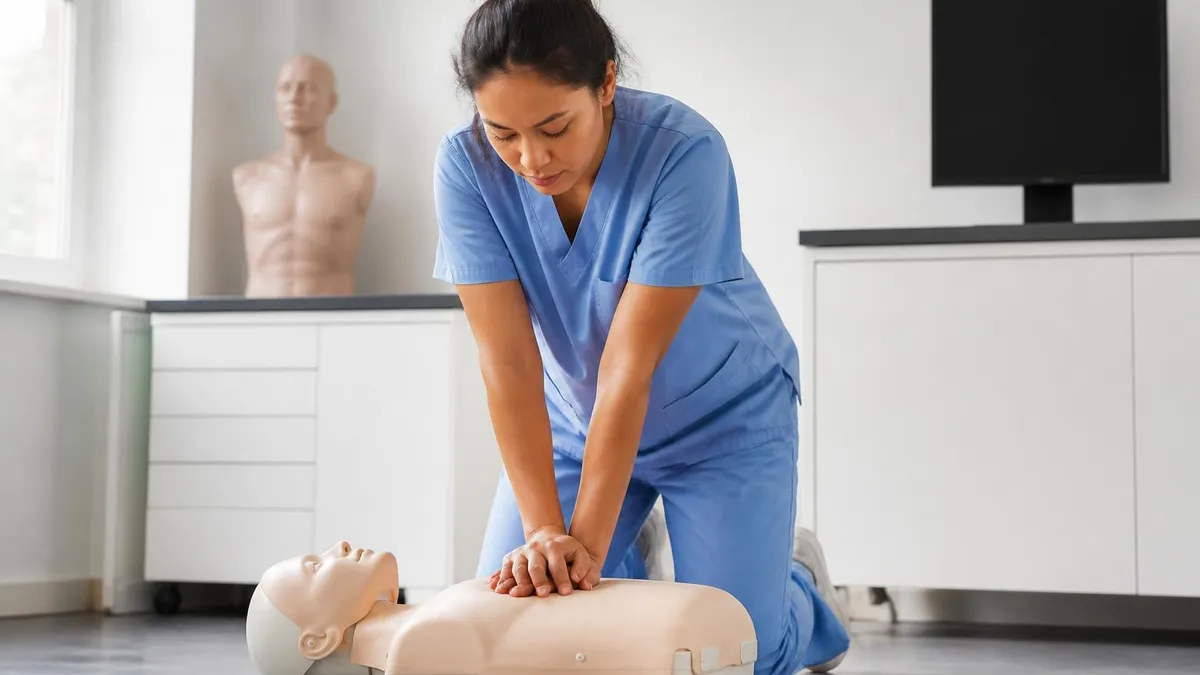
CPR Practice Test 2026: Free Questions, Answers & Full Exam Prep Guide

CPR Training Online: What's Possible and What's Not
How this page was made: written with AI tools and published by Nathan Beja, founder of Practice Test Geeks, who is responsible for its content. Exam facts are checked against the official sources listed below. Not reviewed by a subject-matter expert. Editorial policy
Sources & references
Exam facts on this page (fees, format, dates, passing scores) are checked against these official sources; the date is our last check. Editorial policy
- redcross.org — Score validity, renewal, test delivery, passing score · verified Oct 2026
- elearning.heart.org — Fees, score validity, passing score · verified Oct 2026
- shopcpr.heart.org — Test delivery · verified Oct 2026