
American Red Cross CPR: Classes, Certification, Cost 2026 October
American Red Cross CPR certification covers BLS, infant CPR, and heartsaver courses. 🆕 Learn about class types, costs, validity, and how to sign up.
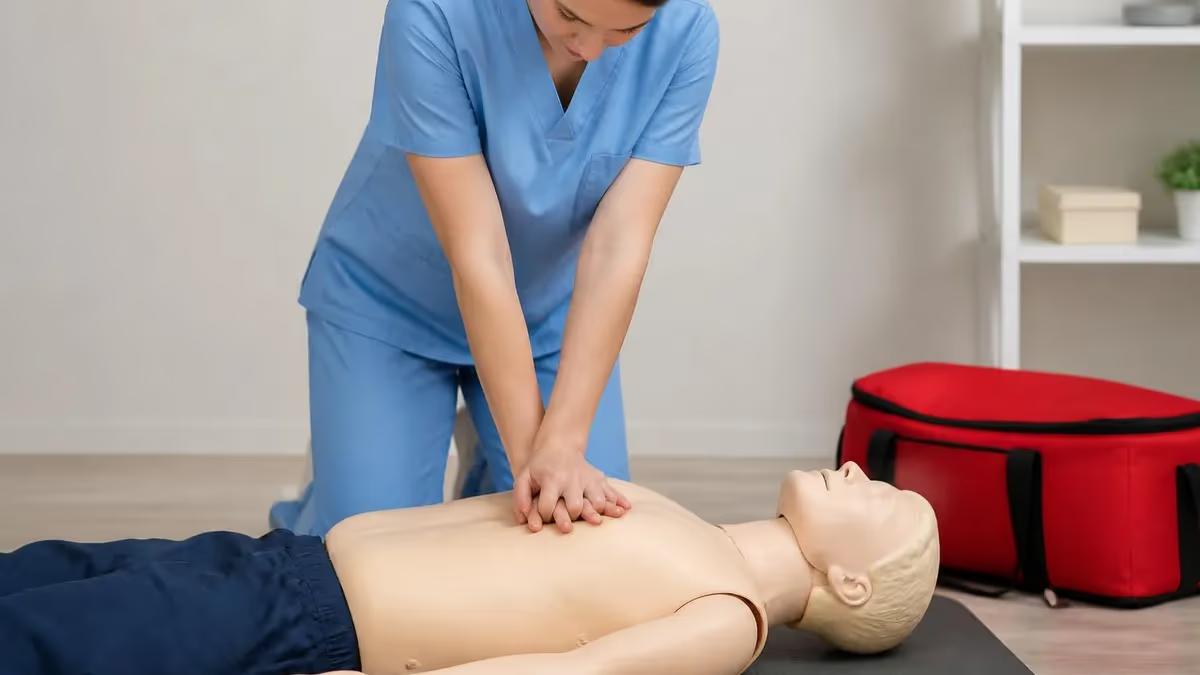
The American Red Cross is one of the two major providers of CPR certification in the United States — the other being the American Heart Association (AHA). Both organizations offer science-backed CPR training that follows current guidelines from the International Liaison Committee on Resuscitation (ILCOR), and both are widely accepted by employers in healthcare, education, childcare, fitness, and public safety. The Red Cross programs are taught by trained instructors, available through in-person classes at community locations nationwide, and also offered through online and blended-learning formats that combine digital coursework with in-person skills assessments.
Red Cross CPR certification is accepted by hospitals, emergency services, schools, and other healthcare employers across the country. For most employment purposes, there's no meaningful difference between Red Cross and AHA CPR certification — both meet ILCOR standards, both produce a valid certification card, and both require renewal every two years. The choice between providers often comes down to price, class availability, and employer preference. Some healthcare institutions specify AHA certification; most accept either.
The Red Cross distinguishes itself through a broad catalog of courses designed for different audiences and levels of responsibility. From a basic Heartsaver CPR/AED course designed for community members and workplace first responders to a full Basic Life Support (BLS) Healthcare Provider course required for clinical healthcare workers, the Red Cross program structure covers a wide range of learner needs.
Understanding which course you need before registering saves time and ensures your certification meets the requirements of your employer or licensing board. The national cpr foundation and other alternative providers also offer CPR certification, but Red Cross and AHA together represent the most widely recognized and accepted credentials in the US market.
Employer acceptance is one of the most important factors to verify before selecting a CPR certification course. Most healthcare employers and regulatory bodies specify either Red Cross or AHA. If your employer hasn't specified a preferred provider and simply says CPR certification is required, confirming with HR or your supervisor that Red Cross is acceptable before enrolling takes two minutes and prevents the possibility of completing a course that doesn't satisfy the requirement. In practice, Red Cross CPR is accepted in the vast majority of workplaces and licensing contexts — but for healthcare positions, confirm directly rather than assuming.
The Red Cross brand carries significant weight in emergency response contexts because of the organization's long history in disaster relief and public health training. That brand recognition translates to real value for certification holders in some employment contexts — a Red Cross CPR card communicates training credibility that a lesser-known provider's certificate may not carry with the same immediate authority. For consumer-facing roles where public trust matters — lifeguards, camp counselors, sports coaches — the Red Cross credential often resonates more strongly with parents and community members than credentials from less-recognized training organizations.
American Red Cross CPR Course Types
The Heartsaver CPR/AED course is the most widely taken Red Cross CPR program and the one most non-healthcare workers need. It covers adult, child, and infant CPR and AED use, and is designed for workplace first responders, teachers, fitness professionals, and anyone who wants to be prepared to respond to a cardiac emergency in daily life. The course typically runs 2-4 hours in person and produces a certification card that's valid for two years. The blended learning version allows you to complete the cognitive content online and attend a shorter in-person skills session to demonstrate hands-on competency.
The BLS Healthcare Provider course is the Red Cross equivalent of what AHA calls the BLS for Healthcare Providers course. It's designed for nurses, physicians, EMTs, medical assistants, dental hygienists, and other clinical healthcare workers who need CPR certification as a condition of their employment or licensure. The BLS course covers high-quality CPR technique, team CPR dynamics, AED use, and relief of foreign-body airway obstruction in adults, children, and infants. The higher standard of this course reflects the professional context — healthcare workers are expected to perform CPR with the technical precision needed in a clinical environment.
The First Aid/CPR/AED course combines basic first aid skills with CPR and AED training in a single certification. This is the most common course for childcare workers, teachers, coaches, lifeguards, and summer camp staff — anyone who works with children or in environments where both first aid and CPR skills are needed. The combined certification is often required by state licensing boards for childcare facilities and schools.
It's typically slightly longer than CPR-only courses but produces a single certification that covers both competencies. The infant cpr component of this course is particularly important for childcare workers — the technique for infant CPR differs significantly from adult CPR, and the Red Cross covers these differences in both the standalone infant course and the combined First Aid/CPR/AED course.
The Pediatric First Aid/CPR/AED course is specifically designed for early childhood education workers and covers infant and child emergencies in more depth than the standard First Aid/CPR/AED course. Some state licensing requirements for licensed daycare facilities and preschools specifically require pediatric CPR rather than general adult CPR certification — check your state's requirements before selecting a course if you work in early childhood settings. The pediatric course content includes choking response for infants and children, fever management, allergic reaction recognition, and other pediatric-specific emergencies alongside CPR and AED use.
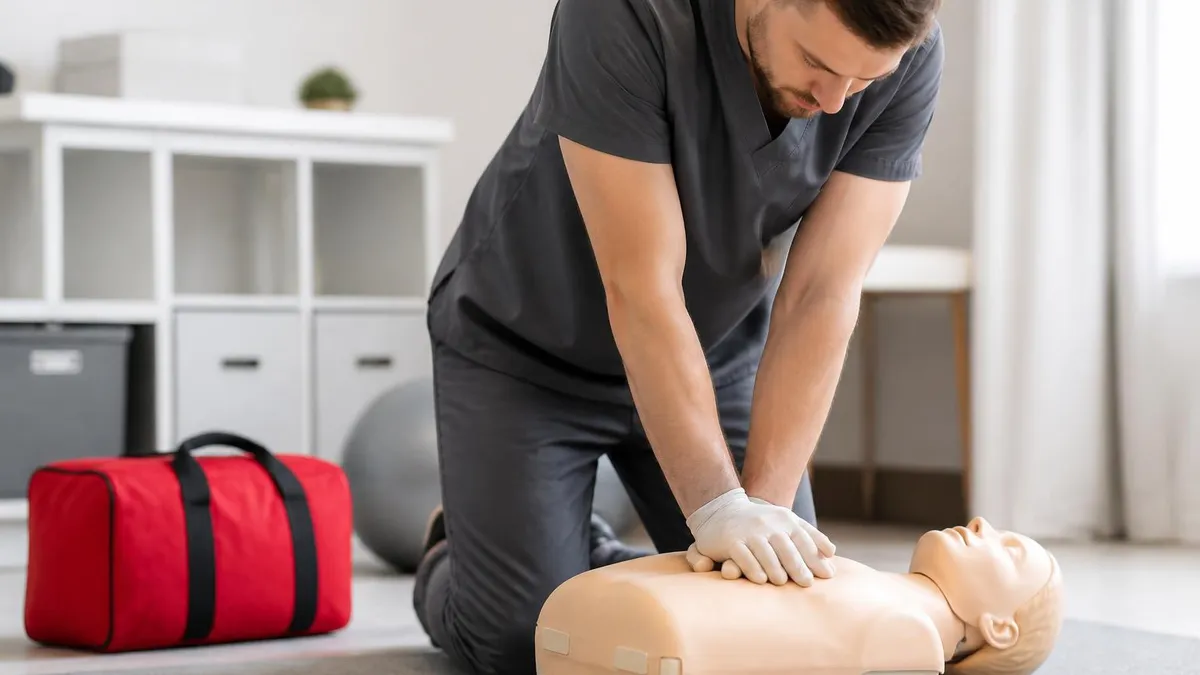
American Red Cross CPR Courses
For workplace and community responders. Covers adult, child, and infant CPR + AED use. 2-4 hours. Best for teachers, coaches, office workers, fitness staff. Valid 2 years.
For clinical healthcare workers. Required by hospitals and clinical employers. Higher technique standard. Covers team CPR dynamics. Equivalent to AHA BLS course. Valid 2 years.
Combines first aid + CPR + AED in one certification. Required for childcare workers, teachers, coaches, camp staff. State licensing boards often require this combined credential. Valid 2 years.
Specifically for early childhood education workers. More depth on infant and child emergencies. Some state childcare licensing boards require pediatric-specific CPR rather than general adult CPR.
How to Find and Register for Red Cross CPR Classes
Red Cross CPR classes are available through the Red Cross website at redcross.org/take-a-class. The class finder allows you to search by zip code, course type, and format (in-person, online, or blended). In major metropolitan areas, classes run almost daily at community centers, fire stations, hospitals, and Red Cross chapter locations. In rural areas, classes may run weekly or less frequently, which is worth checking before you need the certification urgently. Scheduling a class several weeks in advance is easier than trying to find one on short notice.
Blended learning (online + skills session) is available for several Red Cross courses and is a popular choice for people with scheduling constraints. In the blended format, you complete the cognitive portion — CPR theory, AED operation, recognition of cardiac emergencies — through an online module at your own pace, then attend a brief in-person skills session (typically 30-90 minutes) with a Red Cross instructor who verifies that you can perform the hands-on techniques correctly.
The skills session can often be scheduled more flexibly than a full course, and it's typically shorter than an all-in-person class. The red cross cpr classes near me search on the Red Cross website provides the most current schedule of local classes and skills sessions in your area.
Group training is available for organizations — businesses, schools, sports teams, healthcare facilities — that need to certify multiple employees at once. Red Cross can send a certified instructor to your location when you have 10 or more participants, which is often more cost-effective than sending employees to individual public classes. Corporate group rates are typically lower per person than individual class fees, and in-office training eliminates travel time for employees. Organizations with large workforces that require CPR certification — manufacturing plants, construction companies, schools — often use this option to manage annual certification renewals efficiently.
The cost of Red Cross CPR certification varies by course type and delivery format. Standard Heartsaver CPR/AED courses typically run $40-$60 per person. The First Aid/CPR/AED combined course is typically $50-$75. BLS Healthcare Provider courses are typically $55-$85. Online-only courses are available for some program types and cost less, though they produce a completion certificate rather than a full certification — the full certification with renewal card typically requires demonstrating skills with an instructor. Course fees may vary by region and delivery partner; the Red Cross website shows current pricing when you search for classes in your area.
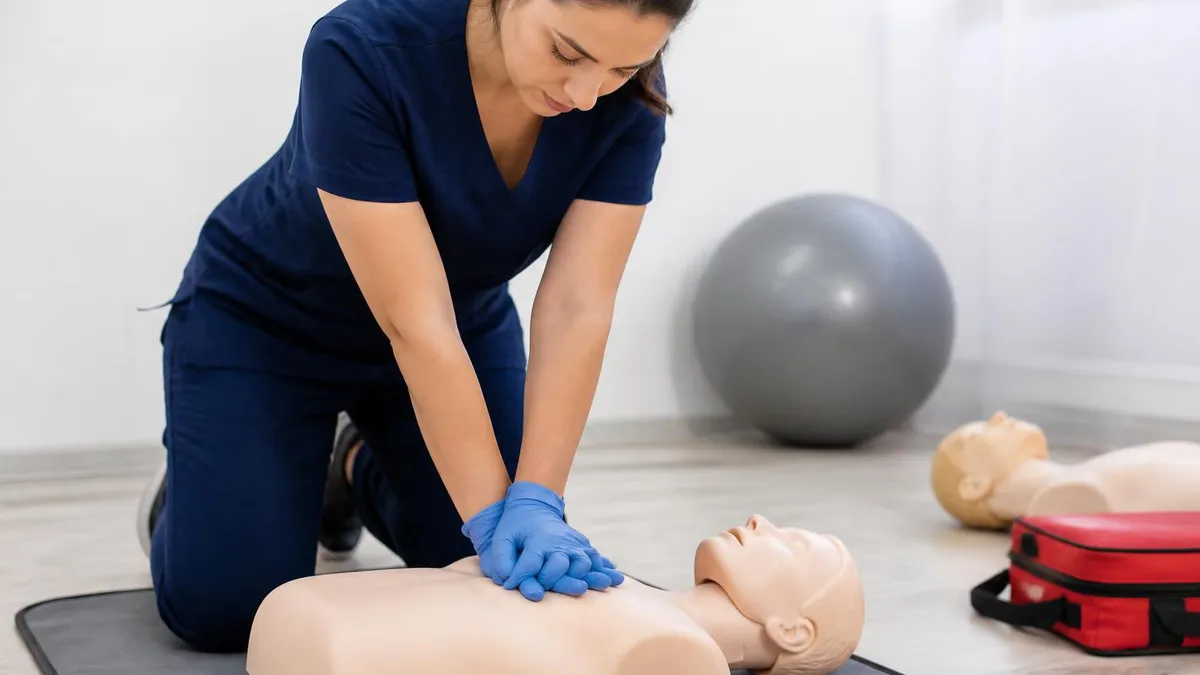
American Red Cross CPR: Key Numbers
Red Cross CPR Certification Validity and Renewal
Red Cross CPR certification is valid for two years from the date of completion. This two-year validity period is standard across both major providers (Red Cross and AHA) and is based on research showing that CPR skills begin to decline significantly after about a year without practice. The two-year renewal requirement ensures that certified individuals periodically refresh their technique and stay current with updated guidelines, which are revised periodically as new cardiac arrest outcome research becomes available.
Renewal courses are shorter than initial certification courses. A Red Cross CPR renewal typically takes 1-2 hours versus 2-4 hours for an initial course, because the renewal assumes prior training and focuses on skills review and refresher rather than teaching the concepts from scratch. Blended renewal options are also available. Employers often track certification expiration dates for staff whose roles require CPR certification and send renewal reminders.
If your employer doesn't track this, setting a personal calendar reminder 60 days before your certification expires gives you time to schedule and complete a renewal course before the expiration date. The question of how long does cpr certification last comes up frequently, and the answer is consistent across providers: two years for standard CPR certification. Extended validity periods aren't available, but renewal courses are straightforward and widely accessible.
For healthcare workers, some employers require that renewal happens before expiration rather than just before the next performance review or licensure renewal date — check your specific employer policy. Letting CPR certification lapse, even by a few days, can create compliance issues for healthcare workers at facilities that track certification status continuously.
This is particularly relevant for nurses and allied health professionals whose licenses may be audited for CPR currency. The standard answer to how long is cpr certification good for is two years, but checking the specific requirements of your employer and any relevant licensing boards ensures you know the applicable standard rather than relying on the general rule.
For individuals who need to renew CPR certification quickly — perhaps because they discovered an upcoming licensure review or job interview — the blended learning option can dramatically compress the timeline. Completing the online module takes 2-3 hours and can be done any time of day. Skills sessions are often available within 48-72 hours in metro areas.
An individual who discovers Monday morning that they need current CPR certification by Friday for a job can often complete both steps within the same week. This compressed timeline is not available through in-person-only courses that run on fixed schedules, which is one of the practical reasons blended learning has become the preferred format for many renewal candidates.
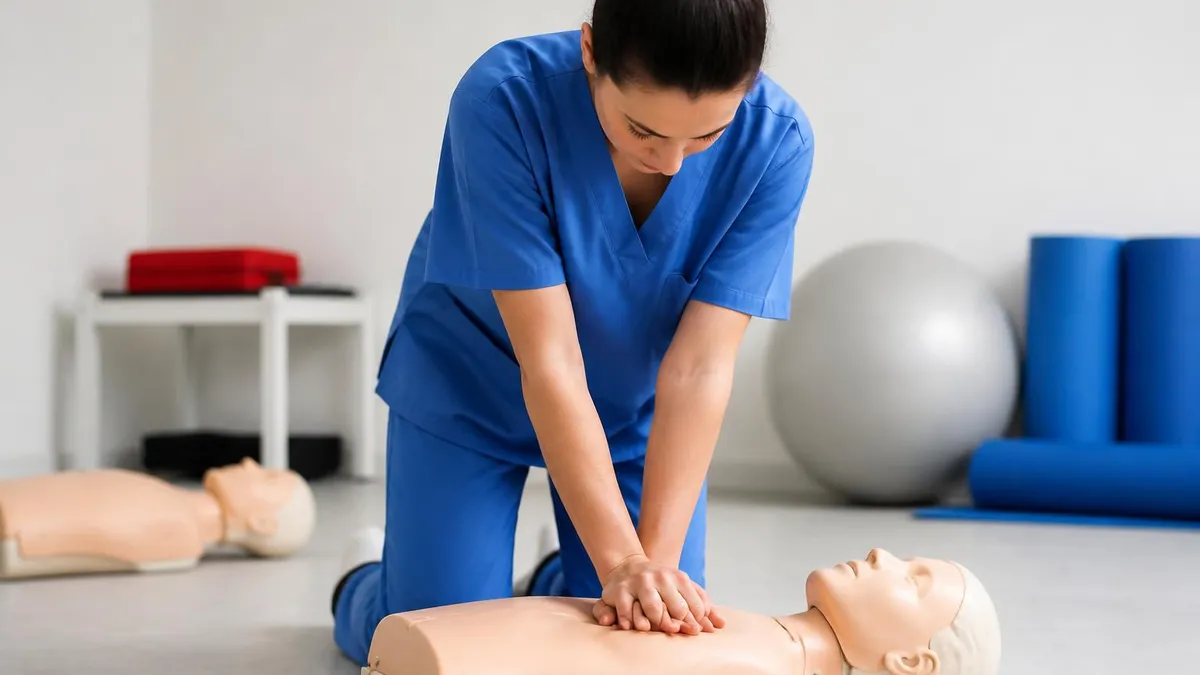
Red Cross CPR: Key Comparisons
The American Red Cross and American Heart Association (AHA) are the two dominant CPR certification providers in the United States. Both follow current ILCOR guidelines and produce two-year certifications. Both are accepted by most employers and licensing boards. The key differences are in format, price, and some specific employer preferences. AHA is the dominant provider in hospital and healthcare settings — many major hospital systems specifically require AHA BLS certification rather than accepting Red Cross equivalents. Red Cross tends to have broader community presence and is often more accessible in non-urban areas through its chapter network.
Format differences include AHA's recent shift to HeartCode BLS for online/blended delivery, which Red Cross also mirrors with its blended options. Price differences are modest — typically $5-$15 per course depending on location and format. If your employer hasn't specified a preferred provider, either credential is generally acceptable. If your employer has specified AHA, check before choosing Red Cross; the reverse is rarely true. For community-level certification — workplace first aid, childcare, sports coaching — the distinction matters less and personal convenience should guide the choice.
Who Needs American Red Cross CPR Certification
Healthcare workers — nurses, CNAs, medical assistants, dental professionals, physical therapists, and others — need CPR certification as a condition of employment at most healthcare facilities. BLS Healthcare Provider certification is the standard required for clinical roles. Many state licensing boards for healthcare professions require current CPR certification for license renewal. The renewal cycle often aligns with professional license renewal, which makes the every-two-years CPR timeline generally compatible with healthcare licensing cycles, though specific alignment varies by state and profession.
Childcare workers and early childhood educators are required to have CPR and first aid certification by most state childcare licensing regulations. The specific course required varies — some states require pediatric CPR, others accept any CPR certification, and some require a specific number of training hours. Checking your state's childcare licensing requirements before selecting a Red Cross course ensures you select the right credential. Red Cross offers pediatric-specific courses that meet the stricter state requirements where they apply.
Coaches, athletic trainers, lifeguards, fitness professionals, and camp counselors typically need CPR and AED certification as a condition of employment or professional certification. For most of these roles, Heartsaver CPR/AED or First Aid/CPR/AED certification satisfies the requirement. Sports governing bodies and certifying organizations for fitness professionals (NASM, ACE, NSCA) typically specify CPR certification as part of initial certification and ongoing renewal requirements. The two-year renewal aligns reasonably well with most professional certification cycles in these fields.
Workplace first responders — designated employees in offices, manufacturing plants, construction sites, and other workplaces who serve as first responders under OSHA requirements — typically need Heartsaver CPR/AED or First Aid/CPR/AED certification. Employer-specific requirements vary, but the Red Cross Heartsaver program meets OSHA's general requirements for trained workplace first aid and CPR responders. Companies that self-insure their workers' compensation programs often receive insurance incentive for maintaining higher ratios of CPR-certified employees, which is why some employers fund CPR training broadly rather than limiting it to designated first responders.
For parents of young children, basic CPR training through the Red Cross provides genuine readiness for common household emergencies — choking, drowning, sudden cardiac arrest — that no parent wants to encounter unprepared. The Heartsaver or First Aid/CPR/AED course takes a few hours and provides skills that remain relevant for the rest of your life.
The two-year renewal requirement keeps those skills current rather than allowing years of skill decay. Many pediatricians recommend that parents of young children complete CPR certification, and the Red Cross community class network makes that accessible regardless of whether you work in a field that requires it professionally.
American Red Cross CPR: Pros and Cons
- +Widely accepted — Red Cross CPR certification is recognized by most employers, licensing boards, and state agencies across the US
- +Flexible delivery — in-person, blended learning, and online options available to accommodate different schedules
- +National coverage — 700+ Red Cross chapters make in-person classes accessible in most areas of the country
- +Comprehensive course catalog — from basic community CPR to clinical BLS, pediatric CPR, and first aid combinations
- +Renewal courses available — shorter than initial certification, with blended options for convenience
- +Group training available — on-site instructor training for organizations with 10+ employees is cost-effective
- −Some hospital systems specifically require AHA certification rather than accepting Red Cross — verify with your employer before enrolling
- −Online-only courses produce a completion certificate, not a full hands-on certification — many employers require the skills component
- −Course availability varies by region — rural areas may have fewer class options and less frequent scheduling
- −Fees add up for groups with many employees needing certification — $40-$85 per person for individual courses
- −Two-year renewal requirement means ongoing cost and time for professionals who need continuous certification
- −Blended learning still requires an in-person skills session — not fully remote for roles requiring demonstrated technique
American Red Cross CPR: Questions and Answers
About the Author

Registered Nurse & Healthcare Educator
Johns Hopkins University School of NursingDr. Sarah Mitchell is a board-certified registered nurse with over 15 years of clinical and academic experience. She completed her PhD in Nursing Science at Johns Hopkins University and has taught NCLEX preparation and clinical skills courses for nursing students across the United States. Her research focuses on evidence-based exam preparation strategies for healthcare certification candidates.